
5 minutes of history
Frank Lowfield
0
5 Minutes of History is a daily podcast that delivers quick, digestible looks at historical events, famous figures, and intriguing stories. Each episode is designed to fit into about five minutes, making it easy to listen during a morning coffee or commute. The show aims to make history accessible and engaging without requiring a long time commitment.
Episodes
-
 Cyprus: The Divided Sun-Kissed Island of Aphrodite, Goddess of Love 03.11.2026 5mCyprus: The Divided Sun-Kissed Island of Aphrodite, Goddess of Love Nestled in the shimmering azure embrace of the Mediterranean Sea, Cyprus beckons with a tapestry woven from ancient myths, sun-drenched beaches, and a complex modern history. Known as the birthplace of Aphrodite, the Greek goddess of love, beauty, pleasure, and procreation, this island gem promises more than just idyllic holidays; it offers a profound journey into the heart of human resilience and the enduring legacy of a captivating past. From the moment you set foot on its shores, Cyprus enthralls. The air hums with the whispers of antiquity, carrying tales of Odysseus, Roman emperors, Byzantine churches, and Crusader castles. Paphos, a UNESCO World Heritage site, serves as a poignant reminder of Aphrodite’s legendary emergence from the sea foam at Petra tou Romiou. Here, ancient mosaics depict scenes of gods and mortals, vibrant and timeless, reflecting the island’s deep roots in classical mythology. The very landscape seems to radiate a unique energy, a blend of wild natural beauty and millennia of human habitation. Yet, beneath this enchanting surface lies a poignant narrative of division. Since 1974, Cyprus has been bisected by a ‘Green Line,’ separating the Greek Cypriot south from the Turkish Cypriot north. This partition, a result of political tensions and military intervention, has cast a long shadow over the island, creating two distinct entities with different cultures, languages, and international recognition. The capital city, Nicosia, stands as the last divided capital in the world, its bustling streets abruptly halted by checkpoints and barbed wire. This division is not merely political; it permeates daily life, family histories, and national identity, offering a powerful case study in geopolitical complexities. Despite this historical wound, Cyprus radiates an indomitable spirit. In the south, vibrant tourist resorts like Ayia Napa and Limassol buzz with international visitors drawn to pristine beaches, lively nightlife, and water sports. Inland, traditional villages like Lefkara, famed for its intricate lacework, offer a glimpse into authentic Cypriot life, where hospitality is paramount and the aroma of halloumi and souvlaki fills the air. The Troodos Mountains, a verdant sanctuary, invite exploration with their ancient monasteries, picturesque hiking trails, and even skiing in winter – a surprising contrast to the island’s sun-baked coastal image. The northern part of the island, often referred to as Northern Cyprus, also boasts incredible natural beauty and historical sites, albeit with a different, often quieter, tourism infrastructure. The walled city of Famagusta, with its haunting ghost town of Varosha, and the dramatic Kyrenia Castle, overlooking the harbor, tell their own stories of conquest and resilience. The Karpas Peninsula, a wild and rugged stretch of land, is home to wild donkeys and secluded beaches, offering a serene escape for those seeking tranquility. What truly captifies about Cyprus is its enduring allure, even in its complexity. The island’s strategic location at the crossroads of Europe, Asia, and Africa has made it a coveted prize throughout history, leading to a rich amalgamation of influences – Greek, Roman, Byzantine, Lusignan, Ottoman, and British. This cultural mosaic is evident in its architecture, cuisine, and traditions, creating a deeply layered identity. For travelers, Cyprus offers a unique juxtaposition: ancient ruins alongside modern resorts, a vibrant party scene next to serene mountain monasteries, and the stark reality of division contrasting with the warmth of its people. It is an island that challenges perceptions, inviting visitors to look beyond the surface and engage with its multifaceted soul. Whether exploring Aphrodite’s rock, hiking through fragrant pine forests, or simply savoring a meze feast by the sea, Cyprus leaves an indelible mark. It is a testament to the power of history, the beauty of nature, and the enduring human spirit, forever intertwined with the myth of the goddess who emerged from its very waters.
-
 Gambia: The Slender Ribbon Along the Mighty River's Course 02.11.2026 6mGambia: The Slender Ribbon Along the Mighty River’s Course Nestled on the western edge of Africa, Gambia stands as a geographical anomaly and a testament to the enduring power of a river. Often described as a sliver, a ribbon, or even a finger, this nation is almost entirely defined by the Gambia River, carving a path from the Atlantic Ocean deep into the continent and separating the country from its larger neighbor, Senegal. It’s a land of vibrant cultures, breathtaking biodiversity, and a rich, often tumultuous, history, all intrinsically linked to the waterways that sustain it. The Gambia River isn’t just a geographical feature; it’s the lifeblood of the nation. For millennia, it has served as a highway, a provider of sustenance, and a historical artery. Its banks are fertile, yielding groundnuts, rice, and millet – staples of the Gambian diet and economy. The river itself teems with life: hippos wallow in its muddy stretches, crocodiles bask on its sun-drenched banks, and a myriad of fish species provide livelihoods for countless fishing communities. What role has the Gambia River played in shaping the country’s economic activities? Historically, the river was a crucial conduit for trade, connecting inland communities with the Atlantic and, by extension, with the wider world. During the era of the transatlantic slave trade, it became a tragic gateway, with many enslaved Africans departing from its shores. James Island, now Kunta Kinteh Island, a UNESCO World Heritage site, stands as a poignant reminder of this dark chapter. Its ruins whisper stories of human suffering and resilience, attracting visitors who seek to understand the profound impact of this period. How does Kunta Kinteh Island serve as a historical testament to Gambia’s past? Beyond its historical significance, Gambia is a nation brimming with natural beauty. The low-lying landscape, characterized by mangroves, swamps, and savanna, supports an incredible array of wildlife. Birdwatchers flock to its shores, drawn by over 560 species, including rare raptors, colorful bee-eaters, and majestic pelicans. National parks like Kiang West and Tanji are sanctuaries for monkeys, antelopes, and a diverse range of reptiles and amphibians. The coastal areas, with their golden beaches and swaying palm trees, offer a stark contrast to the verdant riverine interior, attracting tourists seeking relaxation and adventure. What makes Gambia a significant destination for ecotourism, particularly for birdwatching? The people of Gambia, often called ‘Gambians,’ are renowned for their warmth, hospitality, and resilience. A melting pot of ethnic groups, including the Mandinka, Fula, Wolof, Jola, and Serahule, they coexist peacefully, contributing to a rich tapestry of traditions, languages, and cuisines. Jollof rice, benachin, and domoda are culinary delights that reflect the nation’s diverse heritage. Storytelling, music, and dance are integral to their cultural fabric, often accompanied by the kora, a 21-stringed instrument that produces enchanting melodies. How do the diverse ethnic groups of Gambia contribute to its cultural richness? Despite its charm and natural beauty, Gambia faces significant challenges. Economic development, particularly outside the tourism sector, remains a priority. Infrastructure improvements, access to quality education, and healthcare are ongoing efforts. Political stability, though improving after a period of authoritarian rule, requires constant nurturing. The delicate balance between preserving its natural environment and fostering sustainable economic growth is a perpetual challenge. What are some of the key developmental challenges currently facing Gambia? However, the spirit of Gambia remains undaunted. Its people, armed with an unwavering sense of community and a deep connection to their land and river, are striving for a brighter future. Initiatives focusing on eco-tourism, community empowerment, and sustainable agriculture are gaining traction, promising to harness the nation’s unique assets for the benefit of all. The slender ribbon of land, cradled by its mighty river, continues to flow forward, carrying with it the hopes and dreams of a vibrant nation. In essence, Gambia is more than just a geographical curiosity; it’s a vibrant, living entity, intricately woven into the fabric of the Gambia River. It’s a place where history resonates in the whispers of the wind, where nature thrives in breathtaking abundance, and where the human spirit triumphs amidst adversity. Its story is a testament to how a small nation, defined by a single waterway, can leave an indelible mark on the world. What does the future hold for Gambia, considering its focus on sustainable development and community empowerment?
-
 The Accidental Marvel: How Teflon Slipped into Our Lives 01.11.2026 6mThe Accidental Marvel: How Teflon Slipped into Our Lives Imagine a world before non-stick pans, before stain-resistant fabrics, before the myriad of applications that rely on a material so inert, so incredibly slippery, that it almost defies common sense. This world was the reality before 1938, the year a truly accidental discovery changed the landscape of modern material science forever. It all began in the pursuit of something entirely different: a safer refrigerant. Our story’s protagonist is Dr. Roy J. Plunkett, a chemist working for DuPont’s Jackson Laboratory in Deepwater, New Jersey. The year was 1938, and the scientific community was deeply concerned with finding alternatives to the highly toxic refrigerants like ammonia and sulfur dioxide that were then in use. Plunkett’s task was to investigate new chlorofluorocarbon (CFC) compounds, specifically tetrafluoroethylene (TFE), for this very purpose. He and his assistant, Jack Rebok, were diligently working with cylinders of gaseous TFE, often cooled to liquid form for storage. One fateful morning, Plunkett was preparing a cylinder of TFE for an experiment. He opened the valve, expecting the gas to flow out. Nothing. Puzzled, he weighed the cylinder. It was still full. Something was amiss. The pressure gauge indicated zero, yet the weight suggested the TFE was still inside. Was the valve faulty? He detached the valve and, curious, peered inside the cylinder. What he saw was utterly astonishing. Instead of the expected liquid or gaseous TFE, he found a white, waxy, incredibly slippery powder coating the inside of the cylinder. It was tenacious, adhering firmly to the metal walls, yet felt like nothing he had ever encountered. It was as if the gas had spontaneously polymerized, creating a solid substance out of thin air. The TFE, under the influence of the iron from the cylinder walls acting as a catalyst and the pressure and temperature conditions, had transformed into polytetrafluoroethylene (PTFE). This was the birth of what would later be christened Teflon. Plunkett, a true scientist, recognized the profound implications of this unexpected discovery. He immediately set about trying to understand this new material. What were its properties? How could it be replicated? The initial challenge was even getting it out of the cylinder – it was so slippery, yet so adherent, that conventional methods proved difficult. Once extracted, its unique characteristics became apparent. It was incredibly heat resistant, virtually impervious to chemical attack, and possessed an astonishingly low coefficient of friction – meaning almost nothing would stick to it. This last property, its ‘non-stickiness,’ was what would ultimately propel it into household fame. DuPont patented the new fluorocarbon polymer in 1941, and registered the Teflon trademark in 1945. Initially, the material found its niche in highly specialized industrial and military applications. Its chemical inertness made it perfect for sealing radioactive materials in the Manhattan Project. Its incredible lubricity was invaluable in rocket nose cones and other high-stress environments where friction was a critical concern. Its electrical insulation properties were also unparalleled. It wasn’t until the 1950s that a French engineer, Marc Grégoire, discovered how to bond Teflon to aluminum, paving the way for the first non-stick frying pans. His wife, Colette, suggested the idea after he used it to coat his fishing gear to prevent tangles. Soon, the ‘Tefal’ brand was born, and the kitchen revolution had begun. The material that was once a mysterious residue in a gas cylinder was now making breakfast easier for millions. From there, Teflon’s applications exploded. It’s in medical implants, aerospace components, computer wiring, waterproof clothing (often in conjunction with Gore-Tex, which uses a form of expanded PTFE), and countless industrial coatings. Its journey from a baffling white powder in a frozen cylinder to an indispensable material in our daily lives is a testament to the power of observation, curiosity, and the serendipitous nature of scientific discovery. Dr. Plunkett’s pursuit of a safer refrigerant led him, quite literally, to slip upon one of the most remarkable materials of the 20th century. The story of Teflon reminds us that sometimes, the most groundbreaking discoveries are not found at the end of a planned path, but in the unexpected detours along the way. What other accidental discoveries have had such a profound impact on society? How might the world be different if Dr. Plunkett had simply discarded the ‘faulty’ cylinder? The legacy of Teflon is a constant reminder that sometimes, the greatest innovations come from the most surprising places.
-
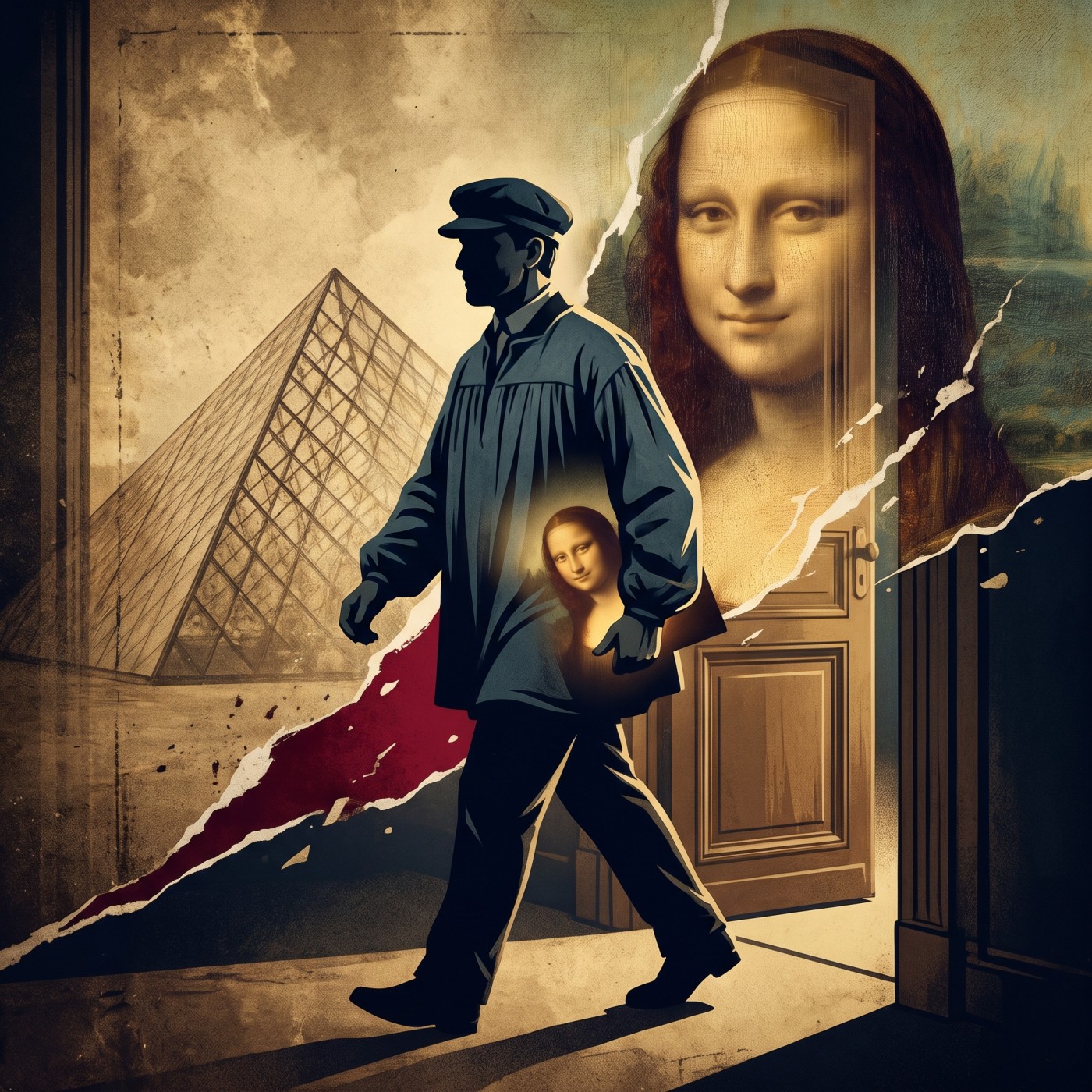 The Audacious Heist: How the Mona Lisa Became a Global Icon 30.10.2026 7mThe Audacious Heist: How the Mona Lisa Became a Global Icon August 21, 1911. A seemingly ordinary Monday morning at the Louvre Museum in Paris. The sun, still gently warming the city, cast long shadows through the grand galleries. Tourists and art enthusiasts alike meandered through the hallowed halls, unaware that one of the most audacious art thefts in history was about to unfold, forever changing the destiny of a certain enigmatic smile. The Mona Lisa, a portrait by Leonardo da Vinci, painted in the early 16th century, was already a revered work. However, it was not yet the universally recognized cultural phenomenon it is today. In fact, before its disappearance, many visitors to the Louvre might have breezed past it, perhaps giving it a cursory glance. Its frame, a rather modest affair, was often overshadowed by the more opulent and larger works surrounding it. Yet, this unassuming painting was about to embark on an involuntary journey that would catapult it to unprecedented global fame. The man responsible for this seismic event was Vincenzo Peruggia, an Italian handyman who had previously worked at the Louvre, installing protective glass casings for several of the museum’s artworks, including the Mona Lisa. Peruggia was, by all accounts, a quiet and unassuming individual, a patriot consumed by a fervent, if misguided, belief: that Italy’s masterpieces, stolen by Napoleon, rightfully belonged on Italian soil. He saw himself not as a thief, but as a liberator, righting a historical wrong. This profound conviction fueled his extraordinary act. On that fateful Monday, Peruggia, dressed in a white smock identical to those worn by Louvre employees, simply walked into the museum before it opened to the public. He knew the layout, the routines, the blind spots. Approaching the Salon Carré, where the Mona Lisa hung, he found himself momentarily alone. With astonishing calm and efficiency, he lifted the painting from its hooks, carried it to a nearby service staircase, and there, using simple tools, removed the painting from its heavy wooden frame. The frame itself, a cumbersome object, was abandoned on the stairs. Then came the most astonishing part of the whole affair. Peruggia wrapped the unframed Mona Lisa – a painting on a poplar wood panel, measuring roughly 77 cm by 53 cm – in his smock and, with the masterpiece tucked under his arm, simply walked out of the museum. He passed a guard, who barely registered his presence, assuming he was just another employee. The streets of Paris, bustling with morning activity, offered anonymity. Peruggia boarded a bus and returned to his modest boarding house, where he hid the painting in a false-bottomed trunk. For two long years, the Mona Lisa resided in this unassuming dwelling, a world away from its gilded palace. It wasn’t until Tuesday morning that the theft was discovered. A painter, Louis Béroud, arrived at the Salon Carré to sketch the Mona Lisa for a series of paintings. To his bewilderment, the space where the masterpiece should have hung was empty. Initially, museum officials assumed the painting had been temporarily removed for photography or conservation. It was a common practice. But as hours turned into a frantic search, the grim reality dawned: the Mona Lisa was gone. The news sent shockwaves across the globe. Paris was in an uproar. The Louvre was shut down for a week, and every available resource was poured into the investigation. Suspects ranged from famous artists like Pablo Picasso and Guillaume Apollinaire (who were actually questioned and briefly detained due to previous association with other art thefts) to international criminal masterminds. The sheer audacity of the crime captured the public imagination. Newspapers sensationalized the story, publishing countless articles and photographs of the ‘missing’ Mona Lisa. Suddenly, everyone knew her name, her enigmatic smile, her story. Reward offers poured in, reaching astronomical sums. Postcards, posters, and even songs were created in her honor. The void on the Louvre wall became a morbid attraction, with crowds gathering to stare at the empty space. This period of absence inadvertently became the single greatest publicity campaign the Mona Lisa could ever have wished for. Her image was reproduced endlessly, cementing her status as a global icon. Peruggia, meanwhile, remained undetected. He kept the painting hidden, occasionally showing it to friends, claiming it was a copy. His plan was to eventually return it to Italy. In December 1913, he contacted an art dealer in Florence, Alfredo Geri, offering to sell the Mona Lisa back to Italy for 500,000 lire, ostensibly for its rightful place in the Uffizi Gallery. Geri, skeptical but intrigued, arranged a meeting with the director of the Uffizi, Giovanni Poggi. After careful authentication – a process that involved comparing the painting to the original frame and noting peculiar details of the poplar wood panel – the art world let out a collective gasp: it was indeed the real Mona Lisa. Peruggia was arrested, his patriotic motivations acknowledged but not excused. He served a relatively light sentence, only seven months, for his crime, becoming something of a folk hero in Italy. The Mona Lisa, after a brief exhibition tour across Italy, returned to Paris in January 1914, greeted by ecstatic crowds. She was no longer just a beautiful painting; she was a symbol of resilience, a survivor of an extraordinary adventure. The theft, far from diminishing her, had elevated her to an unparalleled status, making her the most famous, and perhaps the most beloved, work of art in the world.
-
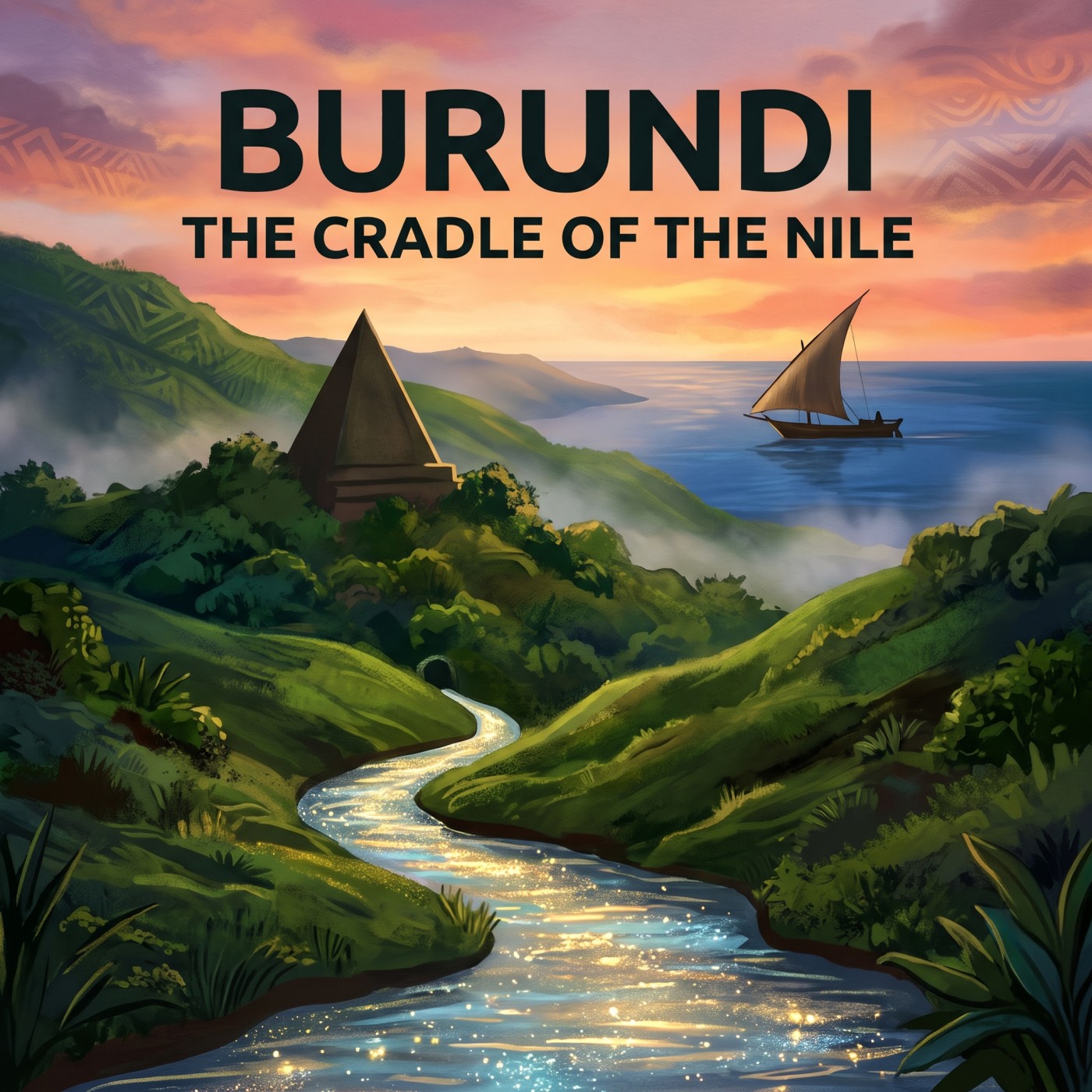 Burundi: The Cradle of the Nile's Southernmost Source on the Shores of Lake Tanganyika 29.10.2026 5mBurundi: The Cradle of the Nile’s Southernmost Source on the Shores of Lake Tanganyika Nestled in the heart of Africa, a land of verdant hills and dramatic landscapes, lies Burundi – a nation often overlooked, yet holding a geographical secret of immense global significance: it is home to the southernmost source of the mighty River Nile. Far from the popular imaginations of ancient Egyptian pharaohs and bustling Cairo, the story of the Nile begins here, amidst the tranquil beauty and often turbulent history of this small East African nation. Its shores are kissed by the majestic Lake Tanganyika, the world’s second-deepest freshwater lake, adding another layer of wonder to this captivating region. For centuries, the quest to pinpoint the definitive source of the Nile captivated explorers, cartographers, and adventurers. From ancient Greek historians like Herodotus to 19th-century British explorers like John Hanning Speke and Henry Morton Stanley, the ‘source of the Nile’ remained one of geographical discovery’s most elusive prizes. While Speke initially credited Lake Victoria as the primary source of the White Nile, subsequent expeditions and more precise measurements have unveiled a more intricate truth. The true southernmost tributary of the Nile, the Ruvyironza, a small stream that flows into the Rurubu River, then into the Kagera River, and finally into Lake Victoria, actually originates deep within Burundi’s highlands. This small, unassuming stream, often marked by a pyramid monument near Rutovu, symbolizes the very genesis of a river that sustains millions across eleven countries and journeys over 6,650 kilometers to the Mediterranean Sea. Imagine standing at this monument, a simple yet profound marker of one of the world’s most significant hydrological points. The air is cool, the surrounding hills are lush with tea plantations and traditional homesteads, and the silence is broken only by the chirping of birds or the distant sounds of rural life. It’s a place that humbles, reminding us of the interconnectedness of our planet and the grand scales of natural phenomena. This geographical fact imbues Burundi with a unique claim to fame, making it a pivotal point in the global hydrological network. But Burundi’s allure extends beyond this singular geographical marvel. Its western border is defined by the shimmering expanse of Lake Tanganyika, a geological wonder itself. Formed within the Great Rift Valley, this ancient lake is an ecological hotspot, teeming with unique biodiversity. It is home to an astonishing array of endemic cichlid fish species, making it a living laboratory for evolutionary biologists. Its crystal-clear waters, often stretching to the horizon, offer breathtaking vistas and a sense of timelessness. The local communities along its shores rely on its bounty for sustenance and livelihood, their lives intricately woven with the lake’s rhythms. The juxtaposition of being the Nile’s cradle and bordering Lake Tanganyika presents a powerful narrative. It highlights Burundi as a land of vital water resources, a crucial element for life and development. However, like many nations in the region, Burundi has faced significant challenges. Its history is marked by periods of political instability and conflict, impacting its ability to fully capitalize on its natural endowments and tourism potential. Yet, the resilience of its people, their vibrant culture, and the sheer beauty of its landscapes remain undimmed. Understanding Burundi means appreciating its complex tapestry: its role in the global ecosystem as the source of the Nile, its rich biodiversity within Lake Tanganyika, and the enduring spirit of its people. It’s an invitation to look beyond headlines and discover a nation of profound natural beauty and hidden depths. The journey to the Nile’s source in Burundi is not just a geographical quest; it’s a journey into the heart of Africa, a discovery of a land that truly holds the origins of one of earth’s greatest rivers.
-
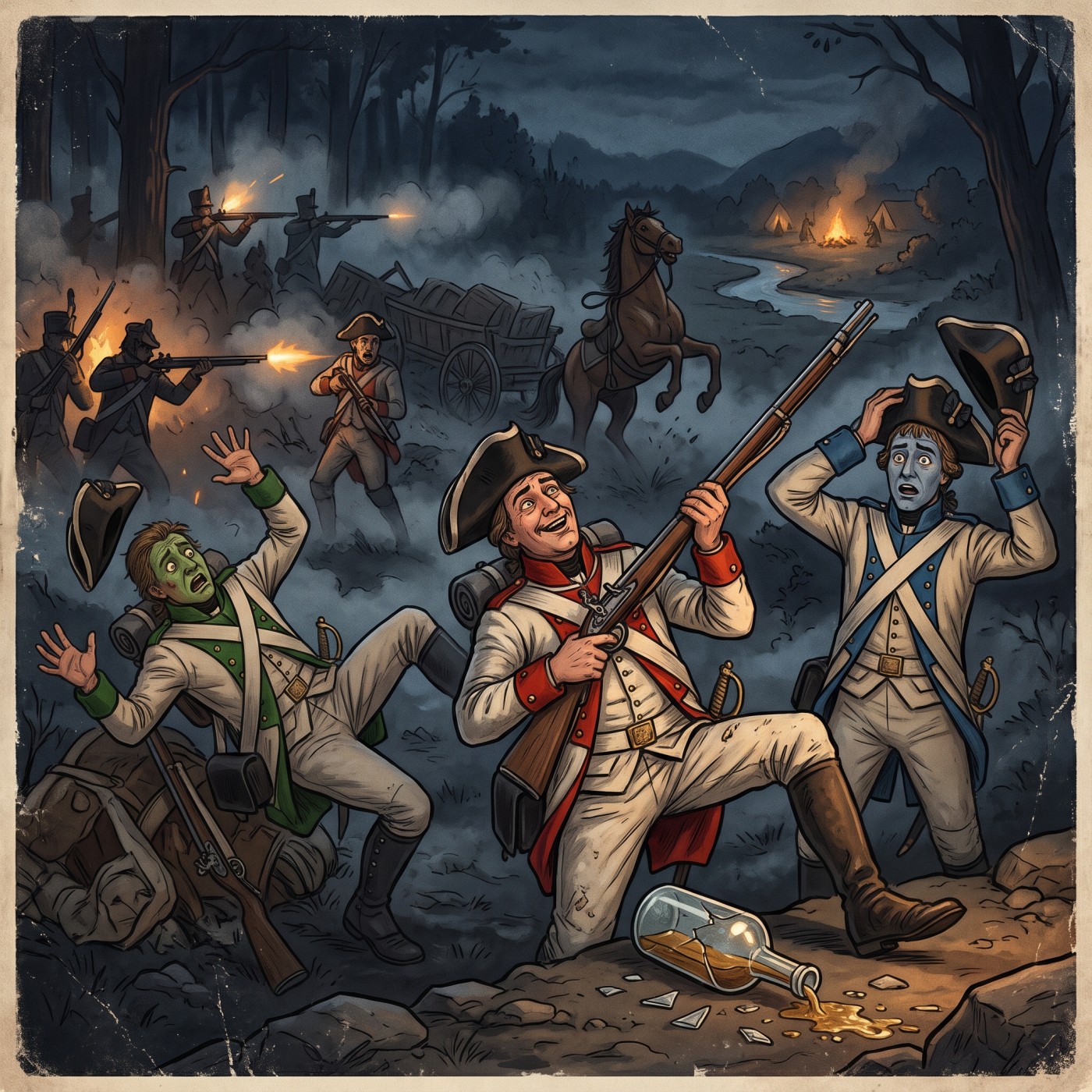 The Debacle at Karansebes: History's Most Embarrassing Self-Inflicted Defeat 28.10.2026 8mThe Debacle at Karansebes: History’s Most Embarrassing Self-Inflicted Defeat The annals of military history are replete with tales of heroism, strategic brilliance, and the brutal realities of warfare. Yet, nestled amidst these sagas of valor and cunning, there exists an extraordinary incident that defies conventional understanding, a story so absurd it almost seems like a dark comedy. This is the tale of the Battle of Karansebes in 1788, an event where the Austrian army, without firing a single shot at its enemy, managed to inflict a catastrophic defeat upon itself. The year is 1788. The Ottoman Empire and the Habsburg Monarchy are locked in yet another protracted conflict. Emperor Joseph II, a man of enlightenment ideals but perhaps less so of military foresight, was leading his forces against the Turks. The Austrian army, a multinational force comprised of various ethnicities within the empire, was encamped near the town of Karansebes (modern-day Caransebeș, Romania) along the Timiș River. It was a hot, tense night, and patrols were out. The stage for this monumental blunder was set by a combination of factors: alcohol, darkness, linguistic barriers, and the ever-present fog of war. A vanguard of Austrian hussars, light cavalry renowned for their dash and bravado, crossed the river to scout for Ottoman forces. They found no Turks, but what they did find was a group of Romani settlers, who, for a small fee, offered them schnapps. Now, schnapps, a potent alcoholic beverage, is perhaps not the ideal pre-engagement fuel for cavalry scouts. But the hussars, being hussars, indulged. Soon after, another contingent of Austrian infantry, observing the prolonged absence of the cavalry, crossed the river themselves. They stumbled upon the hussars, who by this point were rather inebriated and jovially sharing their schnapps. The infantry, seeing the cavalry enjoying themselves with alcohol that hadn’t been shared, demanded their share. A heated argument ensued, escalated by the consumption of alcohol and the underlying tensions of a diverse army in a foreign land. Soon, shouts turned to shoves, and then, a shot rang out. Who fired the first shot remains a mystery, lost to the mists of history and the collective intoxication of the participants. But that single shot was the spark that ignited a chain reaction of unimaginable chaos. In the darkness, compounded by the schnapps-induced haze, soldiers began to mistake their own comrades for Ottoman Turks. The cry of ‘Turci! Turci!’ (Turks! Turks!) ripped through the night. This was a critical moment. Many of the soldiers in the Austrian army did not speak German, the official language of command. Different units, speaking different languages – German, Serbian, Croatian, Hungarian, Romanian – interpreted the shouts differently. Some believed they were being attacked, others thought it was an order to engage, still others were simply bewildered. Panic, a most formidable enemy, took hold. The Austrian commanders, unable to ascertain the true situation, issued orders that were misunderstood, or worse, misinterpreted as confirmation of an Ottoman attack. An Austrian artillery officer, hearing the commotion and cries of ‘Turci!’, ordered his cannons to fire on what he perceived to be approaching enemy cavalry. In reality, he was shelling his own retreating infantry and cavalry, adding to the carnage and confusion. The sound of artillery, muskets, and the screams of men amplified the terror, creating a feedback loop of fear and self-destruction. Throughout the night, soldiers fired blindly into the darkness, often at the muzzle flashes of their own comrades. Units collided, friendly fire incidents became rampant, and the disciplined structure of the army dissolved into a terrified mob. Emperor Joseph II himself was caught up in the melee. While attempting to restore order, his horse was spooked and he was thrown, sustaining injuries that would later contribute to his death. His imperial carriage was overturned, and he narrowly escaped capture by his own panicked troops, a testament to the sheer pandemonium. By morning, when the sun finally rose to reveal the horror, the true scale of the disaster became apparent. The ‘Battle’ of Karansebes resulted in an estimated 10,000 casualties for the Austrian army – dead, wounded, or missing. All without a single Ottoman soldier being present. The Turks, arriving two days later, found a scene of utter devastation and confusion, littered with Austrian bodies and equipment. They effortlessly captured Karansebes, wondering at the strange, self-destructive nature of their enemy. The Battle of Karansebes stands as a bizarre and tragic testament to the dangers of miscommunication, the intoxicating power of alcohol, and the inherent chaos of warfare, even when the enemy is nowhere to be found. It remains a stark reminder that sometimes, an army’s greatest foe can be itself, particularly when fueled by schnapps and shrouded in the darkest of nights. Questions for Reflection: What role did alcohol play in escalating the initial argument between the hussars and infantry? How did linguistic diversity within the Austrian army contribute to the widespread panic? What specific actions by Austrian officers exacerbated the chaos and friendly fire? How did the darkness of night become a significant factor in the unfolding disaster? Beyond alcohol and darkness, what underlying tensions or conditions might have made the Austrian army particularly susceptible to such a self-inflicted defeat? What does the incident at Karansebes reveal about the nature of panic in large groups? Could a modern army, with advanced communication technology, fall victim to a similar scenario? Why or why not? What leadership failures can be identified during the initial moments of the panic? How did the Ottoman forces react upon discovering the aftermath of Karansebes, and what does this tell us about the perceived effectiveness of the Austrian army? What lessons can military strategists and leaders draw from the Battle of Karansebes regarding training, discipline, and communication?
-
 The Emperor of the United States: A Crown of Whimsy and a City's Love 27.10.2026 6mThe Emperor of the United States: A Crown of Whimsy and a City’s Love In the bustling, gold-fueled San Francisco of the mid-19th century, a city brimming with ambition, innovation, and no small amount of eccentricity, one figure transcended mere oddity to become a beloved, if self-proclaimed, monarch. This was Joshua Abraham Norton, a man whose remarkable journey from failed businessman to the “Emperor of the United States and Protector of Mexico” is a testament to the power of collective imagination and the unique spirit of a burgeoning city. Born in England in 1818, Norton emigrated to South Africa with his parents as a child. He arrived in San Francisco in 1849, armed with a modest fortune and an entrepreneurial spirit, hoping to capitalize on the California Gold Rush. He quickly made a name for himself as a shrewd, if sometimes impulsive, businessman, dabbling in real estate and commodities. By the early 1850s, he was a respected member of the financial community, albeit one prone to high-stakes gambles. His fortunes took a dramatic turn in 1857 when he attempted to corner the rice market. A glut of Peruvian rice arrived unexpectedly, driving prices down and bankrupting Norton. The ensuing legal battles drained his remaining resources and, some believe, his sanity. It was two years later, on September 17, 1859, that Joshua Norton, having lost everything but his dignity (and perhaps a touch of his mind), walked into the offices of the San Francisco Bulletin and issued a proclamation that would forever etch his name into the annals of American folklore. “At the peremptory request of a large majority of the citizens of these United States,” he declared, “I, Joshua Norton, presently of San Francisco, California, declare and proclaim myself Emperor of these United States.” A few years later, he added “Protector of Mexico” to his growing list of titles, apparently to ensure Latin American stability. What happened next is truly extraordinary. Instead of being dismissed as a lunatic, Norton was embraced. San Franciscans, known for their independent streak and their appreciation for a good story, took to their self-appointed Emperor with surprising warmth. He eschewed the trappings of a traditional monarch, instead adopting a distinctive blue uniform with gold epaulets, a feathered beaver hat, and a cane or umbrella. He would patrol the streets of his “empire” daily, often accompanied by his two loyal stray dogs, Lazarus and Bummer, who themselves became local celebrities. Emperor Norton’s proclamations, often published in local newspapers (who, for a small fee, were happy to oblige their monarch), ranged from the sublime to the utterly absurd. He demanded the dissolution of the United States Congress, arguing that its divisions were tearing the nation apart. He ordered the construction of a bridge-tunnel connecting San Francisco to Oakland, a visionary idea decades ahead of its time. He even issued his own currency, scrip notes that were accepted by many local businesses, often out of respect and affection for the Emperor. Businesses proudly displayed signs proclaiming themselves ‘By Appointment to His Imperial Majesty, Emperor Norton I.’ Restaurants offered him free meals, and theaters reserved a special box for his attendance. When a zealous police officer once dared to arrest Norton for disturbing the peace, the public outcry was immediate and fierce. The chief of police, embarrassed, ordered Norton’s immediate release and issued an apology, instructing his officers to treat the Emperor with the utmost respect. From that day forward, San Francisco’s police saluted him when he passed. Emperor Norton served as a living embodiment of San Francisco’s unique character – its irreverence, its generosity, and its willingness to embrace the unconventional. He offered a touch of theatricality and escapism in a city that was rapidly modernizing. He was a harmless, beloved figure who brought smiles to faces and inspired a sense of shared community. He became a symbol of the city’s independent spirit, a reminder that one didn’t always have to conform. His reign lasted for 21 years. On January 8, 1880, Emperor Norton collapsed on a San Francisco streetcar on his way to a lecture at the California Academy of Sciences. He died shortly thereafter, a pauper by conventional standards, but a monarch in the hearts of San Franciscans. His funeral was a monumental event. Thousands lined the streets, and his casket was carried by members of the Pacific Club, a prestigious organization whose members he had once counted among his peers. The San Francisco Chronicle’s obituary read simply, “Le Roi est Mort” (The King is Dead). Joshua Norton’s legacy endures. He is celebrated in books, plays, and even a musical. His image appears on souvenirs, and numerous historical markers commemorate his presence. The bridge-tunnel he envisioned eventually became a reality, albeit long after his death. He remains a beloved eccentric, a reminder that sometimes, the greatest titles are those bestowed not by birth or conquest, but by the affection and imagination of a city that dared to dream along with him.
-
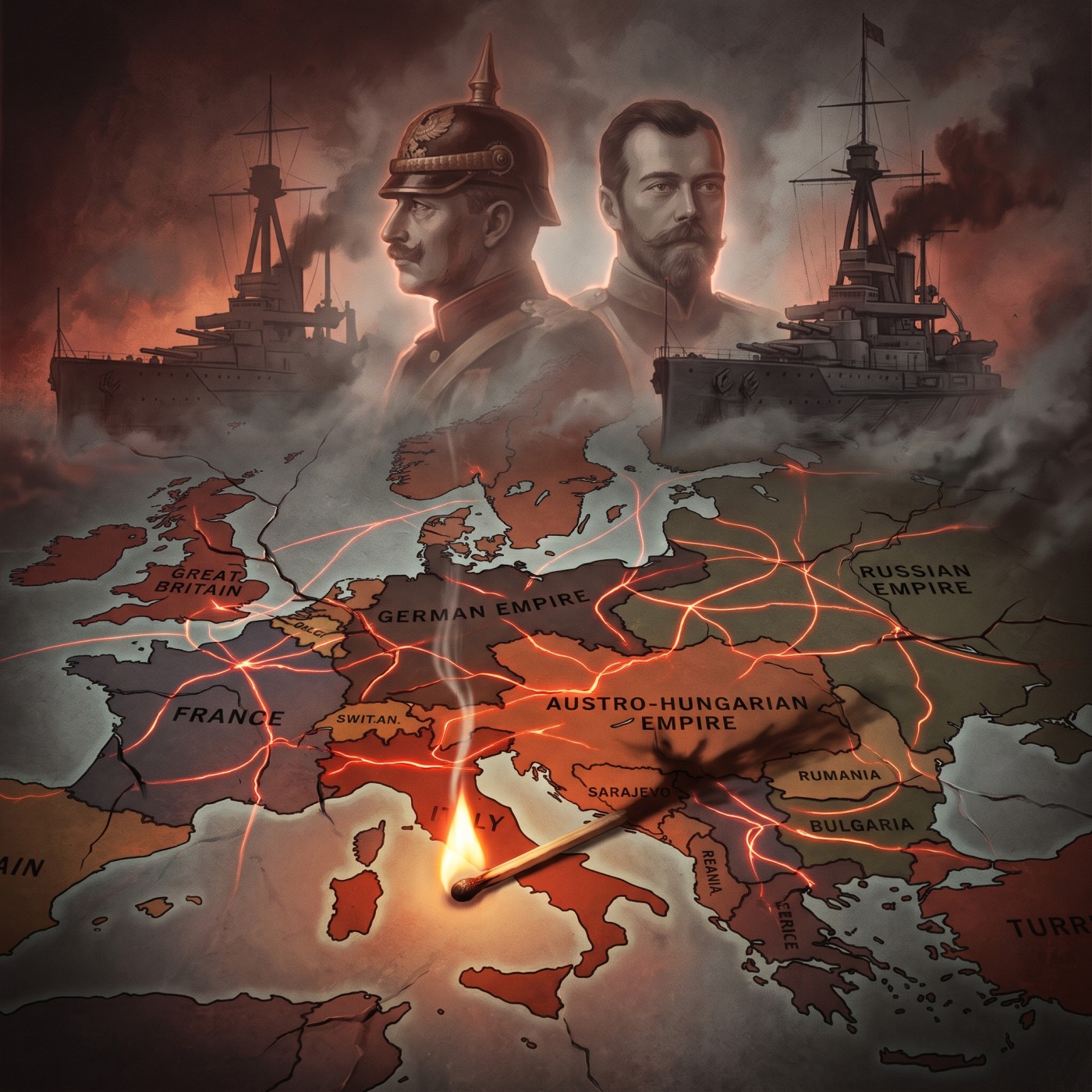 The Tinderbox of Europe: Unraveling the Causes and Lessons of World War I 26.10.2026 6mThe Tinderbox of Europe: Unraveling the Causes and Lessons of World War I The assassination of Archduke Franz Ferdinand on June 28, 1914, in Sarajevo is often cited as the spark that ignited World War I. While undeniably a critical trigger, it was merely the match dropped into a tinderbox meticulously assembled over decades by geopolitical tensions, shifting alliances, fervent nationalism, and an arms race of unprecedented scale. To truly understand ‘Wie kam es zum 1. Weltkrieg’ – how World War I came about – we must delve into the complex tapestry of late 19th and early 20th-century European power dynamics. At the heart of the impending catastrophe was a deeply intertwined system of alliances. Germany, a newly unified and rapidly industrializing power, felt encircled by the Triple Entente of France, Britain, and Russia. This ‘Schlieffen Plan’ mentality, born from the fear of a two-front war, dictated Germany’s aggressive military strategy. France, still smarting from its defeat in the Franco-Prussian War of 1870-71 and the loss of Alsace-Lorraine, harbored a potent desire for ‘revanche’ (revenge). Russia, a vast empire, saw itself as the protector of Slavic peoples in the Balkans, a region simmering with nationalist aspirations and ethnic tensions, particularly between Serbia and the Austro-Hungarian Empire. Britain, with its vast colonial empire, sought to maintain its naval supremacy and the balance of power on the continent, viewing German expansion as a direct threat. Imperialism also played a significant role. The scramble for colonies in Africa and Asia fueled rivalries, particularly between Britain, France, and Germany, as each sought to expand its economic and strategic influence. These colonial disputes, though often resolved diplomatically, added layers of mistrust and competition to an already volatile international environment. The ‘place in the sun’ that Kaiser Wilhelm II famously demanded for Germany underscored this ambition. Nationalism, a powerful and often destructive force, surged across Europe. In the Balkans, Serbian nationalism, aiming for a ‘Greater Serbia,’ directly challenged the authority of the Austro-Hungarian Empire, a multi-ethnic state struggling to maintain cohesion. The Black Hand, a secret Serbian nationalist society, orchestrated the assassination in Sarajevo, believing it would contribute to the liberation of Serbs under Austro-Hungarian rule. This act provided Austria-Hungary with what it saw as a legitimate reason to crush Serbian independence, and its ally Germany offered a ‘blank cheque’ of unconditional support. Compounding these factors was a relentless arms race. Technological advancements in weaponry – dreadnoughts, machine guns, artillery – made war seem both inevitable and, paradoxically, quick and decisive. Military leaders, often with significant political influence, developed elaborate mobilization plans that, once set in motion, were incredibly difficult to halt. The ‘cult of the offensive’ permeated military thinking, with the belief that a swift, aggressive attack was the surest path to victory. This led to a situation where rapid mobilization was seen as a vital first step, locking nations into a path towards conflict. When Archduke Franz Ferdinand was assassinated, Austria-Hungary issued an ultimatum to Serbia, deliberately designed to be unacceptable. Serbia’s partial rejection led to Austria-Hungary’s declaration of war. This activated the intricate web of alliances: Russia mobilized to support Serbia, Germany declared war on Russia (and subsequently France, in accordance with the Schlieffen Plan), and Britain, upholding its treaty obligations to Belgium (which Germany invaded to bypass French defenses), declared war on Germany. Within weeks, the entire continent was plunged into a cataclysm. What do we learn from this devastating period? ‘Was lernen wir daraus?’ The most profound lesson is the danger of unchecked nationalism and the destructive potential of an inflexible alliance system. The domino effect of declarations of war highlights how a localized conflict can rapidly escalate when major powers are bound by rigid commitments and pre-determined military strategies. It teaches us about the perils of miscalculation, the failure of diplomacy, and the ease with which fear and ambition can override rational decision-making. Furthermore, the Great War underscores the importance of effective international communication and institutions for conflict resolution. The absence of a strong mediating body allowed tensions to fester and escalate. It also serves as a stark reminder of the human cost of war, discrediting the romanticized notions of military glory that preceded it. World War I shattered empires, redrew maps, and fundamentally altered the course of the 20th century. Its legacy continues to influence international relations, serving as a cautionary tale about the fragile nature of peace and the imperative for proactive, empathetic engagement in global affairs to prevent history from repeating its most tragic mistakes.
-
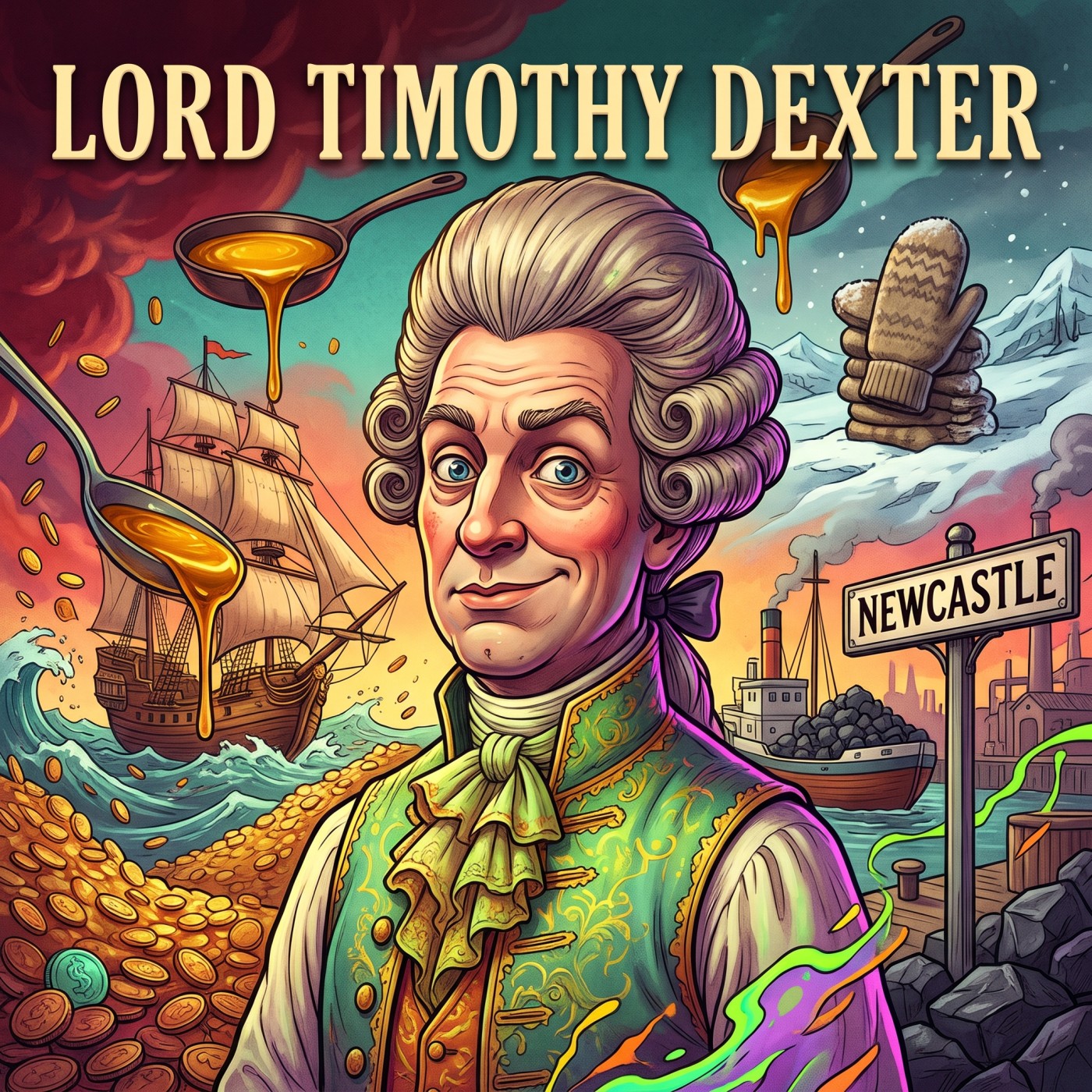 Lord Timothy Dexter’s Absurd Fortune: The Eccentric Merchant Who Mastered Accidental Riches 25.10.2026 7mLord Timothy Dexter’s Absurd Fortune: The Eccentric Merchant Who Mastered Accidental Riches In the annals of history, there are figures whose lives defy logic, whose successes seem born not of shrewd calculation but of a universe playing a cosmic joke. One such individual was Lord Timothy Dexter, an 18th-century American merchant whose career was a baffling testament to serendipity, defiance of conventional wisdom, and perhaps, a touch of divine madness. Dexter, born in Malden, Massachusetts, in 1747, was not born into wealth or privilege. He was, by all accounts, a man of humble beginnings and limited formal education, yet he harbored an insatiable desire for recognition and status. This desire, coupled with an almost preternatural ability to make the wrong decisions that somehow turned out spectacularly right, would define his bizarre journey to immense fortune. Dexter’s initial foray into the merchant world was far from auspicious. His early business ventures were marked by what any sensible person would deem catastrophic errors. He famously bought a large quantity of Continental currency during the American Revolutionary War, a currency that was rapidly depreciating and eventually became almost worthless. While others saw financial ruin, Dexter, with an uncanny stroke of luck, held onto his paper until a post-war government initiative allowed for its redemption at a fraction of its face value, but still a significant return for what was expected to be nothing. This early win, a mere fluke, likely emboldened him, cementing his belief in his own peculiar genius. But it was his subsequent, and even more outlandish, trading decisions that cemented his legendary status. Imagine, if you will, a merchant in the late 18th century, with ships at his disposal, deciding to export… warming pans. Not just a few, but thousands of warming pans – those long-handled contraptions used to heat beds in cold climates – to the tropical West Indies. A climate where the very idea of a warming pan was an absurd anachronism. Every seasoned merchant, every sane advisor, would have scoffed, perhaps even committed him to an asylum. Yet, Dexter, in his inimitable style, went ahead. The conventional narrative suggests that his captains, faced with unsellable inventory, ingeniously found a market for the warming pans by selling them as ladles to the burgeoning molasses industry. They were perfect for scooping the thick syrup, and Dexter, unknowingly, had cornered the market on industrial ladles. His investment, predicted to be a colossal failure, yielded a handsome profit. His next act of commercial wizardry involved shipping coal to Newcastle, a phrase synonymous with a pointless endeavor, given Newcastle, England, was a major coal-producing region. True to form, Dexter did precisely that. His rivals, witnessing this blatant act of commercial folly, must have reveled in his impending doom. However, a sudden coal miners’ strike in Newcastle created an unforeseen scarcity, driving prices through the roof. Dexter’s seemingly misguided cargo arrived at the opportune moment, selling for an exorbitant sum. Again, what should have been a ruinous enterprise turned into a goldmine. The absurdity continued. He purchased thousands of mittens and sent them to Siberia, a logical destination perhaps, but only if one was planning a winter expedition. Yet, legend has it that these mittens found a lucrative market with Russian fur traders who used them as protective hand coverings in the harsh Siberian wilderness, not necessarily for warmth in their own homes, but as a practical tool for their trade. Each misstep, each act of commercial defiance, miraculously transformed into a triumphant success. Timothy Dexter’s life was not just about his accidental wealth; it was also about his outrageous personality and his relentless pursuit of notoriety. After amassing his fortune, he relocated to Newburyport, Massachusetts, and styled himself ‘Lord Timothy Dexter.’ He adorned his mansion with twenty-foot-tall minarets and statues of famous Americans and even himself, often alongside George Washington and Thomas Jefferson. His eccentricities knew no bounds. He published a book, ‘A Pickle for the Knowing Ones,’ a chaotic masterpiece devoid of punctuation and replete with idiosyncratic spelling. When critics complained, he famously added a page of punctuation marks at the end of the second edition, instructing readers to ‘pepper and salt it as they please.’ He even staged his own mock funeral to see how people would react, severely beating his wife for not crying enough during the procession. His vanity, his lack of formal education, and his sheer luck made him an object of both ridicule and fascination. Lord Timothy Dexter serves as a captivating anomaly in economic history, a man who consistently made choices that should have led to financial ruin, yet somehow, through sheer, dumb luck or perhaps an unconscious brilliance, stumbled his way to an immense fortune. His story challenges the very notions of skill, foresight, and conventional wisdom in business. Was he a lucky fool, a deluded savant, or a man whose utter disregard for ‘the knowing ones’ somehow tapped into a deeper, chaotic market dynamic? Whatever the answer, Lord Timothy Dexter remains a testament to the unpredictable nature of fortune, a ‘pickle’ for those who believe they can always predict the market.
-
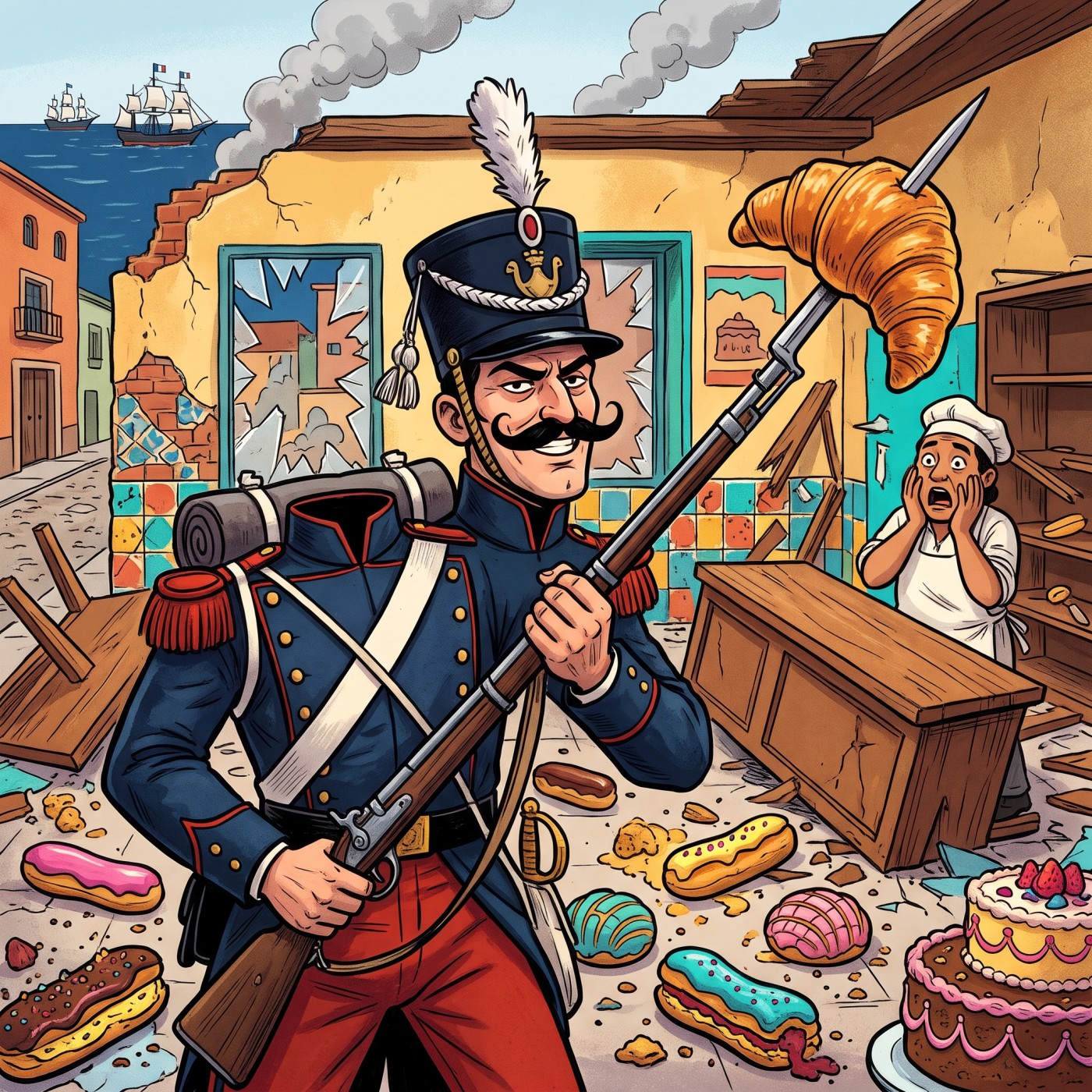 The Sweetest Revenge: France's Pastry War (1838) 24.10.2026 8mThe Sweetest Revenge: France’s Pastry War (1838) Imagine a world where a baker’s ruined shop could spark an international conflict, where the crunch of broken glass led to the booming of cannons. This isn’t a whimsical tale from a children’s book; this is the astonishing, and frankly, delicious, true story of the Pastry War of 1838, a conflict that saw France invade Mexico over a pastry chef’s vandalized bakery. The year is 1838. Mexico, having only recently gained independence from Spain, was a young nation grappling with internal instability and a chaotic political landscape. Revolts and coups were frequent, and with them came a breakdown of law and order. One unfortunate casualty of this tumult was a French pastry chef named Monsieur Remontel, who owned a beloved bakery in Tacubaya, a district of Mexico City. During a period of widespread unrest and looting, some rowdy Mexican soldiers, in a moment of utter disregard for delicate éclairs and crispy croissants, ransacked Remontel’s establishment. They didn’t just smash a window; they went through the shop like a hurricane of hungry, destructive soldiers, leaving behind a trail of shattered crockery, demolished display cases, and, presumably, a great many crumbs. Now, you might think, ‘Bad luck, Monsieur Remontel. File an insurance claim.’ But this was a different era, and Remontel was a Frenchman in a foreign land. He appealed to his government, seeking compensation for the considerable damage to his livelihood. The French government, under King Louis-Philippe I, saw an opportunity. They had numerous complaints from French citizens residing in Mexico who had suffered losses due to the ongoing instability. These claims, collectively known as ‘French claims for damages,’ had largely gone unaddressed by the Mexican government, which was perpetually short on funds and preoccupied with its own internal struggles. The specific demand for Monsieur Remontel’s ruined bakery, among other grievances, escalated quickly. France presented Mexico with an ultimatum: pay 600,000 pesos in compensation, or face the consequences. To put this sum into perspective, 600,000 pesos was an astronomical amount for the fledgling Mexican nation. It was roughly equivalent to a substantial portion of Mexico’s annual revenue at the time. Mexico, perhaps understandably, refused to pay what they considered an extortionate demand, especially one stemming from such a seemingly trivial incident. Enter the French Navy. King Louis-Philippe, eager to assert French power and protect French interests abroad, dispatched a fleet under the command of Rear Admiral Charles Baudin. In October 1838, Baudin’s squadron arrived off the coast of Veracruz, Mexico’s principal port. The stage was set for a conflict that would forever be known as the ‘Pastry War,’ or the ‘Guerra de los Pasteles’ in Spanish. The French initiated a blockade of Mexican ports, severely disrupting trade and crippling the Mexican economy. When Mexico continued to resist, the French took more direct action. On November 27, 1838, the French bombarded the fortress of San Juan de Ulúa, which guarded the harbor of Veracruz. After a fierce battle, the fortress fell, and the city of Veracruz was occupied by French forces. This was a significant blow to Mexican pride and sovereignty. The conflict wasn’t just a naval affair. Mexican forces, led by figures such as General Antonio López de Santa Anna (a name that would become infamous in Mexican history, particularly during the Texas Revolution and the Mexican-American War), attempted to repel the French. Santa Anna, despite having lost a leg previously, personally led troops into battle against the French, demonstrating a characteristic blend of bravery and recklessness. The Pastry War drew international attention. Great Britain, ever keen to maintain a balance of power in the region and protect its own commercial interests, intervened diplomatically. Their mediation efforts, led by Commodore Richard Pakenham, eventually brought the conflict to an end. In March 1839, a peace treaty was signed, with Mexico agreeing to pay the demanded 600,000 pesos. The French lifted their blockade and withdrew their forces. The war, which had lasted a mere four months, had cost Mexico dearly, both in terms of financial strain and human lives. What are the lasting lessons from this bizarre conflict? It highlights the fragility of sovereignty in a post-colonial world, the often-disproportionate use of force by powerful nations, and the strange ways in which seemingly minor incidents can escalate into major international crises. It also underscores the economic vulnerability of nations and the power dynamics that shape global relations. And perhaps, it serves as a quirky reminder that sometimes, even a ruined pastry shop can become a symbol of national honor and a catalyst for war. So, the next time you enjoy a delicate croissant or a rich chocolate éclair, spare a thought for Monsieur Remontel and the audacious French invasion that followed the destruction of his bakery. It’s a sweet, albeit violent, chapter in the annals of history. Questions for Reflection: How did Mexico’s internal instability contribute to the escalation of the Pastry War? What other factors might have motivated France to take such aggressive action over a relatively minor incident? How did the Pastry War impact Mexico’s economy and its standing on the international stage? What role did Great Britain play in resolving the conflict, and what were their motivations? Can you think of any modern parallels where a seemingly minor dispute escalates into a larger conflict due to underlying political or economic tensions? How might the outcome of the Pastry War have differed if Mexico had a more stable government and a stronger military? What does the Pastry War reveal about the nature of international relations and diplomacy in the 19th century? Was France’s demand for 600,000 pesos justified, considering the initial incident? Why or why not? How did the Pastry War contribute to the legacy of figures like Antonio López de Santa Anna? What historical precedents or patterns can we observe from the Pastry War that are still relevant today?
-
 The Tanganyikan Laughter Epidemic (1962): A Curious Case of Contagious Hilarity 23.10.2026 6mThe Tanganyikan Laughter Epidemic (1962): A Curious Case of Contagious Hilarity Imagine a classroom, bustling with the usual sounds of learning – chalk on slate, hushed whispers, a teacher’s gentle instruction. Now imagine that sound dissolving into something else entirely: uncontrollable, infectious laughter. Not joyful mirth, but a relentless, almost painful paroxysm that refused to abate. This isn’t a scene from a slapstick comedy; it’s a chilling glimpse into the Tanganyikan Laughter Epidemic of 1962, a bizarre and profoundly unsettling event that closed schools, baffled medical professionals, and remains one of history’s most perplexing cases of mass psychogenic illness. The year was 1962, and Tanganyika (now part of Tanzania) had just gained its independence. A sense of optimism permeated the air, but in the small mission-run boarding school for girls in Kashasha, something far stranger was brewing. It began on January 30th with three girls, their laughter suddenly erupting without apparent cause. What started as a chuckle quickly escalated into convulsive, unstoppable guffaws. Soon, other girls in the school began to ‘catch’ the laughter. It wasn’t just a fleeting giggle; these were episodes lasting from a few minutes to several hours, sometimes accompanied by anxiety, restlessness, and even fainting spells. The laughter was not born of joy; it was a symptom, a torment. The school, overwhelmed and unable to contain the strange outbreak, was forced to close on March 18th, sending 159 affected students back to their villages. But the ‘epidemic’ didn’t dissipate with the dispersion of the students; it merely spread. Like ripples in a pond, the laughter travelled to Nshamba, a neighboring village, where another 217 people, including adults, became afflicted. Whole communities found themselves caught in the grip of this inexplicable mirth. Men, women, and children, previously healthy, would suddenly succumb to bouts of intense, uncontrollable laughter, disrupting daily life and rendering normal activities impossible. Shops closed, fields went untended, and social gatherings became chaotic scenes of involuntary hilarity. The authorities, bewildered by the situation, attempted various interventions. Medical doctors were consulted, but physical examinations revealed no underlying organic cause. There was no virus, no bacteria, no toxin that could account for the widespread and peculiar symptoms. The symptoms themselves varied: some experienced intense crying spells after the laughter subsided, others reported rashes, dizziness, and respiratory problems. The common thread, however, was the relentless, uncontrollable laughter. The sheer scale and persistence of the phenomenon led to the closure of multiple schools for months at a time, impacting the education of thousands of children. The Kashasha school, the epicenter, was eventually reopened, only to be closed again twice more due to recurrences of the epidemic. So, what was the cause of this extraordinary phenomenon? While the exact trigger remains debated, the most widely accepted explanation is mass psychogenic illness (MPI), also known as mass hysteria. MPI occurs when a group of people experiences similar physical symptoms, often without a clear physical cause, believed to be due to psychological factors, stress, and anxiety. The newly independent Tanganyika was undergoing significant social and political changes. For young girls in a demanding mission school, the pressures of academic performance, cultural shifts, and the general anxieties of a new nation could have created a fertile ground for such an outbreak. Laughter, in this context, might have been a stress response, a non-verbal expression of underlying tension. Several factors likely contributed to the rapid spread. The highly structured environment of a boarding school, coupled with the close proximity of students, would have facilitated contagion. Once a few individuals began exhibiting symptoms, the psychological ‘priming’ effect could have taken over, leading others to unconsciously mimic the behavior, especially if they were already susceptible due to stress or suggestibility. The lack of a clear medical explanation would have further fueled anxiety and uncertainty, perpetuating the cycle. The Tanganyikan Laughter Epidemic eventually subsided, gradually fading away by late 1963. While it left no lasting physical damage, its legacy as a medical curiosity and a testament to the powerful, often mysterious, connection between mind and body endures. It serves as a stark reminder that the human psyche can manifest distress in incredibly diverse and unexpected ways, sometimes even in the form of a contagious, uncontrollable laugh that shutters entire communities. The story of Kashasha is not just a historical oddity; it’s a profound case study in the complex interplay of social dynamics, psychological stress, and the enigmatic nature of collective human experience.
-
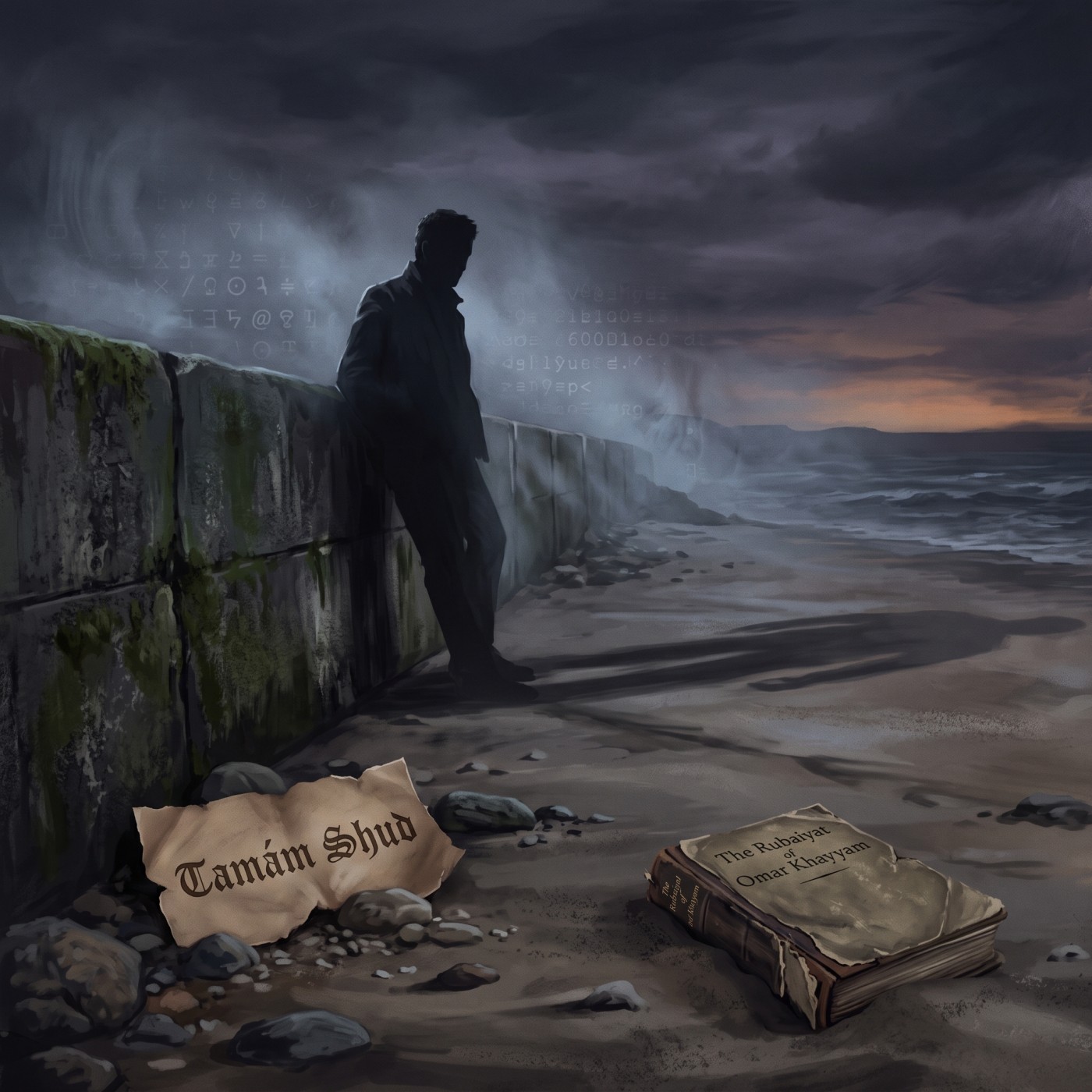 The Somerton Man Mystery: A Cold Case That Chills to the Bone 22.10.2026 6mThe Somerton Man Mystery: A Cold Case That Chills to the Bone Picture this: a serene December morning on an Australian beach, the gentle lapping of waves, and the rising sun casting long shadows. But this picturesque scene is about to be shattered by a discovery that would launch one of the most enduring and perplexing cold cases in history. On December 1, 1948, on Somerton Beach, South Australia, an impeccably dressed man was found deceased, slumped against a seawall. He seemed to be merely sleeping, but his stillness was unnerving. He was gone. From the outset, the Somerton Man, as he came to be known, was a riddle wrapped in an enigma. There were no obvious signs of struggle or violence. His pockets contained an unused train ticket from Adelaide to Henley Beach, a bus ticket, a comb, a packet of Army Club cigarettes (a brand he didn’t smoke, as a half-smoked packet of more expensive Kensitas cigarettes was also found), a box of matches, and two chewing gum packets. All fairly mundane, right? Wrong. Every identifying label, from his clothing to his possessions, had been meticulously removed. His wallet was missing, and his dental records yielded no matches. He had no identification. It was as if he had been scrubbed from existence, a ghost in human form. But the mystery deepened, layer by tantalizing layer. An autopsy revealed no clear cause of death, suggesting poisoning, though no trace of a common toxin was found. His spleen was enlarged, and there was congestion in his brain and liver, consistent with poisoning, yet the specific agent remained elusive. The pathology report simply deepened the quagmire of uncertainty. Then came the breakthrough, or so it seemed. Weeks later, during a more thorough examination of the man’s clothes, a tiny, rolled-up piece of paper was discovered sewn into a hidden fob pocket in his trousers. On it, two words were printed: ‘Tamám Shud’. This phrase, meaning ‘finished’ or ‘ended’ in Persian, was traced to the final page of a collection of poems known as ‘The Rubaiyat of Omar Khayyam’. This discovery ignited a frantic search. Eventually, a copy of the ‘Rubaiyat’ was found in the back seat of an unlocked car parked near Somerton Beach around the time of the man’s death. The book was missing the very page from which the ‘Tamám Shud’ scrap had been torn. What’s more, faint indentations on the book’s back cover revealed five lines of seemingly coded text, alongside a phone number. This wasn’t just a dead man on a beach anymore; this was something out of a spy novel. The phone number led to a woman named Jessica Thomson (later known as Jo Thomson), who lived in Glenelg, not far from where the body was found. When shown a plaster bust of the deceased, she reportedly reacted with a visible shock, almost fainting, but claimed not to know the man. However, she admitted to owning a copy of the ‘Rubaiyat’ which she had given to a man named Alfred Boxall during World War II. Boxall, however, was very much alive and still possessed his copy of the ‘Rubaiyat’, complete with its ‘Tamám Shud’ page intact. The plot thickened, creating a baffling discrepancy. Over the decades, theories abounded. Was he a Cold War spy, his mission completed or compromised? Was it a lovers’ pact gone wrong, or a carefully orchestrated murder? The coded message has never been definitively deciphered, despite numerous attempts by cryptographers. Each proposed solution only seemed to lead to more questions, like echoes in a vast, empty hall. Recent developments have offered a glimmer of hope. In 2022, Professor Derek Abbott, an electrical engineering professor at the University of Adelaide, a long-time investigator of the case, announced that DNA analysis of hair found on the Somerton Man’s bust had identified him as Carl ‘Charles’ Webb. This identification, while significant, has been met with caution by official authorities, who are yet to formally confirm it. If confirmed, this would be a monumental step, solving the decades-long mystery of his identity. But even if his name is known, the circumstances of his death, the ‘Tamám Shud’ scrap, the coded message, and the enigmatic Jessica Thomson remain largely unexplained. The Somerton Man case continues to captivate and mystify, a testament to the enduring power of an unsolved puzzle. It serves as a stark reminder that sometimes, even with the most thorough investigations, some secrets are so deeply buried that they resist all attempts at excavation. Will we ever truly know what happened on Somerton Beach that fateful morning? Or will the Somerton Man forever remain ‘finished’, his story untold, his secrets taken to the grave?
-
 Portugal: The Dawn of the Global Colonial Empire 21.10.2026 6mPortugal: The Dawn of the Global Colonial Empire The year is 1415. Europe is a patchwork of kingdoms, duchies, and city-states, largely confined to its own continent. Yet, on the southwestern edge of this landmass, a small, ambitious nation is about to embark on a journey that will irrevocably alter the course of human history. Portugal, driven by a potent mix of economic ambition, religious fervor, and technological innovation, was not merely exploring; it was laying the groundwork for the first truly global colonial empire, an empire that would connect distant continents and reshape the world order. What fueled this audacious endeavor? The answer lies in a confluence of factors. Geographically, Portugal’s Atlantic coastline provided a natural launching pad for overseas voyages. Politically, the consolidation of its monarchy allowed for the centralization of resources and strategic direction. Economically, the lure of lucrative spice routes to the East, bypasssing the Venetian and Ottoman intermediaries, was a powerful motivator. But perhaps most crucial was the intellectual and technological revolution occurring within Portugal itself. Prince Henry the Navigator, though never a mariner himself, was a visionary patron of exploration. He established a school of navigation in Sagres, bringing together cartographers, astronomers, and shipbuilders. Under his guidance, innovations like the caravel – a light, fast, and highly maneuverable ship capable of sailing against the wind – transformed maritime travel. Astrolabes and quadrants became essential tools, allowing sailors to determine their latitude with unprecedented accuracy. The initial Portuguese forays were down the coast of West Africa. These voyages, starting with the capture of Ceuta in North Africa, were not just about discovery; they were about establishing trading posts, seeking gold, slaves, and new agricultural lands. The strategic island chains of Madeira, the Azores, and Cape Verde became vital stepping stones, providing resupply points and bases for further exploration. As the Portuguese pushed further south, they encountered diverse cultures and vast, untapped resources, fueling their imperial ambitions. Bartolomeu Dias’s monumental rounding of the Cape of Good Hope in 1488 shattered the long-held belief that Africa was an impassable barrier to the East. This triumph opened the sea route to India, a route that Vasco da Gama would famously complete in 1498. Da Gama’s arrival in Calicut marked a pivotal moment. It bypassed the traditional land routes controlled by Muslim traders and Venice, effectively breaking their monopoly on the incredibly lucrative spice trade. Spices like pepper, cinnamon, and cloves, once luxuries, were now within reach of European markets, albeit still at a premium. The Portuguese empire was not built on vast land conquests in the traditional sense, but rather on a network of fortified trading posts and naval dominance. Their strategy, known as ‘Estado da Índia’ (State of India), focused on controlling strategic chokepoints along maritime routes. Goa, Malacca, and Hormuz became critical nodes in this vast network, allowing Portugal to dictate terms of trade and project power across the Indian Ocean. The introduction of cannons on their caravels gave them a decisive military advantage over local fleets, cementing their control. However, the Portuguese empire was not without its challenges. The vast distances involved made administration difficult and expensive. Competition from other European powers, particularly the Dutch and English, grew fiercer over time. The strain on Portugal’s relatively small population to man ships and administer distant territories was immense. Despite these hurdles, for over a century, Portugal stood as the undisputed master of the seas, a testament to its pioneering spirit and strategic foresight. What enduring legacy did this early global empire leave? Firstly, it undeniably catalyzed the age of global exchange, intertwining economies and cultures across continents. It initiated the first truly globalized trade network, laying the foundation for modern international commerce. Secondly, it fostered the development of sophisticated navigational and cartographic techniques that would benefit all subsequent maritime powers. Thirdly, it indelibly shaped the demographics and cultures of regions like Brazil, which became a vast Portuguese colony, and parts of Africa and Asia, where Portuguese influence can still be seen in language, religion, and architecture. Portugal’s bold ventures into the unknown not only reshaped its own destiny but profoundly altered the fabric of the entire world, ushering in an era of global interconnectedness that continues to define our present.
-
 The Corpse on Trial: Rome's Most Macabre Courtroom Drama – The Cadaver Synod (897) 20.10.2026 6mThe Corpse on Trial: Rome’s Most Macabre Courtroom Drama – The Cadaver Synod (897) Imagine a courtroom. The air is thick with anticipation, not of justice, but of a grotesque spectacle. The judge, Pope Stephen VI, glares from his throne. The accused? Not a living soul, but a decaying, nine-month-old corpse, propped upright, dressed in full papal regalia, its vacant eye sockets staring into eternity. Welcome to the Cadaver Synod of 897, a moment in history so bizarre, so chillingly theatrical, it feels ripped from the darkest pages of gothic fiction. Our story begins with Formosus, the deceased Pope, whose pontificate (891-896) was marked by political maneuvering and shifting allegiances within the fragmented Holy Roman Empire. Formosus had, at various points, been excommunicated, reinstated, and then, controversially, crowned Arnulf of Carinthia as Emperor. He was a man of ambition, and like many powerful figures of his era, he made enemies. One such enemy was his successor, Stephen VI, who harbored an intense, almost pathological, hatred for Formosus. Stephen VI’s animosity stemmed from Formosus’s alleged violation of canon law, specifically a prohibition against a bishop moving from one see to another. Formosus had been Bishop of Portus before becoming Pope, a move Stephen VI deemed uncanonical and, crucially, a violation of an oath Formosus had taken never to return to Rome or exercise ecclesiastical functions there after an earlier excommunication. Stephen, however, twisted these accusations into a truly outrageous charge: perjury. Driven by a potent mix of political opportunism and personal vendetta, Stephen VI decided to put Formosus on trial. But how do you try a dead man? Stephen’s solution was as audacious as it was horrifying: exhume the corpse. In January of 897, Formosus’s body was dug up from its tomb in St. Peter’s Basilica. What must have been the scene? The stench, the ghoulish sight of the decomposing Pontiff, dragged from his eternal rest to face earthly judgment. The cadaver was then brought to the Basilica of St. John Lateran, Rome’s cathedral, and placed on a throne. Before the assembled bishops and Roman nobility, the trial commenced. A deacon was appointed to stand beside the corpse and answer on its behalf. The charges were read: perjury, ambition in seeking the papacy, and transmigrating from one see to another in violation of canon law. Stephen VI, reportedly frothing with rage, interrogated the silent, rotting figure. Can you imagine the spectacle? The living Pope, condemning the dead, demanding answers from a mouth that could only offer the silence of the grave. Unsurprisingly, the Cadaver Synod found Formosus guilty on all counts. The verdict was a foregone conclusion. The judgments that followed were as brutal as they were symbolic. All of Formosus’s acts as Pope were declared null and void. The papal robes were stripped from the corpse, and the three fingers of its right hand, used for blessings, were severed. Then, in a final act of desecration, the body was dragged through the streets of Rome and eventually thrown into the Tiber River. It was a clear message: Formosus was not only dead, but his memory and legacy were to be utterly erased. However, the Cadaver Synod proved to be a spectacular miscalculation for Stephen VI. The Roman populace, initially shocked, soon grew disgusted by the sheer barbarity of the event. The act was seen as an affront to human dignity and a sacrilege against the sanctity of the papacy. Public outcry quickly mounted. A few months later, a popular uprising led to Stephen VI’s imprisonment. He was subsequently strangled to death in his cell. The Cadaver Synod stands as one of the darkest and most bizarre chapters in papal history. It reflects a period of extreme political instability in Rome, where the papacy was a pawn in the hands of powerful Roman noble families. While Formosus’s body was later recovered from the Tiber, reburied, and his pontificate eventually reinstated, the memory of the ‘Corpse on Trial’ serves as a chilling reminder of the lengths to which power struggles and personal vendettas could go in the medieval world. It’s a testament to the fact that even in the highest echelons of spiritual authority, human fallibility, and outright madness, could prevail, creating a spectacle that continues to shock and fascinate over a millennium later.
-
 The Man Who Sued God: Ernie Chambers' Divine Litigation 19.10.2026 5mThe Man Who Sued God: Ernie Chambers’ Divine Litigation In the annals of legal history, few cases stand out with the audacious eccentricity of Chambers v. God. This wasn’t a disgruntled litigant seeking divine intervention for a lost lottery ticket or a bad harvest. This was the calculated, theatrical, and profoundly insightful maneuver of Nebraska State Senator Ernie Chambers, a man known for his unflinching commitment to justice, his sharp intellect, and his penchant for challenging the status quo. The year was 2007 when Chambers, a seasoned politician and civil rights activist with a legal background, filed a lawsuit in Douglas County District Court. His defendant? God. The charges? Chambers accused God of causing “frightful floods, outrageous hurricanes, terrifying tornadoes, devastating earthquakes, and other pestilential pluralities.” He further claimed that God, through these actions, had “caused, created, and enhanced fearful storms, and tornadoes, and has wrought death, destruction, and terror upon the plaintiffs and to the property of the plaintiffs in the Judicial District of Douglas County, Nebraska.” On the surface, the lawsuit was absurd, an almost comedic endeavor designed to elicit laughter and ridicule. Yet, beneath the surface of this seemingly frivolous litigation lay a razor-sharp critique of the American legal system. Chambers wasn’t genuinely trying to drag the Almighty into a courtroom. His primary objective was to demonstrate that anyone – even a fictional or unprovable entity – could be sued, thereby highlighting a crucial loophole in the legal system: the lack of barriers to filing lawsuits, no matter how outlandish. His case aimed to expose how easy it was for individuals to file frivolous lawsuits, clogging the courts, wasting taxpayer money, and potentially infringing upon the rights of those with legitimate claims. By suing God, an entity that could neither be served nor appear in court, Chambers ingeniously illustrated the fundamental problem of access to justice and the system’s susceptibility to abuse. If he could sue God and have the case heard, what truly constituted ‘frivolous’ in the eyes of the law, and who was ultimately responsible for making that determination? The court, predictably, struggled with Chambers’ lawsuit. Legal precedent offered no guidance on serving a subpoena to a deity. The question of jurisdiction over an omnipotent being proved equally challenging. Eventually, the case was dismissed. Judge Marlon Polk, in his ruling, noted that while the court “recognizes the sincerity of Senator Chambers’ beliefs,” the issue was that the defendant, God, “is without address and cannot be served notice of the lawsuit.” The judge further elaborated that Chambers had failed to demonstrate how the court could exercise jurisdiction over God. It was a dismissal based on procedural grounds rather than the intrinsic merits of the case. Chambers, however, considered the dismissal a victory. He had achieved his goal: sparking a national conversation about frivolous lawsuits, court access, and the role of the judiciary. He pointed out that if his case against God was dismissed due to inability to serve, then similar logic should apply to cases where plaintiffs sue individuals or entities without proper identification or verifiable existence, a problem that often plagued the court system. His actions resonated beyond the legal community. Media outlets worldwide covered the bizarre yet thought-provoking lawsuit, bringing the complex issues of legal reform and court efficiency to a broader public. Chambers, ever the iconoclast, had used absurdity as a weapon to shine a light on serious systemic flaws. His lawsuit against God stands as a testament to creative activism, demonstrating that sometimes, the most profound statements are made through the most unexpected and seemingly ludicrous actions. It was a bold, brilliant, and unforgettable lesson in jurisprudence, delivered by a man who wasn’t afraid to challenge even the highest authority, real or perceived, to make his point.
-
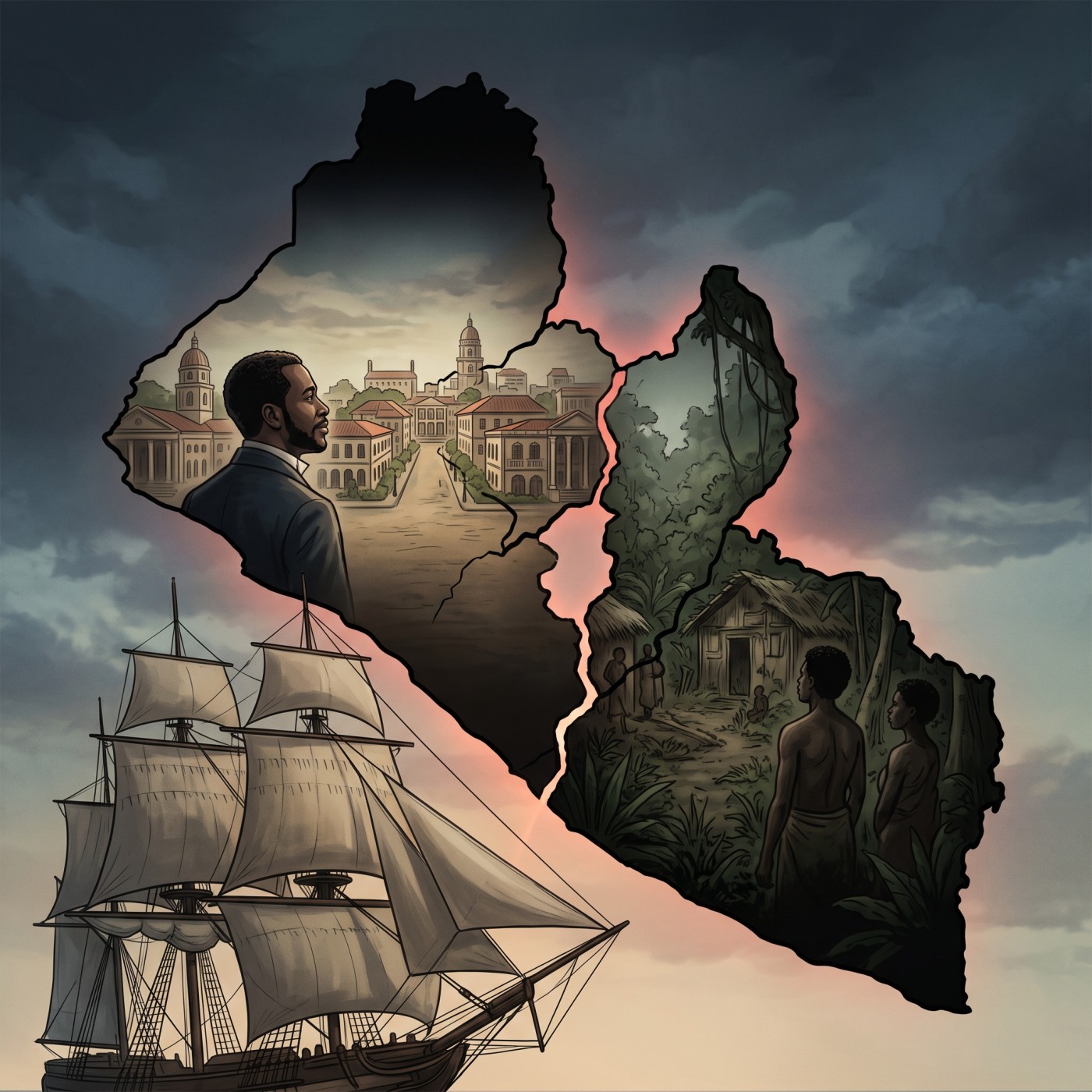 Inverted Freedom: The Liberian Experiment 18.10.2026 6mInverted Freedom: The Liberian Experiment The year is 1822. A ship, funded by the American Colonization Society (ACS), sets sail across the Atlantic, its cargo not spices or gold, but hope, fear, and a profound paradox. On board are formerly enslaved African Americans, promised a new life, a new nation, and most significantly, a new freedom – in Africa. This was the genesis of Liberia, a nation born of an ideology both noble and deeply flawed, an experiment in ‘inverted freedom’ that continues to resonate today. The ACS, a peculiar coalition of abolitionists, slaveholders, and politicians, harbored varied motivations. Some genuinely believed in a dignified repatriation for freedmen, a chance to escape the pervasive racism of the United States. Others saw it as a convenient solution to the ‘problem’ of free Black populations, fearing their influence on enslaved people. This inherent conflict in its founding principles would forever stain Liberia’s early years and shape its trajectory. Upon arrival, the American settlers, often referred to as Americo-Liberians, encountered a land already inhabited by numerous indigenous ethnic groups with established societies, languages, and cultures. The very notion of ‘establishing’ a nation here, without genuine consultation or integration, immediately sowed the seeds of future discord. The Americo-Liberians, despite their own history of oppression, often adopted a colonial mindset, viewing the indigenous populations as ‘backward’ and in need of ‘civilization.’ This created a rigid social hierarchy, with the Americo-Liberians at the apex, controlling political power, economic resources, and social influence. The early decades were fraught with challenges. Disease, hostile encounters with indigenous tribes defending their ancestral lands, and internal squabbles threatened the nascent colony’s survival. Yet, bolstered by American aid and a fierce determination to prove their capacity for self-governance, Liberia declared its independence in 1847, becoming the first independent republic in Africa. This was a moment of immense pride for many, a beacon of hope for Black people worldwide, demonstrating the potential for self-determination. However, the ‘inverted freedom’ began to manifest with increasing clarity. The very people who had sought freedom from oppression in America became, in many ways, oppressors themselves. The Americo-Liberian elite, a minority of the population, maintained a political system that disenfranchised and marginalized the vast indigenous majority. Land ownership, political representation, and economic opportunities were largely restricted, leading to growing resentment and a deepening chasm between the two groups. Economic development was largely driven by rubber plantations and mining concessions, often exploited by foreign companies with little benefit trickling down to the indigenous population. Forced labor, sometimes euphemistically called ‘recruitment,’ became a dark stain on Liberia’s human rights record, echoing the very systems the settlers had fled. The international community, while recognizing Liberia’s independence, often turned a blind eye to these internal injustices. This simmering discontent eventually erupted. Decades of inequality, political repression, and economic disparity culminated in a military coup in 1980, led by Samuel Doe, an indigenous Krahn man. This event marked the end of Americo-Liberian dominance and ushered in a period of unprecedented instability, including two devastating civil wars that tore the nation apart, claiming hundreds of thousands of lives and displacing millions. Liberia’s journey from an ambitious experiment to a nation scarred by conflict offers profound lessons. It highlights the complexities of identity, the dangers of replicating oppressive systems, and the enduring struggle for true, equitable freedom. Today, Liberia is on a path of reconstruction, grappling with its history and striving for genuine reconciliation. The echoes of ‘inverted freedom’ still resonate, reminding us that liberation is not merely the absence of chains, but the presence of justice, equality, and shared dignity for all citizens.
-
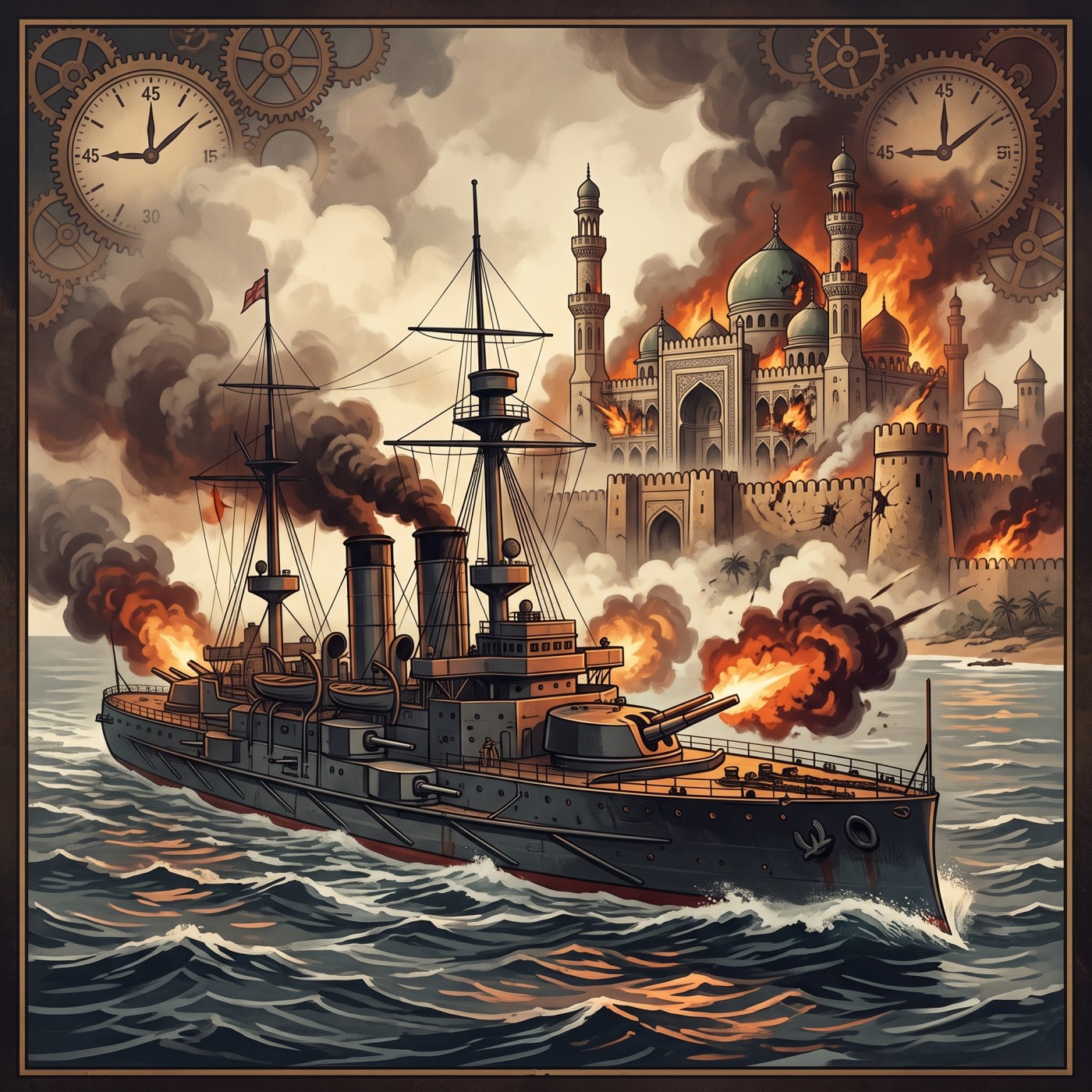 The 45-Minute Fury: Unraveling the Anglo-Zanzibar War of 1896 17.10.2026 5mThe 45-Minute Fury: Unraveling the Anglo-Zanzibar War of 1896 Imagine a conflict that begins and ends before your morning coffee cools, a war so swift it barely registers as a blip on the radar of human brutality. Welcome to the astonishing, almost comical, saga of the Anglo-Zanzibar War of 1896 – officially, and quite spectacularly, the shortest war in recorded human history. Clocking in at a mere 38 to 45 minutes (depending on which startled timepiece you consult), this isn’t just a historical footnote; it’s a testament to colonial power, political maneuvering, and a dramatic display of overwhelming force. The year is 1896. Zanzibar, a vibrant spice-trading sultanate off the coast of East Africa, is a British protectorate. While nominally independent, its foreign policy and, increasingly, internal affairs were dictated by London. The reigning Sultan, Hamad bin Thuwaini, a British-aligned ruler, had died suddenly on August 25th. His death triggered a pre-existing succession crisis, exacerbated by the colonial powers’ desire for stability and control. Enter Khalid bin Barghash, the Sultan’s nephew and a determined, albeit rebellious, individual. Without seeking British approval, and in direct defiance of their wishes, Khalid seized the royal palace and declared himself Sultan. His claim was based on a traditional line of succession, but the British, wary of an anti-British ruler and fearing a challenge to their authority, had a different candidate in mind: Hamud bin Mohammed. They saw Khalid as a potential puppet of German interests, further complicating the delicate balance of power in the region. The British ultimatum was swift and unequivocal: Khalid was to vacate the palace by 9 AM on August 27th, or face the consequences. But Khalid, perhaps underestimating the resolve of the British Empire, or perhaps emboldened by his small, loyal army and a single, albeit outdated, armed yacht, refused. He barricaded himself in the palace, fortified its defenses, and awaited the inevitable. As the clock ticked towards the fateful hour, the British squadron, a formidable array of warships including HMS St George, HMS Philomel, HMS Racoon, HMS Thrush, and HMS Sparrow, positioned itself strategically in Zanzibar Harbour. Their guns were trained on the palace. Rear-Admiral Harry Rawson, leading the British forces, was a man of action, not negotiation. The ultimatum expired. At precisely 9:00 AM, the British opened fire. The ensuing bombardment was devastatingly effective. The palace, built more for grandeur than defense, quickly crumbled under the relentless shelling. Khalid’s forces, though spirited, were no match for the superior firepower and training of the Royal Navy. The sultanate’s single armed yacht, the Glasgow, was sunk within minutes. Buildings adjacent to the palace caught fire, and the smoke billowed across the harbor, a grim testament to the speed of modern warfare. Within 38 to 45 minutes, Khalid’s banner was shot down, and the firing ceased. Estimates of casualties vary, but it is believed that around 500 of Khalid’s soldiers and palace inhabitants were killed or wounded, while the British suffered only one casualty – a single petty officer injured in a boat. Khalid himself managed to escape through a back exit, seeking asylum at the German consulate. He was later transported to German East Africa, where he remained for years. The aftermath was equally swift. Hamud bin Mohammed was installed as the new Sultan, a ruler compliant with British interests. The British cemented their control over Zanzibar, effectively ending any pretense of independent rule. The Anglo-Zanzibar War of 1896 stands as a stark reminder of the might of colonial powers and the dramatic, often brutal, efficiency with which they maintained their dominance. It’s a war that ended before most people had even heard it began, a fleeting yet impactful moment in the annals of history that continues to fascinate and instruct on the dynamics of power and conflict.
-
 DB Cooper: The Ghost of the Northwest Skies 16.10.2026 6mDB Cooper: The Ghost of the Northwest Skies On November 24, 1971, the tranquil skies above the Pacific Northwest were shattered by an act of audacious daring that would baffle law enforcement for decades and embed itself firmly in the annals of American folklore. A man identifying himself only as Dan Cooper, impeccably dressed in a dark suit, white shirt, and black tie, purchased a one-way ticket on Northwest Orient Airlines Flight 305 from Portland to Seattle. What began as a routine 30-minute flight quickly descended into a meticulously planned and flawlessly executed skyjacking, forever etching the name ‘DB Cooper’ into the collective consciousness. Shortly after takeoff, Cooper calmly handed a note to flight attendant Florence Schaffner. Assuming it was a lonely businessman’s flirtation, she ignored it. He leaned in, his voice low and steady, stating, “Miss, you’d better look at that note. I have a bomb.” The words, delivered without a hint of panic, were enough to make her open the folded slip of paper. Inside, in neat, block letters, was the chilling declaration: “I have a bomb in my briefcase. I want you to sit next to me. You are being hijacked.” Schaffner, demonstrating remarkable composure, relayed Cooper’s demands to the cockpit: $200,000 in unmarked 20-dollar bills, four parachutes (two main, two reserve), and a fuel truck standing by in Seattle to refuel the aircraft upon landing. The FBI, scrambling to respond, assembled the ransom and parachutes. Upon landing at Seattle-Tacoma International Airport, Cooper allowed all passengers to disembark in exchange for the money and parachutes. The crew, including pilot William Scott, co-pilot William Rataczak, flight engineer H.E. Anderson, and flight attendant Tina Mucklow, remained onboard with Cooper. With the demands met, Cooper instructed the pilot to take off again, setting a course for Mexico City at an altitude no higher than 10,000 feet and a speed no greater than 100 knots, with the landing gear extended and the wing flaps at 15 degrees. He also demanded that the cabin remain unpressurized. This specific set of instructions immediately signaled to the crew that Cooper possessed an intimate knowledge of aviation, particularly of the Boeing 727’s design and operational capabilities. The flight attendants noticed him studying the aircraft’s internal mechanisms, particularly the aft airstairs, with a professional eye. Somewhere over southwestern Washington, between Seattle and Reno, at approximately 8:13 PM, Cooper made his move. He lowered the aft airstairs, tied the money bag around his waist, and, despite the howling wind and sub-freezing temperatures, plunged into the black, unforgiving night. He was equipped with one of the parachutes and the ransom. The crew, shaken but unharmed, landed safely in Reno hours later, but Cooper was gone. He had vanished without a trace. The ensuing manhunt, codenamed ‘NORJAK,’ became one of the most extensive and expensive in FBI history. Over the years, countless theories emerged. Was he a disgruntled ex-military paratrooper? A civilian with a thrill-seeking streak? A master criminal who pulled off the perfect heist? The FBI interviewed hundreds of suspects, pursued thousands of leads, and scoured acres of dense wilderness. For years, every major discovery – a partial parachute, a skeletal remains, a suspicious utterance – reignited the hope of solving the mystery, only to lead to dead ends. In 1980, eight years after the skyjacking, a significant piece of evidence finally surfaced. A young boy named Brian Ingram, picnicking with his family near the Columbia River, unearthed three bundles of twenty-dollar bills, totaling $5,800. The serial numbers matched the ransom money given to Cooper. This discovery, however, only deepened the enigma. The money’s location, far from the original estimated drop zone, suggested a different trajectory or perhaps that Cooper had survived the jump and journeyed some distance. Was it an accident of nature that brought the money to the surface, or a deliberate misdirection by Cooper himself? Despite the passage of time, the case of DB Cooper continues to fascinate. The FBI officially suspended active investigation in 2016, citing the lack of new, credible leads. Yet, the legend of DB Cooper endures, a testament to the allure of the unsolved, the brazenness of the act, and the enduring question: who was DB Cooper, and what became of him after his daring leap into the dark? Was he swallowed by the vast, unforgiving wilderness, or did he successfully vanish into a new life, forever outsmarting those who sought to bring him to justice? The Pacific Northwest still holds its breath, waiting for the ghost of the skies to finally reveal its identity.
-
 The King of Redonda: An Eccentric Caribbean Monarchy Born of Guano and Genius 15.10.2026 6mThe King of Redonda: An Eccentric Caribbean Monarchy Born of Guano and Genius In the annals of obscure history, where fact often blends with delightful absurdity, few tales captivate quite like that of the Kingdom of Redonda. Imagine a barren, uninhabited speck of volcanic rock in the Caribbean, barely a mile across, devoid of fresh water, and utterly unappealing for human settlement. Yet, this unlikely outcrop, more guano-rich bird haven than nascent nation, became the seat of a self-proclaimed monarchy, founded by an eccentric Irish-Antiguan merchant whose audacious vision stretched beyond the mundane realities of island trade. The year was 1865. Matthew Dowdy Shiell, a businessman with a keen eye for opportunity and perhaps an even keener imagination, staked his claim. Redonda, geographically positioned between Nevis and Montserrat, was largely ignored by colonial powers, save for its valuable guano deposits – a highly sought-after fertilizer of the era. Shiell, seeing a window of opportunity and perhaps inspired by the British Crown’s official annexation of the island for its phosphate mining rights, decided to take matters into his own hands. He sailed to Redonda, accompanied by his son, Phipps, and declared himself its sovereign, adopting the regal title King Matthew I. This wasn’t a desperate act of rebellion, but rather a whimsical, albeit firm, assertion of personal ownership over a forgotten land. His intent was not to wage war or establish a thriving populace, but to secure a legacy, perhaps even a tax haven for his guano profits, and certainly a good story. Upon Matthew I’s death in 1880, the crown passed to his son, Phipps, who was crowned King Felipe I. Phipps, a man of letters and a celebrated author under the pen name M.P. Shiel, elevated Redonda from a mere commercial enterprise to a literary legend. It was under his reign that the Kingdom truly gained its eccentric lustre. Instead of establishing a functional government or a navy, King Felipe I began to ‘knight’ esteemed authors and intellectuals. This wasn’t a jest born of idleness, but a genuine attempt to create an intellectual aristocracy, a ‘nobility of the mind.’ The list of those purportedly knighted or granted Redondan peerage reads like a who’s who of early 20th-century literature and arts: H.G. Wells, George Bernard Shaw, Lawrence Durrell, Dylan Thomas, and even figures like John Gawsworth (who would later become King Juan I). These weren’t official titles recognized by any terrestrial government, of course, but they carried a certain bohemian charm, a whimsical nod to an alternative reality where talent and intellect were the true markers of nobility. The ‘Order of Redonda’ became a symbol of literary merit, a playful yet profound recognition among peers. The Kingdom’s history, as chronicled by its various ‘monarchs’ and their literary associates, is a fascinating blend of historical fact and delightful fabrication. The narrative shifted and evolved with each successive king, each adding their own layer of mythology and eccentricity. After King Felipe I’s death in 1947, the succession became a convoluted affair, with multiple claimants to the throne, each asserting their legitimacy based on varying interpretations of his will or supposed declarations. This fragmentation only added to the mystique, transforming Redonda into a legendary intellectual playground. Today, the Kingdom of Redonda remains uninhabited and officially belongs to Antigua and Barbuda. Yet, its spirit endures. It serves as a testament to the power of imagination, the allure of intellectual rebellion, and the enduring human desire to create meaning and order, even on the most barren of rocks. The legacy of the Kings of Redonda is not one of geopolitical power or vast dominion, but of a quiet, persistent insistence that art, literature, and wit can forge a kingdom more enduring than any founded on mere land or gold. It’s a reminder that sometimes, the most profound sovereignty lies not in conquest, but in culture and the audacious declaration of an idea. The story of Redonda reminds us that history is not just about empires and wars, but also about the curious, the eccentric, and the wonderfully unconventional individuals who dared to dream a different kind of world. What began with guano, evolved into a literary phenomenon, proving that even the smallest, most desolate island can become the heart of a grand, imaginative enterprise. The Kings of Redonda, in their quiet, literary way, truly conquered not territory, but the very notion of what a kingdom could be.
-
 The Silent Sentinel: Christopher Knight and the North Pond Enigma 14.10.2026 5mThe Silent Sentinel: Christopher Knight and the North Pond Enigma For nearly three decades, a phantom walked the woods of Maine. Not a ghost, but a man named Christopher Knight, who lived entirely undetected, a silent sentinel in the vast wilderness surrounding North Pond. His story isn’t one of survival against the elements in the traditional sense, but a radical, almost spiritual, rejection of human society itself. For 27 years, from 1986 until his capture in 2013, Knight’s sole companions were the trees, the animals, and the profound, isolating silence he so meticulously cultivated. He spoke not a word to another human being, his voice a forgotten echo in the depths of the forest. Knight wasn’t a survivalist by choice in the prepper sense; he was a renunciate. He simply walked away from his life at the age of 20, driving his car until it ran out of gas, then disappearing into the woods with little more than the clothes on his back and a desire for absolute solitude. His encampment, a meticulously camouflaged haven nestled deep within the thick Maine woods, became his world. He built no elaborate structures, instead utilizing a tarp, a bed of pine needles, and a carefully constructed shelter that melted seamlessly into the natural landscape. This was not a primitive existence in all aspects, however. To survive the harsh New England winters and feed himself, Knight became an expert burglar. His targets were vacation homes and cabins scattered around the perimeter of North Pond. Under the cloak of darkness, he would break in, methodically taking what he needed: food, propane tanks for cooking, batteries for his radio (his only connection to the outside world, from which he absorbed news and sports scores, but never sought interaction), books, and even mundane items like toiletries. He was known for his precision, his quiet movements, and his almost surgical ability to take only what was necessary without leaving a trace. Local residents, baffled by the recurring disappearances and the occasional half-eaten snack, dubbed him the ‘North Pond Hermit.’ They spoke of a legend, a shadowy figure, but never imagined the true extent of his isolation. What drove Christopher Knight to such an extreme? Journalists and psychologists have grappled with this question since his capture. Knight himself offered enigmatic explanations, speaking of a desire for simplicity, an aversion to the complexities of modern life, and a profound sense of alienation. He found peace in the absence of human interaction, a clarity in the silence that most people actively avoid. His existence was a radical experiment in self-sufficiency, a testament to the human capacity for adaptation, but also a stark reminder of the fragile line between independence and profound loneliness. His capture, by Game Warden Sergeant Terry Hughes, was almost anticlimactic after decades of elusive behavior. Hughes, driven by years of frustration and meticulous observation, set up a surveillance system at a targeted camp. Knight, venturing out for supplies, walked directly into the trap. His first words to another human in 27 years were, reportedly, a simple, “Good morning, officer.” The reintroduction to society was a jarring ordeal. He was diagnosed with a form of autism spectrum disorder, which some believe contributed to his desire for isolation. He faced charges of burglary and theft, and subsequently spent time in jail and a program designed to reintegrate him into society. The story of Christopher Knight continues to fascinate and disturb. Was he a criminal, a recluse, a philosopher, or a victim of his own unique psyche? His decades of silent existence force us to confront uncomfortable questions about our own reliance on society, the nature of freedom, and the inherent human need for connection. The North Pond Hermit remains a potent symbol of radical self-reliance, a man who, for 27 years, proved it was possible to disappear, to truly be alone, and to survive, a silent sentinel in the heart of the Maine wilderness.
Similar podcasts


Popular in
The podcast also appears in the podcast charts of these countries.
