
Technically U
Technically U
0
Technically U is a weekly podcast for IT professionals in cybersecurity, networking, and IT leadership. It covers career-threatening surprises such as breaches, outages, and AI disruption, helping listeners stay ahead of issues they might otherwise miss. Episodes examine topics like MFA limitations, AI's impact on jobs, and costly cloud architecture mistakes. New episodes are released every Thursday.
Episodes
-
 Pass-ta-Key Attacks: Is Passwordless Security Still Safe? 12.09.2026 23mApple, Google, Microsoft, and the security industry have spent years telling us that passkeys are the future of authentication.No passwords.Less phishing.No reusable credentials for attackers to steal.But researchers have now demonstrated something important :Attackers may not need to break the passkey itself. They can attack everything around it. Windows. Browsers. Extensions. Password managers. Cloud synchronization. Authentication workflows.Welcome to the world of Pass-ta-Key attacks.In this episode of the Technically U Podcast, we break down how researchers demonstrated more than 20 techni...
-
 SaaS Bloodbath: Why Your Trusted Apps Are Now the Attack Surface 05.09.2026 36mYour company may not get hacked through the firewall. It may get breached through the SaaS app everyone trusts.In this episode of Technically U, we break down the growing SaaS security crisis and why trusted cloud applications like Salesforce, Slack, Workday, Google Workspace, Microsoft 365, and third-party integrations have become prime targets for attackers.Modern breaches are no longer just about breaking into networks. Attackers are stealing credentials, abusing OAuth permissions, compromising SaaS vendors, and using trusted integrations to move directly into business-critical systems.We d...
-
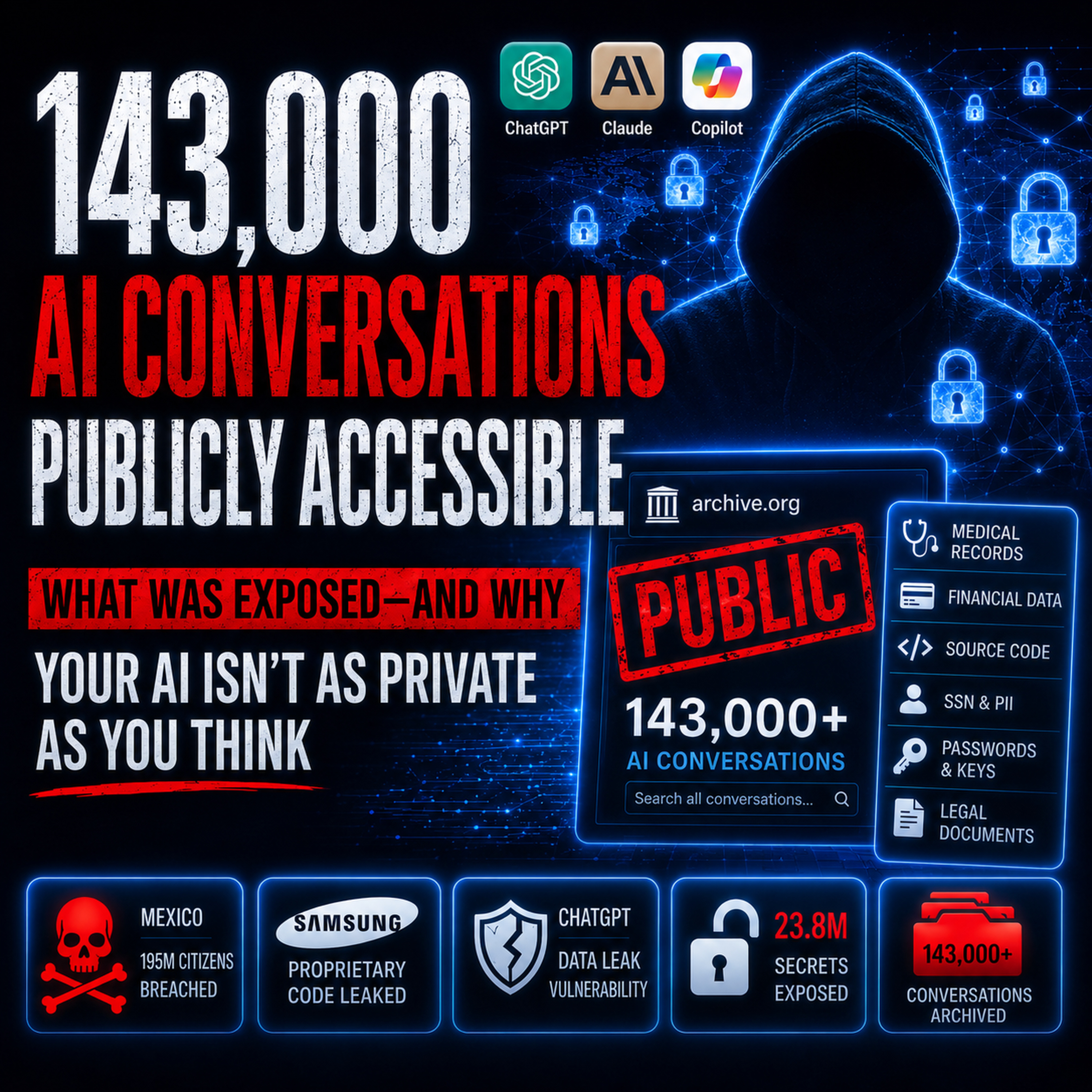 The AI Data Disaster: What ChatGPT, Claude, and Gemini Really Do With Your Secrets 29.08.2026 21m143,000 ChatGPT, Claude, and Copilot conversations are publicly accessible right now. Here's what was exposed—and why your AI isn't as private as you think.🚨 THE HEADLINE:143,000 user conversations with ChatGPT, Claude, Copilot, and other AI tools are publicly accessible on Archive.org. Anyone with internet access can read them.WHAT'S IN THEM:- Medical histories and diagnoses- Financial accounts and credit card numbers- Source code from major companies- Internal company documents- Social Security numbers- Passwords and API keys- Legal contracts and NDAs---💀 REAL INCIDENTS (2024-2026):CASE 1:...
-
 The BIMI Paradox: Why 90% of Companies Are Losing Thousands. 29.08.2026 26mThe BIMI Paradox: Why 90% of Companies Are Losing Thousands—And Why Your Logo Might Be Illegal in Inboxes (2026 Reality Check).BIMI (Brand Indicators for Message Identification): 90% of companies have it wrong—and 75% will have it by year-end 2026. Here's the reality behind the hype.🎯 THE BIMI PARADOX (2026 REALITY):ADOPTION STATISTICS:- 90.85% of domains have NO BIMI record- 4.57% have VALID BIMI records- 4.58% have INVALID BIMI records- BIMI adoption increased 340% year-over-year- Yet most implementations are failing silentlyTHE CONTRADICTION:Adoption is exploding, but 95% are doing it wron...
-
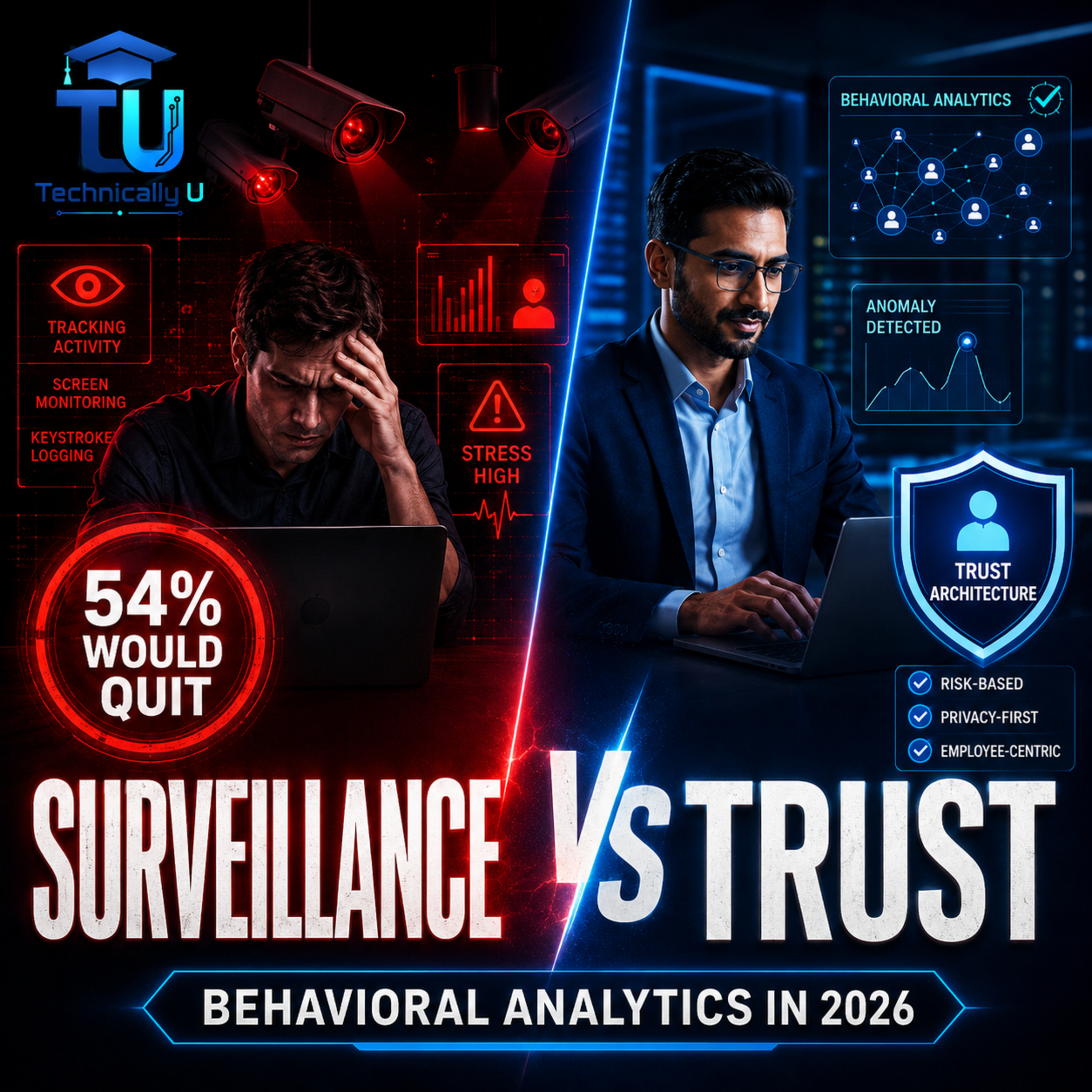 Beyond Surveillance: How Behavioral Analytics Became a Trust Problem 20.08.2026 17mBehavioral Analytics in 2026: How Companies Are Moving From Surveillance to Trust ArchitectureThe paradox nobody talks about: 76% of companies see efficiency gains from monitoring. But 60% of employees report feeling MORE stressed. 54% would quit if surveillance increased. This is how leading organizations are reframing behavioral analytics from "surveillance" to "security."🎯 THE REAL COST OF INSIDER THREATS:$19.5 MILLION: Average annual cost of insider threat incidents per organization (2026)22-24 MILLION: North America average (doubling from 2018INSIDER THREAT BREAKDOWN:- 53% from negligent...
-
 The Confidence Gap: Why Executives Think AI Agents Are Secure (And Why They're Wrong) 08.08.2026 18mThe Confidence Gap: AI Agents and the Security Crisis Nobody Is Talking AboutEighty-two percent of executives feel confident that their existing AI agent policies are enough to keep their organizations secure.But 50% of deployed AI agents are operating without security oversight or logging.That gap between confidence and reality may become one of 2026’s biggest security crises.Many executives believe their organizations already have AI agent risk under control.The assumption sounds something like this:“AI agents are just applications. We already have security controls for applications.”Or:“We’...
-
 Seeing Is No Longer Believing: How Deepfake Fraud Targets Businesses and Families 31.07.2026 23mWhat if the voice on the phone sounds exactly like your boss, your bank, or someone in your family — but it isn’t them?In this episode of Technically U, we break down Deepfake Fraud and why it has become one of the fastest-growing identity and cybersecurity risks for businesses and consumers.This is not just about fake videos online. Deepfake fraud is about something much bigger: fake trust.AI can now clone voices, generate faces, manipulate video calls, create fake applicants, impersonate executives, and pressure people into approving payments, resetting passwords, or sharing sensitive inform...
-
 The AI Criminal Playbook: How Cybercrime Changed Forever in 2026 24.07.2026 16mThe next generation of cybercrime may not come from a hacker typing code in a dark room.It may come from someone using AI to generate phishing emails, clone voices, create fake identities, manipulate video calls, automate scams, and launch attacks at a scale human attackers could never match.In this episode of Technically U, we break down how AI is changing the economics of cybercrime — not just making elite attackers more dangerous, but making average attackers far more capable.We explore why AI-powered cybercrime is becoming a serious threat for businesses, consumers, IT teams, and security...
-
 RiskRecon Explained: The Cybersecurity Credit Score Companies Use to Judge You 19.07.2026 9mWhat if a company you've never heard of is already influencing whether customers do business with you?In this episode of Technically U, we break down RiskRecon, the cybersecurity risk-rating platform owned by Mastercard that helps organizations evaluate the security posture of vendors, suppliers, partners, and even themselves.Often described as a "credit score for cybersecurity," RiskRecon continuously analyzes an organization's internet-facing assets, looking for vulnerabilities, misconfigurations, outdated software, weak encryption, email security issues, and other indicators of cyber risk.B...
-
 Vulnerability Management Explained: Find, Prioritize & Patch Before Hackers Strike 12.07.2026 19mRight now, there may be vulnerabilities sitting inside your organization’s systems — and attackers may already be looking for them.In this episode of Technically U, we break down Vulnerability Management in a way that makes sense for security teams, IT leaders, business executives, and anyone responsible for reducing cyber risk.Most major cyberattacks do not come from brand-new, never-before-seen techniques. Many come from known vulnerabilities — weaknesses that already have patches available but were not fixed in time. That delay between discovery, patching, and exploitation is where breaches...
-
 HSTS: The Invisible Security Header Protecting Billions 03.07.2026 10mEvery time you visit your bank, check your email, log into a shopping site, or open a secure web app, there’s an invisible browser protection working behind the scenes: HSTS — HTTP Strict Transport Security.In this episode of Technically U, we break down how HSTS protects billions of web sessions from one of the most elegant and dangerous network attacks ever demonstrated: SSL stripping.Back in 2009, security researcher Moxie Marlinspike showed how attackers could intercept users on public Wi-Fi, downgrade HTTPS connections to plain HTTP, and steal usernames, passwords, cookies, and sensitive...
-
 The DNS Encryption War: Why Privacy Tools and Security Teams Are Fighting Over DoH 20.06.2026 28mDNS over HTTPS (DoH) encrypts the internet's phonebook—and it's breaking traditional network security. Here's what IT professionals need to know about DoH in 2026, why enterprises are concerned, and how to adapt.🔐 WHAT IS DNS OVER HTTPS:THE PROBLEM DoH SOLVES:- Traditional DNS = plaintext on port 53 (unencrypted since 1983)- ISPs, network operators, anyone on WiFi can see every domain you visit- DNS queries reveal: Health research, job hunting, political views, all browsing activity- Government censorship via DNS blocking- DNS hijacking attacks on public WiFiHOW DoH WORKS:- Wraps DNS queries...
-
 Container Security Explained: Kubernetes, Docker & Cloud Native Threats 14.06.2026 9m🔐 Are your containers actually secure… or just assumed to be?In this episode of Technically U, we take a deep, structured dive into Container Security, breaking down how modern environments built on Docker and Kubernetes are secured—and more importantly, how they’re attacked.Containers have revolutionized application deployment, but they’ve also introduced an entirely new security model. Unlike traditional virtual machines, containers share a kernel, are highly dynamic, and require a completely different approach to security.🎯 In this episode, you’ll learn:Why containers are NOT virtual mach...
-
 Your Device Has a Secret Fingerprint — And Websites Know It 28.05.2026 21mHave you ever logged into your bank account and seen the message: “We don’t recognize this device”?That message may be powered by one of the most important cybersecurity tools most people have never heard of: device fingerprinting.In this episode of Technically U, we break down how websites, banks, apps, payment platforms, and security systems can recognize your device based on clues like your browser, operating system, screen size, location, time zone, IP address, graphics behavior, and even how your device renders web content.Device fingerprinting can help protect you from fraud, account tak...
-
 DTLS: Why VoIP Calls and Video Conferences Need Different Encryption Than HTTPS 28.05.2026 3mYour Zoom call, WebEx meeting, VoIP phone conversation, and WebRTC video chat may all be encrypted — but they are not using HTTPS. Why? Because HTTPS relies on TLS over TCP, while real-time communications usually run on UDP.In this episode of Technically U, we break down DTLS — Datagram Transport Layer Security — the encryption protocol that makes secure real-time communication possible. DTLS gives voice, video, gaming, IoT, VPNs, and live streaming the security benefits of TLS while still supporting the speed and flexibility of UDP.You’ll learn why traditional TLS works well for websites, API...
-
 AI Agents Are Replacing Jobs AI Chatbots Never Could: Here's the Difference 21.05.2026 10mAI agents are changing the workplace faster than most people realize. Unlike AI assistants such as ChatGPT, Claude, Gemini, or Copilot, AI agents do more than answer questions — they can take action inside business systems, complete workflows, update records, process requests, and make decisions within defined rules.In this episode of Technically U, we break down the real differences between AI assistants and AI agents, why companies are deploying them aggressively in 2026, and which jobs are most at risk of automation.You’ll learn how AI agents are being used in customer service, IT support,...
-
 DHT Security Explained: Why Distributed Hash Tables Are Fundamentally Vulnerable 13.05.2026 8mWhat if the technology powering BitTorrent, IPFS, and blockchain networks… is fundamentally insecure?In this episode of Technically U, we take a deep dive into Distributed Hash Table (DHT) security—and uncover why one of the internet’s most important decentralized technologies still faces unsolved security challenges after more than 20 years of research.DHTs enable peer-to-peer networking without central servers, making them powerful for censorship resistance and scalability. But that same openness introduces serious vulnerabilities that attackers can exploit.🎯 In this episode, you’ll learn:W...
-
 802.1X Explained: The Technology Controlling Who Gets on Your Network 10.05.2026 9mWho is allowed on your network—and how is that decision made?In this episode of Technically U, we break down IEEE 802.1X, the powerful security framework behind Network Access Control (NAC) that determines whether devices can connect to your wired or wireless network.Whether you're plugging into an Ethernet port or connecting to corporate Wi-Fi, 802.1X is working behind the scenes to authenticate users, validate devices, and enforce security policies—often in just seconds.🎯 In this session, you'll learn:What 802.1X authentication is and why it mattersHow RADIUS servers, switches, and endpoint...
-
 Encrypted Wavelength Services: (Part 3) Securing Data at the Optical Layer 30.04.2026 7m🔐 Is your private network actually secure… or just private?In Part 3 of our Wavelength Services series on Technically U, we dive into encrypted Wavelength services—and why security at the optical layer is becoming critical for modern enterprise networks.Even with HTTPS, VPNs, and application-layer encryption, your data still travels across carrier-owned fiber infrastructure. And yes—fiber tapping is rare, but it’s possible. That’s why organizations handling sensitive data are adding encryption at the Wave layer for true defense in depth.🎯 In this episode, you’ll learn:Why optical layer encry...
-
 Wavelength Engineering Explained: (Part 2) Protection, Failover & Resiliency 30.04.2026 7m⚡ Think your network is redundant? It might not be.In Part 2 of our Wavelength Services series on Technically U, we go beyond the basics and dive into the engineering decisions that determine whether your network survives a failure—or goes down hard.If you’re investing in 100G or 400G Wavelength (Wave) services, understanding protection, failover, and restoration is critical. Many organizations assume they’re protected… only to discover during an outage that both circuits share the same physical path.🎯 In this episode, you’ll learn:The difference between Protected vs Unprotected Wavelength c...
Similar podcasts


Popular in
The podcast also appears in the podcast charts of these countries.
