
Soundwalk
Chad Crouch
0
Soundwalk pairs roving field recordings with original musical scores. Each episode places listeners inside a sound-rich environment and turns it into an immersive listening journey. The podcast is created by Chad Crouch and published through his Substack.
Episodes
-
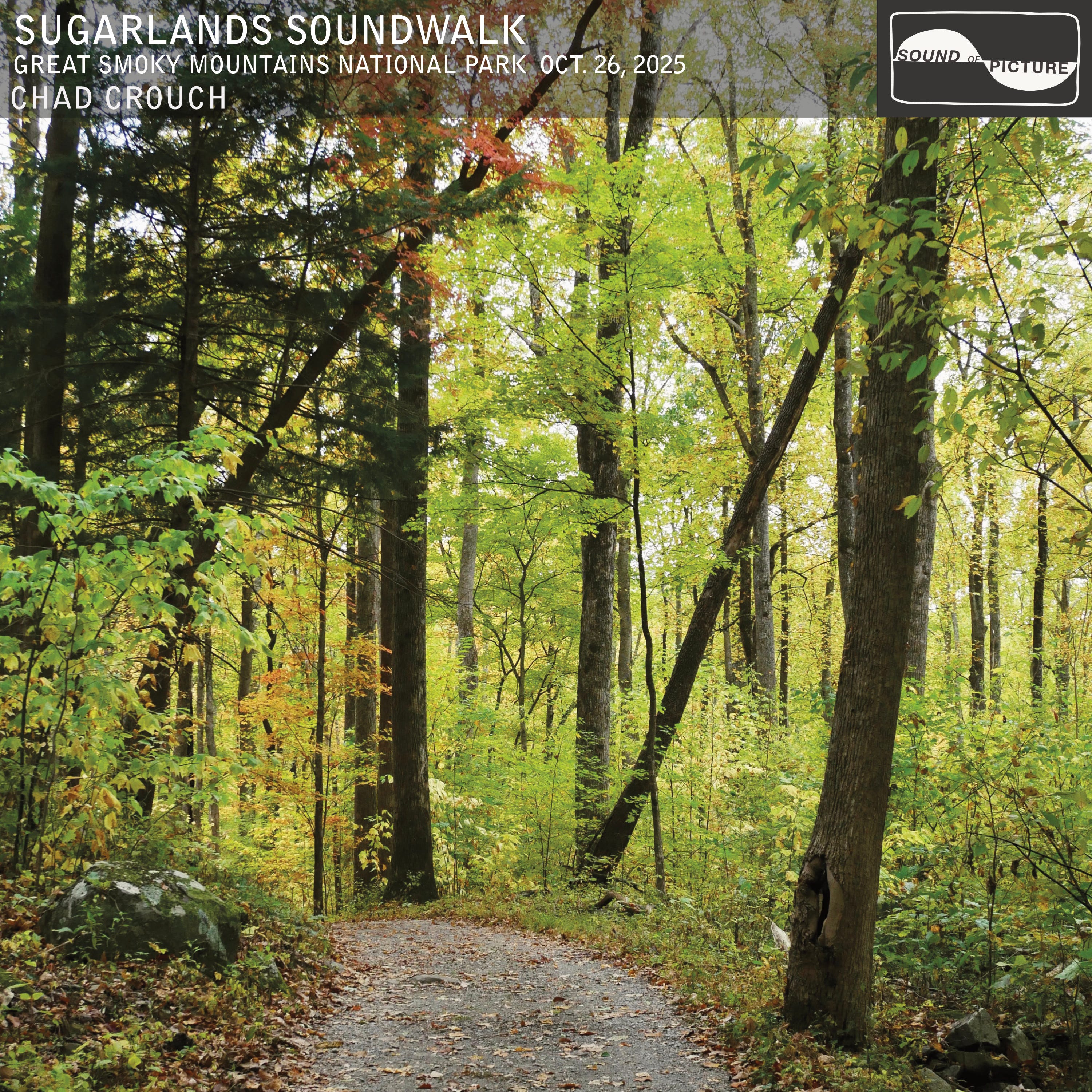 Sugarlands Soundwalk 30.10.2026 7mThis is a free preview of a paid episode. To hear more, visit chadcrouch.substack.comThe Sugarlands take their name from the sugar maple trees on these slopes of the Great Smoky Mountains. Writer Horace Kephart described the area this way in 1919 letter:I have just returned from a man-hunt in the Sugarlands of Sevier County, Tennessee. The Sugarland Mountain runs northwest from the Smokies between Clingman’s Dome and Mount Le Conte. On its southwestern side is the great gulf that I call “Godforsaken” in Our Southern Highlanders. On the northerly side, which is drained by the headwaters of the Little Pigeon River, is a similar descent, though into a narrower basin, or rather a gorge, exceedingly steep and rocky, gloomy with immense trees that crowd each other, and choked with laurel and other underbrush, fairly impenetrable except where the one lone trail leads down along a brawling torrent. These two basins, and the mountain dividing them, collectively go by the name of Sugarlands.Today, “Sugarlands” is most well known as the busiest gateway to Great Smoky Mountains National Park; home to a visitors center and the park headquarters just a few miles up the road from Gatlinburg, TN, a Mecca of the Appalachian souvenir economy. While Kephart described the Sugarlands in dark and mysterious tones as a “moonshiners’ paradise” in 1919, within a decade the people who lived there were largely bought out and cleared away for the park. Gatlinburg today sells legally distilled “moonshine” in mason jars to the park’s visitors, and the hills above town are dotted with a few preserved cabins and a mill buildings harkening back to that brief era.The parkway running through the Sugarlands Valley is routinely congested throughout the summer and on weekends. Vehicles crawl along, sounding to the stationary observer like a scanning radio dial; broadcasts of varying energy waft from car windows with a subtle doppler effect as they move along at a kiddie ride pace. About 15 miles to the northeast as the crow flies lies Locust Ridge, the childhood home to Dolly Parton, who remembers the area in a hushed soft focus:In my Tennessee mountain homeLife is as peaceful as a baby's sighIn my Tennessee mountain homeCrickets sing in the fields near byThese fables of Appalachia persist today, exerting influence on broader American culture. Both the peaceful childhood and mountain moonshiner narratives may serve as precursors for some of the identity politics that have played out in the last decade. A nostalgia for a simpler time might contribute to a sincere longing to Make America Great Again for example. Behind the appeal of the moonshiner flouting the law for a cause he considers justified is a logic that leads people to accept actions they’d otherwise question.As it turns out, Dolly Parton’s peaceful haven doesn’t take much effort to rediscover. You simply need to get out of the car and start walking away from the road. Soon enough the sounds of Sugarlands reveal themselves to you. As in “My Tennessee Mountain Home,” there are crickets, songbirds, and come nightfall, the glow of fireflies.Though the song also recalls, “on a distant hilltop an eagle spreads its wings”, this turns out to almost certainly be a nostalgic invention, or symbolism. While an eagle might have passed overhead occasionally, the Sugarlands were not then or now eagle habitat. More to the point, eagle populations had plummeted in the 50’s in 60’s due to DDT use in pesticides. They were listed as an endangered species in the continental US in the 60’s, and just 417 known nesting pairs were tallied in 1963.It’s unequivocally a better world for eagles today than it was in Parton’s childhood. You might say America is great again, for eagles, thanks to the Endangered Species Act of 1966. There are now over 300,000 bald eagles in the continental US. Meanwhile, the current administration has been systematically rolling back Endangered Species Act protections over the last year. A longing for the past, for a simpler time, a more affordable time, a peaceful time, a time of perceived abundance, is universal. No one political party can lay claim to it, to the exclusion of another. Any good-faith conversation will certainly uncover that when you add it all up, it’s a complicated picture, what is lost and what is gained over time, and why. To keep what we’ve still got it’s going to take cooperation and accountability.One thing I believe—and what keeps me interested in doing this soundwalk work—is that we must strive to nourish our connection to nature; to animals, to plants, to natural systems. If we veer off, disconnected in our hall of mirrors screens, we risk losing sight of our interconnectedness. Ideally this is accomplished firsthand, in the field, whatever that “field” might look like—it needn’t be a national park. But, I’m also receptive to the idea that vicarious exposure—caring about a place you’ve never been to, for example—through storytelling and media is beneficial too. My hope is that the environmental audio in my soundwalks can serve as this kind of tonic, a sort of quencher for the thirst of belonging to a functional ecosystem.Thanks again, for reading and listening. Sugarlands Soundwalk is available on all music streaming services October 30th, 2026. It will be followed by a sequel, Sugarlands Soundwalk II, the following week, Nov. 6th, 2026.
-
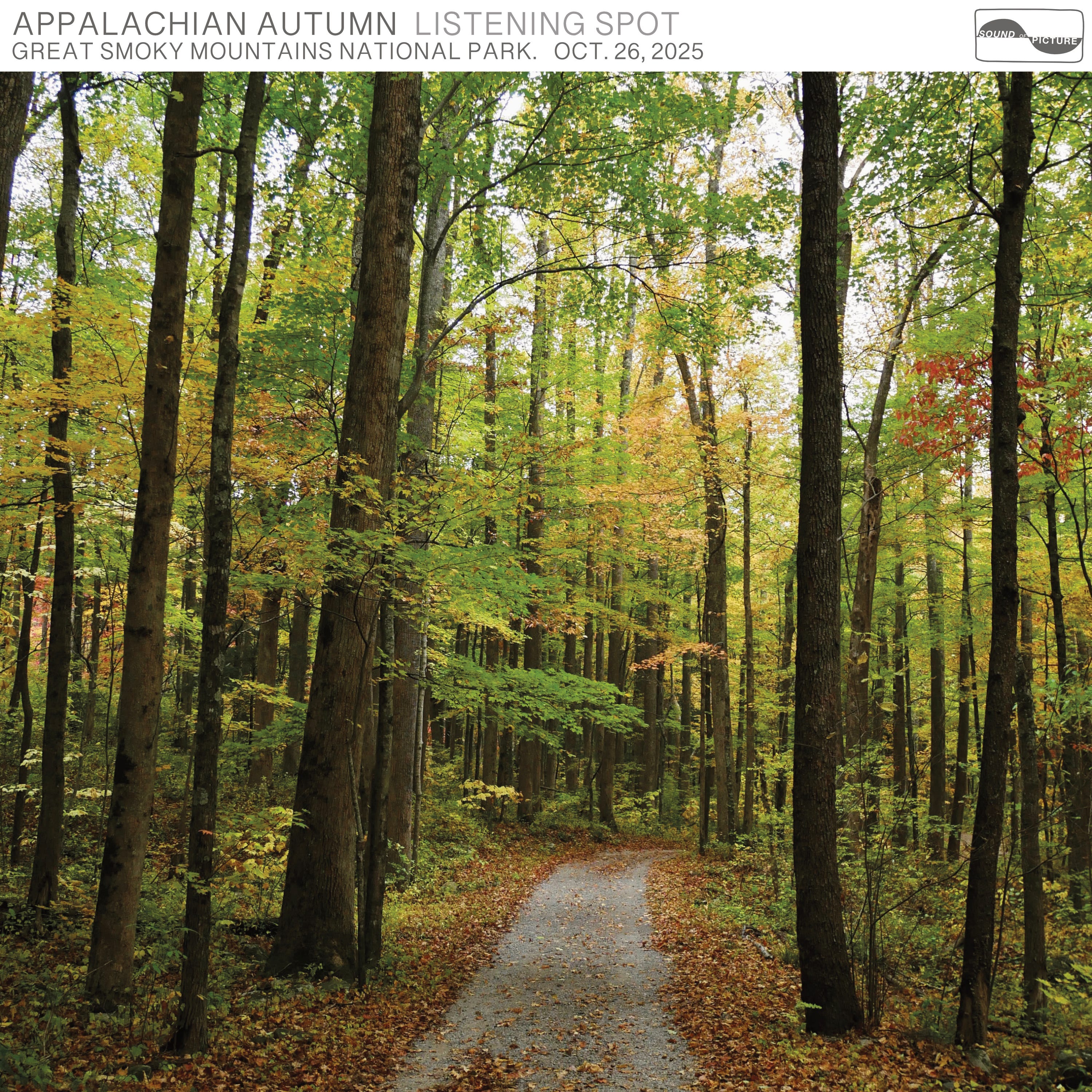 Appalachian Autumn 16.10.2026 38mI wasn’t sure what to expect from the soundscape of the Smoky Mountains in October. I’d been there in the fall 25 years ago, but my memories were mostly confined to images, and a generalized sense of topography. What I found on return was a soundscape of crickets in the valleys, stridulating in a glacial crescendo—from a murmur in the afternoon to a full-blown cacophony in the gloaming of dusk. This was not new to me. It was the sound early autumn from my childhood, living among fields and orchards on the fringe of suburbia.The soundscape that was truly novel to me, that I’m sharing today, has a little bit of that: the breathing hum of crickets in the early evening. But the real soundmarks come from mammals—squirrels, more plentiful and more active than I can ever recall hearing. This was the sound of peak mast season.What is mast season? Mast was a term that was new to me. It is taken to mean the food that comes from bushes and trees: fruits, nuts, and seeds. “Hard mast” is principally acorns, beech nuts and hickory nuts, here in the Sugarlands, the western foothills of the Great Smokies. A “mast year” is a particularly abundant year for acorn and nut production, and every indication suggests 2025 was a genuine mast year in southern Appalachia. A 2025 article described, “oak production as the heaviest since 2012, with beech crops heavy enough that ground beneath beech trees was ‘littered with hulls... after squirrels feasted.’"I was hearing a squirrel feast! Here in the Sugarlands, hardwoods and oak forest commingle, so there's a lot of mast dropping in a small area. Squirrels get frantic and vocal during the harvest push before winter arrives—chattering, barking, leaf-rustling, and branch-shaking as they work the canopy.It was this abundance, this sense of life in the trees that encouraged me to reach for woodwinds and harmonium-like sounds in my composition. I wanted it to conjure that peace that comes after a hard day’s work feeling. The music bears more than a passing resemblance to my vinyl LP release Wildwood Trail Soundwalk earlier this year. Both are built up very simply with sets of slowly morphing chords, stacked in equal measure, set in a slow, breathing tempo. I rarely have the conviction that any one album is a good starting place for getting to know my work, but as I listen now and write this, it strikes me that this may at least be more accessible than many others. The music is uncomplicated, warm and reassuring. The sound of humming crickets, the rustle of crisp leaves, the crystalline “kuk-quaa” of squirrels chiming out, all come together in a soothing velvet haze—like the “Smoky” blue air from the faraway mountaintops coming down to settle in the valleys, in the slow transition to nightfall. Thanks for listening and reading along. Appalachian Autumn is available under the artist name Listening Spot on all streaming platforms Friday, October 16th. This is a public episode. If you'd like to discuss this with other subscribers or get access to bonus episodes, visit chadcrouch.substack.com/subscribe
-
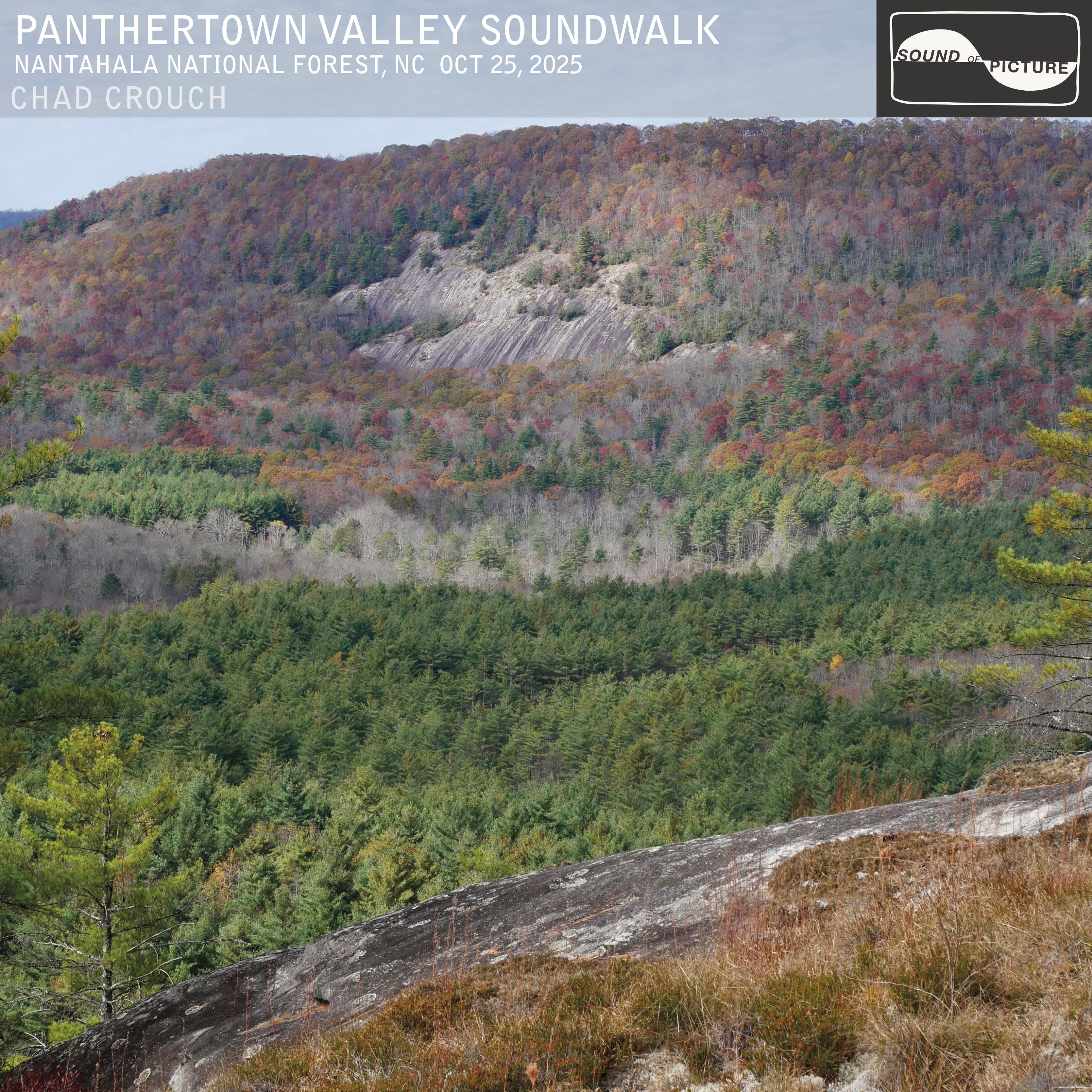 Panthertown Valley 01.10.2026 34mPanthertown Valley is a relatively small 6311-acre wilderness area in Nantahala National Forest in western North Carolina, in the Blue Ridge Mountains. It’s a little bit off the beaten track, but far from obscure, as the old promoter’s trick of slapping the label “Yosemite of the East” seems to have piqued interest over the decades. The Yosemite comparison owes itself to the granite features of the mountains that surround the valley. Proto-Half Domes, I guess. These smooth outcrops are a far cry from El Capitan, but they do possess a distinct character. Unlike the tectonic uplift and glacial scouring that happened in Yosemite, these dome faces were the result of magma cooling deep underground before being exposed by millions of years of weathering. If there is any superlative aspect that can be drawn in the comparison, it is that the formation here is much, much older. The granite underlying Panthertown Valley, the Whiteside granitic pluton, was intruded into the earth’s crust approximately 466 million years ago. The granite forming the cliffs and domes of Yosemite Valley was formed just 105 to 85 million years ago. The popular Panthertown Valley Trail to Mac’s Gap Loop is one of the most memorable hikes I’ve ever taken, topographically speaking. Does anybody else catalog wilderness experiences this way—as perceptions of topography? The overwhelming impression this place gives is one of a basin. When you peer down into the valley and scan the horizon, you see what looks like a rim, almost circular in definition. Of course this is not the way hydrology works. Panthertown Creek does not go down a drain in the middle, but slips out through a fold in the hills. The creek does linger though, there in the center. Indeed, Panthertown Valley features a rare high-elevation mountain bog on its valley floor, a wetland ecosystem fed by groundwater seeping from the surrounding granite.While fall paints the trees in shades of yellow umber, Venetian red, cadmium orange and the grasses in Naples Yellow, I couldn’t help but wonder what colors spring brought to the valley floor, festooned as they are with Rosebay Rhododendron and rare Pinkshell Azalea, an endemic shrub native only to a few high-elevation pockets in western North Carolina. Here in the understory Carolina Chickadees and Golden-crowned Kinglets ranged in foraging flocks while Carolina Wrens buzzed as they hopped along the downed wood. The valley was very quiet, enhancing the perception of being acoustically sheltered in a basin—or “cove” as they say in Appalachia—insulated from the sounds that roads invariably bring. This allowed me to appreciate the manifold cricket sounds: they purred, cooed, buzzed and blinked on and off. It was so nice to hear crickets this way: not in a chorus but distributed across the patchy habitat, in conversation with each other. “Halloo over there,” I imagined them saying. I looked toward fuzzier electric piano voices with this in mind, placing them alongside breathy flutes, mirroring the breeze and the cricket textures. I kept it spartan, as is my way. There are moments, if you listen closely, where you really hear the space here: the collective fir trees played by the wind, the dull sound of footsteps on granite, the constellations of cricket hum. My pictures really don’t do it justice. This is not a place that is about one vista, or one waterfall. It’s about exploring its contours, and for me, listening deeply.I found myself pondering time. The long and lonely time that it took for these rocky slopes to become the Yosemite of the East. I tried to picture the solvent action of water in time-lapse carting off the hills. I pictured the forest lifting and falling like the subtle dilation of an animal’s belly, breathing. Along the trail, Schoolhouse Falls proved to be a popular destination. Here one can walk behind the falls. That splotch of red is one such person, taking a picture through the falling water. Somewhere I am a splotch of colored pixels in his digital photo album. The name “Schoolhouse” is literal. There was once a small schoolhouse nearby likely serving the settler and logging camp populations in the early 1900s. Likewise Panthertown Valley is said to have got its name from the abundant Eastern cougar population here. An 1898 Asheville Daily Citizen article eulogizing a hunter described the valley vividly: “Bear and deer were very numerous in those days, and almost every night lying around our camp fire, we could hear the panther’s shrill scream over in Panthertown.” Old Joe Dodgins, the article’s subject, reportedly calculated his bear kills year by year, summarizing, “I can’t tell exactly, but I can count up over 300 and think I have killed nearer 400.”Panthertown Valley became the domain of the Moltz Lumber Company beginning in 1916. Moltz then built a 16-mile railroad in the valley and a sawmill in the Lake Toxaway area. Hundreds of workers were hired to peel tanbark from the hemlocks, and others were hired to carry out the logging. During the logging operations, perhaps 100 people had moved into the valley, most probably living in Moltz’s houses. (Dan Pittilo for the Sylva Herald)Land ownership passed from Moltz to Liberty Properties to Duke Energy, finally to The Nature Conservancy in 1989. The concept of a resort development in the valley was entertained in the 1960’s with a man-made lake, golf course and condominiums. The drive to the trailhead revealed a modified modern-day version of this concept, with high-end estate homes sprinkled in an enclave just west of the valley. One arterial bore the name New Settlers Way.Thanks again, for reading and listening! If you find yourself in the Blue Mountains, Panthertown Valley is a destination worth the trip. You won’t forget it. Panthertown Valley Soundwalk is available on all music streaming services October 2nd, 2026. This is a public episode. If you'd like to discuss this with other subscribers or get access to bonus episodes, visit chadcrouch.substack.com/subscribe
-
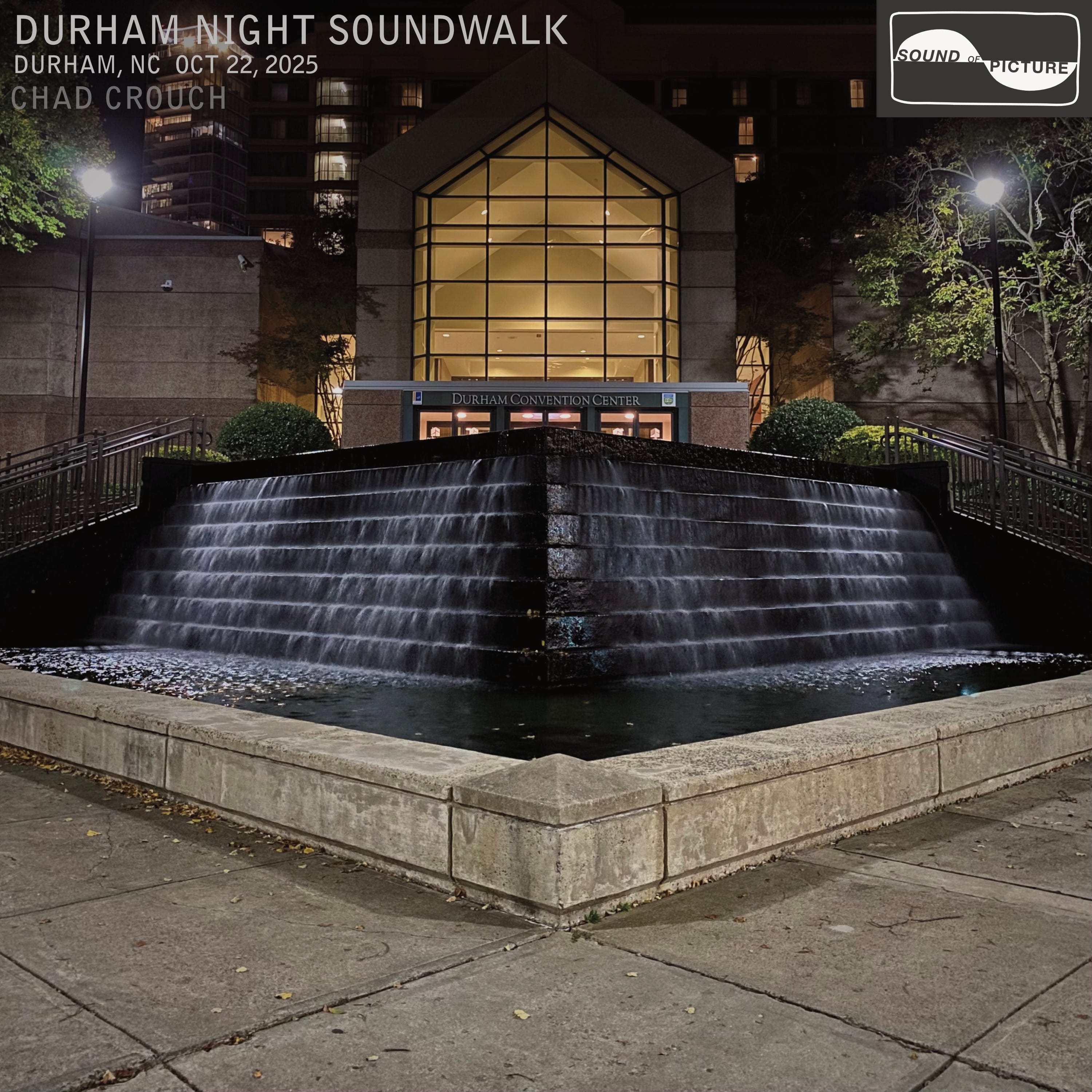 Durham Night Soundwalk 18.09.2026 27mLast year, around this time, I travelled to Durham, NC for a record label conference. The city reminded me of Eugene, OR, where I went to school for a short time. Both are university towns. Durham has a bigger population, and is just one node of a much larger urban area, but the downtown cores are similarly compact, pedestrian-friendly, and relatively quiet.My mission at the conference was to figure out how to grow my business and innovate my way toward prosperity. A tall order. Given that my business model is hyper-niche—capturing environmental recordings and creating instrumental musical suites—I was sifting ideas and prospects, feeling good about taking time to reflect and plan. As I walked to an evening event downtown, I was taken in by the sound of crickets in a sparsely filled surface parking lot. We have crickets in Oregon, of course, but perhaps not as many in our cities. The sound was both familiar and novel. I had my Sennheiser binaural headset in my pocket, and decided to capture the moment. From there I took a meandering walk into the heart of the city. This is one of my first urban soundwalks in the US—something that had long occurred to me to do, but never seemed particularly promising, aesthetically or commercially.But, as I was feeling the sensory excitement that comes with being in a new place, I reasoned it was high time to experiment. I let my ears lead the way. There are urban sounds throughout the recording, but they largely seem confined to the auditory horizon. The near field sound of the city is so quiet it could almost read as pastoral. As I padded into the downtown blocks, a fountain in the plaza of the Durham Convention Center beckoned me toward it. The shimmering sound put me in a kind of audio trance. I just stood there for several minutes—long enough to become self-conscious—figuring passersby might take me for a tweaker staring at the ground. I took a photo of the sidewalk to memorialize the moment.I felt a peace wash over me there, surrounded by people, cars, trains, energy, life. It was all very ordinary, but as I stood listening, I began to sense the extraordinary qualities of it too. I know that might sound hokey, but it’s true. I tried to convey that feeling in the score. Maybe it will translate, listening to it? That’s the hope, anyways. Once again, thanks for reading along and listening. Durham Night Soundwalk is available on all music streaming services September 18, 2026. This is a public episode. If you'd like to discuss this with other subscribers or get access to bonus episodes, visit chadcrouch.substack.com/subscribe
-
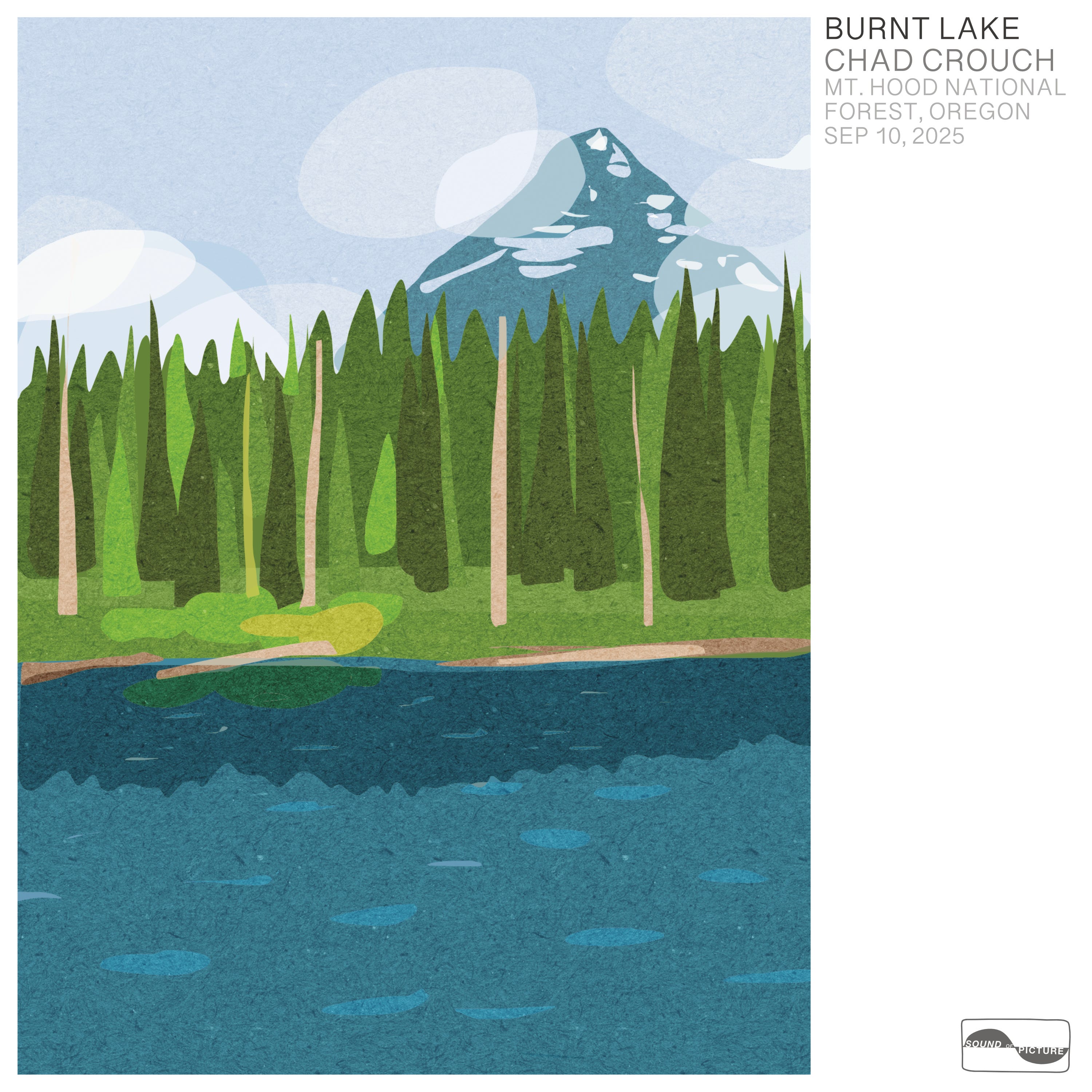 Burnt Lake 04.09.2026 27mWhat is the hike up to Burnt Lake without the greyed spectral snags of ancient old growth, killed, but not entirely destroyed, by fire? Would it be like walking through a graveyard with no gravestones? The stand of trees along the trail is uniform, almost homogenous. A mix of hemlock and Douglas-fir.Scattered among these conifer poles are columns, smoothed and greyed, sometimes hollowed out. They can measure four times as large in diameter. These are the markers of the great fire that gave Burnt Lake its name. The forest fire of 1904 started from a homesteader burning slash near what is now Rhododendron, on Aug 25th of that year. Dense smoke engulfed the slopes, reportedly blanketing Government Camp so heavily that visibility dropped to under half a mile. Another fire in 1906 burned off what the first one didn’t consume.On my way up I stopped at locations that struck my interest, both visually and sonically. Due to technical difficulties with my ancient iPad, however, I only made three sketches on this outing. The first was where a spring rivulet meandered with the trail:When I arrived at the lake, the mountain was obscured by clouds.The clouds were moving; shredding, scattering, opening, closing. The effect was tantalizing, revealing glimpses of Mount Hood, a looming sentinel across the valley at 11,250 ft tall. Burnt Lake is a glacial tern. As alpine glaciers expanded from the crest of Zigzag Mountain in the Pleistocene, ice carved out a steep-walled cirque amphitheater beneath East Zigzag Mountain. The lake basin is scooped directly out of volcanic rock. Morainal deposits impound the water, allowing snowmelt and spring water to pool into the basin.The clouds brought rain; short bursts of precipitation playing the placid lake surface and leafy margins like a chorus of little drums. I sat on a log absorbing it all, sketching the scene on my iPad. While my second attempt adorns the cover at the top, my first quick study looked like this:Thanks for reading along and listening. Burnt Lake is available on all music streaming services Sept 4, 2026. This is a public episode. If you'd like to discuss this with other subscribers or get access to bonus episodes, visit chadcrouch.substack.com/subscribe
-
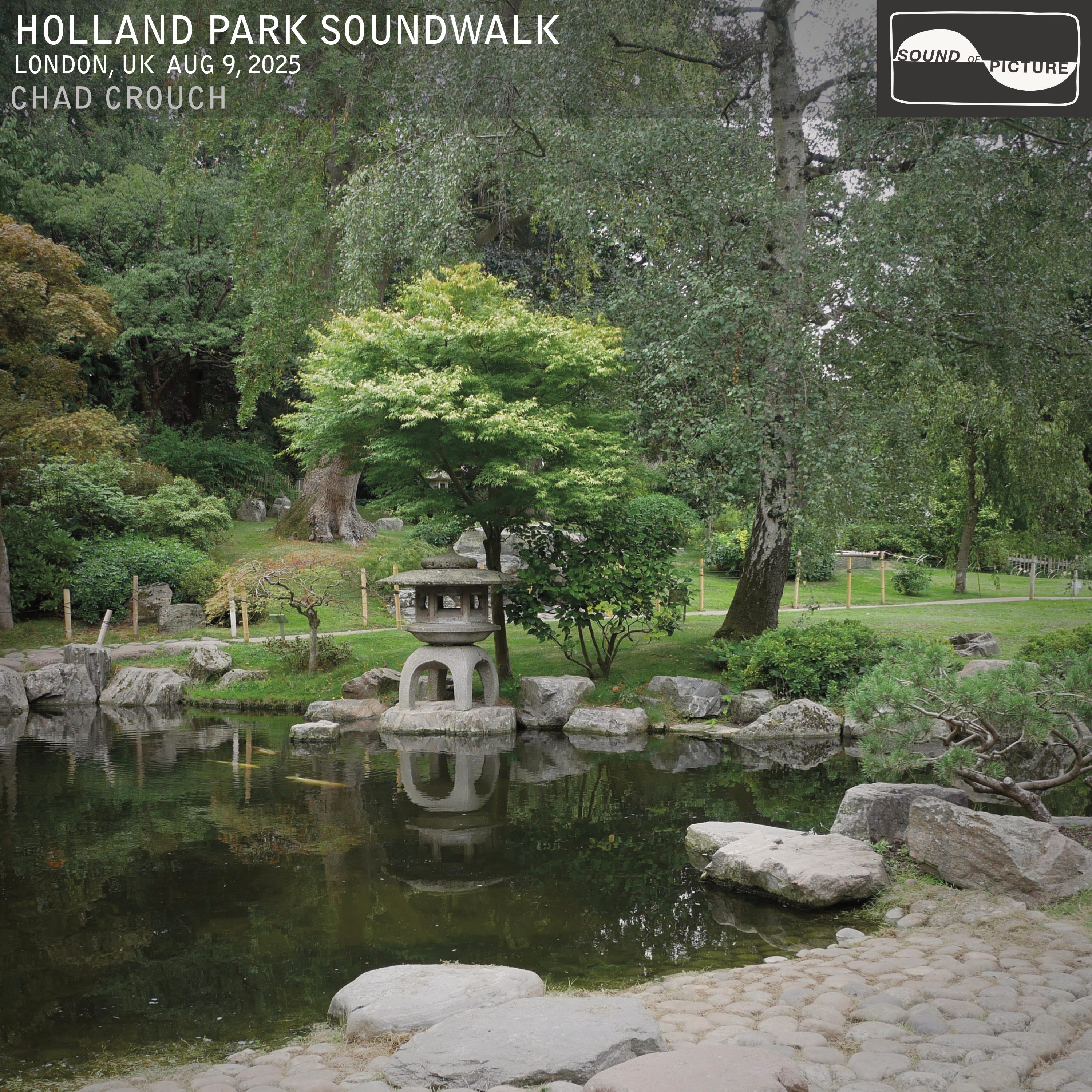 Holland Park Soundwalk 14.08.2026 30mToday we are visiting Holland Park in west central London. But before we do, let’s zoom out. If you look at a map of central London you’ll see, within the spiderweb of roadways fanning out from the Thames, hundreds of small green rectilinear plots. Where I live, on the west coast of the United States, this symbology tends to translate as parks or open spaces, accessible to the public. Not so in London. The majority of these smaller bits of green are private parks; fenced, gated and surrounded by tall hedges. You need a key to get in.Thankfully the much larger green spaces, including the Royal Parks, are open to the public. The Royal Parks trace back to Henry VIII seizing land for royal deer hunting. In Hyde Park, Kensington Gardens, Regent's Park, and five others you’ll find a mix of woodlands and meadows, where Londoners now gather to commune with the naturalistic landscape in genuinely massive numbers. Holland Park is something of an outlier in this mix. The 54 acre site dates back to the 1600’s as the private gardens of Cope Castle, a mansion originally built on a 500 acre estate for Sir Walter Cope. The Youngest of Cope's daughters married Henry Rich, who became the 1st Earl of Holland in 1624, giving the house, and eventually the park, its name. Much of Holland House was destroyed in Blitz bombing raids. An Act of Parliament in 1953 finalized the sale of the estate to the government, with part of the grounds opened to the public that year.Holland Park feels smaller and more intimate than its acreage suggests. It’s quiet. Its few discrete entrances contribute to this feeling of privacy and intimacy. It’s also compartmentalized. It’s rigidly formal in the Dutch Garden;While woodlands sprawl on the north side;And a unique blend of the two near can be found near the center, in the Kyoto Garden:And so, it does not sound like the Royal Parks. There are far less visitors, more wildlife density, and less traffic noise from boulevards on the margins. To put it plainly, it’s my kind of city park.For my soundwalk score, I sought to capture the relaxed and hushed feel of the park in musical movements using electric piano, synthesizers, tuned percussion, electric bass, and woodwinds.Thanks for reading along and listening. Holland Park Soundwalk is available on all music streaming services August 21st, 2026. Author’s Note: I mixed up my dates, so this post arrived one week early. My new release for this week is Amsterdam Dusk, available under the artist name Listening Spot, on all streaming platforms today, Friday, August 14th. This is a public episode. If you'd like to discuss this with other subscribers or get access to bonus episodes, visit chadcrouch.substack.com/subscribe
-
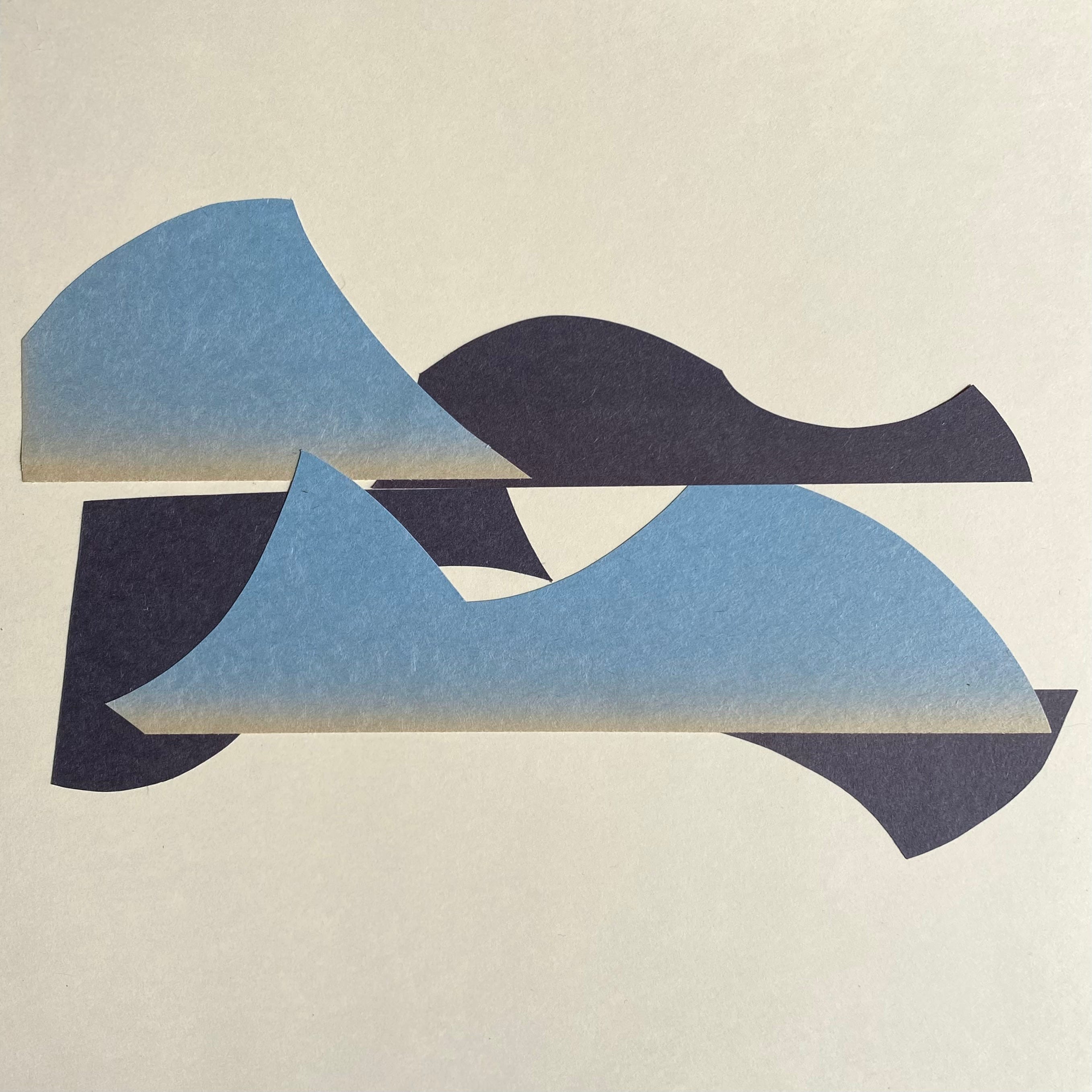 Vondelpark Soundwalk 31.07.2026 6mThis is a free preview of a paid episode. To hear more, visit chadcrouch.substack.comBefore I begin, just a quick plug for my son, Sam, who I’ve mentioned briefly on here. Today marks the release of his first single, ever; “Tides”.Sam has developed really quickly in the last year. He started composing his own songs six months ago, and started making recordings just three months ago. He has a handful that are finished, but is in no particular hurry to release a debut album. “Tides” showcases his ear for melody, as well as the ease and expression he brings to the piano bench. Daily he fills our house with beautiful music, and now yours can be too! He asked me to make a cover, and I obliged with a construction paper collage that embraced the sun-bleached edges:Favorite, add, share, and smash that follow button wherever you stream music!Now, on to today’s soundwalk:Amsterdam has several lovely parks. Vondelpark is not the biggest, nor the most serene, but it is the oldest and perhaps the most beloved. It’s just so comfortable. It vibrates with life. It’s distinctly beautiful.The park almost feels like a series of outdoor living rooms. Every one is apportioned an open space, often a meadow, that gracefully embraces its visitors and beckons them to stay.Visitors can also find a quiet corner, among stately houses; a cafe overlooking a pond; a contemplative honeycomb garden; a sunny wading pool; a bench in the shade.On a summer night it seems like the park can accommodate thousands, affording the visitors a rich experience of togetherness without feeling crowded or overly noisy.This soundwalk was recorded on August 13th, nearly a year ago as I write this, in the pleasant afterglow of a warm summer day. Park visitors were spread out on blankets enjoying each other’s company, amongst the boisterous calls of Rose-ringed Parakeets. Cyclists clicked past with a little less urgency than during the day. The register of ease and joy can be heard within indiscernible snippets of passing conversations.To say I was charmed by Vondelpark is an understatement. I was bowled over. I wanted to do right by it with the music I composed for the soundwalk. I tried to incorporate intimate, convivial moments amongst broad sweeps; moments of steady tempo, and free time, moments that whispered and moments that welled up.Thanks for reading along and listening. Vondelpark Soundwalk is available on all music streaming services today, July 31st, 2026
-
 Newcastle, UK Soundwalk 24.07.2026 14mA short post today, for a short piece. First off, one thing to be clear about is this is not Newcastle upon Tyne, UK Soundwalk. This is Newcastle, Northern Ireland, UK, at the foot of the enchanting Mourne Mountains. It’s quite a charming little seaside town. Not too posh, not too shabby. Maybe this even comes through in the environmental recording? Newcastle just feels so tucked-in. You can hop on the trail that starts just above sea level on the south end of town and hike all the way up to Slieve Donard, Northern Ireland’s tallest peak. Pretty remarkable really, and a stunning landscape. I did make a recording of said hike, but have not set about composing music for it yet. This short vignette of a piece came with the same sense of discovery and happenstance that accompanied landing in the little town by chance for a night last summer.Thanks for tuning in. Newcastle UK Soundwalk is available on all music streaming services today, July 24th, 2026PS. Last week I released another miniature album. Otter Point marries the sounds of the southern Oregon Cast with a composition for electric piano, synth, and dulcimer that plays well with this one, I think. Otter Point is available under the artist name Listening Spot on all music streaming services as of July 17th, 2026. This is a public episode. If you'd like to discuss this with other subscribers or get access to bonus episodes, visit chadcrouch.substack.com/subscribe
-
 Maple Pass Soundwalk 10.07.2026 6mThis is a free preview of a paid episode. To hear more, visit chadcrouch.substack.comMaple Pass is a mountain pass loop trail in North Cascades National Park. It’s 6.8 miles, rated hard, and scores a 4.9/5 on alltrails.com. It’s about as good as it gets, really. I went there with my son a year ago now, to the day. It was great. Clear skies, warm sun, wildflowers in bloom, birds singing.A few weeks ago I mentioned a nearby hike, Cascade Pass, that didn’t go down quite like we hoped. This one happily exceeded all expectations.The trail rises from Rainy Pass, a subordinate saddle to the Cascade range divide about 5 miles to the east, at Washington Pass. Here the Pacific Crest Trail crosses Hwy 20 on its final 60 mile push toward the Canadian border. Emerging from the subalpine conifers, the trail traverses alongside Lake Ann, an emerald pool in a cirque with a picturesque tiny island. I am a slower climber than my son but I tried to keep apace, fighting the urge to stop and just listen for a spell. Warbling Vireo, Hermit Thrush, Western Wood Pewee, Dark-eyed Junco, Canada Jay and the peculiarly raspy (to my ear) Mountain Chickadee are heard along the trail. And, of course, the scrunch, scrunch of footsteps on the coarse trail.Climbing to Maple Pass, the trail affords vistas of the stunning North Cascades. Red Indian paintbrush, lupines, and bistort are scattered among the granite boulder shards on the ridge. It’s the type of scene that brings to mind the lyric, “the hills are alive with the sound of music”. My score picks up on this ebullient vibe by reaching for a painterly sound palette: big, reverb-drenched synth pads and undulating swarms of synthesized bell tones evoke the panoramic views adorned with colorful life on the margins. This is not intimate piano suite fare.It’s a popular hike on a summer day, and we certainly were not alone. The environmental audio has been spliced to focus on the biophony, as has been the case for most of my soundwalks. When we made it back to the trailhead I was astonished at how quick we made the transit. We shaved one or two hours off the estimated hike time, and yet time seemed to slip so slowly while we were out there.Thanks for reading and listening along. If you find yourself in the North Cascades and have the time and ability, don’t pass this hike up!Maple Pass Soundwalk is available on all music streaming services today, July 10th, 2026.
-
 Wildwood Trail Soundwalk 26.06.2026 7mIt’s funny how arrivals can turn into quiet affairs. Like, say, you’re walking along a trail with a friend and you get to a view or a waterfall or something and then slip into quiet. That’s how I’m feeling with this arrival.It is the arrival of my first LP, and the sound recording it contains, which both captures and takes inspiration from The Wildwood Trail in Portland, Oregon’s Forest Park. To recap, it’s a 30 mile linear trail through a 5000+ acre forest in the city. I’ve written quite a lot about it: its magnetism, its quirks, its creation, its history, its wildlife, the volunteers that keep the trails clear, and the art that it inspires. You can read up on it while listening to the forest ambience in every quarter, in my ten part series: 1, 2, 3, 4, 5, 6, 7, 8, 9, and this one makes 10. It’s virtual forest bathing! And now, well, here we are. The end of the trail, the launch of the album, and also a new beginning. It’s kind of strange to have an artifact after creating so many soundwalks memorialized only in pixels and a digital ephemera. This is a tactile thing in comparison, and while not as simple to distribute, it’s reassuring on some level. It turned out pretty good, if I do say so myself.It’s really amazing how the material holds the sound. It's all contained in the microscopic ridges of the infinitesimal canyon that spirals along the surface of the vinyl disc. I was curious how long that tiny canyon is, if you stretched it out and measured it, so I turned to Claude to work it out. It obliged my story problem in two seconds and spit out: approximately 3000 meters or 1.86 miles. I don’t know why, but I found that fascinating; picturing the groove like a gossamer ribbon spooling out on the Wildwood Trail itself for nearly 2 miles, shimmering in the wind like a sound wave. I must pay my respect and gratitude to the kind people at MusicOregon’s Echo Fund, and The Portland Office of Arts and Culture. Without an Echo Fund Grant this would not have come to pass. Thank you, Thank you. And to all of you who are reading this and who have shared moments of my journey or listened to my music, thank you. I hope this finds you well. Wildwood Trail Soundwalk is available on all music streaming services today June 26th, 2026. Find the limited run LP on Bandcamp. This is a public episode. If you'd like to discuss this with other subscribers or get access to bonus episodes, visit chadcrouch.substack.com/subscribe
-
 Cascade Pass Rain 05.06.2026 38mIt was supposed to be the highlight of our trip. I spent a few days with my son hiking in the North Cascades last summer. The North Cascades is, according to one YouTuber who titled his video The Most Breathtaking Hike of my Life!, the “American Alps”.It’s also one of the least visited National Parks in the US lower 48. It ranks as the second-least, to be precise, after Isle Royale National Park in Michigan, a large island in Lake Superior which requires over 12 hours travel time from the closest major airport. All of this to say, it’s a mystery to me why so few people visit the North Cascades. We saved this hike for our last day, because we were staying on the east side of the range and the hike was on the west side. What we failed to comprehend was the east side forecast calling for clouds meant west side rain. The North Cascades operates like a giant squeegee, scraping the moisture from the cloud layer. And so it was, that the grand vistas of chromatic glacial valleys were replaced by a visibility of 100 feet or so; a blanket of silvery grey. The hike started at the end of a gravel spur road. The trail was essentially switchback after switchback for over 3 miles, gaining 1,700 feet in elevation as it climbed the SW flank of Sahale Mountain under a conifer canopy. Streams and seeps were alive with water coming down the slope. The canopy was a safe, warm refuge for the birds on that day. They called to each other as we climbed. I have to say, I was really enjoying the thick fog. The construction of the trail was superb; a nice even climb. The canopy filtered out the fine rain. I focused my attention on the near field wonders. The numerous little waterfalls were vivid landscapes in miniature. The wildflowers and mosses seemed to glow in the visibility deprivation tank. As we got closer to the exposed ridge traverse the fog thickened and heavy rain began to fall. It felt like we were in the clouds. “Every cloud has a silver lining,” according to the Milton poem that birthed the phrase. The metaphor of the bright cloud edge is taken here to mean every negative situation holds positive qualities, so long as you are able to notice them. We made the call to turn around before the pass, which was only a few hundred yards away. The experience didn’t match the expectations we set for it, and I’d be lying if I said it wasn’t a disappointment for both of us. Still, it was memorable and special for its dreamlike quality. As the visible was minimized, the audible was maximized; ephemeral, resonant, and enveloping.Thanks for joining me here. Cascade Pass Rain is available on all music streaming services today June 5th, 2026. Also, the first two singles from my vinyl LP release Wildwood Trail Soundwalk are also out and available to stream. Find the limited run LP only on Bandcamp. (20% off pricing is extended through release day, June 26) Lastly, I posted Part 7 from my in-depth series on the Wildwood Trail a few days ago. So long for now! This is a public episode. If you'd like to discuss this with other subscribers or get access to bonus episodes, visit chadcrouch.substack.com/subscribe
-
 Paris Rain 08.05.2026 6mI alluded to a crop of urban soundwalk and soundscape recordings on the way a few weeks ago with Amsterdam Dawn. We’re still easing in with another Listening Spot treatment: a musical suite in conversation with a continuous environmental sound recording. This is Paris during an evening summer rain. It’s a vignette, recorded from a 5th floor room in the 3rd arrondissement. Just over 6 minutes long. The composition resembles the series of mini albums I offered up last year as Sleeping Animal. The Pianet electric piano meanders its way along, creating a scaffolding for various washes and textures. Something about the drips in the foreground and sizzle of puddles in the narrow street below are soothing. Paris Rain is available under the artist name Listening Spot on all streaming platforms Friday, May 8th, 2026.Thanks for reading and listening! This is a public episode. If you'd like to discuss this with other subscribers or get access to bonus episodes, visit chadcrouch.substack.com/subscribe
-
 Snow Lake Soundwalk 01.05.2026 31mWe are back at Tahoma / Mount Rainier this week for another soundwalk. These hikes were made in June, 2024, on a weekend father and son getaway. The recordings were edited to focus on the natural soundscape (but you can make out four feet scuffling along the trail at certain points.)I’ve always felt a strong pull to Tahoma, having hiked around it on the Pacific Crest Trail in August, 1994. It snowed that August in the higher elevations; the biggest, wettest snowflakes I’ve ever seen and felt in my entire life. It snowed and rained for three days, and it was all I could do to keep my down sleeping bag dry. I was soaked. It’s one reason my experience of the mountain was so dreamlike. I sensed it, but I didn’t really see it. So it goes with mountains, and so it was that I was eager to see it and experience it with my son, thirty years later. We arrived late in the day. Skies were clear and the sun’s rays bathed the alpine meadow in golden light. The southeastern face of the mountain loomed over our shoulder as we climbed the trail to a picturesque bench. Birds were singing their hearts out. Western Warbling Vireo, Hermit Thrush, Fox Sparrow, Pine Siskin, Townsend’s Warbler, Yellow-rumped Warbler…. We had a snack there, and I set my recording hat 25 feet away to soak up the soundscape. Bench Lake sat below us; its placid crystal clear water reflecting the subalpine setting. Both Bench and Snow Lakes sit in a cirque—a giant amphitheater with the mountain at one end—that was formed over time by glacial erosion. This amphitheater effect, I think, can be discerned in the birdsong; almost like they chose the spot to amplify their crooning.Listening back, I’m struck at how the creek—Unicorn Creek—has the same urgent sound of Comet Falls; that wideband shhh of a young creek coursing through steep, boulder-strewn valleys. Such great names here. Approaching Snow Lake, the creek slowed as it moved through a shaded gully where snow still covered the trail. It was like something from a movie, painted in blue tones of snow reflecting the evening sky. We scrambled down to a boulder at the edge of Snow Lake and ate M&Ms. Snow Lake was quiet and so were we.Since then, my son has grown. Instead of two inches shorter, he is now at least two inches taller than me. In the time since, he’s also made significant progress on the piano, and is now composing songs that sound to me like they could have been written by the artists we both admire: Dustin O’Halloran, Joep Beving, Sergio Diaz De Rojas… It’s almost like life has been speeding up. The pace of change is dramatic. And yet I look at myself in the mirror, and I see the same person, with lines slightly more drawn. My changes are largely hidden from view, my advances scarcely measurable. People make pronouncements about how one decade of life will feel compared to another—as if we move through them all the same. “Make memories,” they say, as if it’s just that easy.Thanks for coming along. As always Snow Lake Soundwalk is available on all music streaming services today, May 1, 2026. This is a public episode. If you'd like to discuss this with other subscribers or get access to bonus episodes, visit chadcrouch.substack.com/subscribe
-
 Comet Falls 09.04.2026 7mThis is a free preview of a paid episode. To hear more, visit chadcrouch.substack.comComet Falls is on the south side of Tahoma (Mount Rainier) offering a nice four mile roundtrip hike, perfect for a day when the mountain is socked-in. It’s one of the most impressive falls that I’ve hiked to, dropping about 320 feet (98 m) in a vertical plunge from a hanging valley into a pretty subalpine canyon.I’ve mentioned this before, but I think waterfalls rarely translate the way you’d hope they would in sound. They’re so dazzling to look at, and it’s exhilarating to feel the rush of wind and spray near the bottom, but not all that interesting to listen to, it turns out. They kind of sound like FM radio static: Shhh. Most of them anyway. And alas, Comet Falls is no remarkable exception on that score.And so it goes most any waterfall may be more sonogenic when captured in a soundwalk format, as this captures a dimensionality that isn’t conveyed in a fixed point recording. The hike to Comet Falls follows Van Trump Creek through the canopy and along hillside openings with talus slopes, where you might find Pika (sounding a high-pitched peep). The wildlife was subdued under the grey sky on this day. Varied Thrush, Dark-eyed Junco, and Pacific Wren can be heard to the attentive listener in headphones, but this is mostly a water soundwalk. Our journey takes us to the waterfall viewpoint and follows a return path for a couple minutes. Another thing about waterfall sound: unless you get really close (like next to water splattering on rocks) it’s difficult to discern when you are “there”. This is another composition where I’m keeping to the low octaves of a particularly sonorous electric piano. (It would not sound good on a phone speaker.) I do this to preserve listening space for all the water and wildlife frequencies, and also because I just like the dark (as opposed to bright) vibe for this one. I’ve always thought that a waterfall walk would make an interesting canvas for a super-minimal synth score for droning synth pads and very slowly morphing pitches and timbres, mirroring the manifold sound of the waterfall’s creek outlet. This is not that, exactly. Though it occasionally goes there, it’s more melodic and approachable. Written in a D minor, the composition evokes the cloudy sky and the slow climb through the valley. The harmonics are ponderous, peppered as they are with sustained second chords, and textured with organ washes and soft, flutey synth pads.Thanks for reading and listening. Comet Falls Soundwalk is available on all music streaming services tomorrow April 10th, 2026.
-
 Amsterdam Dawn 02.04.2026 4mThis is a free preview of a paid episode. To hear more, visit chadcrouch.substack.comOn many a post I’ve told a story about how I found a spot somewhere, that despite being within an urban area, sounded as if it might be in the deep woods. As a practical matter this tends to rely on geologic and erosive forces creating canyons and acoustic gullies of one sort or the other. While I find this sort of thing interesting, I’m mindful it doesn’t spark other peoples imaginations quite like my own. So, it is with some reluctance that I advance this line of thinking yet again, but with a twist. Bear with me.One thing that is not abundant along the Netherlands coastline are hills, canyons, and gullies. It’s for this reason, the bicycle is embraced as a primary form of transportation for many (maybe most) people. Amsterdam is alive with cyclists in part because the flat landscape is so conducive to cycling. And, because more trips are made via bicycle, the inner city does not pulse with automobile traffic sounds in the same way that a hilly, post-industrial city might. San Fransisco, for example. Or wherever. All of this is background to presenting to you today the first of many soundscape and soundwalk recordings that embrace anthropogenic sounds (alongside the wildlife sounds) in these urban environments. Consider this an easing-in.We are getting our feet wet, so to speak, in the Oud Zuid district of Amsterdam, alongside the Noorder Amstelkanaal, as the city wakes up, on a summer day. Sirens mix with songbirds in a strangely musical way. Overall, though, it’s astonishingly quiet. The buildings and canals form an engineered canyon, of sorts. It’s well known that travel can spark a person to reconsider assumptions; to make new associations. I guess that can be said of my travels in Europe last summer, leading me to re-evaluate my approach to making environmental recordings. In some ways the cities sounded familiar to the one I call home. In others, quite distinct. On the whole, I was able to find new appreciation for these city sounds in general, hearing them with fresh ears. There is a futility in attempting to record soundscapes free of any anthropogenic sound. Our noisy machines routinely puncture the soundscapes of even the most remote locations. It comes as a relief to me, therefore, to chart a new course that embraces the totality of sound, with less rigidity. Amsterdam Dawn is available under the artist name Listening Spot on all streaming platforms tomorrow, Friday, April 3rd, 2026. Thank you for meeting me here; for listening and reading. There’s a lot to read and hear in this modern world. I’m grateful for your interest in my little corner.
-
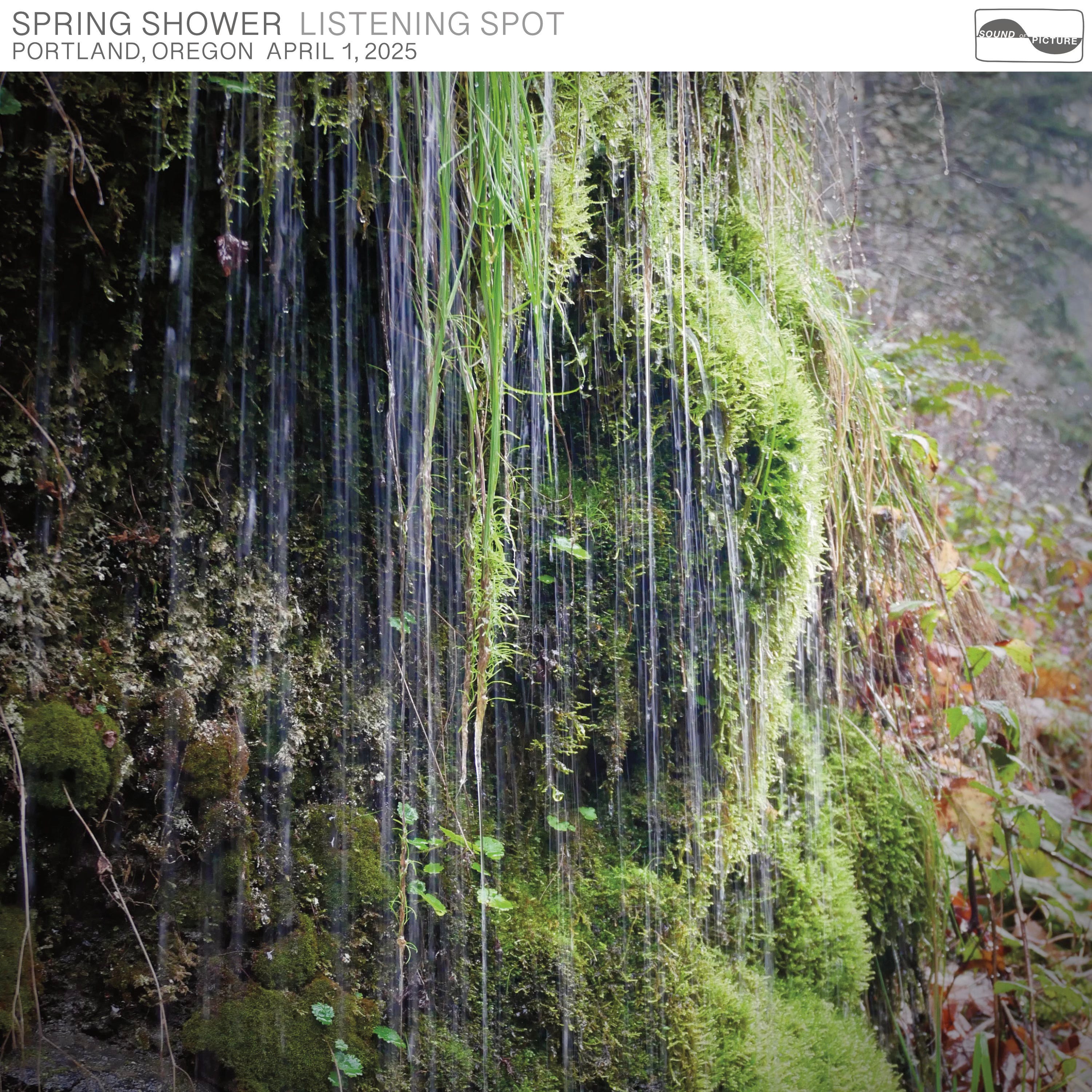 Spring Shower 20.03.2026 8mTraveling around, I’ve become aware of how Pacific Northwest rain is different from rain patterns in other regions of the US. Take Texas, for example. Texas rain pours. Houses don’t have gutters there, presumably because they can’t engineer them large enough to accommodate the deluges reliably. Storm water infrastructure is three times the size of what I see around here. In contrast, Oregon rain is persistent. Drizzle can last for days. It’s kind of like the tortoise and the hare, I guess. This soundscape was recorded in Forest Park last year around this time, on a dead-end, unnamed trail that doesn’t see a lot of use, but nonetheless features a sturdy old bench. It is a pretty sweet listening spot for this reason, and this particular time slice offers a pretty accurate sound portrait of our soft rain. Our soft power. Did you know that the Pacific Temperate Rainforest—a bioregion extending from the northern California redwoods to the coastal forests along the gulf of Alaska—can pack more carbon per acre than a tropical rainforest like the Amazon? The Pacific Temperate Rainforest is the second-most dense biomass repository and carbon sink in the world (bested only by the Eucalyptus regnans forests of Victoria and Tasmania, Australia) and it’s what gives our Pacific Northwest rain its unique character (and sound). The Pacific Temperate Rainforest operates like a giant lung. Just as a lung draws in air, extracts what's vital, and releases what the body needs to stay alive, the Pacific Temperate Rainforest breathes on a continental scale, pulling carbon dioxide out of the atmosphere and locking it away in massive old-growth trunks, roots, and the deep organic soils beneath them, while exhaling oxygen and releasing moisture that cycles inland as rain. The forest doesn't just store carbon passively; it actively pumps water vapor into the atmosphere, seeding clouds and feeding rivers that sustain salmon, which in turn fertilize the forest floor when they die. It’s a closed loop where nothing is wasted.Spring Shower is available under the artist name Listening Spot on all streaming platforms Friday, March 20th, 2026. I’ve made it available here in its entirety with the idea it might be useful. Thanks for reading and listening! This is a public episode. If you'd like to discuss this with other subscribers or get access to bonus episodes, visit chadcrouch.substack.com/subscribe
-
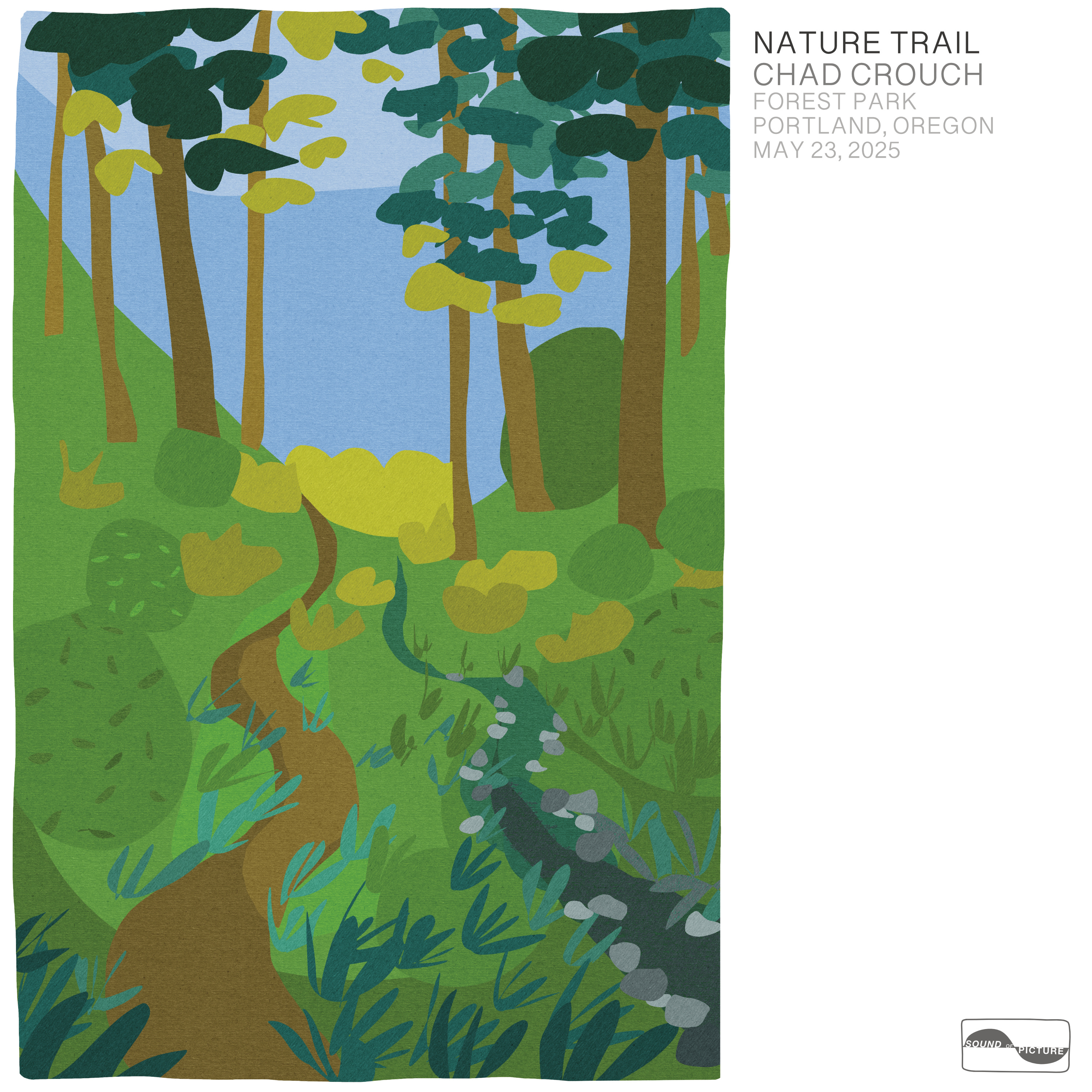 Nature Trail 13.03.2026 27mThis is a story about a trail called Nature Trail. At the heart of the story is a simple question: What is nature for? Feel free to click play above to listen to the soundscape of Nature Trail as we ponder this question. Nature Trail was built in the 1960’s in the interior of the roughly 5,000-acre nature park that had been dedicated 20 years prior, but received little attention in the way of development. Indeed, the most newsworthy question in those early years seemed to be what should we call it? In 1957, a call for suggestions—perhaps favoring something more showy than the functional, socially adopted name, The Forest Park—yielded many (Skyline, Tualatin, Wildwood, Tualatin Mountain…) but the de-facto name won the day. Officially, “Portland’s Forest Park” was favored by one vote over “Skyline Forest Park”. The “Portland’s” part never seemed to really catch on.Actually, the biggest changes to the park, to this day, came in response to a 1951 fire that burned over 1200 acres in the center of it. Fifteen emergency access fire lanes were constructed in the early 1950’s, broadly perpendicular to the slope of the Tualatin Mountains, like rungs on a ladder. What was nature for in the 1950’s? Accessible nature was becoming scarce. The public wanted protections from both development and the threat posed by wildfire. These fire lanes likely became informal points of entry for the park users in the early years. A network of hiking trails was modest: around 10 miles in total, on the southern end in 1960. Today there are over 80 miles of trails.What was nature for in 1960? A refuge to visit and admire via trails and lanes. Today, Nature Trail still harbors subtle clues to its origins There’s an old steel pole gate and concrete bollards covered by so much moss they could pass for stumps at the end of Fire Lane 1. It all appears quite out of place in the quiet interior of Forest Park. Nearby there is a meadow-like ridge with a couple weathered picnic tables. Starting in the late 60’s and running for about two decades or so, this was the drop zone for thousands of children in a campaign to foster a connection with nature, formalized in 1968. A rare 1968 publication in the Library Use Only stacks of Multnomah County Library holds the key to understanding Nature Trail: Portland’s Forest Park Nature Trail was a 32-page interpretive guide authored by Oregon Outdoor Education Councils as informal curriculum for a generation of school children. Fifty-two markers on Nature Trail were keyed to entries in the guide. Midway through the trail was a shelter, bathroom and campfire area. Bus drop off and pickup areas were located on each end. What was nature for in 1968? Nature was a common good. It was a living lab for learning about the interconnectedness of plants, animals and humans, as stated in the booklet introduction:If you are quiet and observant, you may see some of the animals that live here.The forest community is a living area of plants and animals. It has many parts. Some tall plants shade everything on the ground. Under these grow the medium size and the small ground plants. Part of the forest community is the soil and the many organisms that live in the ground. It is the animals that live in the forest. It is the water that comes from the forest. The forest community is many more things. (Portland’s Forest Park Nature Trail, 1968)Mind you, this was all designed and implemented a couple years before Earth Day made its debut. A 1970 Oregonian article about Nature Trail noted the large coalition involved— the Park Bureau, Multnomah County schools, U.S. Forest Service, Oregon State Game Commission, Industrial Forestry Association, and others. Much of the trail building for Nature Trail was done by the Neighborhood Youth Corps, employing low-income urban teenagers in public works projects. It all took coordination and vision. Precisely who the masterminded Nature Trail isn’t easily discerned, but there is little doubt Thornton T. Munger was a galvanizing force from the late 40’s into the 60’s, inspiring people to work together, while advancing principles of conservation and education in the nascent Forest Park.Munger’s own connection to nature can be traced back to growing up next to an eighteen-acre natural area called Hillhouse Woods in North Adams, Massachusetts, which fostered his lifelong interest in forests. In 1908 he was hired by the US Forest Service, and trained under Gifford Pinchot, who between 1905 and 1910 oversaw a rapid expansion, roughly tripling the number of National Forests and acreage. In his retirement, Munger chaired the Committee of Fifty, convincing city leaders to designate the lands as a nature park. The committee eventually became the Forest Park Conservancy, that to this day provide a Nature Education Program with free public events, organize volunteers, raise money, and conduct community outreach.In 1960, Munger—in collaboration with C. Paul Keyser—wrote a 32 page report entitled The History of Portland’s Forest Park. In Part IV A Look Ahead, they write, In a few years nearly a million people will be living within a few miles of the Forest Park. Residences will crowd about it on three sides and industry will dominate its eastern edges. …There will be pressure to widen the roads, to straighten the curves, to pave, to build more roads. This should be resisted, for this “wilderness within a city” is not a place for speeding motorists; here there should be no need for haste. ...Here within city limits will be a continuous forest 7½ miles long. The roads and trails will be under over-arching trees, varying from virgin forest with giants up to 8 feet in diameter, to thrifty second-growth stands of tall Douglas fir.What was nature for in the 1960’s and beyond?* To provide facilities that will afford extensive nearby outdoor recreation for the people and attract tourists.* To beautify the environs of Portland.* To provide food, cover, and a sanctuary for wildlife* To provide a site on which youth and other groups may carry on educational projects.* To grow timber which will in time yield an income and provide a demonstration forest.That last point became contentious within a couple decades. Limited timber harvests were being recommended by the committee up until 1975, when the Portland Parks superintendent, facing environmentalist pressure, ruled out selective logging as part of over-all park management. What was nature for in 1975? Forest Park was closer to becoming a quasi-wilderness area, protected from all resource harvesting. (The Forest Park Rock Quarry lease was terminated in 1979.) Fire suppression remained a primary concern, though seasonal manned fire lookouts were by then retired.So when and why did the Nature Trail program dissolve? It’s not clear when, and I can only speculate on why. For starters, interior access roads around the park were closed to motor vehicles sometime in the 1980’s. Therefore, any bus passage would have been met with more friction. The built elements of Nature Trail would have been approaching their expected lifespan: numbered posts would be weathered and broken, the shelter roof would have by then become what we now call a “living roof”: an ecosystem of duff, mosses and seedlings. Beyond that, the environmentalist awakening of the 1970s … This is a public episode. If you'd like to discuss this with other subscribers or get access to bonus episodes, visit chadcrouch.substack.com/subscribe
-
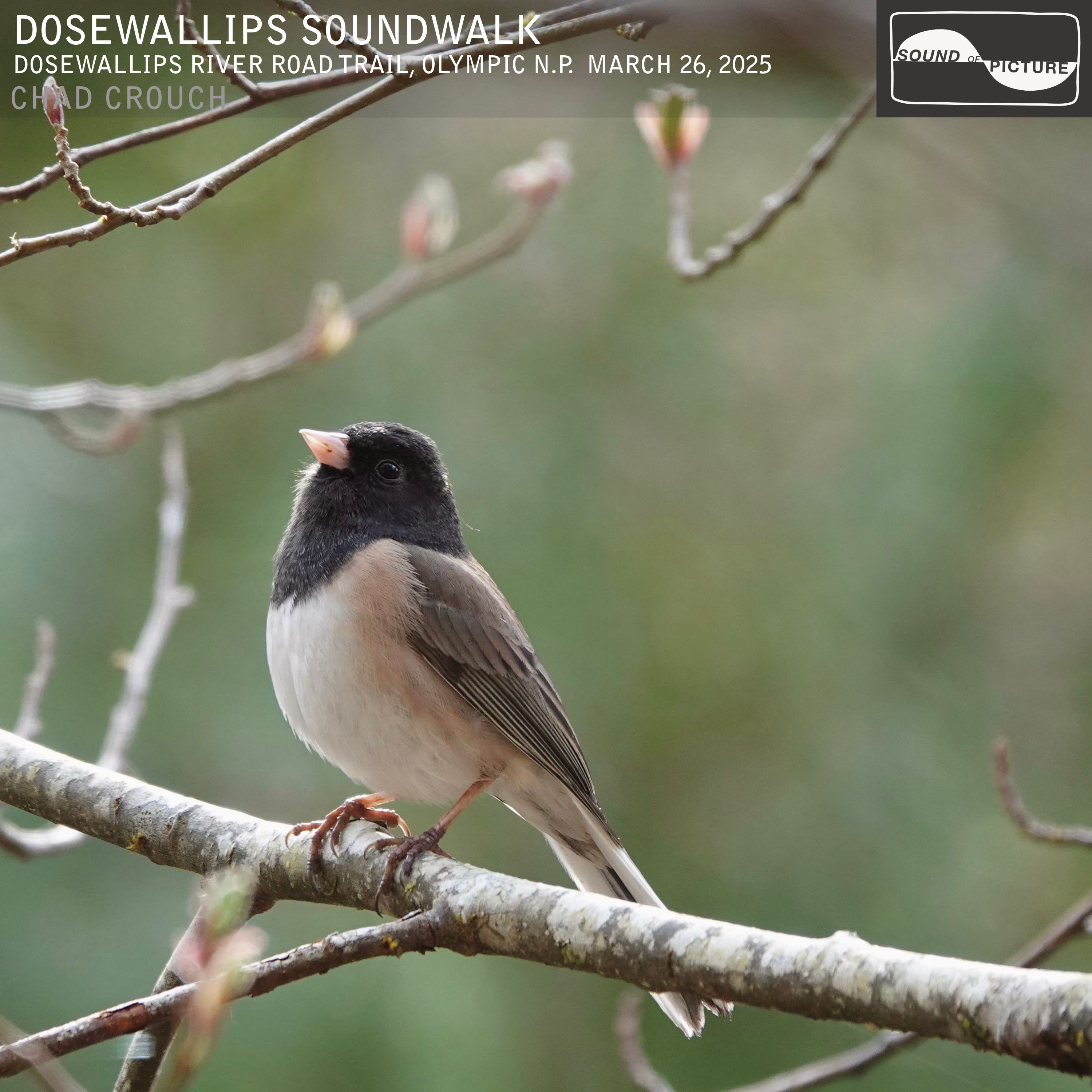 Dosewallips Soundwalk 13.02.2026 32mOlympic National Park is the 8th most visited National Park in the US. About 95% of the park is roadless and designated wilderness, making it one of the most wild and undeveloped parks in the entire National Park system. Many of these most-visited parks have a significant road footprint, which makes much of their interior accessible. In contrast, Olympic National Park is largely one big wilderness, absent of roads. There are highways encircling it, and a few spur roads reaching in a few miles, but none passing through the interior. Dosewallips River Trail is the remains of one such spur road that washed out in 2002. The road reroute/repair proved too costly, and so has added to the relative inaccessibility of the canyon. When paired with the East Fork Quinault River Trail, this makes an enticing 35-mile multi-day backpack traverse through Enchanted Valley in the southern interior of the park. The Enchanted Valley offers lush old-growth rainforests, towering mountains with countless waterfalls, and an iconic chalet, nestled in an absolutely stunning valley.This soundwalk barely scratches the surface of the wilderness soundscape that awaits the visitor here, but it’s an appealing teaser. In these lower reaches, small wetlands thrive, fed by creeks coming down the mountain, making for ideal frog habitat. Trilliums burst through the resplendent mosses found here. A Great Blue Heron perches above a creek channel. The name Dosewallips derives from a Twana Indian myth about a man named Dos-wail-opsh who was turned into a mountain at the river's source. Twana is the umbrella term for nine bands of Coast Salish groups that lived around Hood Canal, the largest being the Skokomish. As with so many tribes of the Pacific Northwest, a defining conflict the Skokomish faced over the last century was the salmon fishery collapse.The ironically-named 1855 Treaty of Point No Point established a roughly 5000-acre reservation at the Skokomish River delta for the Twana bands, roughly 30 miles south of where the Dosewallips meets the Hood Canal, part of the Salish Sea. The 1920’s-era Cushman Dam projects on the North Fork of the Skokomish not only blocked fish passage to the upper river, they also removed the water from the river, tunneled it through a mountain, and dumped it directly into Hood Canal. From 1930 to 2008 the North Fork of the Skokomish ran nearly dry. Because lower river flows no longer flushed sediment and debris in the lower river, it caused a devastating pattern of flooding in the Skokomish valley where two-thirds of the Skokomish Reservation is within the floodplain. After decades of legal struggle, the tribe reached a settlement in 2009 with Tacoma Power that resulted in a 2010 amendment to the dam’s federal license. This restored about 40% of natural river flows and gave the tribe joint management authority. The river now has considerably more water, a salmon restoration effort is in place on the North Fork, and the delta benefits from increased flows. Still, it’s just the first step toward restoration. The Skokomish valley is still flood-prone after 80 years of sediment aggradation, and the fish passage solutions are as yet underperforming. So, what does this have to do with listening to the sounds of the Dosewallips River? For me, listening to a place just naturally arouses my curiosity. Who is making the sound? Why is it called Dosewallips? Who named it? Where are they now? What will I find upriver, downriver? How will the sound change? How has it changed over time?That the mountain, river, and tribe were named after a mythical chief who was transformed into a mountain tells us something about a worldview tied to the language, where the landscape itself is imbued with not only personhood, but ancestry. Twana people viewed the river not as a resource, the land not as property, but as a living entity, as family. Coast Salish people spoke of animals with a similar non-hierarchical framing. Salmon were seen as gift-bearing relatives.This was such a departure from the Euro-American worldview it was, and is, both hard to grasp and easy to dismiss. With the benefit of hindsight, though, it’s worth questioning how the English language encodes a worldview that can lead to short-sighted outcomes.My score for the Dosewallips soundwalk is very relaxed and minimal; just four instrument voices in all. I drew inspiration from the frog choruses. It’s unusual for me to rest on an undulating single chord arpeggio for several minutes, but that’s what felt right for “Part 7, Frog Chorus”. Now that I know a little more about the area, I’m eager to make a return. Thanks for reading and listening. Dosewallips Soundwalk is available on all music streaming services today, February 13th, 2026. This is a public episode. If you'd like to discuss this with other subscribers or get access to bonus episodes, visit chadcrouch.substack.com/subscribe
-
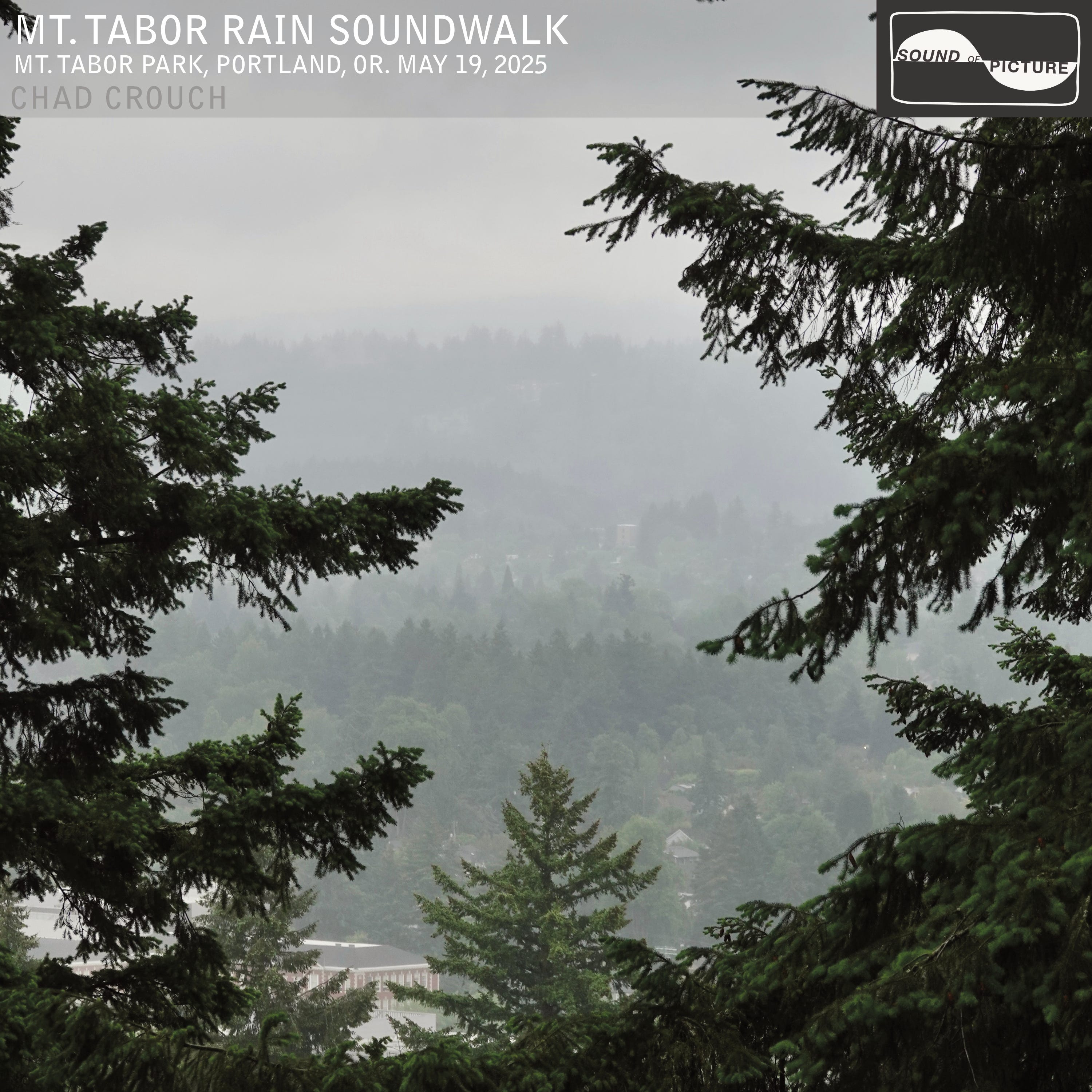 Mt. Tabor Rain Soundwalk 15.01.2026 5mThis is a free preview of a paid episode. To hear more, visit chadcrouch.substack.com When I first heard a radio piece about Mt. Tabor Park being awarded America’s first Urban Quiet Park I have to admit I was incredulous. Don’t get me wrong, I’m all for it, but of all the parks I visit to make field recordings in the Portland area, this one might be the most frustrating. That is, if you’re hoping to get away from anthropogenic sounds—people and their machines.It was just last October that I introduced you to Mt. Tabor (if you weren’t already acquainted.) I described it as a “island of green in a patchwork of grey.” And so it is: all 176 acres of it. The deal with mountains, though, is they only give the listener more acoustic vantage as you venture further up and in. There are few folds in the park’s contours, so getting out of earshot of boulevards pulsing with machine energy and airplanes raining down sound waves on approach to PDX, just 5 miles to the north, is nearly impossible. It’s also a well-loved, well-used park. Runners and cyclists breathe heavy scaling its slopes. People talk. On phones. It is not packed on a weekday, but it sure isn’t lonely either. All this sound energy is not a bad thing, don’t get me wrong, but why the first urban quiet park in the US? This is an exemplar?It’s all about framing isn’t it? I mean yeah, you walk up the mountain and there’s downtown looking like a diorama set against the green West Hills. It looks quiet. It seems quiet. Quiet is so slippery, so subjective. Maybe it’s the signal-to-noise ratio of the near field soundscape—of being able to key in on small sounds because the background noise is just a wash—that lends itself to the perception of quiet. When you can hear little birds, with their little bird-whisper sounds. Or rain. Yes, rain with its crowd-suppressing effect; it makes the park seem quieter. Rain and wind in the trees masks the city din. Like passing through a veil, moving through the rain can feel transportive. It sounds a sizzle on the reservoirs, a diffused and hushed drum circle played on millions of leaves. But still, the first quiet urban park in the whole of the USA? I love the sentiment, but the logic seemed imprecise. Unearned, even.And then a few weeks ago, on a Wednesday, I went up there for a walk. Something was different. The gate to one of several lanes leading to one of several parking areas was locked shut. “Park Closed to Vehicles on Wednesday” a sign read. I don’t remember this. Is this new? Then a thought occurred to me: maybe this is why it’s the first urban quiet park. Maybe it is earned. After all, cordoning off whole interior parking lots, even one day a week is sure to rankle some folks. This is what intention looks like, I thought. This is a place that, at least on Wednesdays, sounds different. Measurably quieter. It came with a cost. People can’t vroom in and out. They have to enter from the perimeter and use good old-fashioned human power to move through it. Mt. Tabor Park, I’m sorry I ever doubted you. But how long has this been going on? A while, it seems. According to a 2013 article, which references the closure policy, it’s been well over a decade; so long even the internet doesn’t know. I love it when the internet—and AI, when it’s not hallucinating— doesn’t know something. That’s when I let my fingers do the walking through the maze of research tools the Multnomah County Library provides: not quite microfiche, but as close to it as digital gets. Could the policy go back to the 1980’s? Conceivably. In a bulletin of Matters to be Considered by City Council, the Apr. 6, 1981 Oregonian references “an ordinance authorizing Parks to install 5 traffic control gates in Mt. Tabor Park” up for consideration. I found no events programmed for the park on a Wednesday thereafter, save for Audubon bird walks embarking from a perimeter entrance in 2006.If it goes back that far, what really motivated no-vehicle-Wednesdays? Was a day of peace and quiet? Wilderness-in-the-city-Wednesdays? I’d like to think so.On several spring and summer Wednesday nights, however the quiet park is jolted to life. Established in 2020, Mount Tabor Dance Community (aka MTDC or Tabor Dance) saw another role that the closure policy could lend itself to in summertime: Insulating their outdoor music-fueled events from the dense neighborhoods of SE Portland, while also minimizing potential conflicts of park users. Tracing its roots to the pandemic and dancing in chalk circles drawn for distancing, the event grew over the years to draw crowds in the hundreds. Last spring and summer MTDC started again at Mt. Tabor, then hopped around to at least five other Portland parks, making good on the motto “Portland is our dance floor.”My score for Mt. Tabor Rain Soundwalk is very gauzy: mostly languorous synth pads and drones. Electric piano only enters the instrumentation in the final third of the recording. That’s my favorite moment; a tender melody receding into the blue-grey distance.Thanks, my friends, for reading and listening. Mt. Tabor Rain Soundwalk is available on all music streaming services on January 16th, 2026.
-
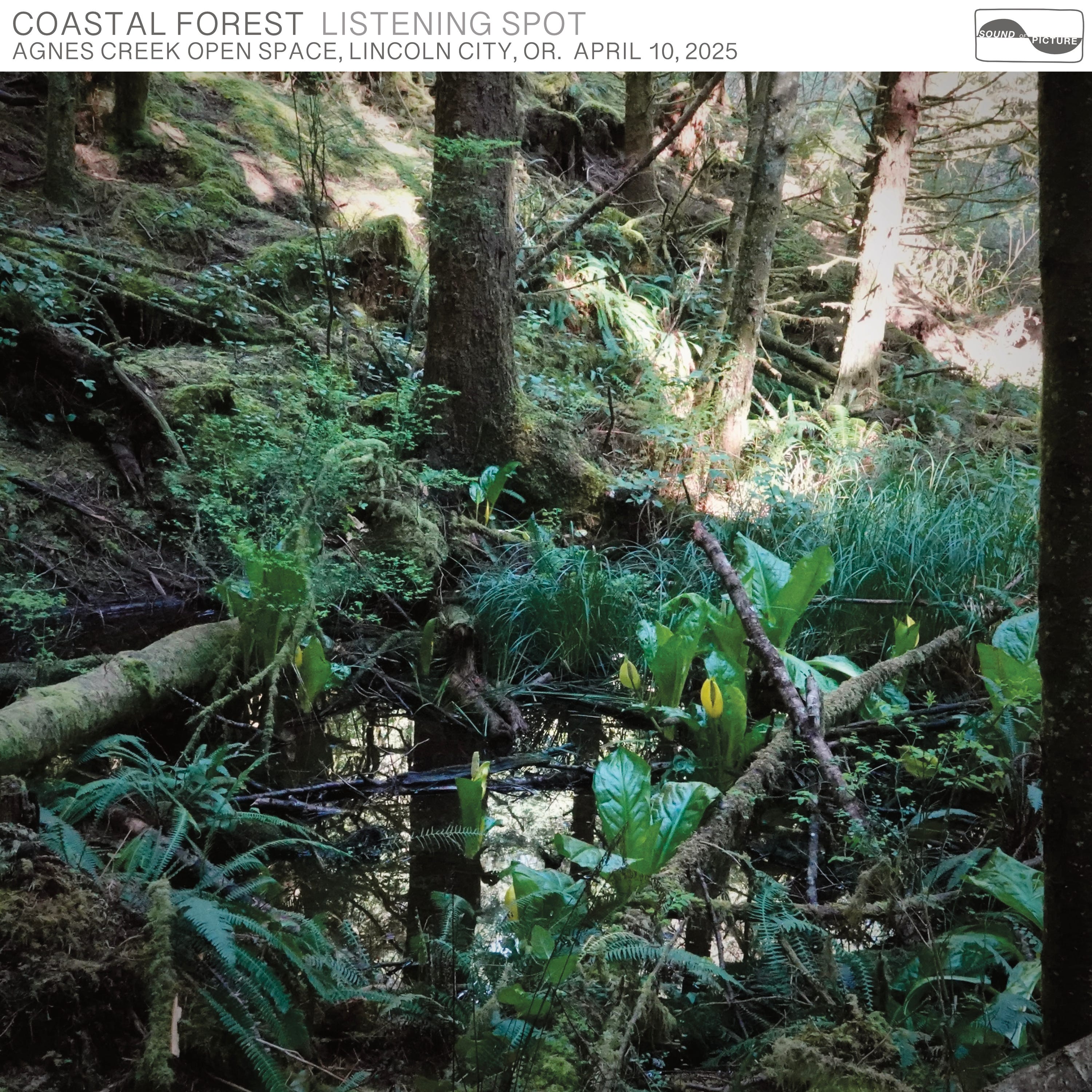 Coastal Forest 01.01.2026 37mAnd so we start again. Happy New Year everyone!I picked this album to coincide with the new year because the field recording it is built on is, to me, a kind of tonic. It pulses with the sound of distant surf, wildlife, and a spring rain shower.Recorded on April 10th last year at Agnes Creek Open Space, a 57 acre woodland in the heart of Lincoln City, Oregon, this soundscape features the low din of the ocean, the ebullient Pacific Wren, and a very nice ensemble of Varied Thrush adding their ethereal single-note song. In the distance we hear cheerful American Robins and Song Sparrows. In time, a Purple Finch and a Douglas’ squirrel take positions in the soundstage. Mixed flocks—bushtits and Chestnut-backed Chickadees primarily—pass through. It sounds like a thriving habitat, but it was not always this way.The area was clear-cut in the 1960s. After that, it regenerated naturally, resulting in a very dense thicket of young conifers that became draped with invasive species. By 2000, when the city purchased the property with funds from an open space acquisition bond, it was overgrown and trash-strewn.In 2013 the city conducted a selective forest thinning project, which improved forest health, and provided wood chips for a new loop trail. In 2016 a ribbon cutting ceremony celebrated carved benches and a footbridge created by local groups. This environmental recording serves as a testament to the forces of both neglect and attention to create renewal. Yes, neglect. Don’t we all have issues we don’t tend to? We make resolutions and then fail to act on them. Sometimes that’s just a necessary step in natural rejuvenation, creating the necessary conditions for real transformation.My composition takes cues from the low moan of the surf, with a variety of sampled and synthesized instrument voices selected to preserve space in the higher frequencies for the wildlife. Coastal Forest is available under the artist name Listening Spot on all streaming platforms Friday, January 2nd, 2026. I’ve made it available here in its entirety with the idea it might be somehow useful. Thanks for reading and listening. And, again, may the promise of a fresh new year be a boon to us all!Thanks for reading Soundwalk! This post is public so feel free to share it.ps. For a deeper dive from, see also Field Report Vol 26: Nelscott by Chad Crouch available on all-but-one streaming services. This is a public episode. If you'd like to discuss this with other subscribers or get access to bonus episodes, visit chadcrouch.substack.com/subscribe
Similar podcasts


Popular in
The podcast also appears in the podcast charts of these countries.
