
Machine Learning Street Talk (MLST)
Machine Learning Street Talk (MLST)
0
Machine Learning Street Talk (MLST) features in-depth conversations with leading figures in artificial intelligence, cognitive science, neuroscience, and philosophy of mind. The show covers current affairs in AI with rigorous analysis, aiming to cut through hype and explore diverse intellectual perspectives. Hosted by Tim Scarfe, Ph.D., with regular contributions from MIT Ph.D. Keith Duggar.
Episodes
-
 What It Would Actually Take for a Machine to Have Agency (Michael Tomasello) 19.11.2026 1h 6mMichael Tomasello is a developmental psychologist who spent twenty years at the Max Planck Institute in Germany putting children and great apes into the same experiments, and is now back at Duke University. His book The Evolution of Agency asks what it takes for a living thing, or a machine, to act for its own reasons.SPONSOR:---Cyber Fund built the Monastery to help founders ship products that were impossible a year ago.Apply now: https://cyber.fund---His answer starts with unpredictability. Where the environment is predictable, nature builds the behaviour in; where it isn't, it builds a deci...
-
 Why Leibniz Couldn't Find the Mind Inside the Mill (Joscha Bach) 02.11.2026 1h 37mJoscha Bach is a cognitive scientist and the founder of the California Institute for Machine Consciousness.SPONSOR:---Parallel is a single platform for all your agentic research: web search built for AI agents, with Pareto-optimal quality, cost and speed.Get started: https://parallel.ai/mlst---Bach's null hypothesis is that consciousness is easy: an algorithm not much more complicated than the transformer, simple enough for an infant's brain to discover by itself. In this conversation with Tim, he lays out the Machine Consciousness Hypothesis in two parts. The first is that consciousness is a...
-
 Mathematics Just Changed Forever — Kevin Hartnett 26.10.2026 1h 33mKevin Hartnett is the author of *The Proof in the Code*.SPONSOR:---Cyber Fund built the Monastery to help founders ship products that were impossible a year ago. Applications for Batch 1 are now open.Apply now: https://cyber.fund---In 1998 Thomas Hales finished a proof of the Kepler conjecture that leaned so heavily on computer code that the Annals of Mathematics could not say whether it was true. That impasse opens Kevin Hartnett's book *The Proof in the Code*, and this documentary.Built around Tim's conversation with Hartnett, the film follows Lean from a side project at Microsoft Research t...
-
 What Most People Get Wrong About Evolution | Akarsh Kumar 10.10.2026 47mA lot of people in AI treat evolution as a dumb fallback, basically random search for when you can't take a gradient. Akarsh Kumar thinks that is wrong. Selection hangs on to partial solutions, so mutations only need to be useful about 1% of the time for the search to keep making progress.Akarsh is a PhD student at MIT working with Phillip Isola, works with Sakana AI, and is first author of the Fractured Entangled Representation paper with Kenneth Stanley, Jeff Clune and Joel Lehman. He tells Tim Scarfe why the path a learner takes may shape the structure of what it learns, and why that is a d...
-
 How a Voice Agent Learns the Rhythm of Conversation — Shawn Wen 01.10.2026 1h 10mTsung-Hsien (Shawn) Wen, CTO of PolyAI, tells Tim Scarfe why voice agents are harder than text agents. Voice adds time, and a good conversation depends on adapting to the person on the line, not just on reasoning to the best answer. Shawn describes an audio-native model (Dialog-RSN-1) that first predicts a turn-taking signal, then replies in text with citations, and writes the transcript last so enterprises can audit it.Along the way: training on real, noisy calls with synthetic noise added, and why over-cleaned audio made the new model worse. Latency, and what a voice agent should do while it...
-
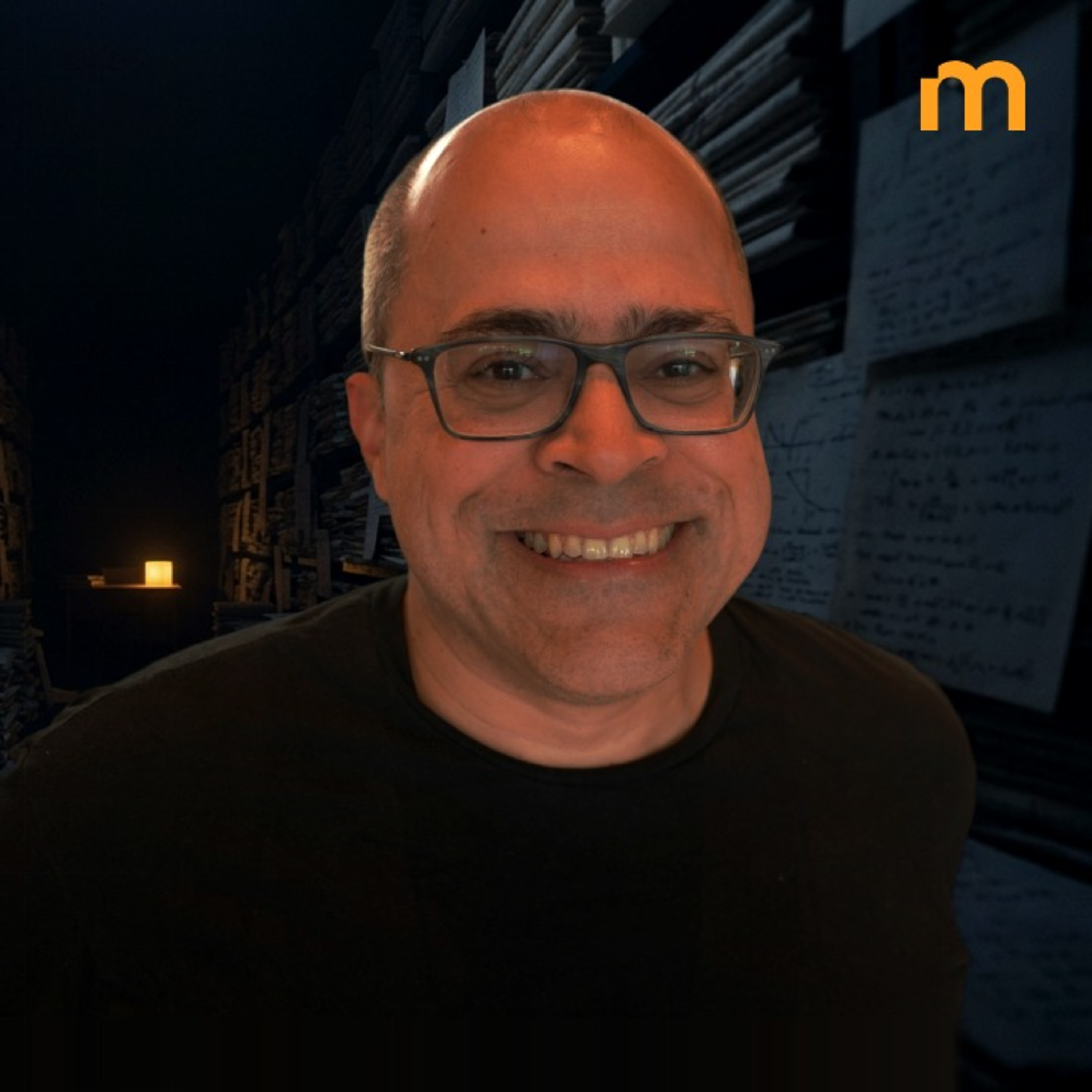 Who Checks a Proof No Human Can Read? — Leo de Moura 30.09.2026 1h 14mLeonardo de Moura created Lean and co-created Z3. ---This episode is sponsored by Parallel.Parallel, where agents find answers: web search, extraction and deep research APIs built for AI agents.Start free with the Parallel MCP server and $5 of credits every month: https://parallel.ai/mlst?utm_source=creator&utm_medium=podcast&utm_content=MLST---Tim Scarfe talks with Leo about how Lean escaped its original audience, why dependent types and Mathlib made it useful to working mathematicians, and what happens when formal verification leaves the lab. De Moura explains the small trusted kernel and in...
-
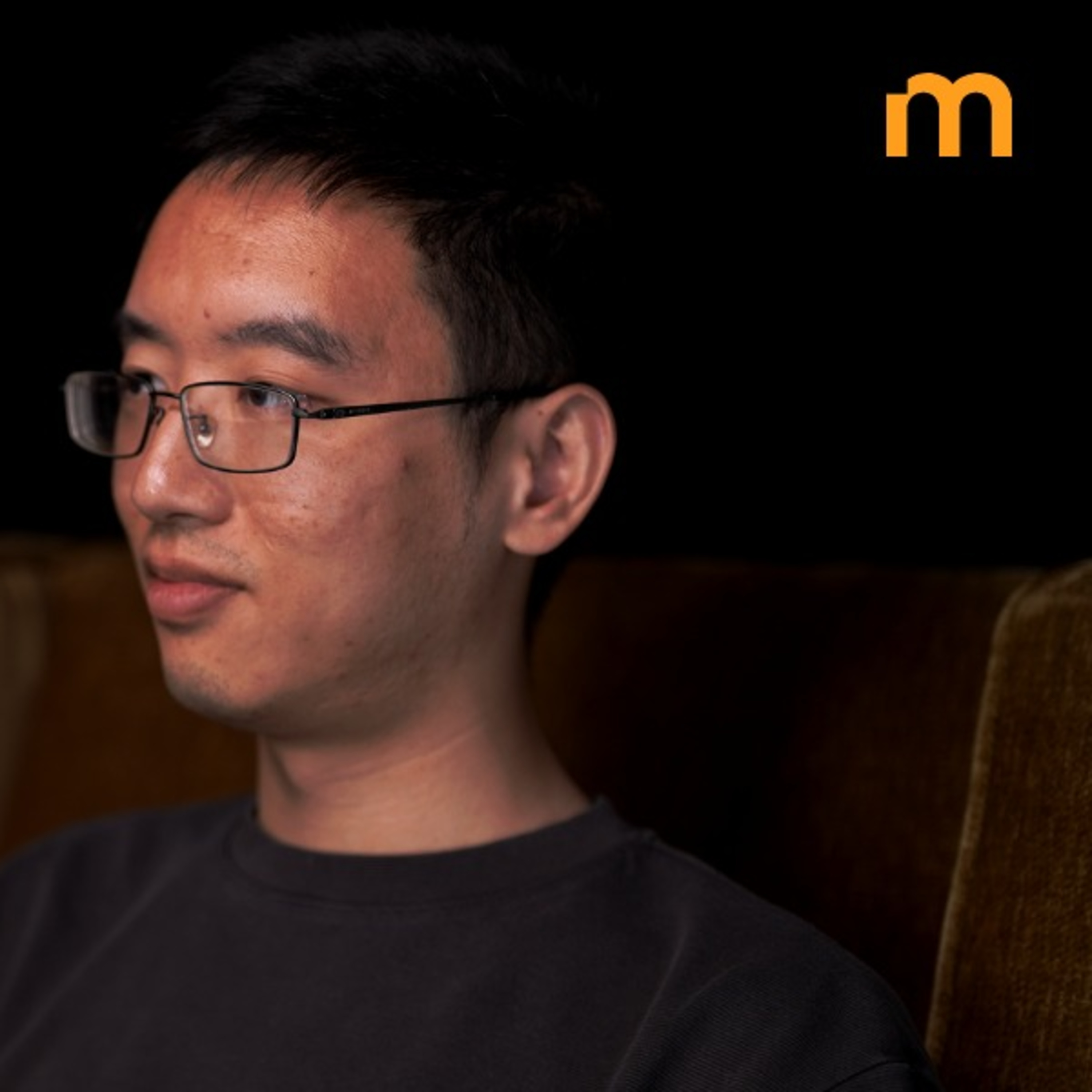 When AI Research Starts Moving Faster Than Human Research - Zhengyao Jiang 26.09.2026 43mWeco let an AI coding agent rewrite the harness around another agent for eight days: its code, prompts and tools, while the underlying language model stayed fixed. Tim Scarfe asks Weco co-founder Zhengyao Jiang what the reported gains over two years of human engineering actually demonstrate.The discussion examines AIDE 85's generated code, held-out evaluation and the difficulty of separating useful discoveries from reward hacking. Jiang explains Weco's four levels of recursive self-improvement and compares the experiment with AlphaEvolve and the Darwin Gödel Machine.The limits matter as much a...
-
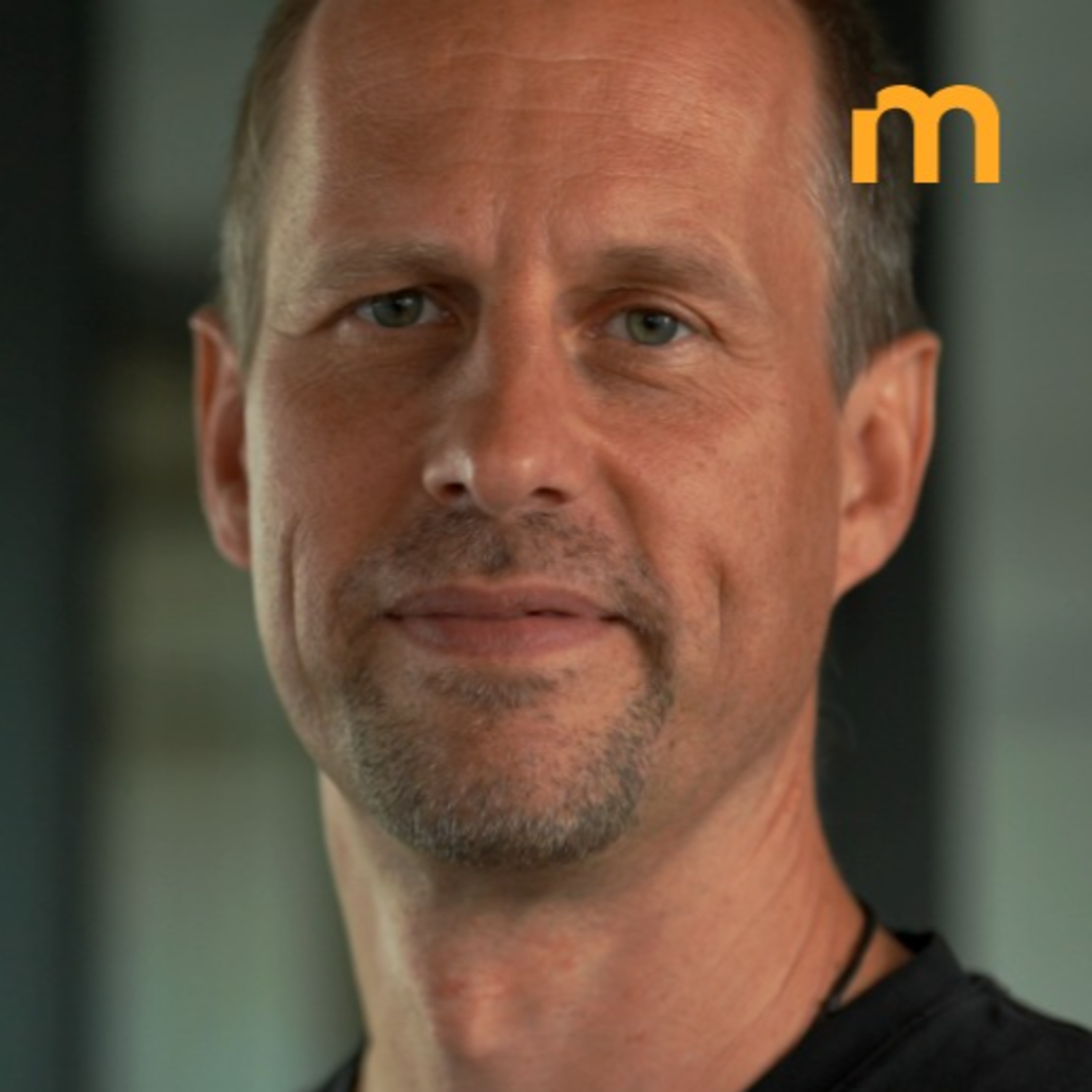 How Deep Learning Finally Cracked Messy Tables - Frank Hutter 23.09.2026 1h 53mFrank Hutter, co-founder of Prior Labs, talks about TabPFN, a tabular foundation model that makes predictions in a single forward pass, and the research behind it.TabPFN is pre-trained on synthetic datasets drawn from a prior over structural causal models, rather than on real data. At prediction time it takes the whole training table as context and outputs an approximation of the Bayesian posterior predictive distribution, without per-dataset training or hyperparameter search. Frank explains how this grew out of his earlier work on AutoML and neural architecture search, how the priors are buil...
-
 Why Scaling Prediction Cannot Create Intelligence - Alexander Mattick 21.09.2026 2h 14mAlexander Mattick is a researcher at Fraunhofer IIS and a PhD researcher at the University of Technology Nuremberg (UTN), and a regular on Yannic Kilcher's Discord. He first came on MLST in 2022, after helping research the Yann LeCun and Randall Balestriero episode on interpolation.SPONSOR:---Cyber Fund built the Monastery to help founders ship products that were impossible a year ago. Applications for Batch 1 are now open.Apply now: https://cyber.fund---Alexander treats inference as the thread running through modern machine learning: once you have a model, what does it cost to get an answer o...
-
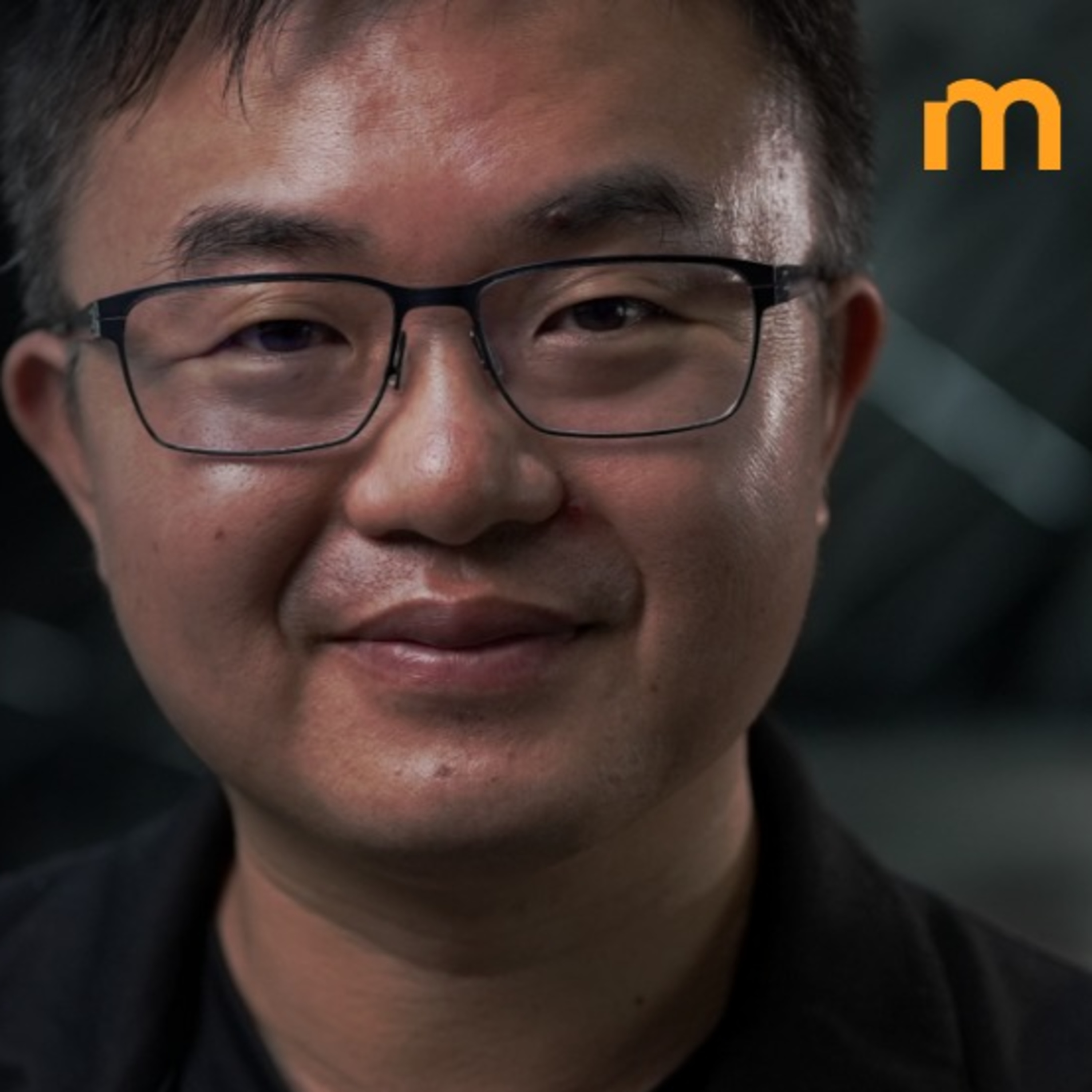 How Physical AI Learns Across Language, Video and Action — Ming-Yu Liu 15.09.2026 25mThe car making a left turn at the start of this episode was never filmed. Cosmos 3 generated it. Ming-Yu Liu, who leads the Cosmos research at NVIDIA, explains how one model can describe a video, generate one, and produce robot actions.He walks Tim through the architecture. A vision language model reasons one token at a time; its weights then initialise a bidirectional diffusion generator for video, audio and action, and a shared temporal position scheme lines up signals that run at different rates. Ming-Yu treats "world model" as a set of tools, not one definition: forward dynamics, inverse d...
-
 Speech Recognition Is Not a Solved Problem — Pavan Kumar Reddy 14.09.2026 1h 42mPavan Kumar Reddy leads audio research at Mistral AI. He joins Tim Scarfe for a deep technical tour of Voxtral — and explains why the frontier of deployed voice is still a cascade of specialised models rather than one end-to-end system.IN PARTNERSHIP WITH MISTRAL AI:---This episode was produced in partnership with Mistral AI.Mistral AI: https://mistral.ai/---The conversation opens on architecture. Voxtral Chat feeds a 3B Ministral text trunk with continuous embeddings from an audio encoder, passed to the decoder as direct token input rather than through cross-attention as in Whisper, so the mo...
-
 How Replication Could Teach Machines What Good Science Looks Like — Edward Hughes 11.09.2026 2h 1mCan a machine learn the judgement that separates a plausible-looking result from a faithful experiment? Edward Hughes, Chief Scientist and co-founder of Inherent, joins Tim Scarfe to argue that creativity is not optimisation, and that the missing capability in AI is choosing which questions are worth asking.SPONSOR:---Cyber Fund built the Monastery to help founders ship products that were impossible a year ago.Apply now: https://cyber.fund---Edward makes the case that Move 37 was innovative rather than creative, and that the field, not the individual, decides what counts as a discovery. That r...
-
 AI 2040: Plan A report - Daniel Kokotajlo & Thomas Larsen 08.09.2026 1h 29mCould slowing AI development make superintelligence safer? Daniel Kokotajlo and Thomas Larsen of the AI Futures Project join Tim Scarfe to examine AI 2040: Plan A, a proposal to buy time before AI exceeds human control.SPONSOR:---Cyber Fund built the Monastery to help founders ship products that were impossible a year ago.Apply now: https://cyber.fund---After revisiting AI 2027 and the limits of forecasting, they ask what happens when AI can automate research and sustain an economy without human workers. Tim challenges the case for general models and asks whether intelligence alone explains po...
-
 Designing How AI Grows — Tom McGrath 02.09.2026 1h 40mTom McGrath is co-founder and Chief Scientist at Goodfire, and a former Google DeepMind researcher. He joins Tim Scarfe to ask what neural networks actually learn, whether their internal representations converge on structures in the world, and whether interpretability can extract new scientific knowledge rather than merely explain model outputs.Beginning with AlphaZero and learned modularity, the conversation moves into neural geometry: concept manifolds, reusable computation inside Llama, and why activation steering can fail when it pushes a model off-manifold. McGrath then makes the case for...
-
 Stealing Reasoning Traces from Proprietary LLM APIs — Ilia Shumailov & Alexander Panfilov 22.08.2026 49mTim Scarfe speaks with Ilia Shumailov and Alexander Panfilov about their paper, Stealing Reasoning Traces from Proprietary LLM APIs.The core bug sounds deceptively simple: providers return encrypted reasoning state so conversations can be resumed or forked. But those blobs can be replayed across users and sibling models. A smaller model can ask the provider to decrypt the trace, then repeat the hidden reasoning in plain text. The discussion covers leaked private data, a broadly reusable jailbreak, poisoned agent traces, chain-of-thought monitoring, responsible disclosure, and possible defenses...
-
 Every Exponential Ends — Silicon Valley Forgot — Adam Becker 20.08.2026 1h 18mAstrophysicist Adam Becker, author of "What Is Real?", joins Tim Scarfe to take apart the futures Silicon Valley keeps selling: the 2045 singularity, mind uploading, Mars colonies, and the AI apocalypse. His new book *More Everything Forever* argues these ideas are hugely influential, mostly evidence-free, and bankrolled by tech billionaires who need a story in which growth never ends.Becker does the physics the boosters skip. Kurzweil's "law of accelerating returns" rests on cherry-picked data, and every exponential ends. Grant Bezos his perpetual energy growth and humanity boils the oceans w...
-
 AI Is Learning at the Wrong Level of Abstraction — Matthieu Wyart 10.08.2026 1h 18mThis episode is sponsored by Notion. Learn more about Notion's Developer Platform today at https://notion.com/mlstWhy can deep networks discover abstractions that shallow models miss? Statistical physicist Matthieu Wyart joins Tim Scarfe to argue that the answer lies in the hidden hierarchy of data. Language and images are built from parts within parts; depth lets a network recover those coarse-grained variables and escape the curse of dimensionality.The conversation moves from jamming transitions and rough loss surfaces to Chomsky, context-free grammars and machine creativity. Wyart explains...
-
 How Researchers Test AI for Hidden Goals — Apollo Research 31.07.2026 1h 18mCan an AI do the right thing for the wrong reason? Tim Scarfe speaks with Apollo Research’s Alexander Meinke, Axel Højmark and Jérémy Scheurer about Measuring Reward-Seeking via Contrastive Belief Updates, their new research with OpenAI.The panel asks how models infer what graders reward, why good behaviour can come from the wrong reason, and whether that difference can be measured. The conversation moves through promise-breaking, grader awareness, reward hacking, scheming, opaque reasoning and corrigibility, then turns to a detailed walkthrough of the contrastive-belief method and what its re...
-
 Why a Nation Can't Outsource Its Frontier AI - Alistair Pullen (Cosine AI) 13.07.2026 55mThis episode is sponsored by Notion. Learn more about Notion's Developer Platform today at https://notion.com/mlstBritain's most capable coding model can't be exported, and that ban is the whole reason Cosine set out to build one from scratch. Alistair Pullen, CEO and co-founder of Cosine, sits down with Tim Scarfe to explain how a frontier system he calls Fable, locked behind US export controls, became the founding case for a UK sovereign model trained on the Isambard supercomputer in Bristol.The bet underneath it is economic. Pullen argues that an inference company, rather than a training-fi...
-
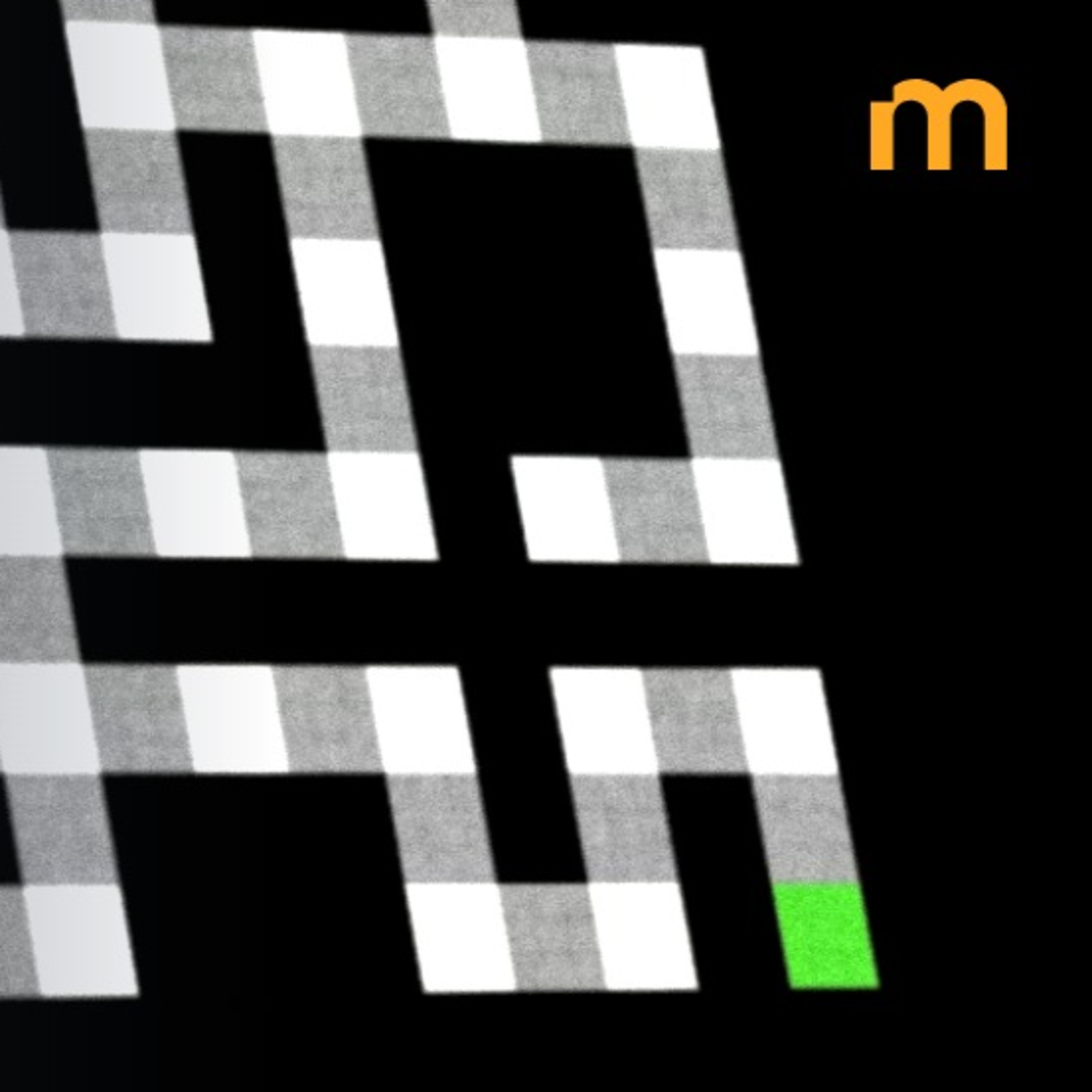 The Benchmark With No Instructions — ARC-AGI-3 (winning team!) 01.07.2026 1h 24mTim Scarfe travels to Zurich to sit down with the Tufa Labs ARC-AGI-3 team — founder Benjamin Crouzier, with Jeroen Cottaar, Dries Smit, Stefano Viel and Michal Tesnar — to work out what their leaderboard-topping system does and what the benchmark is really testing.The cut opens on the games: a walkthrough of the Locksmith game, where you read the rules of an unfamiliar world straight from raw frames. ARC-AGI-3 makes ARC interactive and agentic, so the model has to *discover* the goal rather than transduce a static grid. It stays easy for humans and breaks LLMs, and it runs through everything...
Similar podcasts


Popular in
The podcast also appears in the podcast charts of these countries.


