
New Books in Law
New Books Network
0
This podcast is a channel on the New Books Network, an academic audio library dedicated to public education. Each episode features scholars discussing their recently published research with another expert in their field. The podcast covers a wide range of legal topics and is part of a larger network with over 150 channels and 28,000 episodes. Listeners can explore more content on the New Books Network website and subscribe to a free weekly newsletter.
Episodes
-
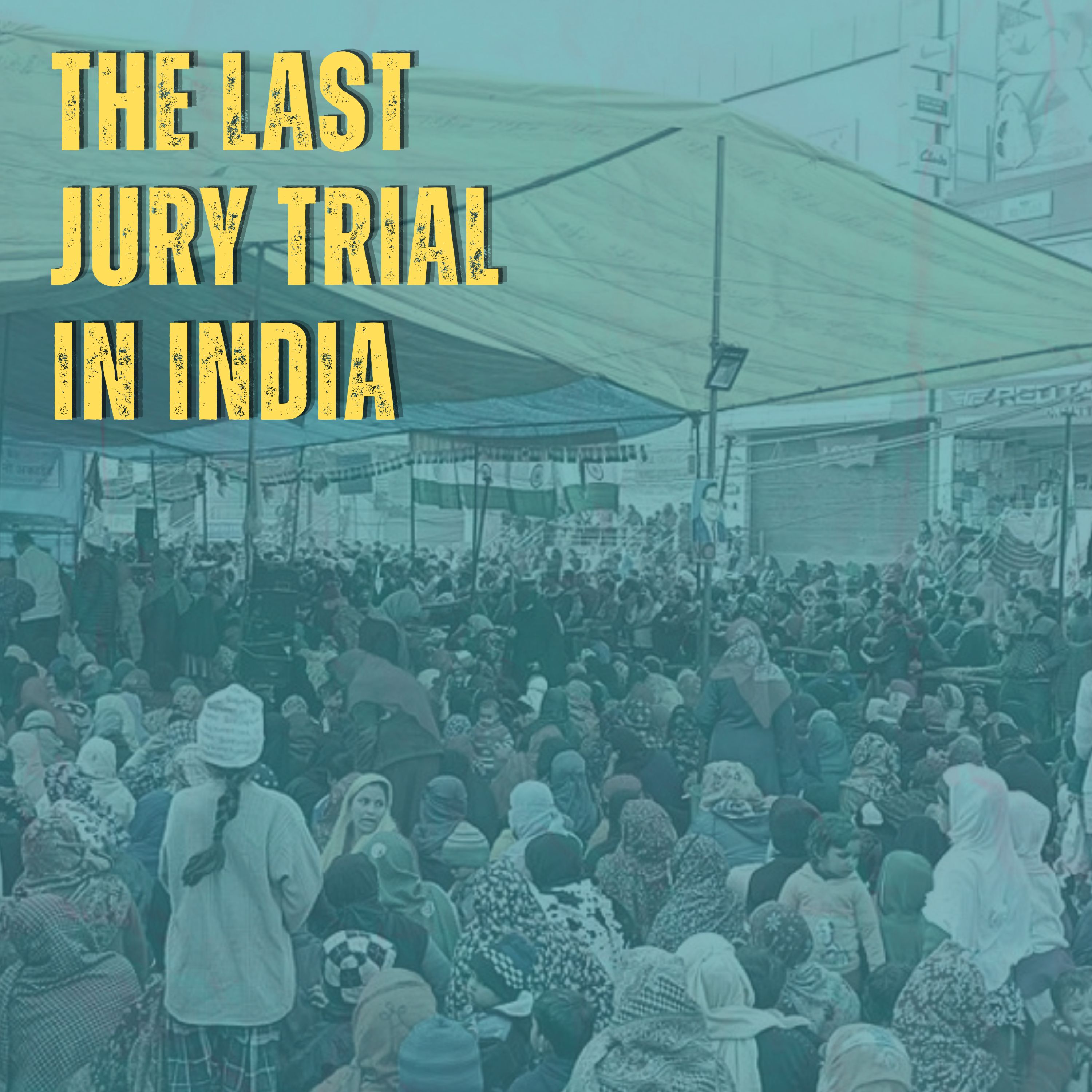 Episode 4: The Case for Juries 18.11.2026 40mHow is the judge-centered legal system working in India today? Tremendous backlogs and a feeling of distance between the people and the courts are the concerns I heard most about. The detention of Umar Khalid, an activist who protested the 2019 Citizenship Amendment Act has gone on for more than 5 years. What would happen if he had his case heard before a jury? This thought experiment of the jury trial in India is paired with a discussion of the legal system in Argentina where jury trials have recently been introduced in the most serious cases.
-
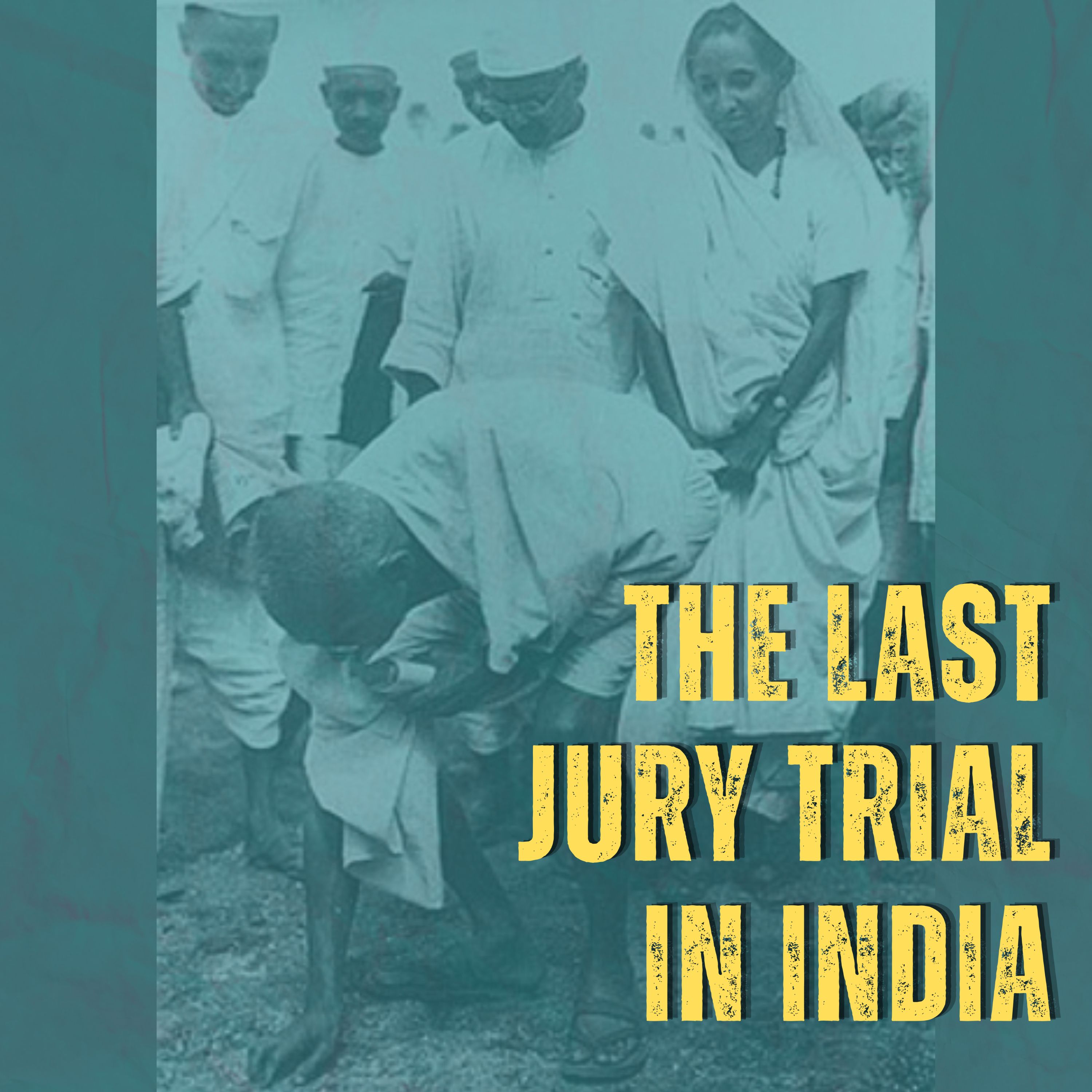 Episode 3: They, the People 17.11.2026 36mEven though jury trials were suspended for many nationalist leaders charged with political crimes, there were still moments when jurors exerted their power. One example is the trial of Communist organizer, Philip Spratt, a focus of the episode. The threat of a jury undermining the prosecution in the sprawling Meerut Conspiracy Trial also led the colonial government to take drastic action. Lastly, this episode also looks at the drafting of the 1950 Indian Constitution and asks, “Why did a country that committed to universal suffrage decide that the jury trial was not worth fighting for?”
-
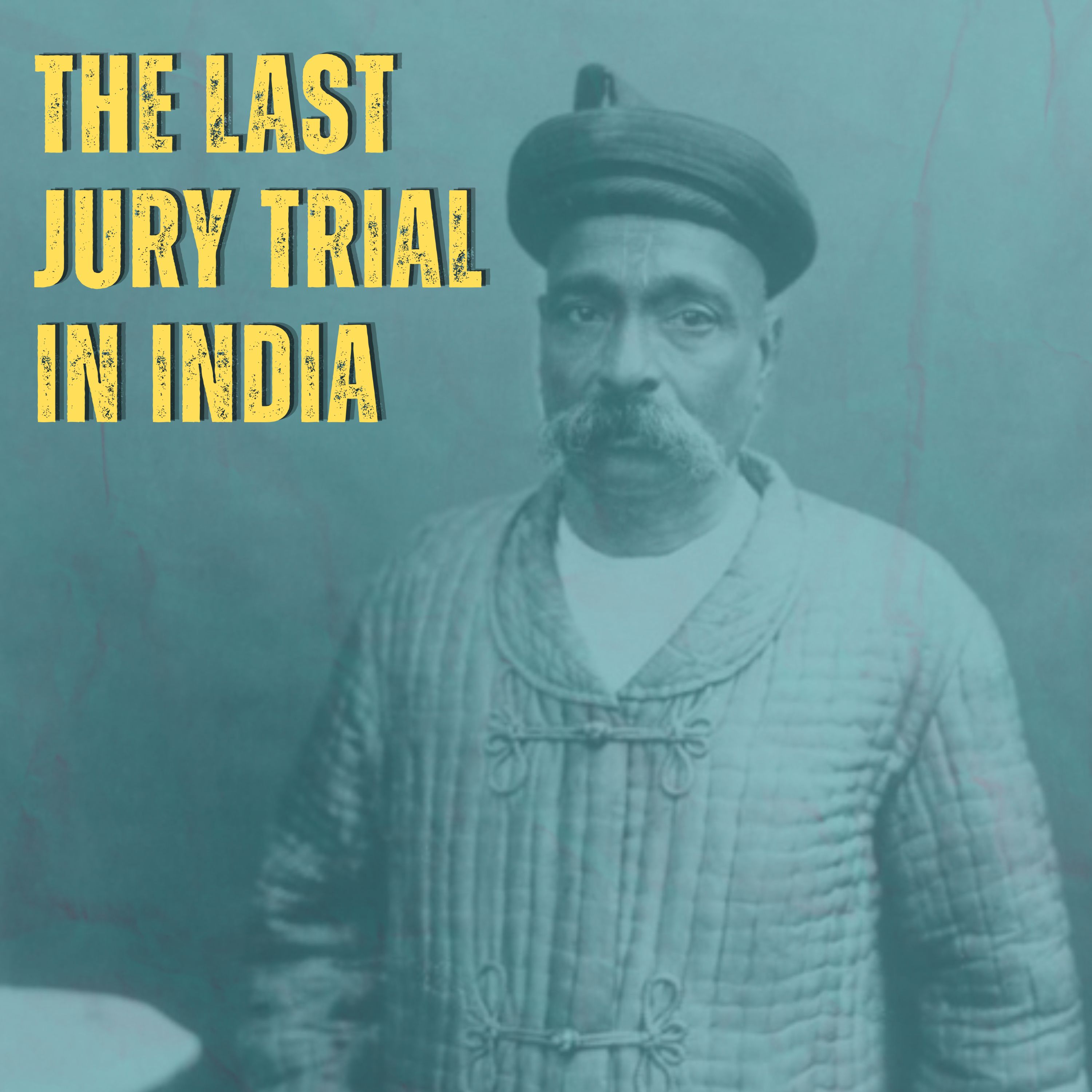 Episode 2: You Can’t Trust Them 16.11.2026 39mThis episode looks at two remarkable trials: the first is a murder trial of a British tea plantation owner by his workers, and the other is the 1908 trial of Bal Gangadhar Tilak. Tilak was the publisher of the most widely read newspaper in Western India and faced charges of sedition, that is, promoting “disaffection” for the king. Taken together, the trials show that the jury trial was meant to legitimize the British as an empire of law, but the way the trials were conducted revealed something more sinister.
-
 Antitrust and the Age of Asset Management with Andrew P. McLean (Harvard UP, 2026) 16.11.2026 26mRecent decades have witnessed the rise of both finance and monopoly power in the United States. Although seemingly unrelated, these developments are in fact intimately linked. As Dr. Andrew McLean makes clear, asset managers—especially private equity houses and large index investors—are key contributors to the decline of competition in the American economy.
-
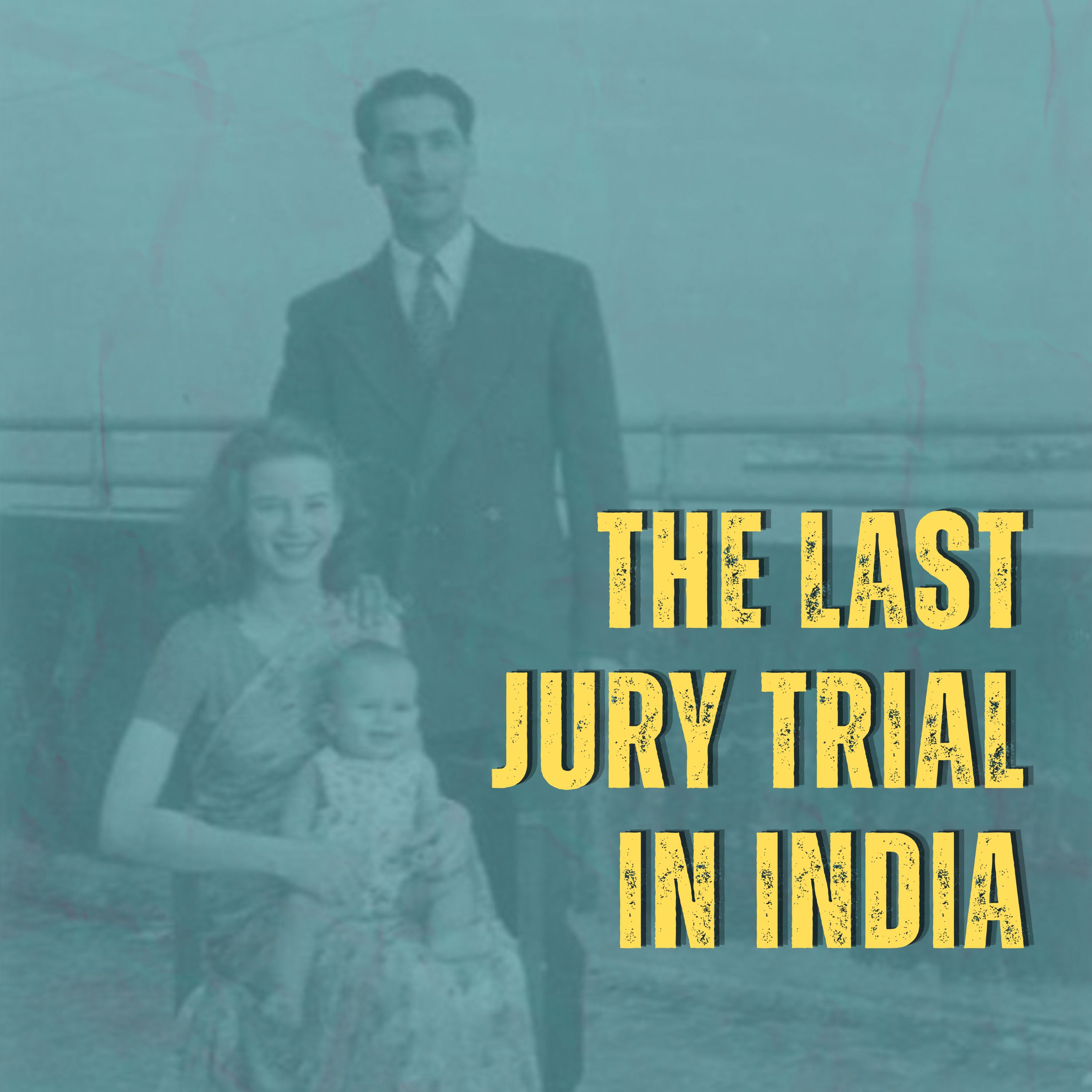 Episode 1: The Pulse of the People 13.11.2026 46mThe murder trial of Commander Kawas Nanavati captivated Bombay because it had everything—sex, betrayal, intrigue. When the jury verdict came out, many were outraged and they thought the jury system was to blame. The trial came to be known as “The Last Jury Trial in India” because it heralded the end of the jury in India and became a lightning rod for concerns about the jury being corrupted by prejudice and the media.
-
How Settlers Get Away With Murder: The Killing of Indigenous Women and Two-Spirit People in the Americas with Liza Black (Beacon, 2026) 12.11.2026 52mSince the arrival of Columbus, thousands of perpetrators have gotten away with murder, burying evidence of their crimes in police reports and court testimony. How Settlers Get Away with Murder: The Killing of Indigenous Women and Two-Spirit People in the Americas (Beacon, 2026) unearths that hidden evidence to expose the ongoing crisis of missing and murdered Indigenous women and Two-Spirit people (MMIW2S). Historian and citizen of Cherokee Nation Liza Black examines five cases in Canada, the United States, and Mexico, from 1908 to 2017. Rejecting narratives that blame victims’ poverty or trau...
-
When Healing Harms: The Doctor Who Put a Hospital on Trial—and the Case That Shook Psychiatry with Eric Caplan (U California Press, 2026) 11.11.2026 55mIn 1979, Dr. Raphael Osheroff admitted himself to Chestnut Lodge, a prestigious psychiatric hospital in Rockville, Maryland, expecting world-class care for his severe depression. Instead, he was confined to a locked ward, denied medication, and subjected to seven months of talk therapy. The experience rendered him physically frail and emotionally devastated before his parents secured his transfer to a hospital willing to prescribe the antidepressants he desperately needed. But the damage was done: his marriage, his practice, and his reputation all lay in tatters. Then he did something unpreced...
-
Islamophobia and Freedom of Speech with Asim Qureshi, hosted by Chella Ward 06.11.2026 1h 1mIn this episode, Chella Ward interviews Dr Asim Qureshi about the relationship between Islamophobia, the counter-terror framework and freedom of speech. Asim is the Research Director at CAGE International, and the author of numerous important books and articles about Islamophobia, racism and political prisoners including I Refuse to Condemn and A Virtue of Disobedience. His conversation with Chella took place as part of the Islamophobia Awareness Month events at the Open University in 2026.
-
Guantanamo Bay and the Enduring Struggle for Human Rights with Joshua Colangelo-Bryan 02.11.2026 39mIn this episode of International Horizons, John Torpey speaks with Joshua Colangelo-Bryan, special counsel at Human Rights First and author of Through the Gates of Hell: American Injustice at Guantanamo Bay (Humanitas Media, 2025). Drawing on his work representing detainees at Guantanamo Bay, Colangelo-Bryan recounts the legal battles, harsh detention conditions, and personal relationships that shaped his experience. He also reflects on the legacy of Guantanamo, the erosion of due process, and the troubling parallels between the post-9/11 response to terrorism and the Trump administration’s tr...
-
National Parks and the Supreme Court: Groundbreaking Legal Battles with Carla Chung Mattix (U Nevada Press, 2026) 01.11.2026 47mThe national parks are loved by many Americans and visitors from around the world. Yet, few realize how often these landscapes and their history have been shaped by questions answered in the courts. With more than 3,500 lawsuits involving the National Park Service, litigation has shaped and defined the character of the parks. Litigation has determined how land can be added to national parks, answered questions about treaty and free speech rights on park land, and settled numerous other disputes that have helped determine what the parks look like today. In her new book National Parks and the Su...
-
The Course of Human Events: The Declaration of Independence and the Historical Origins of the United States with Steven Sarson (U Virginia Press, 2025) 29.10.2026 42mHow reading the Declaration of Independence as a document of history explains its intended meaning Thomas Jefferson chose his words carefully. Few could have been more deliberate than “When in the Course of human events,” the phrase with which he opened the Declaration of Independence. As Steven Sarson shows in The Course of Human Events: The Declaration of Independence and the Historical Origins of the United States (U Virginia Press, 2025) , the original Declaration moved through the ages of human history from Creation to American independence, assessing it according to “the Laws of Nature a...
-
Carceral Utopia: A Global History of Model Prisons with Gregory Salle (Polity, 2026) 26.10.2026 46mWhat underpins the legitimacy of the prison system in the twenty-first century? Despite numerous challenges and setbacks, there is still a widespread belief that prisons can be improved in a socially progressive way. Even today, 'model prisons' are being built that seek to fix the shortcomings and failures of their predecessors, as if past failures were due to a lack of imagination, determination, or resources. The aim of creating model prisons is not new: it dates back to the early nineteenth century. Ranging from England to Switzerland and Spain, from Russia to China and India, Carceral Utop...
-
Human Rights in Psychiatry: Prospects and Dilemmas of Abolishing Coercion in Mental Health Care with Dirk Richter (Springer, 2025) 23.10.2026 45mIn Human Rights in Psychiatry: Prospects and Dilemmas of Abolishing Coercion in Mental Health Care (Springer, 2025), Professor Dirk Richter describes the ethical lines of conflict, shows why coercion can no longer be justified and analyzes the consequences and dilemmas of a possible abolition of coercive measures in psychiatric care. The use of coercion in mental health care is one of the most controversial topics in psychiatric nursing and psychiatry. The conflict line centers around the UN-Convention in the Rights of People with Disabilities (CRPD). Advocates of the CRPD are pushing for the...
-
Terror, Torture and State Violence in Colonial India, with Deana Heath, hosted by Salman Sayyid and Claudia Radiven 23.10.2026 59mIn this episode, Salman Sayyid and Claudia Radiven were joined by Deana Heath to discuss her work Colonial Terror: Torture and State Violence in Colonial India (Oxford UP, 2026). Heath’s work explores the legacies of colonial violence in India, Britain’s colonial amnesia in reckoning with it’s past and how torture was facilitated and systemized. Deana is a scholar of British Imperialism and colonialism, and is also Chair in Indian and Colonial History at the University of Liverpool.
-
Forgive Us Our Debts: How Black Churches Use Bankruptcy to Survive with Pamela Foohey (U Chicago Press, 2026) 23.10.2026 40mWhen American churches face financial difficulties, a disproportionately high number of Black churches reorganize under chapter 11 bankruptcy. There are no easy explanations for this distinction: not location, denomination, leadership structure, or the reasons for the loans. In Forgive Us Our Debts: How Black Churches Use Bankruptcy to Survive (U Chicago Press, 2026), legal scholar Pamela Foohey asks why, then, Black churches account for two-thirds of all congregations that file for chapter 11 bankruptcy every year. Drawing on case studies of six Black churches and one white church, and 150 in...
-
Offshore Oildom: America’s Energy Expansion into the Ocean with Tyler Priest (LSU Press, 2026) 22.10.2026 1hOffshore Oildom: America’s Energy Expansion into the Ocean (LSU Press, 2026) tells the riveting story of the United States’ quest to secure the oil riches of the sea. Drawing on a wealth of untapped sources, Tyler Priest reveals how the offshore oil industry emerged from an ambitious project to incorporate the ocean’s submerged lands into the territory of the United States. These lands were frontier spaces, beyond traditional jurisdiction and control. Efforts to commandeer them for oil and gas extraction thus required new institutions of governance. From the titanic struggle over the tidelands...
-
Justice Was Her Calling: The Fierce and Fascinating Life of Dorothy Kenyon with Jennifer L. Brinkley (U California Press, 2026) 22.10.2026 55mBefore Ruth Bader Ginsburg persuaded the Supreme Court to strike down sex discrimination, Dorothy Kenyon drew the legal blueprint. Justice Was Her Calling: The Fierce and Fascinating Life of Dorothy Kenyon (U California Press, 2026) by Jennifer Brinkley is the first full-length biography of the New York judge, lawyer, and civil liberties champion whose litigation strategies helped transform the Equal Protection Clause into a powerful tool for women’s rights. Across decades, from the Progressive Era through the New Deal and into the rise of second-wave feminism, Dorothy Kenyon stood at the fore...
-
Disability: A History of Resistance with David Turner (Random House, 2026) 20.10.2026 54mDespite there being more than 16 million disabled people in the UK today, disability rarely features in mainstream accounts of our past. That absence is not down to a lack of evidence: it is a forgotten, suppressed history – the result of deliberate choices about whose histories matter. This remarkable book rectifies this. Disability: A History of Resistance (Random House, 2026) is a story of resistance and ingenuity, full of people who refused to be silenced or pitied. We meet the labourer who fights accusations in court that he’s faking his disability, and wins; the painter who signs her roy...
-
Punishment: Behind Japanese Military Brutality with Danny Orbach (Hurst, 2026) 18.10.2026 55mWhy was the Japanese Army so brutal before and during World War Two? This haunting question anchors a sweeping investigation into the moral universe of Imperial Japan’s soldiers, tracing their path from the twilight of the samurai age to the ashes of Manila in 1945. Punishment: Behind Japanese Military Brutality (Hurst, 2026) by Professor Danny Orbach uncovers a world in which war was conceived not merely as combat, but also as justice. Officers and soldiers learned to navigate two rival visions of war: one restrained by the ‘foreign gaze’ of the Western world, the other rooted in older tradit...
-
Governance by Emulation: The Oversight Board, the Digital Services Act, and the Struggle for Platform Accountability with Moritz A. Schramm (Cambridge UP, 2026) 14.10.2026 43mSocial media giants like Meta and transnational regulators such as the European Union are transforming private governance by creatively emulating public law frameworks. Drawing on exclusive interviews and in-depth analysis of Meta's Oversight Board and the EU's Digital Services Act, Governance by Emulation: The Oversight Board, the Digital Services Act, and the Struggle for Platform Accountability (Cambridge UP, 2026) explores how these approaches blend European and American perspectives, bridging distinct legal traditions to address the challenges of platform governance. Analysis of content m...
Similar podcasts


Popular in
The podcast also appears in the podcast charts of these countries.


