
Holy Quran
Qahramon
0
This podcast features recitations of the Holy Quran by Sheikh Mishari Rashid. It provides a spiritual listening experience for those seeking to hear the Quran recited in Arabic.
Episodes
-
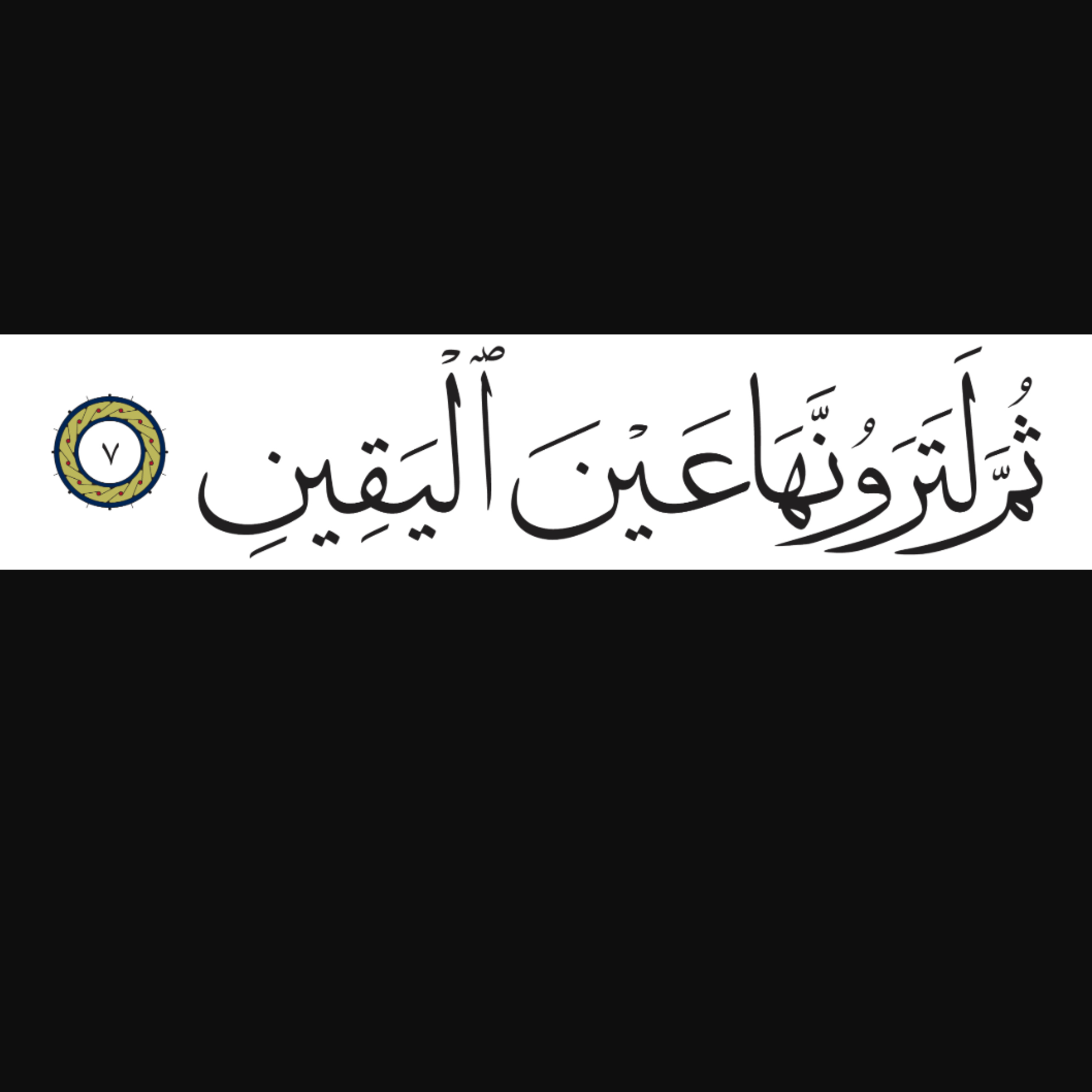 At-Takathur التكاثر "Rivalry, Competition" 14.02.2025At-Takāthur ( التكاثر, "Rivalry, Competition") is the 102nd chapter of the Qur'an, with 8 versesRegarding the timing and contextual background of the believed revelation (asbāb al-nuzūl), it is an earlier "Meccan surah", which means it is believed to have been revealed in Mecca, rather than later in Medina.Text, translation, and transliterationThe translation is the Saheeh International English translation of the Qur'an.بِسْمِ ٱللَّهِ ٱلرَّحْمَٰنِ ٱلرَّحِيمِBismi l-āhi r-raḥmāni r-raḥīm(i)In the name of Allāh, the Entirely Merciful, the Especially Merciful...أَلْهَىٰكُمُ ٱلتَّكَاثُرُ 1 ’a...
-
 Al-Adiyat - The War Horses which run swiftly العاديات "The Courser, The Chargers" 16.06.2024 1mAl-Adiyat or The War Horses which run swiftly[1] (Arabic: العاديات, al-ʿādiyāt, also known as "The Courser, The Chargers") is the 100th chapter (sūrah) of the Qur'an, with 11 āyāt or verses. Regarding the timing and contextual background of the revelation (asbāb al-nuzūl), it is an earlier "Meccan surah", which means it is believed to have been revealed in Mecca, rather than later in Medina Summary 1-6 Oaths that man is ungrateful to his God 7-8 Man loves the things of this world 9-11 Man’s secret thoughts shall be discovered in the judgment-day [2] A one liner theme of surah al-adiyat would r...
-
 Al-Adiyat العاديات al-ʿādiyāt "The Courser, The Chargers" 14.06.2024 1mAl-Adiyat or The War Horses which run swiftly[1] ( العاديات, al-ʿādiyāt, also known as "The Courser, The Chargers") is the 100th chapter of the Qur'an, with 11 āyāt or verses. Regarding the timing and contextual background of the revelation (asbāb al-nuzūl), it is an earlier "Meccan surah", which means it is believed to have been revealed in Mecca, rather than later in Medina Summary 1-6 Oaths that man is ungrateful to his God 7-8 Man loves the things of this world 9-11 Man’s secret thoughts shall be discovered in the judgment-day [2] A one liner theme of surah al-adiyat would read that this s...
-
 Al-Zalzalah الزلزلة, "The Quake" 31.05.2024 1mAl-Zalzalah ( الزلزلة, al-zalzalah, meaning: "The Quake") is the 99th chapter (surah) of the Qur'an, composed of 8 ayat or verses. Although it is usually classified as a Medinan surah, the period during which the surah was revealed is not unanimously agreed upon by Qur'anic exegetes. Other Abrahamic religions also support the idea of punishment to the wrongdoers like in the Day of Judgement Summary 1-5 The judgment-day shall be ushered in by a declare why she trembles 6-8 Men shall be judged according to their deeds[1] The surah begins by describing how on the Day of Judgment, the Earth will g...
-
 Al-ʻAlaq العلق "The Clinging Thing" or "The Embryo" 17.05.2024 1mAl-ʻAlaq (Arabic: العلق, al-ʻalaq, also known as "The Clinging Thing" or "The Embryo"[1]), is the 96th chapter of the Qur'an. It is composed of 19 verses. It is sometimes also known as Sūrat Iqrā (سورة إقرا, "Read") Chapter 96 of the Qur'an is traditionally believed to have been Muhammad's first revelation. It is said that while Muhammad was on retreat in the Cave of Hira, at Jabal al-Nour near Mecca, the angel Gabriel appeared before him and commanded him to "Read!". He responded, "But I cannot read!". Then the angel Gabriel embraced him tightly and revealed to him the first lines, "Read: In...
-
 At-Tīn التين "The Fig, The Figtree" 17.05.2024 1mAt-Tīn ( التين, "The Fig, The Figtree") is the ninety-fifth surah of the Qur'an, with 8 verses Summary 1-4 Oaths that God created man "a most excellent fabric" 5-6 God has made all men vile except true believers 7-8 None may rightly deny the judgment-day[1] This sura opens by mentioning the fig (the sura's namesake), the olive of Jerusalem, Mount Sinai, and "this city secured" (generally considered to be Mecca) Muhammad Asad, the author of The Message of The Qur'an comments on these verses: The "fig" and the "olive" symbolize, in this context, the lands in which these trees predominate: i.e.,...
-
 Al-Inshirāḥ الانشراح "Solace" or "Comfort" or ash-Sharḥ الشرح, "The Opening-Up of the Breast" 10.05.2024Al-Inshirāḥ ( الانشراح, "Solace" or "Comfort"), or ash-Sharḥ ( الشرح, "The Opening-Up of the Breast") [1] is the ninety-fourth chapter of the Qur'an, with eight or verses. Because of its subject matter, length, style, and placement in the Qur'an, this sura is often coupled with Surah ad-Dhuha (Sura 93). They are generally considered to have been revealed around the same time. Al-Inshirāḥ's subject matter seems a continuation of the reassurance and encouragement given in the preceding chapter and so closely resembles it that both these Surah seem to have been revealed in about the same period u...
-
 Al-Ḍuḥā الضحى "The Morning Hours", "Morning Bright", "The Early Hours" 03.05.2024 1mAl-Ḍuḥā ( الضحى, "The Morning Hours", "Morning Bright", "The Early Hours") is the ninety-third chapter of the Qur'an, with 11 or verses. Qur'an 93 takes its name from Arabic its opening word, al-ḍuḥā, "the morning" The chapter begins with oaths. It is often coupled with sura al-Inshirah, sometimes without the basmala between them. It should be taken into consideration that according to many narrations, it is said that surah Ad -Dhuha and surah Al-Inshirah are one surah and should be recited in prayers (salah) together. One can also see the close relation between the subject matter of both the...
-
 Sūrat al-Layl الليل "The Night" 26.04.2024 1mSūrat al-Layl الليل "The Night" is the ninety-second sūrah (chapter) of the Qur'an, containing twenty-one āyāt (verses). This sūrah is one of the first ten to be revealed in Mecca. It contrasts two types of people, the charitable and the miserly, and describes each of their characteristics Summary 1-4 Oaths by various natural objects 5-13 The obedient blessed and the covetous accursed 14-16 The covetous warned with hell-fire 17-21 True believers shall be rewarded hereafter [1] Date of the revelations Duration: 2 minutes and 27 seconds.2:27Al-Lail in murattalMasjid al-Haram, Mecca at night Sūra...
-
 Ash-Shams الشمس "The Sun" 23.04.2024 1mAsh-Shams الشمس "The Sun" is the 91st surah of the Qur'an, with 15 ayat or verses. It opens with a series of solemn oaths sworn on various astronomical phenomena, the first of which, "by the sun", gives the sura its name, then on the human soul itself. It then describes the fate of Thamud, a formerly prosperous but now extinct Arab tribe. The prophet Saleh urged them to worship God alone, and commanded them in God's name to preserve a certain she-camel; they disobeyed and continued to reject his message; they killed the she-camel and God destroyed them all except those who had followed Salih S...
-
 Al-Balad البلد "The City" 19.04.2024 2mAl-Balad البلد, "The City" is the 90th Surah or chapter of the Qur'an. It is composed of 20 verses Summary 1-7 Man, though created in misery, yet boasts of his riches 8-16 Captives to be freed and the poor and orphan to be fed 17-20 Description of the companions of the right and left hand The subject matter and style of Qur'anic chapter al balad resemble those of the earliest Surahs revealed at Mecca,[2] but it contains a pointer which indicates that it was sent down in the period when the disbelievers of Makkah had resolved to oppose Muhammad, and made it lawful for themselves to commit tyran...
-
 Al-Fajr الفجر "The Dawn", "Daybreak" 11.04.2024 3mAl-Fajr (Arabic: الفجر, "The Dawn", "Daybreak") is the eighty-ninth chapter of the Quran, with 30 verses .[3] The sura describes destruction of disbelieving peoples: the Ancient Egyptians, the people of Iram of the Pillars, and Mada'in Saleh. It condemns those who love wealth and look with disdain upon the poor and orphans. Righteous people are promised Paradise – the final verse says "And enter you My Paradise!". The Surah is so designated after the word wal-fajr with which it opens.[4] Summary 1-4 Various oaths by natural objects 5-13 Unbelievers are warned by the fate of Ád, Thamúd, and Pha...
-
 Al-Ghāshiyah الغاشية "The Overwhelming", "The Pall" 09.04.2024 2mAl-Ghāshiyah (Arabic: الغاشية, "The Overwhelming", "The Pall") is the 88th chapter (surah) of the Qur'an, with 26 ayat or verses. The surah's topics are Paradise, Hell and the miracle of the creation of all things by God. This surah refers to three broad-ranging topics. First, God describes the difference between good and evil paths that an individual can take and the consequence of each path. God then clarifies their destiny and describes what hell would be like for the non-believers. The second theme mentions the creations God has made, referring to the sky, the earth, and the mountains. Las...
-
 Al-Aʻlā الأعلى, lit. 'The Most High, Glory To Your Lord In The Highest' 05.04.2024 1mAl-Aʻlā (Arabic: الأعلى, lit. 'The Most High, Glory To Your Lord In The Highest') is the eighty-seventh chapter (surah) of the Qur'an, with 19 ayat or verses. Al-A'la describes the Islamic view of existence, the Oneness of Allah, and Divine revelation, additionally mentioning rewards and punishments. Mankind often hides things from each other and from themselves as well. The sura reminds its readers that Allah knows the things that are declared and things that lie hidden. The final verse of this Sura affirms that a similar message was also revealed to Abraham and Moses in the scriptures.[1] Th...
-
 Al-Inshiqāq الانشقاق "The Sundering", "Splitting Open" 10.03.2024 2mAl-Inshiqāq (Arabic: الانشقاق, "The Sundering", "Splitting Open") is the eighty-fourth chapter (surah) of the Qur'an, with 25 verses (āyāt). It mentions details of the Day of Judgment when, according to this chapter, everyone will receive reckoning over their deeds in this world.[2] Summary 1-5 Signs of the Judgment Day 6-15 The books of the righteous and the wicked given into their hands, and the consequence thereof 16-20 Oaths attesting the doctrine of the resurrection 21-25 The unbelievers denounced and threatened [3] The name of the chapter, Al-Inshiqaq, is a noun variously translated as "...
-
 Al-Muṭaffifīn Al-Tatlif المطففين "The Defrauders" 01.03.2024 5mAl-Muṭaffifīn (المطففين, "The Defrauders") is the eighty-third surah of the Qur'an. It has 36 verses Summary The primary theme of this surah is Islamic eschatology or the hereafter, and the rhetoric addresses the following subjects is the discourse. The surah opens with a declaration of war and denunciation of those who use false weights and measures in the first six ayat.[1] The surah warns the audience that the acts of the wicked are recorded in the book Sajjín in 7th to 9th ayaat. The surah makes explicit the relation between morality and the doctrine of the Hereafter effectively and impres...
-
 Al-Infitar الانفطار The Cleaving in Sunder 23.02.2024 2mThe Cleaving in Sunder [1] ( الانفطار, al-infiṭār, also known as "The Cleaving" and "Bursting Apart") is the 82nd sura of the Quran, with 19 ayat. The chapter is named 'Al-Infitar' because of the occurrence of the word 'unfatarat' in the first verse of this chapter. Infitar means 'split asunder': the word 'Unfatarat' is used in this chapter in order to describe the splitting of the sky on the day of Judgment. This chapter (Al-Infitar), along with chapters At-Takwir and Al-Inshiqaq, provides an exhaustive description about the 'Day of Judgment'. Summary 1-5 Signs of the Judgement Day 6-9 Astoni...
-
 At-Takwir التكوير, literally "The Turning Into a Sphere" 16.02.2024 2mAt-Takwīr (Arabic: التكوير, literally "The Turning Into a Sphere") is the eighty-first chapter (sura) of the Qur'an, with 29 verses (ayat). It tells about signs of the coming of the day of judgement. Some of these signs include the following: (a) When the sun is covered in darkness (solar eclipse), (b) When the stars fall, (c) And when the mountains vanish (blown away), (d) When the camels big with young are abandoned. (e) And when the wild beasts are herded together (f) And when the seas rise, (g) And when the souls are sorted, (h) And when the girl [who was] buried alive is asked, (i) For wh...
-
 Abasa عبس "He Frowned" 09.02.2024 3mʻAbasa (عبس, "He Frowned") is the 80th chapter of the Qur'an, with 42 verses It is a Meccan sura The Surah is so designated after the word `abasa with which it opens.[1] Summary 1-11 Muhammad rebuked for frowning on a poor blind Muslim 12-15 The Quran written in honourable, exalted, and pure volumes 16-23 Man cursed for turning aside from his Creator 24-32 It is God who provides man with food 33-37 On the judgment-day men will desert their nearest relatives and friends 38-42 The bright and sad faces of the resurrection-day [2]
-
 An-Nāziʻāt النازعات "Those Who Pull Out" 26.01.2024 4mAn-Nāziʻāt (النازعات, "Those Who Pull Out", in reference to "the angels who tear out the souls of the wicked") is the seventy-ninth sura of the Qur'an, with 46 ayat. Its name derived from the word wan-nazi‘at with which it opens. The root (n-z-‘) roughly means "to yank out with great force",[2] although it can also mean "to yearn for" or "to yearn after" Summary 1-3 Oaths by the angels of death that there will be a resurrection and judgment-day 4 The preceding narration about the angels tasked in the following verse of 5.[4] The angels with various roles and missions perform their tasks by des...
Similar podcasts


Popular in
The podcast also appears in the podcast charts of these countries.
