
An Electric Revolution
Henry Sanderson
0
An Electric Revolution is a podcast about how the world is being transformed by clean energy. Each episode dives into the stories behind today's shift, from the history of past energy revolutions to the minerals shaping our future. The host also offers a newsletter, Volt Insight on Substack, for more context and analysis on the geopolitics of clean energy.
Episodes
-
 The Aluminium Crisis Nobody Saw Coming 04.06.2026 32mAluminium prices are at a four-year high, up more than 25% this year, as war in the Middle East and a blocked Strait of Hormuz choke off nearly a quarter of the world's seaborne metal supply. In this episode, Henry Sanderson speaks with Paul Adkins of AZ Global Consulting about the structural shortage reshaping the aluminium market: which Gulf smelters have been knocked out, why a bombed plant can take a year or more to rebuild, and why China — which makes 60% of the world's aluminium — won't ride to the rescue. Plus: how Europe's carbon border rules are quietly transforming Chinese industry,...
-
 China's Rare Earth Weapon: Inside the 'Mineral War' with Tomasz Nadrowski 18.03.2026 39mChina currently holds an unprecedented grip on the critical minerals and rare earth magnets that power our future—from EVs to wind turbines. As export restrictions tighten, is the West finally moving from "strategic competition" into an actual war footing?In this episode, host Henry Sanderson sits down with Tomasz Nadrowski, a New York-based fund manager and author of the new book, Mineral War: China’s Quest for Weapons of Mineral Destruction.They dive into why the US and Europe built "houses of straw" while Japan prepared for the storm, the massive financing advantage China holds over Western...
-
 Why Can’t The World Quit Coal? 30.01.2026 49mWe are burning more coal than at any point in human history — more than during the Industrial Revolution, and more than during the global energy crisis of the 1970s.Global coal demand likely rose by 0.5% last year to a record 8.85 billion tonnes, according to the International Energy Agency, driven largely by China.This is happening despite the rapid reduction in the cost of solar panels, wind turbines, and lithium-ion batteries.So why can’t the world quit coal?Lucy Shaw, who writes the Slow Burn substack newsletter, digs into this contradiction in this episode.
-
 Unlocking Chile’s Lithium: Boric’s Legacy and the Future of Supply 10.12.2025 20mChilean President Gabriel Boric is nearing the end of his term. One of Boric’s signature achievements was his National Lithium Strategy — an effort to open new areas for lithium production and reshape how Chile manages one of the world’s most important critical minerals.I’m joined by Ignacio Mehech, CEO of CleanTech Lithium and formerly Country Manager for Albemarle in Chile. Ignacio offers an insider’s view on what Boric’s strategy was really trying to achieve — and what may change under the next administration.The company plans to re-apply for a special lithium operating contract ("CEOL") fo...
-
 Bill Gates-backed Mantle8 and the race for natural hydrogen 12.11.2025 26mHydrogen is the universe’s oldest and most abundant element. The clean energy discussion has centered on “green hydrogen”—manufacturing it using renewable electricity. But what if the earth itself held vast, untapped reserves of pure, naturally occurring hydrogen, ready for us to tap into?In this week’s podcast I speak to Emmanuel Masini, known as Manu, a geologist and the CEO of Mantle8, a company at the forefront of exploring this game-changing resource. The company is backed by Bill Gates’ Breakthrough Energy Ventures and Kiko Ventures. We discuss how natural hydrogen is formed in the earth...
-
 China’s Battery Export Curbs and the Future of LFP 17.10.2025 26mChina has introduced new export license rules for advanced lithium iron phosphate (LFP) battery materials—potentially restricting global EV and clean energy supply chains. In this episode, I speak with Dan Blondal, CEO of Nano One Materials, one of the few companies outside China developing LFP technology. We discuss what the new rules mean for the market, China’s head start in high-density LFP, and how innovation like Nano One’s “one-pot process” could make North American production more competitive.
-
9. Is the West Losing the Uranium Race? 07.10.2025 25mIn a world buzzing with talk of AI and data centers, nuclear power is back in the spotlight.But behind the headlines lies a complex and often overlooked market: uranium. In this episode, I speak with Nick Clarke, founder of Curzon Resources — one of the world’s largest uranium traders — about how the market is evolving as nuclear power returns to the global stage.Clarke explains why he expects the uranium market to double in size over the next decade, how China is outpacing the West in securing supply, and why uranium prices have dipped despite soaring demand.As the world races to power the ne...
-
8. The UK's EV Charging Revolution — From Home to Grid 30.09.2025 39mHome charging has transformed the economics of owning an electric vehicle in the UK.With smart overnight tariffs, it can cost as little as £6 ($8) to fully charge your EV at home — compared to more than £20 at a public charger.The next frontier is even more exciting: using your car’s battery not just for driving, but to power your home during peak hours and even support the wider electricity grid. This is the promise of Vehicle-to-Grid (V2G) technology.In this episode, I speak with Peter McDonald, Mobility Director at charging company Ohme. With two decades of experience at companies like Niss...
-
7. How mining for clean energy is sparking opposition — a conversation with Thea Riofrancos 17.09.2025 41mHow do we reconcile the need to move away from fossil fuels with the need for new mines to build clean energy technologies?Thea Riofrancos, Associate Professor of Political Science at Providence College, explores this dilemma in her new book Extraction: The Frontiers of Green Capitalism.The book focuses on lithium — the metal at the heart of batteries for electric vehicles. Traveling through Chile, Nevada, and Portugal, Riofrancos meets with activists and residents to investigate what she calls “green extractivism.”She argues that these “extractive frontiers” form the material foundation of a...
-
6. How Solar Energy Became Cheap — with Gregory Nemet 18.07.2025 45mWhy did it take more than 60 years for solar to go mainstream—and how did it get so cheap?In this episode, I explore the global history of solar energy with Gregory Nemet, professor at the University of Wisconsin–Madison and author of How Solar Energy Became Cheap.Greg reveals how solar’s stunning price drop—from over $100 per watt for a solar modulee in the 1970s to under 10 cents today—wasn’t driven by a single breakthrough or country. Instead, it was a global relay race of innovation, policy, and persistence.🔍 What we cover:Why it took decades for the world to install its first terawatt of...
-
5. The Rare Earth Reckoning: How China Won the Supply Chain War 06.06.2025 29mIn this episode, I speak with David Abraham, author of The Elements of Power, about the enduring vulnerabilities in Western supply chains for rare earth elements and magnets, which are used in electric vehicles and wind turbines. Nearly a decade after his book warned of the consequences of China’s control over these resources, Abraham reflects on how little has changed — and why.We explore how China’s state-led strategy outmaneuvered market-driven Western approaches, why Japan doubled down on China even after a supply shock, and what lessons the U.S. and Europe must learn if they hope to build...
-
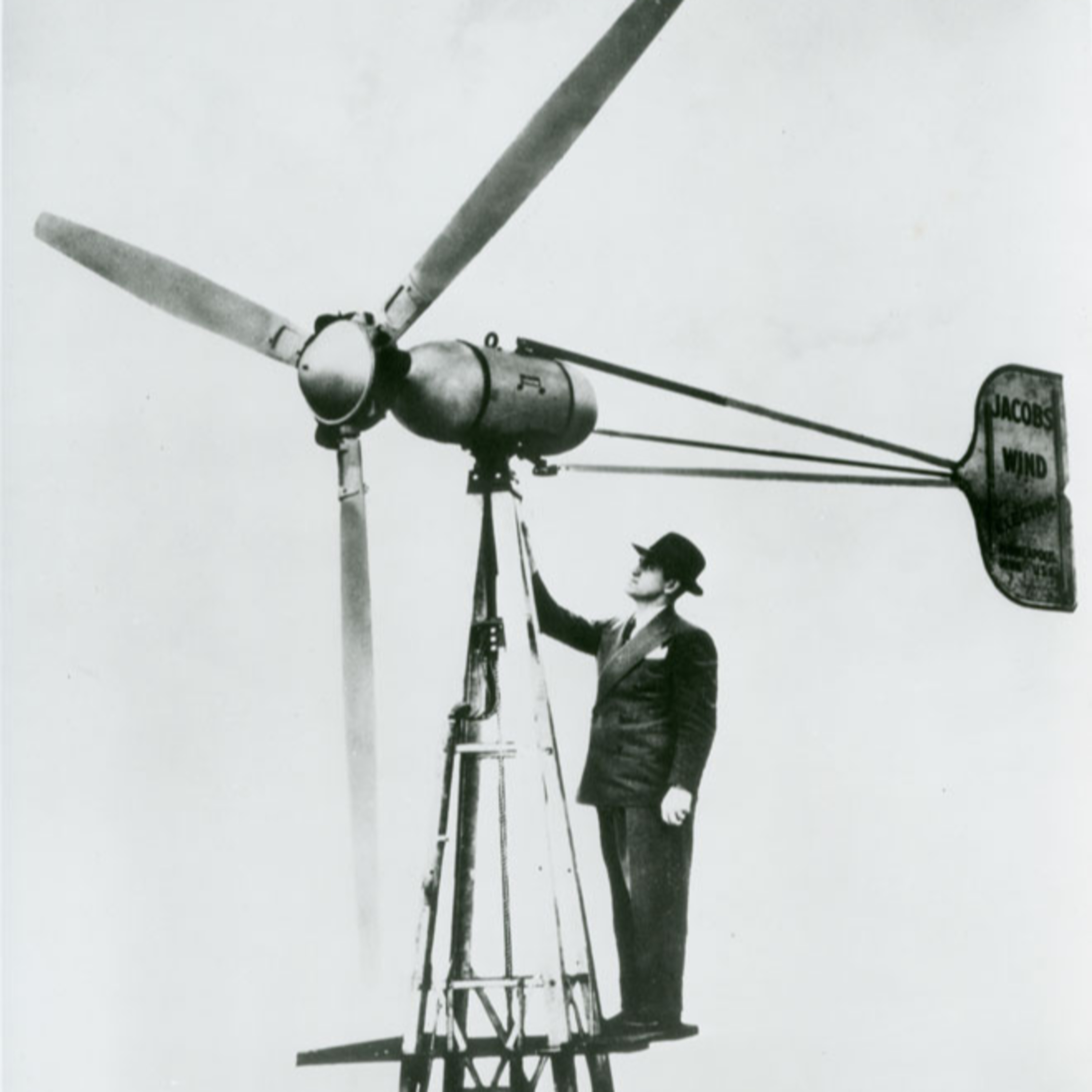 4. A Wind Turbine on Every Farm: How Wind Power Shaped 1930s America 15.05.2025 22mIn the 1930s, fewer than 10% of U.S. farms had electricity. One solution? Small wind turbines.My guest, Brandon Owens—author of The Wind Power Story—explores how wind power brought electricity to rural America long before the grid. We dive into the story of the Jacobs Wind Electricity Company, which delivered over 30,000 turbines to farms across the country. Known as the “Cadillac of the trade,” one even powered a station at the South Pole.We also discuss how federal policy, like the 1937 Rural Electrification Act, helped end this early era of decentralized, off-grid power.SOURCES: The Wind Po...
-
 3. Did the Kidnapping of a Solar Pioneer in 1909 Set Back Solar Power? 09.04.2025 32mThis week we are talking about the life of George Cove, a Canadian inventor and entrepreneur. Born in Nova Scotia in 1863 or 1864, Cove presented his first “solar electric generator” in 1905 in the Metropole Building in Halifax, Nova Scotia. He then moved to the US to continue work on his solar device. In 1909 he exhibited four solar panels on a New York rooftop, which were used to charge lead-acid batteries. This was decades before the first conventional photovoltaic solar panel as we know it today was invented at Bell Labs. Cove intended to use the heat of the sun to generate electricity, a...
-
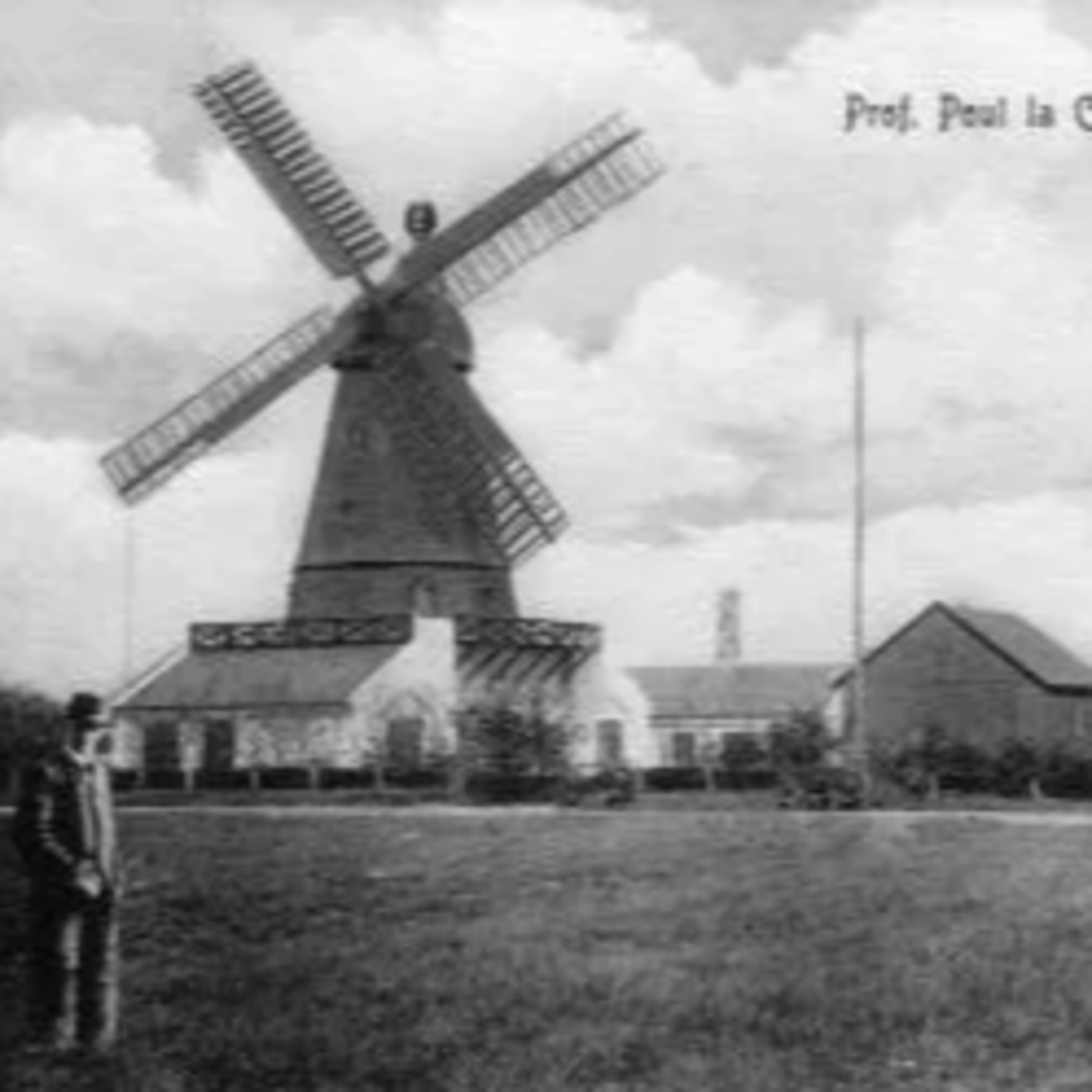 2. How Poul la Cour Launched Denmark's Wind Power Dominance 19.03.2025 19mDenmark is a global leader in wind energy, with Danish company Vestas standing as one of the world’s largest producers of wind turbines. Wind power accounts for around 58% of Denmark’s electricity—the highest share among OECD countries, according to Ember.But how did Denmark rise to this level of dominance? The roots of the country's wind power success can be traced back to history, specifically to Poul la Cour, the man who built Denmark's first wind turbine to generate electricity in 1891.In this episode, Jytte Thorndahl, former curator at the Danish Museum of Energy, delves into the life and...
-
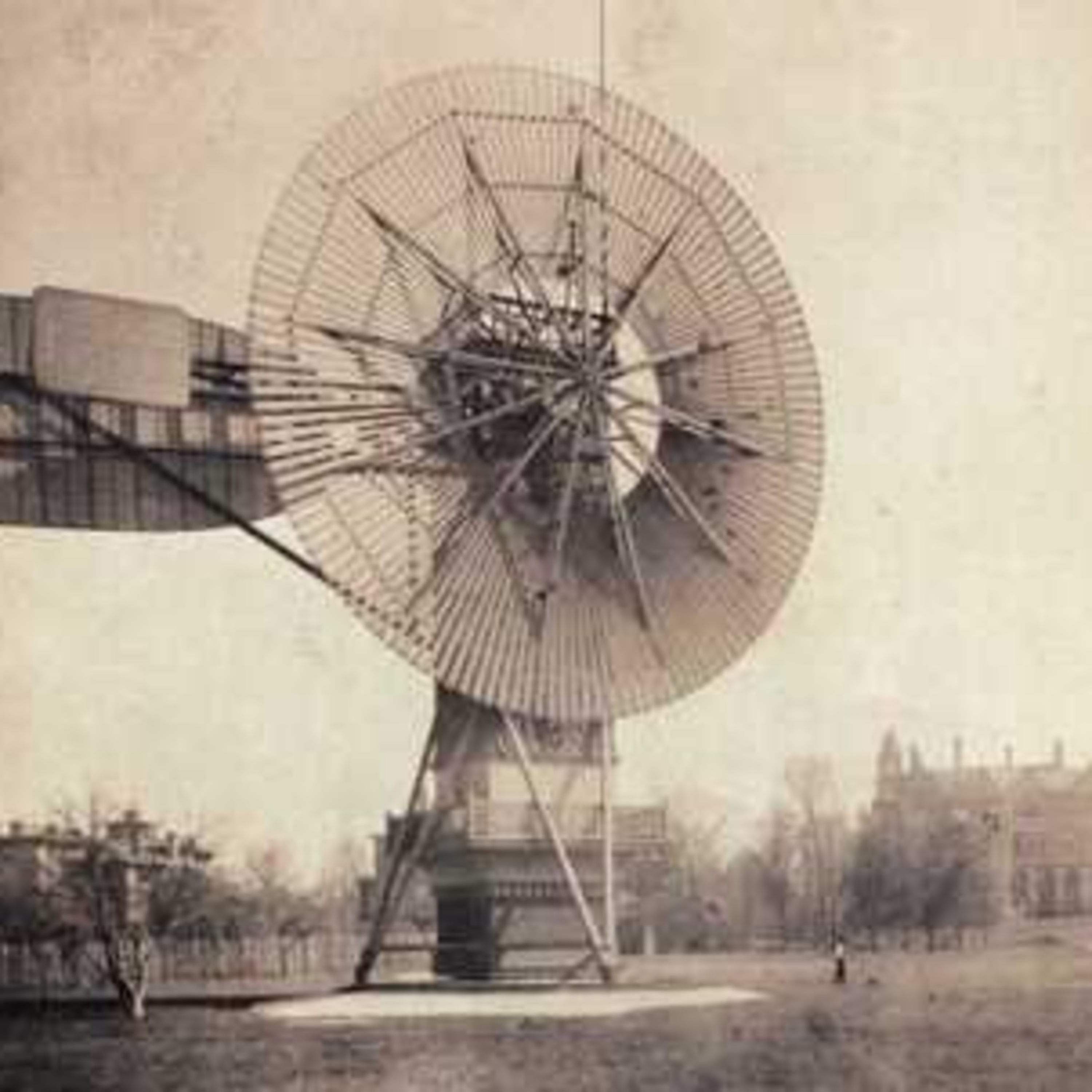 1. Charles Brush – America's Wind Power Pioneer 07.03.2025 25mIn 1888, a tall wind turbine in the backyard of a grand mansion on Cleveland's Euclid Avenue caught the attention of many. To most passers-by, it seemed like an unusual curiosity—perhaps the toy of a wealthy man. But this was no ordinary decoration. It was the pioneering work of Charles Brush, one of the first people to harness wind power for generating electricity.Brush's wind turbine had 144 wooden blades which were mounted on a sixty-foot tall tower. He stored the electricity in twelve batteries in his basement. Yet Brush, a businessman, never patented the wind turbine, nor did he seek to s...
Similar podcasts


Popular in
The podcast also appears in the podcast charts of these countries.
