
Endocrine Deep Dives
Gurbir Gill, MD
0
Endocrine Deep Dives covers advanced topics in endocrinology using AI-driven synthetic audio discussions derived from the host's study notes. Each episode breaks down complex endocrine concepts for healthcare providers and medical students. The content represents the host's personal opinions and does not constitute medical advice.
Episodes
-
 The Testicular Exam 19.11.2026 23mThe testicular examination is an essential physical diagnostic tool for characterizing hypogonadism, varicocele-induced hyperthermia, and occult malignant or benign neoplasms. We break down the clinical utility of the Prader orchidometer in differentiating pre-pubertal from post-pubertal arrest, palpation technique for intratesticular versus extratesticular pathology, and diagnostic thresholds that warrant scrotal ultrasonography or targeted hormonal evaluation.
-
POEMS Syndrome 17.11.2026 22mPOEMS syndrome is a paraneoplastic disorder driven by clonal plasma cells producing excess VEGF and proinflammatory cytokines. Endocrinopathies affect the majority of patients, most commonly primary or secondary hypogonadism, adrenal insufficiency, and hypothyroidism. We review the essential diagnostic criteria, distinguishing features from CIDP, serum free light chain evaluation, and systemic therapies targeting the underlying clone to resolve multi-organ dysfunction.
-
Post Hydrocortisone "Crash" 16.11.2026 14mPost-hydrocortisone crashes stem from rapid clearance kinetics, where steep trough levels trigger rebound ACTH surges, hypocortisolemic symptoms, or perceived withdrawal despite adequate daily cumulative dosing. We break down the clinical distinction between genuine under-replacement and pharmacokinetic troughs, strategies for dose fractionation, circadian curve optimization, and the diagnostic utility of switching to dual-release formulations or longer-acting glucocorticoids.
-
Nuanced Hyperthyroidism Workup 13.11.2026 25mDifferentiating thyrotoxicosis etiologies requires moving beyond suppressed TSH to evaluate free T3 to free T4 ratios, TRAb titers, and radioactive iodine uptake kinetics. We break down distinguishing high-uptake states like Graves disease and toxic adenomas from destructive thyroiditis, the utility of Doppler ultrasound, and targeted management strategies across antithyroid drug selection, radioactive iodine, and surgical indications.
-
The Oral Overnight Metyrapone Test 12.11.2026 23mThe overnight metyrapone test interrogates hypothalamic-pituitary-adrenal reserve via 11-beta-hydroxylase blockade, circumventing cosyntropin false-negatives in acute corticotroph injury where adrenocortical atrophy is absent. Interpretation demands sequential analysis: post-dose cortisol below 5 ug/dL confirms enzyme inhibition, while 11-deoxycortisol above 7 ug/dL verifies reserve. Levels between 7 to 10 ug/dL require Bayesian pretest calibration. Testing established insufficiency risks precipitating adrenal crisis.
-
Thyroid Radioactive Iodine Uptake Patterns 11.11.2026 27mRadioactive iodine uptake differentiates de novo hyperthyroidism from destructive or factitious thyrotoxicosis. Diffusely elevated tracer accumulation confirms Graves disease driven by thyrotropin-receptor antibodies, whereas focal autonomy denotes toxic adenoma or toxic multinodular goiter with extranodular suppression. Conversely, suppressed or absent uptake indicates destructive thyroiditis, exogenous hormone exposure, or recent iodine contamination, shifting clinical management from thionamides toward symptomatic beta-blockade.
-
Adrenergic Symptoms Differentials 10.11.2026 24mThis episode reviews the differential diagnosis of paroxysmal adrenergic symptoms, contrasting sympathoadrenal hyperreactivity with catecholamine-secreting neuroendocrine tumors. We analyze the diagnostic utility and pre-test confounding factors of plasma versus fractionated urinary metanephrines, evaluate concurrent features of thyrotoxicosis, carcinoid syndrome, and mast cell activation, and outline evidence-based alpha-blockade protocols prior to surgical or medical intervention.
-
POTS and endocrine mimics 09.11.2026 15mThis episode evaluates postural orthostatic tachycardia syndrome, exploring neuroendocrine and autonomic dysregulation, including hyperadrenergic phenotypes and volume depletion. We examine diagnostic tilt-table criteria, the crucial exclusion of primary endocrine mimics such as pheochromocytoma and adrenal insufficiency, and evidence-based management strategies spanning fludrocortisone, nonselective beta-blockers, alpha-1 agonists, and structured physical reconditioning.
-
Subclinical Hyperthyroidism 06.11.2026 22mThis episode examines subclinical hyperthyroidism, characterized by suppressed serum TSH alongside normal free thyroxine and triiodothyronine. We analyze etiology differentiation between autonomous nodular disease and Graves disease, risk stratification for atrial fibrillation and accelerated bone loss, and guideline thresholds for initiating antithyroid pharmacotherapy or definitive ablation in older adults and postmenopausal patients.
-
Elevated Cortisol: False Positive vs CS? 05.11.2026 22mPretest probability dictates the entire diagnostic workflow for Cushing syndrome by guiding appropriate patient selection for screening and preventing false positives from incidentalomas or physiological hypercortisolism. Because diagnostic tests carry distinct false-positive rates when applied to low-risk populations, initial biochemical evaluation must be strictly reserved for patients with recognizable clinical stigmata or progressive multisystem manifestations. Quantifying clinical probability prevents the diagnostic cascade of unindicated testing, ensuring that abnormal screening results...
-
Primary Aldosteronism: Diagnostic Nuances 04.11.2026 25mScreening for primary aldosteronism requires measuring the aldosterone-to-renin ratio under standardized conditions, accounting for interfering antihypertensives and hypokalemia. Diagnosis hinges on non-suppressible autonomous aldosterone secretion via confirmatory suppression testing. Once confirmed, adrenal protocol cross-sectional imaging and adrenal vein sampling are essential to reliably differentiate unilateral surgically curable adenomas from bilateral idiopathic adrenal hyperplasia prior to targeted intervention.
-
Familial Partial Lipodystrophy 03.11.2026 19mFamilial partial lipodystrophy mutations causing progressive subcutaneous fat loss from the extremities and trunk with paradoxical fat accumulation in the face and neck. This redistribution precipitates severe insulin resistance, hypertriglyceridemia, and premature cardiovascular disease. Diagnosis relies on physical examination recognizing characteristic fat loss patterns, genetic testing, and metabolic profiling. Management focuses on aggressive metabolic optimization, lifestyle modification, and targeted therapies for dyslipidemia and glycemic control to mitigate long-term cardiovascular an...
-
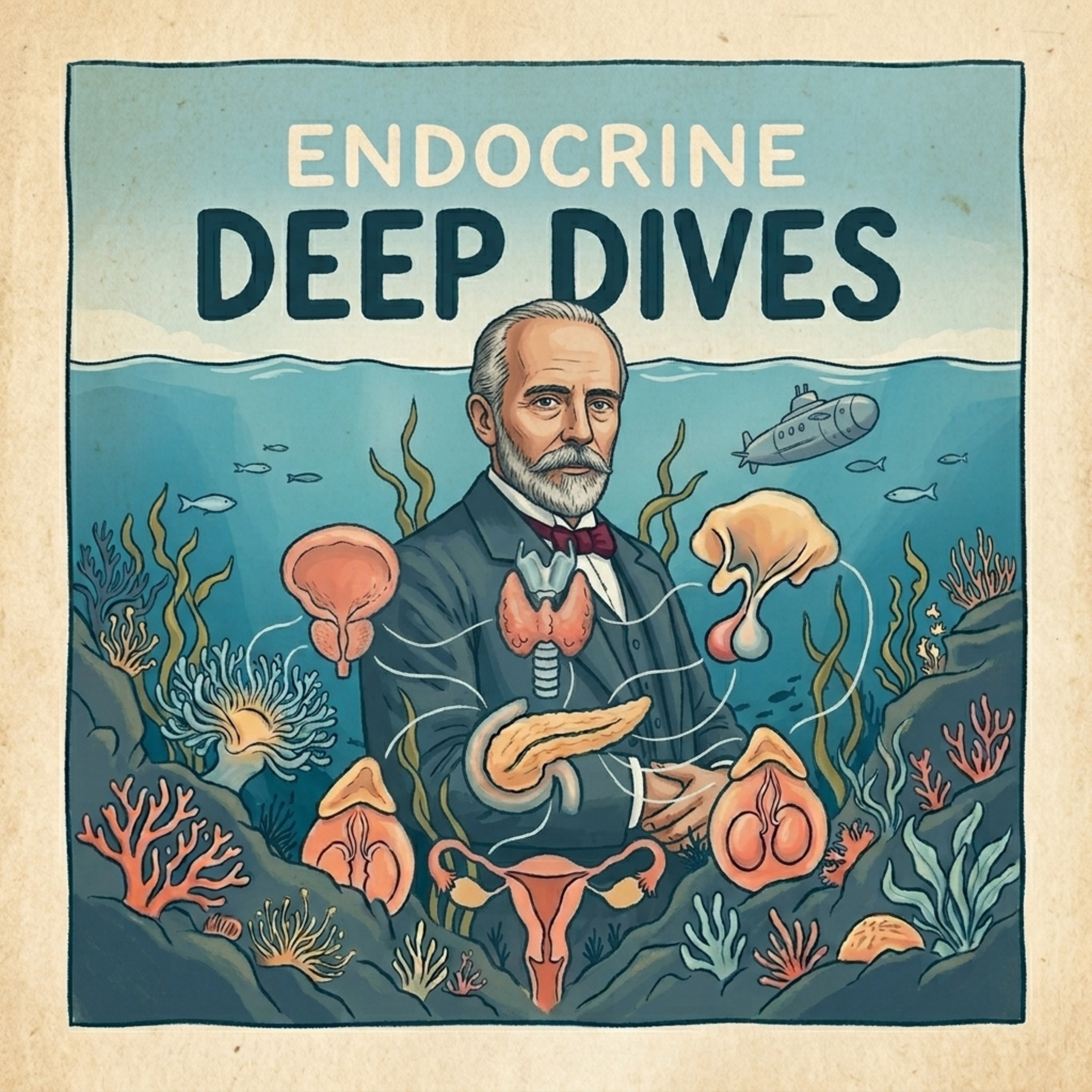 Emil Theodor Kocher 02.11.2026 27mEmil Theodor Kocher revolutionized endocrine surgery by developing meticulous, sterile, and bloodless thyroidectomy techniques. His standardized operative methods reduced surgical mortality from nearly forty percent to under one percent. Kocher's precise documentation of cachexia strumipriva fundamentally delineated thyroid physiological function and postoperative myxedema, establishing the foundations of modern surgical endocrinology and safe neck exploration.
-
Calcitonin 30.10.2026 24mCalcitonin, secreted by thyroid parafollicular C cells, acts as a physiological antagonist to parathyroid hormone by suppressing osteoclastic bone resorption and renal tubular calcium reabsorption. While minor in routine adult calcium homeostasis, serum calcitonin serves as an indispensable diagnostic and post-thyroidectomy surveillance biomarker for medullary thyroid carcinoma, directly correlating with tumor burden, staging, and systemic progression.
-
Multiple Endocrine Neoplasia Type 1 29.10.2026 20mMultiple endocrine neoplasia type 1 arises from inactivating MEN1 tumor suppressor mutations, causing loss of menin function. Clinical manifestations classically feature primary hyperparathyroidism due to multiglandular hyperplasia, enteropancreatic neuroendocrine tumors, and anterior pituitary adenomas. Management prioritizes subtotal parathyroidectomy with transcervical thymectomy, specialized biochemical surveillance, and aggressive multi-phase imaging to detect malignant functional pancreatic lesions early.
-
Crinecerfont for Steroid Reduction in CAH 28.10.2026 21mThis episode evaluates crinecerfont, an oral corticotropin-releasing factor type 1 receptor antagonist, for classic congenital adrenal hyperplasia. By blocking pituitary ACTH secretion independently of glucocorticoid feedback, crinecerfont reduces adrenal androgen excess, including androstenedione. This mechanism permits significant supraphysiologic glucocorticoid dose reduction toward physiologic replacement levels, mitigating long-term iatrogenic metabolic and skeletal complications while preserving adrenal control.
-
Billing Code G2211 27.10.2026 16mExplore the clinical implementation of add-on code G2211 for longitudinal endocrinology outpatient care. We analyze Centers for Medicare and Medicaid Services documentation requirements, medical decision-making thresholds, and audit vulnerabilities when capturing complex chronic disease management. Key takeaways include differentiating routine evaluation and management encounters from sustained, comprehensive continuity and structuring electronic health record workflows to ensure defensible reimbursement.
-
Billing Code CGM/95251 27.10.2026 17mAnalysis and interpretation of continuous glucose monitoring data requiring at least seventy-two hours of sensor wear. This physician service focuses on evaluating glycemic variability, time in range, and nocturnal hypoglycemia to refine therapy. Documentation requires a dedicated written interpretation addressing glycemic trends and actionable management changes, distinct from sensor placement and calibration procedures.
-
XLH and Burosumab 27.10.2026 21mAdult presentations frequently masquerade as axial spondyloarthritis, early-onset osteoarthritis, or recurrent pseudofractures, evading diagnosis when chronic hypophosphatemia and renal phosphate wasting are overlooked. Transitioning from conventional therapy to the anti-FGF23 monoclonal antibody burosumab requires a mandatory washout of oral phosphate and active vitamin D to prevent hyperphosphatemia while restoring renal tubular reabsorption.
-
COCPs for PMOS 23.10.2026 24mCombined oral contraceptives serve as first-line pharmacotherapy for non-fertility management. They suppress pituitary luteinizing hormone secretion to arrest ovarian theca-cell androgen synthesis while stimulating hepatic sex hormone-binding globulin production, drastically reducing bioactive free testosterone. This concurrent action mitigates hirsutism, restores cyclic withdrawal bleeding, and provides essential endometrial protection against unopposed estrogen-driven hyperplasia.
Similar podcasts


Popular in
The podcast also appears in the podcast charts of these countries.
