
Multi-messenger astrophysics
Astro-COLIBRI
0
Discussions around tools and discoveries in the novel domain of multi-messenger and time domain astrophysics. We'll highlight recent publications, discuss tools to facilitate observations and generally talk about the cool science behind the most violent explosions in the universe.
Episodes
-
 Multimessenger Gold Rush: hasing Kilonovae with the Schmidt Observatory System 18.11.2026 22mIn this episode, we explore the future of multimessenger astronomy and the hunt for electromagnetic counterparts to compact binary mergers. As the LIGO–Virgo–KAGRA (LVK) detector network prepares for its fifth observing run (O5), astronomers face the twin hurdles of catching rapid, faint transients and pinpointing them across broad sky localizations. We dive into how the Eric and Wendy Schmidt Observatory System—teamed with ground-based giants like the Rubin Observatory—plans to turn single-event discoveries into a statistical population of kilonovae and relativistic jet afterglows.The O5 Disc...
-
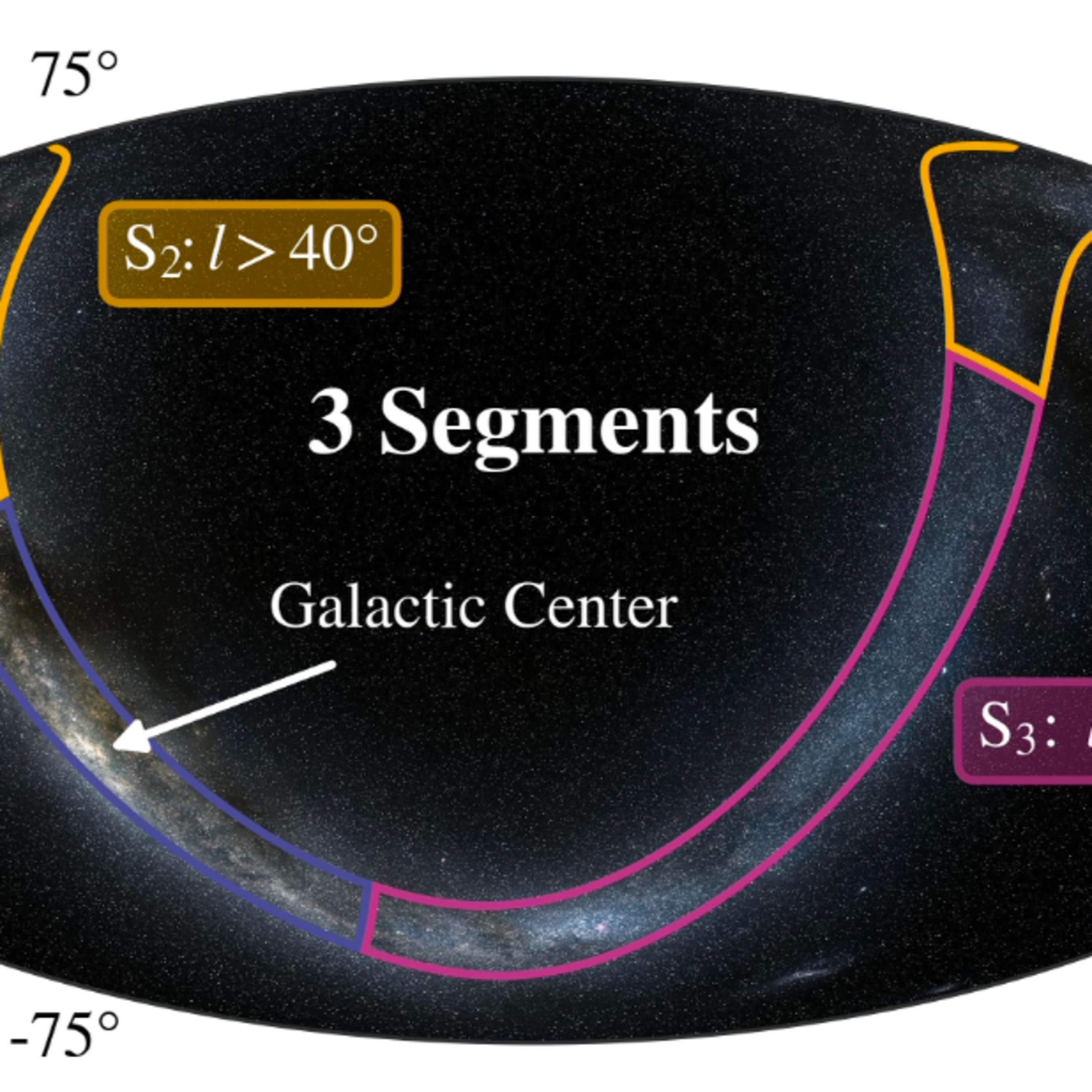 Mapping Galactic Neutrinos with IceCube 16.11.2026 22mIn this episode, we break down a major astrophysics milestone from the IceCube Neutrino Observatory at the South Pole. Analyzing 10 years of neutrino-induced cascade data (nearly 60,000 events spanning from 500 GeV to the PeV regime), researchers performed the first model-independent measurement of neutrino flux variations and energy spectra across different segments of the Galactic plane.Key Discussion Points & Takeaways Model-Independent Sky Segmentation: Rather than testing the entire Milky Way against fixed gamma-ray emission templates, the IceCube collaboration divided the Galactic plane...
-
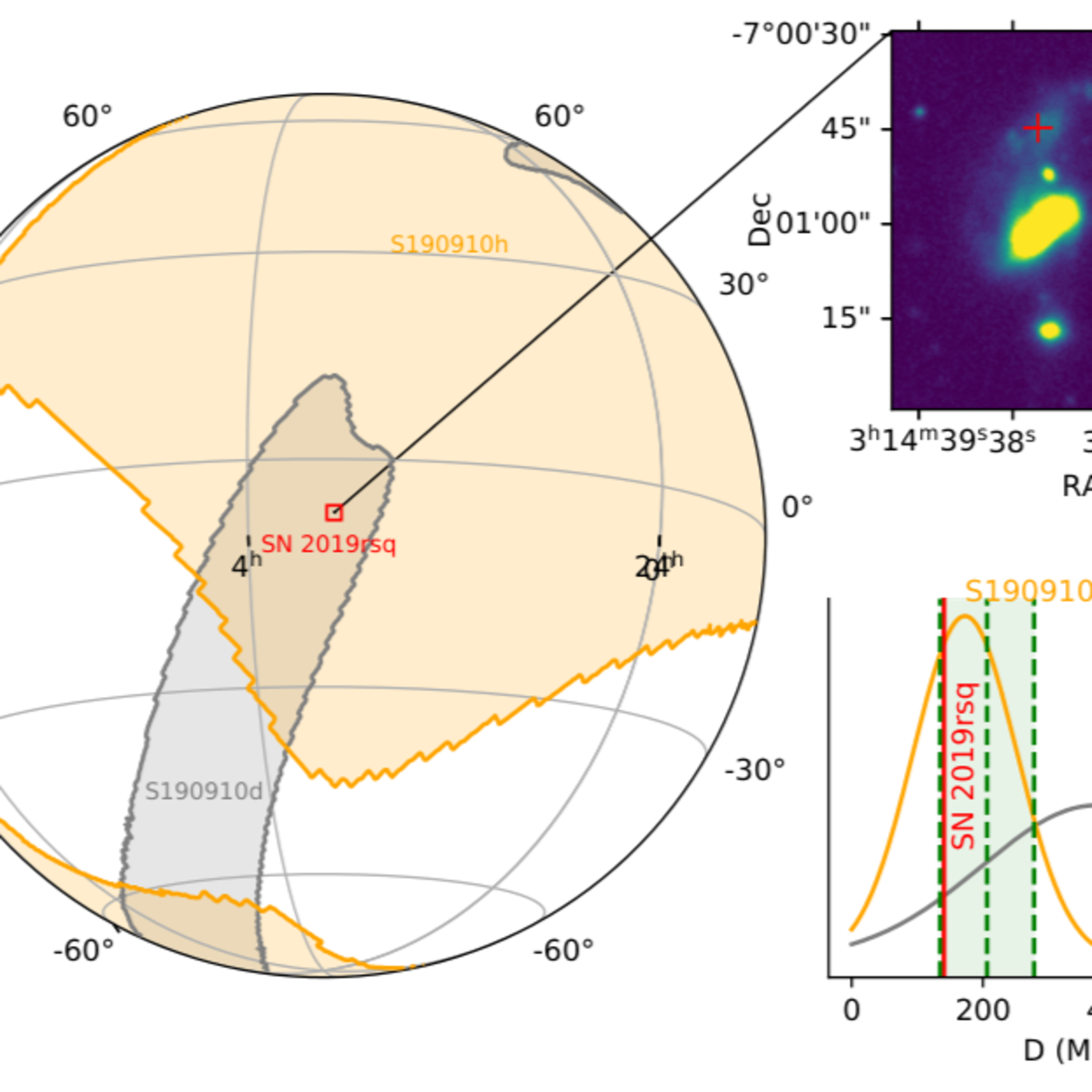 SN 2019rsq + two GWs: Rethinking Stellar Collapse 13.11.2026 21mIn standard astrophysics, stellar collapse forms a remnant, and binary mergers take tens of millions to billions of years to inspiral and collide. But what happens when two gravitational wave signals occur just 7.1 hours apart in the exact same region of space as a newly exploding supernova? In this episode, we dive into a study identifying an unprecedented candidate triplet: two marginal gravitational wave (GW) candidates (S190910d and S190910h) aligned in 3D localization and distance with the stripped-envelope Type IIb supernova SN 2019rsq. We explore how a fragmenting collapsar disk could e...
-
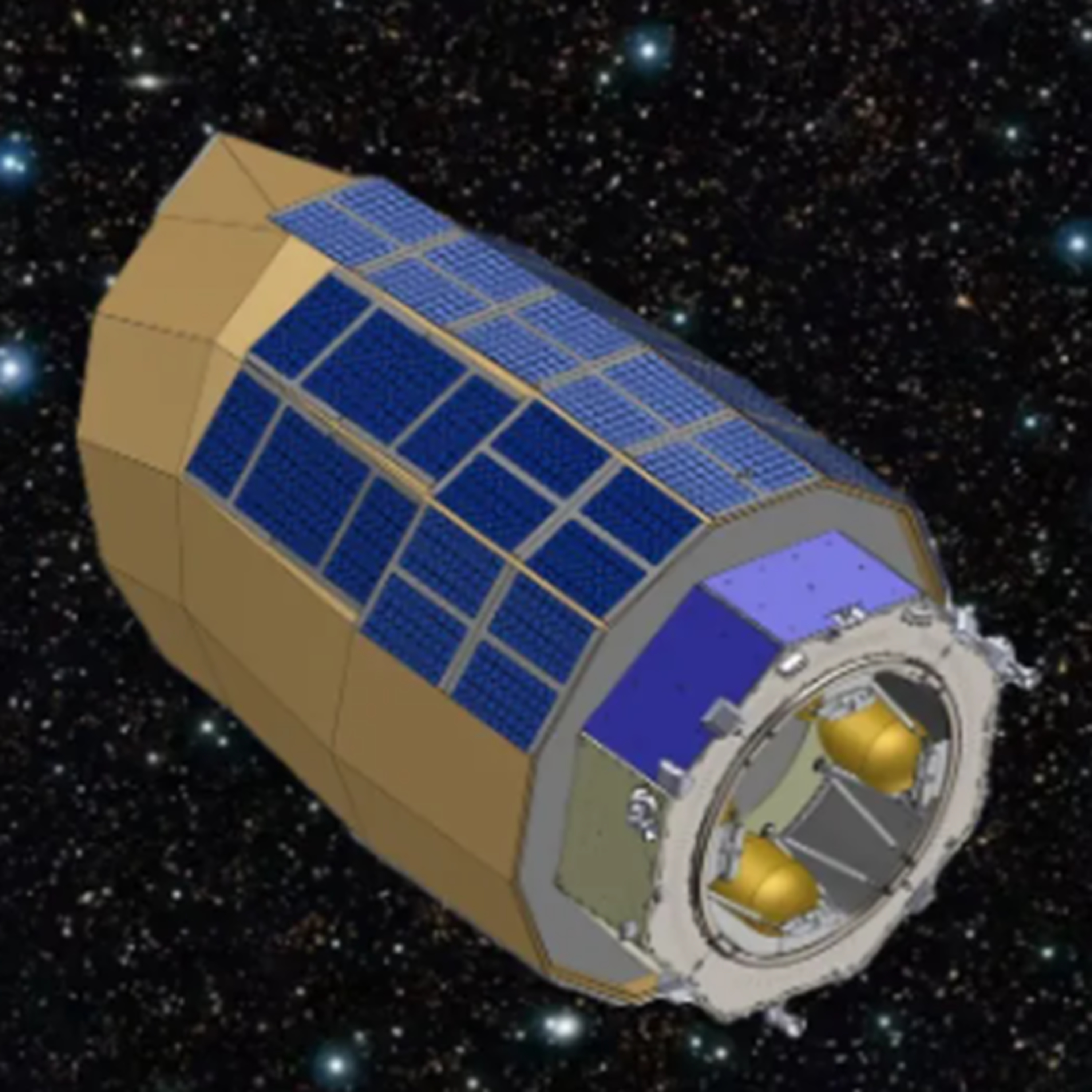 The Lazuli Space Observatory: Time-Domain Astronomy’s Next Flagship 09.11.2026 23mIn this episode, we dive into the Lazuli Space Observatory, a flagship space mission designed to fill the critical gap in tracking faint, fast-evolving cosmic transients. Featuring a 3-meter primary mirror in a 3:1 lunar resonant orbit, Lazuli combines flagship-class sensitivity with an ultra-fast target-of-opportunity (ToO) response time of less than 4 hours (and under 90 minutes in favorable scenarios)—one to two orders of magnitude faster than conventional space telescopes like Hubble or JWST. We explore how Lazuli will revolutionize our understanding of gravitational wave counterparts, exp...
-
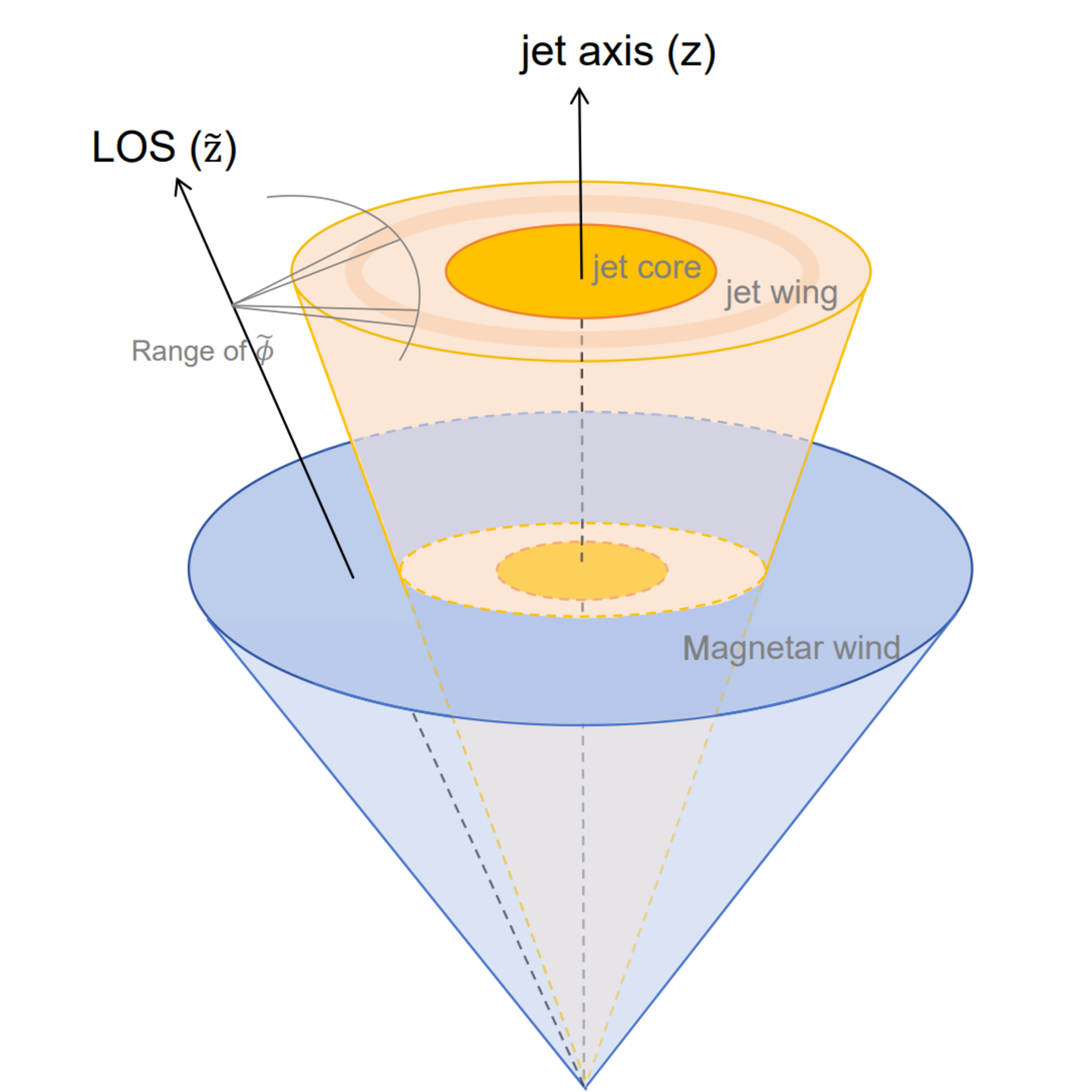 When a Magnetar Becomes a Black Hole: The Mystery of EP251129a 04.11.2026 23mIn this episode, we dive into the discovery and multiwavelength analysis of EP251129a / GRB 251129A—a extragalactic fast X-ray transient located at redshift \\(z = 0.505\\). Detected independently by the Einstein Probe and SVOM/ECLAIRs, this event provides a rare window into the birth of a black hole, combining an ultra-long early X-ray plateau with an unusual off-axis radio afterglow.Key Topics Covered:The Initial Trigger & Detection: How wide-field X-ray space telescopes spotted EP251129a, triggering follow-up observations across the electromagnetic spectrum with Swift, Chandra, and the Very...
-
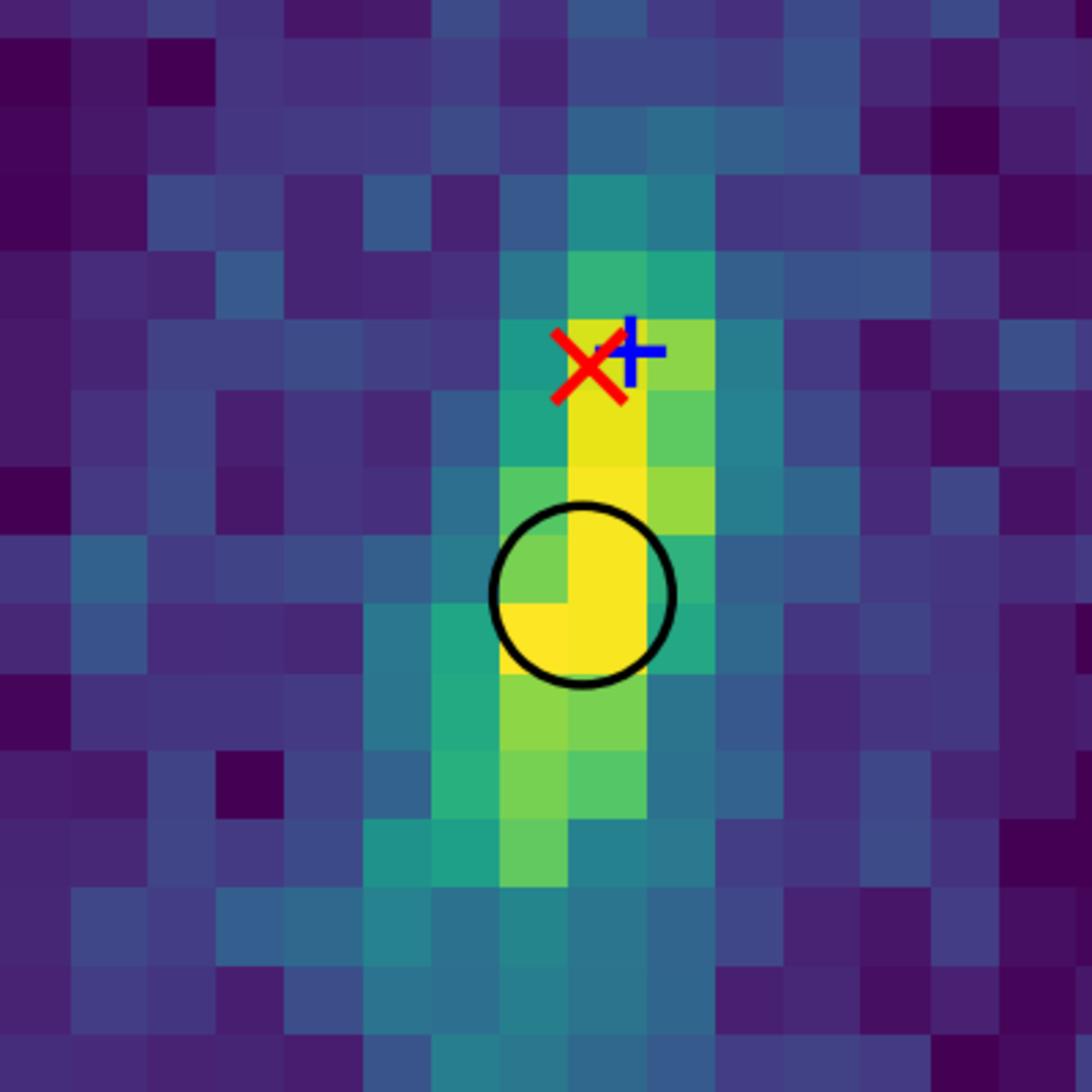 Off-Nuclear Cosmic Fireworks: The Curious Case of EP241021a 02.11.2026 23mIn this episode, we explore the extraordinary extragalactic event EP241021a, a peculiar Fast X-Ray Transient (FXT) discovered by the Einstein Probe on October 21, 2024, at a redshift of \\(z = 0.748\\). Featuring a long X-ray plateau and multiple optical rebrightenings, EP241021a challenged standard stellar explosion and jet afterglow models.Deep late-time observations using the Hubble Space Telescope (HST) and Gemini-North revealed that the event occurred in a dwarf starburst galaxy, positioned at a clear off-nuclear offset of \\(0.95 \pm 0.13\text{ kpc}\\) from the galactic center. Host-subt...
-
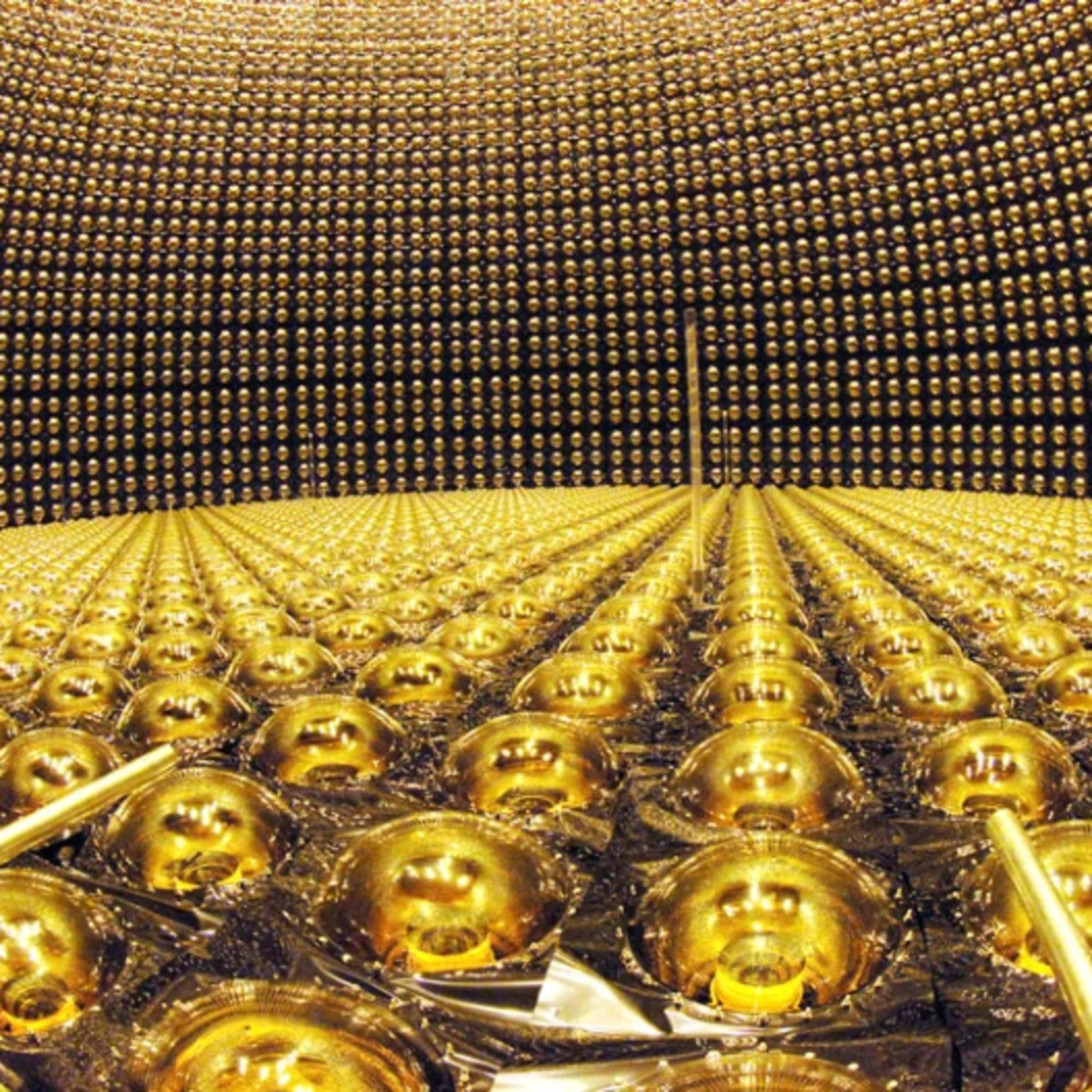 2.6 Sigma: Super-Kamiokande’s First Indication of Ancient Supernova Neutrinos 30.10.2026 23mIn this episode, we dive into a landmark result from the Super-Kamiokande Collaboration: the first experimental indication (2.6\sigma significance) of electron antineutrinos from the Diffuse Supernova Neutrino Background (DSNB). Also known as supernova relic neutrinos, this faint, steady stream of particles represents the collective glow of every core-collapse supernova that has occurred throughout cosmic history. Key Discussion Points & Highlights:What is the DSNB? Unlike rare burst neutrinos from single local supernovae, the DSNB is a continuous, isotropic flux accumulated from billions of s...
-
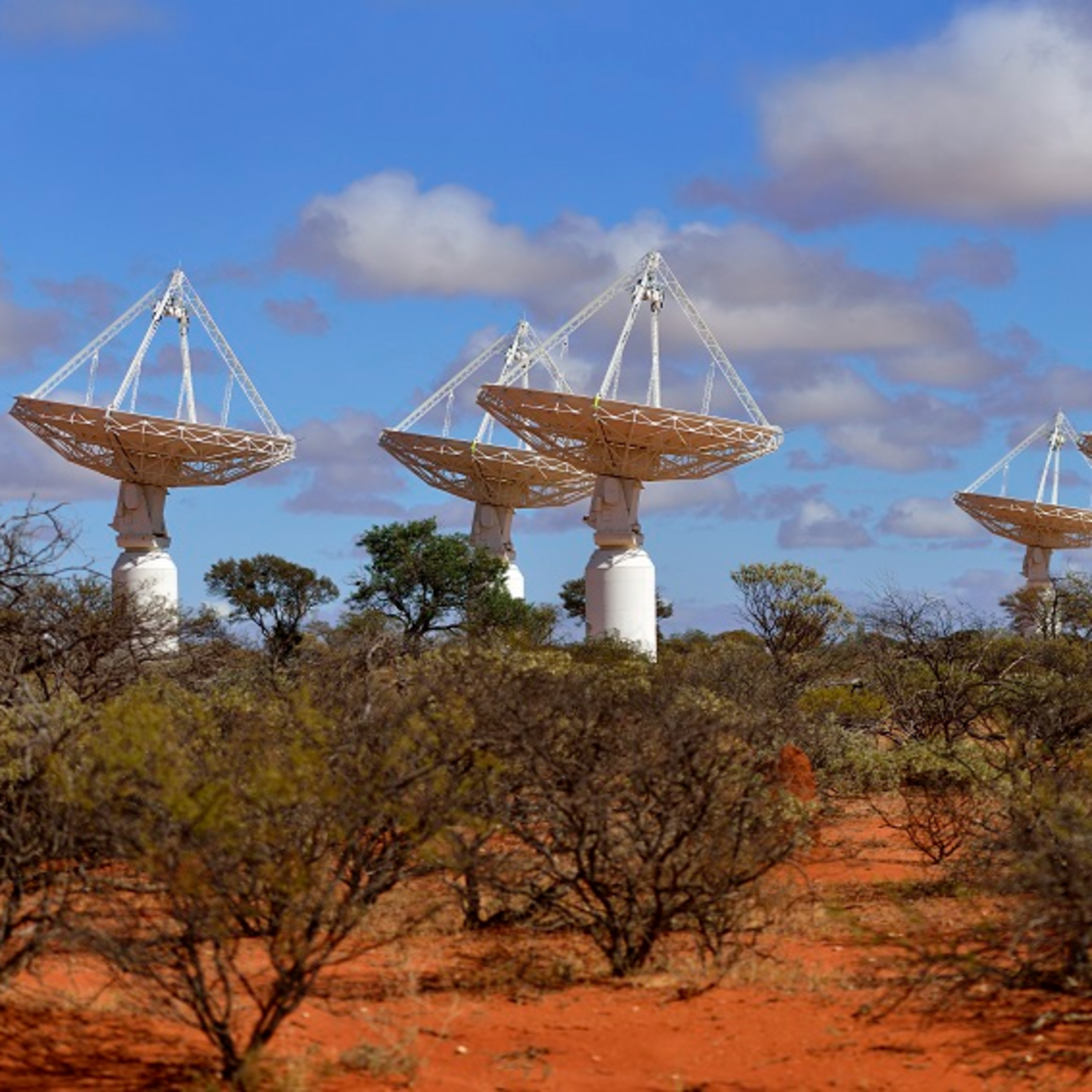 Supernovae, TDEs, and Scintillation: How ASKAP and Rubin Are Mapping the Variable Universe 16.10.2026 20mIn this episode, we dive into how astronomers are combining the power of the Australian Square Kilometre Array Pathfinder (ASKAP) and the Vera C. Rubin Observatory to capture the dynamic, ever-changing sky in real time. Historically, optical and gravitational-wave observatories issued rapid alerts, but radio astronomy lacked automated, large-scale, real-time alert infrastructure. Now, a long-term monitoring program (project AS331) targets Rubin’s Deep Drilling Fields (DDFs), taking 3-hour radio snapshots approximately every 10 days to achieve a sensitivity of \\(\sim 60\ \mu\text{Jy}\\). This...
-
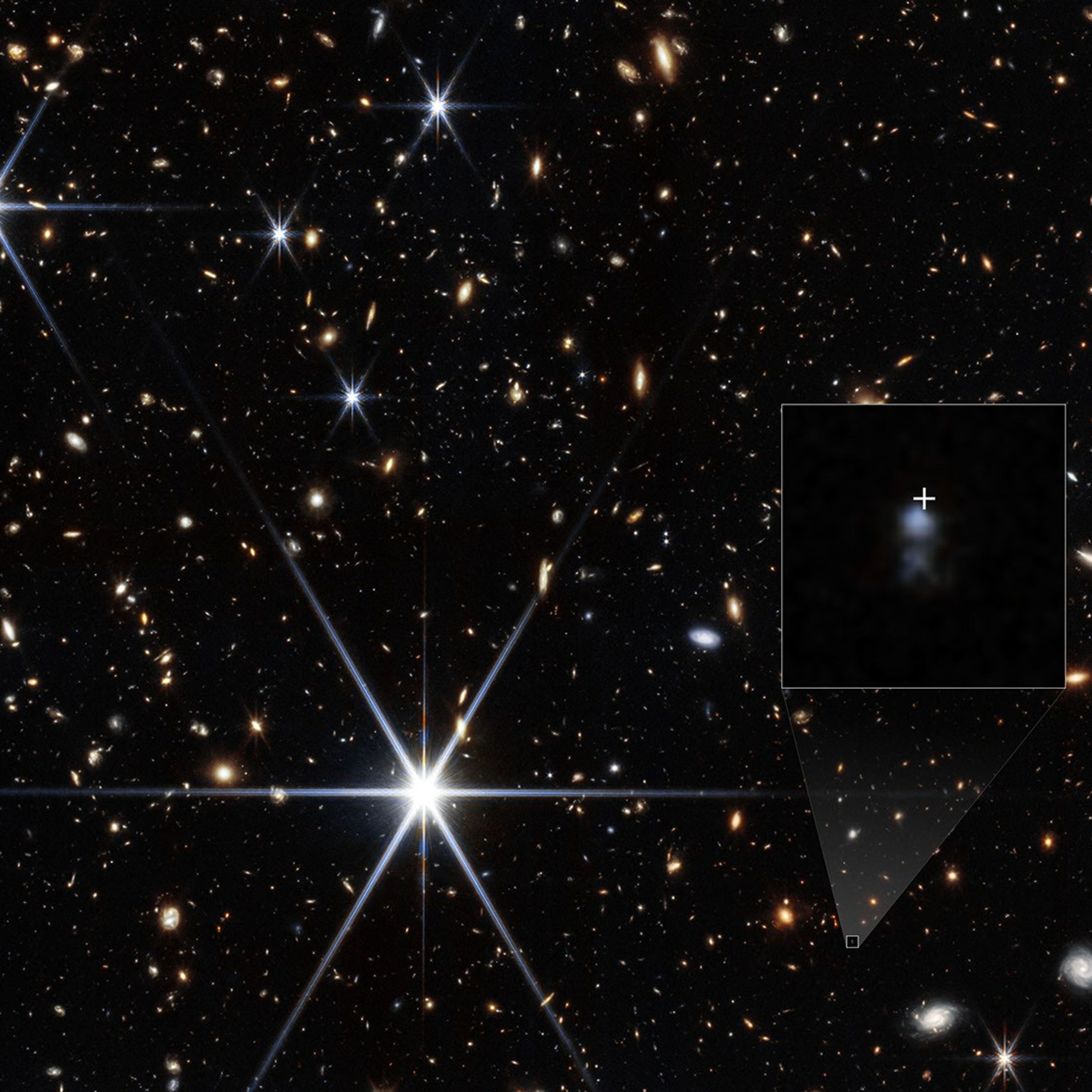 JWST and MeerKAT Team Up: Uncovering the Most Distant Fast Radio Burst Yet 12.10.2026 20mFast Radio Bursts (FRBs) are millisecond-duration radio signals originating from deep space. In this episode, we explore the groundbreaking discovery of FRB 20240304B, detected by the MeerKAT radio telescope in South Africa as part of the MeerTRAP survey. Subsequent near-infrared observations with the James Webb Space Telescope (JWST) pinpointed its host galaxy at an unprecedented spectroscopic redshift of z = 2.148 — tracing the signal back to just 3 billion years after the Big Bang.Key Talking PointsBreaking Distance Records: Prior to this discovery, the highest confirmed redshift for an FRB...
-
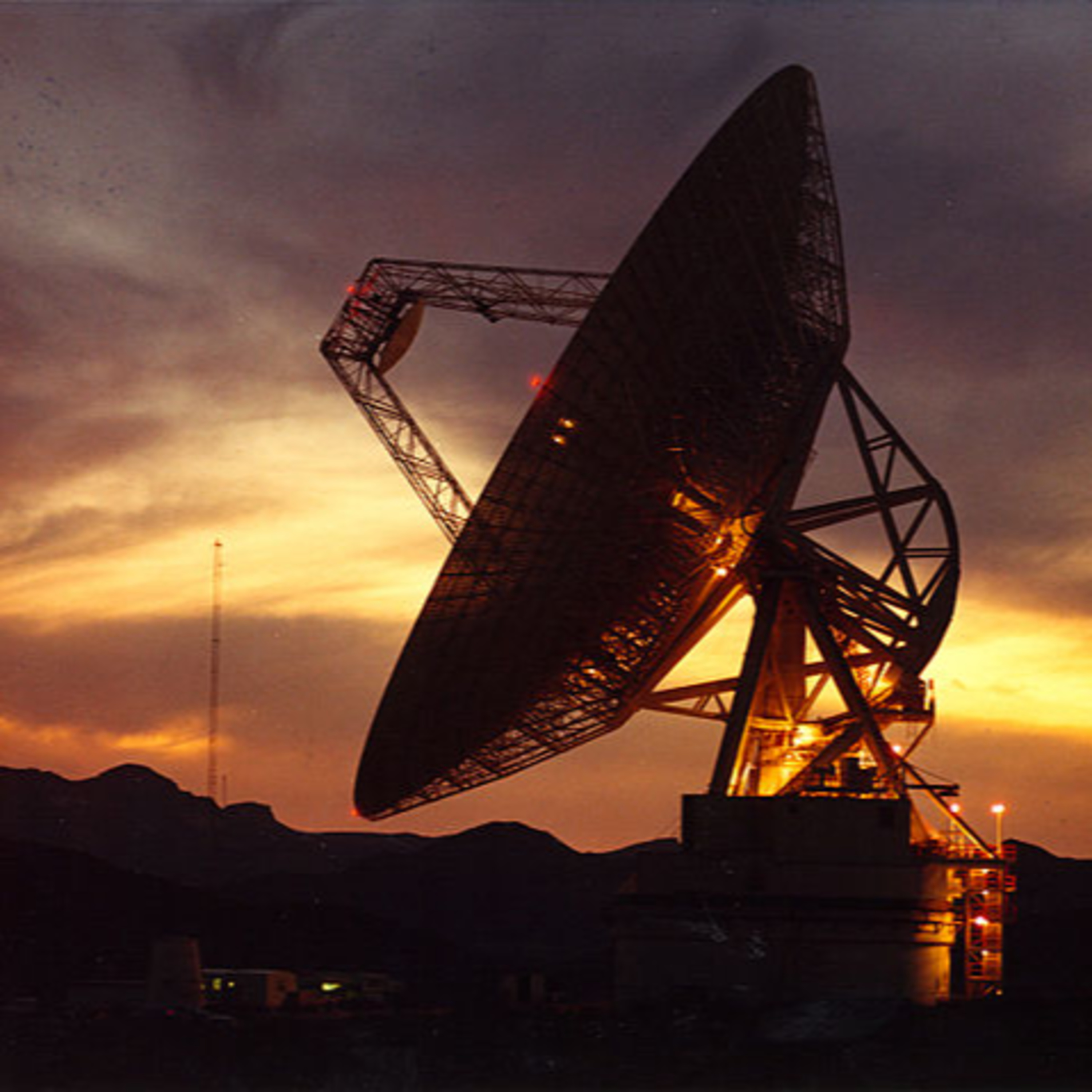 GRB 221009A: Measuring Relativistic Jets using Radio Interferometry 08.10.2026 21mIn this episode, we explore high-precision Very Long Baseline Interferometry (VLBI) radio observations of GRB 221009A, the brightest gamma-ray burst ever detected. Using the Global-VLBI network at 5 GHz between 231 and 750 days post-burst, an international team of astronomers directly measured the expanding projected image size and relativistic velocity of the blast wave. Their direct size measurements provide a powerful test of theoretical afterglow physics, revealing that existing multi-wavelength models struggle to reproduce the physical size evolution of the burst.Key Takeaways & Discussio...
-
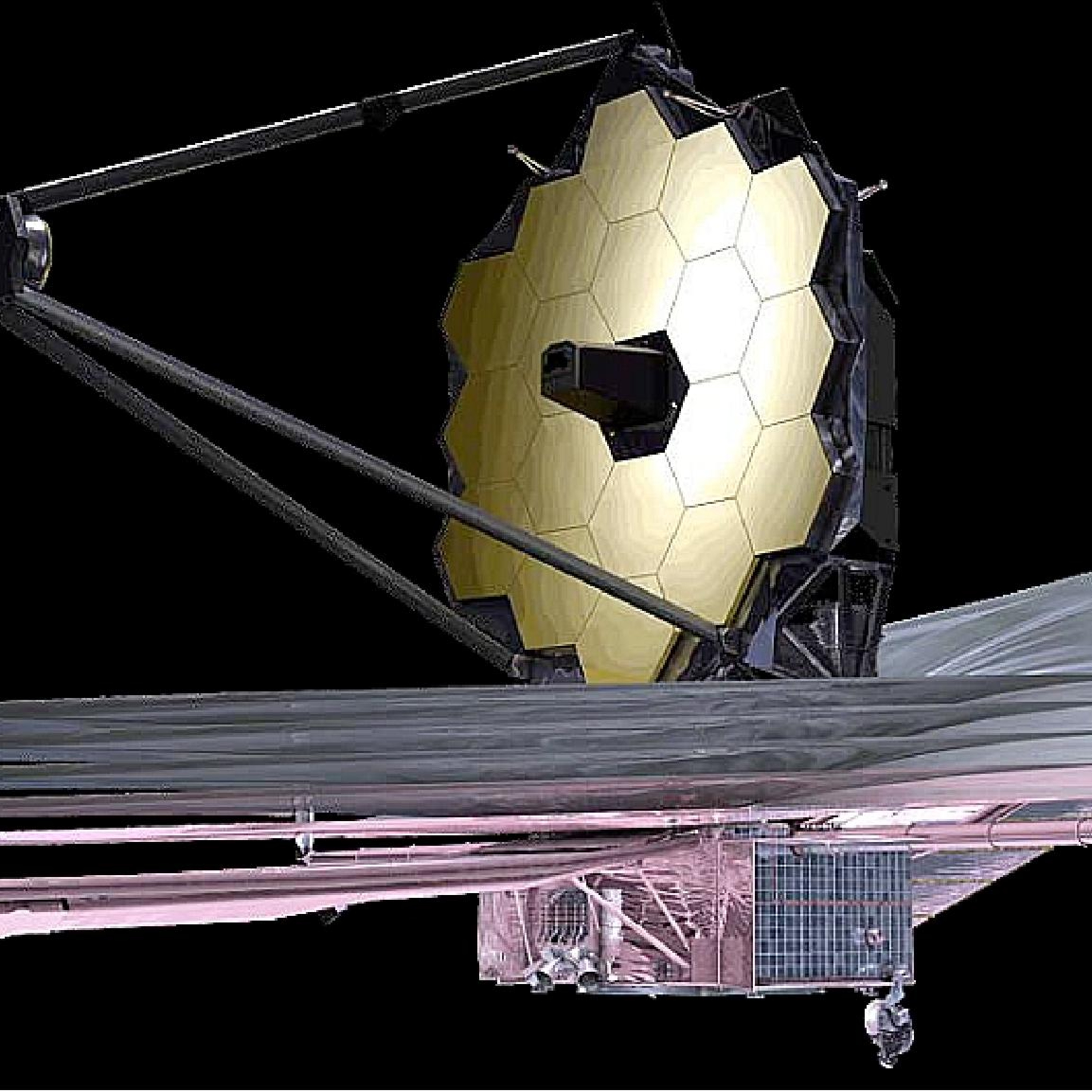 Unveiling GRB 240825A: Cosmic Dust, JWST, and a Supernova in Hiding 05.10.2026 14mIn this episode, we explore the cosmic mystery of GRB 240825A, a gamma-ray burst detected at redshift z = 0.659. Its short rest-frame duration and hard prompt emission initially pointed toward a compact-object merger, while deep ground-based searches turned up no sign of an accompanying stellar explosion. We break down how the James Webb Space Telescope (JWST) stepped in to solve the puzzle.Key Discussion Points:The Cosmic Puzzle: GRB 240825A displayed prompt gamma-ray features traditionally associated with short-duration merger events. Early ground observations with major telescopes failed to...
-
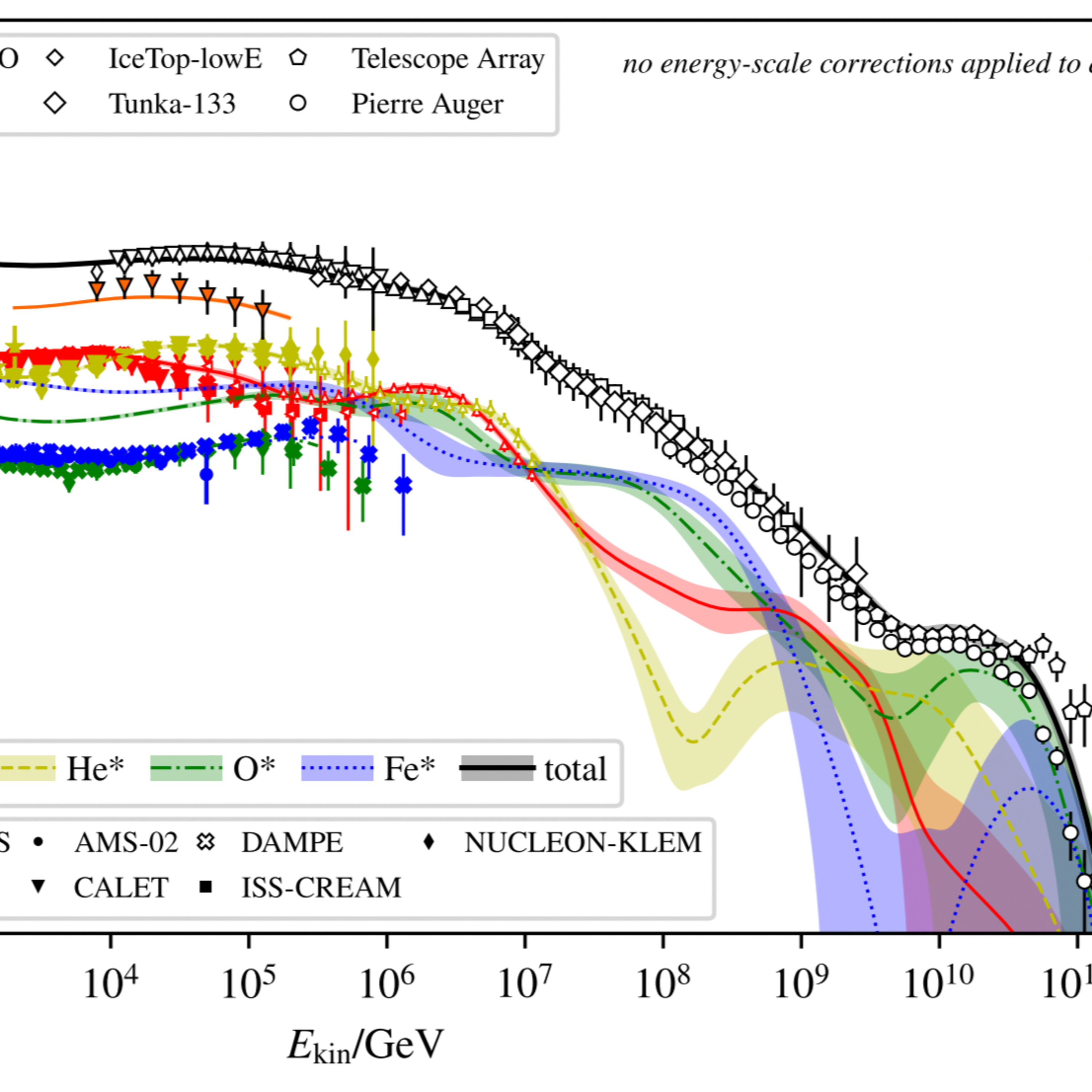 From GeV to EeV: A Data-Driven View of Cosmic Rays 02.10.2026 24mHow do high-energy particles traveling across the universe reach Earth, and what are they made of? In this episode, we explore the Global Spline Fit (GSF), a comprehensive framework that unifies cosmic-ray flux and mass composition measurements across eleven orders of magnitude in energy (from 1\text{ GeV} to beyond 10^{11}\text{ GeV}).Key Topics CoveredBridging Direct & Indirect Detection: How researchers combined direct elemental identification from space and balloon instruments (e.g., AMS-02, CALET, DAMPE) with ground-based extensive air-shower arrays (e.g., LHAASO, Pierre Auger Observatory...
-
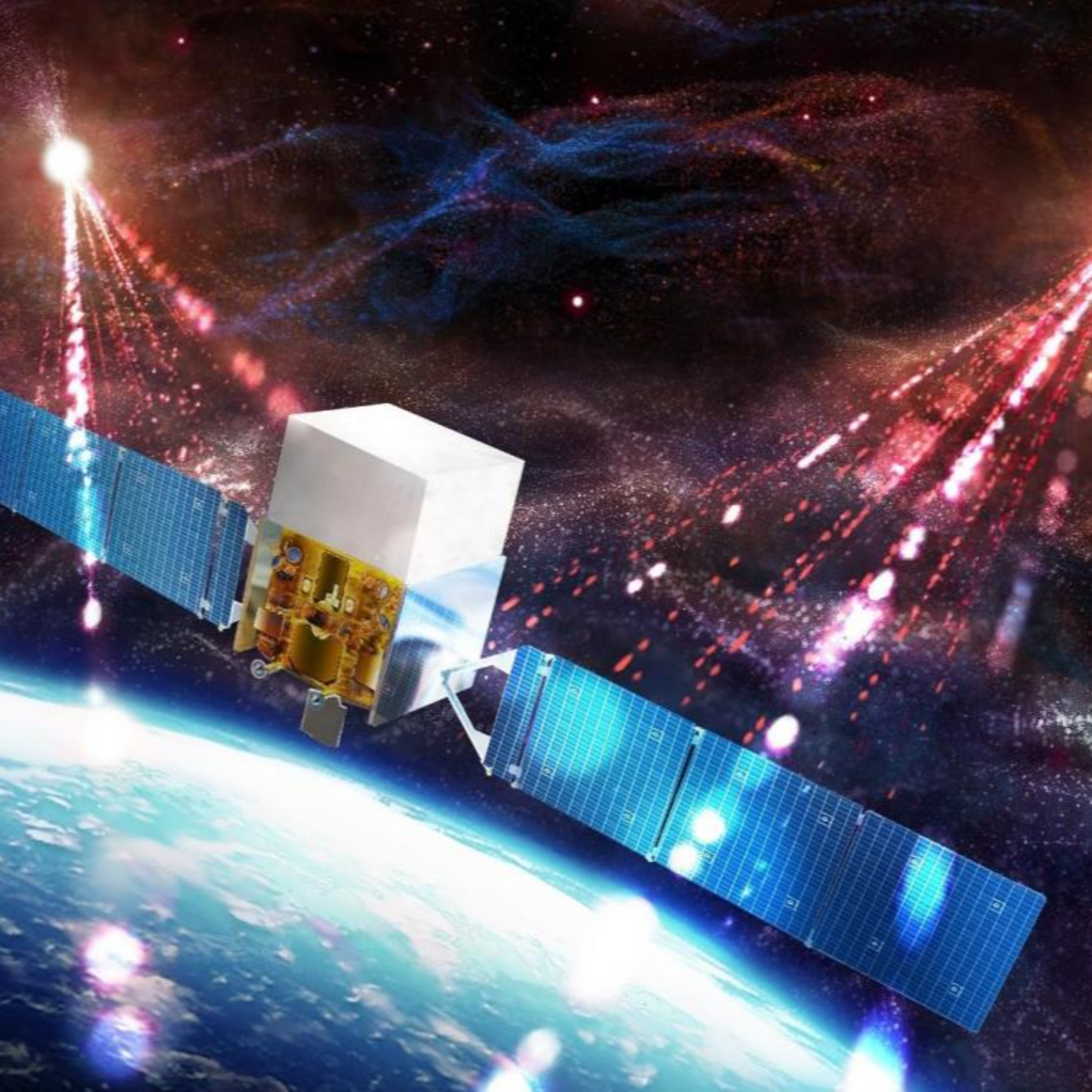 From Blazars to Supernovae: Fermi’s Deepest High-Energy Sky Survey 29.09.2026 23mIn this episode, we dive into the release of the Fourth Catalog of Hard Fermi-LAT Sources (4FHL). Utilizing 16 years of continuous data from NASA's Fermi Gamma-ray Space Telescope, this catalog provides the deepest and most detailed survey of the universe in the 50 GeV to 2 TeV energy range. We explore how astronomers detected 673 extreme cosmic sources—nearly doubling previous surveys—and what these findings reveal about particle acceleration, supermassive black holes, and cosmic ray sources.Key Topics CoveredThe Deepest High-Energy Survey: How 16 years of Fermi Large Area Telescope (LAT) obs...
-
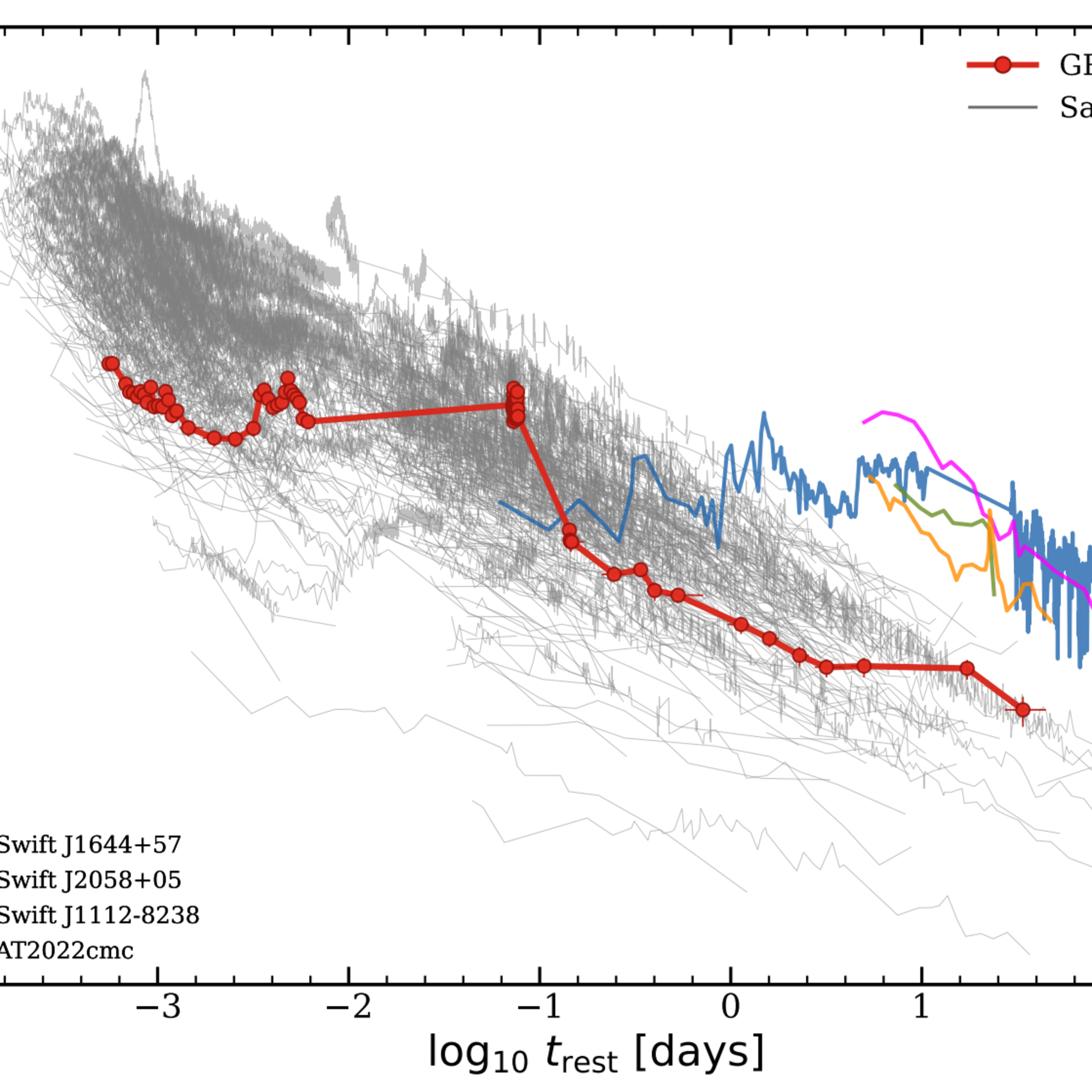 GRB 220706A: The Longest-Lived Gamma-Ray Burst Engine Ever Seen 24.09.2026 19mIn this episode, we explore the extraordinary discovery of GRB 220706A, a record-shattering cosmic explosion at redshift z = 0.8577. While most gamma-ray burst engines die down within minutes, X-ray follow-up observations revealed active flaring continuing for 27 rest-frame days (~51 days in the observer frame). This sets the record for the latest central engine activity ever detected in a gamma-ray burst by a margin of roughly 21 rest-frame days.An Engine Duration for the Record Books: How combined high-energy data from Swift, NICER, and Chandra established an engine duration of t_burst = 10^...
-
 Chasing Kilonovae: How LIGO-India Multiplies Multimessenger Discoveries 18.09.2026 21mIn this episode, we explore the future of multimessenger astronomy as neutron star–black hole (NSBH) mergers take center stage. While binary neutron star collisions have delivered iconic multimessenger detections, finding the faint optical kilonova counterparts of NSBH mergers remains one of astrophysics' biggest challenges. We dive into how adding LIGO-India (Aundha) to the global gravitational-wave network will transform our ability to catch these elusive optical transients using the Vera C. Rubin Observatory.Key Topics Covered:The LIGO-India Boost: How expanding from the three-detector LHV...
-
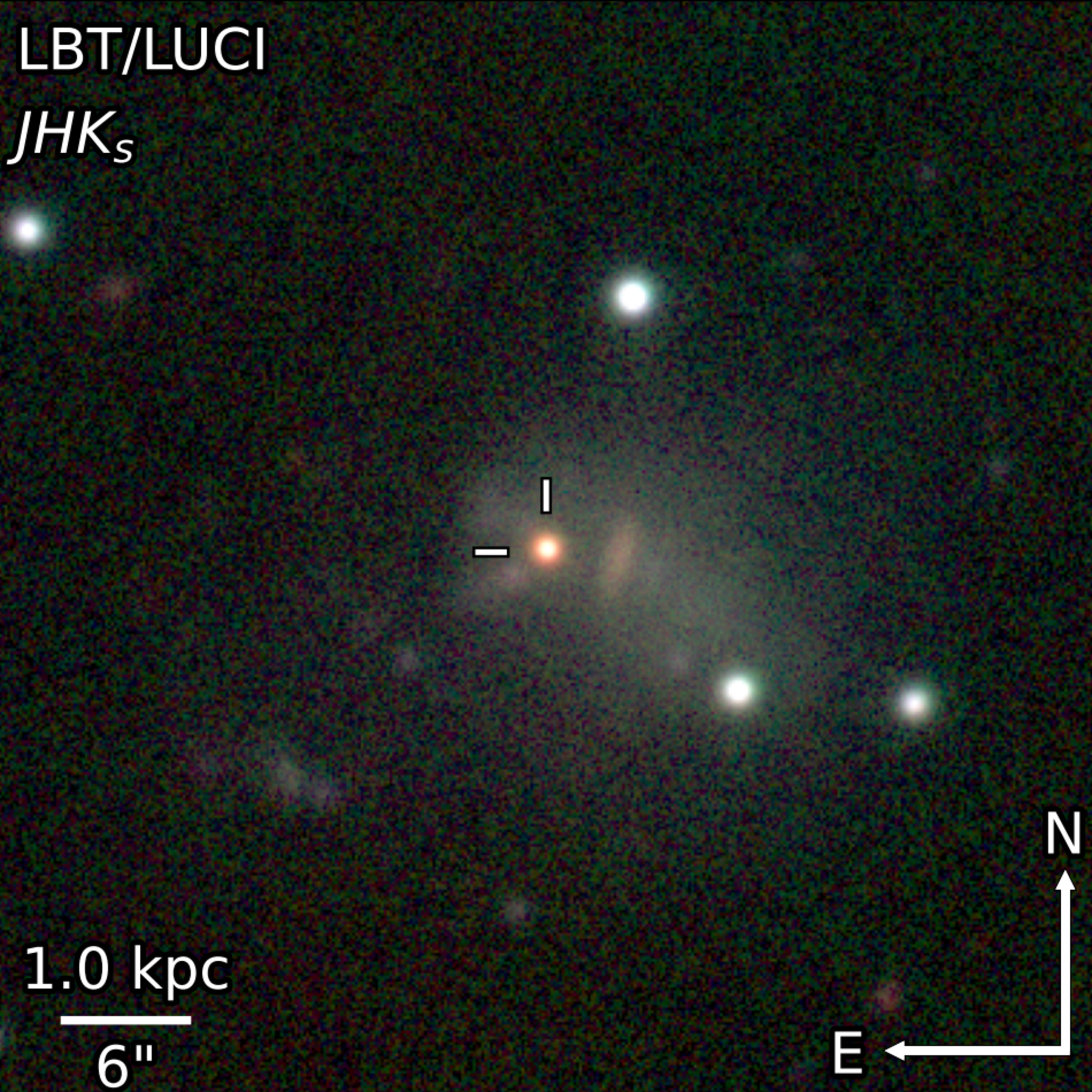 The Antimatter Explosion: Unraveling Supernova 2024afyu 14.09.2026 22mEpisode OverviewIn this episode, we explore the extraordinary discovery of SN 2024afyu, a nearby supernova located at redshift (z = 0.0085) (approx. 37.7 Mpc). Featuring an unusually slow 85-day rise to peak brightness and a peak magnitude of (M_r = -18.9 mag), this supernova challenges standard core-collapse models. We discuss how its massive synthesized Nickel and Sulfur components make SN 2024afyu one of the strongest candidates ever observed for a Pair-Instability Supernova (PISN)—a catastrophic thermonuclear explosion triggered by electron–positron pair creation in massive stellar cores.K...
-
 NMMA + Astro-COLIBRI: Unmasking Star Explosions in Real Time 31.08.2026 20mWith modern wide-field telescopes, astronomers are facing an unprecedented deluge of data—soon peaking at up to 10 million transient alerts every single night. Among this cosmic noise, finding a rare binary neutron star merger (a kilonova) is like searching for a needle in a haystack of exploding stars. In this episode, we explore NMMA-Astro-COLIBRI, an on-demand Bayesian classification service that bridges the gap between advanced nuclear-physics modeling and real-time observer platforms. We discuss how this tool can unmask "cosmic impostors"—ordinary supernovae masquerading as rare kilonovae...
-
 Structuring the Transient Universe: Astro-COLIBRI’s New AI Pipeline 26.08.2026 23mIn this episode, we dive into how astronomers are leveraging state-of-the-art AI to tame the flood of unstructured data in time-domain and multi-messenger astrophysics. When cosmic transients like gamma-ray bursts or gravitational waves occur, the global science community coordinates rapid follow-up observations. Historically, these updates have been shared via GCN (Gamma-ray Coordinates Network) Circulars: free-text, human-written emails that are highly flexible but incredibly difficult to parse quickly or systematically. We explore a groundbreaking new component integrated into the Astro-COL...
-
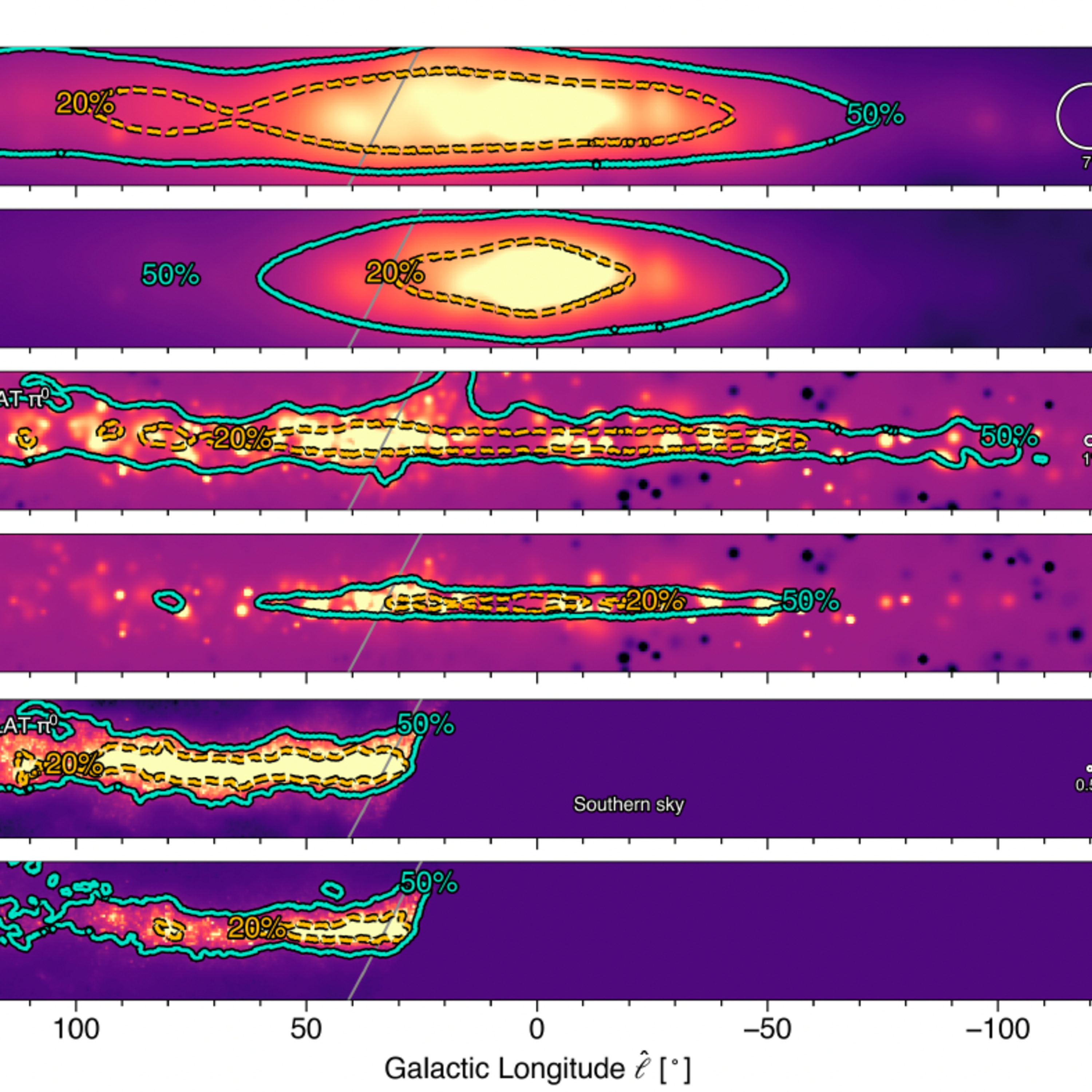 Peering Through the Ice: The Milky Way’s High-Energy Neutrino Signal 31.07.2026 20mPeering Through the Ice: The Milky Way’s High-Energy Neutrino Signal Episode Summary: In this episode, we explore a major breakthrough in astrophysics: the IceCube Neutrino Observatory has established high-energy neutrino emission from the Galactic plane of the Milky Way at a 5.7σ statistical significance.The Cosmic Ghost Particle: Neutrinos trace where cosmic rays interact with interstellar gas, preserving crucial clues about Galactic engines that accelerate particles to extreme energies.12 Years of South Pole Ice Data: Researchers analyzed 12 years of data from 5,160 optical sensors frozen a...
-
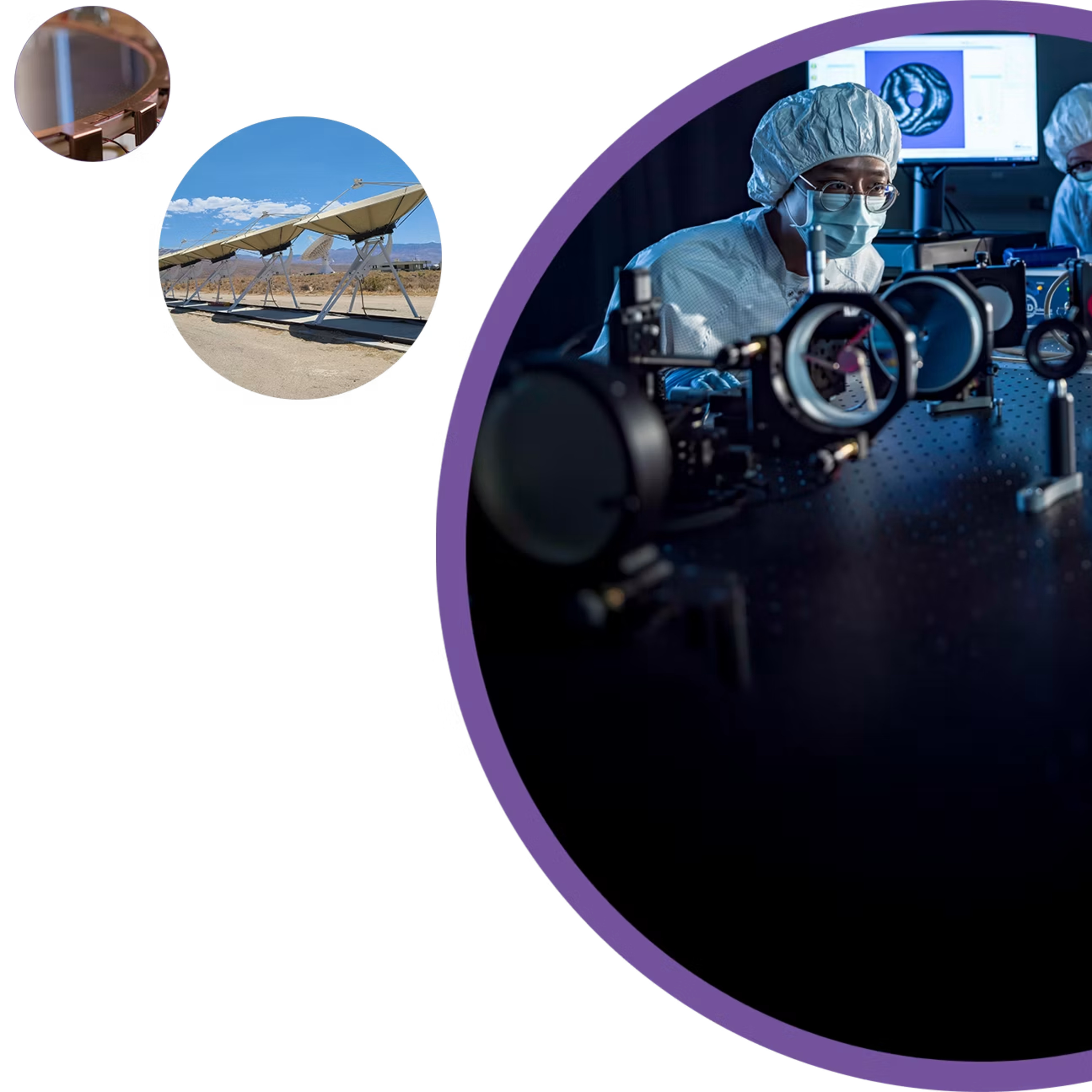 The Schmidt Observatory System unlocking the Transient Universe 27.07.2026 21mIn this episode, we dive into the Eric and Wendy Schmidt Observatory System, a groundbreaking initiative designed to pioneer a new paradigm for astronomical research through rapid development, modular designs, and a commitment to open data. We explore the system's four major next-generation facilities: the Argus Array, the Deep Synoptic Array (DSA), the Large Fiber Array Spectroscopic Telescope (LFAST), and the Lazuli Space Observatory.Our discussion highlights how these facilities act as a comprehensive end-to-end system capable of discovering and rapidly characterizing transient events. We f...
Similar podcasts


Popular in
The podcast also appears in the podcast charts of these countries.
