
Distillations | Science History Institute
Science History Institute
0
Distillations is the Science History Institute's critically acclaimed flagship podcast. It takes deep dives into stories that range from the serious to the eccentric, helping listeners better understand the surprising science that is all around us. Episodes cover topics from the crisis in Alzheimer's research to New England's 19th-century vampire panic in compelling, sometimes-funny, documentary-style audio stories.
Episodes
-
 Poison Booze 10.11.2026 43mThe roaring twenties were a time of huge political, scientific, and cultural change. In the U.S., women finally won a hard-fought battle over the right to vote, medicine was forever transformed by the discovery of penicillin, and the jazz age was fully underway. And in the background of all of this was a not-so-small new law: the 18th Amendment. But six years into Prohibition, people were drinking as much as ever. In response, the U.S. doubled down by tasking government chemists to poison the liquor supply. And the most shocking part? People drank it anyway.
-
 Making Things Explode 03.11.2026 36mThroughout history, there has been continual negotiation over who gets to access fireworks. Control over them has swung like a pendulum between ordinary people and institutions of power—like monarchies, the church, and the ATF (Bureau of Alcohol, Tobacco, Firearms and Explosives). And this ongoing tension begs the same question as the myth of Prometheus: who should really be in control of the fire? Join us as we explore the history of our fascination with making things explode and go behind the scenes with both professional and amateurs from the Western Pyrotechnic Association. Credits Host: A...
-
 Mules, Arsenic, and Sesame: Untold Black History in the Americas 27.10.2026 46mJayson Porter has written for Distillations magazine on topics ranging from mules and sesame seeds, to arsenic and porgy fish. At first, these things might sound kind of random, but they share a common thread. Together they reveal hidden stories about the black experience in Mexico and the United States. Join us for a conversation with Jayson about using the traces left by everyday objects to examine histories that weren't always written down. This episode was filmed in our studio, and you can watch it on our YouTube Channel: https://www.youtube.com/@ScienceHistoryInstitute. Credits Host: Alex...
-
 Live Show! October 29th in Philly 22.10.2026Come celebrate our newest Distillations podcast season, American Vice. From cigarettes to alcohol to fireworks, this season is all about our relationship with risk, how science plays a role in it, and how it has shaped the American experience. To do it, we're partnering with our friends at the Crossroads Comedy Theater to bring you a special edition of their popular Study Hall: Comedy Inspired By Lectures show. Join us for an experience unlike any you have seen before—or will ever see again! Enjoy short talks about topics from our podcast episodes, after which Crossroads' cast of amazing impro...
-
 From Hysteria to Long COVID: Invisible Illnesses 21.10.2026 56mMany of us have heard of Long COVID, but few of us understand the depth and breadth of the diagnosis or the history leading up to it. We talk with medical anthropologist Emily Mendenhall about her book on invisible illnesses and what happens when medical symptoms are hard to explain. We discuss why patients are dismissed and how the history of hysteria, neurasthenia, and chronic fatigue syndrome all contribute to Long COVID denialism. Credits Host: Alexis Pedrick Executive Producer: Mariel Carr Senior Producer: Rigoberto Hernandez Sound Design: Seth Samuel Fact-Checking: Alexandra Atiya Music...
-
 Chasing Shiny Things 13.10.2026 48mSilver's Volatile History. How long have people been pinning their hopes on silver? And what makes it valuable to us? Is it just because it's shiny and pretty or do we care about its practical uses too? Join us as we go down the rabbit hole to find out how Nevada got its nickname as the Silver State, how The Wizard of Oz might have actually been a hidden story about money, and how a trio of billionaire brothers managed to control more than a third of the world's silver supply. Along the way, we'll find the science in a story about a volatile asset. Credits Host: Alexis Pedrick Executive Produc...
-
 The Acid Queen: An Interview with Susannah Cahalan 06.10.2026 1h 4mA conversation with the author of The Acid Queen: The Psychedelic Life and Counterculture Rebellion of Rosemary Woodruff Leary. If you've ever read anything about the history of psychedelics, the name Timothy Leary will probably sound familiar. He was a Harvard psychologist who researched psychedelics within academia before getting fired in 1963 and taking his experiments underground. But you might never have heard of Timothy's wife, Rosemary Woodruff Leary. We talk with author Susannah Cahalan about her book on Rosemary and how she played a quiet but foundational role in our early understandi...
-
 Jersey City's Secret Water Experiment 28.09.2026 47mHow did a covert chemical treatment permanently change our drinking water? In 1908, two men, John L. Leal and George Warren Fuller, spent 99 days secretly constructing something that would fundamentally alter the Jersey City water supply. Their decision to add chlorine is one that continues to impact our lives for the better, but there was no large-scale testing or approval process. This episode, brought to us by producer Caitlin Faulds, explores the big questions about Leal and Fuller's great experiment. Do the ends justify the means? What if it hadn't worked? And how did people react when th...
-
 Cigarettes in America, Part 2: The Reckoning 22.09.2026 34mCigarettes: they provide no nutrition and quench no thirst. They serve no purpose other than being an excuse to take a break from the grind before getting right back to it. And on top of that, they're deadly. As far as American vices go, they might be at the top of the list. So how did they get and stay popular for so long? And why are they making a comeback? This two-part episode dives into the rise of this quintessential American product, the science that proved it was dangerous, and the eventual reckoning that came from a mysterious box of documents—one delivered with the return address of...
-
 Cigarettes in America, Part 1: The Rise 15.09.2026 27mCigarettes: they provide no nutrition and quench no thirst. They serve no purpose other than being an excuse to take a break from the grind, before getting right back to it. And on top of that, they're deadly. As far as American vices go, they might be at the top of the list. So how did they get and stay popular for so long? And why are they making a comeback? This two-part episode dives into the rise of this quintessential American product, the science that proved it was dangerous, and the eventual reckoning that came from a mysterious box of documents—one delivered with the return address of...
-
American Vice: New Season Coming September 15th 31.08.2026 1mCheck out our new season, dropping weekly on Tuesdays, starting September 15th.
-
 The History of Clinical Trials: From Fake Exorcisms to Testing Today 30.06.2026 54mAlexis Pedrick joins Sam Jones and Deboki Chakravarti to bring you an episode from Tiny Matters, an award-winning podcast from the American Chemical Society produced by Multitude. The episode, which originally aired in February 2026, explores the surprising origins and evolution of one of modern medicine's most important tools: the clinical trial. Tiny Matters follows the development of experimental design across centuries to modern-day randomized control trials and the debates about their limitations, trying to answer the question, "How do we know whether a treatment truly works?" Credits Hos...
-
 Agnes Pockels and the Kitchen Sink Myth 19.03.2026 37mThis episode is a co-production with Lost Women of Science. Agnes Pockels did pioneering work in surface science. Her invention, the Pockels Trough, became the basis for an instrument that helped Katherine Burr Blodgett and Irving Langmuir make discoveries in material science that quietly shape our everyday world. But the way we talk about Agnes's life and work often falls back on familiar tropes about women's domestic roles, assumptions about how science gets done, and what it looked like to do science as a woman in the 19th century. Agnes's story invites us to rethink how we define success f...
-
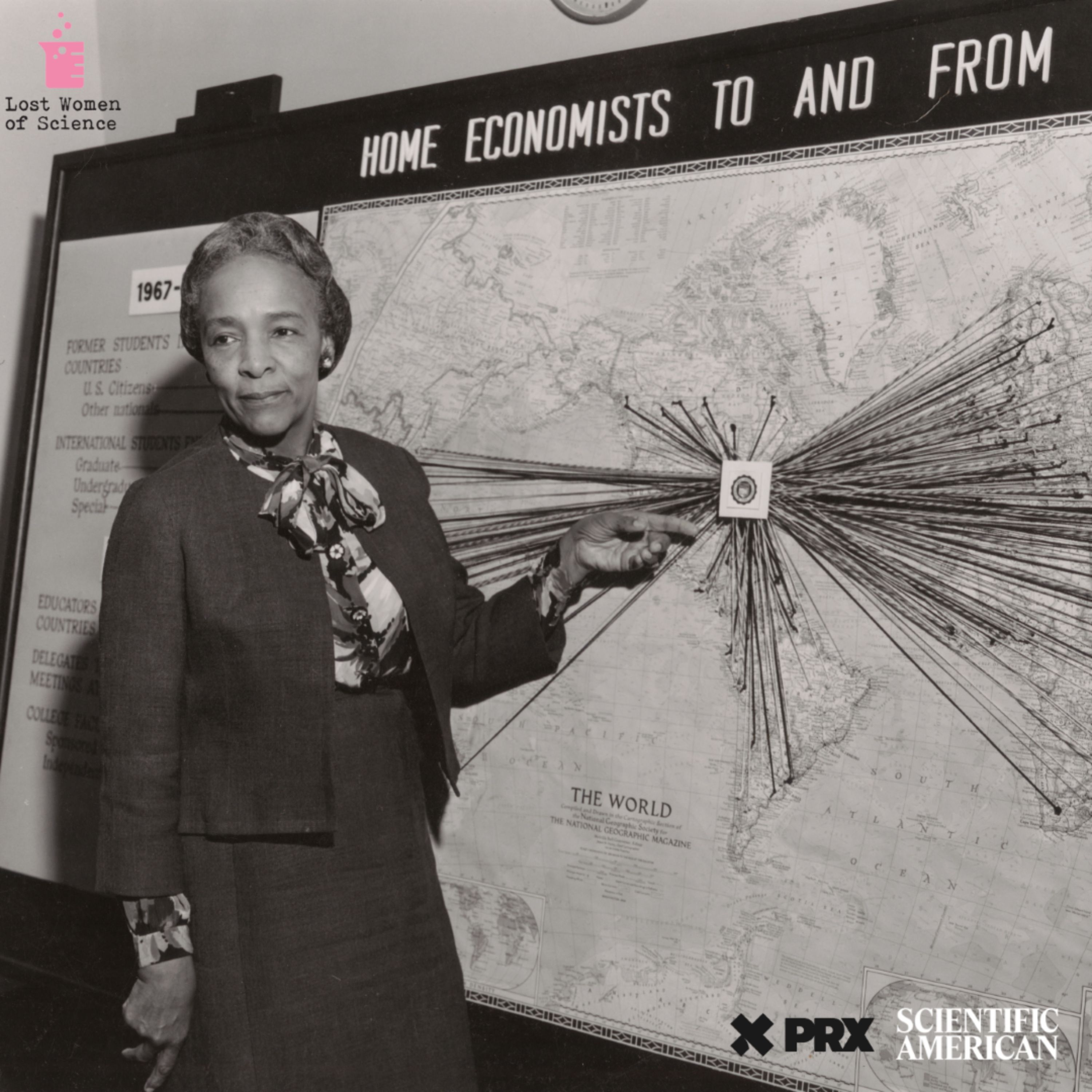 Flemmie Kittrell and the Preschool Experiment 30.09.2025 52mAlexis Pedrick joins Katie Hafner to bring you an episode from The Lost Women of Science Initiative, a non-profit educational organization dedicated to telling the forgotten or untold stories of remarkable female scientists and their groundbreaking work through history. The episode, which originally aired in October 2023, is about Flemmie Kittrell, the first Black woman to earn a PhD in Home Economics. In the early 1960s, Flemmie decided to see what would happen if you gave poor kids a boost early in life, in the form of a really great preschool. Every day for two years, parents would get free...
-
 The CRISPR Babies 11.09.2025 53mIn 2018 news broke that a Chinese scientist, He Jiankui, had used CRISPR to edit human embryos, and twin girls had been born as a result. The story set off an explosive bioethical controversy. As gene editing expert Kiran Musunuru put it, "He Jiankui's genetic misadventures were the biggest medical story of the century so far." Both scientists and the public had a lot of questions. What was the unmet medical need that justified the gene editing? Was the science ready for prime time? And, if it was, was He Jiankui the right scientist to do it? Seven years later these questions are far from reso...
-
 Humans and Monsters: An Interview with Surekha Davies 09.09.2025 31mThe fears about genetic engineering were stoked when experiments took off in the 1970s. From lab leaks to disease epidemics to the ability to make "Frankenstein creations," many of those fears are still with us today. We talk to author Surekha Davies about her latest book, why she thinks of monsters as category breakers and why blurring boundaries can be so terrifying for us, but maybe doesn't have to be. Credits Host: Alexis Pedrick Executive Producer: Mariel Carr Producer: Rigoberto Hernandez Associate Producer: Sarah Kaplan Audio Engineer: Samia Bouzid Music by Blue Dot Sessions Resource Li...
-
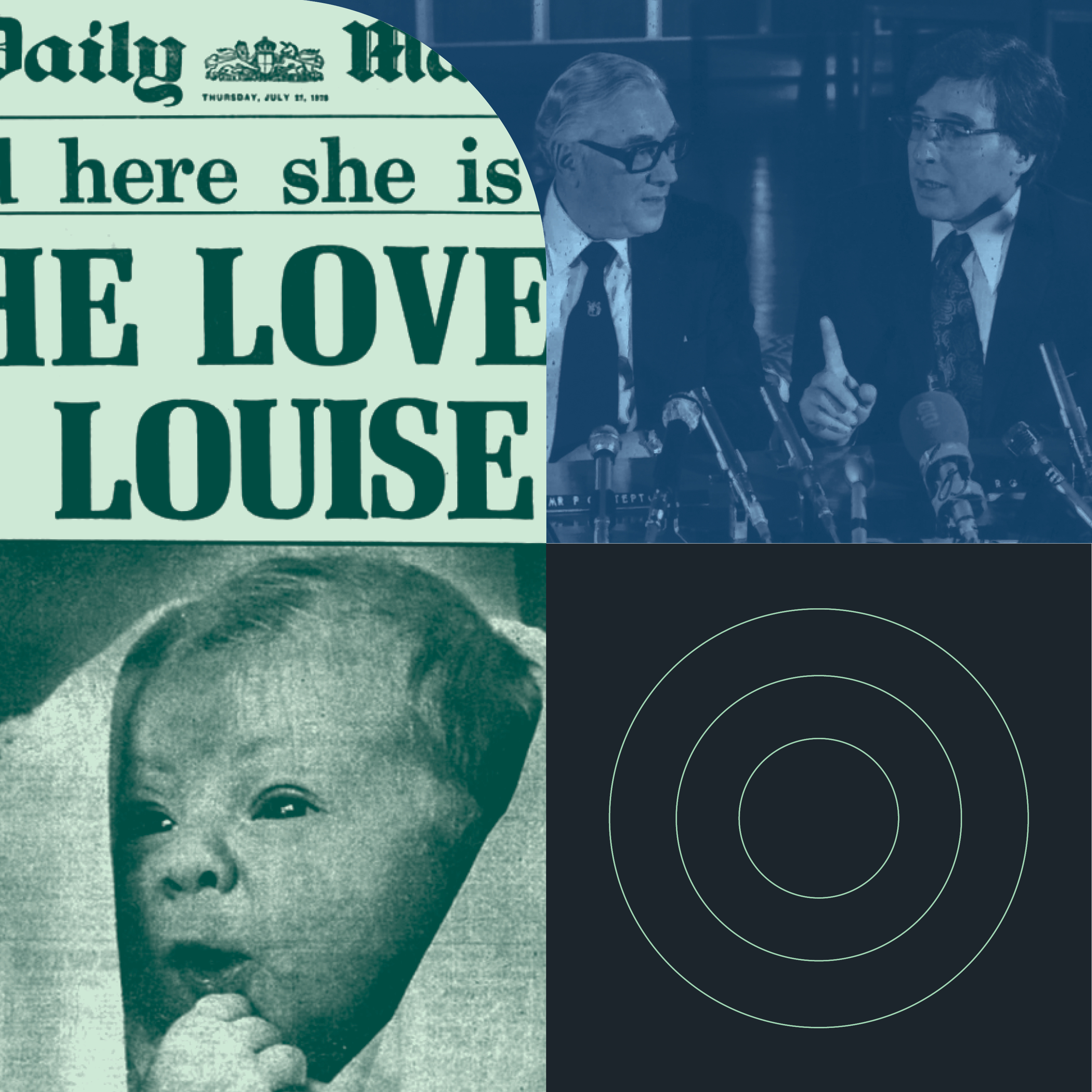 IVF: An Interview with Robin Marantz 02.09.2025 43mOur producer Rigoberto Hernandez spoke with Robin Marantz, the author of Pandora's Baby: How the First Test Tube Babies Sparked the Reproductive Revolution. She tells us about the history of IVF, from the first known artificial insemination by donor produced in Philadelphia in the 19th century to the scientific race in the 1960s and 1970s that resulted in the first so-called "test-tube baby." Credits Host: Alexis Pedrick Executive Producer: Mariel Carr Producer: Rigoberto Hernandez Associate Producer: Sarah Kaplan Audio Engineer: Samia Bouzid Music by Blue Dot Sessions Resource List Henig, Rob...
-
 Gene Therapy's Families 26.08.2025 42mWhen Rebekah and Evan Lockard's daughter, Naomi, was diagnosed with a devastating ultra-rare genetic disease, they didn't know where to turn. Then they found Terry Pirovolakis, an IT professional who had made a gene therapy for his son with the same disease. But the process of getting Naomi treated has been an uphill battle, full of financial and logistical obstacles. The Lockard's story flips the question we've been asking all season on its head. Instead of wondering, "if we could do something, should we," we're now asking, "if we can do something that helps patients, should we do it at any c...
-
 Gene Therapy's Dark Ages 19.08.2025 49mGene therapy is based on a simple-sounding, yet deceptively complicated premise: adding or replacing faulty genes to fix medical problems. A compelling idea that came out of breakthroughs in DNA research, the field grew lightning fast. But the death of teenager Jesse Gelsinger after a gene therapy clinical trial left the public and scientists questioning the field's promise. Why did researchers push ahead with clinical trials despite gene therapy still being in its infancy? What does the Jesse Gelsinger story tell us about the personal risk behind medical breakthroughs? Credits Host: Alexis Pe...
-
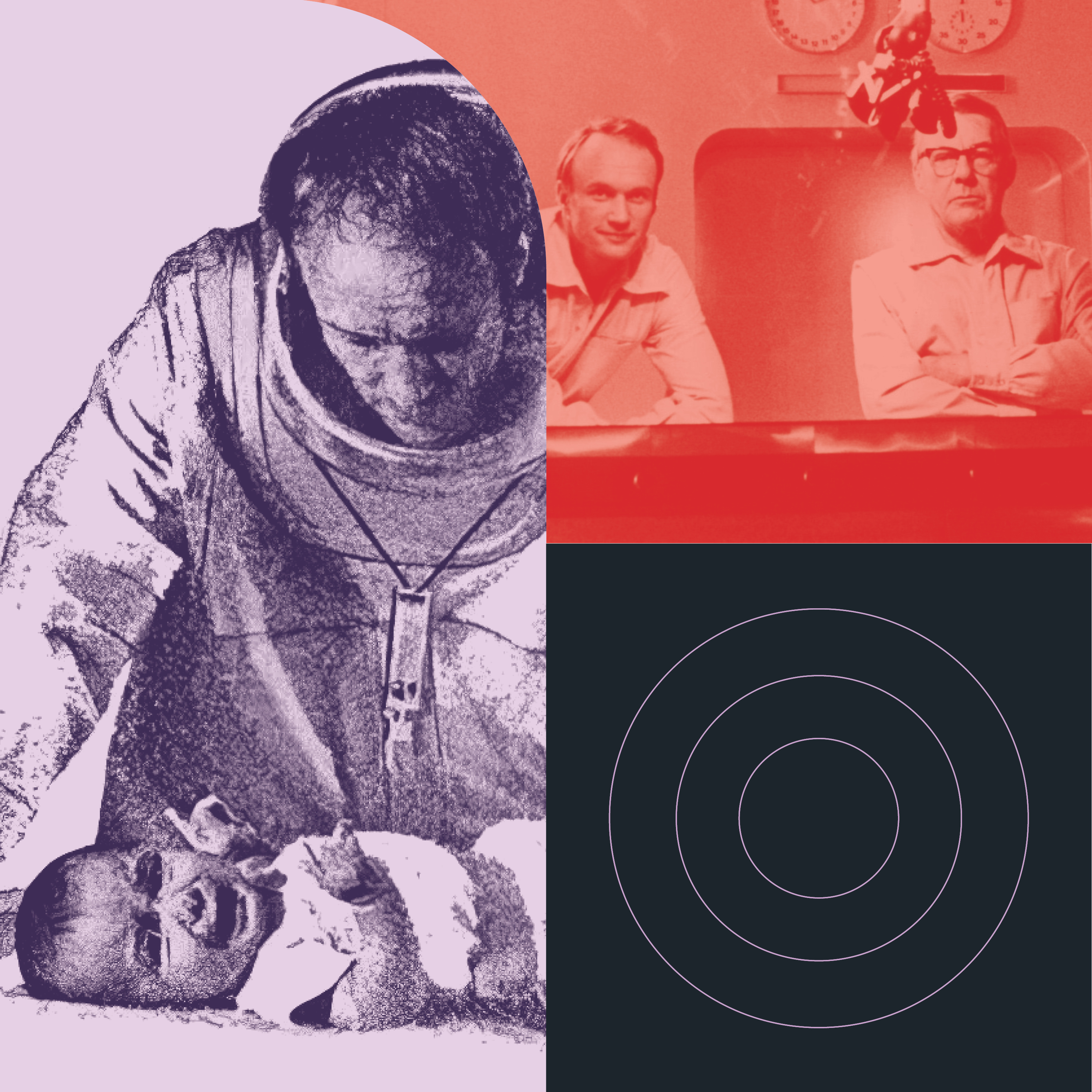 'The Andromeda Strain': An Interview with Luis Campos 12.08.2025 39mProducer Mariel Carr talks to historian of science and former Science History Institute fellow, Luis Campos, about his article "Strains of Andromeda: The Cosmic Potential Hazards of Genetic Engineering." He shares how Michael Crichton's first novel and the subsequent film influenced the conversation and controversy around recombinant DNA research in the 1970s. Credits Host: Alexis Pedrick Executive Producer: Mariel Carr Producer: Rigoberto Hernandez Associate Producer: Sarah Kaplan Audio Engineer: Samia Bouzid Music by Blue Dot Sessions Resource List The Andromeda Strain. IMDb. Campos, Luis A....
Similar podcasts


Popular in
The podcast also appears in the podcast charts of these countries.

