
Learning Bayesian Statistics
Alexandre Andorra
0
A podcast for researchers and data scientists who want to learn Bayesian inference. Host Alexandre Andorra interviews practitioners from various fields about how they use Bayesian statistics in their work. The show covers topics from detecting dark matter to forecasting elections and understanding disease spread. It also focuses on failures and challenges, emphasizing learning from mistakes. The goal is to help listeners apply Bayesian methods in their own modeling workflows.
Episodes
-
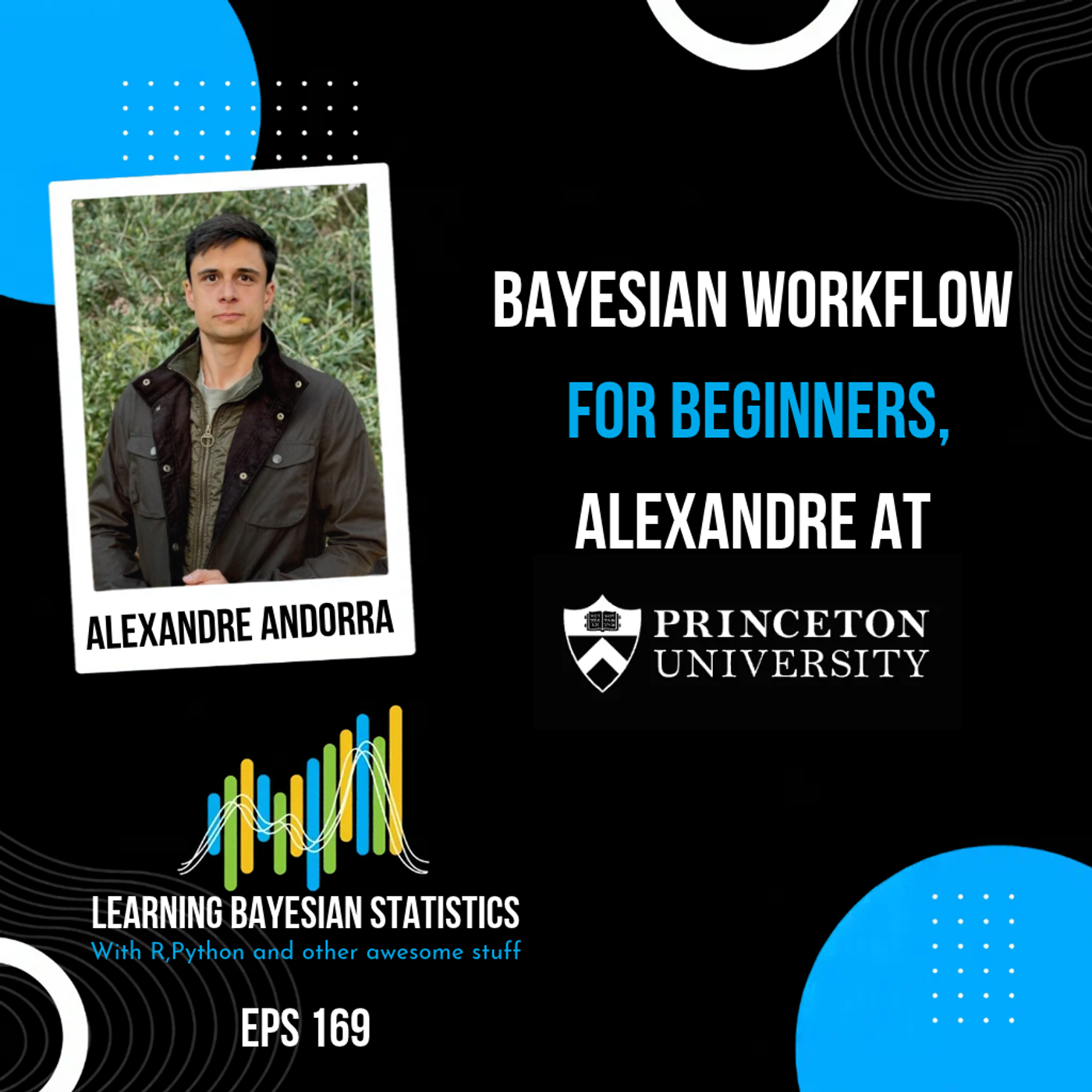 #169 Bayesian Workflow for Beginners, Alex at Princeton 18.11.2026 54mSupport & Resources→ Support the show on Patreon→ Bayesian Modeling Course (first 2 lessons free)Our theme music is « Good Bayesian », by Baba Brinkman (feat MC Lars and Mega Ran). Check out his awesome work!Takeaways:Q: What does a mixed model in psychology actually assume?A: Written as a generative story, a standard repeated-measures model says participants are drawn from a shared population, each has one latent ability that stays stable across sessions, a condition effect shifts everyone by the same amount, and trials within a session are independent. Each of those is testable and can be wr...
-
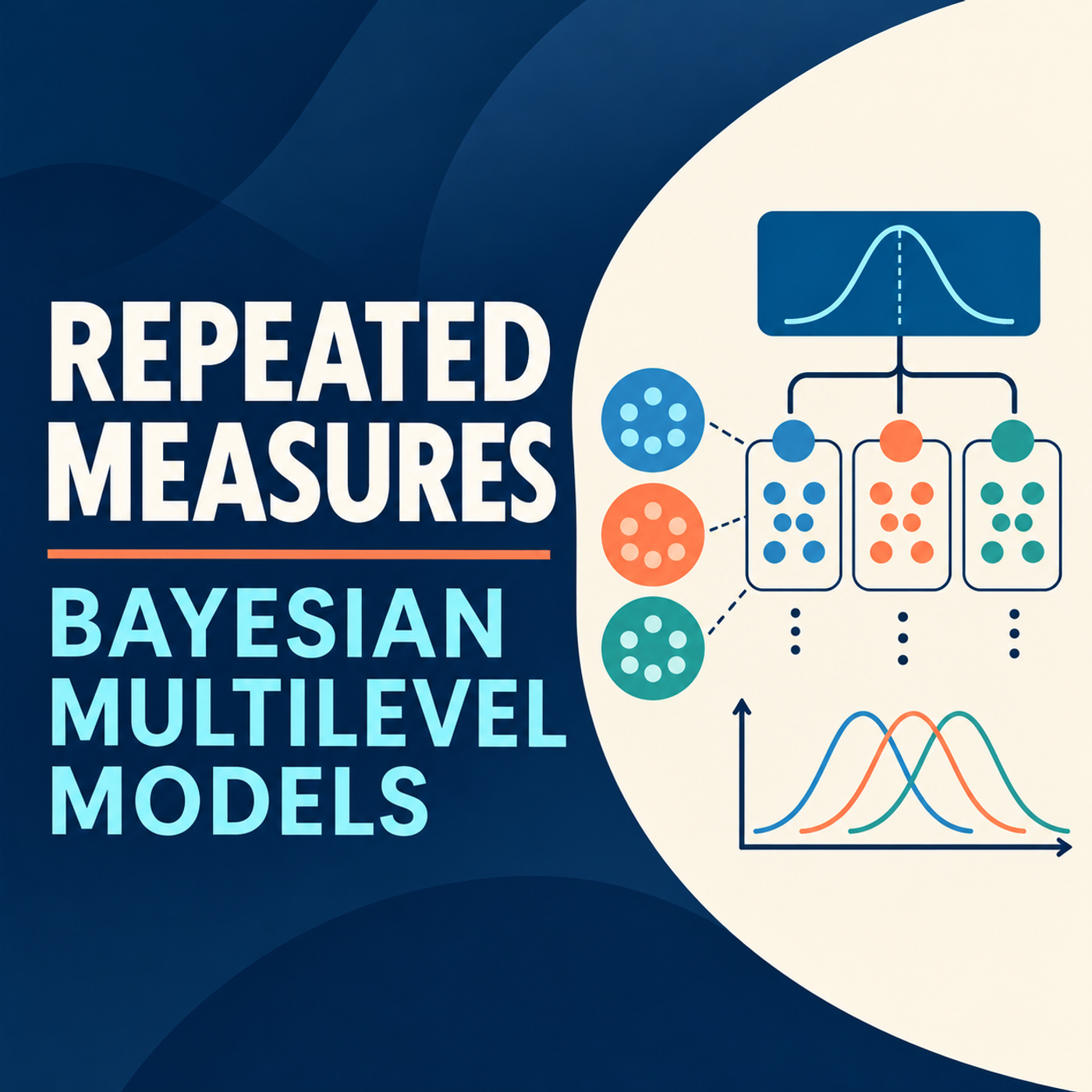 Why Start with Bayesian Multilevel Models for Repeated Measures? 17.11.2026 4mToday's clip is from Episode 168 of Learning Bayesian Statistics, featuring Santiago Barreda, who joins host Alex Andorra to discuss Bayesian multilevel models and why they are particularly useful for researchers working with repeated measures data.Santiago explains why he believes students in linguistics and related fields should spend less time learning traditional statistical models like t-tests and ANOVAs, and start directly with the multilevel models they will actually use in their research. In fields like linguistics, researchers often collect hundreds of observations from each listener,...
-
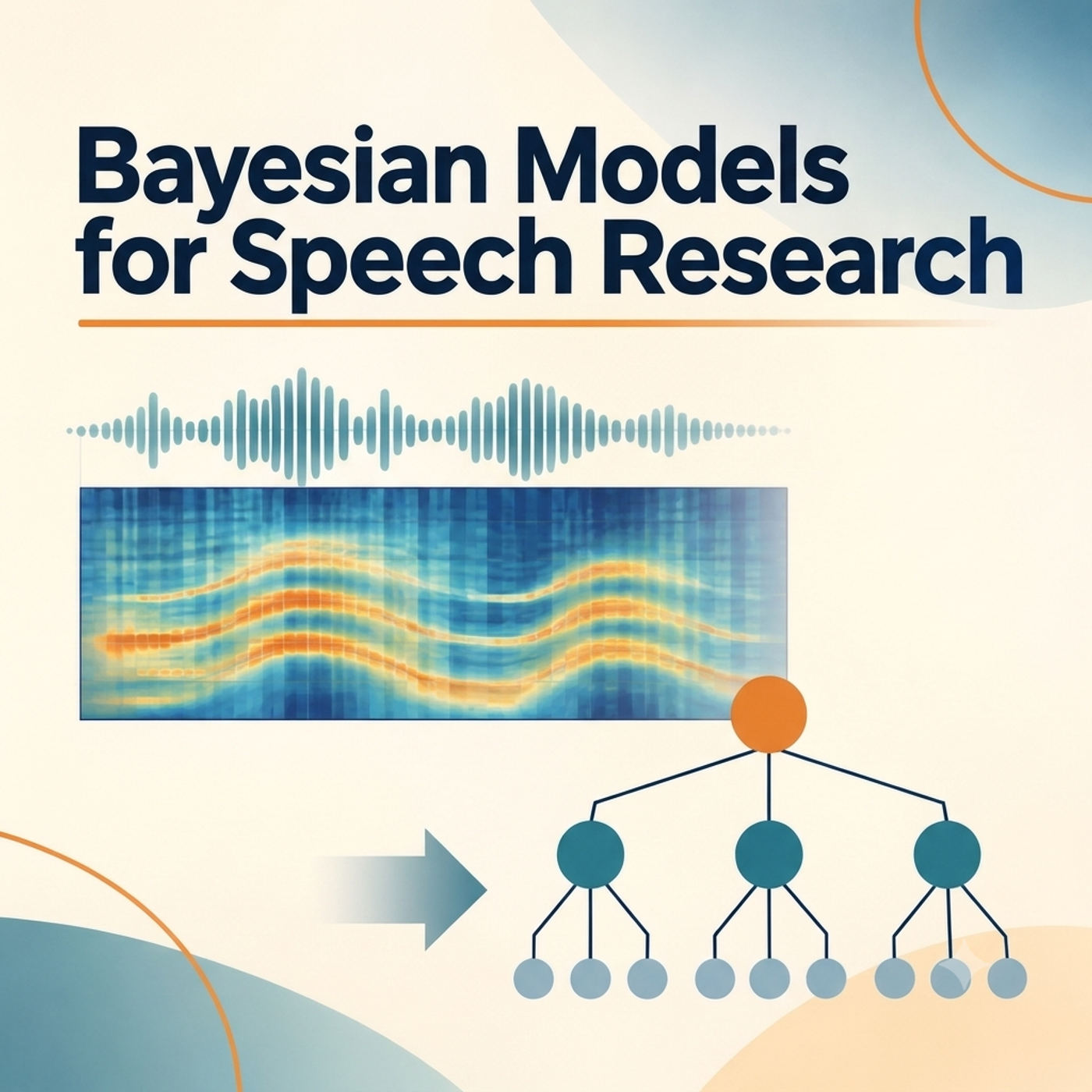 Why Speech Researchers Should Give Bayesian Statistics a Shot 12.11.2026 3mToday's clip is from Episode 168 of Learning Bayesian Statistics, featuring Santiago Barreda, who joins host Alex Andorra to discuss Bayesian multilevel models and their applications in speech perception and linguistics.Santiago explains how tools like BRMS have made Bayesian modelling much more accessible, lowering the barrier to entry for researchers working in linguistics and speech perception. He also addresses some common concerns around Bayesian methods, particularly the choice of priors, arguing that these concerns are often overstated and that their influence can be examined directly.H...
-
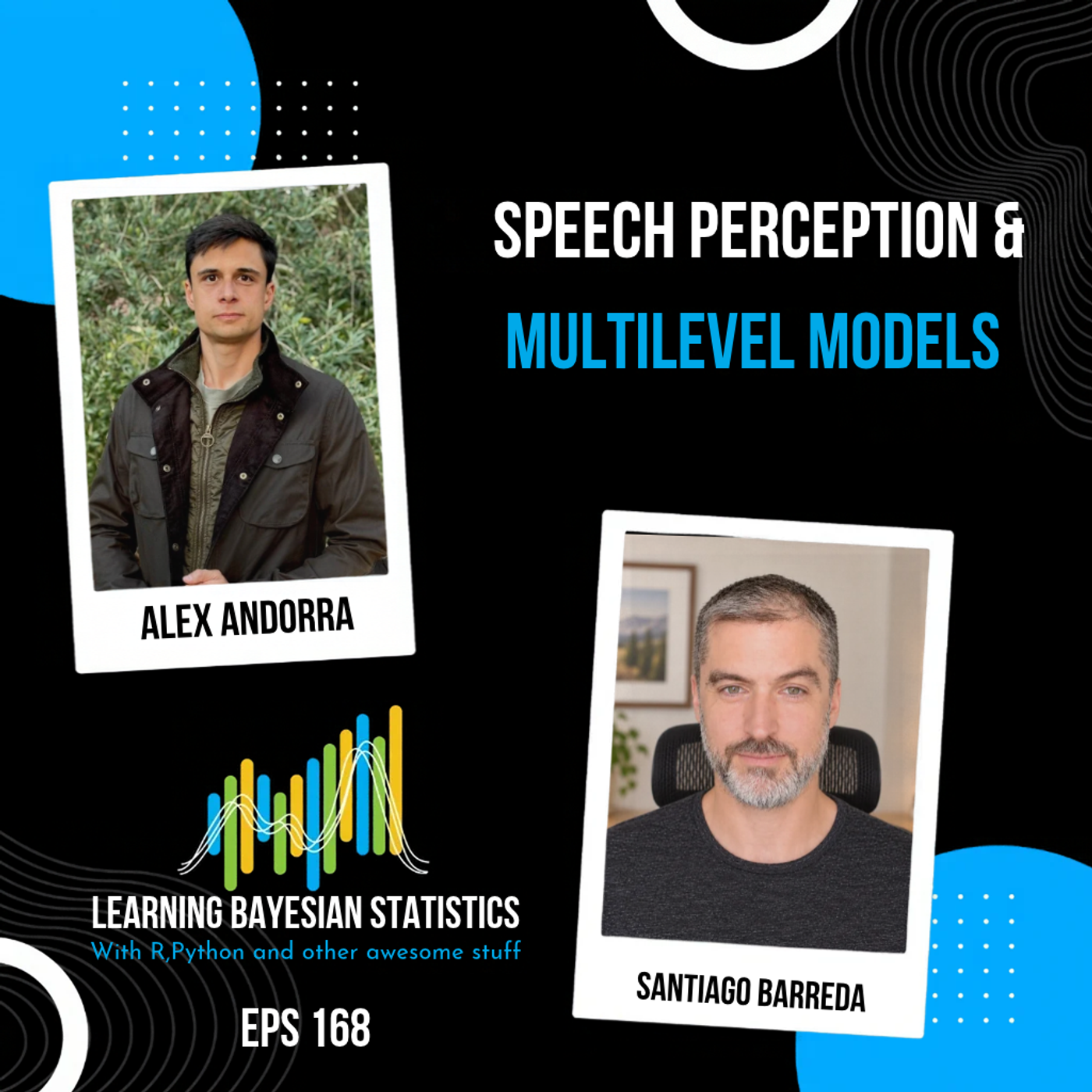 #168 Speech Perception & Multilevel Models, with Santiago Barreda 04.11.2026 1h 26mSupport & Resources→ Support the show on Patreon→ Bayesian Modeling Course (first 2 lessons free)Our theme music is « Good Bayesian », by Baba Brinkman (feat MC Lars and Mega Ran). Check out his awesome work!Takeaways:Q: Why would a linguist switch from lme4 to Bayesian multilevel models?A: For Santiago, it was purely practical. Mixed-effects models fit with lme4 kept failing to converge, and they couldn't handle the complex repeated-measures structures his experiments needed. His friend Noah Silbert got him into Bayesian modeling around 2015, and only afterwards did he realize he agreed with...
-
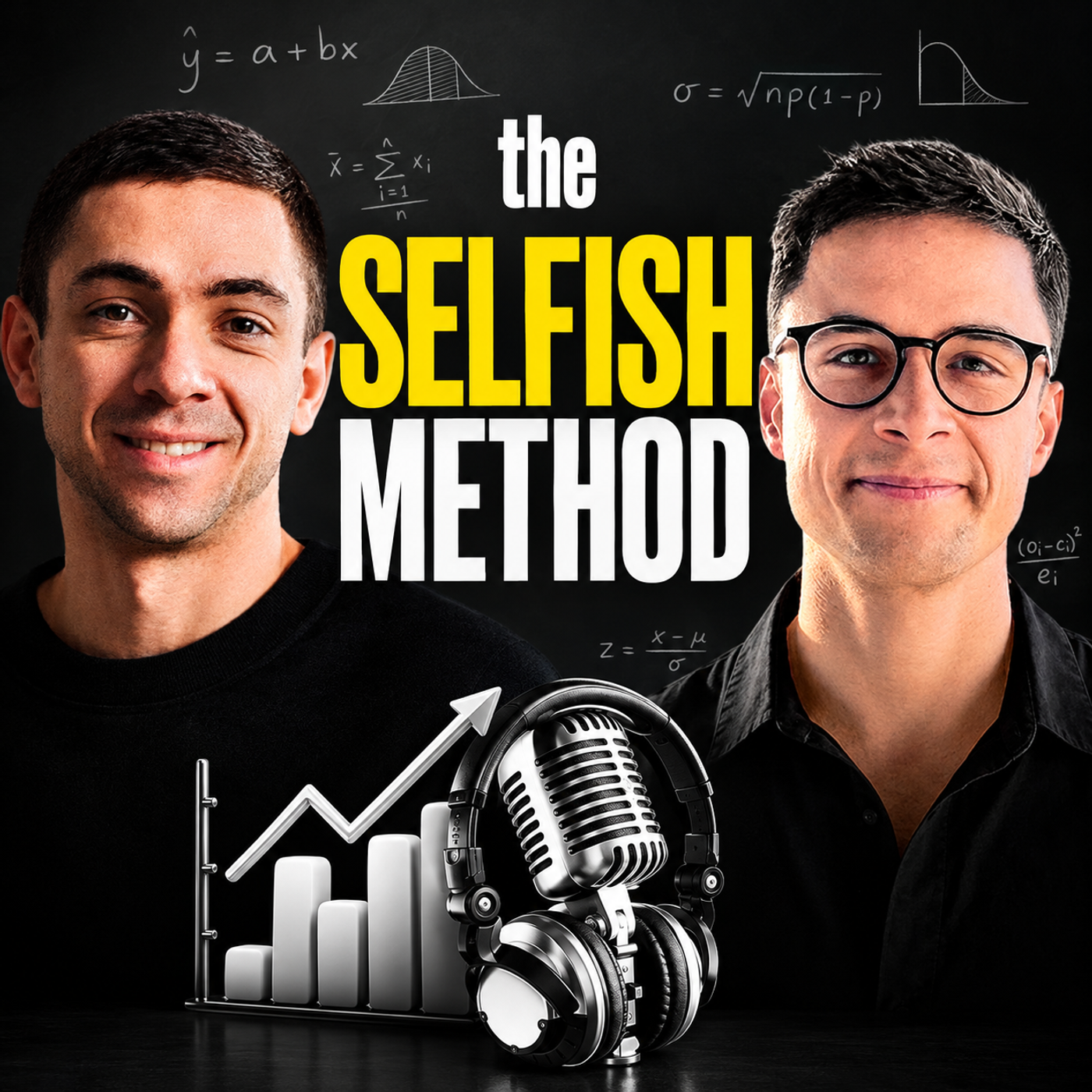 How I built Learn Bayes Stats to the Top 1.5% 28.10.2026 22mThis one is a bonus episode, where I was the guest, on a podcast called One Thing That Worked! Get all the insights and takeaways here. In the meantime, here is how they described it:In this insightful episode of One Thing That Worked, my guest is Alex Andorra, host of Learning Bayesian Statistics Podcast. Alex reveals how he built a top-tier show that ranks among the top 1.5% of podcasts globally out of nearly 4 million shows.Discover how Alex leveraged "The Selfish Method"—creating the exact show he needed for his own career growth—to attract a hyper-dedicated audience of technical experts....
-
 Can Neural Networks Replace MCMC? 26.10.2026 3mToday’s clip is from Episode 167 of Learning Bayesian Statistics, featuring Paul-Christian Bürkner and Steve Bronder, recorded live at StanCon 2026 in Uppsala, Sweden.Paul Bürkner, creator of brms and a leading researcher behind BayesFlow, explains how neural networks can replace MCMC for Bayesian inference. Instead of evaluating likelihood and prior densities, the networks are trained on simulated data, so you can do simulation-based inference (SBI) even when the likelihood is intractable. Once trained, they give you amortized, real-time posteriors for new datasets, and they have made SBI sca...
-
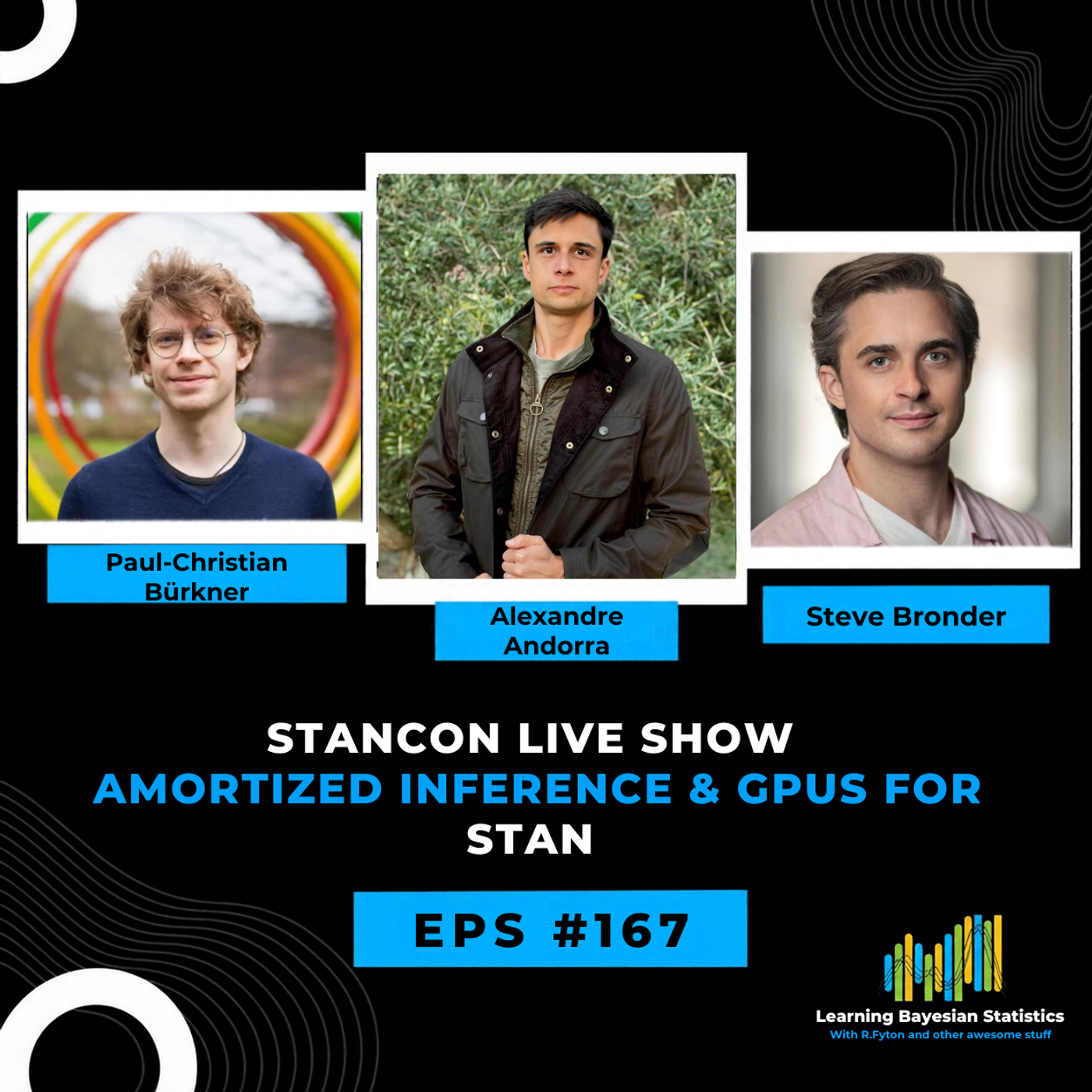 #167 Amortized Inference & GPUs for Stan, with Paul-Christian Bürkner & Steve Bronder 20.10.2026 1h 3mSupport & Resources→ Support the show on Patreon→ Bayesian Modeling Course (first 2 lessons free)Our theme music is « Good Bayesian », by Baba Brinkman (feat MC Lars and Mega Ran). Check out his awesome work!Takeaways:Q: What is amortized Bayesian inference and how does it differ from MCMC?Instead of running MCMC on each dataset, you train neural networks on data simulated from the model, so you don't need likelihood or prior densities. Once training is done, inference on a new dataset is essentially instant: new data in, posterior out. The price is everything neural networks bring with them,...
-
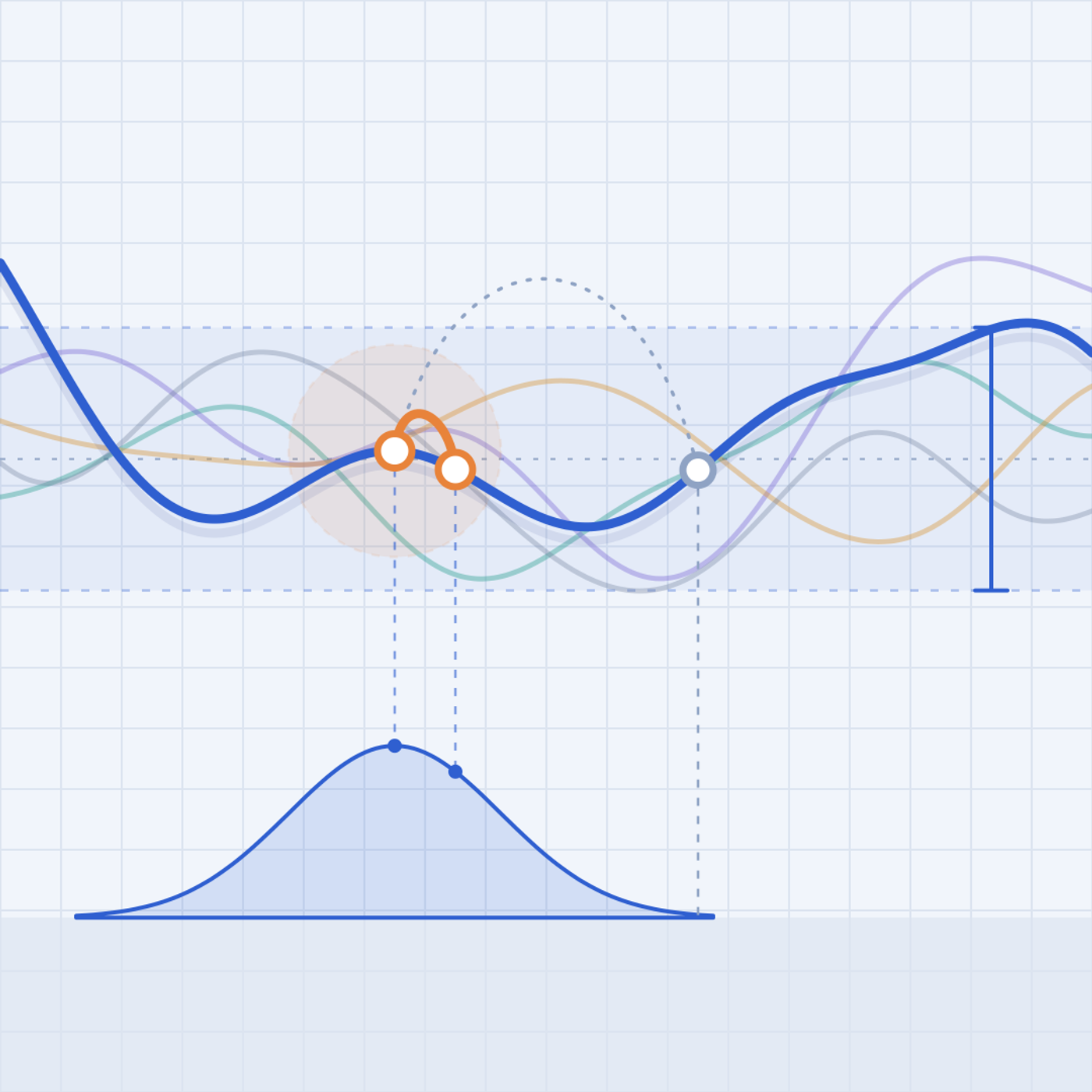 What Do Kernels, Length Scale & Amplitude Mean in Gaussian Processes? 07.10.2026 3mToday's clip is from Episode 166, featuring Bill Engels & Jesse Grabowski. In this conversation, Bill explains what a kernel means in a Gaussian process and how it defines the idea of similarity between data points. He then breaks down the role of the length scale, showing how it controls how quickly the relationship between two points changes, and how amplitude controls the overall scale of the functions a GP can represent. The discussion also connects these ideas to the practical use of Gaussian processes for modeling unknown nonlinear relationships, and why kernels provide an interpretable...
-
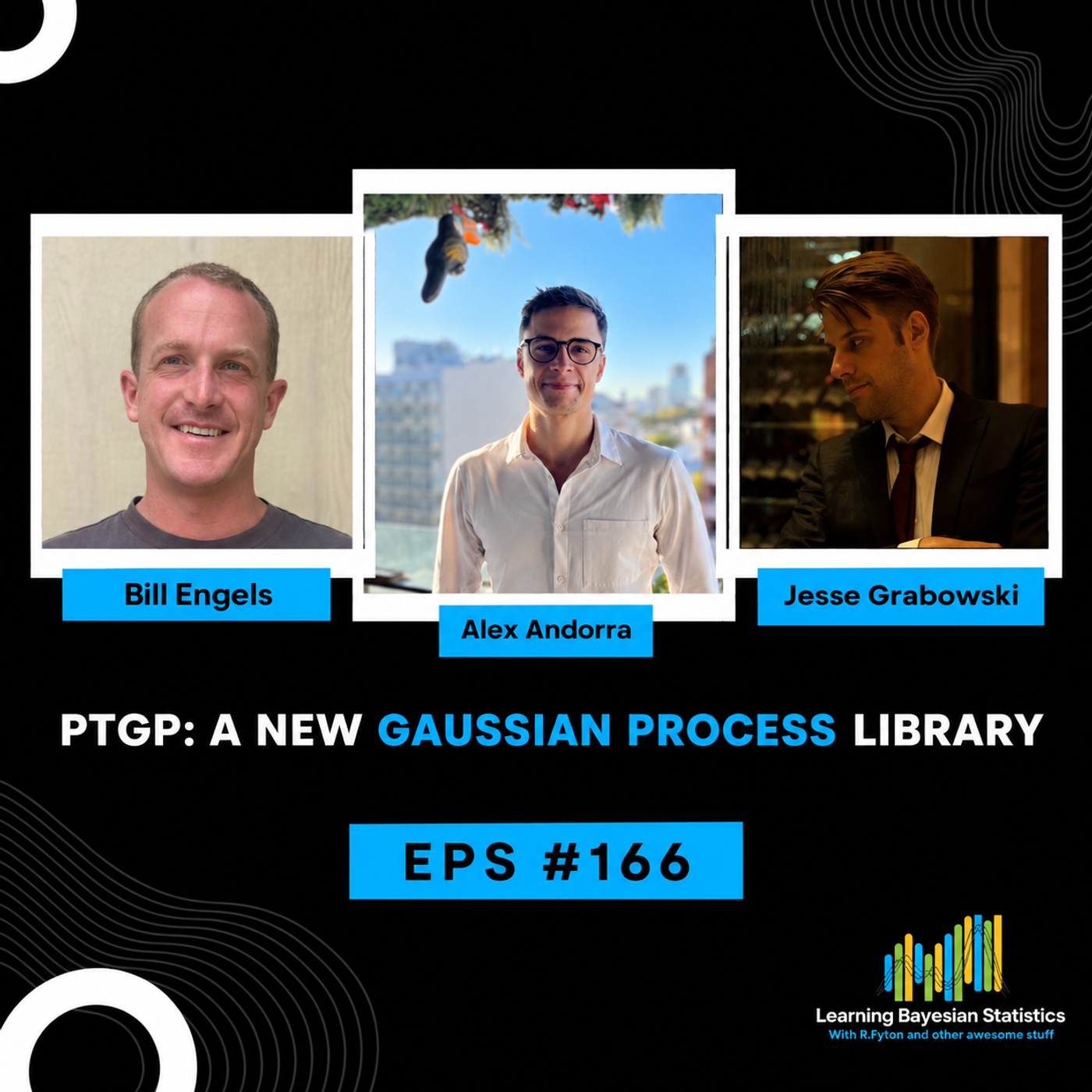 #166 PTGP: A New Gaussian Process Library, with Bill Engels & Jesse Grabowski 01.10.2026 1h 58mSupport & Resources→ Support the show on Patreon→ Bayesian Modeling Course (first 2 lessons free)Our theme music is « Good Bayesian », by Baba Brinkman (feat MC Lars and Mega Ran). Check out his awesome work!Takeaways:Q: What is PTGP and why did Bill and Jesse build it?A: PTGP is a new Gaussian process library built on PyTensor and PyMC, aimed squarely at practitioners rather than researchers assembling their own GP methods from papers. Bill Engels, who wrote PyMC's original GP submodule during a Google Summer of Code, built it because most GP libraries implement one method well but give littl...
-
 How AI Can Evaluate Bayesian Workflows with Bayesify 28.09.2026 4mToday's clip is from Episode 165, featuring Alex Fengler. In this conversation, Alex introduces Bayesify , a tool that uses AI to analyze research papers and assess how well they follow a Bayesian workflow.He explains how the tool breaks an analysis down step by step, identifies strengths and weaknesses, and provides suggestions for improving the paper. They also discuss how BasiFi can be used as an educational resource, a review engine for researchers, and potentially as a way to study how the quality of Bayesian analyses has changed over time.Alex also explains why the team is building a hum...
-
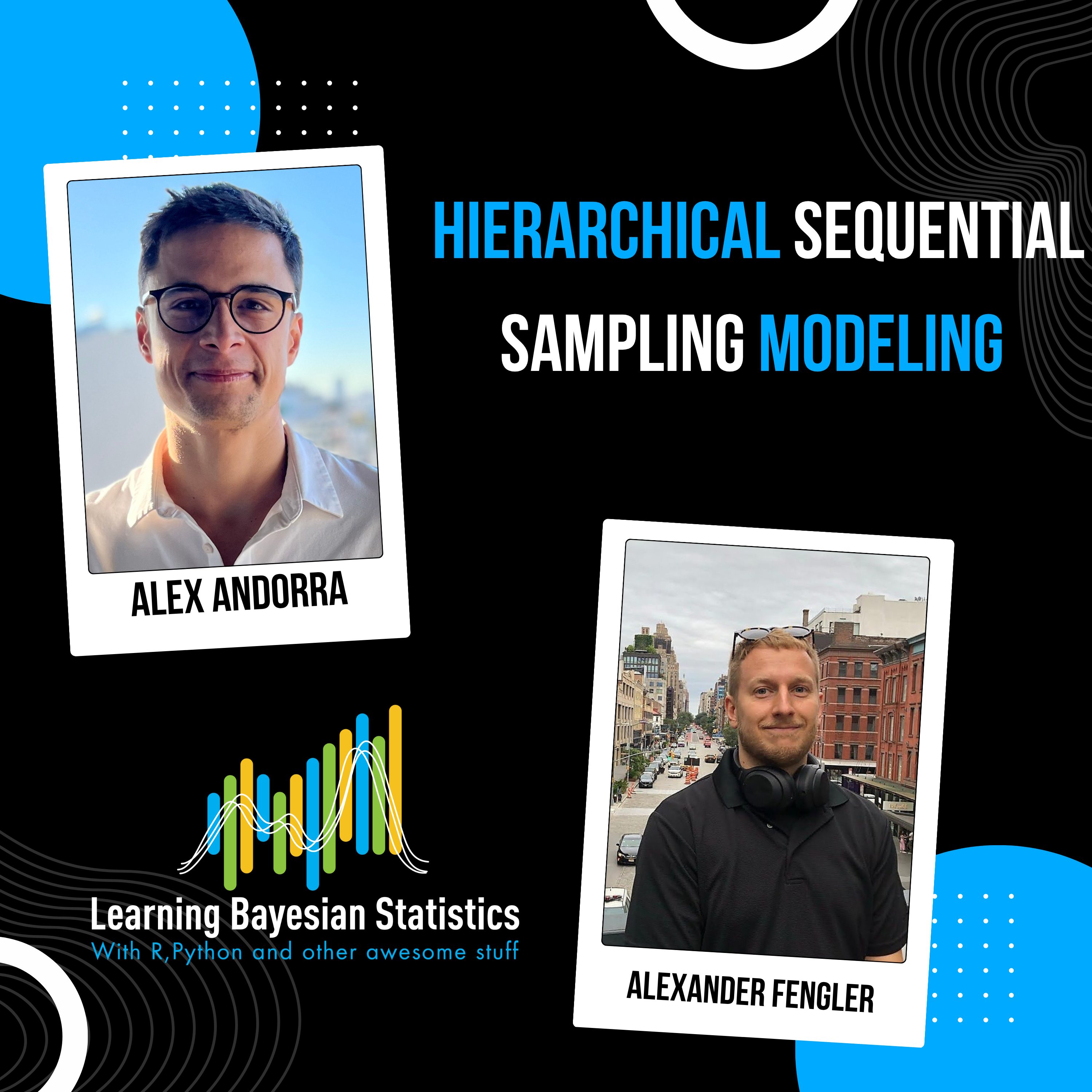 #165 Hierarchical Sequential Sampling Modeling, with Alex Fengler 18.09.2026 1h 47mSupport & Resources→ Support the show on Patreon→ Bayesian Modeling Course (first 2 lessons free)Our theme music is « Good Bayesian », by Baba Brinkman (feat MC Lars and Mega Ran). Check out his awesome work!Takeaways:Q: What is HSSM and how does it relate to HDDM?A: HSSM stands for hierarchical sequential sampling models, a generalization of HDDM (hierarchical drift diffusion models), the older toolbox for the same class of decision-making models, but HSSM is built from the ground up on simulation-based inference. That's what lets it handle any variation of the underlying process model, not j...
-
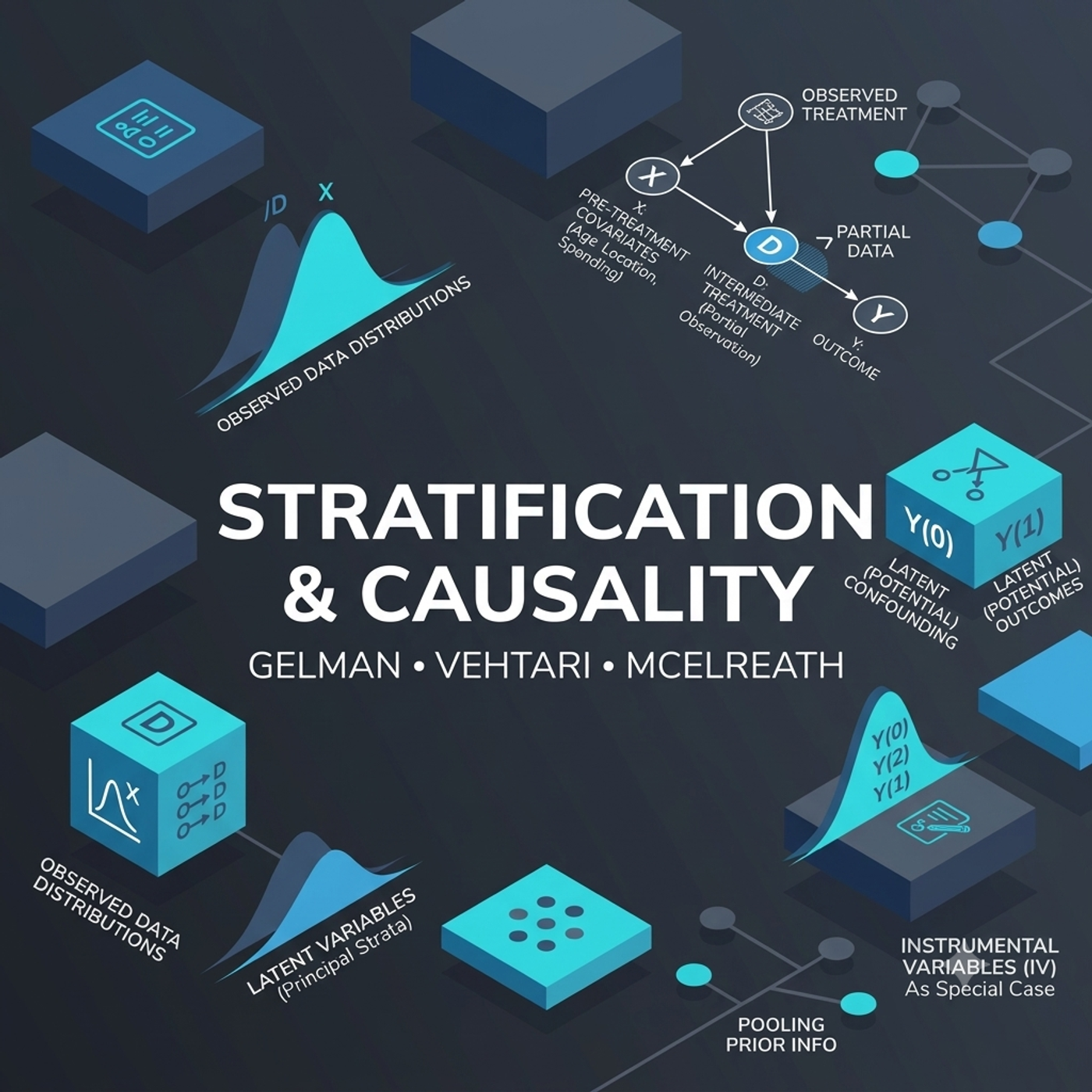 Bayesian Principal Stratification: Modeling Treatment Effects 11.09.2026 5mToday's clip is from Episode 164, featuring Andrew Gelman, Aki Vehtari & Richard McElreath. In this conversation, Andrew explains how Bayesian principal stratification can be used to reason about treatment effects when there is an intermediate treatment or outcome that is only partially observed.He discusses how latent variables can represent whether someone would take a stage-two treatment, and how pre-treatment characteristics such as age, location, and past spending can help build a model for this process.Richard connects the problem to the broader distinction between per-protocol and inten...
-
 Why a Bayesian Workflow Goes Beyond Fitting Models 02.09.2026 4mToday's clip is from Episode 164, featuring Andrew Gelman, Aki Vehtari & Richard McElreath. In this conversation, Andrew explains why a Bayesian workflow goes far beyond simply fitting a model. He discusses the importance of building, fitting, and checking models, and why moving between simpler and more complicated models can reveal insights that a single model might miss. He also explores how simulation and generative modeling can help researchers evaluate new models and gain confidence in their results, even when there isn't an established method or published study to rely on. It's a look at...
-
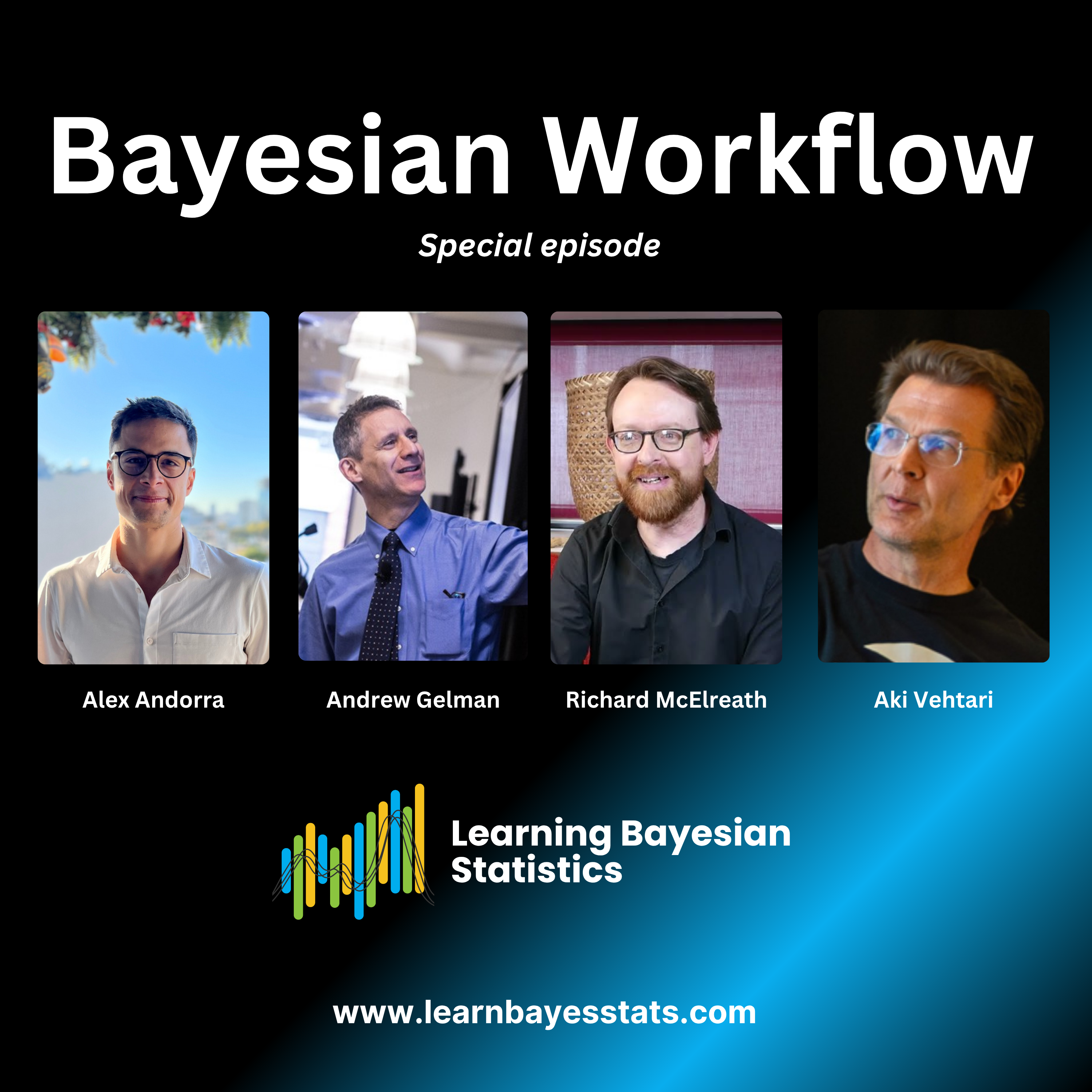 #164 Bayesian Workflow, with Andrew Gelman, Aki Vehtari & Richard McElreath 31.08.2026 1h 44mSupport & Resources→ Support the show on Patreon→ Bayesian Modeling Course (first 2 lessons free)Our theme music is « Good Bayesian », by Baba Brinkman (feat MC Lars and Mega Ran). Check out his awesome workTakeaways:Q: What is the "Bayesian Workflow" book about, and who is it for?A: It covers what the three authors know that isn't already in Bayesian Data Analysis (BDA3) or Statistical Rethinking, organized around case studies that walk through full analyses end to end rather than just giving a recommendation. It's not an introduction to Bayesian inference -- it assumes you already know the b...
-
 Making Gaussian Processes Easier to Use 25.08.2026 4mToday's clip is from Episode 154, featuring Thomas Pinder. In this conversation, Thomas shares what he sees as the next steps for GPJax and how the project could become easier to use beyond its original research-focused audience.He discusses creating a higher-level interface that could make fitting Gaussian processes possible in just a few lines of code, while still keeping the flexibility and infrastructure that GPJax provides. He also talks about making the documentation more engaging by moving beyond synthetic examples and showcasing real-world applications, such as modeling ocean currents...
-
 The Future of Faster MCMC 21.08.2026 4mToday's clip is from Episode 163, featuring Eliot Carlson and Adrian Seyboldt. In this conversation, Eliot and Adrian look beyond current approaches to HMC adaptation and preconditioning and share the ideas they're most excited to explore next.Eliot discusses new ways of parallelizing MCMC by solving for an entire trajectory at once rather than computing every step sequentially, a potentially powerful direction for expensive, high-dimensional problems. Adrian, meanwhile, talks about exploring non-adjusting methods and going beyond first-order information by investigating how higher-order autod...
-
 #163 How to make your models sample faster, with Adrian Seyboldt & Eliot Carlson 13.08.2026 1h 24mSupport & Resources→ Support the show on Patreon→ Bayesian Modeling Course (first 2 lessons free)Our theme music is « Good Bayesian », by Baba Brinkman (feat MC Lars and Mega Ran). Check out his awesome workTakeaways:Q: What is mass matrix adaptation, in plain terms?A: Mass matrix adaptation is best understood as an automatic, fairly dumb, but very effective reparameterization of your model. The simplest version, the diagonal mass matrix, just rescales each parameter so its posterior standard deviation becomes one, which is exactly what you'd do by hand if you had the patience. Every time you...
-
 Bayesian Statistics vs. Epistemology 13.08.2026 5mToday's clip is from episode 160, featuring Vaden Masrani. In this conversation, Vaden explores the tension between Bayesian statistics and Bayesian epistemology, and why he sees them as fundamentally different.He explains why Bayesian epistemology can run into problems when trying to explain where hypotheses themselves come from, and argues that an emphasis on finding supporting evidence can encourage confirmation bias rather than genuine scientific inquiry. He also discusses Hempel's paradox, Popper's idea of falsification, and why these philosophical problems don't necessarily undermine Bay...
-
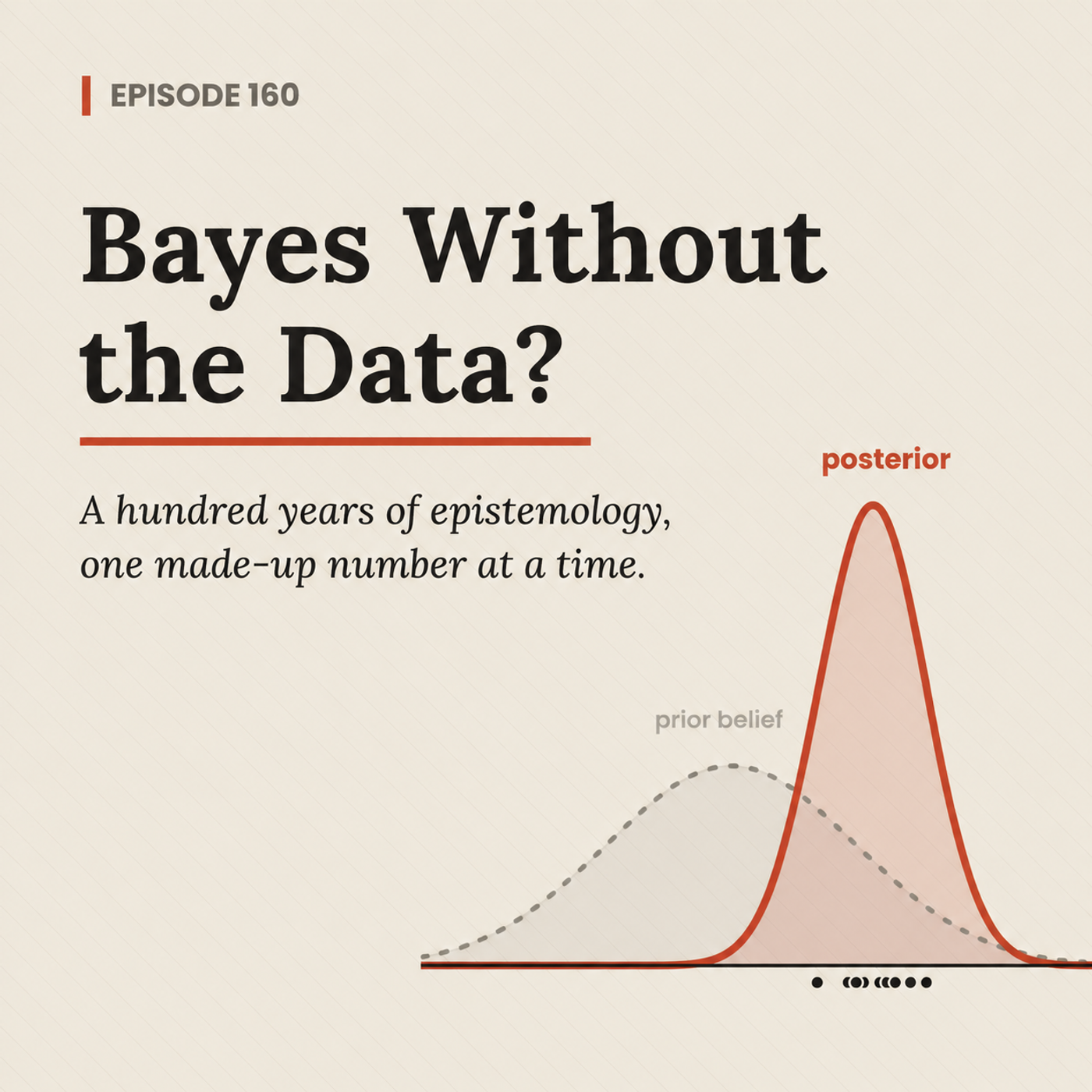 Bayesian Epistemology Is "Bayes' Theorem Without the Data" 07.08.2026 4mToday's clip is from episode 160, featuring Vaden Masrani. In this conversation, Vaden lays out a sharp critique of Bayesian epistemology - the roughly hundred-year-old philosophical tradition, popular in some Oxford-adjacent circles, that treats subjective probability estimates as legitimate even when there's no data behind them.Vaden's core objection: doing Bayes' theorem on numbers you made up in your head is like fitting a regression line to an empty scatter plot - the math looks rigorous, but there's nothing underneath it. He argues this "math-washing" can trick people into thinking a dec...
-
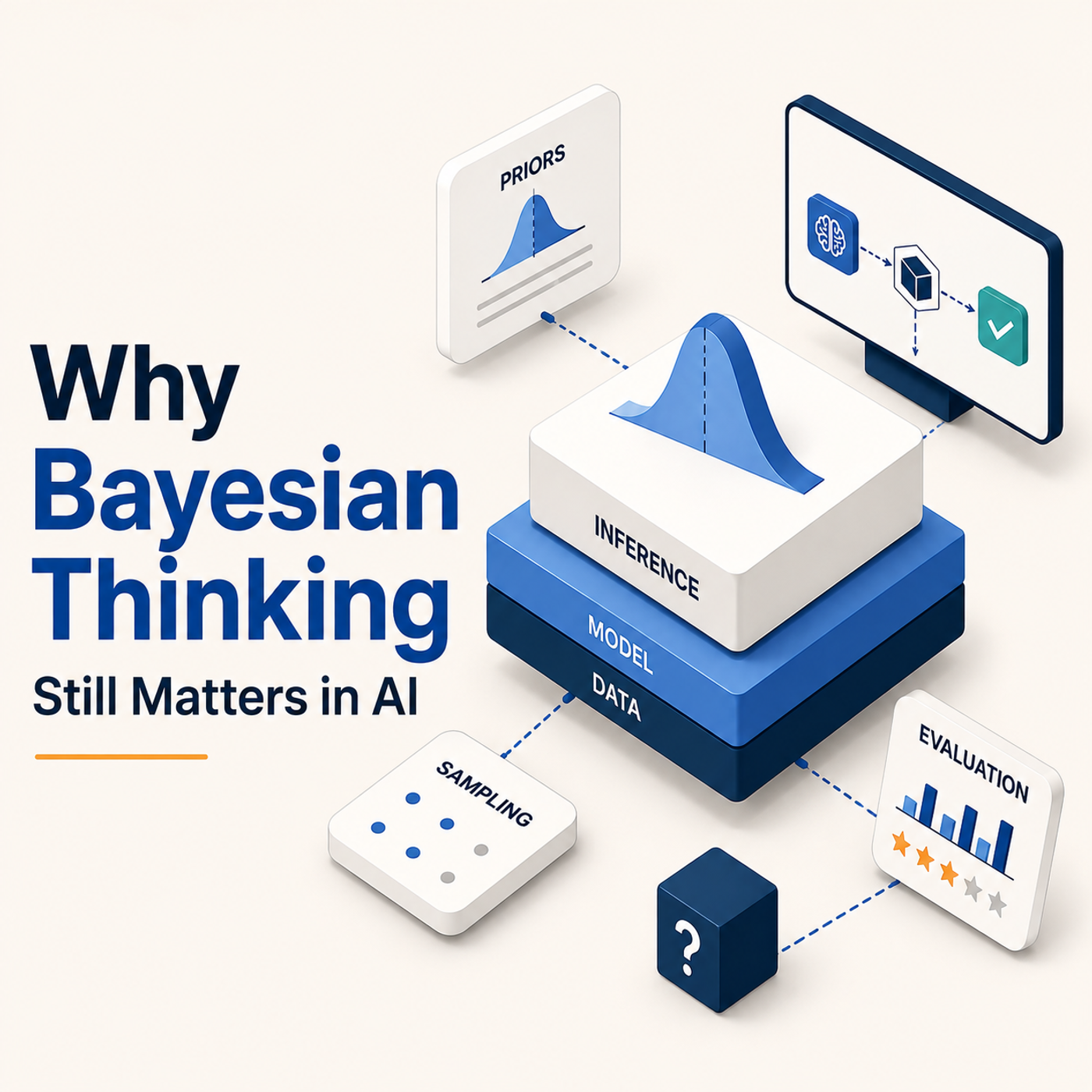 Why Bayesians Have an Edge in AI 03.08.2026 4mToday's clip is from episode 162, featuring Chris Krapu. In this conversation, Chris explains why Bayesian thinking remains surprisingly valuable in today's AI landscape - even when the models themselves aren't explicitly Bayesian.Rather than uncertainty estimation, Chris highlights a different advantage: Bayesian training provides a deep intuition for concepts like priors, sampling, rejection sampling, and high-dimensional geometry, making it much easier to understand and apply modern AI research. He also discusses why Bayesian methods are becoming increasingly relevant for evaluating agentic...
Similar podcasts


Popular in
The podcast also appears in the podcast charts of these countries.

