
Democracy Innovators Podcast
democracyinnovators.com
0
The Democracy Innovators Podcast is an independent publication launched in February 2025 by Alessandro Oppo and Carlo Michaelis. It explores the intersection of technology and governance, focusing on how digital tools are used in politics and what the future may hold. Through interviews with civic hackers and those behind new forms of participation, the podcast shares insider stories and highlights innovative projects in the civic tech space.
Episodes
-
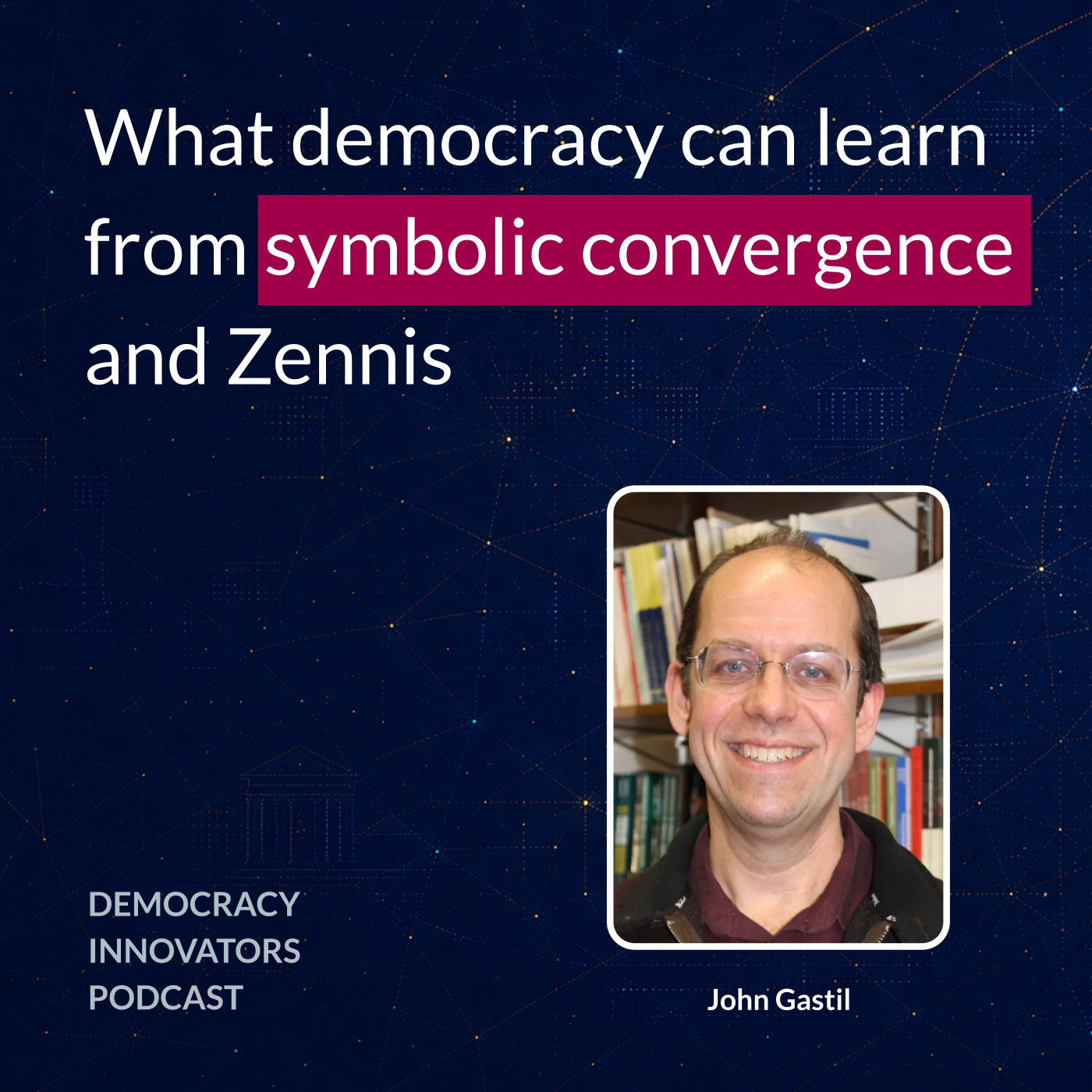 John Gastil on the power of deliberation, digital democracy, and gamification 18.11.2026 1h 5mJohn Gastil explores how groups make democratic decisions, drawing on his research and his upbringing with both political debate and Quaker consensus. The conversation connects citizens’ assemblies and local participation with lessons from cooperative games: shared goals, clear rules and opportunities to work through disagreement. It also asks how democratic innovations can produce decisions that people understand and accept, including when their preferred option loses. If you enjoy our podcast, please consider making a donation. It really helps us to sustain the podcast. PayPal: https://www.p...
-
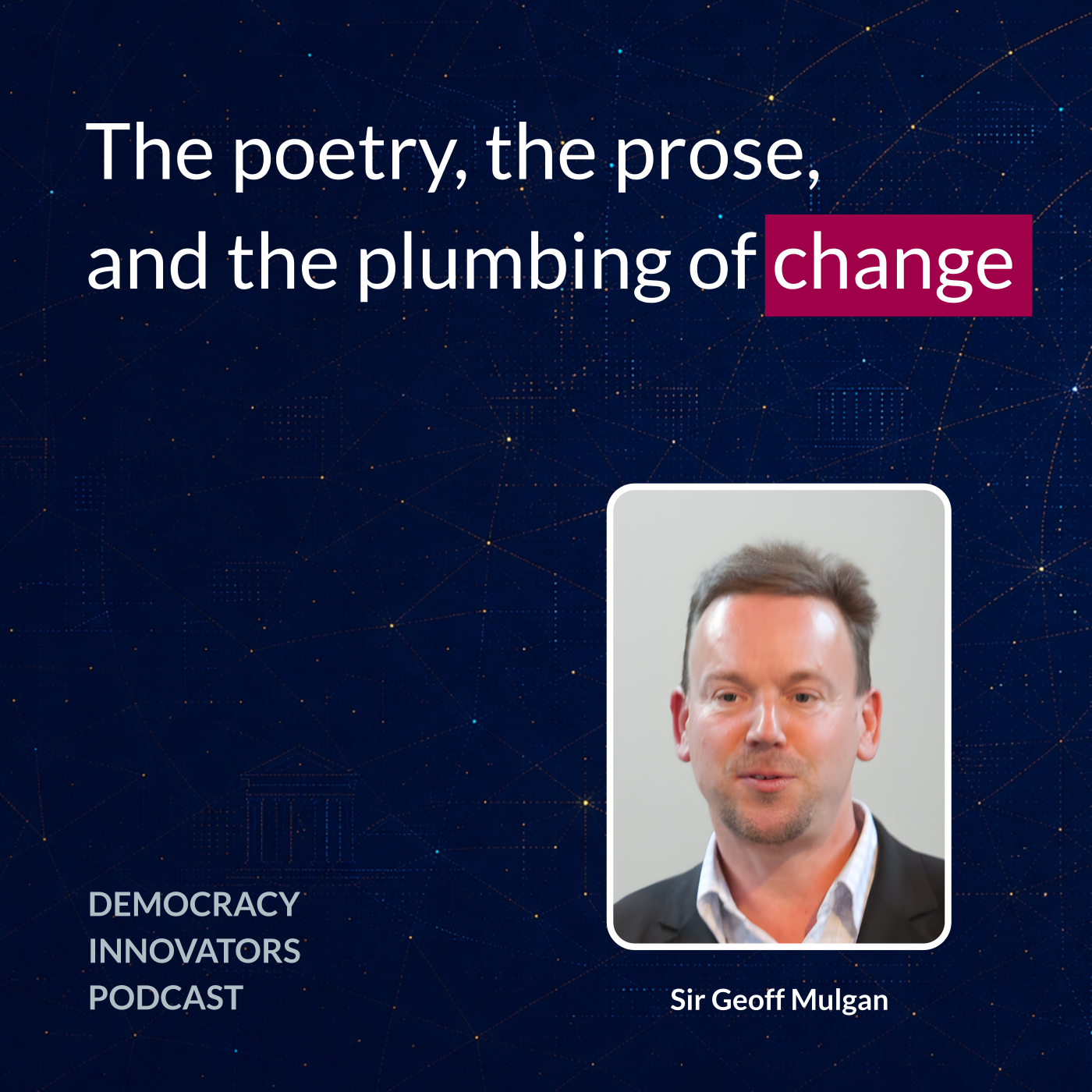 Sir Geoff Mulgan on democracy as a work in progress & roadmaps for lasting reform 10.11.2026 49mSir Geoff Mulgan discusses how democracy can evolve through citizens’ assemblies, participatory budgeting and stronger public input into parliaments. Drawing on his experience in government and democratic innovation, he makes the case for long-term roadmaps while examining how AI could both support participation and enable manipulation. He also considers what protest movements need to turn momentum into lasting change. If you enjoy our podcast, please consider making a donation. It really helps us to sustain the podcast. PayPal: https://www.paypal.com/ncp/payment/7KCR9XBSCQVMG
-
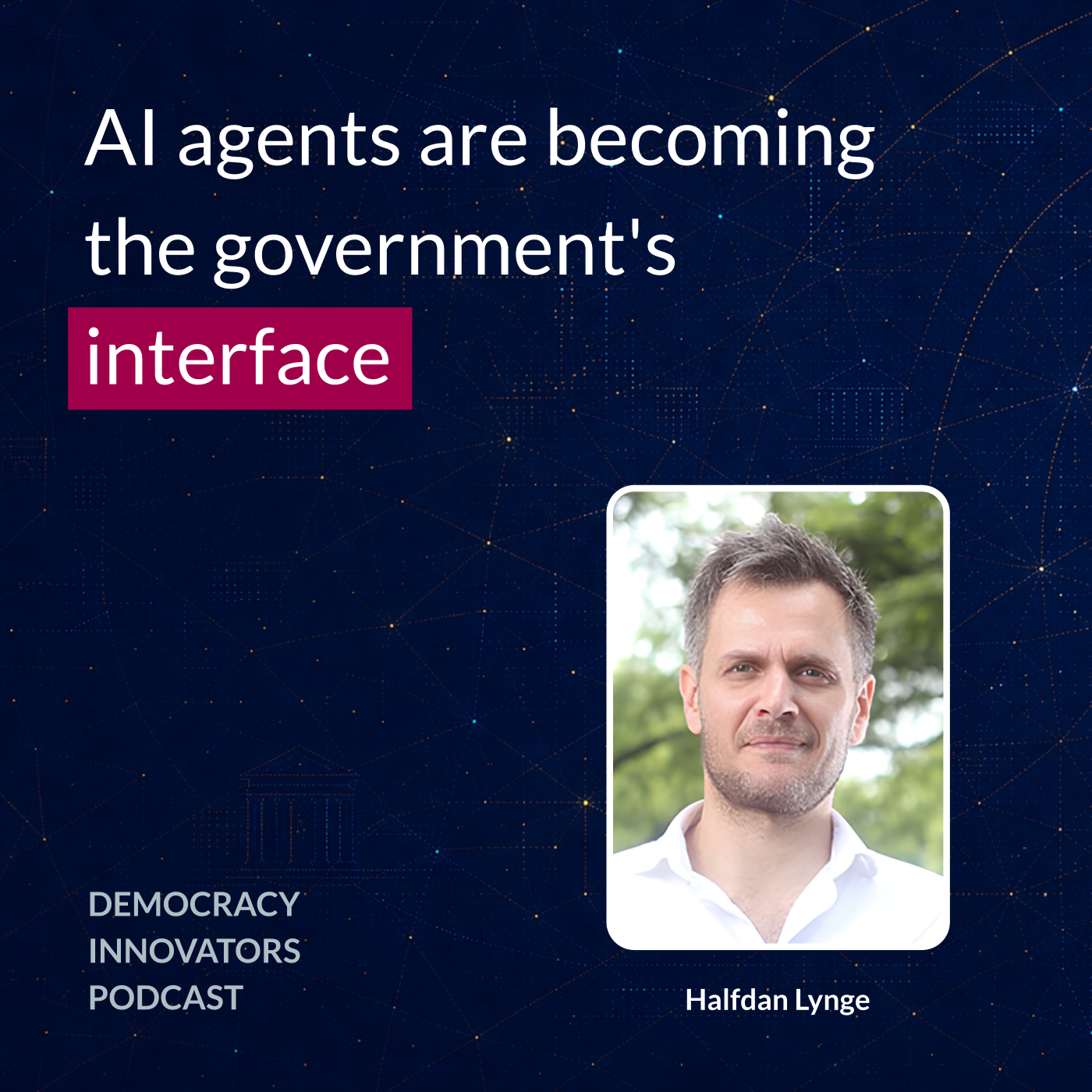 Halfdan Lynge on state-citizen relations when agents become the front end of government 03.11.2026 56mHalfdan Lynge draws on his work in Danish digital government and his experience in Mozambique to discuss where civic tech and GovTech overlap, and how infrastructure, funding and regulation shape what can be built. He and Alessandro then consider what happens when AI agents become an interface between citizens and government. The conversation ends with a question for democracy itself: how might its institutions change as technology changes the way people participate? If you enjoy our podcast, please consider making a donation. It really helps us to sustain the podcast. PayPal: https://www.payp...
-
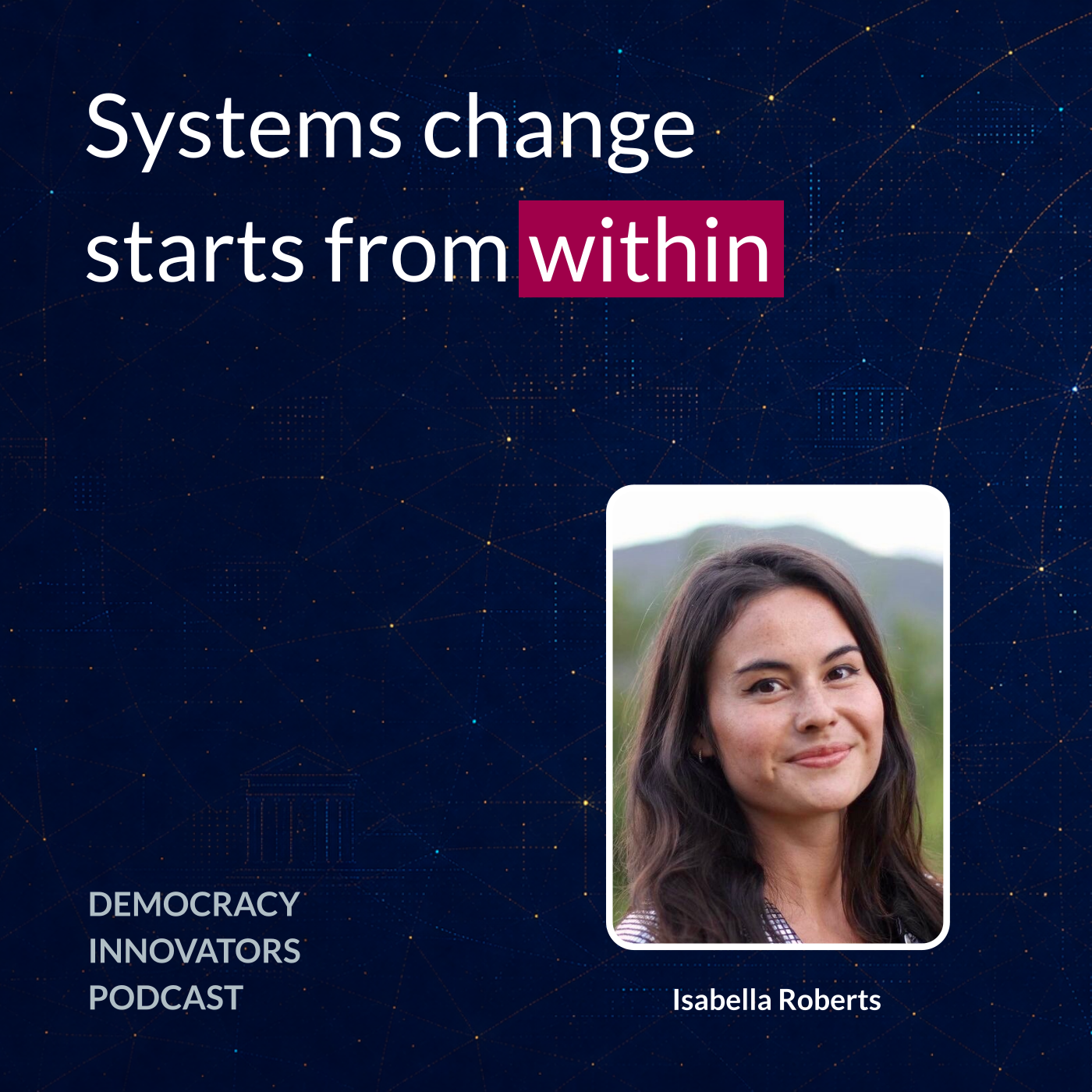 Isabella Roberts on embodied democracy, music festival research & shared identity via deliberation 27.10.2026 57mIsabella Roberts discusses her move from finance and electoral politics into research on deliberative democracy, AI and immersive technology. She explains her BoomTown Festival experiment using surveys and biosensors during mini citizens’ assemblies, including an early finding of increased shared identity among participants. The conversation also examines human-centred principles for digital deliberation and how technology might support participation without displacing reflection, listening and human connection. Isabella links LinkedIn - https://www.linkedin.com/in/isabellaroberts Spotify - ht...
-
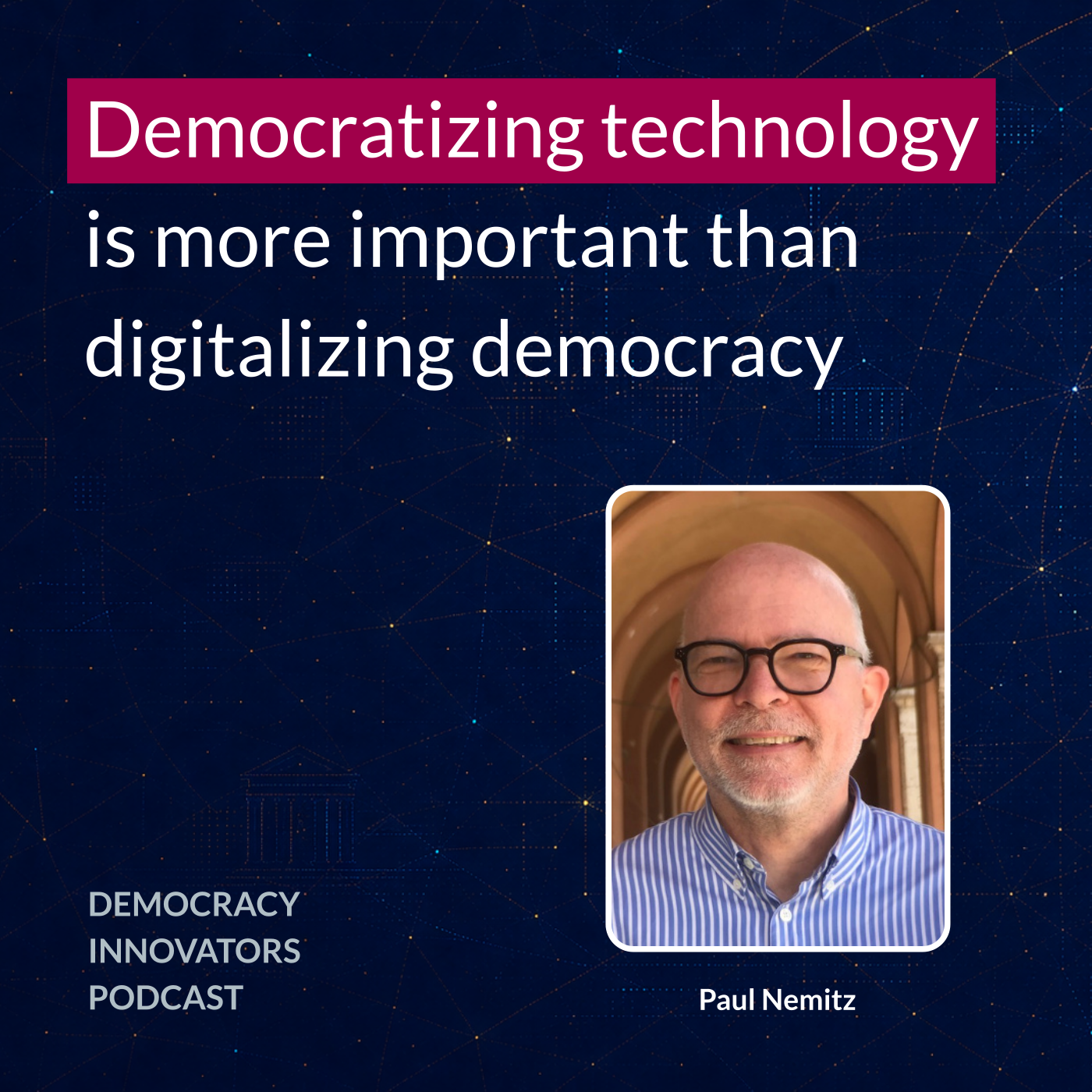 Paul Nemitz on AI’s threat to democracy, Big Tech power & decentralization 01.10.2026 45mPaul Nemitz examines how concentrated control over data, infrastructure and AI can weaken democratic life, and argues that these technologies are not politically neutral. Drawing on his experience with the GDPR and other EU digital legislation, he discusses regulatory enforcement, the limits of treating code as law, and the importance of human judgment. The conversation concludes with a case for decentralizing AI and involving technologists directly in democratic institutions and debate. If you enjoy our podcast, please consider making a donation. It really helps us to sustain the podcast. Pay...
-
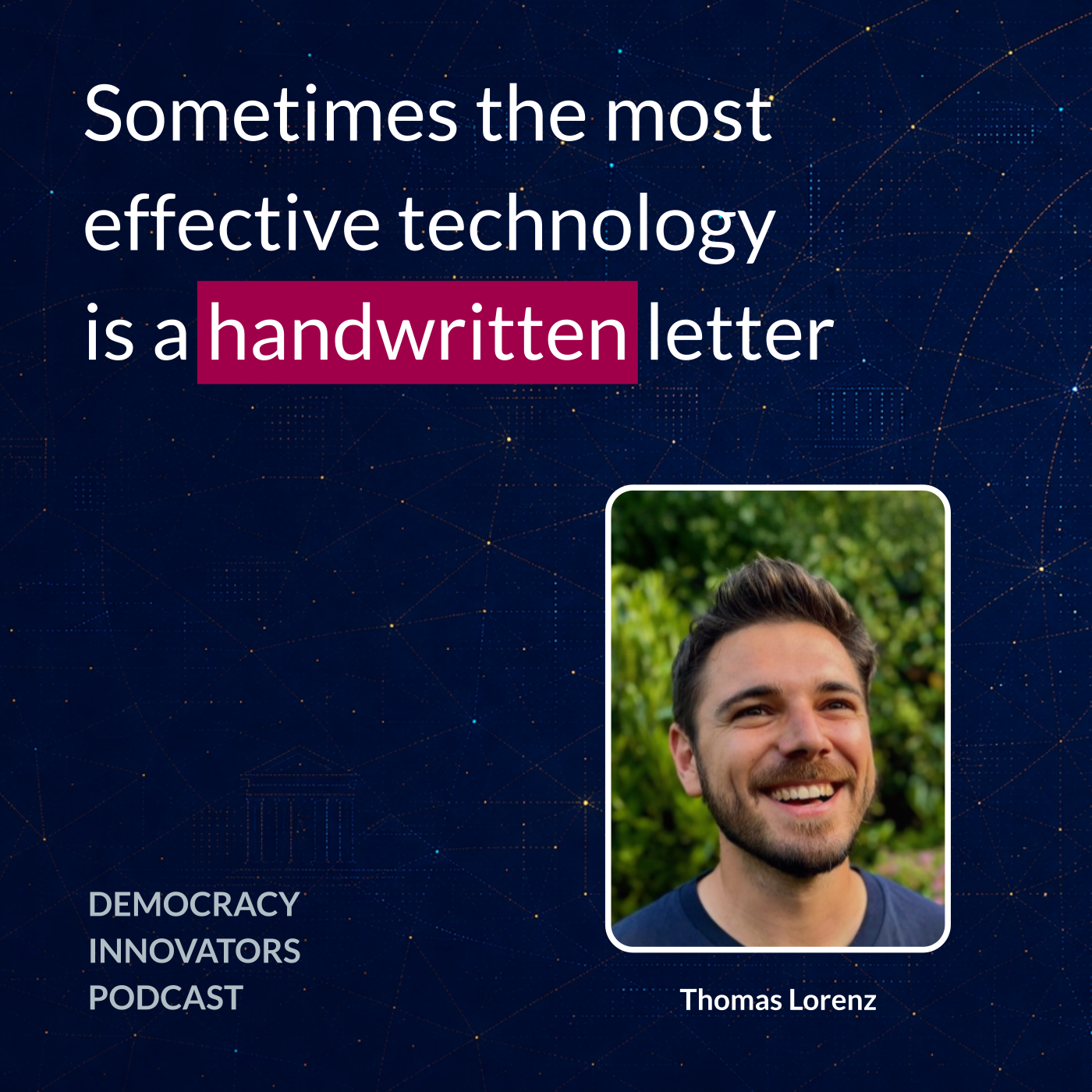 Thomas Lorenz on Brief nach Berlin, lowering barriers to participation & open-source civic tech 22.09.2026 53mThomas Lorenz discusses Brief nach Berlin, an open-source, AI-assisted tool that helps citizens identify the appropriate political representative, draft a letter about a local concern and then copy it by hand. The conversation uses this practical project to examine how civic technology can lower barriers to participation while preserving meaningful human action. It also considers AI’s risks for privacy, dependence and social isolation, as well as its potential to make public administration more responsive and democratic collaboration easier. If you enjoy our podcast, please consider making a d...
-
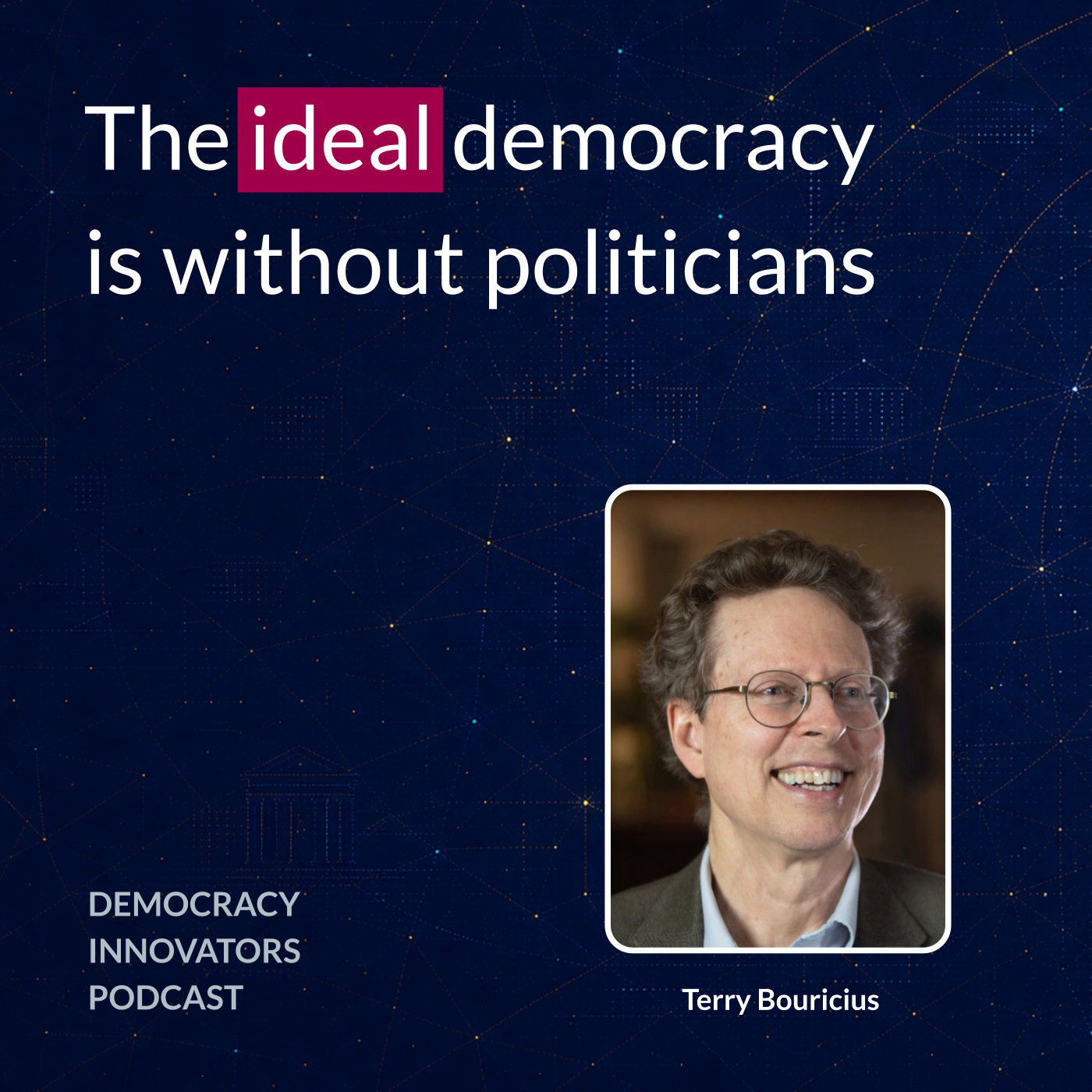 Terry Bouricius on multi-body sortition and redesigning democratic lawmaking 15.09.2026 59mTerry Bouricius is a former Vermont lawmaker who has spent decades working on democracy reform, now focused on sortition — the use of random selection to form representative citizens’ bodies. His experience as both a politician and reformer led him to question whether elections are actually democratic. In this episode, he explains why he sees elected legislatures as inherently oligarchic, drawing on citizens’ assemblies, ancient Athens, and experiments in Ireland and elsewhere. We discuss how randomly selected bodies could make laws, how technology and AI might support deliberation, why adviso...
-
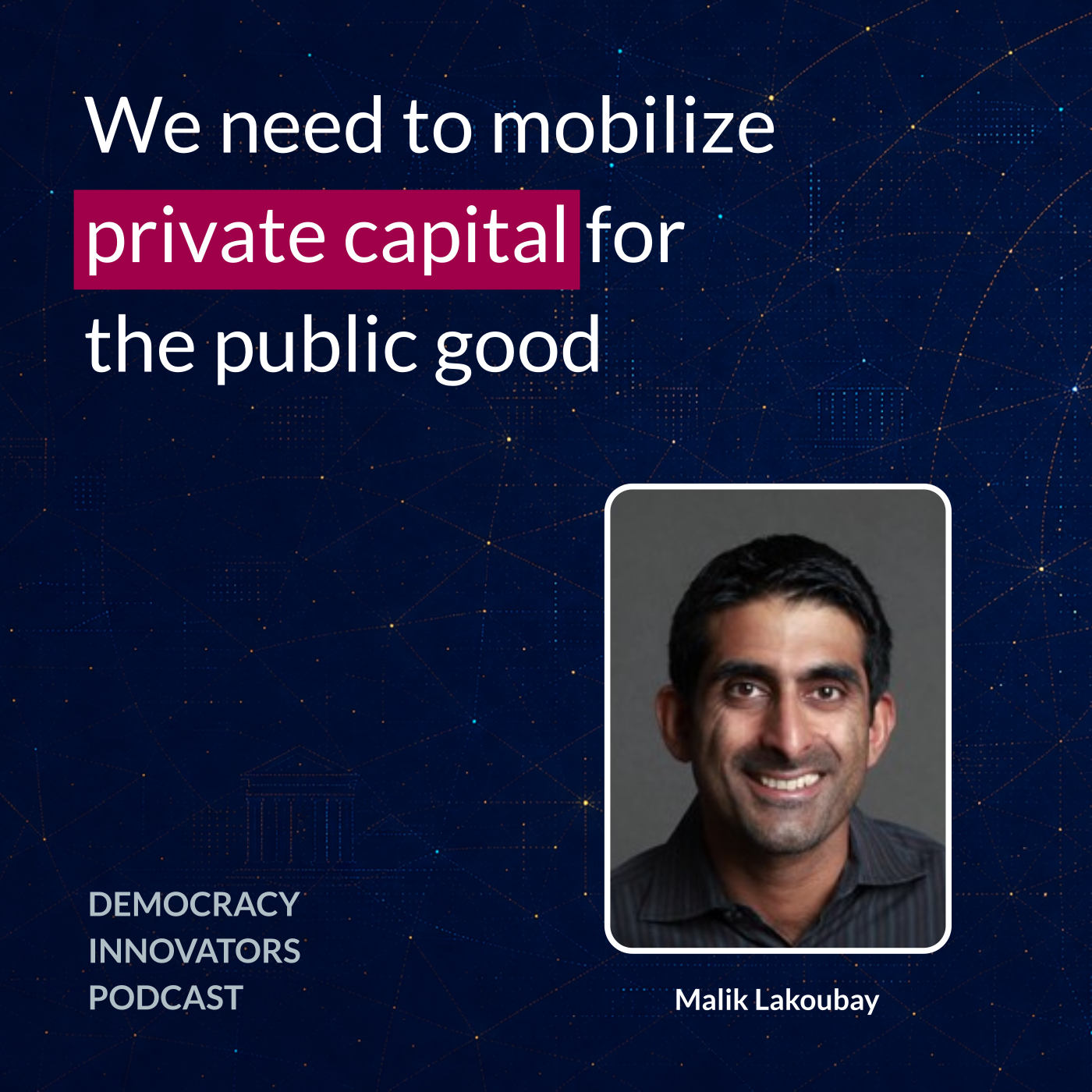 Malik Lakoubay from Dark Matter Labs on financing civic infrastructure and democratic innovation 10.09.2026 56mMalik Lakoubay is a system builder and co-runs the Expanding Civilizational Optionality initiative at Dark Matter Labs, working at the intersection of civic infrastructure, finance, technology, and democratic renewal. In this episode, he explores how technology can enable new forms of participation and collective decision-making, from quadratic voting to community sensing in Mumbai. The conversation takes a provocative turn into “civic finance”: treating civic infrastructure as an asset class and exploring democracy bonds as a way to mobilize private capital for public value. Lakoubay also dis...
-
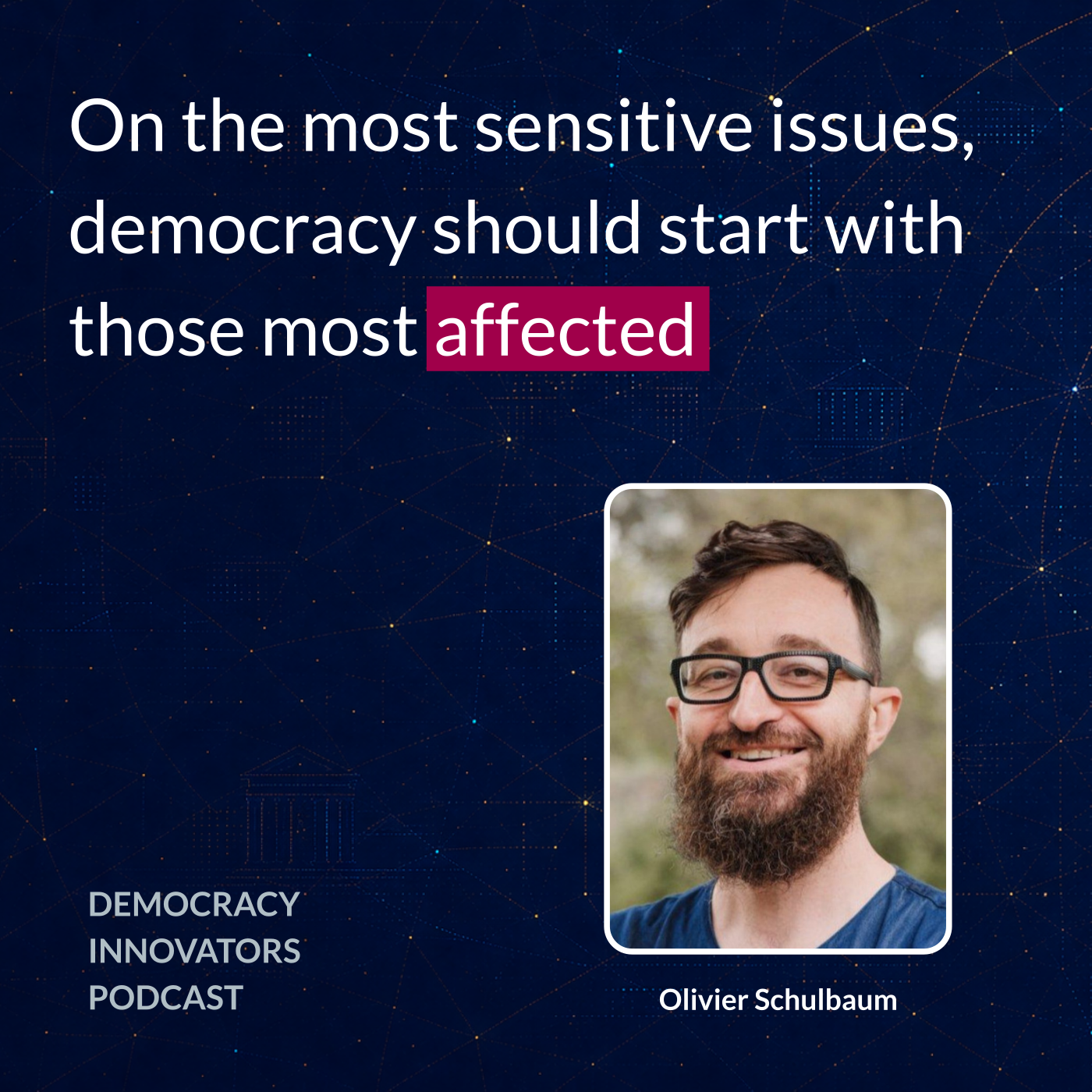 Olivier Schulbaum on democracy after the platform and the struggle for democratic infrastructures 01.09.2026 53mOlivier Schulbaum co-founded Platoniq, a foundation at the intersection of participation, civic technology, culture, social innovation and democratic experimentation. He explains why citizen assemblies on sensitive issues should begin with those most affected, allowing them to shape the agenda before experts frame the question. The conversation also examines how institutional “technification” can drain citizens’ proposals of their original meaning. It then turns to GRID, an experimental AI agent with a legislative-theatre “joker” that interrupts the flow and asks participants to reflect. Rathe...
-
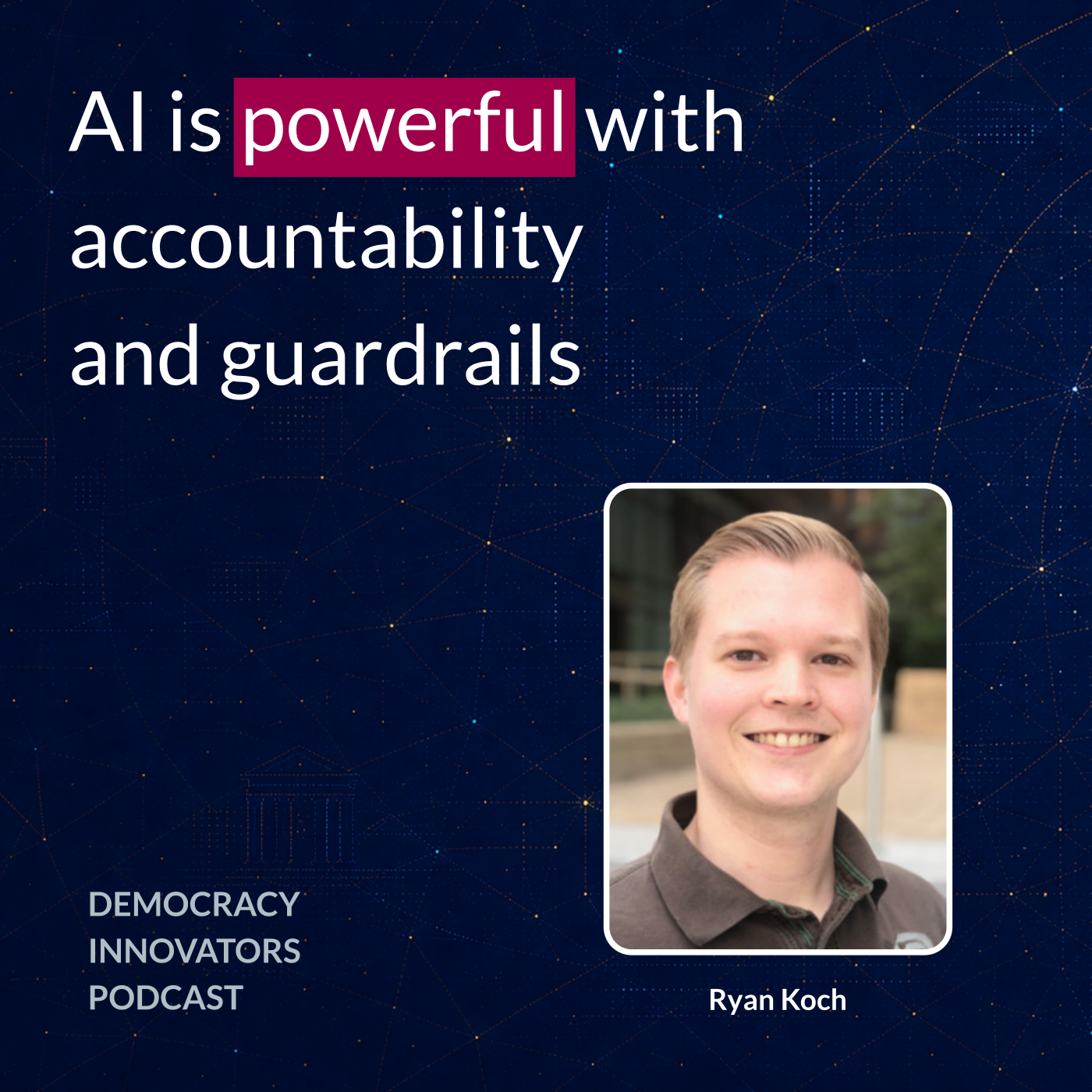 Ryan Koch from the Civic Tech Chat podcast on civic innovation and effective use of AI 25.08.2026 1h 3mRyan Koch, host of Civic Tech Chat, joins Alessandro Oppo for a cross-podcast conversation about the evolution of civic tech and the growing role of AI in public-interest technology. They discuss volunteer civic-tech communities, faster prototyping, public data, and the boundaries between civic tech, gov tech, and public-interest tech. The conversation also examines deterministic systems, AI guardrails, explainability, human oversight in public services, the political choices embedded in software, and how technology might support more direct forms of democratic participation. If you enjoy our...
-
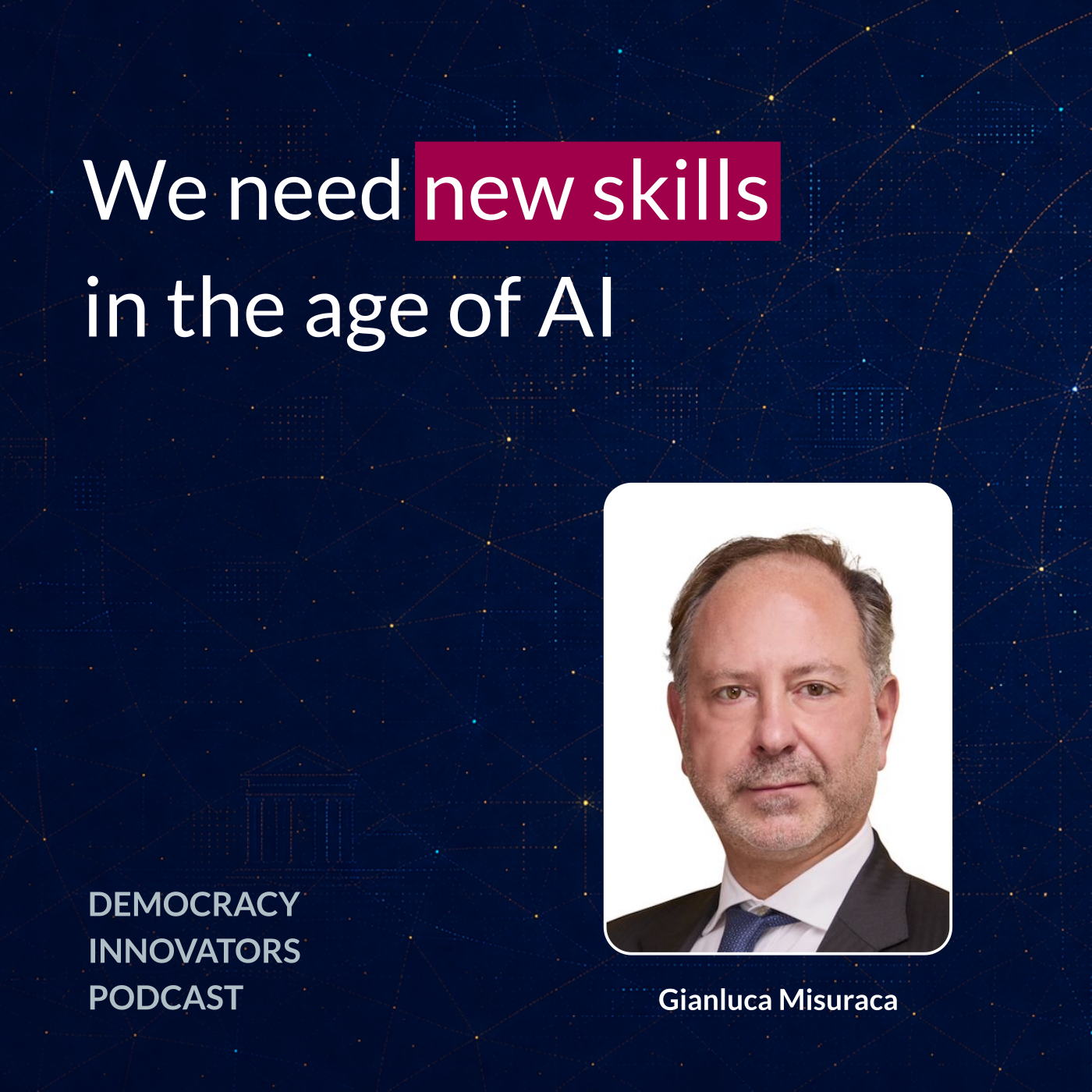 Gianluca Misuraca from Inspiring Futures on AI in the public sector 12.08.2026 49mGianluca Misuraca of Inspiring Futures Europe, coordinator of the European Union AI Skills Academy, discusses how foresight can help societies shape technological change. He explains why democratic control of AI depends on digital sovereignty, public-sector skills, interoperability, better procurement, and meaningful citizen participation. If you enjoy our podcast, please consider making a donation. It really helps us to sustain the podcast. PayPal: https://www.paypal.com/ncp/payment/7KCR9XBSCQVMG
-
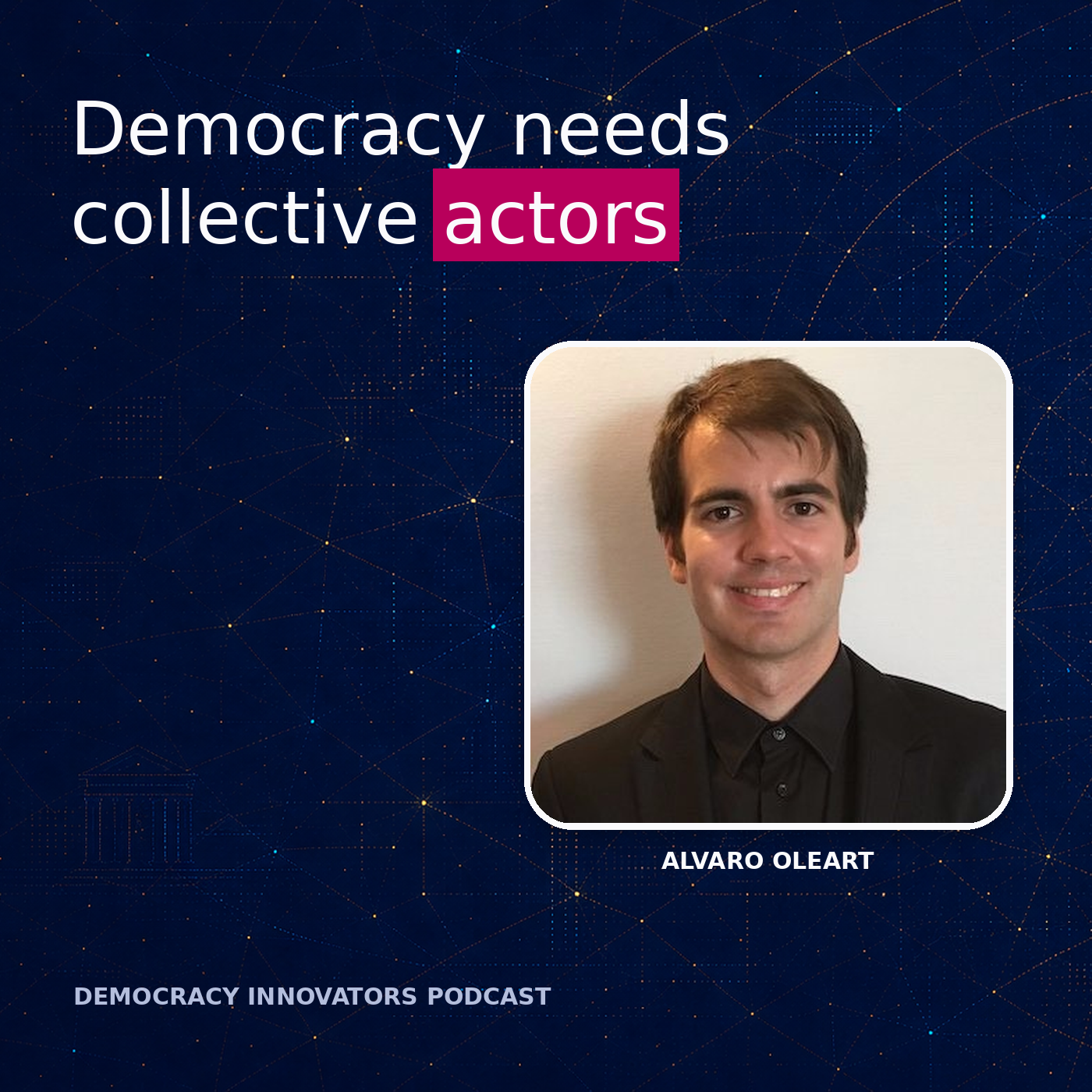 Alvaro Oleart on the instrumentalisation of EU participation processes & limits of AI for democracy 04.08.2026 50mAlvaro Oleart is an academic researcher based in Brussels at the Université Libre de Bruxelles. His work focuses on social movements, EU participatory practices, democratic innovation, and the political economy of technology. In this conversation, he offers a critical perspective on citizen assemblies, arguing that they can depoliticize democracy when they bypass collective actors such as trade unions, political parties, civil society organizations, and social movements. We also discuss Big Tech, AI, the industry of participation, technology in deliberation, the agentic state, and why democrat...
-
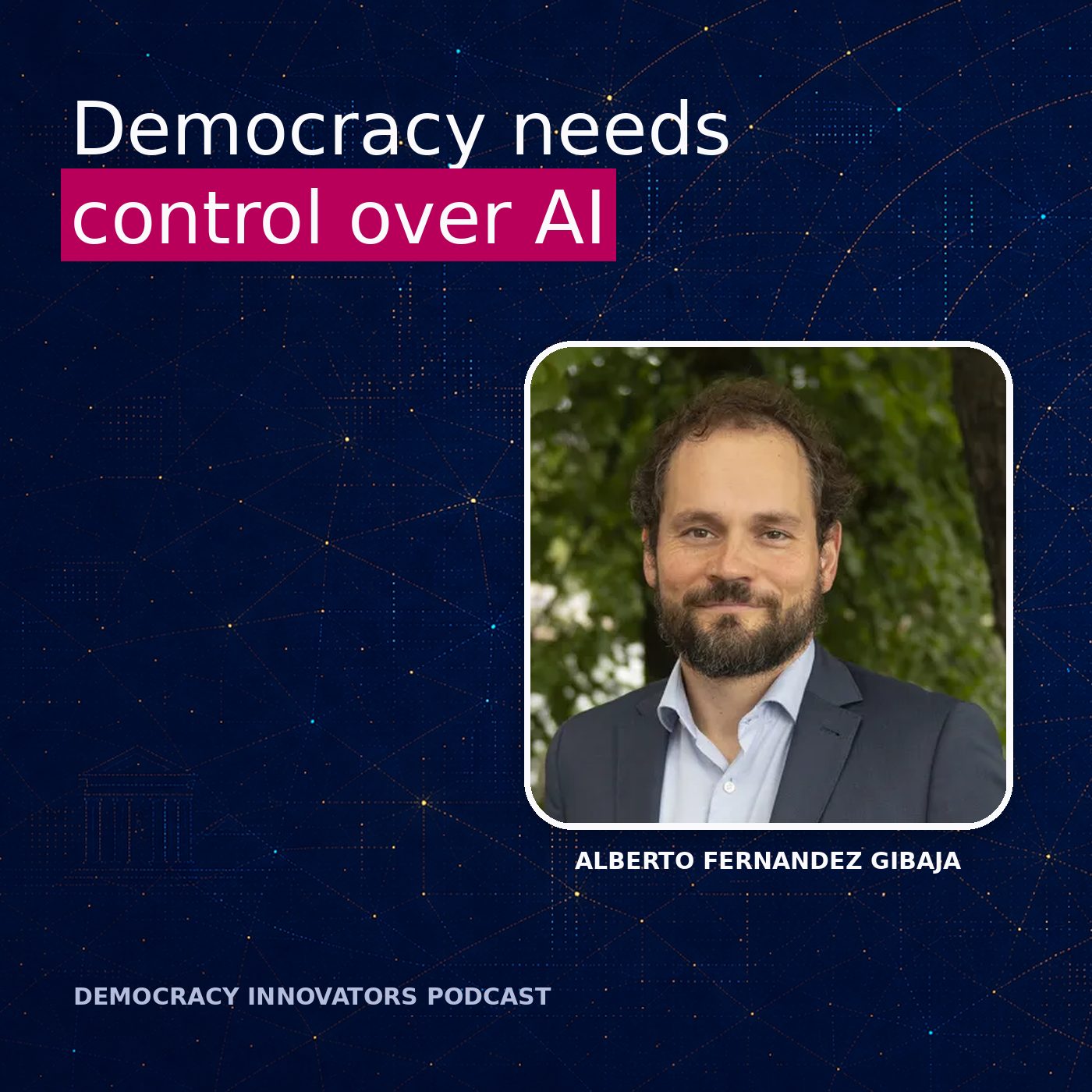 Alberto Fernandez Gibaja from International IDEA on Technology and Democracy 29.07.2026 1hAlberto Fernandez Gibaja leads International IDEA’s global work at the intersection of technology and democracy. In this conversation, he discusses how the early optimism around digital technology changed after Brexit, Trump, and the rise of disinformation, why tech companies can be as powerful as medium-sized countries, and why democratic societies need more control over data, infrastructure, foundation models, and AI applications. We also discuss digital sovereignty, data rights, the limits of direct democracy, political parties, expertise, and why the difficult part of democratic innovation...
-
 Simon Horton on Negotiation, Conflict Resolution, and How AI Can Help End War 15.07.2026 52mSimon Horton is a negotiation expert, author, and lecturer who has taught negotiation for more than 20 years. In this conversation, he explains why the best negotiators do not treat negotiation as an arm wrestle, but as a collaborative problem-solving process. We discuss political negotiations, peace processes, citizen mediation, and how AI could support better conflict resolution. If you enjoy our podcast, please consider making a donation. It really helps us to sustain the podcast. PayPal: https://www.paypal.com/ncp/payment/7KCR9XBSCQVMG
-
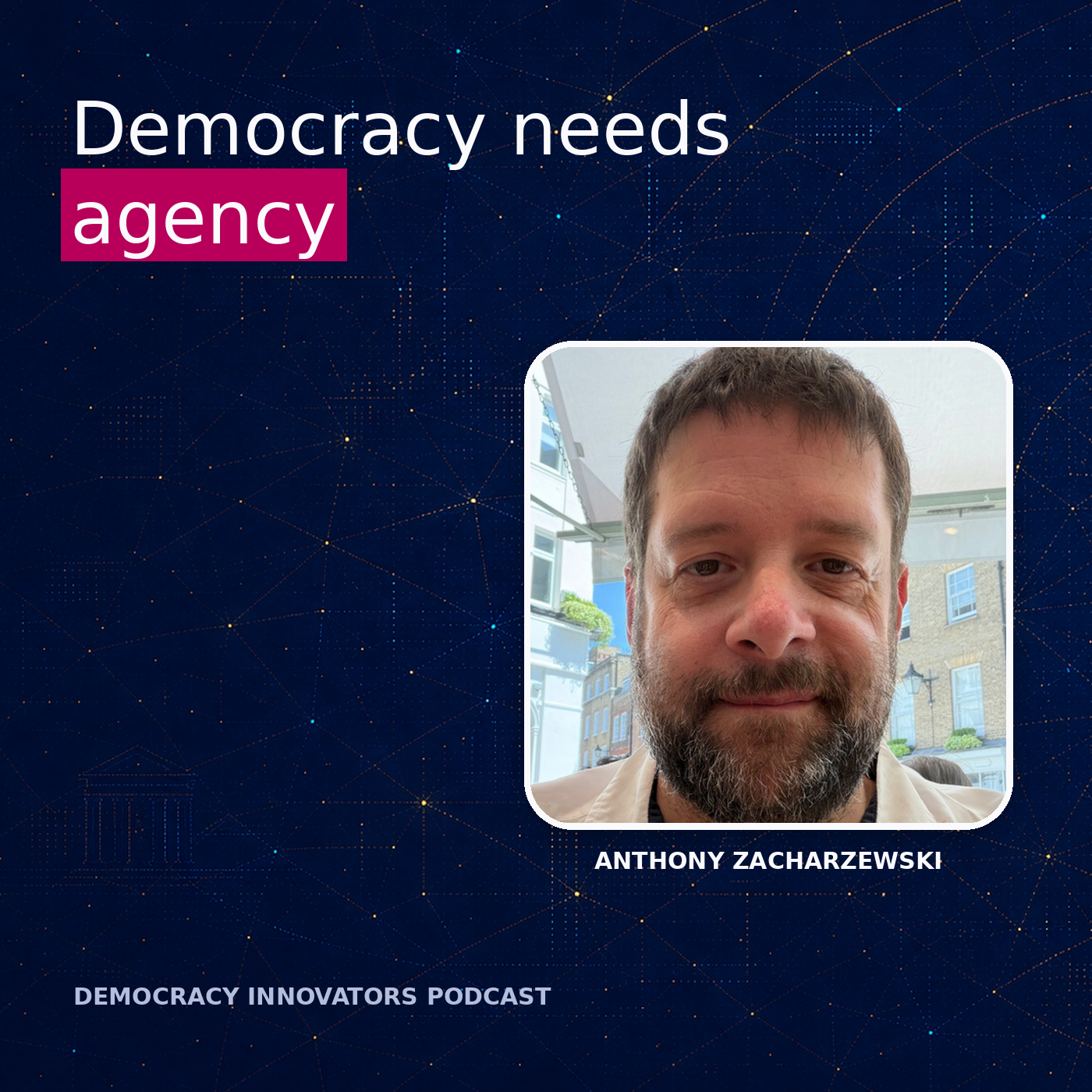 Anthony Zacharzewski from Democratic Society on democratic infrastructure, participation and power 08.07.2026 53mAnthony Zacharzewski is the founder of Democratic Society, an organization working across Europe to build democratic infrastructure and improve participation in government. In this conversation, he discusses how participation can become part of institutional design, why democracy must engage seriously with power, and how digitalization and the agentic state could reshape the relationship between citizens, political parties, and public services. If you enjoy our podcast, please consider making a donation. It really helps us to sustain the podcast. PayPal: https://www.paypal.com/ncp/payment/7KCR...
-
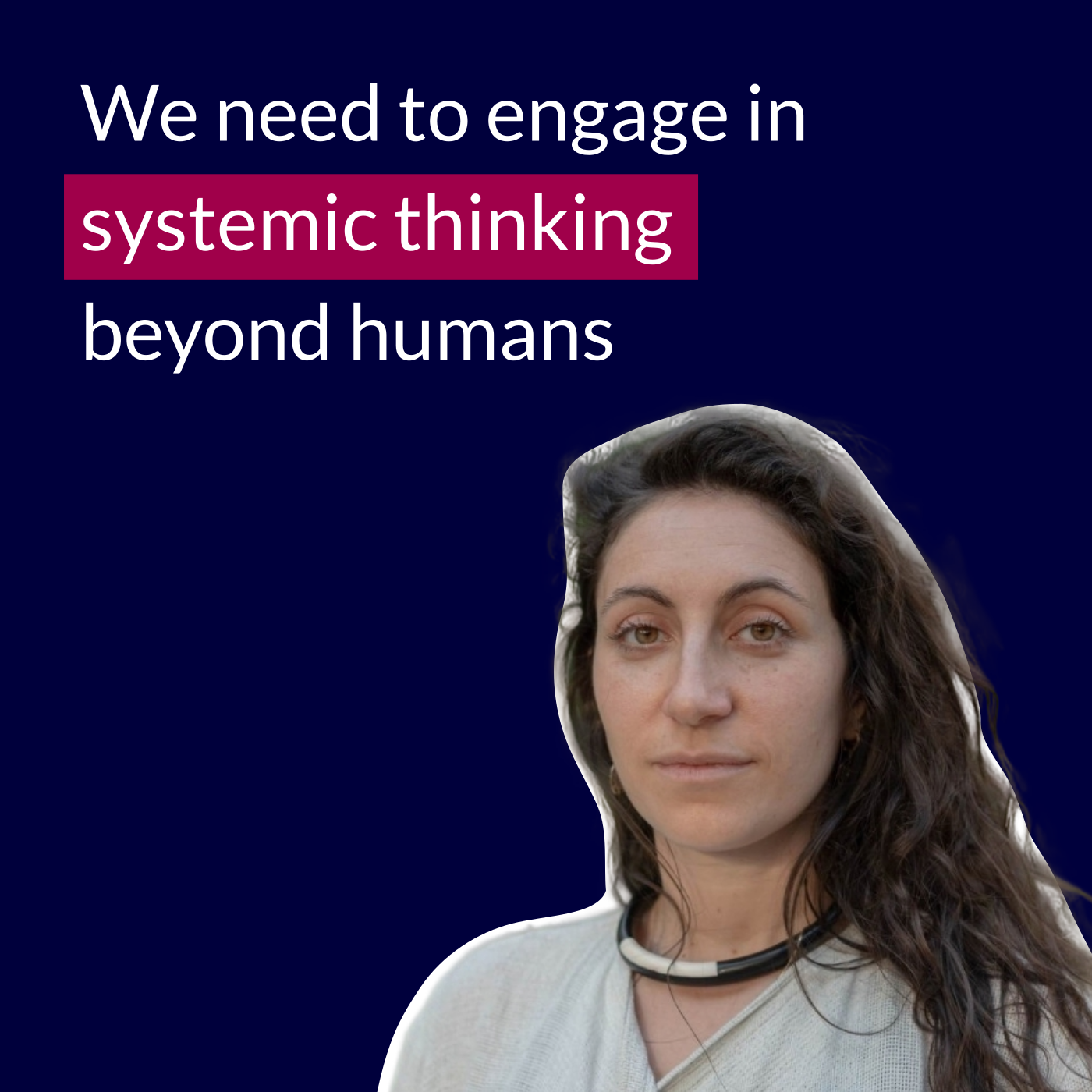 Alice Casiraghi on designing regenerative systems, public services, and democratic participation 30.06.2026 52mAlice Casiraghi is a systemic designer working on sustainability, circular economy, regenerative systems, and public services. She is a European Climate Pact Ambassador, teaches at Politecnico di Milano and created Climate Cards to educate on environmental impacts. Through her systemic approach, she gives new perspectives on participation of citizens and beyond. In the interview we talked about: If you enjoy our podcast, please consider making a donation. It really helps us to sustain the podcast. PayPal: https://www.paypal.com/ncp/payment/7KCR9XBSCQVMG
-
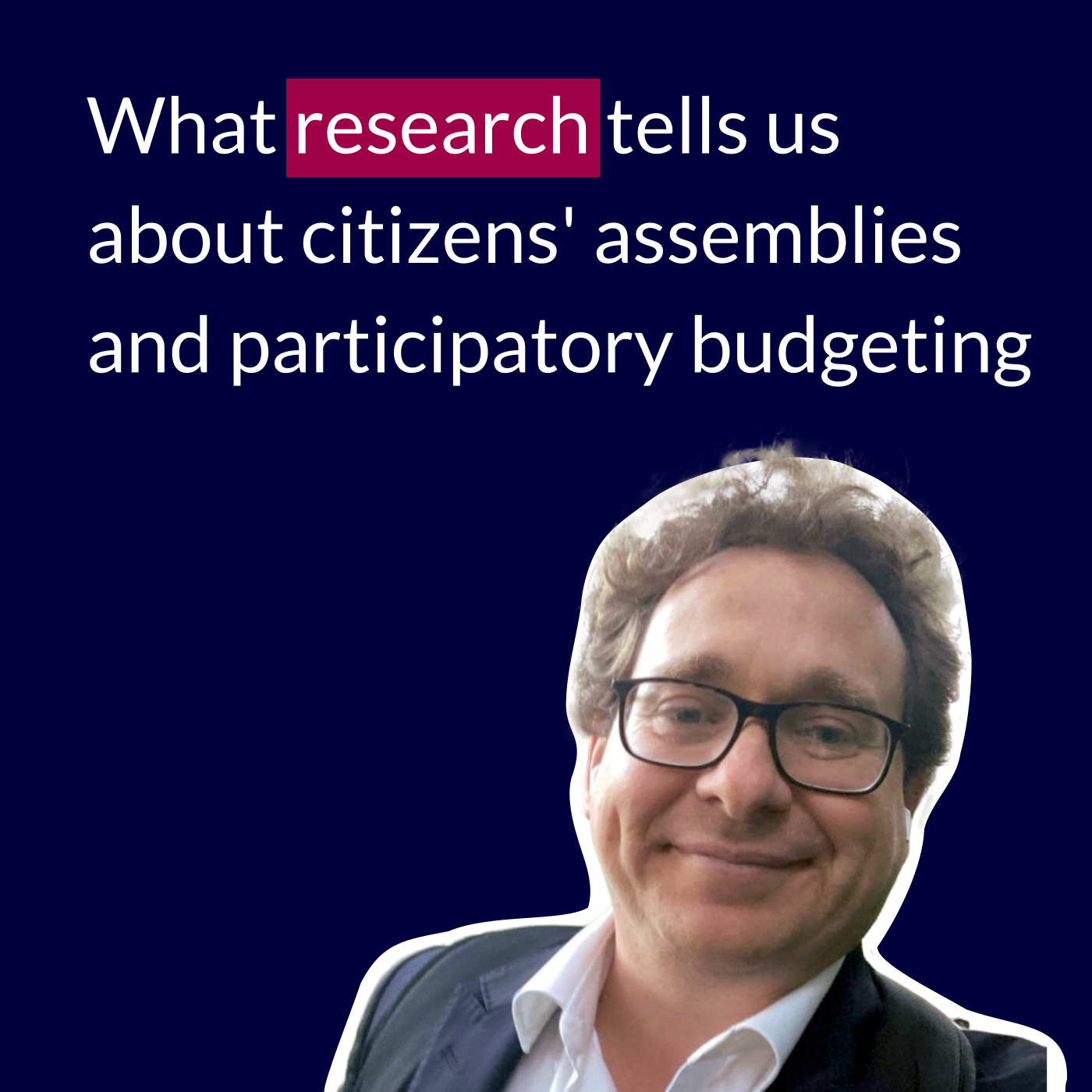 Paolo Spada on participatory budgeting, citizen assemblies, and scaling democratic innovation 09.06.2026 1h 20mPaolo Spada is a political scientist at the University of Southampton working on participatory budgeting, citizen assemblies, and democratic innovation. In this episode, we talk about feedback loops, scaling participation, political parties, online deliberation, and why democratic innovation needs stronger critique as it becomes more established. A central idea in the conversation is that scaling democratic participation is not mainly a technical problem. It is a political problem, and tools like AI only help when ownership, transparency, and accountability remain under democratic control. If...
-
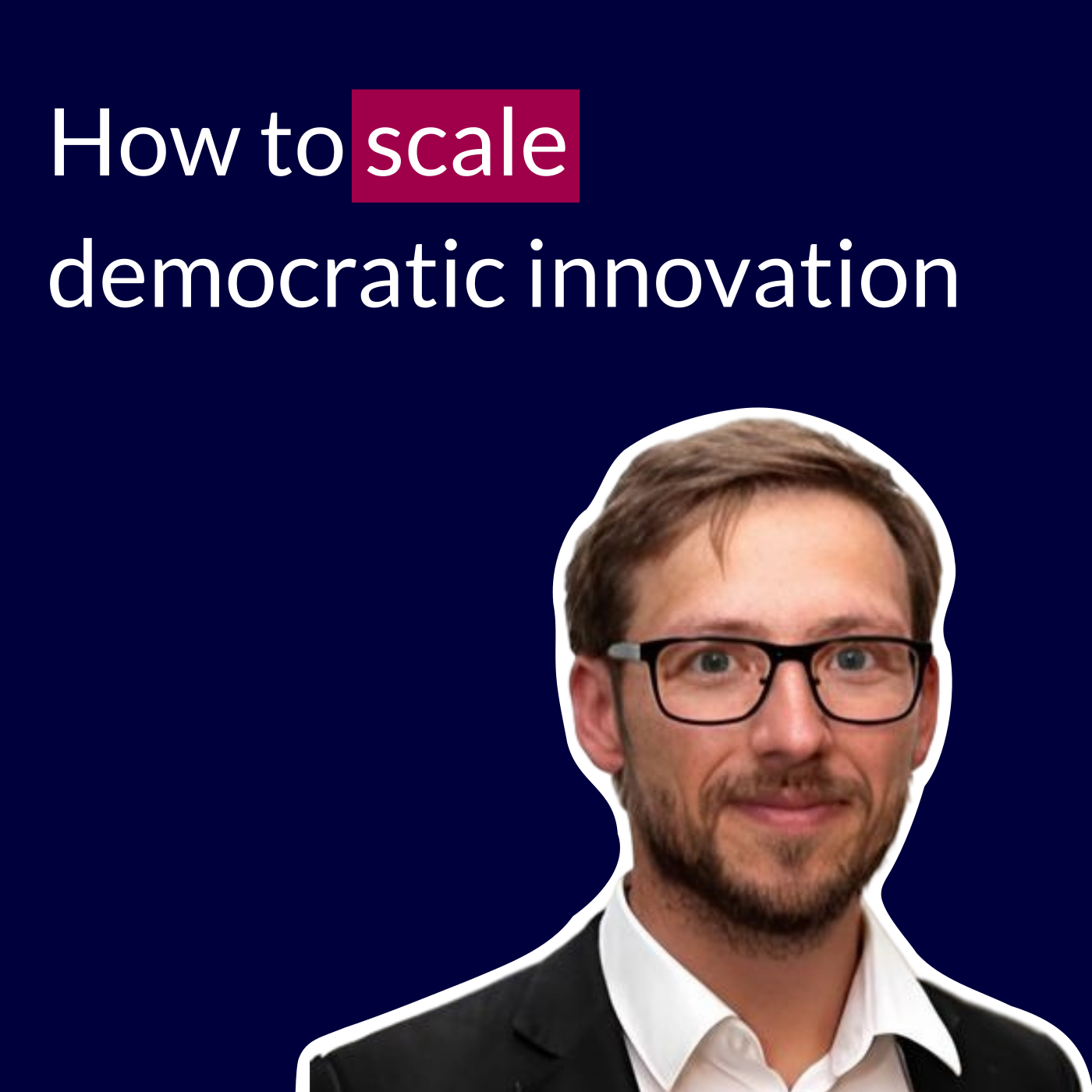 Antoine Vergne from Missions Publiques on scaling deliberative decision-making and random selection 02.06.2026 1h 3mAntoine Vergne is the co-director of Missions Publiques and the co-author of the ScaleDem Analytical Framework. His passion for innovating democratic processes is reflected in his academic background in political science and his nearly 15 years at Missions Publiques. If you enjoy our podcast, please consider making a donation. It really helps us to sustain the podcast. PayPal: https://www.paypal.com/ncp/payment/7KCR9XBSCQVMG
-
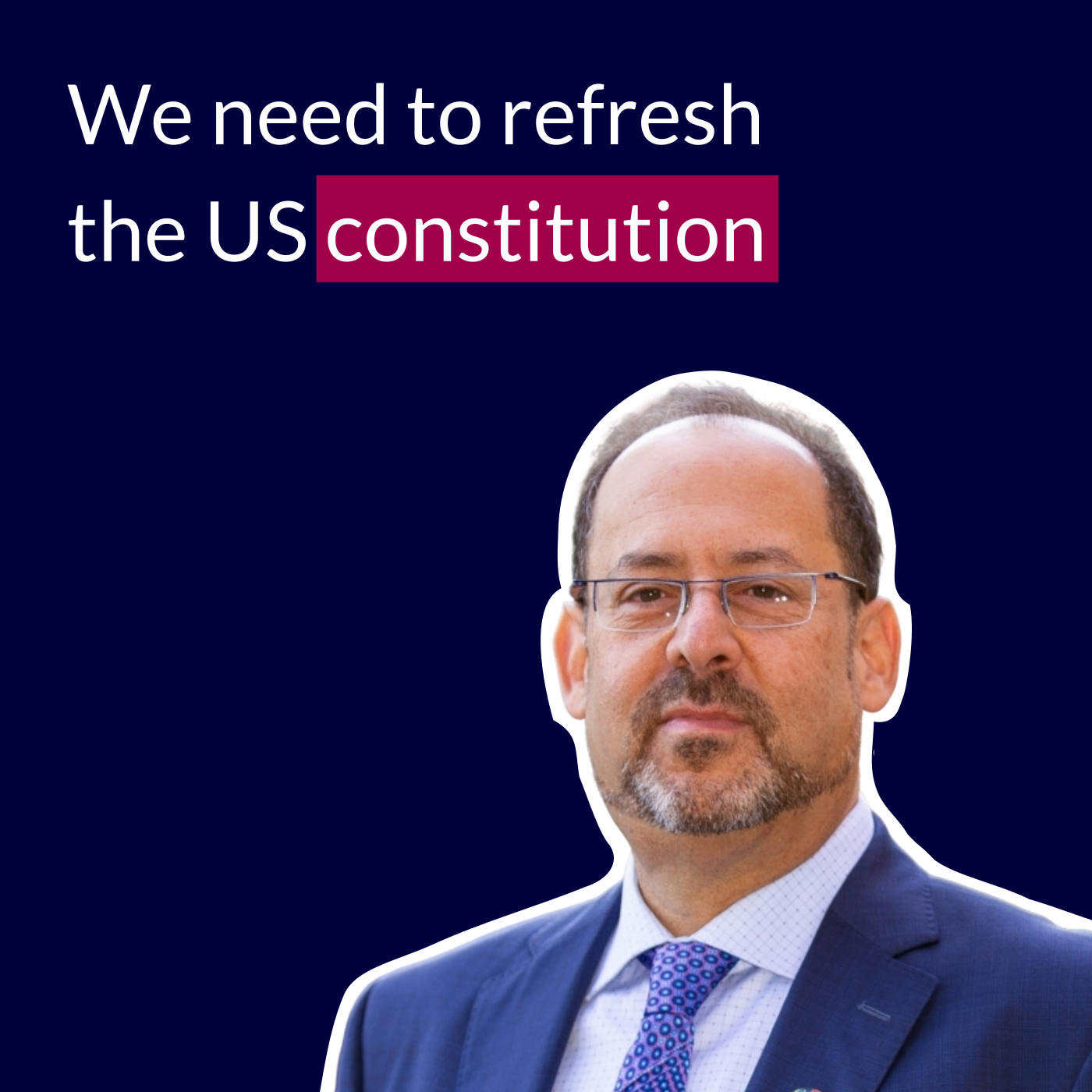 Paul Zeitz about permanent citizens' assemblies in the US and using technology to scale it 05.05.2026 45mPaul Zeitz is an author and advocate for global justice and human rights, among other things. With over 35 years of experience and several publications he is addressing systemic challenges. Especially in his book “Hit Refresh on the U.S. Constitution”, he calls for more deliberation in our democracies. If you enjoy our podcast, please consider making a donation. It really helps us to sustain the podcast. PayPal: https://www.paypal.com/ncp/payment/7KCR9XBSCQVMG
-
 Ben Nelson on the Minerva Project, reforming higher education and its role for democracy 28.04.2026 50mBen Nelson is founder and CEO of the Minerva Project and founder of the Minerva University. His mission is to reinvent higher education by utilising a systematic and evidence-based approach to learning. Drawing on his extensive entrepreneurial experience and keen awareness of societal issues, he offers valuable insights into the relationship between education and democracy, as well as the steps required to pursue one’s passion and achieve success. If you enjoy our podcast, please consider making a donation. It really helps us to sustain the podcast. PayPal: https://www.paypal.com/ncp/payment/7...
Similar podcasts


Popular in
The podcast also appears in the podcast charts of these countries.
