
Digital Innovations in Oil and Gas with Geoffrey Cann
Geoffrey Cann
0
A weekly podcast exploring the impact of digital technologies on the oil and gas industry. Host Geoffrey Cann discusses digital innovation, data analytics, and technology adoption, offering insights and practical advice for energy professionals. The show covers real-world case studies and strategies for leveraging digital tools to improve efficiency and drive business growth.
Episodes
-
 How to Turn Restricted Industrial Data into Business Value 18.11.2026 32mOil and gas companies generate enormous quantities of industrial data through inspections, surveys, maintenance activities, and routine operations. Much of this information is collected for a specific purpose, used once, and then archived. Over time, these archives can become substantial, expensive-to-create assets with untapped business potential.The challenge is coming up with a way to monetize that data without compromising confidentiality. In this episode of *Digital Innovations in Oil and Gas*, I'm joined by Ben Little, CEO of Bridger Photonics, to explore how his company is exploring thi...
-
Talk To Your Quality System: Using AI To Rewire Industrial Compliance 11.11.2026 31mDuring the pandemic, I became involved with a company that was rethinking the work of the quality professional at fabrication shops. The traditional practice was to dispatch a company person to the fabrication business to see what was being built to make sure it conformed to the specification. The pandemic rendered site visits hard to pull off, but the quality standards could not be relaxed.Such equipment manufacturers have to comply some of the strictest standards of any sector. It’s still surprises me that many companies manage the delivery of quality through spreadsheets, paper documents, d...
-
AI Gets Its Hands Dirty 06.11.2026 31mArtificial intelligence has been part of the oil and gas industry's technology toolkit for years. Predictive models identify deteriorating equipment, flag production anomalies, and help engineers make better decisions. These tools generate valuable insights across exploration, production, and maintenance operations.But knowing something is wrong and doing something about it are two different things. Someone still has to interpret the information, determine the appropriate response, and organize the work. Frustratingly, highly skilled specialists spend enormous amounts of time gathering and cle...
-
Finding Oil Where It Doesn't Belong 21.10.2026 34mHow Infrared Spectroscopy Is Changing Industrial Water Diagnostics, an interview with Graham Roeber of Orono Spectral SolutionsOil and water don't mix, but in oil and gas operations, they frequently end up together. Refineries, processing plants, and other industrial facilities routinely test their water streams for hydrocarbon contamination. Historically, this testing has been driven by environmental compliance. The objective is to demonstrate that discharged water meets regulatory standards, rather than to improve the performance of the facility.The problem is that traditional oil-in-water t...
-
 Stick-on Digital Eyes, Ears, and Brain: No Fuss Physical AI for the Field 09.09.2026 36mOil and gas companies have invested billions in SCADA, sensors and other technologies to understand what's happening with their equipment. Yet field workers still spend huge amounts of time driving to remote assets simply to inspect them. Experienced operators can see, hear and sense things that conventional instrumentation misses. Those blind spots have consequences. Equipment problems can go unnoticed until they become failures. Workers make unnecessary truck rolls. Maintenance becomes reactive. And with experienced field workers becoming harder to find, the industry needs a better way to un...
-
 Can AI Actually Help Us Think? Using Structured AI For High-Stakes Decisions 26.08.2026 34mAI can help us quickly when we need to make decisions. But when executives are making high-stakes decisions about pipelines, energy infrastructure, capital investments or geopolitical risk, a quick answer isn't necessarily a good answer. Insight into the decision is fragmented across organizations, external information is difficult to assess, and misinformation, competing interests and human bias all complicate the picture. General-purpose AI tools can sort of help solve this problem. I find that they are designed to produce a fast answer, not necessarily to work systematically through a compl...
-
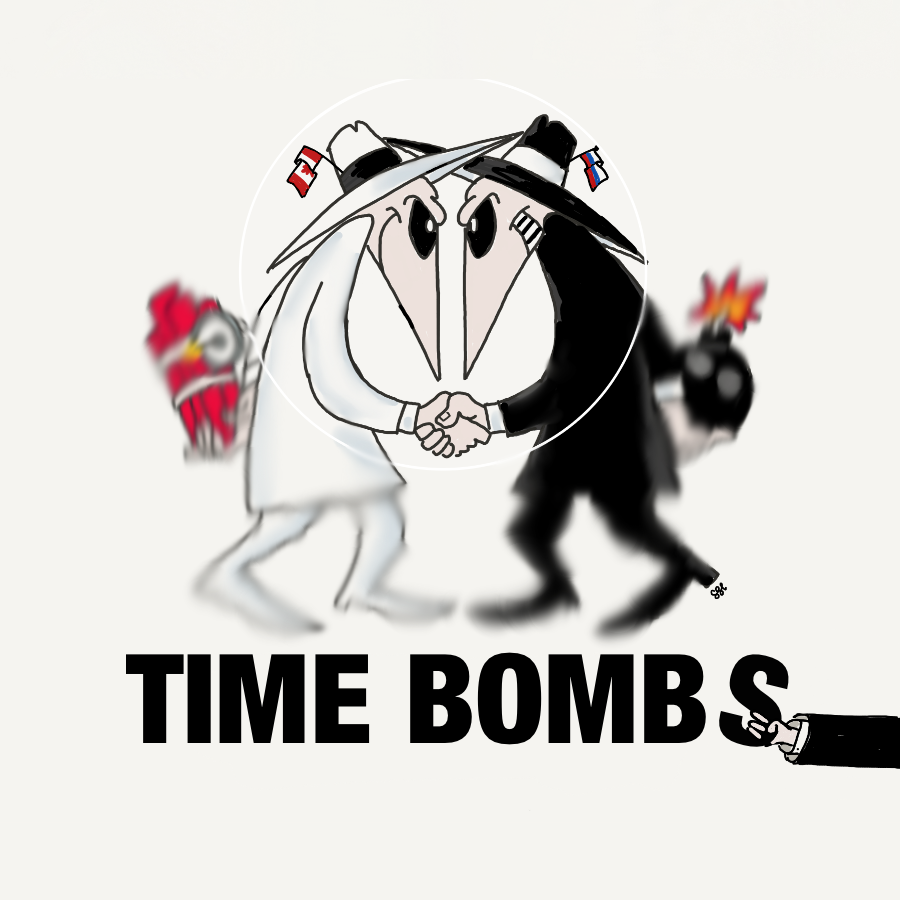 Defuse These Digital Oil and Gas Time Bombs: There's Still Time 19.08.2026 9mDigital innovations are creating huge value for oil and gas, but digital landscape is setting the industry up for problems down the track. Think of them as digital time bombs. Quantum computing will expose encrypted data that companies believe is safely protected. Legacy on-premise software is fast becoming difficult and costy to support as investment capital moves elsewhere. And the industry's shrinking talent pipeline will leave companies without enough people, particularly people with the digital skills needed to replace retiring workers. In this episode, I look at four digital time bombs f...
-
 Can Canada Become An Energy Superpower? Yes, But It Will Take More Than Slogans 12.08.2026 14mEnergy superpower is a fine marketing slogan. In fact, lots of countries have stated their ambition to become the next energy superpower, but oddly, no one spells out what that actually means. Fortunately, there is a rigorous academic definition for energy superpowerhood, which ranks the EU, the U.S., and China as the world's true energy superpowers. All others are pretenders, Canada included, despite its obvious oil and gas resources. What would it take to become a true energy superpower, and is now strategically the right time to pursue such a game plan? ⚒️ Additional Tools & Resources: 🎬 G...
-
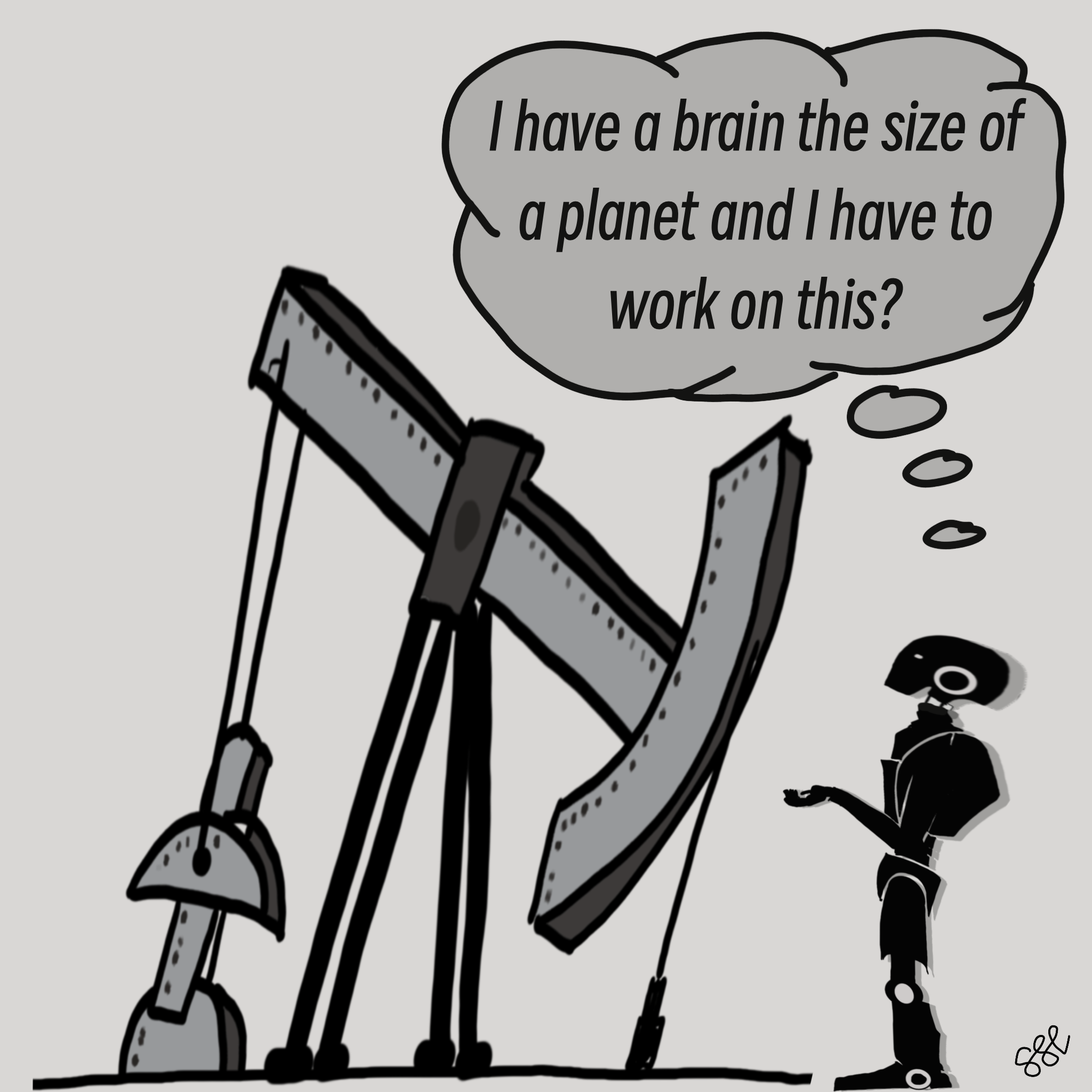 Agentic AI Is All The Rage: Reducing The Cognitive Burden On The Workforce 29.07.2026 12mIndustrial AI is into a new phase. Agentic AI is software that can plan, reason, learn, and act with far greater independence than traditional automation. While the technology is advancing quickly, the oil and gas industry faces unique technical, regulatory, and operational challenges that make full autonomy far less straightforward. In this episode, I share what agentic AI actually is, why it differs from conventional automation, and why the industry's aging assets, fragmented data, safety requirements, cybersecurity concerns, and accountability standards create real barriers to adoption. I a...
-
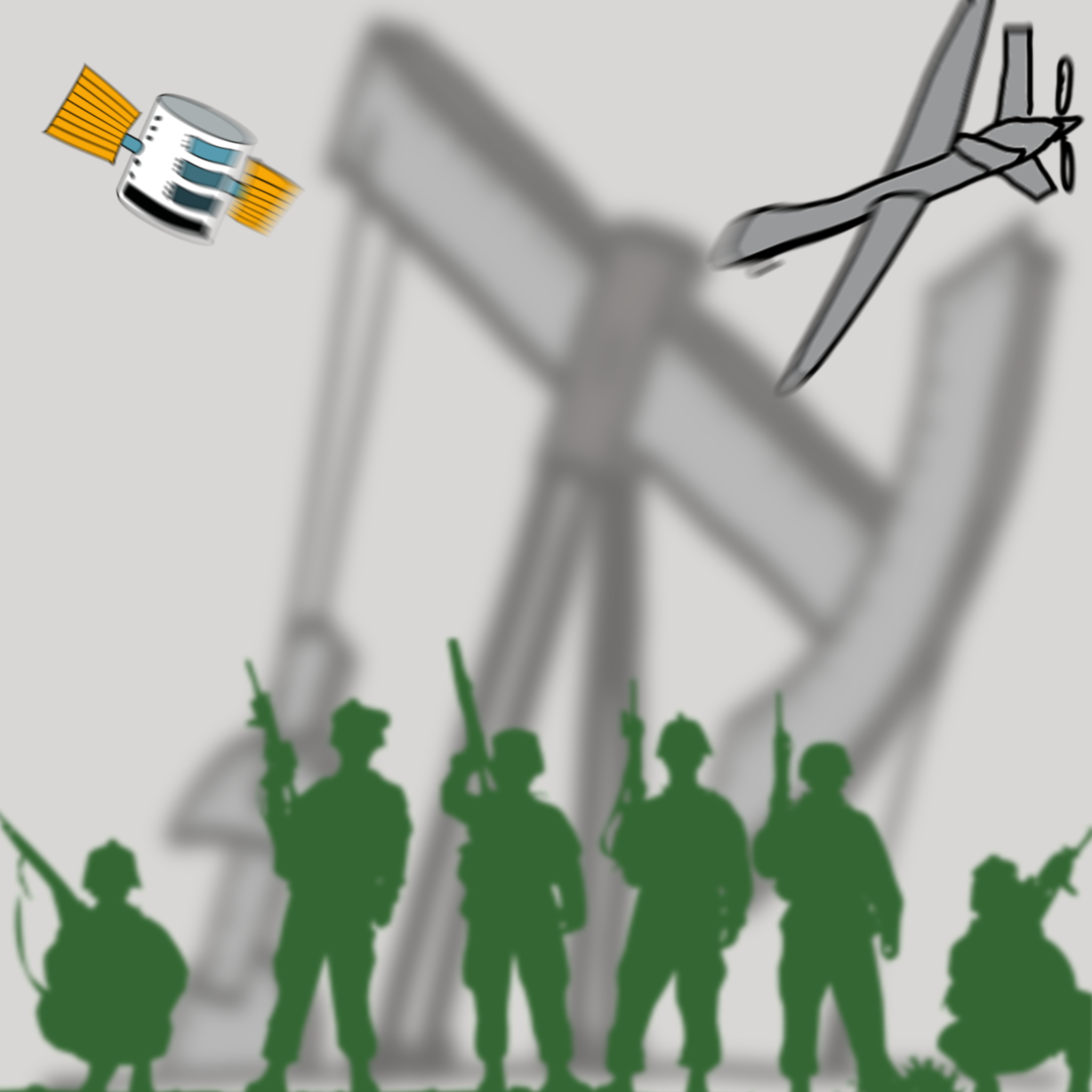 Digital Lessons From The US War on Iran: Drones, Remote Sensing, Speed and More 22.07.2026 12mIt's sad to say but wars create opportunities to apply new technologies in novel ways as the combatants seek to gain advantage over each other. The US-Israeli War on Iran is a case in point. If you've been monitoring the public airwaves about the war, you'll have picked up hints about the role that digital innovations are playing in the crisis. These signals in and of themselves are almost always overshadowed by the big kinetic actions, such as bombings and destruction. Collect them together, project them forward, and they reveal how the world will likely be different when the hostilities abat...
-
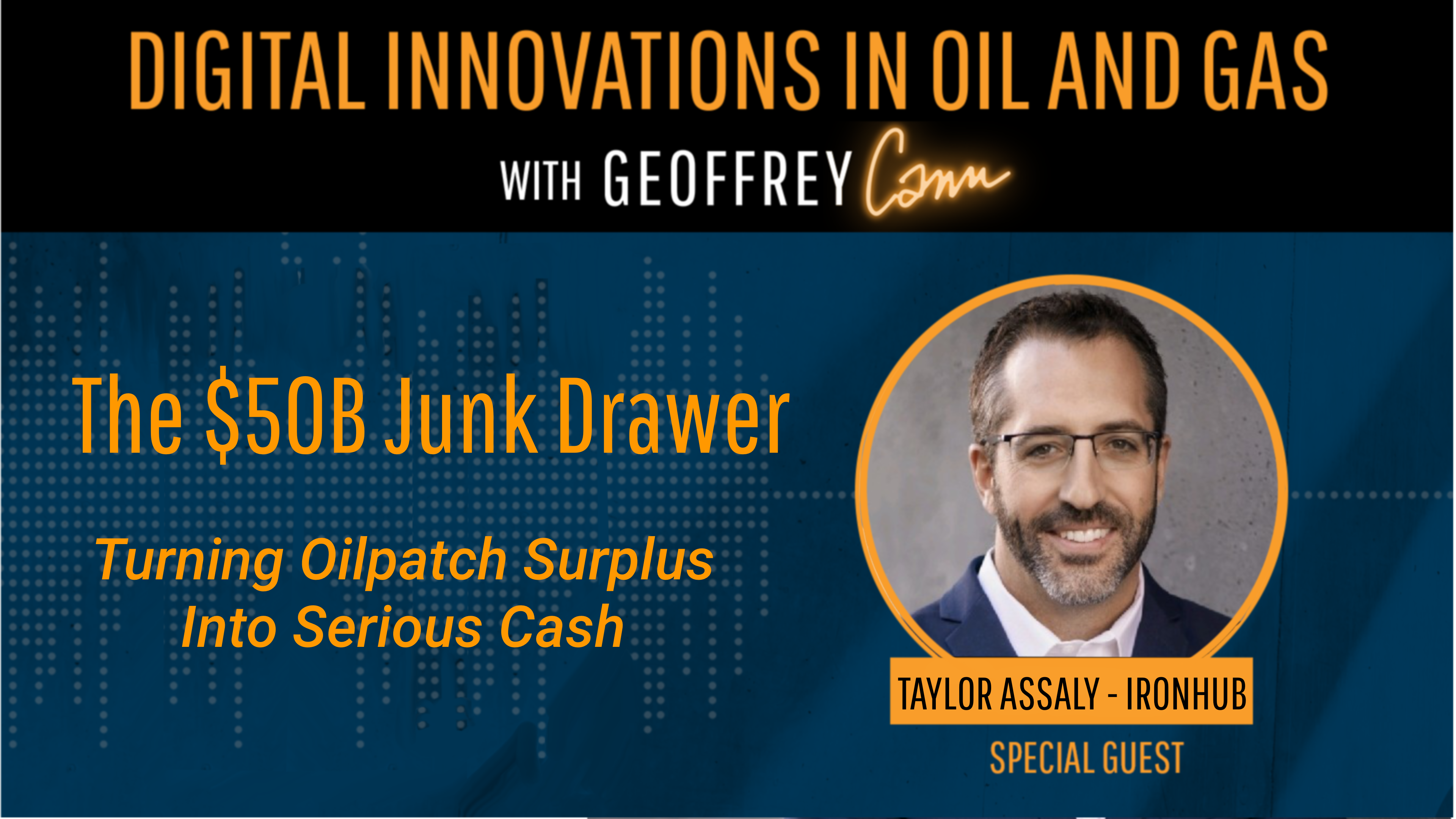 The $50B Junk Drawer: Turning Oilpatch Surplus Into Serious Cash 20.05.2026 30mOil and gas companies are sitting on vast amounts of surplus inventory, often without realizing its true scale or value. Equipment purchased for major projects frequently ends up idle, and stored across warehouses and laydown yards, while tying up capital and incurring ongoing costs. While some of this surplus results from project changes or cancellations, much of it reflects a deeper systemic issue around how industrial assets are tracked and managed. The challenge is greater than just the existence of surplus, and is much more about the inability to act on it. Data quality deteriorates as as...
-
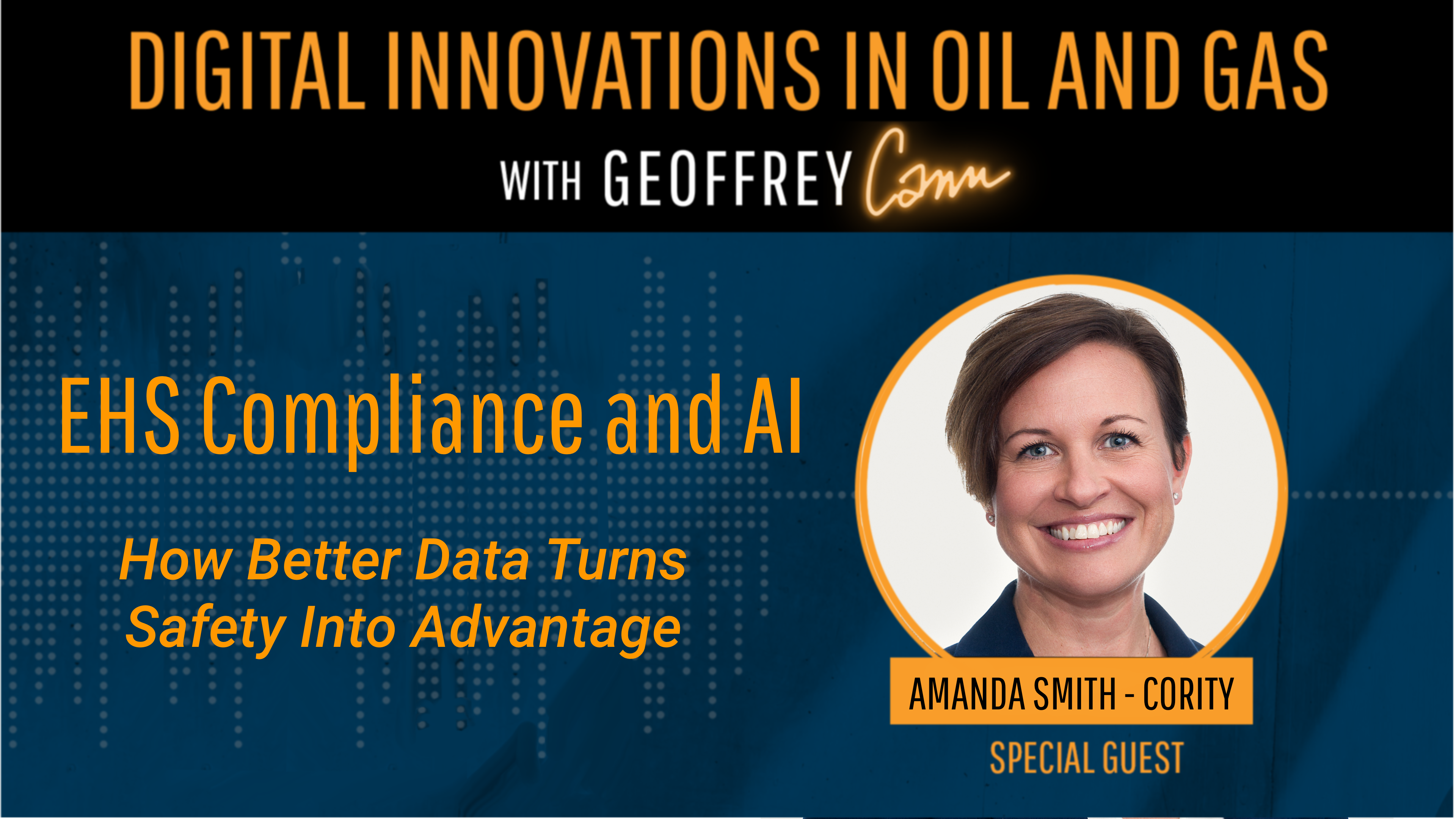 EHS Compliance and AI: How Better Data Turns Safety Into Advantage 13.05.2026 35mEHS and AI are starting to transform safety and reliability in oil and gas. But most organizations are still managing safety as a compliance exercise, not an operational advantage. That approach is under pressure. Operations are more complex, regulations keep shifting, and critical EHS data is scattered across systems, spreadsheets, and sites. When something goes wrong, the impact isn't just regulatory — it shows up as downtime, lost production, and real harm to people and communities. There is a better way to run this. When EHS systems are connected and AI is applied to real operational data,...
-
 Digital Twin Technology Meets AI: Real-Time Optimization in Oil & Gas 06.05.2026 30mDigital twin technology is evolving rapidly, and when combined with artificial intelligence, it is starting to reshape how oil and gas operations are run in real time. For years, companies have relied on simulation tools to design and test assets, but these tools are slow and limited to planning use. In this episode, we explore how new approaches are closing the gap between simulation and real-world operations, enabling faster and more accurate decisions. I speak with Greg Fallon, CEO of Geminus AI, about how combining physics-based models with machine learning creates a new decision layer for...
-
 Fuel Supply Chain Crisis: Why Companies Can't Act Fast Enough 29.04.2026 34mGlobal energy markets are under acute pressure as geopolitical disruption tightens supply and drives volatility. Events like the conflict in the Middle East are no longer regional—they ripple through fuel supply chains everywhere. Companies are not short of data. They are overwhelmed by it. Yet despite this abundance, assembling a clear operational picture still takes hours, leaving decision-makers reacting to a fast-moving market with a slow, fragmented view. The real constraint is not the decision itself—it is the time to assemble data and the even longer delay to execute. Information remain...
-
 Reinventing Turnarounds with AI: Link Planning Directly to Execution 25.04.2026 39mTurnarounds are one of the most critical and expensive activities in oil and gas, yet many are still managed using spreadsheets, manual coordination, and tribal knowledge. Despite years of investment in digital systems, there remains a persistent gap between turnaround planning and execution in the field. This gap creates real consequences. Turnarounds often run into the hundreds of millions of dollars, and delays of even a single day can result in millions in lost production. At the same time, safety compliance is frequently based on self-declared reporting rather than verified outcomes, and...
-
 Tokenizing the Barrel: Rewiring Oil Markets from Molecule to Money 15.04.2026 39mThe global oil market still runs on a horribly fragmented system where physical barrels, paper contracts, and financial settlement operate in parallel but disconnected layers. Transactions are dependent on manual processes, emails, PDFs, and handshake relationships built over decades. For a trillion dollar industry, the core trading infrastructure remains slow, opaque, and largely inaccessible for all but the largest players. This creates real operational and financial constraints. Settlement delays can stretch to 90 days, tying up working capital and exposing companies to liquidity risk. Mark...
-
 How to Reduce Waste in Capital Projects: Using Execution Intelligence To Fix Broken Coordination 25.03.2026 29mLarge-scale capital projects sit at the heart of the oil and gas industry, and across all infrastructure sectors (power, petrochemicals, rail, water, telecoms). These projects require tight coordination of people, equipment, and timelines, often under pressure to deliver quickly and safely. Despite heavy investment in planning tools and scheduling systems, the day-to-day reality remains fragmented, with teams working across disconnected systems and making decisions in isolation. The issue is not a shortage of data, but a lack of connected context. Teams make decisions that work locally, but ca...
-
 The Carbon Credibility Crisis: We Need Trustworthy Carbon Data 18.03.2026 8mOne thing I've learned from producing lots of videos is that you can't really trust with your own eyes what you see presented to you anymore. Green screens, video editing, and AI are so good now, and so inexpensive, that anyone can create compellingvideo content of scenes that didn't happen in real life. As a result, I'm now very skeptical of claims that companies make that they don't offer to back up. Consider the 'organic' chicken at the butcher shop. How do you really know that the chicken has led an exemplary life free from chemicals, pesticides, and growth hormones? Carbon emissions fall...
-
 How to Spot Cyber Attacks on Physical Assets 04.03.2026 32mIndustrial operations have spent decades optimizing for safety, reliability, and uptime. Control systems, sensors, and field equipment were designed to be stable and predictable, often isolated from the outside world. Cybersecurity, by contrast, evolved largely in IT environments, on a separate track, with different tools, assumptions, and incentives. That separation is no longer holding. Operational technology is becoming more connected, more digital, and more automated. Sensors stream data to the cloud, vendors require remote access, and AI-driven tools increasingly influence operational dec...
-
 Data Quality Is Your Bottleneck: Fix The Foundation Before Scaling AI 25.02.2026 35mOil and gas companies generate enormous volumes of operational, geological, and production data. Despite this abundance, much of that data remains fragmented, inconsistent, and difficult to trust. Teams often spend a significant portion of their time preparing datasets rather than analyzing them. The result is delayed decision-making, inflated costs, and reduced operational agility. The core complication lies in data quality, data governance, and data readiness. Duplicate records, null values, drift, and structural inconsistencies make it difficult to move quickly from raw data to actionable i...
Similar podcasts


Popular in
The podcast also appears in the podcast charts of these countries.
