
Pioneers of Psychology and Psychiatry
Selenius Media
0
Pioneers of Psychology and Psychiatry is a narrative series that explores the origins of psychology and psychiatry as scientific disciplines. It delves into the lives and ideas of key figures like Wilhelm Wundt, Sigmund Freud, Ivan Pavlov, and Carl Jung, tracing how philosophy, medicine, and science converged to shape modern understanding of the mind. Each episode combines historical context with cinematic storytelling to connect early theories to contemporary neuroscience and mental health practices.
Episodes
-
 Aaron Beck – Thoughts That Heal 22.11.2025 31mOn a gray morning in the mid-1960s, a middle-aged man sits on the edge of a hospital cot in a psychiatric research unit at the University of Pennsylvania. His shoulders are slumped, his bathrobe hangs loosely from his frame, and his eyes are fixed on the floor as if reading something written there that no one else can see. The psychiatrist across from him, a quiet, neatly dressed man with rimless glasses, asks a simple question: “What went through your mind just then?” The patient hesitates. He is used to doctors asking about his childhood, about his parents, about long-buried memories. No one...
-
 Noam Chomsky – The Cognitive Revolution 19.11.2025 32mIn a small office at the Massachusetts Institute of Technology in the late 1950s, chalk dust hangs in the air like a thin fog. The blackboard that dominates one wall is layered with symbols and arrows, phrases crossed out and rewritten in a neat but relentless hand. A young professor, slight and dark-haired, stands back from the board and squints for a moment, taking in the forest of diagrams he has just drawn.Niklas S Osterman BHPRN, BSN, MA Song: Nowhere else to be. Apple Music
-
 Viktor Frankl – Meaning in the Midst of Suffering 15.11.2025 32mVienna, late autumn 1945. In a city still smelling faintly of smoke and rubble, a thin man in a dark suit stands at the front of a small lecture hall. The windows behind him are patched with cardboard; outside, tramlines rattle past buildings with their insides exposed. Inside the room, students and war-weary adults sit shoulder to shoulder on mismatched chairs, coats still on, breath faint in the cold air. They have come to hear a psychiatrist who has just returned from the camps. His name is Viktor Emil Frankl. His cheeks are hollow, his hair close-cropped, his eyes too old for his forty yea...
-
 Rollo May – Anxiety, Freedom, and the Human Condition 13.11.2025 23mAnxiety, Freedom, and the Work of Being HumanNew York City, late 1960s. On an upper floor of a modest Manhattan office building, a man in his late fifties sits across from a young advertising executive who cannot stop shaking his leg. Traffic murmurs far below; steam hisses in the radiators; the office is quiet enough that the ticking of a clock punctuates every silence. The patient has just finished describing a familiar, hollow ritual: wake before dawn, skim headlines, catch the train, sell images of products he doesn’t believe in, drink too much in the evening, lie awake wondering why he is...
-
 Carl Rogers – The Listening Revolution 09.11.2025 28mChicago, 1953. A cramped second-floor counseling room on Drexel Avenue, half a block from the University of Chicago campus, has become a sanctuary of quiet amid the bustling city. The afternoon sun filters through a narrow window, illuminating motes of dust that hang in the still air. Two people sit facing each other in plain wooden chairs – no couch, no desk between them, nothing to distract from the human encounter. On one chair, a young man in his twenties leans forward, elbows on his knees, head bowed. He struggles to find words, his voice low and taut with shame. He’s a war veteran turned...
-
 Abraham Maslow 06.11.2025 28mNew York City, late 1941. Afternoon light slants across a nearly empty avenue as a small patriotic parade marches by. A handful of Boy Scouts in ill-fitting uniforms carry a faded American flag; behind them a few veterans step in time. A lone flute plays a tune, slightly off-key, its thin notes echoing between brick apartment buildings. On the sidewalk stands a man in a rumpled suit, motionless among the sparse onlookers. Abraham Maslow has stopped on his drive home, compelled by curiosity or perhaps by something deeper. He can hear the distant sound of a radio broadcasting news of troop movem...
-
 B.F Skinner 06.11.2025 26mMinneapolis, 1943. In the dim light of a basement laboratory, eight wooden boxes line the wall, each with a single restless pigeon inside. In one box, a white-feathered pigeon turns a slow circle to the left, again and again, its head bobbing in a curious dance. In another, a bird keeps pecking at the empty air, as if an invisible seed floats just out of reach. The room is hushed except for the whir of a fan and the occasional metallic click of a feeder mechanism. Every fifteen seconds, click—a hopper swings out in one of the boxes, delivering a few grains of food. The pigeon that had been tur...
-
 Erik Erikson – The Eight Ages of the Self 06.11.2025 24mIdentity, crisis, and the lifelong journey of becoming.A fair-haired boy of about ten stands outside his school in Karlsruhe, Germany, clutching his satchel and fighting back tears. It is the early 1910s, and young Erik Homburger – not yet Erik Erikson – has just endured another confusing day of taunts. At his Jewish temple school, his classmates sneered that he looked too Aryan, calling him goy, an outsider, because of his blue eyes and blond hair. But in the neighborhood streets, other children chased and mocked him with anti-Semitic slurs, seeing only that he was being raised in a Jewish ho...
-
 Jean Piaget – The Logic of Childhood 04.11.2025 21mA teenage boy sits at his desk in Neuchâtel, Switzerland, brow furrowed in concentration as he reads a letter that has just arrived. The year is 1911, and Jean Piaget, only fifteen years old, has received astonishing news: his former nanny has confessed that the dramatic story he’d been told as a child – how she fought off a kidnapper who tried to snatch baby Jean from his carriage – was entirely made up. In the letter, the ex-nurse apologizes for having lied years ago to cover her own neglect. Jean sets the letter down, heart pounding. He is bewildered, even embarrassed, to realize that he po...
-
 Karen Horney – Against Freud 01.11.2025 31mCulture, gender, and the feminist revolt inside psychoanalysis.Karen Horney stood at the podium with a steady gaze, the low hum of anticipation filling the lecture hall. It was 1941 in New York City, and she was about to address a crowd of psychoanalysts and students on why she had broken away from orthodox Freudianism. This was not just an academic lecture – it was a declaration of independence. As she surveyed the expectant faces, Karen could not help but recall the winding path that had brought her here, from a rebellious girlhood in Germany to this pivotal moment of asserting her own visio...
-
 Alfred Adler – The Striving for Superiority 21.10.2025 18mEpisode Title: Alfred Adler – The Striving for SuperiorityPodcast: Pioneers of Psychology and Psychiatry Season 1: The Birth of the Mind (1860–1930) Produced by Selenius Media & The Artificial Laboratory.In this episode, we turn to Alfred Adler, the Viennese doctor who believed that what truly drives human behavior is not sex, fear, or fate — but the will to overcome. A sickly child who once overheard a doctor say he would not survive, Adler grew up determined to prove him wrong. That early struggle shaped his lifelong conviction that humans are defined by their striving — their urge to rise a...
-
 Carl Jung – The Shadow and the Self 18.10.2025 37mIn this episode, we enter the world of Carl Gustav Jung, the Swiss psychiatrist who broke away from Freud to pursue a deeper vision of the mind — one that reached beyond the personal into the collective. For Jung, the psyche wasn’t just a battlefield of repressed desires; it was an ancient landscape filled with myths, archetypes, and symbols that spoke to all of humanity.He called it the collective unconscious — the vast, inherited memory of our species. From this realm emerged the archetypes: the Hero, the Shadow, the Anima, the Wise Old Man — timeless patterns that shape our dreams, our stor...
-
 Sigmund Freud – The Unconscious Speaks 15.10.2025 30mIn this episode, we descend into the hidden chambers of the human psyche with Sigmund Freud, the founder of psychoanalysis — a man who dared to suggest that most of what drives us lies beyond our awareness. In Freud’s Vienna, the language of hysteria, dreams, and desire became the language of science. He believed that beneath every action, slip of the tongue, and dream symbol, the unconscious was speaking.Freud’s theories of repression, defense, and sexuality scandalized his contemporaries and reshaped how we understand identity and motivation. Yet beneath his controversies was a revolutionary...
-
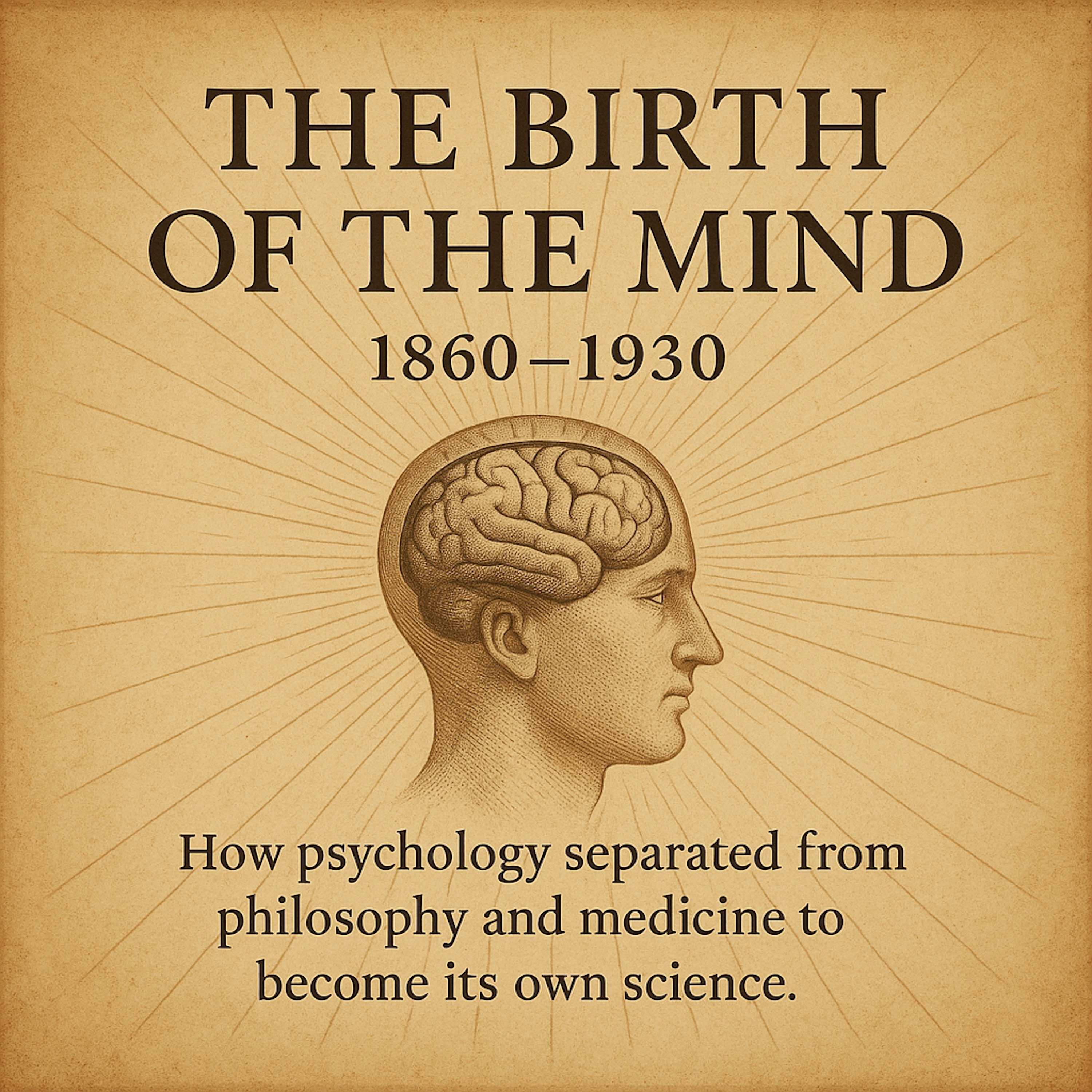 John B. Watson – The Rise of Behaviorism 13.10.2025 28mBy the early 20th century, psychology was still searching for its identity. Then came John B. Watson, a man who declared war on introspection. “Psychology,” he said, “must discard all reference to consciousness.” With that, he founded behaviorism — the belief that the only thing worth studying was what could be seen, measured, and controlled.Watson’s experiments were bold and often controversial. He conditioned fear in a child known as Little Albert, showing how emotions could be trained like reflexes. He viewed humans not as mysteries of the soul, but as organisms shaped by their environment...
-
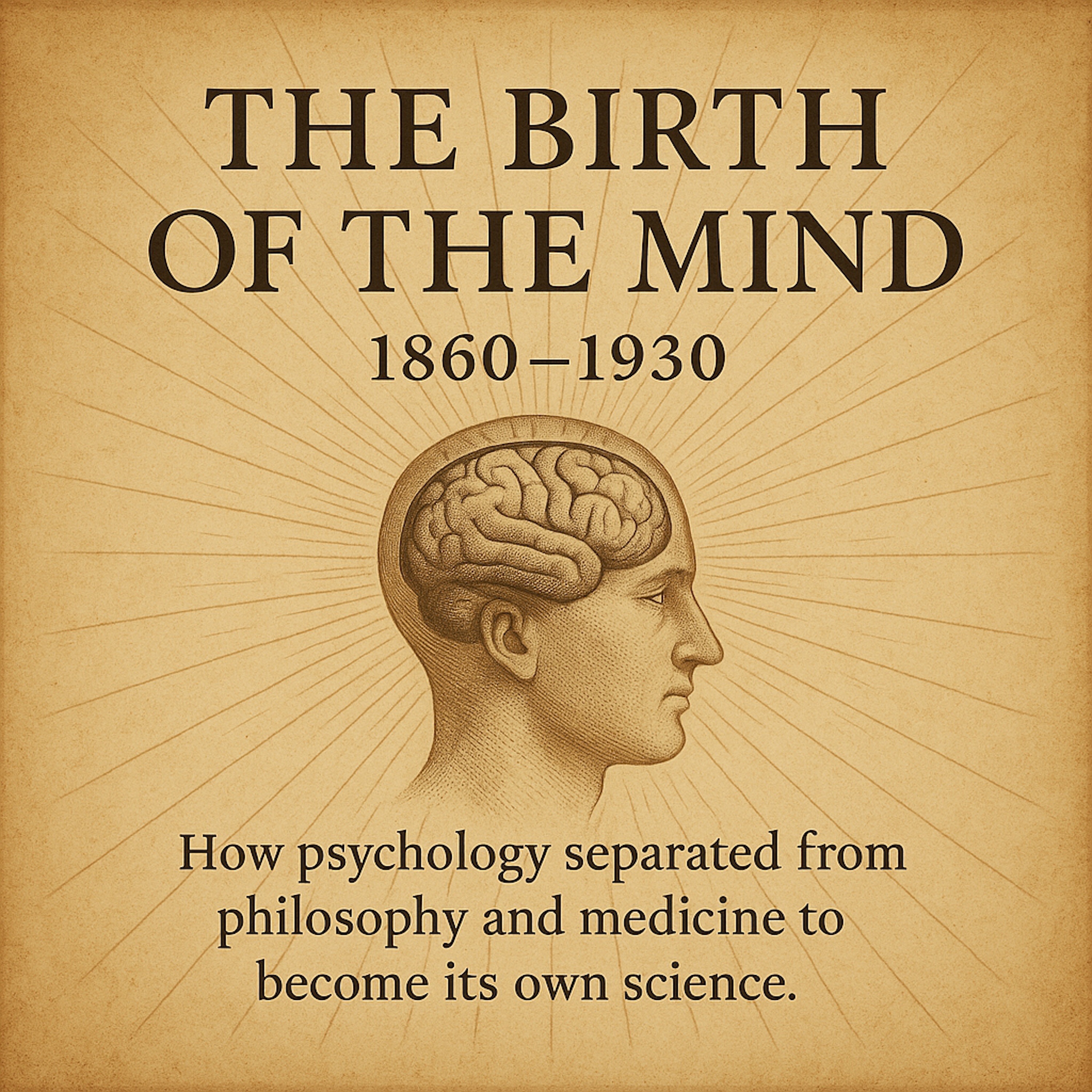 Ivan Pavlov – The Dog, the Bell, and the Reflex 11.10.2025 29mFrom saliva to behaviorism — the roots of conditioning.Pavlov did not come to psychology by intention. He came from the hard school of physiology, a discipline that prized measurable processes and unromantic claims. He trained hands to do delicate surgery on small nerves and glands, and he built apparatus that could give the body a chance to tell the truth without theatrics. Digestion, to him, was a symphony of secretions and muscular waves; he wrote a great treatise on it and won the highest prize his profession could bestow. In 1904 the Nobel committee called his name for discoveries about t...
-
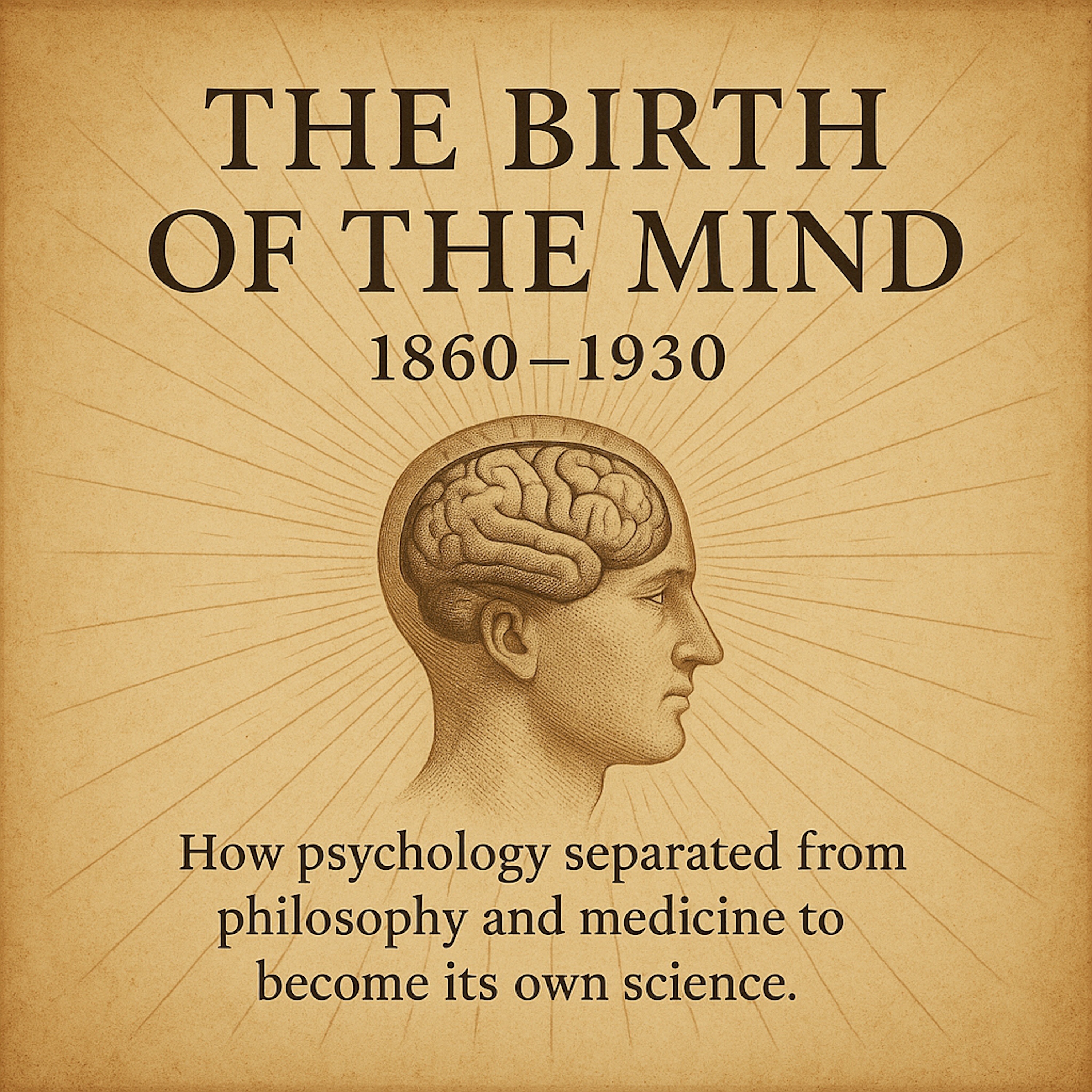 William James – The Stream of Thought 11.10.2025 29mIn this episode, we meet the man who made psychology poetic — William James, the philosopher-psychologist who refused to believe the mind could be reduced to mere measurement. For James, consciousness wasn’t a series of isolated sensations, as Wundt claimed, but a stream — a flowing, ever-changing current that could never be captured in static experiments.James’s Principles of Psychology redefined the field. He explored habit, attention, emotion, and free will, showing that psychology could encompass both science and soul. His work bridged philosophy and physiology, and his classroom at Harvar...
-
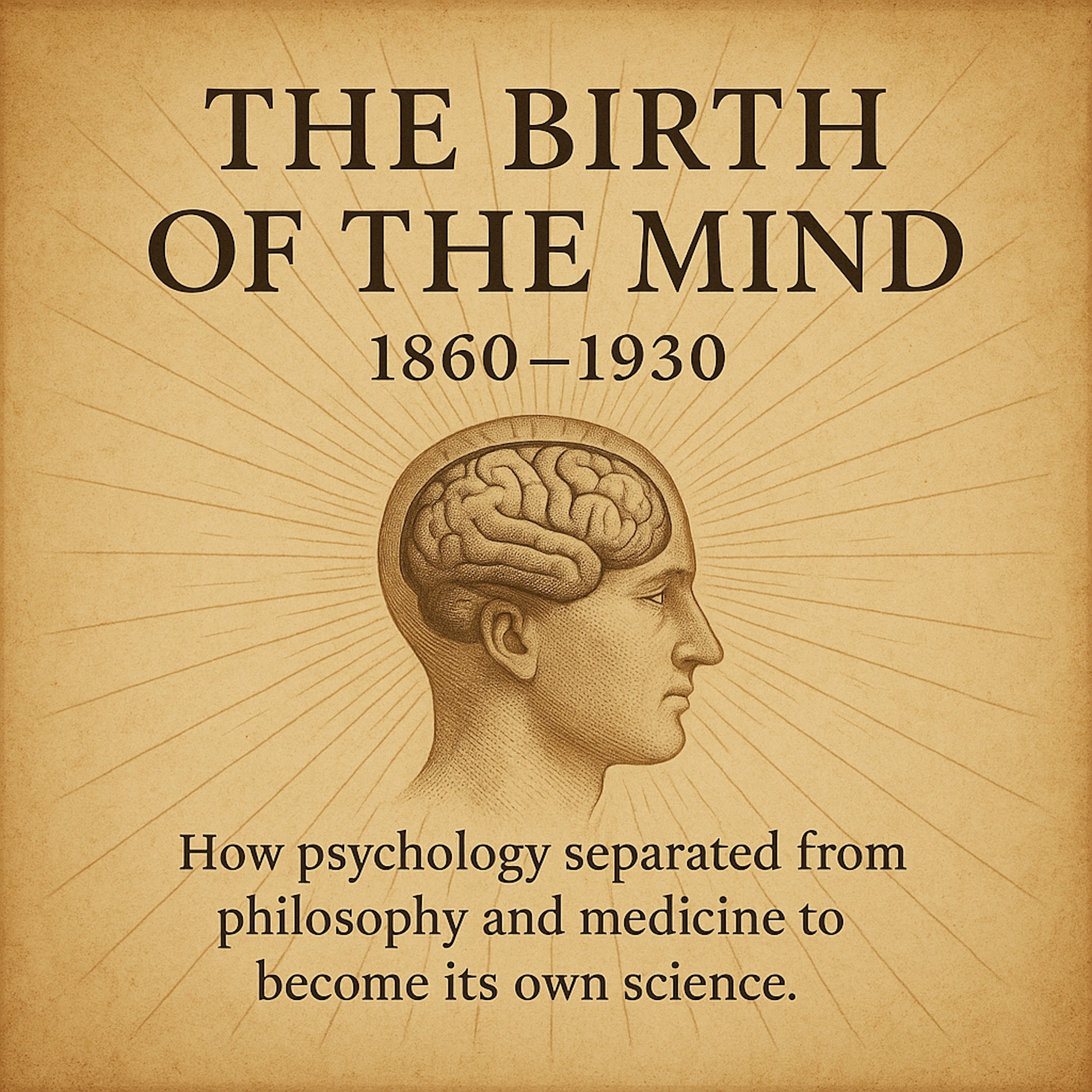 Wilhelm Wundt – The Laboratory of Consciousness 11.10.2025 28mIn this opening episode, we return to the late 19th century — to Leipzig, Germany — where a quiet revolution was unfolding. A man named Wilhelm Wundt stood at the threshold of a new science, asking a question that philosophers had debated for centuries but never dared to measure: what is the mind, and can it be studied?Wundt built the first laboratory devoted to experimental psychology, a place where thoughts, sensations, and reactions were recorded with the same precision as chemical reactions or physical forces. Inside his lab, students measured their response times to sounds and lights, see...
Similar podcasts


Popular in
The podcast also appears in the podcast charts of these countries.

