
Circularity.fm
Patrick Hypscher
0
Circularity.fm is a podcast focused on understanding, building, and managing circular business models. Most episodes showcase a specific organization operating in the circular economy, whether a startup, established SME, or corporate business unit. The interviews cover both founding and funding circular ventures as well as transforming linear businesses into circular ones across the globe. It highlights real-world experiences from Europe, North America, South America, Asia, Africa, and Australia.
Episodes
-
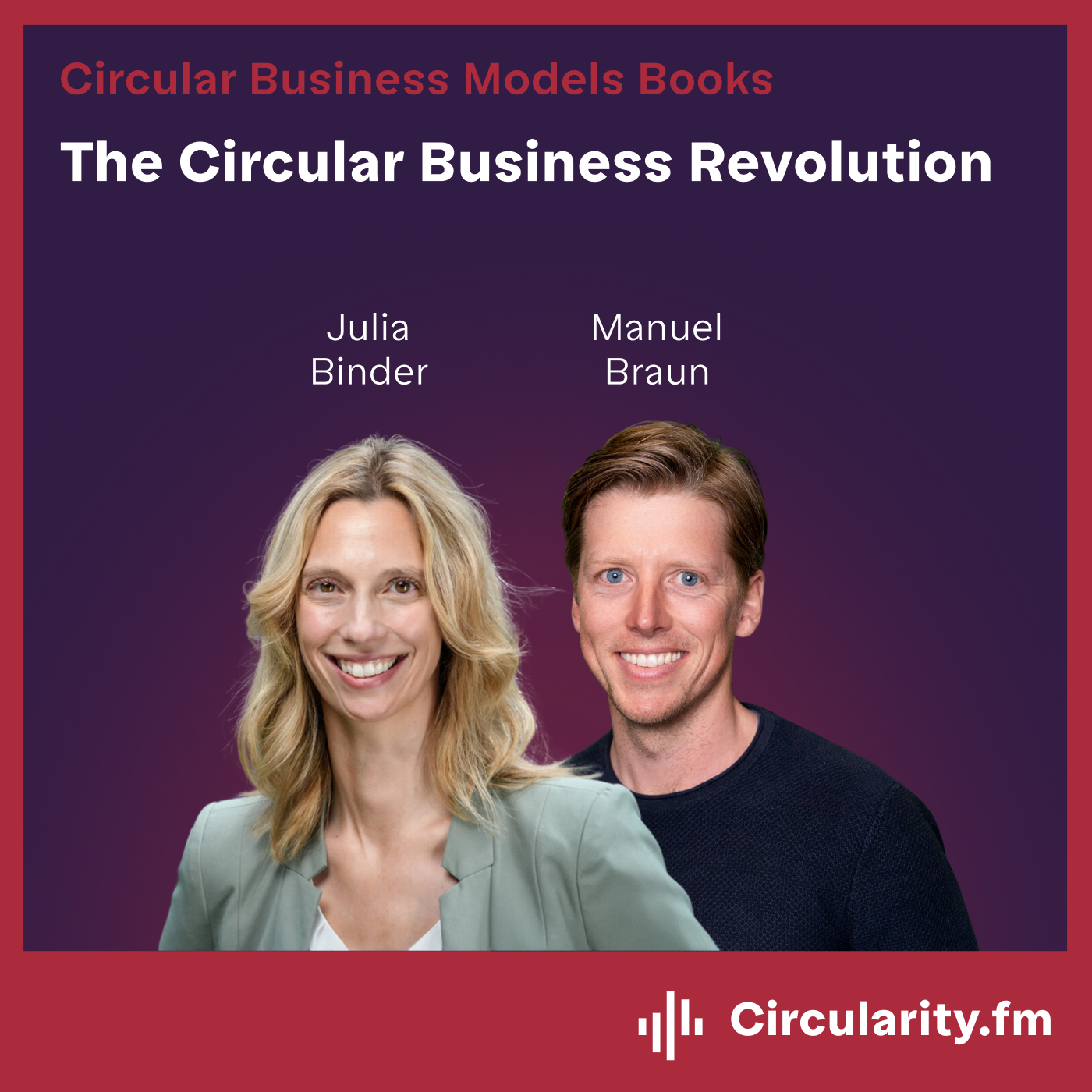 The Circular Business Revolution 17.11.2026 39mA circular business model can make sense on paper and still fail inside the organization. Julia Binder, Professor of Business Transformation at IMD, and Manuel Braun, circular economy advisor, discuss their book The Circular Business Revolution and how companies can turn circular ambitions into business models they can implement. What you'll hear in this episode: • From ambition to action: A four-step approach to identifying circular business opportunities and preparing for implementation. • Beyond reuse, repair and recycling: Why circular strategies don't automatically create business value a...
-
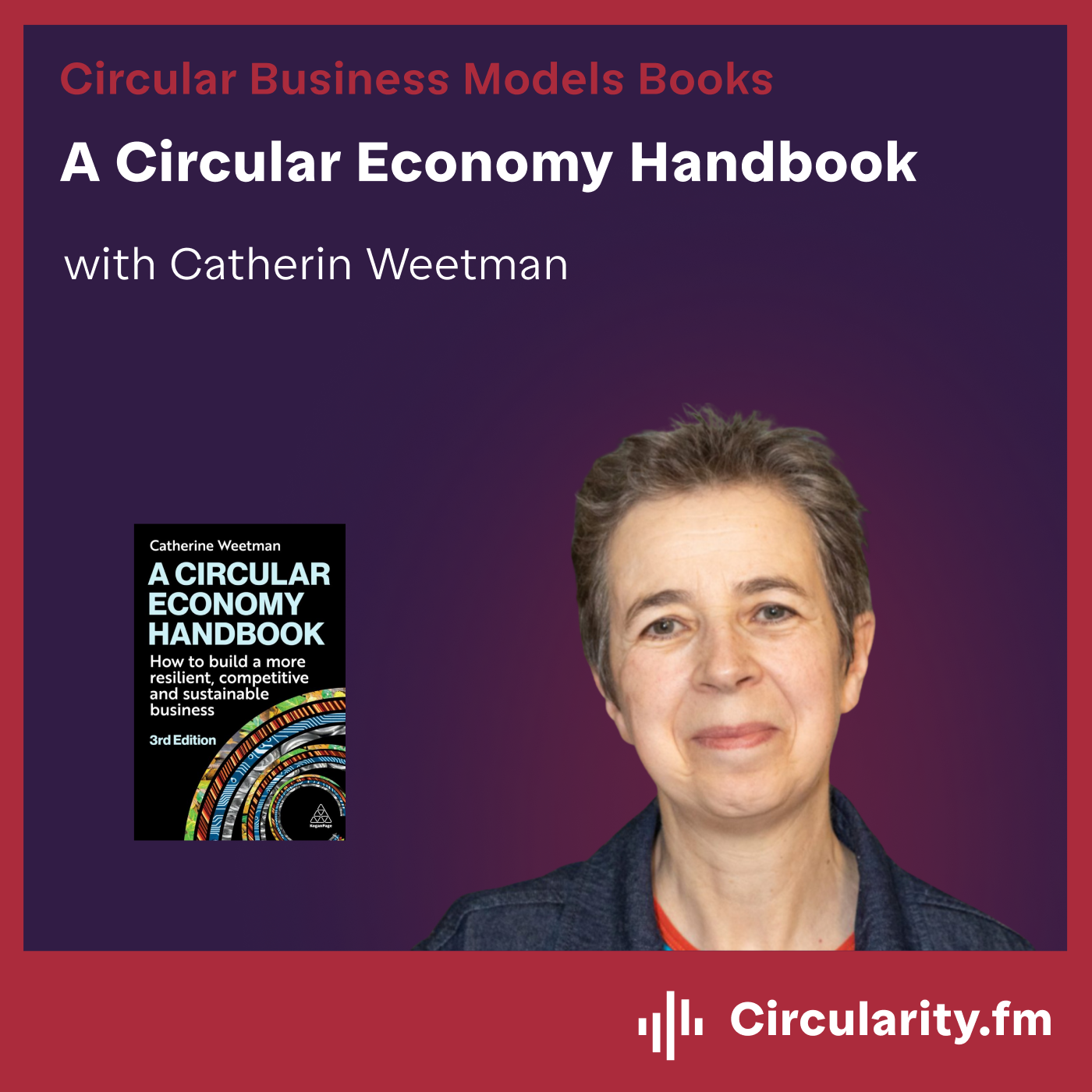 A Circular Economy Handbook 10.11.2026 41mNot every product can be recovered, reused or recycled. So where can companies find opportunities for circularity? Catherine Weetman, author of A Circular Economy Handbook and host of the Circular Economy Podcast, discusses how businesses can create and retain more value from their resources, even in challenging markets. What you'll hear in this episode: • Endurance, intensity and recovery: Three strategies for getting more value from products and materials, including Return on Manufactured Assets (ROMA). • What customers really value: The overlooked costs of constant product innovation, from...
-
 Building Demand for Remanufactured IT with Circularity First 27.10.2026 38mIf remanufactured IT can offer the same warranties and support as new equipment at a lower price, why businesses still prefer to buy new? Anthony Levy, founder of Circularity First and CEO of Cistor, built a business selling remanufactured IT equipment through Cisco Refresh. He shares how he developed customer demand and why adoption remains limited despite the commercial benefits. What you'll hear in this episode: • The business case for remanufactured IT: Beyond lower purchase prices, companies can extend the life of existing platforms and improve supply chain resilience. • Overcoming custom...
-
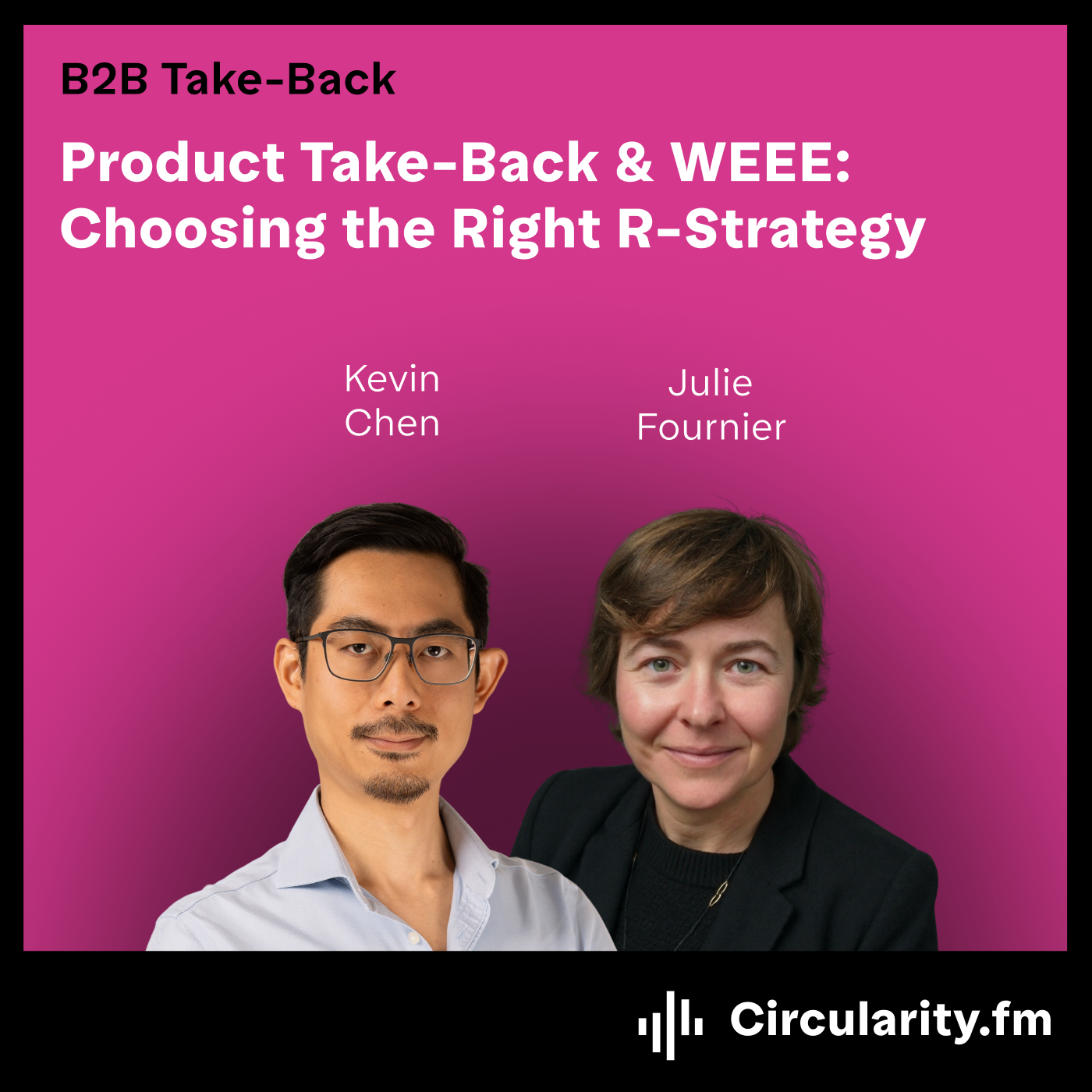 Product Take-Back & WEEE: Choosing the Right R-Strategy 20.10.2026 37mWhich products are worth refurbishing, and how can manufacturers get them back in usable condition? Julie Fournier, responsible for circular economy at Legrand, and Kevin Chen, Director of Consulting at Circul'R, discuss how to select the right circular strategies for different products and organize take-back systems across a portfolio of more than 300,000 product references. What you'll hear in this episode: • How to identify products suitable for refurbishment, considering customer demand, product value and design for disassembly • How to balance collection volumes and product quality by com...
-
 Permanent Magnets: Simplifying Reverse Logistics with Wilo 13.10.2026 48mWilo's take-back system works without contracts, deposits or payments. Instead, the company focuses on making returns as simple as possible for installers. And that works. Thomas Fetting, explains how the company collects used pumps and brings recovered components and materials back into production. What you'll hear in this episode: • How to motivate participation in take-back systems without financial incentives • How manufacturers can recover and reintegrate components and materials into production • What determines the economic viability and scalability of reverse logistics This is the thir...
-
 Deposit Systems: Incentivizing Take-Back at Knorr-Bremse 06.10.2026 38mRemanufacturing depends on getting used products back. Can a deposit system give customers an incentive to return them? Thomas Meyer, responsible for remanufacturing, repair and reuse activities within Knorr-Bremse TruckServices, explains how Knorr-Bremse uses a core deposit in the independent aftermarket to bring parts back for remanufacturing. What you'll hear in this episode: • Why the deposit value is linked to the market value of the core, and how returning an equivalent product keeps parts flowing back • What happens to returned cores, from assessing and disassembling them to deciding wh...
-
 Take-Back Obligation: How DERIX Makes It Work 29.09.2026 32mFor DERIX, the take-back obligation is both a commitment to circularity and an economic advantage. Antonia Görg, Project and Sustainability Manager at DERIX, and Markus Steppler, Managing Director at DERIX, explain how the timber construction company has built a take-back obligation into its contracts. What you'll hear in this episode: • How DERIX's take-back obligation works, from the contract to the return of timber elements • How returned timber is assessed, priced and either reused or remanufactured • Why DERIX sees take-back as a future source of timber and plans to use material from othe...
-
 Scaling Circular Construction with Digitalization 22.09.2026 33mHow can digitalization help scale circular construction? In this episode of circularity.fm, Kilian Eckle, founder of RoofUz, and Timo Walraven, researcher at the University of Applied Sciences Utrecht, discuss how digital twins, building data, standardization, and modular construction can make circular construction more economically feasible. What you’ll hear: • How digital twins can be used to identify and compare buildings with potential for rooftop extensions • Why standardization, modular construction, and bundling similar buildings can improve the financial feasibility of projects • How b...
-
 Circular Construction: Environmental, Economic and Social Aspects 15.09.2026 30mHow can rooftop extensions create housing that is ecologically regenerative, socially valuable, and profitable? In this episode of circularity.fm, Dirk Hengst, founder of Denk.mal.Bau., and Lewin Fricke from TRIQBRIQ talk about their rooftop extension project in Dresden. The conversation covers: • The project's economic, social, and environmental dimensions. • Material choices designed for a healthy, low-carbon home. • How construction can support rooftop extensions, renovation, adaptive reuse, and dismantling for reuse. You’ll gain insight into the additional benefits of this approach to cons...
-
 The Business Case for Rooftop Extension 08.09.2026 32mWhat is the business case for rooftop extensions? Thijs Müller, Co-founder of Creative City Solutions, and Didier Mignery, Founder of UpFactor, explain how adding housing on top of existing buildings can address several challenges at once: housing shortages, energy renovation and urban land use. This episode covers: • When rooftop extensions make economic sense, and the technical, regulatory and financial complexities involved • How revenue from additional homes can help finance energy renovations and upgrades to existing buildings • The advantages of modular timber construction and designing...
-
 Designing Germany's Circular Textile EPR System 24.08.2026 40mWhat are the system-wide recommendations for Germany’s Textile EPR scheme to influence companies' design and portfolio decisions? Carina Hofmann-Wellenhof talks about CIRCULAR REPUBLIC’s System Design Report for Germany’s textile EPR, developed with 20 organisations and more than 50 stakeholders across the textile value chain. She explains the main recommendations for designing the system, from the structure of PROs to eco-modulation and recycling incentives. What you'll hear in this episode: -Why Germany should combine competing PROs with centralised functions -Recycling quotas and content ta...
-
 Unpacking the EPR Legislation for Textiles 18.08.2026 44mWill the EPR regulation create incentives for a more circular textile industry? Alexander Sustal, Lawyer at Redeker Sellner Dahs, explains how Extended Producer Responsibility (EPR) will change the economics of textile collection, sorting and recycling in Germany. The episode covers the status quo, the actors and financing flows an EPR scheme introduces, and the wider legal questions an EPR scheme raises. What you'll hear in this episode: • How the current market based system for used textiles is financed, why it is under pressure, and what an EPR scheme changes about who carries responsibilit...
-
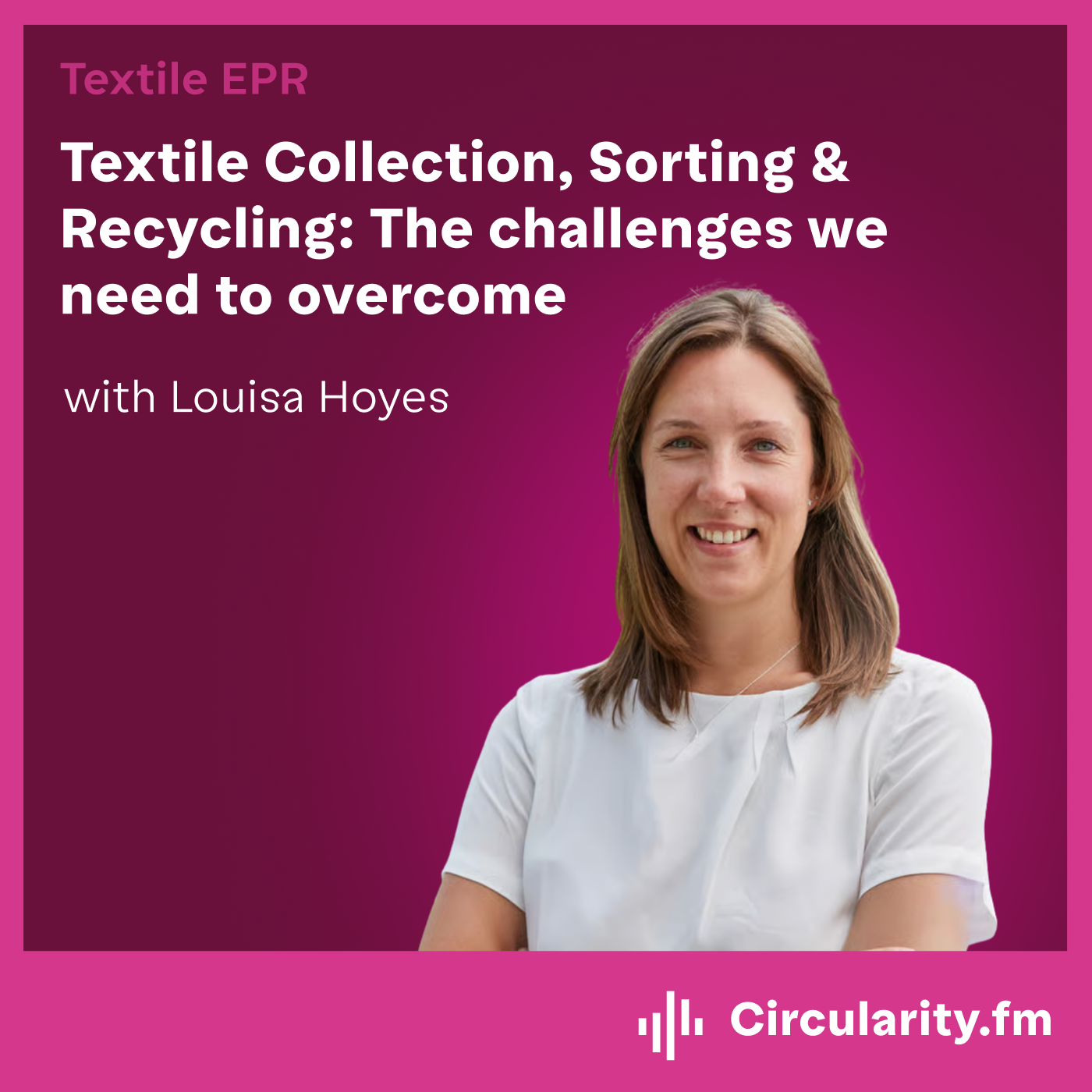 Textile Collection, Sorting & Recycling: The challenges we need to overcome 11.08.2026 30mHow can Europe build a commercially viable circular textile system? In this episode, Louisa Hoyes, who has worked on building up textile circularity for the past 7 years, explains why building a circular textile system requires much more than advances in recycling technology. What you'll hear in this episode: • Why collection, sorting and recycling should be designed as one connected value chain rather than separate industries. • The commercial challenges of scaling textile circularity, including infrastructure investment, feedstock quality, demand for recycled fibres, and business model innov...
-
 How Textile EPR Will Influence Brands’ Business Model 04.08.2026 18mFrom a brand's point of view, how should extended producer responsibility (EPR) be designed so that circularity pays off? Philipp Bonaventura from Schöffel explains where circular design already works, why the economics hold it back, and what the system needs to change. What you'll hear in this episode: • Why the barrier is economic, not technical: low collection volumes, weak sorting, and repair that doesn't cover its cost • How designing for repair differs from designing for recycling, and why material choice decides what can be recovered • Which fees reward durable, repairable products, and...
-
 Textile EPR in Germany: What Brands Need to Know 28.07.2026 20mHow can extended producer responsibility (EPR) pay for the infrastructure that circular textiles need? This is the first episode of the Textile EPR series. We talk to Lisa Oelze from Messe München about why textiles has become the most unsettled waste stream in Europe, and Jelica Ramirez from GRS PRO Textil about how extended producer responsibility will work in Germany. What you'll hear in this episode: • What the EU Waste Framework Directive actually changes for textiles • How a producer responsibility organisation works, and why Germany's competitive model differs from France • What's still...
-
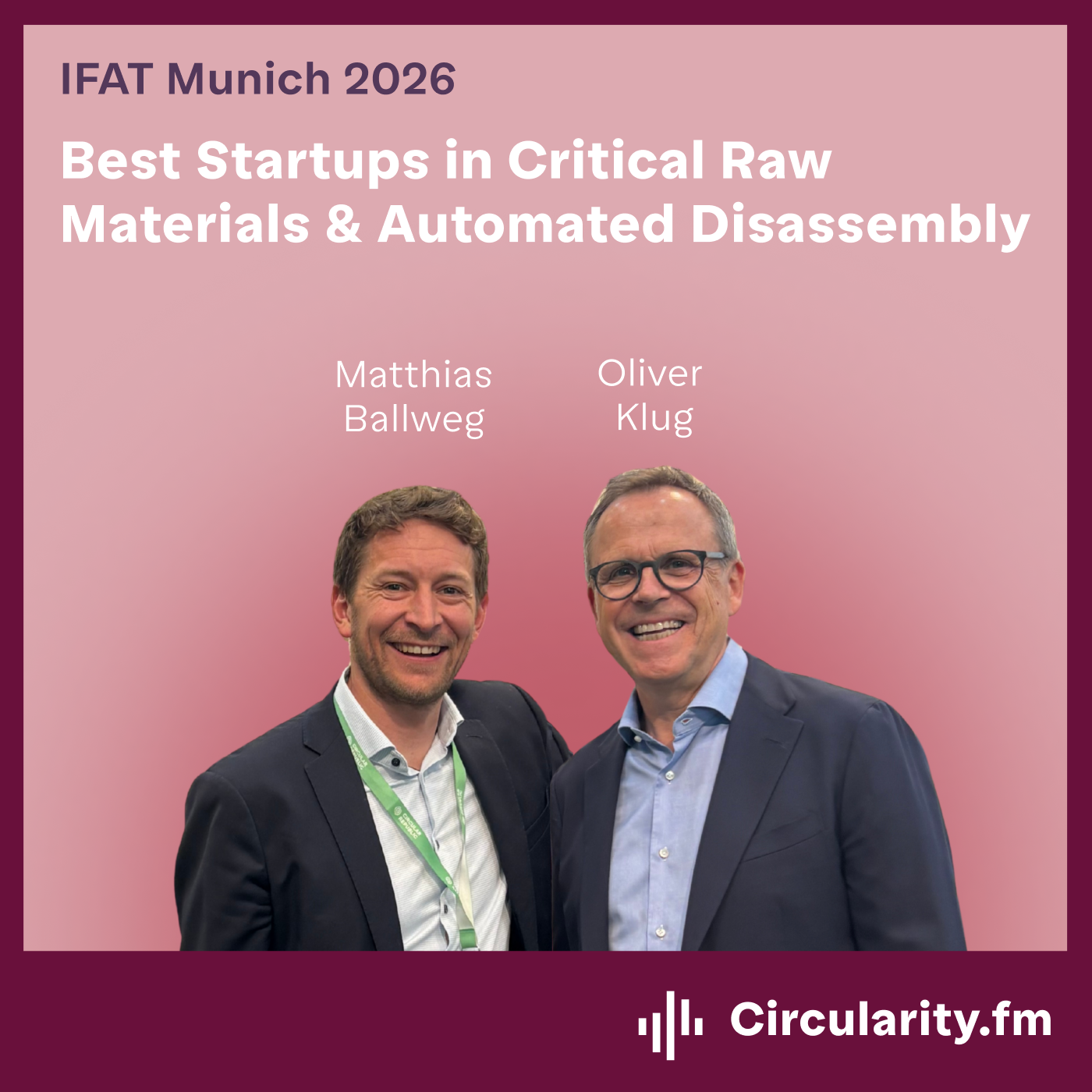 Best Startups in Critical Raw Materials & Automated Disassembly 07.07.2026 26mWhich startups are solving Europe’s two key circular economy challenges: automated disassembly and critical raw materials recovery? This episode covers the Circular Technology Award, launched by Circular Republic and Knorr-Bremse, to back startups working in both fields. Matthias Ballweg, co-founder of Circular Republic, and Oliver Klug, Chief Strategy and Transformation Officer at Knorr-Bremse, explain why they created the award, what they learned from the applicants, and why they paired prize money with proof-of-concept partnerships instead of funding alone. What you’ll hear in this episode:...
-
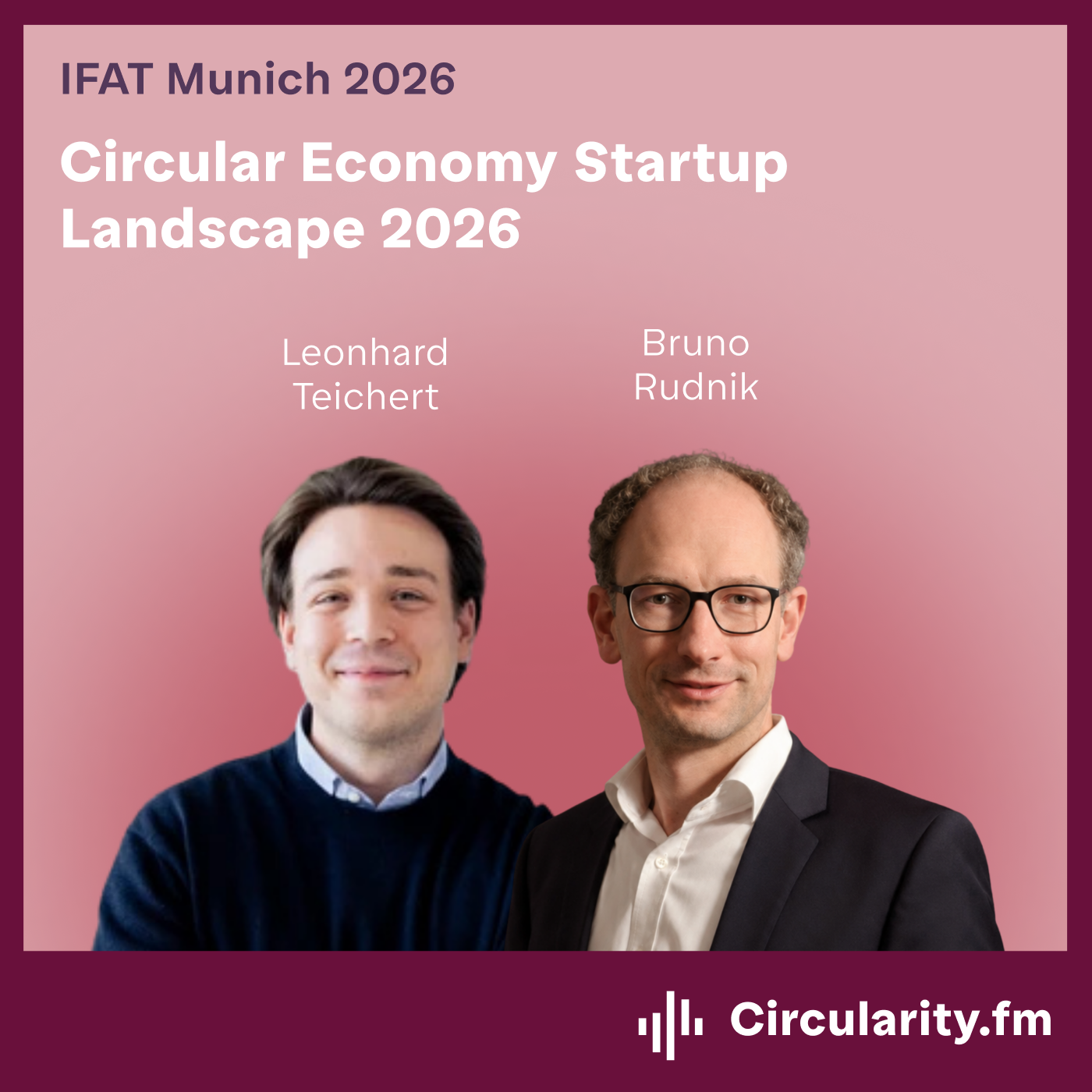 Circular Economy Startup Landscape 2026 30.06.2026 22mWhich areas of circular economy are attracting the most startup activity in Europe, and which ones are being left behind? Leonhard Teichert, Program Lead at Circular Republic, presents the findings of the Circular Economy Startup Landscape 2026. Bruno Rudnik, Managing Partner at SEF Ventures and host of the startup area at IFAT, adds the investor's view on financing and scaling hardware startups in this space. What you'll hear in this episode: • Where European circular startup activity is concentrated and where the map is almost empty: the sectors that are overcrowded and the ones nobody is bu...
-
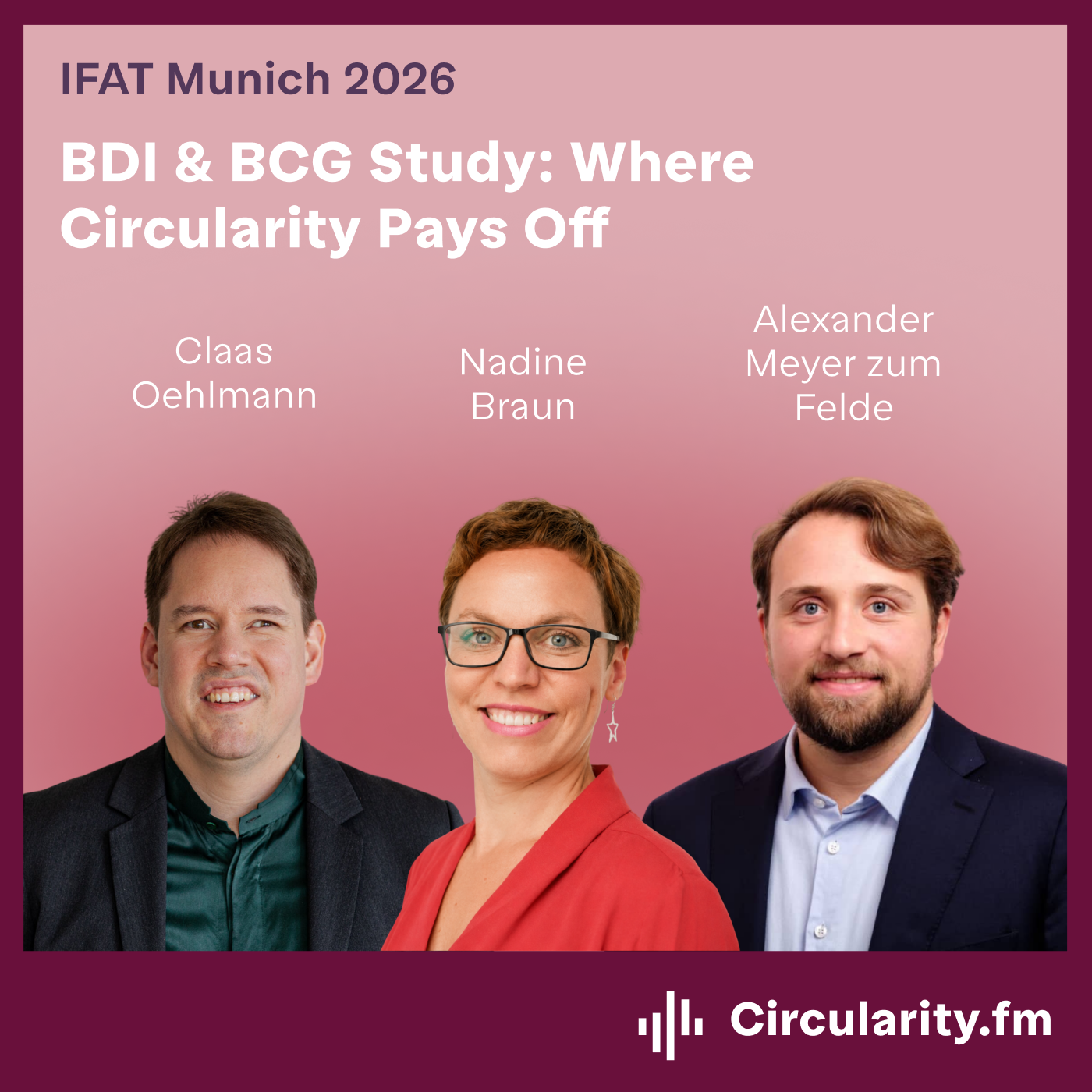 BDI & BCG Study: Where Circularity Pays Off 23.06.2026 37mWhat is the economic potential of circularity? The Federal Association of the German Industries (BDI) asked Boston Consulting Group (BCG) to answer that for German industry. The report's authors, Claas Oehlmann of the BDI's Circular Economy Initiative and Alexander Meyer zum Felde of BCG, walk through the findings, with Nadine Braun of E.ON bringing the view from a company perspective. What you'll hear in this episode: • What the report found: in five sectors covering most of German industry, circular business models could double annual value creation, from 60 to 125 billion euros, by 2045. •...
-
 Circular Sovereignty Forum 16.06.2026 19mCan Europe secure the critical raw materials it needs without stepping back from global trade? Recorded at the Circular Sovereignty Forum at IFAT Munich, with Susanne Kadner of Circular Republic, João Merico of the Ellen MacArthur Foundation, and Roland Gauß of EIT Raw Materials, on the link between circularity, geopolitics, and supply security. What you'll hear in this episode: • What companies actually want from EU regulation: predictability above all. First movers need to know the rules they invested in will not be reversed by the next reform. • Why recycling alone will not close the gap. R...
-
 Startup Collaboration: How to Build Win-Win Partnerships 02.06.2026 24mWhy do startups and corporates need each other, and what makes the partnership work? Florian Fehr, Managing Director of NEEW Ventures, joins Patrick at IFAT and interviews three founders: Rajiv Singhal from Grensol, Stefan Delinde from Minimise, and Gary Lewis from Resourcify about their businesses and what makes a startup-corporate partnership work. What you'll hear in this episode: • Why startups and corporates operate at different speeds, and why that difference is the point of the collaboration • Three founders, three completely different business models built around partnering with corpor...
Similar podcasts


Popular in
The podcast also appears in the podcast charts of these countries.
