
Project 7 to 1 by Carlo Ople
Project 7 to 1 by Carlo Ople
1
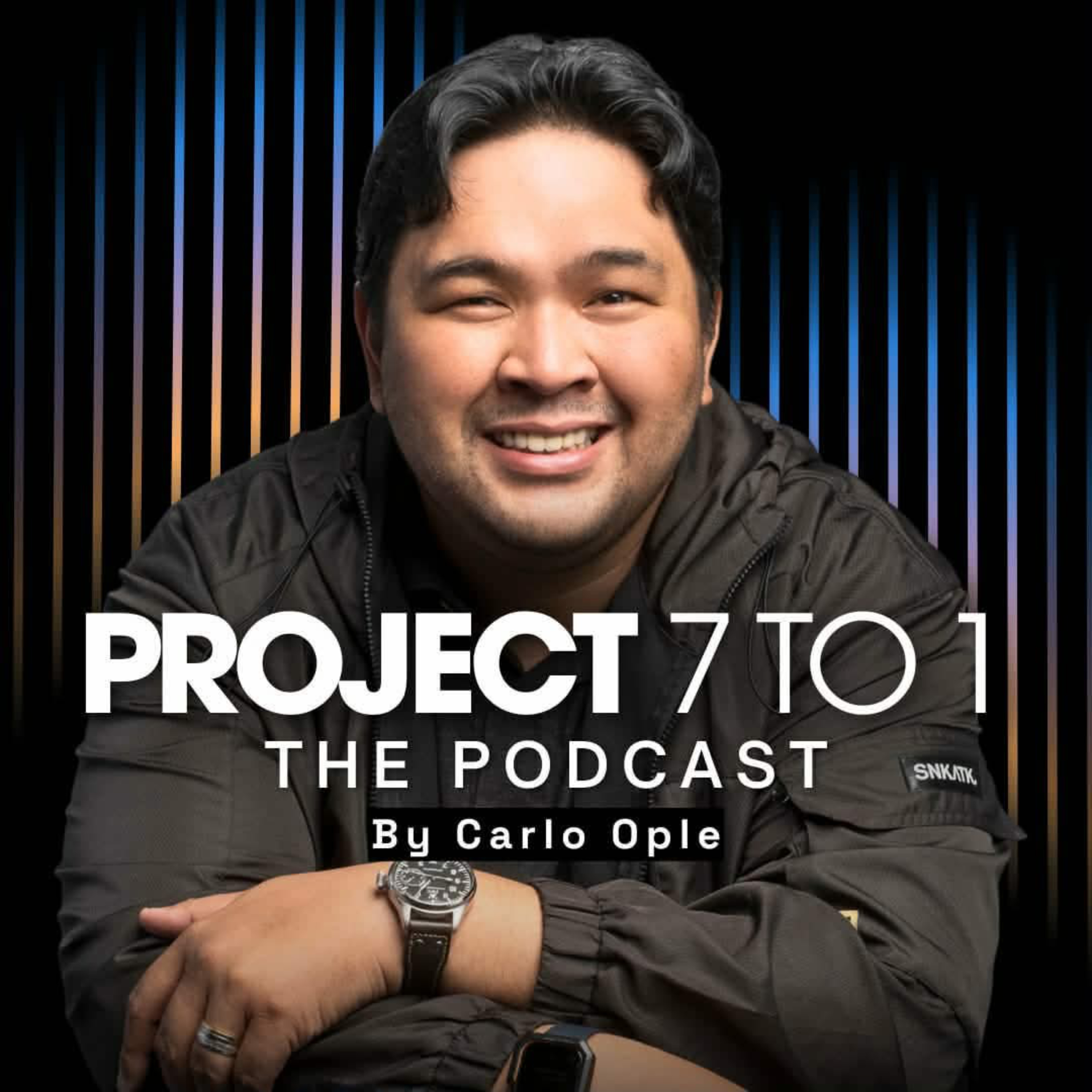
Project 7 to 1 is a podcast created by Carlo Ople that aims to inspire and motivate entrepreneurs, creators, and professionals to achieve their goals and reach their full potential. Each episode features guests who have found success in their respective fields. The show embraces the hustle mindset with the tagline "8:00AM to 5:00PM, Build Your Career. 7:00PM to 1:00AM, Build Your Dreams." It is geared toward those who are willing to put in the extra hours to turn their dreams into reality.
Episodes
-
 Project 7 to 1 Podcast: Emil Javier of Don't Blame The Kids (DBTK) 12.11.2026 52mIn this episode of the Project 7 to 1 Podcast, Carlo Ople sits down with Emil Javier, co-founder of Filipino streetwear brand Don’t Blame The Kids (DBTK), to look back on the journey of building one of the country’s most recognizable local fashion labels.Emil shares how he and his brother Vince turned ₱80,000 and 100 blank shirts into a thriving streetwear brand. He talks about the early struggles, growing the business together, and the lessons that helped DBTK stay relevant for over a decade.The conversation also explores the realities of running a family business, staying relevant in a fast-changing streetwear scene, dealing with counterfeit products, and the dream of bringing a proudly Filipino brand to the global stage.It’s a story of brotherhood, patience, creativity, and building something that lasts. Because a great brand is more than what you wear—it’s the story behind it.
-
Project 7 to 1 Podcast: Cong. Toby Tiangco 10.11.2026 51mn this episode of the Project 7 to 1 Podcast, Carlo Ople sits down with Congressman Toby Tiangco to discuss the ongoing fight for transparency and accountability in government.Cong. Tiangco explains why he believes the national budget should clearly show how much is allocated to every congressional district, who requested each project, and where public funds are going. He shares how he made Navotas’ proposed infrastructure projects publicly accessible, complete with budgets, locations, and explanations, so constituents can hold their representatives accountable.The conversation also tackles questionable budget amendments, the rising cost of living, struggling small businesses, declining online sales, and the challenges facing Filipino entrepreneurs. They also discuss why more Filipinos are considering leaving the country and what meaningful political reform could look like heading into 2028.It’s a candid discussion about public money, government responsibility, and the economic realities Filipinos face every day. Because transparency should be the standard, not the exception.
-
Project 7 to 1 Podcast: Billy Dela Fuente 02.11.2026 1h 1mIn this episode of the Project 7 to 1 Podcast, Carlo Ople sits down with Billy dela Fuente, USANA’s first and highest-ranked 11-Star Diamond Director in the Philippines, to talk about his journey from struggling entrepreneur to becoming one of the country’s most successful leaders in direct selling.Billy shares how he started with part-time jobs, failed businesses, and financial struggles before discovering USANA in 2009. He opens up about the decade of hard work, sacrifices, and persistence that eventually allowed him and his wife to achieve financial freedom.The conversation explores the realities of entrepreneurship, from handling rejection and mastering sales to overcoming the negative stigma surrounding network marketing. Billy also shares his approach to mentorship, building multiple income streams, investing in real estate, and creating generational wealth.Beyond business, Billy talks about the important role his wife played in his success, raising children with the right values, and teaching the next generation to embrace challenges rather than avoid them.Success doesn’t happen overnight. This episode is a reminder that the right mindset, consistent effort, and lessons learned from failure can make all the difference—not just in building wealth, but in building a meaningful life.
-
Project 7 to 1 Podcast: Dr. Karol Mark Yee, EDCOM2 Executive Director 29.10.2026 1hIn this episode of the Project 7 to 1 Podcast, Carlo Ople sits down with Dr. Karol Mark Yee, Executive Director of the Second Congressional Commission on Education (EDCOM 2), for an eye-opening conversation about one of the Philippines’ most urgent challenges: the state of our education system.How can we talk about artificial intelligence, future-ready careers, and competing with our neighbors when so many Filipino students are still struggling with the basics of reading, comprehension, and mathematics? Drawing from EDCOM 2’s research and the latest assessments discussed in the episode, Dr. Yee explains the scale of the learning crisis, why students can advance through school without mastering foundational skills, and how these gaps eventually affect their ability to think critically, find employment, and thrive in the real world.The conversation explores the reforms being pursued to address these problems, including literacy and numeracy assessments, structured reading remediation, teacher support, and efforts to accelerate classroom construction. Dr. Yee also explains why early childhood education matters, why children need access to affordable books, and how the country’s curriculum and school incentives must better reflect what students actually need to learn. The goal is simple but fundamental: every child should be able to read with understanding before moving on to more complex learning.But education does not end at graduation. Carlo and Dr. Yee discuss the challenges faced by college graduates and the existing workforce, including functional illiteracy, declining returns on some college degrees, and the need to give greater attention to technical-vocational education and training. They also explore the Philippines’ enormous potential in creative work, digital services, and other industries—and how better education, strategic investment, and stronger employment opportunities could help Filipinos succeed without having to leave the country to build a better life.Beyond classrooms and policy, the conversation gets personal. Dr. Yee shares how his experiences working with the late Senator Edgardo J. Angara helped shape his commitment to education reform, the importance of mentorship, and why the work must continue beyond any single administration. They also discuss the challenges young people face today, from social isolation and bullying to changing family dynamics, and why children need not only better learning opportunities but also supportive adults who listen and help them build confidence.And despite the difficult realities, this episode ends on a hopeful note. Through initiatives such as Buksan ang Kinabukasan, communities, schools, churches, and ordinary Filipinos can help bring books to children who lack access to them. Dr. Yee shares how people can support local schools, contribute reading materials, and use EDCOM 2’s publicly available data to identify where help is most needed.The Philippines has no shortage of talented, creative, and capable people. The challenge is making sure every child has the opportunity to develop that potential.Because fixing education is not just about improving test scores. It is about building a generation that can think critically, make informed decisions, contribute meaningfully to society, and help shape a better future for the country.
-
Project 7 to 1 Podcast: Dear BIR with Mon Abrea (for the fourth time) 22.10.2026 53mIn his fourth appearance on the Project 7 to 1 Podcast, Mon Abrea, the Philippine Tax Whiz, returns for another unfiltered conversation with Carlo Ople—and this time, things get heated.The discussion kicks off with the BIR’s proposed registration badge for online sellers, businesses, and content creators. Is it a practical way to protect consumers and identify legitimate businesses, or another compliance requirement that could make life more difficult for people who are already trying to follow the rules? Carlo and Mon examine the gap between good intentions and actual implementation, including the confusing procedures, additional costs, and lack of accessible instructions that can discourage people from registering.From there, the conversation gets into a bigger question: Why does paying taxes have to be so complicated? Mon argues for a simpler, more integrated digital tax system that could make compliance easier, improve the collection of taxes from online transactions, and reduce the need for taxpayers to navigate layers of paperwork. They also discuss international online sellers, withholding taxes, the possibility of a final tax system for certain types of income, and how the government can distinguish deliberate tax evasion from people who simply do not know where to begin.But taxes are only half the story. What happens to the money after the government collects it?Carlo and Mon turn their attention to government spending, questioning the heavy reliance on financial assistance programs, the need for sustainable employment opportunities, and concerns over how public funds are allocated. They also get into congressional operating expenses, transparency, and the need for public officials to be held to the same standards of accountability expected of ordinary taxpayers. As the discussion intensifies, the two don’t hold back—and some portions of the conversation had to be censored.Mon also lays out the policy changes he wants lawmakers to prioritize, including raising the income-tax-free threshold toward ₱1 million, abolishing the travel tax, and pursuing a global minimum tax framework to address the taxation of large multinational companies earning from the Philippine market. He explains why he believes these measures could help ease the financial pressure on Filipinos and make the tax system fairer.The episode also explores how citizens can participate in policymaking beyond voting: writing to legislators, attending committee hearings, asking questions, and pushing for meaningful public consultation. Mon shares his continuing efforts to engage government officials and his belief that public office should remain accountable to the people it serves.Four guestings in, the conversation remains as candid and confrontational as ever. From the BIR’s new initiatives to tax reform, government spending, and political accountability, this episode asks a question every Filipino taxpayer should be asking: If the government collects our money in the name of public service, what should we expect in return?
-
Project 7 to 1 Podcast: Nico Rocha 11.10.2026 46mIn this episode of the Project 7 to 1 Podcast, Carlo Ople sits down with Nico Rocha for a conversation about the ever-evolving world of card collecting—and why keeping up with the hobby means keeping an eye on the market.From the excitement of finding a card you’ve been chasing to the thrill of owning something rare, card collecting has grown into a hobby where passion and market value often intersect. But what makes a card valuable in the first place? And why can a card that commands a premium today suddenly lose its appeal tomorrow?Carlo and Nico discuss the trends shaping the collecting scene, the cards and categories gaining attention, and the factors that can cause prices to rise or fall. They explore the role of popularity, scarcity, collector demand, and market hype—and how changing interests can affect the value of cards people already own.They also get into the realities of collecting in a market where prices aren’t always straightforward. How do you tell the difference between genuine demand and temporary hype? When is a card worth pursuing, and when might collectors be paying more than the market can sustain? And how should collectors approach price fluctuations without losing sight of what made them love the hobby in the first place?Whether you collect basketball cards, Pokémon, or other trading cards, this episode offers a closer look at the trends, buying decisions, and market movements that make collecting such an exciting—and sometimes unpredictable—hobby.Because in the world of cards, knowing what you love is one thing. Understanding what the market values is another.
-
Project 7 to 1 Podcast: People's Budget Coalition 08.10.2026 1h 13mIn this episode of the Project 7 to 1 Podcast, Carlo Ople sits down with AJ Montesa and Zy-Za Suzara of the People’s Budget Coalition for a deep dive into something that affects every Filipino but is rarely understood by the public: how the national budget actually gets made.With the proposed ₱7.2-trillion 2027 national budget now going through Congress, AJ and Zy break down the process—from the National Expenditure Program submitted by the Executive, to congressional deliberations, amendments, realignments, and ultimately the General Appropriations Act. The House has described its 2027 deliberations as a line-by-line review, while civil society groups continue to push for greater transparency and meaningful participation throughout the process.The People’s Budget Coalition has been closely scrutinizing the proposed 2027 budget and has identified ₱735.56 billion worth of “red flag” items that it says could be vulnerable to political intervention and insertions. These include social assistance programs, infrastructure projects, lump-sum allocations, and unprogrammed appropriations. AJ and Zy explain why simply looking at the total budget isn’t enough—you have to understand where the money goes, who controls the allocations, and how those numbers can change as the budget moves through Congress.They also discuss the controversial role of congressional insertions, pork-like allocations, infrastructure spending, the Local Government Support Fund, unprogrammed appropriations, and the importance of making budget documents and amendments accessible to the public. The PBC has also raised concerns about civil society organizations being given limited access and insufficient time to participate meaningfully in House budget deliberations.And this conversation gets heated.As AJ and Zy walk Carlo through the mechanics of the 2027 budget and the ways Congress can influence the final spending plan, Carlo becomes increasingly frustrated—and at certain points, things get a little too real for the final cut. Hence, the censored portions.But underneath the heated exchange is a serious question: If this is the people’s money, how much should ordinary Filipinos be able to see, understand, and question about how it is being spent?This is a conversation about the ₱7.2-trillion 2027 budget, congressional power, transparency, pork and insertions, civil society participation, and why understanding the budget process is ultimately understanding how government works.
-
Project 7 to 1 Podcast: District Engineer Kenneth Fernando of Bulacan (First) 01.10.2026 46mIn this episode of the Project 7 to 1 Podcast, Carlo Ople sits down with Engr. Kenneth Fernando, the young engineer handpicked by DPWH Secretary Vince Dizon to take over as Officer-in-Charge District Engineer of the DPWH Bulacan 1st District Engineering Office—an assignment that puts him at the center of one of the most difficult moments in the agency’s history.Bulacan has become ground zero in the country’s flood-control controversy. The district Fernando now leads was previously headed by Henry Alcantara, who was dismissed by the DPWH after being found administratively liable for serious offenses connected to anomalous flood-control projects. The Professional Regulatory Board of Civil Engineering later revoked Alcantara’s license after finding gross unprofessional and unethical conduct.And now, Fernando has to fill those shoes—but under completely different circumstances.A DPWH veteran of around a decade and a graduate of the agency’s Cadet Engineering Program, Fernando came from the Central Office before being assigned to Bulacan. Secretary Dizon described the appointment as part of bringing “fresh blood” into critical positions and specifically tasked the new leadership with helping solve the province’s long-running flooding problems.In this conversation, Kenneth talks about what it feels like to step into such a difficult position at such a difficult time. How do you lead an engineering district when public trust in the institution has been badly damaged? How do you navigate the pressure, the scrutiny, and the expectations while making sure that the work actually gets done?The discussion also goes beyond the controversy. They talk about the realities on the ground in Bulacan, the unfinished and problematic flood-control infrastructure that needs to be addressed, and the enormous responsibility of making sure that future projects are properly planned, implemented, and delivered to the communities that desperately need them.But perhaps the most important part of the conversation is how it ends—with hope.Because even after everything that has happened, Kenneth represents a new generation of public servants who still have the opportunity to do things differently. The challenges facing DPWH are enormous, but institutions can be rebuilt, systems can be changed, and public trust can be earned back—one project and one decision at a time.This is a conversation about taking over a difficult legacy, navigating an extraordinary moment in Philippine public infrastructure, and why there is still a chance to redeem DPWH—and perhaps restore people’s faith that government can still work.
-
Project 7 to 1 Podcast: Atty. Rannie Libyan 26.09.2026 56mIn this episode of the Project 7 to 1 Podcast, Carlo Ople sits down with Atty. Ranny Randolf “Rannie” Libayan of BATASnatin for a conversation about law, content creation, entrepreneurship, technology, and what happens when you put a practicing trial lawyer in front of a camera.Rannie’s journey is anything but conventional. Long before he became a lawyer, he was already building BATASnatin.com as a way to make Philippine legal information more accessible. As a working student who had limited access to legal resources, he turned that challenge into an opportunity—eventually creating what BATASnatin describes as the Philippines’ first comprehensive online legal library. After becoming a lawyer, he went on to build a career in litigation, handling dozens of cases early in his practice and developing his experience as a trial lawyer.From practicing law, Rannie eventually found another way to reach Filipinos: content creation. He talks about how BATASnatin evolved from a website into a broader digital platform, how he uses social media to explain complicated legal issues in a way ordinary Filipinos can understand, and the realities of being a lawyer whose work and opinions are constantly being seen by a massive online audience.But with that visibility also came controversy—and legal battles. Rannie opens up about being sued by prominent personalities and corporations, including an experience where he says he faced 40 counts at one time. The conversation explores what it is like to defend yourself while simultaneously practicing law, creating content, and standing behind the things you publish. The episode also touches on the intersection of copyright, commentary, fair use, and the risks that come with legal content creation. His disputes have previously included a highly publicized case involving Raffy Tulfo in Action.The conversation then moves into perhaps the most futuristic part of Rannie’s journey: AI and the practice of law. He shares the story behind BATASnatin’s AI-powered legal tools and the development of Lexitary, an AI legal secretary designed specifically around Philippine law. Rather than simply functioning as a chatbot, Lexitary is built to assist with legal research, Supreme Court jurisprudence, case digests, document drafting, bar review, case management, and other aspects of legal work—with citations that users can verify.And the bigger question is fascinating: What happens when technology starts changing how lawyers research, prepare cases, draft documents, and even learn the law? Rannie shares his vision for making legal knowledge and technology more accessible not just to lawyers, but also to students, professionals, and ordinary Filipinos trying to understand the law.From building a website before he even became a lawyer, to becoming a trial lawyer and content creator, facing major legal battles, and now developing AI for the Philippine legal profession—this is the story of Atty. Rannie Libayan and the evolution of BATASnatin.
-
Project 7 to 1 Podcast: Edgar "Bobot" Mortiz 23.09.2026 37mIn this episode of the Project 7 to 1 Podcast, Carlo Ople sits down with one of Philippine entertainment’s most respected veterans, Direk Edgar “Bobot” Mortiz, for a conversation that takes us through an extraordinary career spanning music, acting, television, directing, and talent development.Long before he became known as the director behind some of Philippine television’s biggest shows, Bobot Mortiz was already performing professionally at a very young age. He talks about starting out as a competitive singer, eventually moving into acting and becoming part of a popular love team, before finding his way behind the camera and building a remarkable career as a director.A huge part of that journey was his ability to discover, develop, and handle young talent. From Goin’ Bulilit to Let’s Go, Direk Bobot had a front-row seat to the growth of young performers who would eventually become some of today’s biggest stars. He shares what it was like working with children and teenagers, how he recognized potential, and the responsibility that comes with helping shape the careers of young artists.The conversation also takes an unexpected turn into politics. Direk Bobot briefly talks about his own experience as an elected public official—and why, despite understanding and maintaining friendships with people in politics, he realized that public service was something he personally dreaded and never truly enjoyed. He reflects on how difficult the political system can be and the moral toll it can take on the people working within it.And finally, the episode becomes deeply personal as Carlo and Direk Bobot talk about the long-standing relationship between the Mortiz and Ople families. They revisit their shared history in Quezon City, the Mortiz family’s close ties with the late Senator Blas Ople, Carlo’s grandfather, and the connections between their families that go back decades.It’s a conversation about showbiz, mentorship, public service, family, and the people and relationships that remain long after the spotlight fades.
-
Project 7 to 1 Podcast: Orion Perez D 19.09.2026 52mIn this episode of the Project 7 to 1 Podcast, Carlo Ople sits down with constitutional reform advocate Orion Perez Dumdum for a deep dive into one of the biggest questions facing the Philippines: Does the country’s political system need to change?Orion has spent years advocating for constitutional reform through the CoRRECT Movement, pushing for changes that include a shift toward a parliamentary system, federalism, and reforms to the Constitution’s economic provisions. His advocacy has also brought him into public consultations and congressional discussions on possible amendments to the 1987 Constitution.The conversation explores what a parliamentary government could look like in the Philippines, how federalism could change the relationship between Manila and the regions, and whether decentralizing political and economic power could address some of the country’s long-running problems.Carlo and Orion also get into the bigger question behind Charter Change: Is changing individual leaders enough, or do we need to rethink the system itself? They discuss political accountability, economic restrictions, foreign investment, regional development, and why Orion believes the structure of government has a major impact on the country’s ability to move forward.It’s a wide-ranging conversation about the Philippine Constitution, parliamentary government, federalism, economic liberalization, and the possible directions of constitutional reform—and why these debates continue to matter to Filipinos today.
-
Project 7 to 1 Podcast: Secretary Vince Dizon 08.09.2026 1h 10mIn this episode of the Project 7 to 1 Podcast, Carlo Ople sits down with Public Works and Highways Secretary Vince Dizon for a candid conversation about public service, infrastructure, government reform, and the challenge of fixing one of the country’s most important—and most scrutinized—agencies.Dizon looks back at a career that has moved between government and the private sector. Long before leading major government agencies, he began as an economics research staffer and eventually became chief of staff to then-Senator Edgardo Angara. He shares stories from those early years in the Senate, including his encounters with the late Senator Blas Ople, Carlo’s grandfather—a personal connection that brings a different dimension to the conversation.The discussion then follows Dizon’s journey back from the private sector into government and eventually to the Department of Transportation. He talks about the experience of managing major transportation and infrastructure projects before being handed an entirely different challenge: taking over the Department of Public Works and Highways.Carlo and Secretary Dizon discuss just how different the two environments are. From an agency where many of the country’s biggest transportation projects are driven and coordinated centrally, Dizon suddenly found himself leading the highly decentralized DPWH—with regional and district engineering offices implementing thousands of projects throughout the country.And he entered the agency at an extraordinary moment.Dizon took over DPWH as allegations surrounding ghost projects, substandard flood-control works, questionable bidding practices, overpricing, and corruption were being uncovered. He talks about what he encountered inside the department, the difficulty of reforming such a massive decentralized organization, and the challenge of creating systems that promote accountability all the way from the central office down to the districts.The conversation ultimately asks a much bigger question: How do you reform an institution this large while still making sure the roads, bridges, flood-control systems, classrooms, and other infrastructure Filipinos need actually get built?Expect an unusually personal and insightful conversation that spans Vince Dizon’s early days in government, his time in the private sector, his experiences at DOTr, and now the enormous task of cleaning up and transforming the DPWH.
-
Project 7 to 1 Podcast: Jico Umali aka JiConyo 07.09.2026 54mIn this episode of the Project 7 to 1 Podcast, Carlo Ople sits down with Filipino content creator Jico Umali, better known online as JiConyo.Jico takes us through his journey as a creator—from finding his voice through his now-iconic “conyo” persona and building an audience online, to working behind the scenes as a content strategist, writer, director, actor, and creator. His work eventually expanded beyond social media, including appearances in film and other creative projects. But this conversation takes a more personal turn as Jico opens up about the health scare that changed his life. In July 2025, at just 28 years old, he suffered a stroke that left him temporarily bedridden and affected the left side of his body and vision. His road to recovery became a journey he openly documented with his followers—from hospitalization and rehabilitation to gradually regaining his mobility and independence. Jico also talks about the lessons that came with that experience and how it changed his perspective on health, life, and the choices we make. More recently, he has spoken publicly about his belief that smoking and vaping played a major role in his stroke and has turned his experience into a warning for others who may be taking similar risks. Expect a conversation that starts with the laughs and stories behind one of the Philippines’ recognizable creator personas, but eventually goes much deeper—into health, second chances, recovery, and finding a different perspective on life after a life-changing experience.
-
Project 7 to 1 Podcast: Ninong Ry 29.08.2026 1h 35mIn this episode of the Project 7 to 1 Podcast, Carlo Ople sits down with chef, entrepreneur, and content creator Ninong Ry.Ryan “Ninong Ry” Reyes shares the story behind the man millions of Filipinos now know from his no-frills, hilarious, and unapologetic cooking videos. From his beginnings in the family business and his experiences in the restaurant industry to facing financial struggles and eventually discovering content creation during the pandemic, Ninong Ry opens up about the journey that brought him to where he is today. The conversation also goes beyond the kitchen. Carlo and Ninong Ry talk about his various business endeavors, how he built a career around content creation, and how his approach to making content has evolved as the years—and his audience—have grown. What started with simple cooking videos and an old phone eventually became a full-fledged career, brand, and business.And because this is Project 7 to 1, there’s naturally some fun involved. Ninong Ry takes on a matcha drink during the episode—but the real question is: will the Ninong approve?Expect plenty of laughs, real talk, stories about the grind behind the success, and a closer look at the chef and creator behind one of the Philippines’ most recognizable online personalities.
-
Project 7 to 1 Podcast: Cong. Toby Tiangco 26.08.2026 1h 20mIn this episode of the Project 7 to 1 Podcast, Carlo Ople sits down with Navotas Congressman Toby Tiangco for a timely conversation about the proposed 2027 Philippine national budget—and the much bigger question behind the numbers: are we really getting the most out of every peso?As Congress begins deliberations on the proposed 2027 budget, Carlo and Congressman Tiangco discuss how billions in public funds are allocated, scrutinized, and ultimately spent. The conversation looks beyond the headline figure and into the importance of transparency, accountability, proper appropriation, and ensuring that government spending actually translates into meaningful services for Filipinos.Tiangco also shares his concerns about the way budget amendments and insertions have historically been handled. He has argued that the House itself should be subjected to the same level of pre-plenary scrutiny as other government agencies, including greater transparency over how its own budget is allocated and spent. So, when the proposed national budget reaches record levels, does a bigger budget automatically mean better governance? Or should the bigger question be whether every allocation is properly justified, efficiently spent, and accountable to the Filipino people?Expect a candid discussion about the 2027 national budget, budget deliberations, transparency, insertions, and the challenges of making sure public money actually works for the public.
-
Project 7 to 1 Podcast: Mon Abrea, is 350,000 income tax exemption enough? 22.08.2026 1h 4mIn the third guesting of Mon Abrea on the Project 7 to 1 Podcast, Carlo Ople welcomes back the Philippine Tax Whiz for another deep dive into one of the issues that directly affects millions of Filipino workers: income taxes.This time, the conversation focuses on the bills filed in the Senate seeking to raise the income tax exemption threshold. With a proposal to increase the tax-free ceiling to ₱350,000 currently on the table, Carlo and Mon discuss whether that amount is enough to provide meaningful relief to Filipino workers. For Mon and Carlo, raising the threshold to ₱500,000—or even ₱600,000—would be a fairer reflection of today’s cost of living and economic realities. But Mon takes the argument even further: his battlecry remains ₱1 Million Tax-Free Income.The conversation breaks down why they believe the current threshold needs to be revisited, what higher tax exemptions could mean for take-home pay, and how tax policy can better keep pace with the realities faced by working Filipinos. They also explore the bigger question: at what point does taxation become a burden on the very people who are trying to build their lives, families, and businesses?Expect another candid and thought-provoking conversation with Mon Abrea—complete with strong opinions, practical tax talk, and a bold proposition for what Philippine income-tax reform could look like.
-
Project 7 to 1 Podcast: Senator Francis "Chiz" Escudero 19.08.2026 25mIn this episode of the Project 7 to 1 Podcast, Carlo Ople sits down with Senate President Francis “Chiz” Escudero for a timely conversation about his push to regulate—and ultimately prohibit—gambling advertisements and sponsorships across the Philippines.The discussion centers on Senate Bill No. 2347, which seeks to ban gambling-related advertising across television, radio, print, websites, mobile applications, and social media. The proposed measure would also prohibit celebrity and influencer endorsements, gambling sponsorships, promotional giveaways, and other marketing tactics designed to bring gambling closer to the public.Escudero explains why he believes gambling advertising needs stronger legal restrictions, particularly as online gambling becomes increasingly accessible through smartphones and digital platforms. He draws parallels with the country’s regulation of tobacco advertising and argues that voluntary industry self-regulation is not enough when it comes to protecting minors and other vulnerable groups.Carlo and Senator Chiz also discuss the broader implications of the proposed ban—from the role of celebrities and content creators in promoting gambling to the responsibility of government, media, and the industry itself.Expect a timely and thought-provoking conversation about online gambling, advertising, influencer culture, regulation, and the growing debate over how much exposure to gambling should be allowed in the everyday lives of Filipinos.
-
Project 7 to 1 Podcast: James Deakin 14.08.2026 1h 23mIn this episode of the Project 7 to 1 Podcast, Carlo Ople sits down with veteran motoring journalist, broadcaster, and traffic advocate James Deakin.James takes us through his journey—from his early years and return to the Philippines to building a career in broadcasting, motoring journalism, and digital media. He shares the experiences that shaped him, including the successes that propelled his career and, perhaps more importantly, the failures and setbacks that taught him some of his most valuable lessons.A major part of the conversation is James’ long-running crusade for safer and more efficient roads in the Philippines. They talk about traffic rules, road discipline, enforcement, driver behavior, confusing and sometimes inconsistent regulations, and why solving the country’s traffic problems requires more than simply creating new laws.The discussion also goes into the realities behind traffic enforcement and the issues that Filipino motorists encounter every day. James shares his perspective on accountability, responsible driving, and the need for both motorists and authorities to understand and follow the rules.Beyond motoring and traffic, James opens up about the personal lessons he’s gained from mistakes, failures, and difficult moments throughout his career—offering a more personal look at the man behind the opinions and advocacy.Expect a candid, sometimes opinionated, but ultimately reflective conversation about traffic, road safety, public policy, career setbacks, and the lessons that come from getting things wrong along the way.
-
Project 7 to 1 Podcast: Pareng Hayb Anzures of Gentry 08.08.2026 34mIn this episode of the Project 7 to Q Podcast, Carlo Ople sits down with entrepreneur and Gentry Timepieces founder Hayb Anzures, better known as Pareng Hayb.Behind the watches, the businesses, and the larger-than-life social media presence is a story of starting from humble beginnings, taking risks, trying different ventures, and eventually finding his footing in the world of luxury watches and entrepreneurship. Hayb shares how his experiences shaped the businessman he is today and how the people he partnered with along the way played a crucial role in his journey.The conversation goes behind the scenes of building Gentry Timepieces and the realities of growing a business in a highly competitive industry. Hayb also talks about his evolution as a content creator, the lessons he’s picked up from his successes and failures, and what it takes to keep growing when you’ve already achieved more than you once imagined.Carlo and Hayb also look ahead at what’s next—from the continued expansion of his businesses to his plans for Gentry and his growing involvement in projects outside the watch industry, including his push to elevate Philippine tennis through the Gentry Open.Expect a candid conversation about humble beginnings, entrepreneurship, partnerships, ambition, and the mindset behind building something bigger than yourself.
-
Project 7 to 1 Podcast: Jesse "Reflex" Gotangco 01.08.2026 44mIn this episode of the Project 7 to 1 Podcast, Carlo Ople sits down with Jesse “Reflex” Gotangco—one of the pioneers of Philippine breaking and street dance. An internationally acclaimed B-boy, choreographer, educator, and mentor, Reflex has represented the Philippines on the global stage, winning international titles such as the R16 Southeast Asia Solo Championship and helping elevate Filipino street dance through competition, coaching, and education. Beyond the battle floor, he has also served as a faculty member at Ateneo de Manila University and has mentored countless dancers who have gone on to excel in the local and international scene.The conversation explores his journey from discovering dance at a young age to turning his passion into a lifelong profession. Reflex shares the realities of building a sustainable career in the arts, the evolution of Philippine street dance, and the discipline, mindset, and creativity required to compete at the highest level. Carlo and Reflex also discuss the importance of mentorship, cultivating the next generation of dancers, and why Filipino talent continues to earn respect on the world stage. Expect an inspiring conversation about purpose, perseverance, and proving that with enough passion and hard work, it’s possible to transform an unconventional dream into a meaningful career.
Similar podcasts


Popular in
The podcast also appears in the podcast charts of these countries.
