
Russian History Explained
Russian History Explained
0
A podcast dedicated to exploring Russia's vast history, from the early medieval Kievan Rus and the powerful Tsars to the dramatic Soviet era and modern milestones. Through engaging narratives and rich archival visuals, it brings key historical turning points to life, covering politics, culture, and epic conflicts. The show aims to help listeners understand the forces and figures that shaped the world's largest nation.
Episodes
-
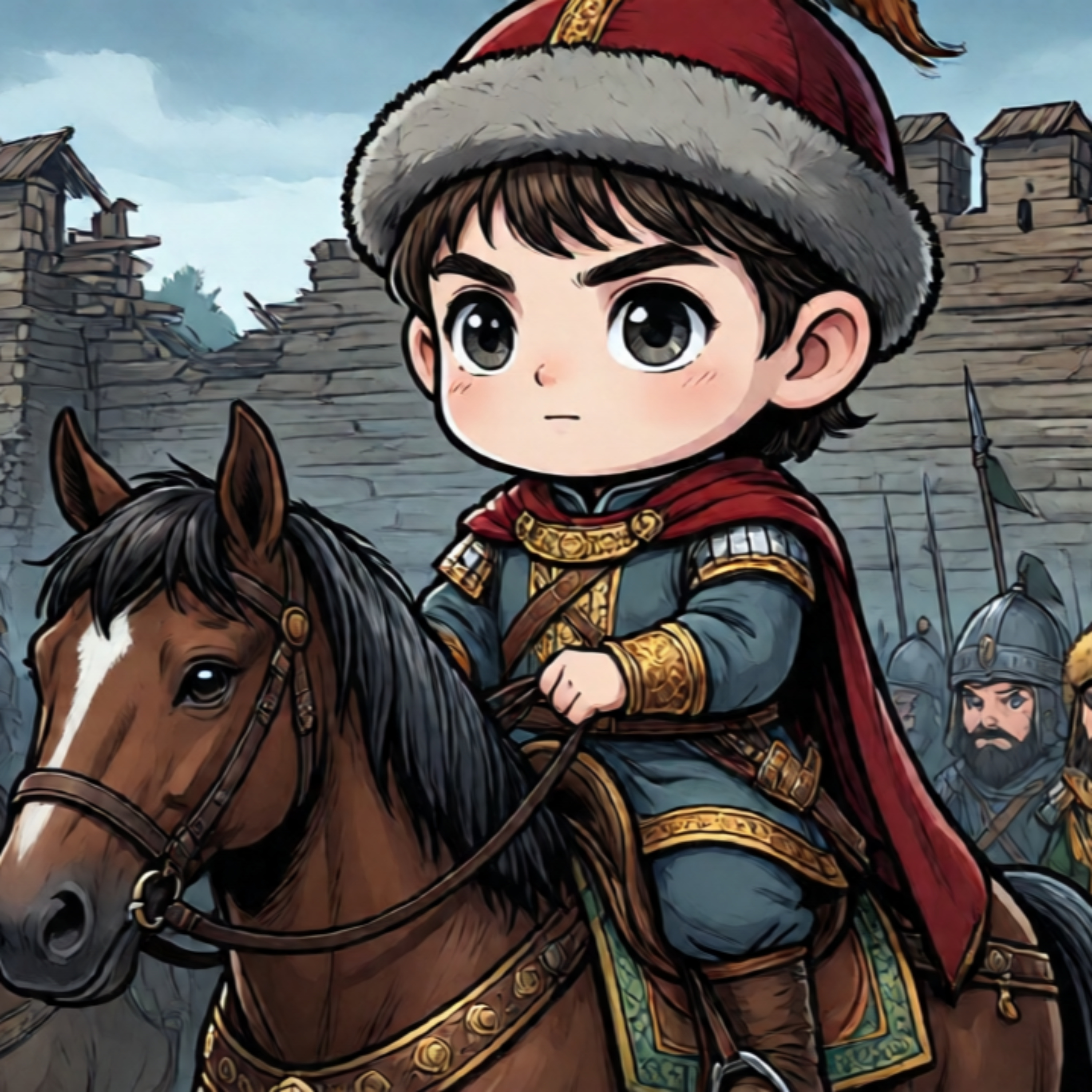 Why Russian High Society Spoke French for More Than a Century 17.09.2026 49mFrench culture and language dominated imperial Russian high society for more than a century, shaping aristocratic salons, education, fashion, diplomacy, literature, architecture, and the daily identity of nobles in Saint Petersburg and Moscow. This Francophile world both refined and divided the empire before revolution. The episode remains central to Russian history, imperial memory, and debates over power today.This video follows Peter the Great's Westernization, Empress Elizabeth's Versailles-inspired court, Catherine the Great's correspondence with Voltaire and Diderot, French tutors, gover...
-
Why the Romanov Tercentenary Became the Last Great Imperial Celebration 17.09.2026 49mThe Romanov Tercentenary of 1913 was a dazzling celebration of three hundred years of dynasty, yet beneath its pageantry lay hemophilia, Rasputin, political fragility, war anxiety, and an empire nearing collapse. Its splendor now reads like the twilight of imperial Russia before revolution. The episode remains central to Russian history, imperial memory, and debates over power today.This video follows the election of Mikhail Romanov in 1613, Nicholas II's sacred vision of autocracy, Alexandra and the imperial children, Alexei's hidden illness, Ivan Susanin propaganda, illuminated Saint Petersb...
-
The 1905 Revolution: The First Storm Against Russia's Last Tsar 17.09.2026 49mThe 1905 Russian Revolution began with Bloody Sunday, when peaceful workers carrying icons and petitions marched toward the Winter Palace and were met by imperial gunfire across the snow of Saint Petersburg. The massacre broke the sacred image of the caring tsar and exposed autocracy. The episode remains central to Russian history, imperial memory, and debates over power today.This video follows industrial misery, the Russo-Japanese War, Okhrana police socialism, Father Georgy Gapon, the Putilov strike, the workers' petition, the January 22 march, the shootings near Narva Gate and Palace Squar...
-
Why Russia Lost to Japan and Triggered Revolution at Home 17.09.2026 48mThe Russo-Japanese War shattered the illusion of Russian imperial might, exposing military weakness, logistical overreach, racial arrogance, and political paralysis while pushing the Romanov Empire toward the Revolution of 1905. It proved that empire could fail far from home and collapse politically at home afterward. The episode remains central to Russian history, imperial memory, and debates over power today.This video follows Russia's expansion into Manchuria, the Triple Intervention, Port Arthur, the Chinese Eastern Railway, the Boxer Rebellion, the Bezobrazov circle, Japan's alliance with...
-
Why Nicholas II's Coronation Began With the Khodynka Tragedy 17.09.2026 46mNicholas II's coronation in 1896 was meant to proclaim sacred Romanov authority, but the Khodynka Field stampede killed more than a thousand people and cast a dark shadow over Russia's last tsar. The celebration became an omen of distance between ruler, bureaucracy, and ordinary people. The episode remains central to Russian history, imperial memory, and debates over power today.This video follows Nicholas's accession after Alexander III, his marriage to Alexandra, the Moscow coronation ceremonies, the Assumption Cathedral ritual, imperial regalia, foreign dignitaries, and lavish court banquet...
-
Why Russia Built the Longest Railway in the World Across Siberia 14.09.2026 49mThe Trans-Siberian Railway connected European Russia to Siberia and the Pacific, turning an isolated empire of forests, rivers, permafrost, and penal routes into a transcontinental state with a modern steel artery. It was engineering, colonization, defense policy, migration, and economic ambition on rails. The episode remains central to Russian history, imperial memory, and debates over power today.This video follows the vision of Muravyov-Amursky, Sergei Witte, Alexander III, and Tsesarevich Nicholas, the 1891 groundbreaking at Vladivostok, convict and peasant labor, bridges over the Ob, Yeni...
-
Why Alexander II Was Assassinated After Freeing Russia's Serfs 14.09.2026 49mAlexander II freed Russia's serfs and launched the Great Reforms, yet he was assassinated in 1881 by revolutionaries who believed only violent terror could destroy the Romanov autocracy. His death froze a moment when reform and revolution collided on a Saint Petersburg canal. The episode remains central to Russian history, imperial memory, and debates over power today.This video follows the Emancipation Reform, zemstvos, judicial reform, military reform, university liberalization, censorship changes, and the radicalization of students, nihilists, populists, and underground revolutionary circle...
-
Why Russia Sold Alaska to the United States for $7.2 Million 14.09.2026 50mRussia sold Alaska to the United States in 1867 for 7.2 million dollars, ending the era of Russian America and giving Washington a vast Pacific and Arctic territory rich in resources and strategic possibilities. The deal grew from fur profits, colonial weakness, and global strategy after the Crimean War. The episode remains central to Russian history, imperial memory, and debates over power today.This video follows Vitus Bering's expedition, the sea otter fur rush, promyshlenniki traders, Grigory Shelikhov, the Russian-American Company, Aleksandr Baranov, conflict with the Tlingit, the Battle...
-
Why the Tsar Liberator Freed Millions but Left Russia Unstable 14.09.2026 48mThe Emancipation Reform of 1861 ended Russian serfdom and freed more than twenty-three million private serfs, but its complicated land settlements, redemption payments, and village communes left deep tensions unresolved. It changed law and society without fully satisfying peasants, nobles, reformers, or radicals. The episode remains central to Russian history, imperial memory, and debates over power today.This video follows Alexander II after the Crimean War, his warning to the Moscow nobility, the Secret Committee, Nazimov Rescript, provincial noble committees, Grand Duchess Elena Pavlovna, N...
-
Why Nicholas I Built an Empire of Censorship, Police, and Military Discipline 14.09.2026 49mNicholas I turned Russia into the Gendarme of Europe after crushing the Decembrist Revolt, building a state defined by autocracy, censorship, political police, military discipline, and intervention against revolution abroad. His reign pursued order while deepening the pressures that later demanded reform after Crimea. The episode remains central to Russian history, imperial memory, and debates over power today.This video follows the creation of the Third Section and Corps of Gendarmes, Speransky's law codification, Cancrin's silver ruble reform, Uvarov's doctrine of Orthodoxy, Autocracy, and N...
-
Why the Decembrist Revolt Failed but Changed Russia Forever 08.09.2026 48mThe Decembrist Revolt of 1825 failed on Senate Square, but it permanently changed Russian politics by bringing demands for a constitution, civil rights, and the abolition of serfdom into open confrontation with autocracy. Its failure created martyrs, exiles, and a new political language for future Russian opposition. The episode remains central to Russian history, imperial memory, and debates over power today.This video follows young officers shaped by the Napoleonic Wars, the Union of Salvation, Union of Prosperity, Northern Society, Southern Society, Nikita Muravyov, Pavel Pestel, Kondraty R...
-
Why Alexander I Defeated Napoleon but Remained Russia's Most Mysterious Tsar 08.09.2026 47mTsar Alexander I defeated Napoleon and helped restore Europe, yet his reign was haunted by guilt over his father's murder, unfulfilled reform dreams, spiritual searching, and the mystery surrounding his final years. His life blended Enlightenment hopes, autocratic hesitation, imperial triumph, and private doubt. The episode remains central to Russian history, imperial memory, and debates over power today.This video follows Alexander's Enlightenment education under La Harpe, his divided childhood between Catherine II and Paul I, the palace coup of 1801, early reform hopes, the Unofficial Commit...
-
The Burning of Moscow: The Sacrifice That Trapped the French Army 08.09.2026 49mThe burning of Moscow in 1812 was the ultimate sacrifice of the Patriotic War, denying Napoleon shelter, supplies, political victory, and the symbolic triumph he expected after occupying Russia's ancient capital. In the ashes, Russia turned loss into strategy, memory, and resistance. The episode remains central to Russian history, imperial memory, and debates over power today.This video follows Kutuzov's council at Fili, the evacuation of Moscow, Count Rostopchin's removal of fire pumps, alleged arson plans, Napoleon's arrival at an empty city, the flames that consumed wooden districts, the Kr...
-
How Russia Destroyed Napoleon's Grand Army in 1812 08.09.2026 43mRussia defeated Napoleon's Grand Army in 1812 through strategic retreat, scorched earth, brutal distance, battlefield resistance, and the winter collapse of the largest invasion force Europe had ever seen. The campaign showed that avoiding Napoleon's trap could be more powerful than seeking glory in battle. The episode remains central to Russian history, imperial memory, and debates over power today.This video follows Napoleon's crossing of the Niemen, Barclay de Tolly's retreat, Bagration's escape, Smolensk, Kutuzov's appointment, the bloody Battle of Borodino, the council at Fili, the abando...
-
Why Alexander Suvorov Never Lost a Single Battle 08.09.2026 44mAlexander Suvorov became one of Russia's greatest commanders by winning more than sixty battles without a single defeat, transforming childhood frailty into iron discipline and leading soldiers with speed, realism, and relentless offensive spirit. His victories came from training, mobility, morale, fearless command, and soldier trust. The episode remains central to Russian history, imperial memory, and debates over power today.This video follows Suvorov's early training, service in the Semenovsky Guards, the Seven Years' War, campaigns against the Polish Confederates, Ottoman victories at Kozl...
-
Why One Art Purchase Created Russia's Greatest Museum 05.09.2026 48mThe Hermitage Museum began as Catherine the Great's private gallery, created after a bold 1764 purchase of 317 paintings that announced Russia's arrival as a major power in European art and Enlightenment culture. A private retreat became an imperial statement of taste, wealth, legitimacy, and ambition. The episode remains central to Russian history, imperial memory, and debates over power today.This video follows the Gotzkowsky collection, the Small Hermitage, Hanging Garden, private salon rules, mechanical dining tables, Catherine's art agents, and the rapid expansion of her paintings, sculpt...
-
Why Catherine's Brilliant Ally Took Control of Russia's Academy 05.09.2026 47mPrincess Yekaterina Dashkova was one of the most brilliant women of the Russian Enlightenment, a teenage conspirator in Catherine the Great's coup and later the first woman to lead the Russian Academy of Sciences. Her life joined scholarship, ambition, court danger, and language reform in imperial Russia. The episode remains central to Russian history, imperial memory, and debates over power today.This video follows Dashkova's education, her friendship with Catherine, her role in the 1762 palace coup, her difficult relationship with the empress, European travels, meetings with Enlightenment th...
-
Why the Pugachev Rebellion Terrified Catherine the Great 05.09.2026 44mThe Pugachev Rebellion was the largest peasant uprising in imperial Russian history, led by Yemelyan Pugachev, a Don Cossack who claimed to be the returned Emperor Peter III and promised freedom to the oppressed. It exposed the explosive pressure beneath serfdom, frontier rule, and popular faith across Russia. The episode remains central to Russian history, imperial memory, and debates over power today.This video follows frontier anger among the Yaik Cossacks, serf exploitation under Catherine the Great, Old Believer grievances, Pugachev's royal manifestos, the capture of forts, the siege of O...
-
Why Crimea Became the Crown Jewel of Catherine's Russian Empire 05.09.2026 46mCatherine the Great's conquest of Crimea transformed Russia's southern frontier, broke Ottoman dominance over the Black Sea, and gave the empire strategic ports, naval bases, and fertile lands that reshaped Eurasian power. The campaign linked diplomacy, war, settlement, naval strategy, imperial mythology, religious tolerance, and Black Sea trade. The episode remains central to Russian history, imperial memory, and debates over power today.This video follows the Russo-Turkish War, the victories of Rumyantsev, Orlov, Dolgorukov, Suvorov, and Ushakov, the Treaty of Kucuk Kaynarca, the unstable in...
-
How Catherine the Great Seized Russia's Throne From Her Own Husband 05.09.2026 45mCatherine the Great seized the Russian throne from her own husband, Peter III, after years of political isolation, careful alliance-building, and growing outrage over his pro-Prussian policies, contempt for Russian traditions, and alienation of the army and church. Her rise was a lesson in image, loyalty, and palace politics under pressure.This video follows Sophie of Anhalt-Zerbst's transformation into Catherine Alekseyevna, her unhappy marriage, intellectual self-education, the birth of Paul, the Seven Years' War, Peter III's sudden reversal in favor of Frederick the Great, church reforms, g...
Similar podcasts


Popular in
The podcast also appears in the podcast charts of these countries.

