
Bunsen Bites
Tess & Rui
0
Bunsen Bites is a short-form educational podcast that tackles big questions in bite-sized episodes. Two young presenters, Tess and Rui, talk through topics from science and maths to history, technology and the world around us. Each episode breaks a subject down into clear explanations, relatable examples and open questions worth thinking about. It is aimed at middle-school listeners who want to understand how things work. The show is created with the help of AI and spoken by AI voices.
Episodes
-
 Who's Holding the Other Two-Thirds? (Physics Level 8) 25.10.2026 6mWe're going to find the one rule that makes that possible, and it fits in three words: force times distance. Then we'll find out what that rule secretly charges you, because nothing comes free, not even in physics.No machine gives you something for nothing. Every one of them obeys moment = force × distance, and the units, newton metres, tell you why. A small force at a big distance equals a big force at a small distance. That's the whole trick behind the wheelbarrow, the pulley, the bike gear and your own arm.Sources:https://www.geeksforgeeks.org/physics/types-of-lever/https://www.vedantu.com/jee-main/physics-levershttps://study.com/learn/lesson/muscle-levers-body-systems-examples.htmlhttps://foreverwingman.com/asvab/mechanical-comprehension/levers/Source: Episode 17 - Physics Level 8, Simple Machines (17/17)Style: Exam prepLength: 900 words, 5 min targetGenerated: 2026-10-25
-
 The Horse Watt Rounded Up (Physics Level 8) 25.10.2026 7mWe're going to follow Watt as he tries to put a price on a horse's effort, and that will show us exactly what work and power are. Then we'll open your electricity bill and see that you're paying for the thing Watt was trying to measure.The listener can explain why the highest-wattage appliance in the house might not be the one that costs the most. They can also say the three formulas in order: work = force × distance in joules, power = work ÷ time in watts, and cost = kW × hours × price per kWh. Watt's failed pricing scheme is the system their family pays under today.Sources:https://en.wikipedia.org/wiki/Horsepowerhttps://www.scienceabc.com/eyeopeners/engine-power-measured-steam-engine-horsepowers-name-watthttps://www.hagerty.co.uk/articles/automotive-history/the-work-and-life-of-the-man-who-invented-horsepower/Source: Episode 16 - Physics Level 8, Work and Power (16/17)Style: Exam prepLength: 973 words, 6 min targetGenerated: 2026-10-25
-
 The Flask That Doesn't Know Anything (Physics Level 8) 25.10.2026 7mIt doesn't know anything. It just blocks every road heat can travel, and there turn out to be two kinds of road: one you can block by taking stuff away, and one that doesn't need any stuff at all.The flask is a heat-blocking checklist. The vacuum stops the two particle routes, and the shiny walls fight the route that needs no particles. That is why it works both ways: it doesn't care which direction the heat is going.Sources:https://en.wikipedia.org/wiki/Vacuum_flaskhttps://www.scienceabc.com/innovation/thermos-flask-keep-hot-things-hot-cold-things-coldhttps://www.docbrown.info/ephysics/wavesaaer-3.htmhttps://en.wikipedia.org/wiki/Leslie_cubeSource: Episode 15 - Physics Level 8, Heat on the Move (15/17)Style: Exam prepLength: 978 words, 6 min targetGenerated: 2026-10-25
-
 Where Your Phone Battery Actually Goes (Physics Level 8) 25.10.2026 8mHere's the deal: we're going to follow every single joule out of a dying phone and find out where it actually goes. Then we'll hit a weirder question: if all that energy is sitting in your room right now, why isn't your room roasting?Your phone didn't destroy its energy. It smeared it across the whole room, adding loads of joules but almost no degrees, until everything reached the same temperature. 'Dead' doesn't mean empty. It means spread out. Now the listener can say that energy (J) is conserved and transferred between stores, that wasted energy is dissipated to the surroundings, and that temperature (°C) is not thermal energy (J). Thermal energy depends on mass, material and temperature: about 4200 J to warm 1 kg of water by 1 °C.Sources:https://cdn.bad.org.uk/uploads/2022/01/29200046/James-Prescott-Joule.pdfhttps://collection.sciencemuseumgroup.org.uk/objects/co2526/mechanical-equivalent-of-heat-apparatushttps://www.aps.org/apsnews/2009/12/joule-abstract-converting-mechanical-heathttps://mcq.sg/blog/heat-vs-temperaturehttps://physicstribune.com/thermodynamics/heat/https://homework.study.com/explanation/what-has-more-heat-a-cup-of-boiling-water-or-a-bathtub-full-of-20-o-c-water-why.htmlhttps://www.gauthmath.com/solution/1812633355147333/2-A-cup-of-water-and-a-bathtub-full-of-water-are-at-the-same-temperature-but-havSource: Episode 14 - Physics Level 8, Energy and Temperature (14/17)Style: Exam prepLength: 1166 words, 6 min targetGenerated: 2026-10-25
-
 The Mars Bar and the Power Station (Physics Level 8) 25.10.2026 7mWe'll follow one Mars bar from the wrapper into you, then follow the same idea into a power station. By the end you'll know why some energy runs out forever and some never does, and it comes down to whether you're spending today's sunlight or sunlight from millions of years ago.You and a power station are both sunlight-spenders. The Mars bar is this year's sunlight, caught by plants. Coal is ancient sunlight, and we're spending it far faster than it was saved. The listener can now say what energy is measured in (kJ), work out a portion from a label, and explain renewable versus non-renewable in one sentence: does the store refill?Sources:https://avzri.com/how-much-energy-is-in-a-mars-bar-per-100gSource: Episode 13 - Physics Level 8, Food, Fuel and Power Stations (13/17)Style: Exam prepLength: 1170 words, 7 min targetGenerated: 2026-10-25
-
 The Magnet That Never Arrives (Physics Level 8) 25.10.2026 5mThis episode chases one idea: a magnet with an off switch. First we'll see what you can do by switching it on and off, then what happens when you flip it back and forth fast enough to make sound and spin a motor.The motor is the bell's trick grown up. The bell interrupts itself to keep ringing, and the motor reverses itself to keep spinning. A magnet that never gets where it's going is what makes things move.Source: Episode 12 - Physics Level 8, Electromagnets at Work (12/17)Style: Exam prepLength: 814 words, 5 min targetGenerated: 2026-10-25
-
 Why the North Pole Is Secretly South (Physics Level 8) 25.10.2026 6mWe're going to work out why the North Pole is secretly a south pole, using nothing but the rules of magnets. Then we'll find out that the Earth isn't really a magnet like the one on your fridge at all. It's something you can build on a kitchen table.The 'wrong' pole name is the rules working correctly. The planet's magnet isn't a lump of magnetised rock but moving metal, the same idea as the coil you can build with a nail, a battery and some wire. The listener leaves able to say which way field lines run, why the North Pole is magnetically south, and the three ways to make an electromagnet stronger.Sources:https://www.esa-spaceweather.net/why-earths-magnetic-north-pole-keeps-drifting/https://www.ncei.noaa.gov/products/wandering-geomagnetic-poleshttps://www.kinocranes.com/how-are-electromagnets-used-in-scrap-yards/Source: Episode 11 - Physics Level 8, Magnets and Electromagnets (11/17)Style: Exam prepLength: 999 words, 6 min targetGenerated: 2026-10-25
-
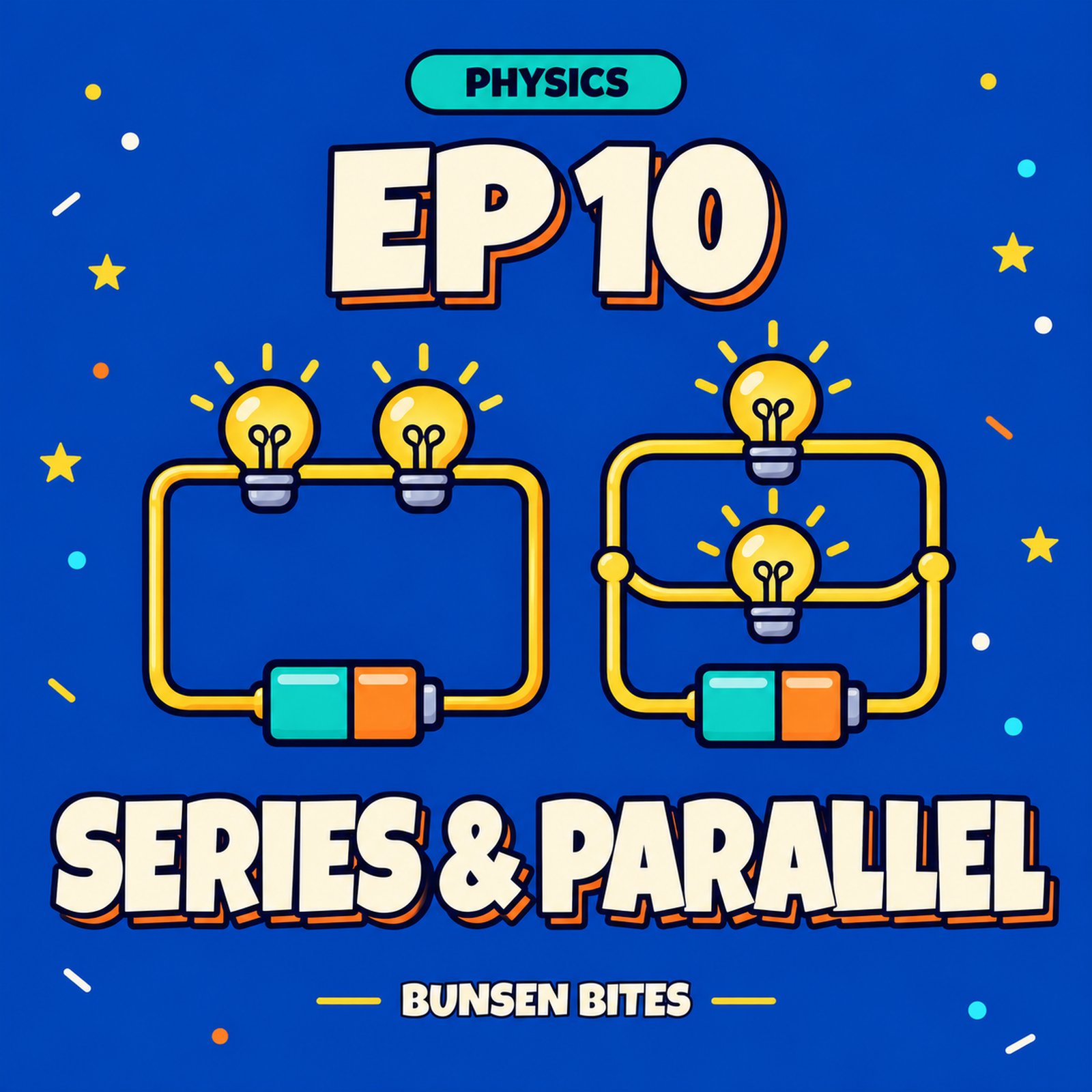 The Night a Prankster Rewired Your House (Physics Level 8) 25.10.2026 6mWe're going to run your house wired the wrong way, watch it fall apart, then rewire it the right way. Along the way you'll get the two rules electricians live by.Houses are wired in parallel so every device gets full voltage and works on its own. The price is that the currents add up in the wire feeding them. The listener leaves able to state both rules with symbols and units. In series, current is the same everywhere and voltages add up. In parallel, voltage is the same on every branch and currents add up. They can also say which one their house uses and why.Sources:https://eshop.se.com/in/blog/post/series-vs-parallel-circuits.htmlSource: Episode 10 - Physics Level 8, Series and Parallel (10/17)Style: Exam prepLength: 961 words, 5 min targetGenerated: 2026-10-25
-
 Why the Pigeon Doesn't Fry (Physics Level 8) 25.10.2026 8mThe bird's secret is that a volt isn't something a wire has. It's a difference between two points. We'll chase that idea until it gives us one equation, and by the end you'll be able to work out exactly why the bird lives.The bird isn't tough. The maths protects it. Small V over big R means almost no I. The listener leaves able to say what potential difference is and how to measure it, state R = V/I in ohms, and rearrange it with the triangle to explain a real-world puzzle.Sources:https://www.electronics-notes.com/articles/history/pioneers/georg-simon-ohm-biography.phpSource: Episode 9 - Physics Level 8, Voltage and Resistance (9/17)Style: Exam prepLength: 1149 words, 8 min targetGenerated: 2026-10-25
-
 Stuck Charge, Moving Charge (Physics Level 8) 25.10.2026 7mWe're hunting for the one difference between those two. First we'll make charge pile up and stay put, then we'll let it go and count it as it moves, and by the end you'll know exactly what an amp is counting.The spark and the glow differ in one thing only: whether the charge keeps moving. A zap is a pile that empties all at once. A light is charge passing steadily, and amps are just the count of how much gets by each second, which is why the counter has to stand in its way.Sources:https://en.wikipedia.org/wiki/Coulombhttps://www.schoolphysics.co.uk/age11-14/Electricity%20and%20magnetism/Current%20electricity/text/Charge_and_current/index.htmlhttps://www.physicsclassroom.com/class/estatics/Lesson-2/Charging-by-Frictionhttps://www.ck12.org/flexi/physical-science/electric-charge-and-electric-force/what-is-the-process-for-charging-a-balloon-with-static-electricity/Source: Episode 8 - Physics Level 8, Charge and Current (8/17)Style: Exam prepLength: 1107 words, 6 min targetGenerated: 2026-10-25
-
 The Flash You've Never Seen (Physics Level 8) 25.10.2026 8mThat invisible flash is a cousin of the light you read by, and of your microwave, your dentist's X-ray and sunburn. They're all one family. By the end you'll know the family in order, why they all travel at the same speed, and how a thing's place in the line tells you whether it heats your dinner or damages your cells.The listener can recite the spectrum in order. They can state that all of it moves at the speed of light and crosses a vacuum, and they can predict from where something sits in the line whether it's a handy tool or a hazard. The one ordered line explains both halves of the topic, uses and dangers.Sources:https://courses.ems.psu.edu/astro801/content/l3_p4.htmlSource: Episode 7 - Physics Level 8, Invisible Light (7/17)Style: Exam prepLength: 1289 words, 7 min targetGenerated: 2026-10-25
-
 Why Your Red Shirt Goes Black (Physics Level 8) 25.10.2026 5mBy the end you'll know why that shirt goes black. First we take white light apart to see what's inside it. Then we see that every coloured thing you've ever looked at is really throwing light away.Back to the shirt, and now the listener can explain it themselves. A red object only reflects red. Green light contains no red. So nothing bounces back to your eye, and you see black. Colour was never in the shirt. It was in the light.Sources:https://spark.iop.org/newtons-visible-spectrumhttps://www.vedantu.com/question-answer/explain-newtons-experiment-by-which-he-proved-class-12-physics-cbse-61559cfe8ec0356042a8b957https://en.wikipedia.org/wiki/Visible_spectrumhttps://www.britannica.com/science/primary-colorhttps://www.wtamu.edu/~cbaird/sq/2015/01/22/why-are-red-yellow-and-blue-the-primary-colors-in-painting-but-computer-screens-use-red-green-and-blue/https://www.britannica.com/science/RGB-color-modelSource: Episode 6 - Physics Level 8, Light and Colour (6/17)Style: Exam prepLength: 849 words, 5 min targetGenerated: 2026-10-25
-
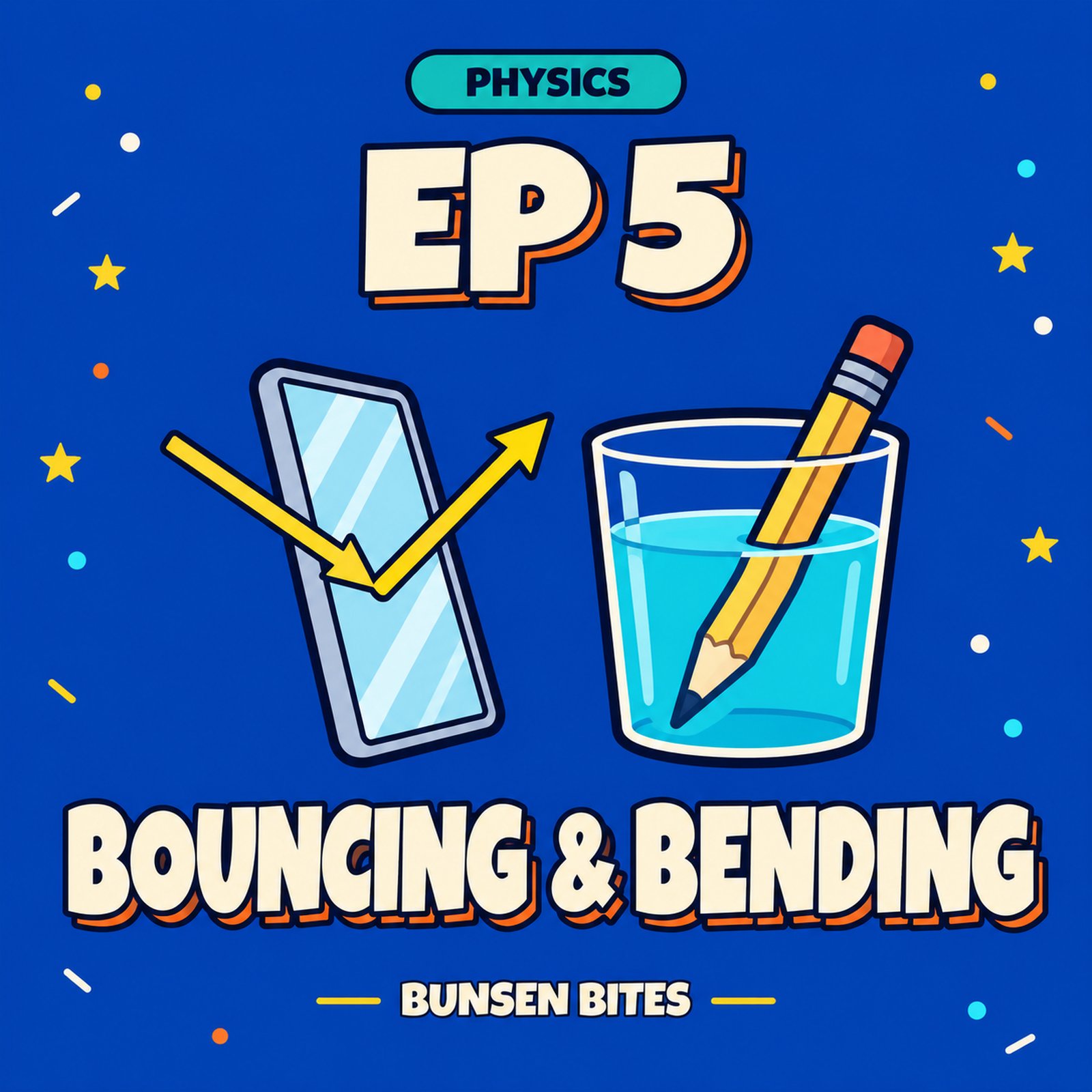 The Mirror Nobody Can See (Physics Level 8) 25.10.2026 7mSo today's question is: how do you steer something moving at 300,000 kilometres every second? It turns out light only lets you do two things to it, bounce it or slow it down, and by the end you'll know the exact rule for each.Two rules, one invisible line. Reflection: the angle of incidence equals the angle of reflection, measured in degrees from the normal. Refraction: when light crosses into a new material it changes speed, measured in km/s, and that change of speed bends it toward or away from the normal, unless it arrives straight along the normal. The listener can now explain the Moon mirror, a periscope, and the lens in their own eye.Sources:https://www.schoolphysics.co.uk/age11-14/Light/text/Refraction_/index.htmlhttps://eclipse.gsfc.nasa.gov/SEhelp/ApolloLaser.htmlSource: Episode 5 - Physics Level 8, Bouncing and Bending Light (5/17)Style: Exam prepLength: 1131 words, 7 min targetGenerated: 2026-10-25
-
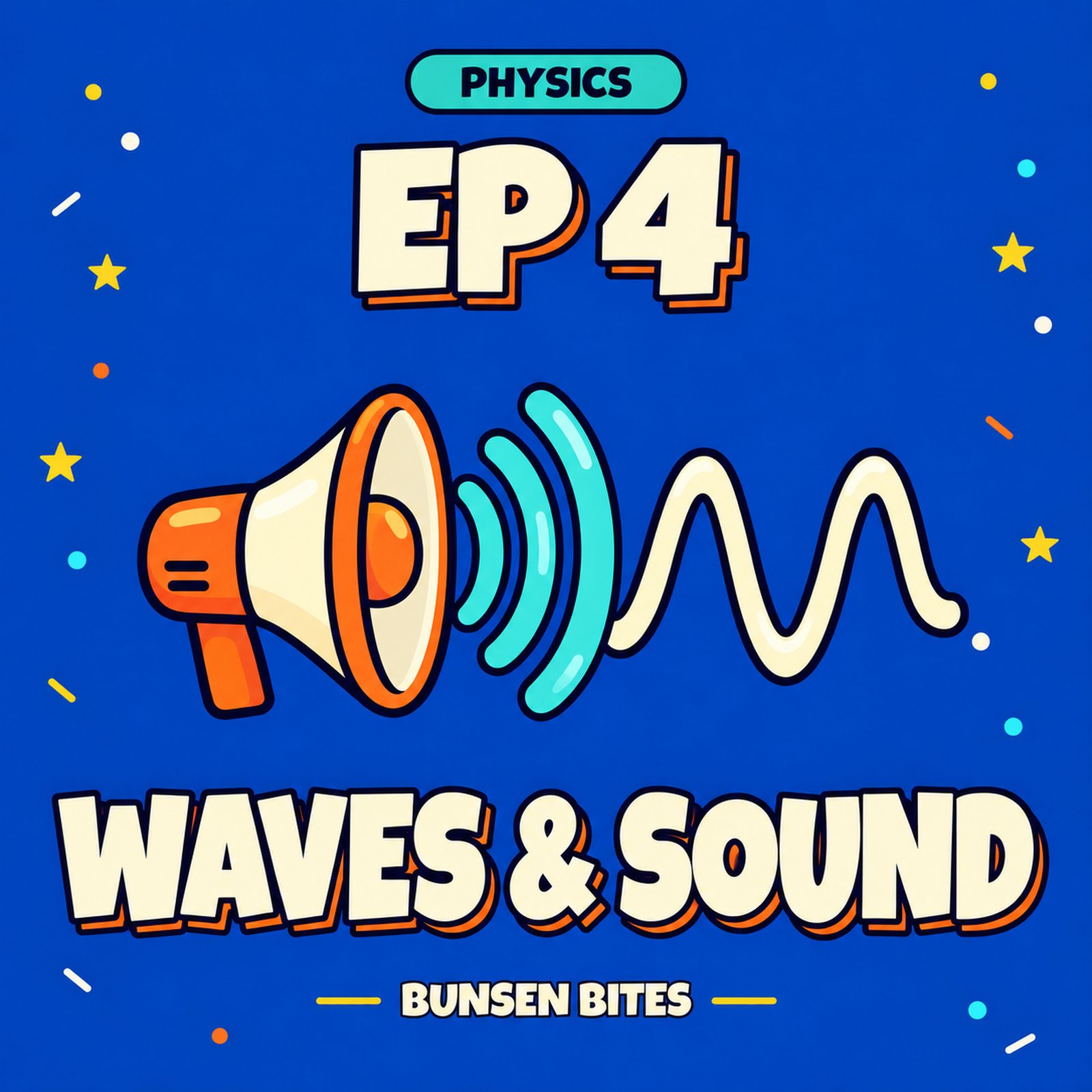 The Screams Over Your Head (Physics Level 8) 25.10.2026 8mWe're going to work out exactly what a sound has to be for your ears to catch it, and then why bats deliberately make the ones you can't. By the end you'll be able to calculate how small a bat's sound waves are, using one short formula.The scream you can't hear is the bat's whole strategy. Push the frequency up past the edge of human hearing and the wavelength shrinks to the size of dinner. You can now prove it with v = fλ: 343 ÷ 100,000 is about 3.4 mm.Sources:https://tractian.com/en/glossary/speed-of-soundhttps://en.wikipedia.org/wiki/Bat_detectorhttps://en.wikipedia.org/wiki/Bat_species_identificationhttps://cdn.bats.org.uk/uploads/pdf/Resources/Welsh-EdPack/05-Echolocation-Eng.pdf?v=1551107156https://arxiv.org/pdf/2407.15318https://www.vigienature-ecole.fr/en/node/102Source: Episode 4 - Physics Level 8, Waves and Sound (4/17)Style: Exam prepLength: 1118 words, 7 min targetGenerated: 2026-10-25
-
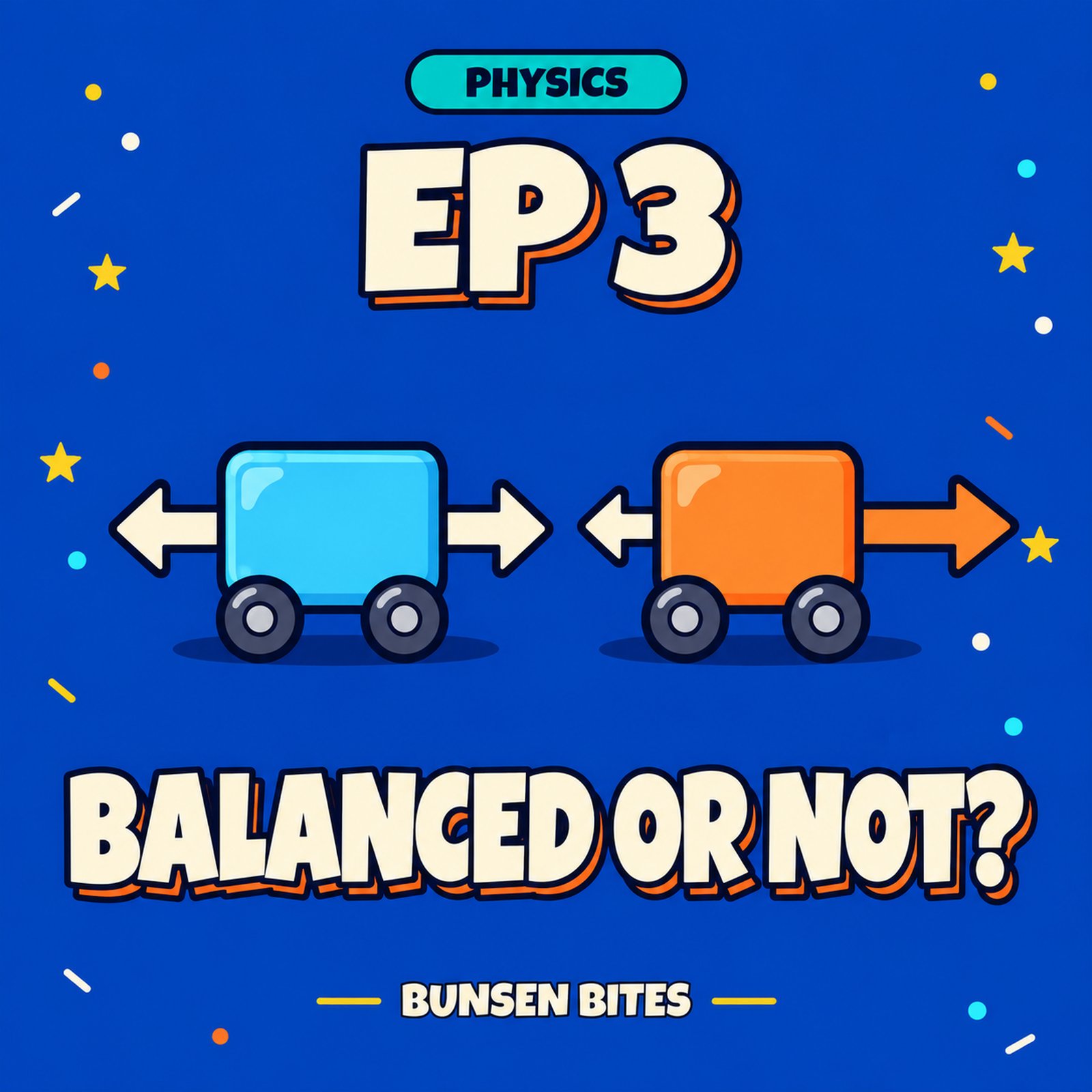 Seventy Miles an Hour and Zero Newtons (Physics Level 8) 25.10.2026 7mWe're going to find out why a thing can be moving fast and still have its forces add up to exactly nothing. Then we'll take that idea somewhere much scarier: a person falling out of a plane.The listener can now say: resultant force = the forces in one direction minus the forces in the opposite direction, measured in newtons. If it's zero, the object stays still or keeps a steady speed. If it isn't zero, the speed, the direction or the shape changes. They can also explain how a falling person can have zero resultant force, and why a parachute works by unbalancing the forces on purpose.Sources:https://en.wikipedia.org/wiki/Terminal_velocityhttps://www.teachoo.com/10174/3050/Balanced-and-Unbalanced-Forces/category/Concepts/https://www.tes.com/en-us/teaching-resource/balanced-or-unbalanced-forces-tug-of-war-11080299https://www.tes.com/teaching-resource/new-aqa-gcse-2016-physics-resultant-forces-12265672https://www.aakash.ac.in/important-concepts/physics/resultant-forceSource: Episode 3 - Physics Level 8, Balanced or Not? (3/17)Style: Exam prepLength: 1073 words, 6 min targetGenerated: 2026-10-25
-
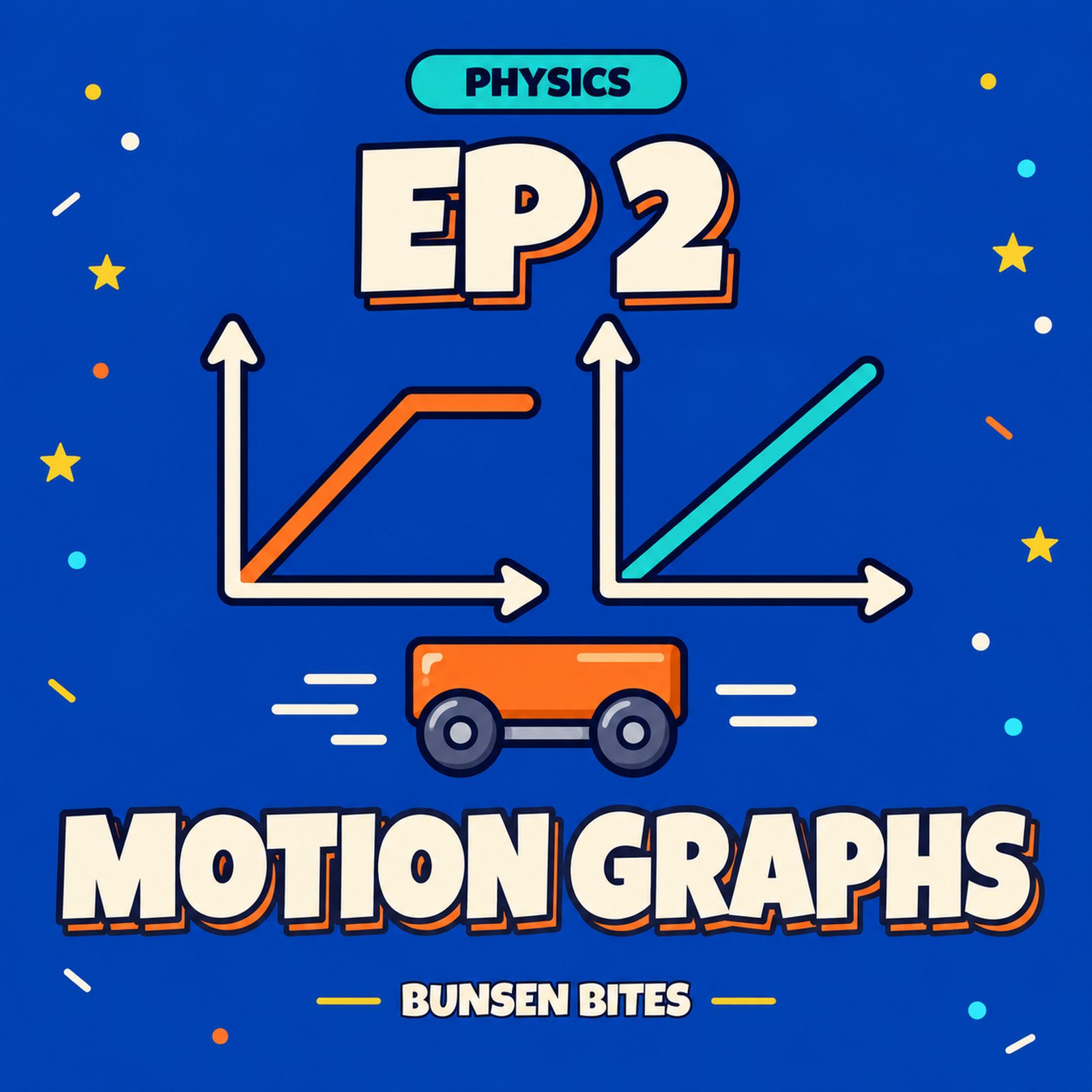 The Getaway Car That Was Parked and Speeding (Physics Level 8) 25.10.2026 8mWe're going to solve this case. To do it, we need to learn to read one kind of motion graph, then catch the detective nearly arresting the wrong person because she read the second one the same way.The case is solved by one habit: read the up-axis before the line. The listener leaves able to say speed = distance/time (m/s) and acceleration = change in speed/time (m/s²), and to explain why a flat line means opposite things on the two graphs.Sources:https://www.olympics.com/en/news/usain-bolt-record-world-champion-athlete-fastest-man-olympics-sprinter-100m-200mhttps://www.britannica.com/story/how-fast-is-the-worlds-fastest-humanSource: Episode 2 - Physics Level 8, Motion Graphs (2/17)Style: Exam prepLength: 1153 words, 7 min targetGenerated: 2026-10-25
-
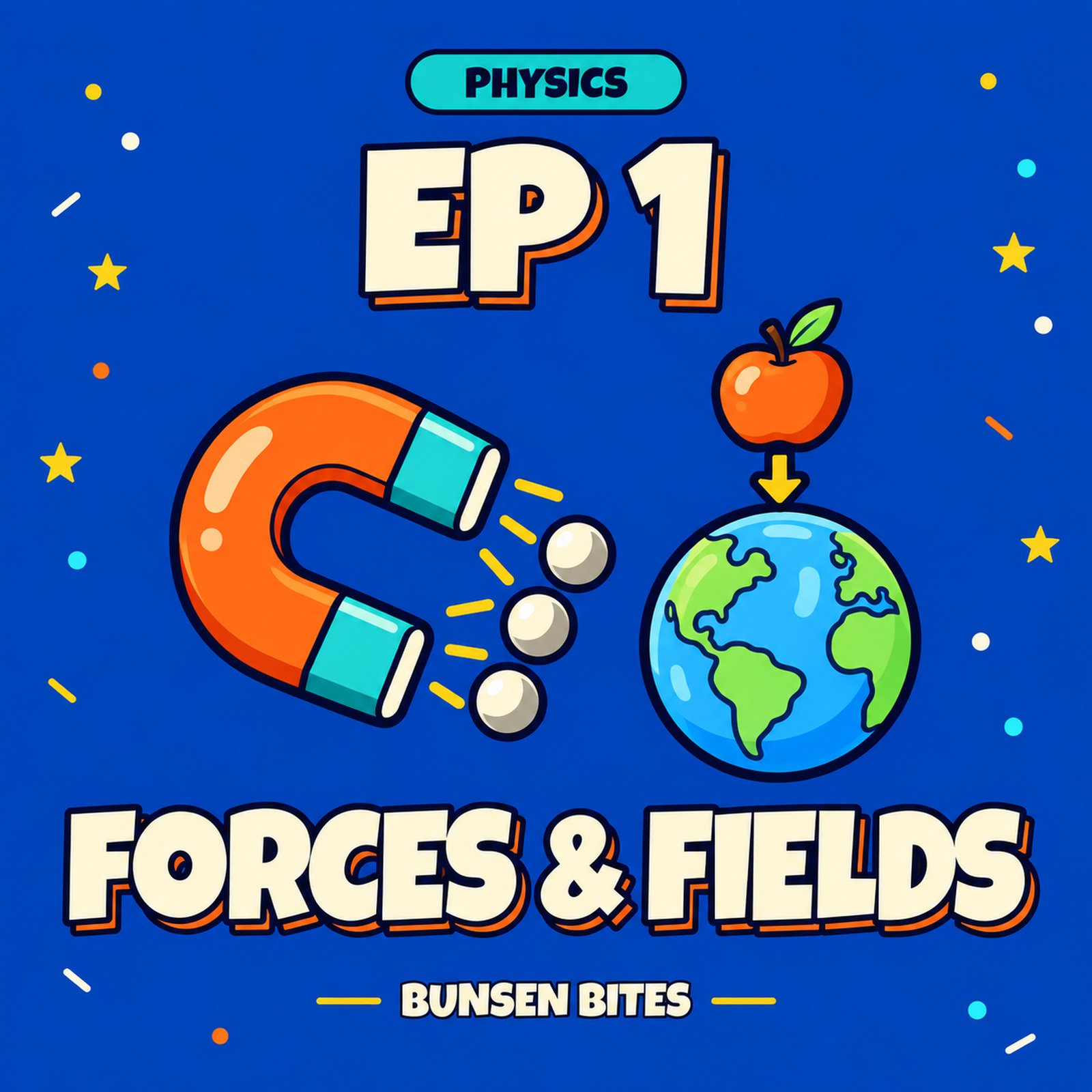 Your Bathroom Scale Is Lying (Physics Level 8) 25.10.2026 6mWe're going to work out what a scale actually feels when you stand on it, and what number it should really show. Then we'll take that scale somewhere else and watch the number change, even though you haven't changed at all.The listener works out their own real weight. Take your kilograms and times by 10: forty kilos means 400 newtons. Then comes the twist. The scale was only ever guessing your kilograms by assuming it was on Earth. On the Moon it would be wrong, but your newtons would be the honest reading.Sources:https://www.ssc.education.ed.ac.uk/BSL/physics/gravitationald.htmlSource: Episode 1 - Physics Level 8, Forces and Fields (1/17)Style: Exam prepLength: 950 words, 6 min targetGenerated: 2026-10-25
-
 The Fittest Might Be Squishy (Biology Level 8) 25.10.2026 8mToday we're finding out what 'fittest' really means, and it isn't strongest or fastest. First we'll see what every living thing is actually fighting over. Then we'll see what happens when the rules of that fight change, and why scientists are freezing seeds just in case.Survival of the fittest really means survival of whoever happens to fit. You can't train for it or choose it. That's why variety matters, and why a freezer full of seeds is an insurance policy against extinction. The listener can now explain natural selection in four steps: variation, competition, survival and reproduction, and inheritance.Sources:https://en.wikipedia.org/wiki/Peppered_moth_evolutionhttps://simple.wikipedia.org/wiki/Peppered_moth_evolutionhttps://confidentials.com/manchester/strange-city-5-how-manchesters-moths-proved-darwin-righthttps://www.croptrust.org/news-events/news/article/svalbard-global-seed-vault-crosses-major-milestone-14-million-seed-samples-secured/https://en.wikipedia.org/wiki/Svalbard_Global_Seed_Vaulthttps://www.seedvault.no/2026/06/18/svalbard-global-seed-vault-crosses-major-milestone-1-4-million-seed-samples-secured/https://www.frozenark.org/https://www.frozenark.org/what-we-do-overviewSource: Episode 10 - Biology Level 8, Survival of the Fittest (10/10)Style: Exam prepLength: 1148 words, 7 min targetGenerated: 2026-10-25
-
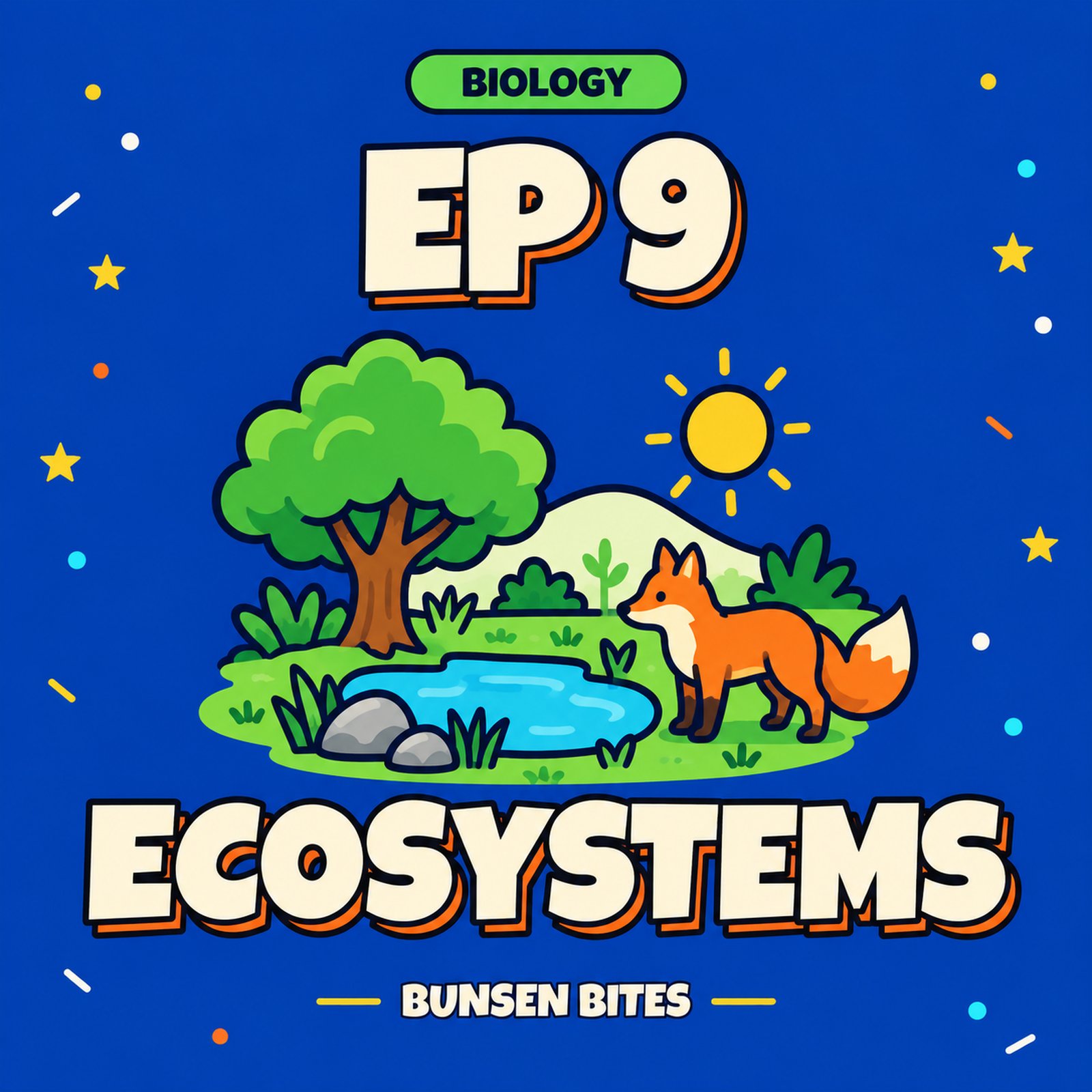 The Forest That Needs an Otter (Biology Level 8) 25.10.2026 6mWe're going to work out who that animal is and why a forest needs it. To do that we'll zoom out step by step, from one animal to the whole forest, and then find out what happened when people took that animal away.If you wanted to save the forest, your first instinct would be to protect the kelp, and that's the wrong answer. The right answer is to protect a furry animal that eats urchins. The listener can now state the five words (organism aside: habitat, population, community, ecosystem), sort any factor into biotic or abiotic, and explain interdependence using a chain they'll remember.Sources:https://defenders.org/wildlife/sea-otterhttps://cimi.org/blog/the-keystone-species/https://www.britannica.com/video/keystone-species-parts-coast-kelp-forest-ecosystem/-174837https://www.marinemammalcenter.org/news/how-sea-otters-can-help-save-the-planetSource: Episode 9 - Biology Level 8, Ecosystems (9/10)Style: Exam prepLength: 861 words, 5 min targetGenerated: 2026-10-25
-
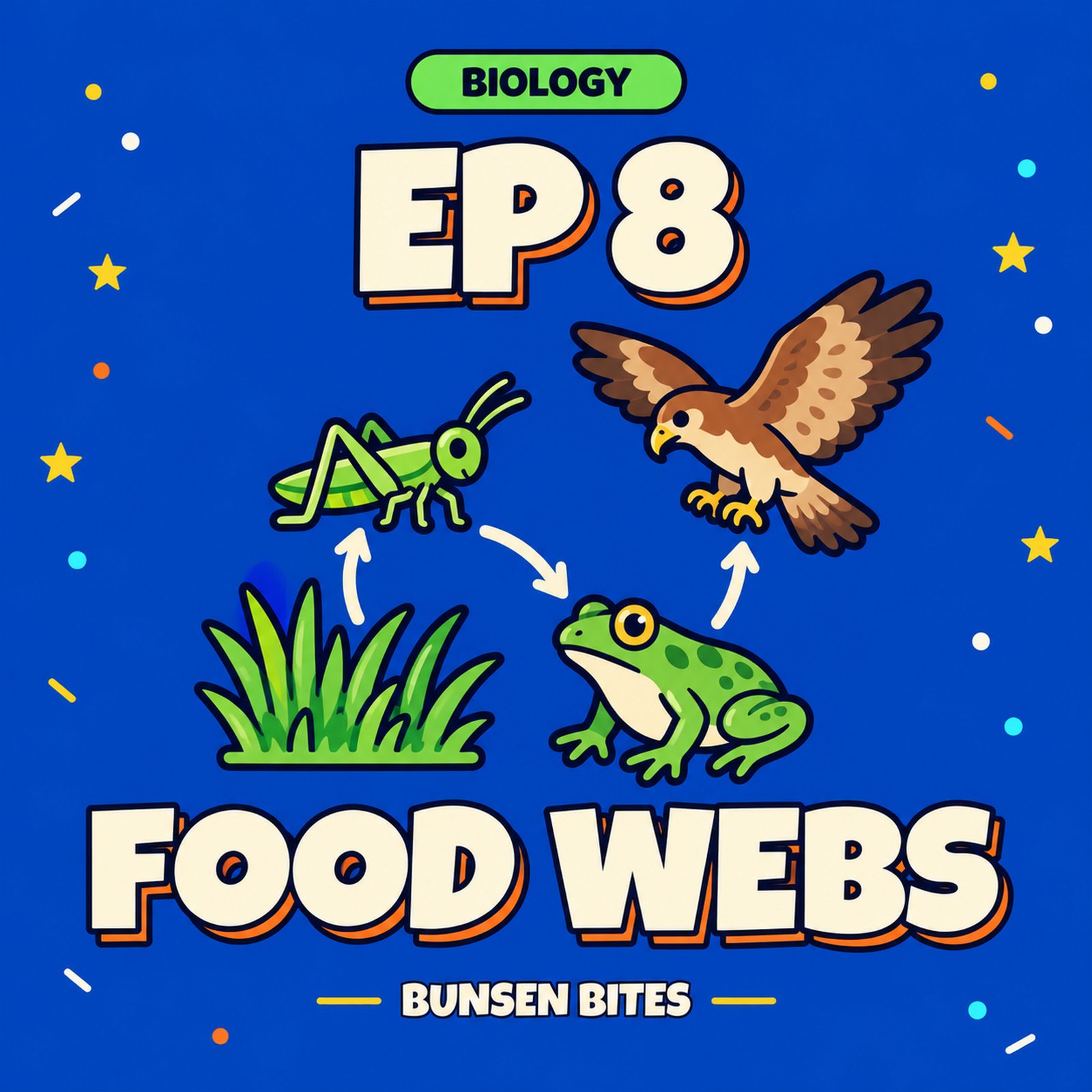 Which Way Does the Arrow Point? (Biology Level 8) 25.10.2026 6mWe're going to work out what that arrow really means. Then we'll follow it to the top of the food chain and find out why the animal everyone thinks is in charge is the one most likely to be in trouble.The listener comes back to the opening question and now answers it correctly: the arrow points to the eater, because energy flows into it. They can explain why that same direction makes the top predator the most fragile animal, since it carries the most poison and is the first to starve. They also learn that the real power sits with the producers and the pollinators at the bottom.Sources:https://nhpbs.org/wild/silentspring.asphttps://blog.susnano.wisc.edu/2013/12/17/the-cautionary-tale-of-ddt-biomagnification-bioaccumulation-and-research-motivation/https://www.animalsaroundtheglobe.com/how-ddt-nearly-wiped-out-bald-eagles-in-the-20th-century-5-345130/Source: Episode 8 - Biology Level 8, Food Webs (8/10)Style: Exam prepLength: 1000 words, 6 min targetGenerated: 2026-10-25
Similar podcasts


Popular in
The podcast also appears in the podcast charts of these countries.
