
This Week in Space (Audio)
TWiT
0
This Week in Space explores the new space age with hosts Rod Pyle and Tariq Malik. Each Friday, they discuss the latest news and developments in space exploration, from rocket launches to cosmic discoveries. The podcast is part of the TWiT network and offers ad-free options for subscribers.
Episodes
-
 TWiS 236: Alienspotting - Revisiting Assumptions About Extraterrestrial Life 13.11.2026 1h 8mWhen we think of extraterrestrials, our minds generally go from the latex-suited bipedal aliens seen in Star Trek and Star Wars to more exotic critters in sci-fi movies. Scientists think in terms of carbon-based microbial life and other lower life forms. But some researchers, such as Mikhail Tikhonov from Washington University, suggest that life can take more unusual forms, ones we might not even recognize. He further suggests a new definition of life: something that takes in and transforms energy and replicates. His ideas radically expand our notions of alien life and how it might be recogniz...
-
 Join Club TWiT 13.11.2026You can help support what we do at TWiT by joining Club TWiT. You'll get ad-free versions of our shows, access to the Club TWiT Discord, chapter markers, in-app transcripts, and custom programming such as Stacy's Book Club, Mikah's Crafting Corner, Off By One with Jeff Atwood, and the AI Users Group.Join today!
-
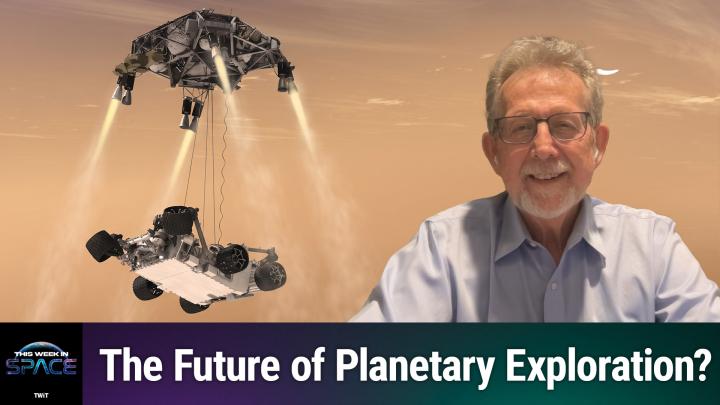 TWiS 235: Robots in Dark and Scary Places - With Jim Green, Former NASA Chief Scientist 06.11.2026 1h 13mRobots have, and always will, be the first to go to the dark and scary places in space. For many years, Dr. Jim Green oversaw these missions for NASA as their Chief Scientist. He joins us to talk about the past, present, and future of planetary exploration. Jim has always been passionate about NASA's science programs and believes we're quite likely to find life off-Earth in the near future. Join us! Headlines: NASA Unveils New X-70 Fractal X-Plane with Reconfigurable Tech Earth Gains Temporary "Mini Moon" Asteroid 2026 QQ8 NASA Hosts First-Ever Max Power Air Show Highlighting Space Innovation...
-
 TWiS 234: Living in Lunar Caves - Could We Live Inside the Moon? 30.10.2026 1h 8mIn our ongoing quest to develop a moon base, could we possibly utilize the area beneath the surface of the moon in order to make the moon habitable? In this episode of This Week in Space, Tariq Malik and guest host Mike Wall of Space.com talk with Than Putzig of the Planetary Science Institute about a NASA-backed payload bound for the Marius Hills Pit, a roughly 50-meter-wide opening that may lead into a lunar lava tube to gather more data about these formations on the Moon and the possibility of these lunar caves becoming the Moon's first living habitats for humans. Putzig explains how geophy...
-
 TWiS 233: The Artemis Generation - The STEM Pipeline for Space 23.10.2026 47mNewspace is hiring! With the major powers heading to the moon, low-Earth orbit becoming busier than ever, and countless new companies entering the space marketplace, the hiring pipeline is more critical than ever. We spoke with Dr. Amanda Smith-Hackler, the Director of Education for the Universities Space Research Association and Principal Investigator for the Air Force Research Laboratory (AFRL) Scholars and STEM Workforce Development Programs, about the new and exciting opportunities available to young people seeking to enter the space workforce. Host: Tariq Malik Co-Host: Fredrick (Rick) Je...
-
 TWiS 232: The Lunar Dump - Over 800 GB of Moon Data 16.10.2026 1h 10mIn this week's episode we turned to Chelsea Gohd, former writer for NASA/JPL and now with Space.com, to talk about the recent large data dump from the Artemis II mission. What was included? Why is this new data important? What observations were made, and what discoveries might result from them? What kind of annotations and notes did the astronauts include that make these observations uniquely valuable? And finally, we talk about Artemis III - what is the mission profile and what are the stakes for SpaceX and Blue Origin? Headlines: SpaceX Seeks Approval for 450 Starship Launches Per Year Flyin...
-
 TWiS 231: Sailing the Stellar Seas - Our Favorite Space Sci-Fi! 09.10.2026 58mFrom the earliest works of Jules Verne and H.G. Wells to the best of contemporary space science fiction, Tariq and I dive deep into our favorite space si-fi across the ages! And our challenge to you for some of the most obscure titles we know. Headlines: Remembering Apollo Era Legends Margaret Hamilton and Milt Windler Soviet Meteor 27 Satellite Breaks Up, Raising Space Debris Concerns Elon Musk Receives National Science Award Amid NASA Science Cuts Main Topic: Space Science Fiction Books and Media Influential Childhood Sci-Fi Classics and Lesser-Known Gems H.G. Wells, Ray Bradbury, and the En...
-
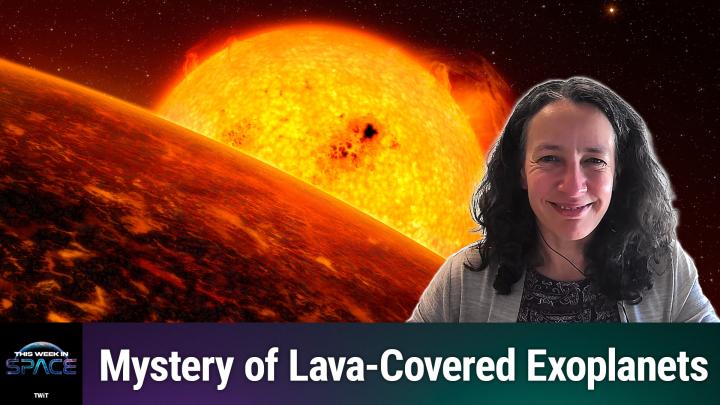 TWiS 230: Living on Lava Worlds - Atmospheres on Lava-Covered Exoplanets 02.10.2026 1h 8mThink you're having a hot summer? Try living on 55 Cancri-e, a super-Earth with daytime temperatures above 4000 degrees Fahrenheit. Most of these super-Earths orbit frighteningly close to their host stars and have long since had their atmospheres scraped away, leaving them baked, parched rocks. But some, like 55 Cancri, still have dense envelopes of air. How is that possible, when the planet is 20 times closer to its star than our own planet Mercury? Dr. Laura Schaefer explains how molten lava worlds defy the odds. Plus: Starship update, the first orbital data centers, and a new year on Mars....
-
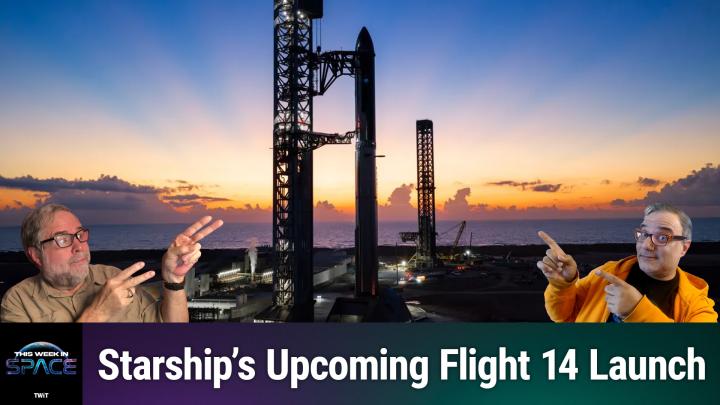 TWiS 229: Is It Starship's Time? - Test Flight 14 to Orbit 25.09.2026 1h 6mThis week it's Rod and Tariq working through the most important space headlines. The big story: Starship could launch test flight 14 as early as Monday the 28th. We've seen lots of tests, but this is the first attempt at an orbital flight, the success of which is necessary for the lunar landing system and eventual retirement of the Falcon 9 and Crew Dragon. Also: Vast starts up a lunar division, Isaacman's relief over delays to China's lunar program, concerns over announced discontinuation of SpaceX's Falcon 9 and Crew Dragon, and yet more money for Boeing's troubled Starliner. This and more o...
-
 TWiS 228: What's a HOTOL? - Britain in Space 18.09.2026 58mIn the 1980s, as the US space shuttle was just starting operations, the UK embarked on an ambitious project called HOTOL—short for Horizontal Take Off and Landing, a radical, air-breathing spaceplane design. Political and funding shifts in the UK ultimately derailed the project, despite the promising technologies it pioneered. The idea was later restarted as Skylon, with key individuals and refined technologies at its core. This project, too, struggled, ultimately shuttering in 2024. Despite this, the promise of rapid, reusable spaceplanes that can launch and land at airports is still coveted...
-
 TWiS 227: TrekMania - Michael Okuda Talks LCARS, Easter Eggs, and Sci-Fi Innovation 11.09.2026 1h 9mHold onto your phasers, but it's been 60 years since Star Trek's debut, and the franchise is still going strong. For 40 of those years, Mike Okuda, working with a gifted team that included his wife Denise, has been central to the look, feel, and substance of the Star Trek universe. From the LCARS computer graphical system to alien languages to the designs and color schemes, and even the digital effects remastering of the original series, Mike has been the Cardinal of Canon when it comes to all things Trek. He has also been involved with many more space-related shows, books, and NASA projects....
-
 TWiS 226: Who Owns the Moon? - Capitalism and Property Rights in Space 04.09.2026 1h 13mCapitalism—and a strong profit motivation—has driven enterprise for centuries. Two notable examples are the East India Company and the US transcontinental railroad, and the various tycoons who built it. In neither case, by today's standards, were the operations fair or ethical on a number of fronts. Can we do better in space? Dr. Rainer Zitelmann joins us to discuss capitalism and the importance of extraterrestrial land ownership as an enabler of human expansion off-Earth. He's got a lot to say, and not all of it is what you might expect. Join us for this fascinating and informative look at on...
-
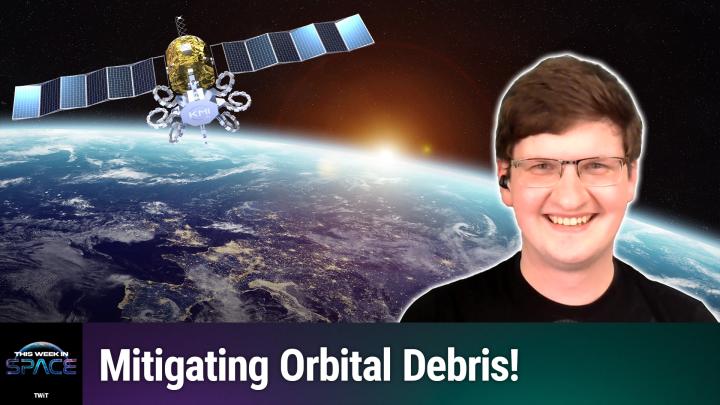 TWiS 225: Get a Grip! - New Technologies for Orbital Salvage 28.08.2026 1hThe mitigation of orbital debris is an increasingly serious problem that has not gotten enough attention, but this is changing. Commercial companies are addressing orbital debris, and one of them, KMI Space, has flown its experiments aboard the International Space Station, performing over 170 individual rendezvous-and-grab operations. The results are very promising, and the company is moving ahead with ever more ambitious designs. Adam Kall of KMI joins us to discuss their work on the ISS, the goals of the company, and how nature—via the humble octopus and gecko lizards—may have provided the a...
-
 TWiS 224: The Science of Artemis - What We'll Do on the Moon 21.08.2026 59mIt has been said that the Moon is a harsh mistress, and nowhere is this more apparent than at the lunar south pole. That is, however, where the Artemis program is headed, and we need to figure out how to best explore the region. Dr. David Kring of the Universities Space Research Association's Lunar and Planetary Institute joins us to explore the where, whys, and hows of the Artemis Program's lunar exploration plans, and the answers--and risks--that await us. Headlines: Starship Flight 12 Survives Indian Ocean Landing nd Long Sea Journey China's Chang'e 7 Lunar Hopper Mission Targets Permanentl...
-
 TWiS 223: The Lunar Domain - Our Future on the Moon with Dr. Scott Pace 14.08.2026 1h 5mWe're headed for a space renaissance, and it will be focused on the Moon. The US, China, and international partners of both are vying to land people there and construct a permanent lunar base. Meanwhile, NASA is evolving to embrace commercial enterprise unlike any time in its past, and American lunar efforts are lagging. What are the stakes? Does it matter who returns humans there first? What does the future of lunar commerce look like? Dr. Scott Pace, the Director of the Space Policy Institute at George Washington University, joins us. Main Topic: The Evolving Lunar Domain and US Space Policy...
-
 TWiS 222: How to Invade Earth in 22 Easy Steps - With Rich Edwards 07.08.2026 1h 8mWe've all seen the movies... the aliens come to Earth, the aliens overcome the inferior humans, and the aliens fall prey to something dumb they overlooked, like microbes, Windows 95, or most absurdly, water. From the 1950s through yesterday, some of the best movies we've seen were about the invasion of our planet. They can be clever, scary, or even downright dumb, but they are all fun. Veteran space writer Rich Edwards joins us to give advice on how to repel the invaders! Headlines: Department of Defense drops new batch of UFO/UAP files Blue Origin traces New Glenn rocket explosion to faulty o...
-
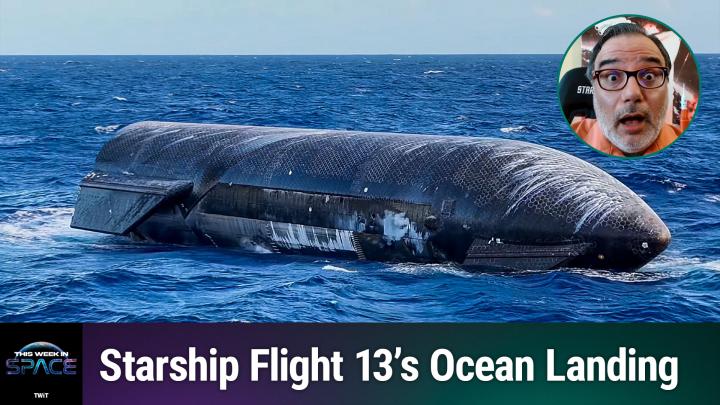 TWiS 221: Starship Can Float? - Roman Space Telescope Ready to Launch! 31.07.2026 57mRod Pyle is out this week, so Rick Jenet of the National Space Society joins Tariq Malik this week to talk about SpaceX's Starship Flight 13, which deployed new Starlink V3 satellites and stunned viewers when the ship survived reentry intact enough to float in the ocean for days afterward. They also discuss NASA's Roman Space Telescope, now just a month from launch, and an in-progress emergency effort to save the ailing Swift Space Observatory using a servicing spacecraft that is itself now experiencing technical trouble. Finally, they look into Boeing's continued Starliner delays and India's...
-
 TWiS 220: First on Mars - The 50th Anniversary of Viking 1 24.07.2026 1h 16mThis week, we cover how Starship Flight 13 finally prepares to launch amid a legal battle over SpaceX's proposed land swap at Starbase, plus a Chinese Long March 3B rocket gets struck by lightning during liftoff, yet still delivers its satellite safely. Then, guests Dr. Pascal Lee and astrobiologist Dr. Penny Boston join the show to mark the 50th anniversary of Viking 1's landing on Mars and revisit the mission's groundbreaking life-detection experiments and the decades-long controversy over what they actually found. The conversation traces Mars exploration from the earliest Mariner flybys thr...
-
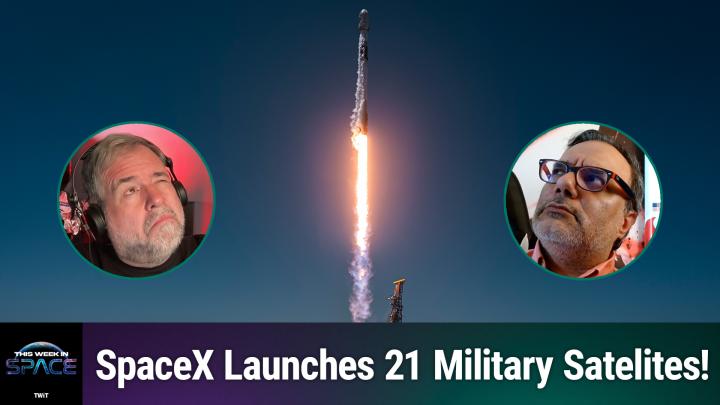 TWiS 219: SpaceX Goes to War! - And Other Space Headlines 17.07.2026 1h 13mThis week we're jumping into the space headlines for the past few weeks. It's been busy, and some exciting things are happening! A couple of companies are moving into the space solar power arena--something we've long advocated--and that's welcome progress. Starship is set to fly Starship test number 13, and a lot is riding on this--the system is overdue for some proof of concept to keep up with NASA's HLS contract. An exoplanet spotted a decade ago has shown signs of a potentially habitable atmosphere; there are landslides--big ones--on Pluto, and evidence of "space candy" sugars in an interst...
-
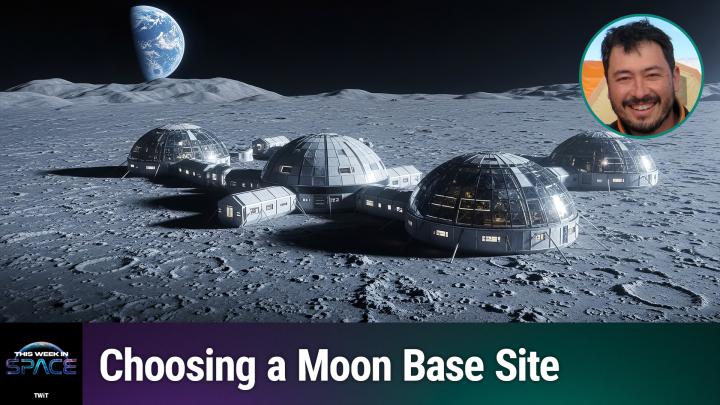 TWiS 218: Which Way to the Moonbase? - With Dr. Pascal Lee 10.07.2026 1h 10mWe've been hearing a lot about NASA's new moonbase plans, and they are ambitious. Starting with Artemis V (so far), the US plans to begin preparations for a permanent base situated in the south polar regions of the moon. Details are somewhat fluid, but one thing stands out: the poles are likely to be the most challenging places to set up shop in an already hostile environment. Planetary scientist Dr. Pascal Lee joins us to discuss moonbase siting options and why the poles may not be the best choice at first. Headlines: China Demonstrates Impressive Rocket Landing and Catch Mechanism New Horizo...
Similar podcasts


Popular in
The podcast also appears in the podcast charts of these countries.


