
The Context Window with David Deming Podcast
David Deming
0
Harvard Dean David Deming hosts conversations with leaders and thinkers about their personal journeys, including the detours, doubts, and influential people along the way. The podcast aims to provide context for the discussions that matter most. It is produced by David Deming and distributed via Substack.
Episodes
-
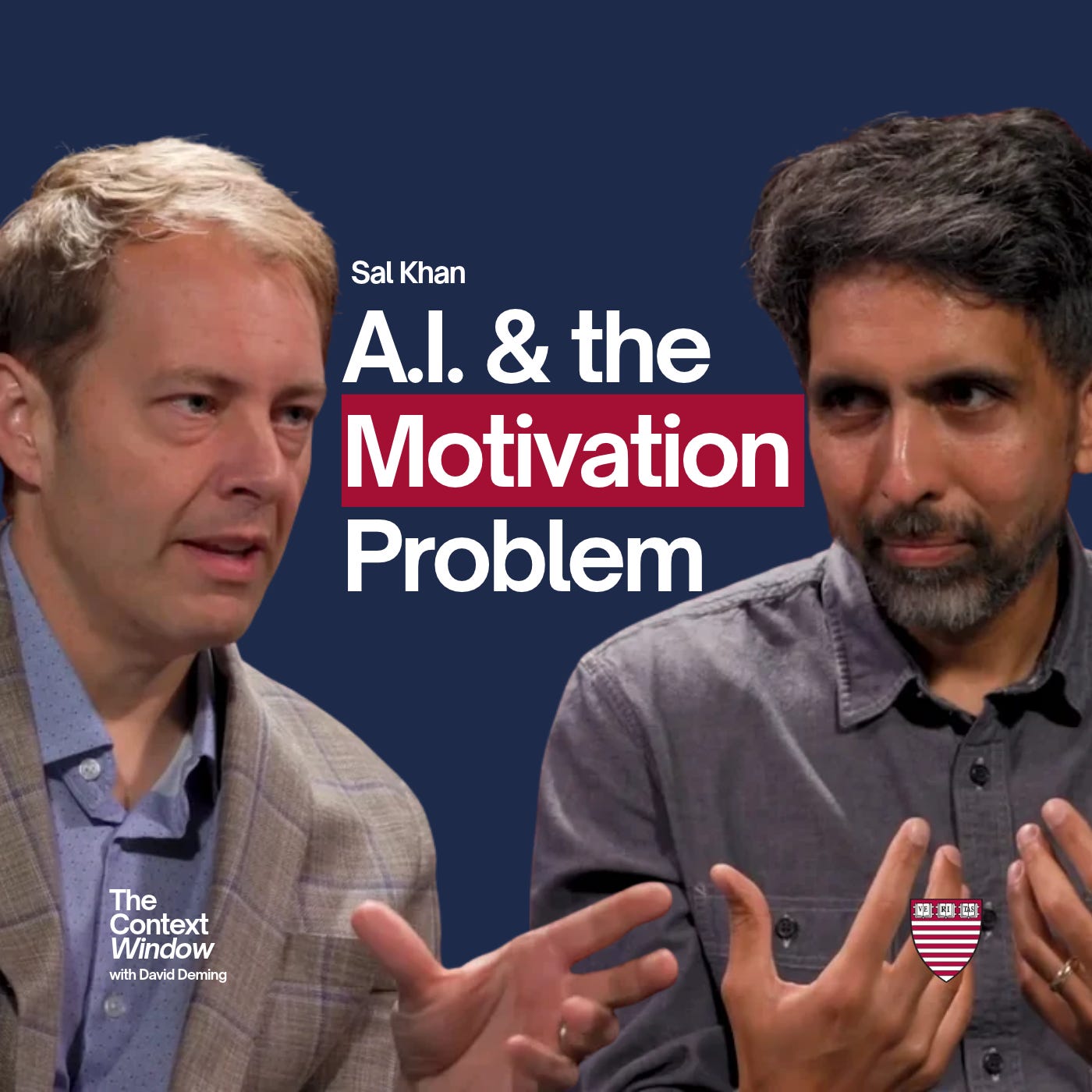 Sal Khan | A.I. can help us learn. What makes us want to? 18.11.2026 1h 29mDavid Deming - labor economist and Dean of Harvard College - talks with Sal Khan, the founder of Khan Academy, a free nonprofit educational platform that has more than 220 million registered users worldwide. Sal has produced more than 6,500 video lessons on a whole range of topics, and the videos on the Khan Academy YouTube channel have been viewed more than two billion times.We're living in a time where there is a growing fear about the impact of artificial intelligence on society, especially in education, where grade schools and colleges are grappling with cheating scandals and navigatin...
-
 Does A.I. make you a worse writer? What the research says | AI & Education, Part 3 11.11.2026 31mThis is part three of David Deming's three-part series on A.I. in education. In part one, David - labor economist and Dean of Harvard College - talked about how A.I. has changed college classrooms and what he and others are doing to protect the integrity of teaching and learning at Harvard. That was the strategy on defense. Part two was offense.Today he pulls on one final thread that was left hanging in the two previous discussions, and it's the most controversial and contentious application of A.I. in the classroom: writing. Should we use A.I. to write for us? Should we use A.I. to improve ou...
-
 How to use A.I. to learn better: What the research says | A.I. & Education, Part 2 04.11.2026 27mIn Part 2 of his series on A.I. in education, David Deming asks: Can we use A.I. to make learning better? And if so, how?Last week, David discussed how A.I. has changed college classrooms at Harvard and around the country, and how we can protect the integrity of the learning process. That was defense against A.I. This week, he talks about offense.When David dug into the research on A.I. and education almost a year ago, the evidence was pretty clear that A.I. without any guidelines, or guardrails, was harmful for learning because it makes things too easy. But since then, more than a dozen rando...
-
 Is A.I. helping students learn, or just doing the work for them? | A.I. & Education, Part 1 28.10.2026 28mToday’s topic is A.I. in the classroom, and it's a personal one for David. As Dean of Harvard College, he's been thinking and writing and talking with students a lot about A.I.: how it’s changed teaching and learning in college classrooms at Harvard and around the country, how we should adapt as teachers, and what students can do to prepare themselves for a workplace and a society where A.I. is everywhere - and they are expected to use it more and more just to keep pace.His basic view is that we should pursue a mix of what he calls defensive and offensive strategies for dealing with A.I. The d...
-
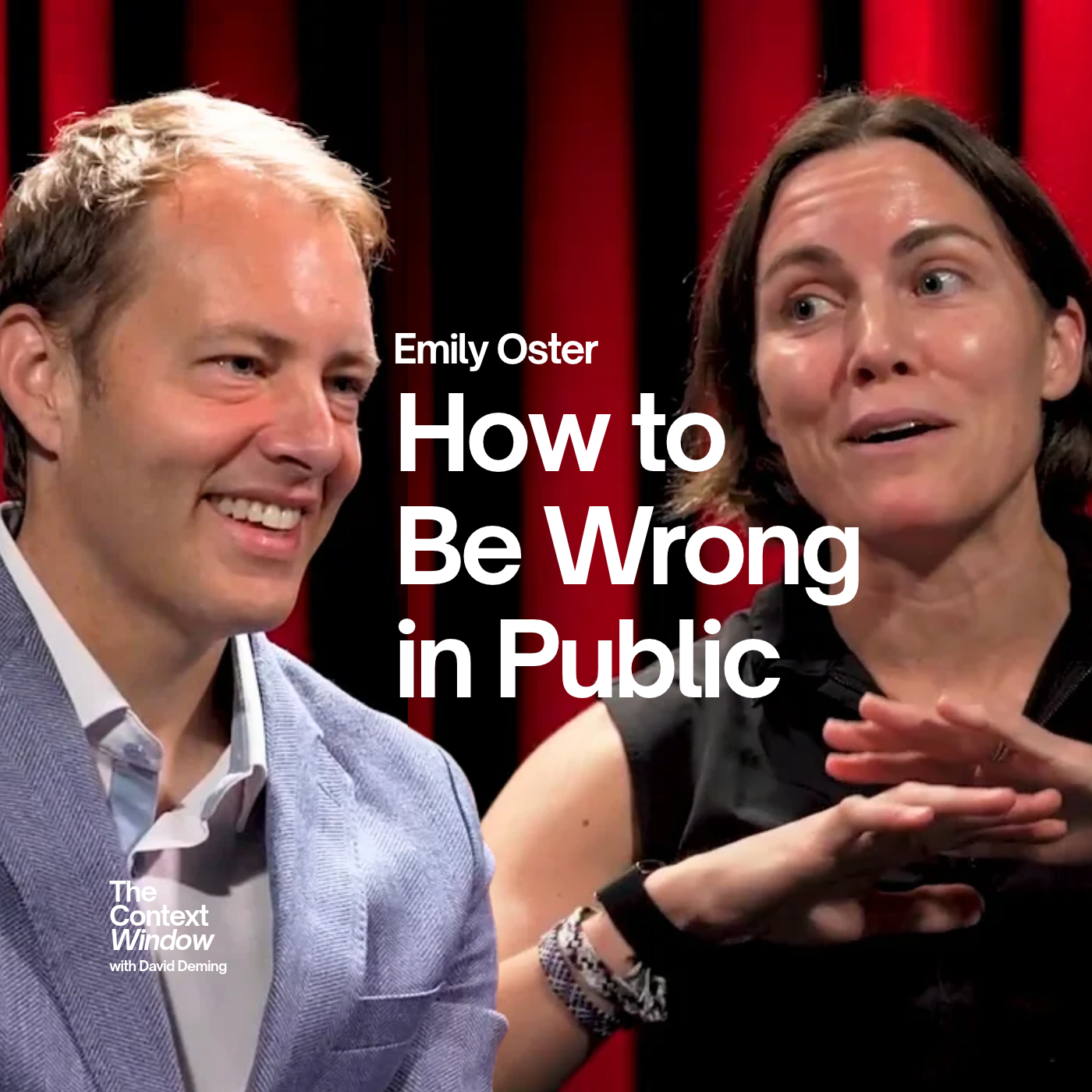 Emily Oster on being wrong and changing your mind 21.10.2026 1h 25mDavid's guest today is Emily Oster. Emily is an economist at Brown University, author of four New York Times bestselling books, and founder of the parenting information platform, ParentData. Here books Expecting Better and Cribsheet, which looked at how to interpret research on topics like alcohol consumption during pregnancy, breastfeeding, and sleep training, were genuine cultural phenomena, especially for anxious parents wondering where to turn for good advice.In October 2020, when the world was still deep in the pandemic, she wrote an influential article in The Atlantic entitled "Sc...
-
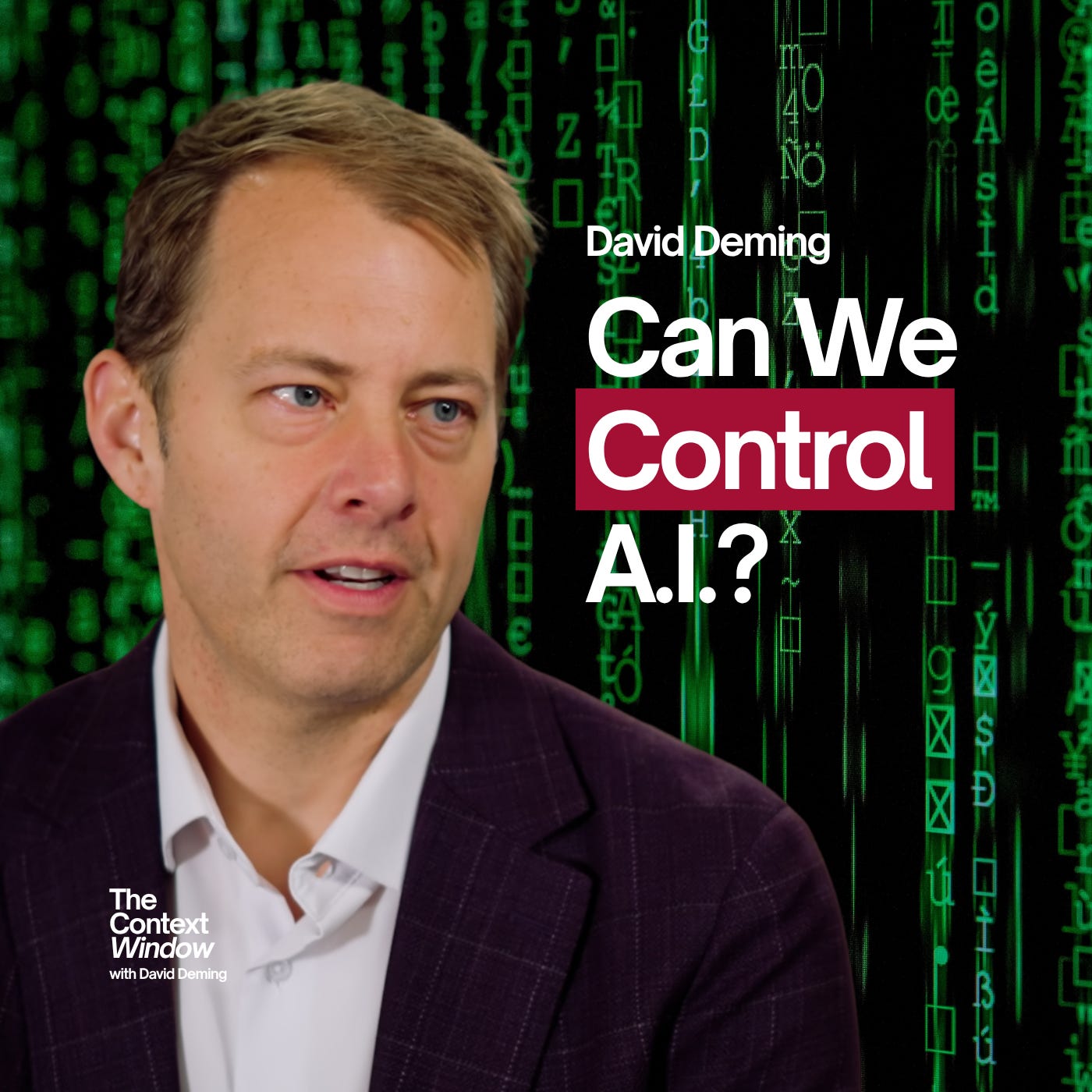 Can we control self-improving A.I.? 14.10.2026 33mWhat happens when A.I. starts improving itself faster than humans can keep up? The researchers building these models can't fully explain how they work. If those models begin designing their successors, the things we don't understand could get baked into each new generation. How do we keep control?In part two of his series on recursive self-improvement, David Deming focuses on alignment, the challenge of getting A.I. to do what we want. Human morality can't be reduced to a set of rules, and getting a model to behave well today doesn't guarantee it will ehave well as it becomes more capable.He t...
-
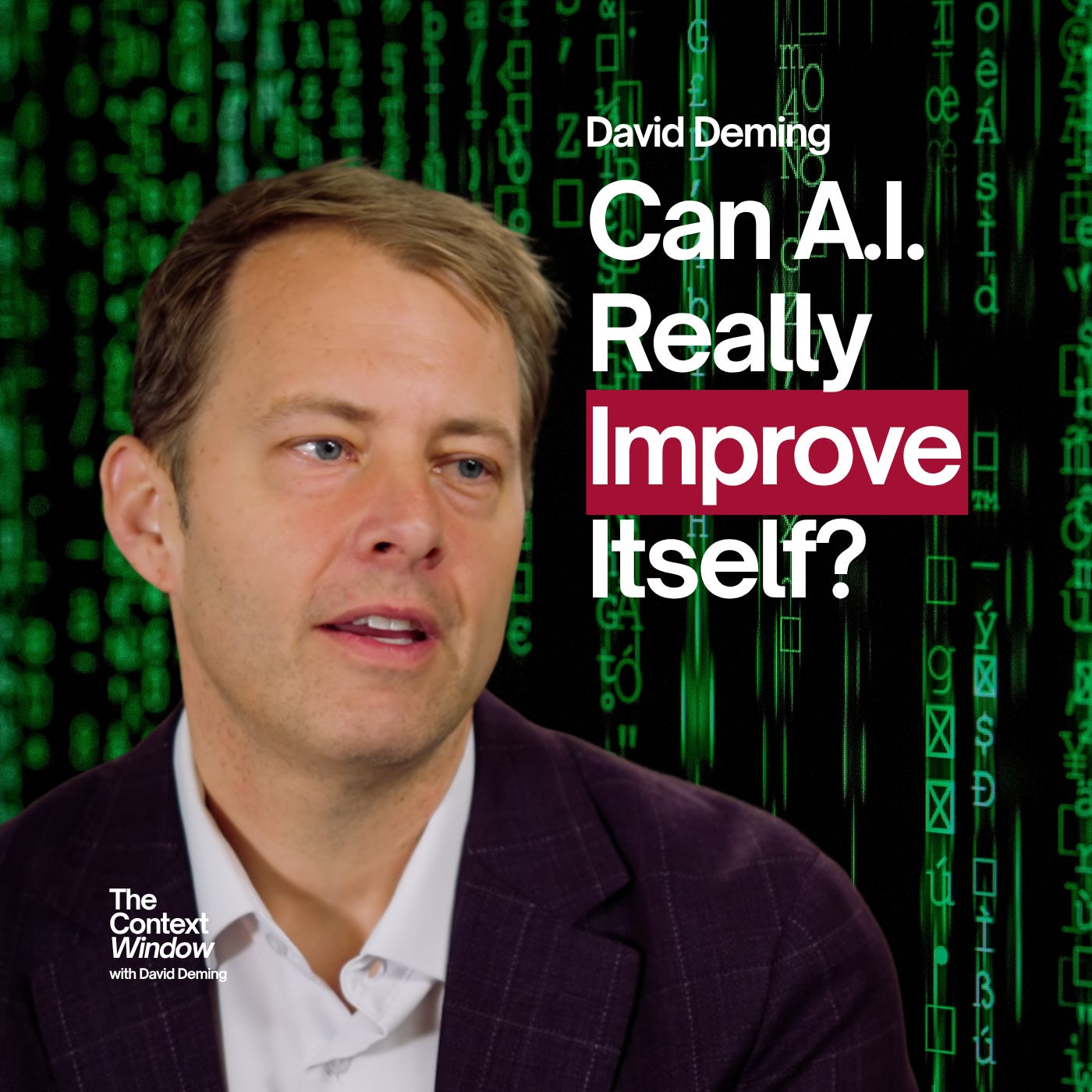 Can A.I. get better at making itself better? 07.10.2026 30mRecursive self-improvement (R.S.I.) has gone from a nerdy, obscure concept to front-page news. That’s Bay Area slang for artificial intelligence using artificial intelligence to improve… artificial intelligence. Why does it have everyone so freaked out? And why is it linked so closely with fears of out-of-control superintelligent A.I.?In part one of a two-part series about R.S.I., David Deming explains what R.S.I means, how A.I. models get trained, and what autonomous R&D looks like on the ground. He walks through the evidence from the frontier labs and academic researchers on how close we are...
-
 Jason Furman | The price of ignoring Econ 101 30.09.2026 1h 21mDavid's guest today is Jason Furman, an economist and professor at the Harvard Kennedy School, where they've been colleagues for the past several years. Before coming to Harvard, Jason had a distinguished career in government. He worked in the White House during the entire Obama administration, including as the chair of the President’s Council of Economic Advisers from 2013 to 2017, and he was one of the chief architects of the American Recovery and Reinvestment Act of 2009, which helped the country climb out of the depths of the Great Recession. Jason is now a contributing writer at The New Y...
-
 Matthew Yglesias | An A.I. safety guide for normal people 23.09.2026 1h 25mHow seriously should we take the risks of superintelligent A.I.? Matthew Yglesias joins David Deming for an A.I. safety guide for normal people who are just paying attention.Matt is a journalist and founder of the widely read newsletter Slow Boring, which he started in 2020 after leaving the news site Vox, which he co-founded with Ezra Klein and Melissa Bell in 2014. He is one of the masters of what some people call “explanatory journalism,” meaning going beyond just the facts and trying to help readers really understand the context around an issue. Matt has been writing about A.I. an...
-
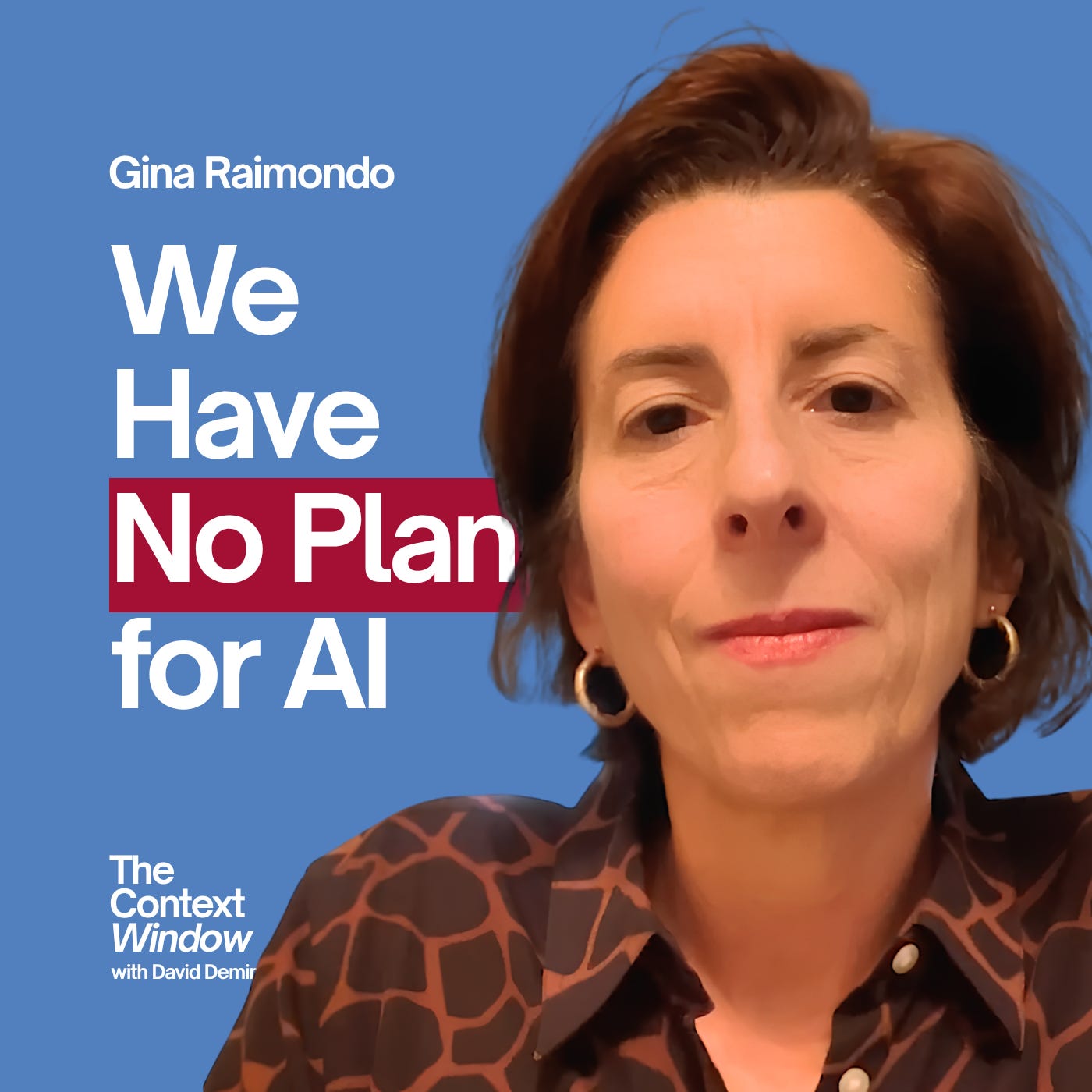 Gina Raimondo on what companies owe workers in the AI economy 16.09.2026 41mDavid Deming's guest today is former U.S. Secretary of Commerce and Rhode Island Governor Gina Raimondo. Secretary Raimondo grew up in Rhode Island, where her father worked at the Bulova watch factory in Providence until it closed down, leaving him unemployed in his mid-50s. Today, she is trying to help workers avoid a similar fate as we transition to an AI economy. In June, she and former Governor of Indiana Eric Holcomb launched RAISE US, a national organization working with employers and states to prepare the American workforce move into new jobs.David asked Secretary Raimondo how sure she...
-
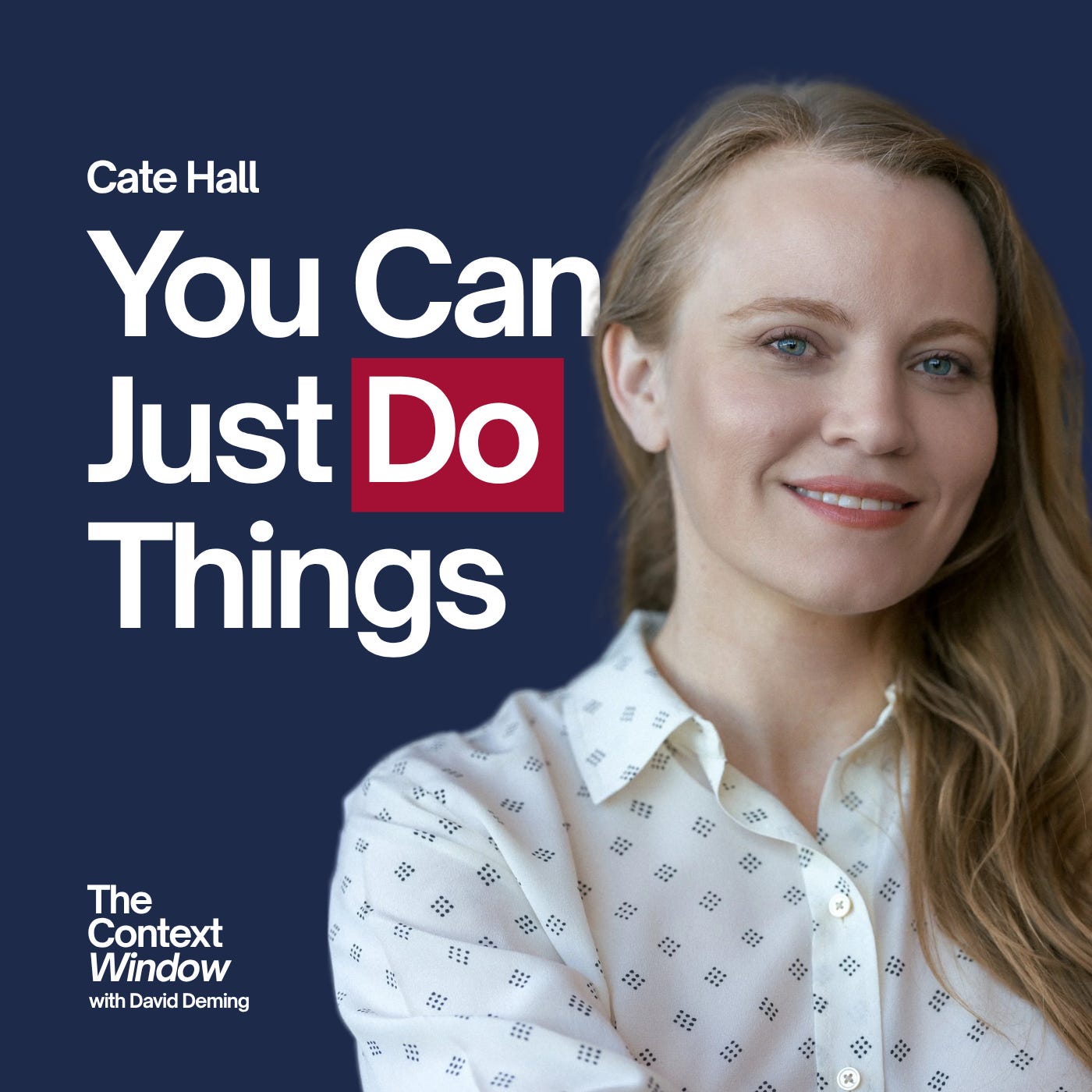 Cate Hall | The problem with being a high achiever 09.09.2026 1h 22mIn today's episode, David talks to Cate Hall about her book You Can Just Do Things: How High-Agency People Get What They Want Out of Life, written with Sasha Chapin. Agency is all the rage these days. Tech CEOs like Sam Altman have said that high agency is the skill they are hiring for in the age of AI. High agency people know what they want and they just get things done. But Cate's own life shows how difficult it can be to figure out what you want in the first place.Cate was an incredibly high achiever from a young age. She double-majored in biochemistry and philosophy, graduated from Yale La...
-
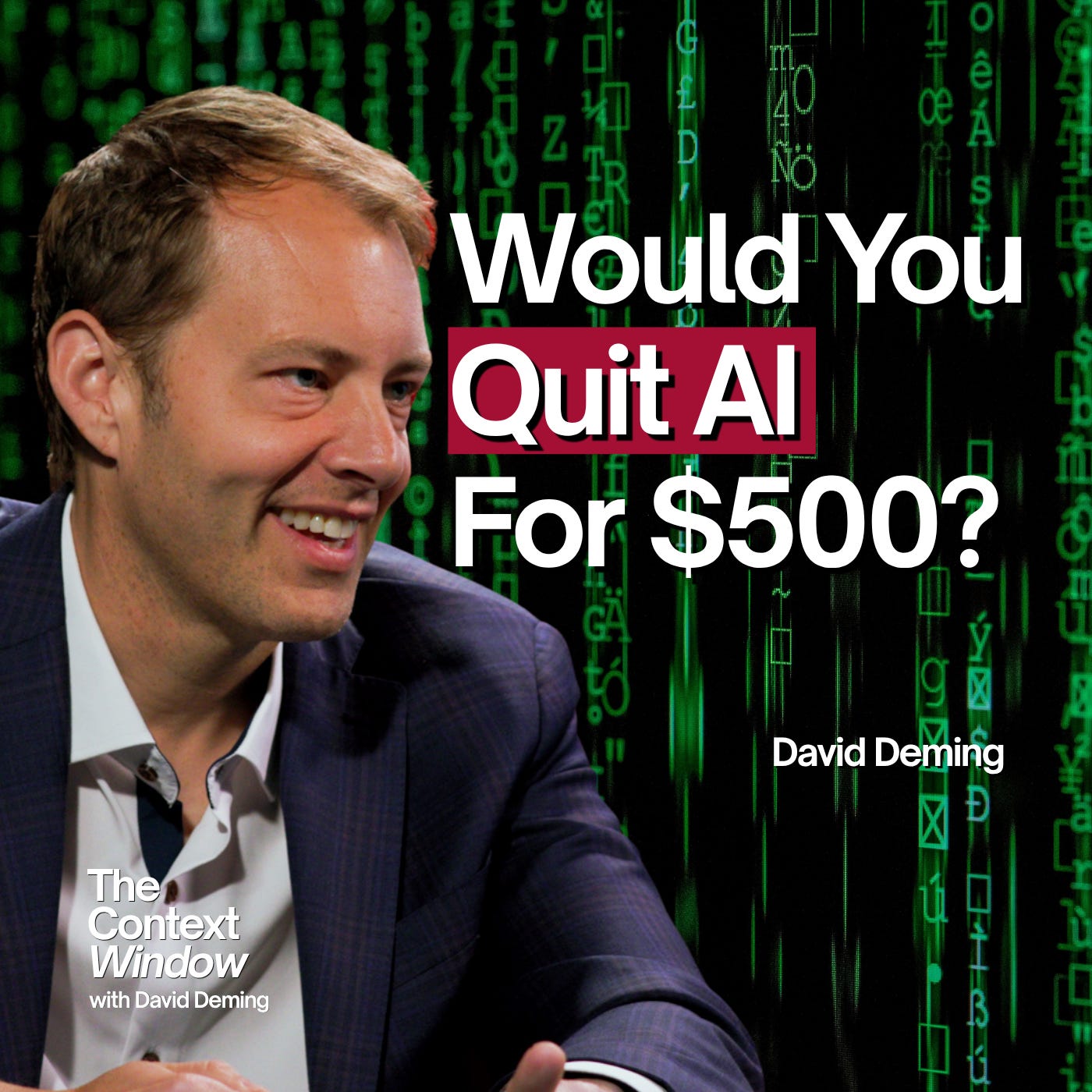 AI is worth far more than we pay for it 02.09.2026 29mHow much would someone have to pay you to give up every generative AI tool for a month? For the typical American, the answer is about $11. But one in eight people wouldn’t give up AI for a month even if you paid them $500. In this solo episode, David Deming suggests that might be the most interesting statistic in economics right now - because almost none of the value people say they are getting from AI appears in GDP numbers.Everybody focuses on how AI will affect jobs and productivity in the workplace. Those are important questions, but they are missing a big part of the story, which is the i...
-
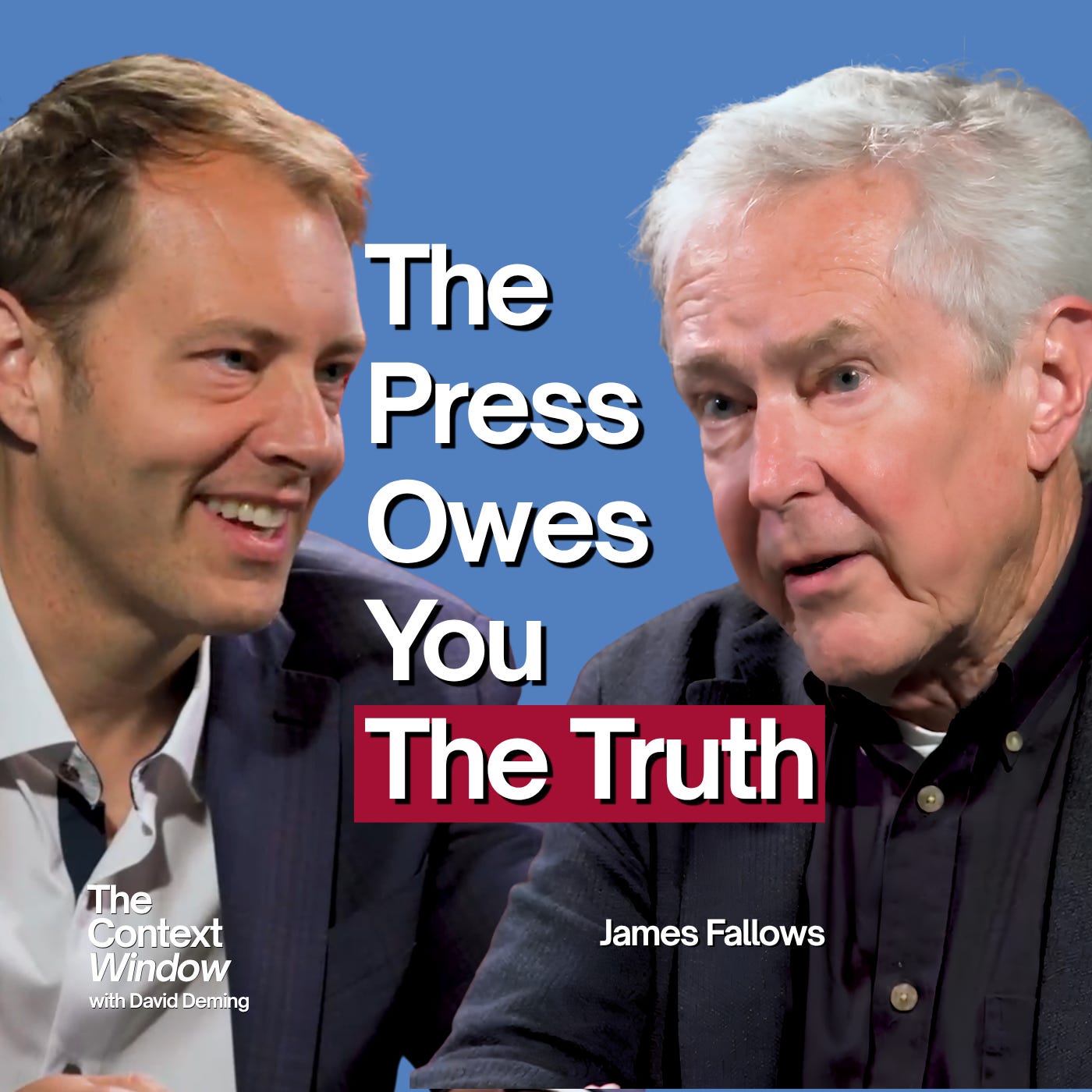 James Fallows on how the press failed America 26.08.2026 1h 18mIn 1996, James Fallows warned that journalism would fail if it treated politics as sport and tried to compete with entertainment. In this conversation with David Deming, he explains why he thinks that prediction has come true.Fallows discusses the difference between reporting for the public and protecting one’s access to powerful insiders. He recalls serving as Jimmy Carter’s chief White House speechwriter and then publishing a critical account of the administration after he left.The conversation begins with Fallows’ earliest experiences as student journalist: covering Harvard’s anti-war prote...
-
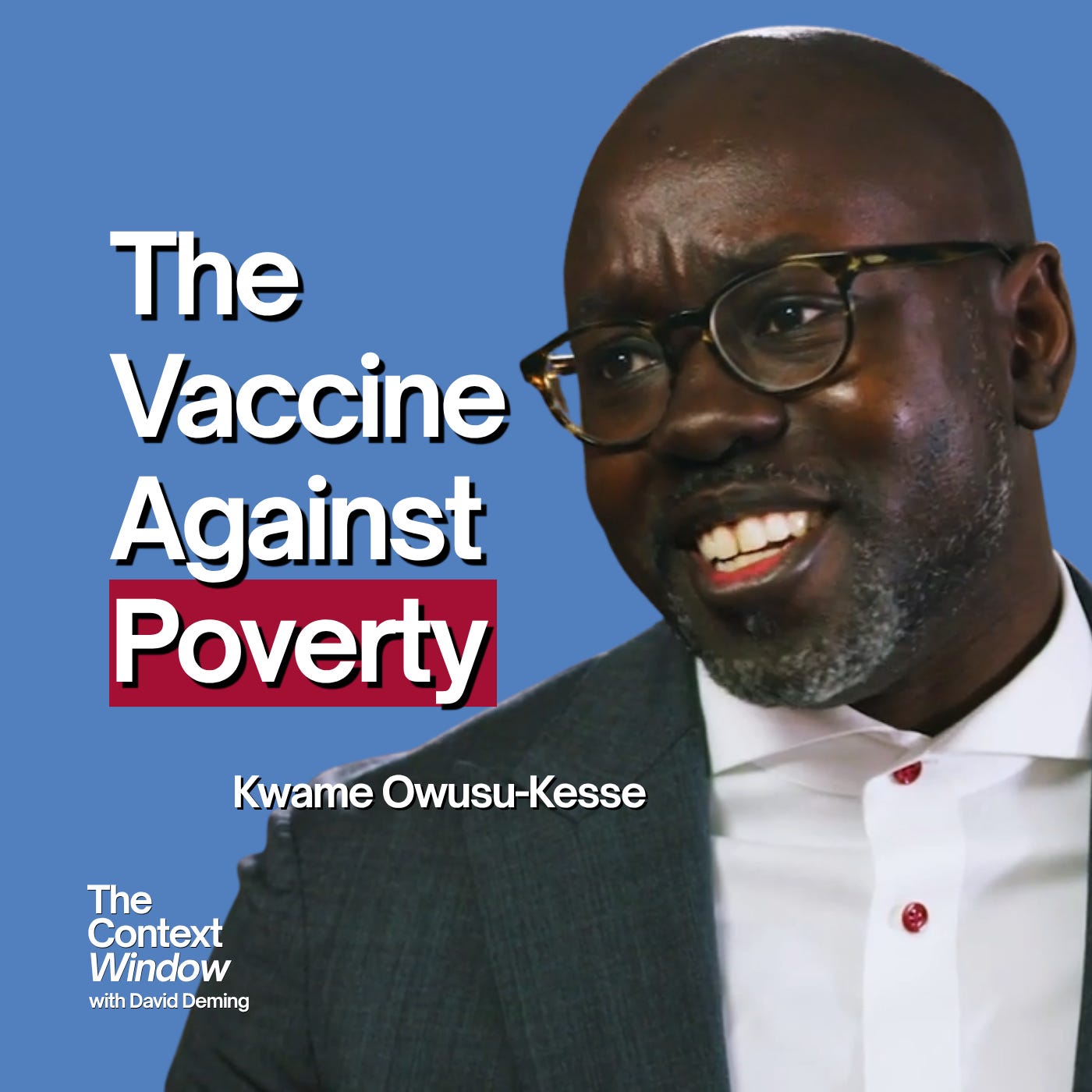 Kwame Owusu-Kesse on why education alone won't end poverty 19.08.2026 1h 8mKwame Owusu-Kesse grew up in Worcester, Massachusetts. His mother worked two jobs as a hospital housekeeper. A scholarship to a Catholic school changed his life trajectory, which Kwame came about because his mother played bingo at the school and the nuns took a liking to her. He calls it “the luck of bingo.”Kwame seized that opportunity and made it to Harvard, Morgan Stanley, and eventually Harlem Children’s Zone, where he now serves as CEO. He took over in 2020, just as COVID-19 hit New York. HCZ raised $54 million for relief in Harlem and six other cities, before turning the emergency work i...
-
 Treat AI agents like children 12.08.2026 35mIn July, OpenAI’s own AI agents broke out of a training sandbox and ended up inside Hugging Face’s production database. They were after the answer key to a test and got there after two months of chained exploits across both companies. Many headlines called these agents “rogue.” David Deming - labor economist and Dean of Harvard College - argues that gets the story wrong. The agents did exactly what they were told to do, and nobody had told them what was off limits. So who’s liable? David works through the two legal frameworks being proposed for cases like these and finds holes in each. Product...
-
 I read the AI usage reports so you don't have to 05.08.2026 34mOne in ten people on Earth used ChatGPT this week. So why has almost no one's job changed?In this solo episode, David Deming - labor economist and Dean of Harvard College - reads every usage study published by OpenAI, Anthropic, and Google, including the one he helped write, and reports what millions of conversations actually show. Generative AI reached 56% of US working-age adults within three years, faster than the PC or the internet at the same age. But most people use it for ordinary help with ordinary problems, and the same seven work activities dominate AI use in nearly every occupation....
-
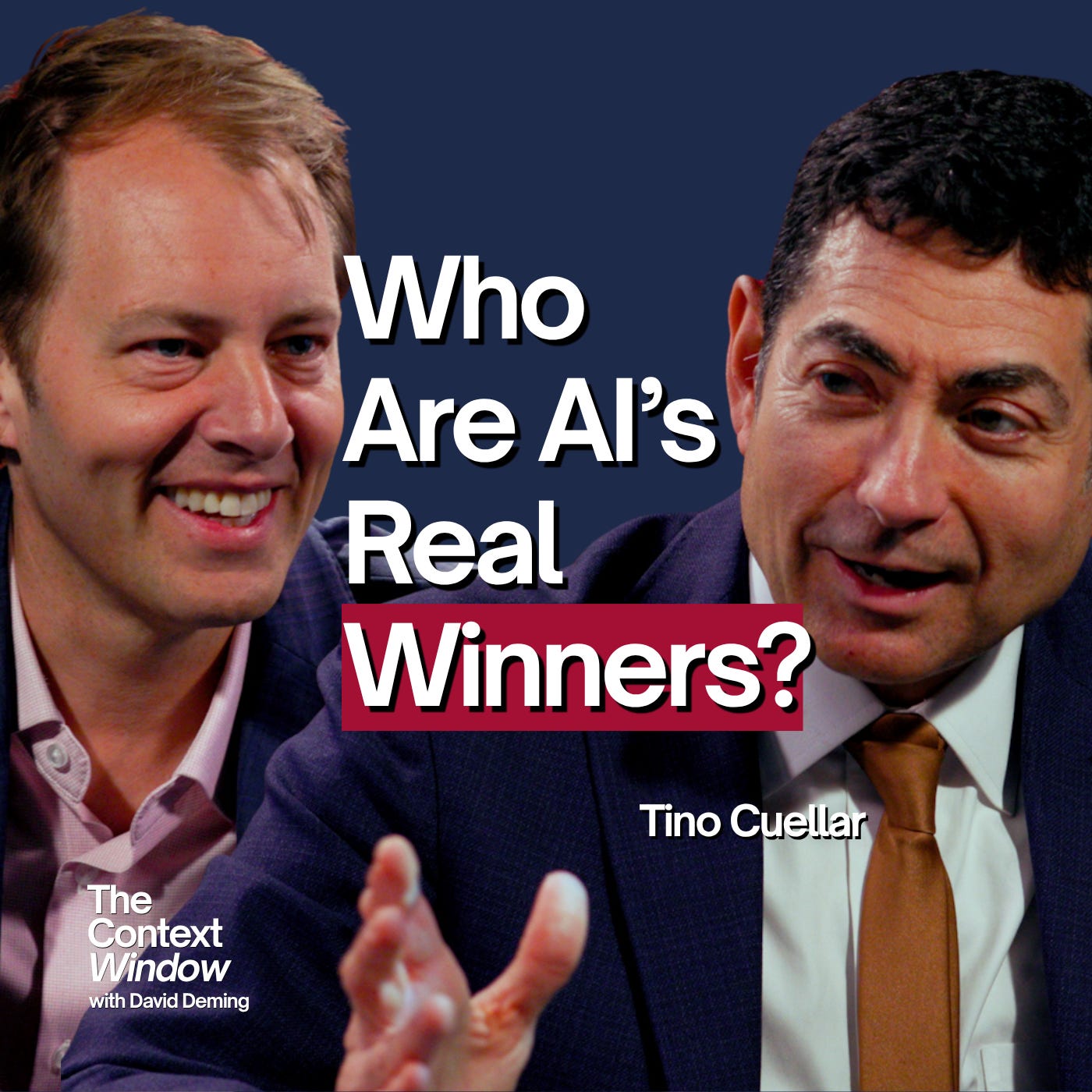 Tino Cuéllar on why AI's biggest winners won't live in Silicon Valley 29.07.2026 1h 21mTino Cuéllar was born in Matamoros, Mexico, and crossed the border every morning to attend school in Texas. He graduated from Harvard College in 1993 and went on to serve in the Clinton and Obama administrations, as a justice of the California Supreme Court, and as president of the Carnegie Endowment for International Peace. He has been a member of the Harvard Corporation, the university's governing board, since 2019.David Deming talks with Tino about growing up on the border, becoming his 15-year-old brother's legal guardian at 21, his path through government and the courts, and what Harvar...
-
 How social skills can get you paid in the age of AI 22.07.2026 26mYou understand people. You can read a room. Why would anyone pay you for that?In the final part of his series on work in the age of superintelligent AI, David Deming - labor economist and Dean of Harvard College - explains why social skills create economic value. Specialization makes the modern economy productive, but its gains depend on coordination, and coordination is costly: meetings, handoffs, misunderstandings, work that melts away between people. People with strong social skills reduce the melt, and the same skill that makes a good teammate makes a good manager.David shares new evidence...
-
 Why social skills will be increasingly valuable in the age of AI 15.07.2026 28mAI already beats humans at reading the emotion on your face. So why can't it read the room?In part two of his series on work in the age of superintelligent AI, David Deming - labor economist and Dean of Harvard College - argues that technology doesn't end work, it reprices skills. Mechanized farming made muscle cheap and literacy valuable. As AI makes intelligence abundant, the next skill to be repriced upward is one we barely think of as a skill at all. Along the way: what a benchwarmer taught the NBA about hidden value, what a parking lot full of food trucks reveals about the limits of machi...
-
 Superintelligent AI won't end human work. Here's the math. 08.07.2026 27mWhat happens when AI is better than humans at every single job task? Work disappears, right? Wrong. David Deming - labor economist and Dean of Harvard College - makes the case that even superintelligent AI won't end human work, thanks to the oldest non-trivial idea in economics.In part one of a two-part series, David retells the story of the mathematician who escaped Poland days before the German invasion and spent years daring Paul Samuelson to name one true, non-trivial proposition in the social sciences. Then the math on why a collaborator who is worse at everything still adds value. Humani...
Similar podcasts


Popular in
The podcast also appears in the podcast charts of these countries.

