
The Mental Models Daily Podcast
Mental Models Daily
0
The Mental Models Daily Podcast offers daily episodes that break down a new mental model each day, helping listeners think more clearly and make better decisions. Topics range from probabilistic thinking and first principles to the Pareto principle and the Eisenhower matrix. The podcast aims to sharpen problem-solving skills and navigate life's complexities with ease.
Episodes
-
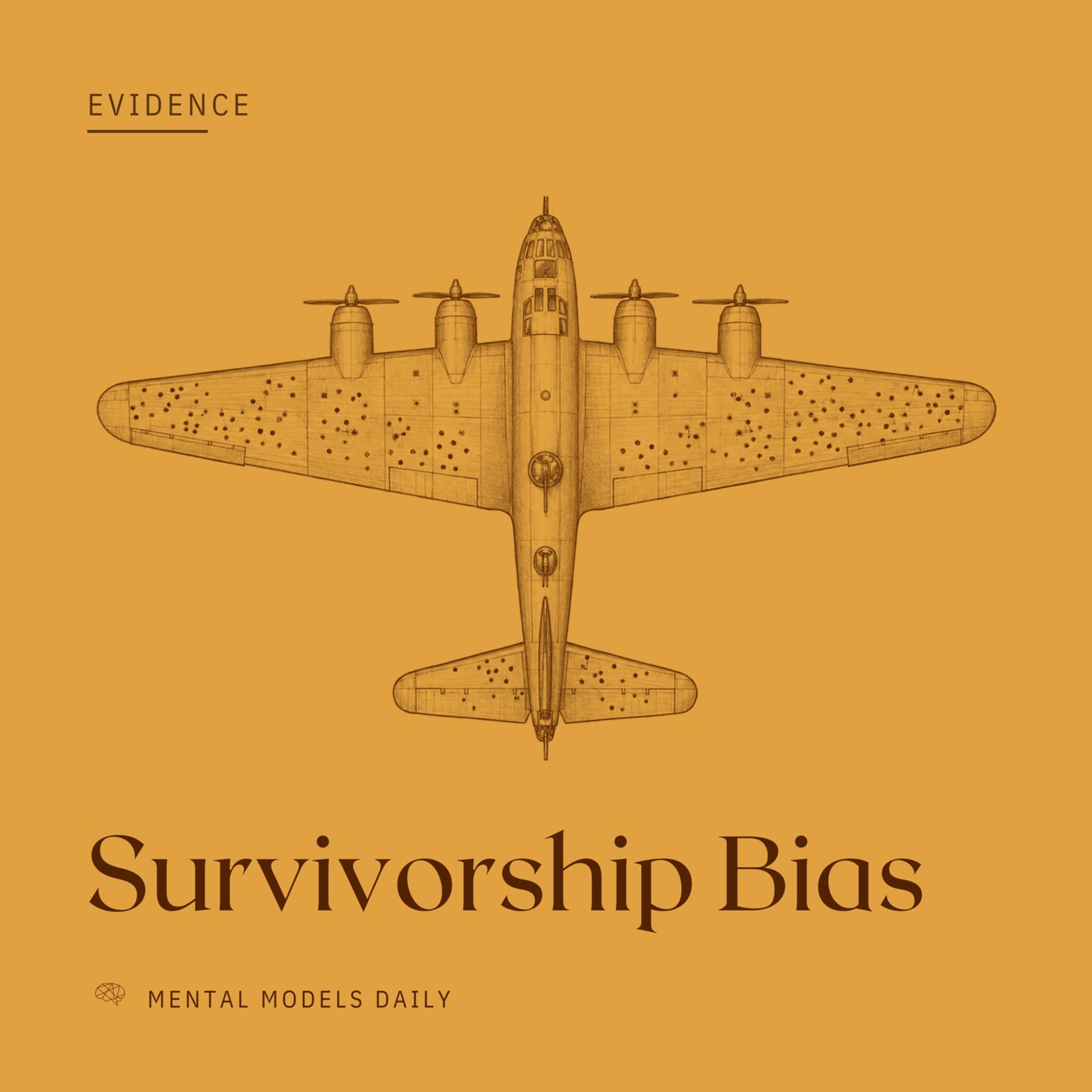 Survivorship Bias 18.11.2026 5mWhen failures vanish from view, the survivors look like the whole story.Survivorship bias is the mistake of studying only the people, companies or things that made it through, while forgetting the ones that didn't. In this episode: the wartime bombers that came back covered in bullet holes, and why, as the story is usually told, the mathematician Abraham Wald saw that the armour belonged where the holes weren't. Then the fund scorecards S&P Dow Jones Indices has published since 2002, which count the funds that quietly closed. Then three places the bias catches us day to day: success stories at...
-
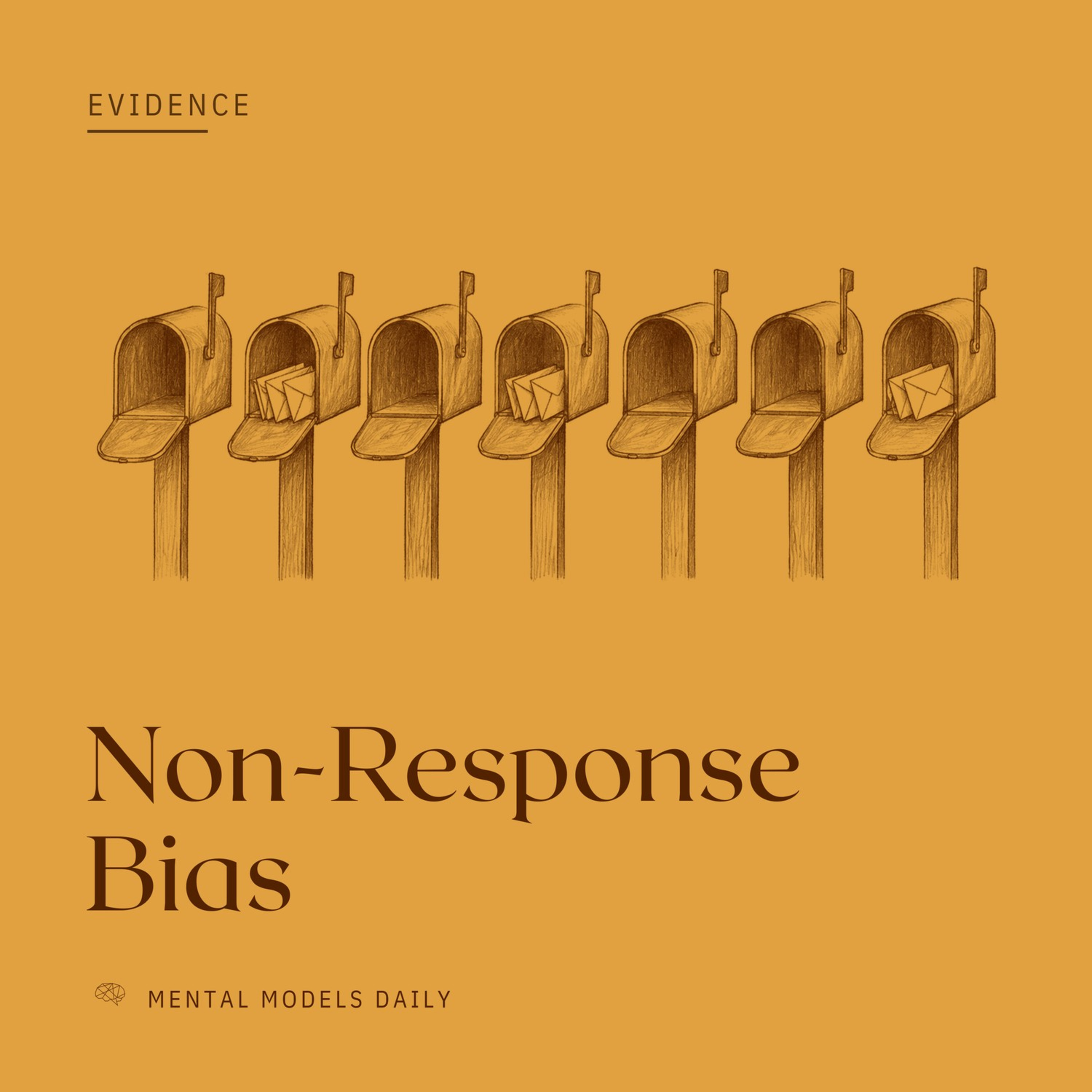 Non-Response Bias 11.05.2025 5mThe people who stay silent can change the answer as much as those who reply.Non-Response Bias happens when the people who answer a survey, review or feedback form differ in important ways from those who stay silent. Even a well-chosen sample can produce misleading results if only certain kinds of people reply.Whenever you rely on responses, ask who did not answer and why. Treat low response rates as a warning sign, follow up with quieter people directly, and look for patterns across many reviews rather than the loudest stories. Silence is data too.Read more about Non-Response Bias: https://men...
-
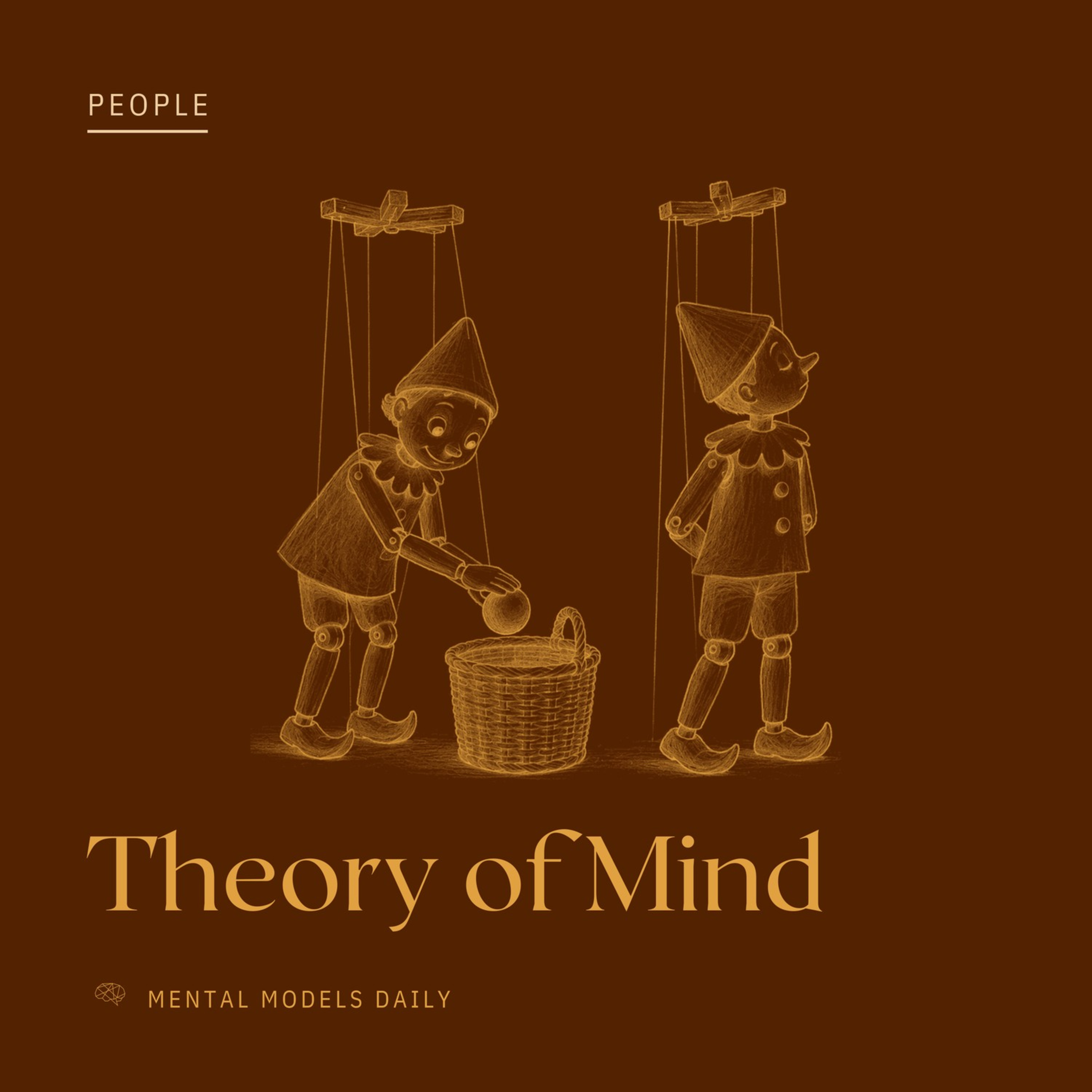 Theory of Mind 10.05.2025 5mOther people act on what they know and believe, not on what you know.Theory of mind is the ability to recognise that other people have their own beliefs, desires and emotions, and to predict what they will do based on what they know, not what you know. Psychologists test it with tasks like the Sally-Anne false-belief test.Use it before important conversations: ask what the other person knows, wants and fears. Explain ideas from your listener's starting point, and treat your guesses about others as hypotheses to check.Read more about Theory of Mind: https://mentalmodelsdaily.com/models/theory-o...
-
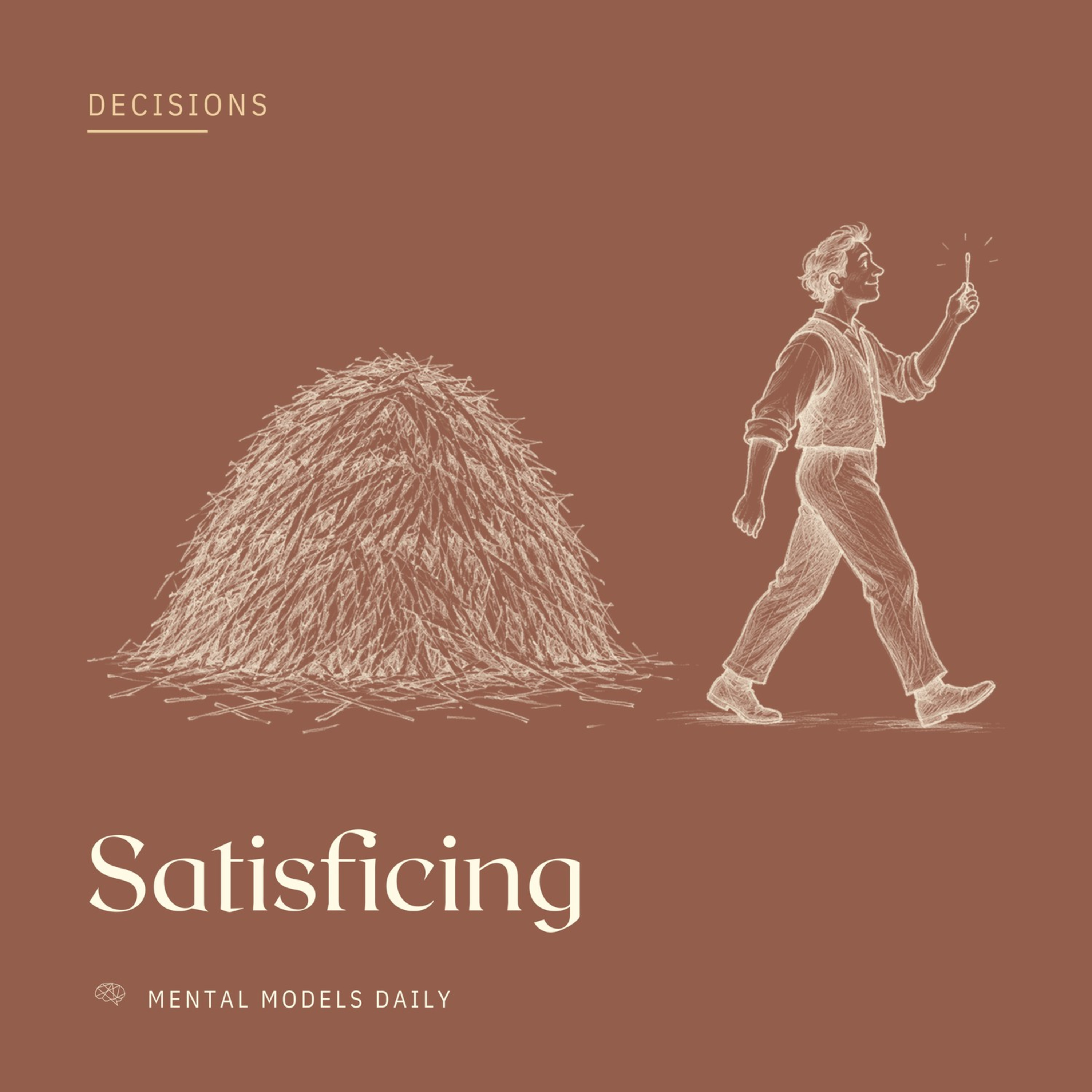 Satisficing 09.05.2025 5mSet a bar for good enough, and stop searching when something clears it.Satisficing, a word coined by Herbert Simon, means setting a bar for good enough and choosing the first option that clears it. Because our time, information and attention are limited, chasing the perfect choice often costs more than it gains.To use it, define your must-have criteria before you start looking, then stop at the first option that meets them. Save exhaustive searching for high-stakes decisions like hiring, health or major investments.Read more about Satisficing: https://mentalmodelsdaily.com/models/satisficing/M...
-
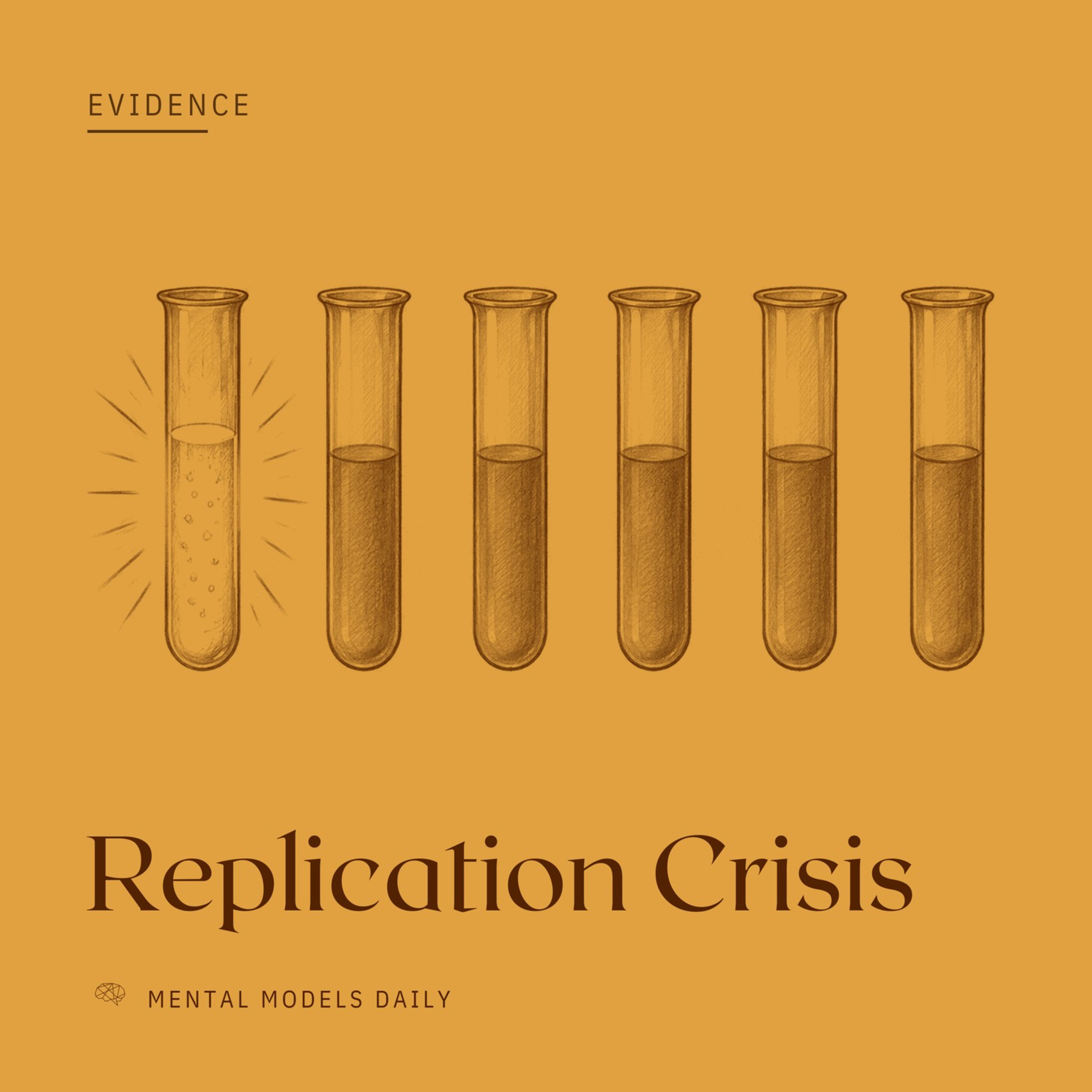 Replication Crisis 08.05.2025 5mA finding earns trust only when others repeat the work and get the same result.The replication crisis is the finding that many published studies cannot be reproduced. Small samples, lucky noise, flexible analysis and pressure to publish exciting results can all create effects that vanish on a second try.Use it as a filter: treat one striking study, headline or success as a starting point, not a fact. Look for independent confirmation, rerun your own wins before scaling them, and let confidence grow as evidence repeats.Read more about Replication Crisis: https://mentalmodelsdaily.com/models/rep...
-
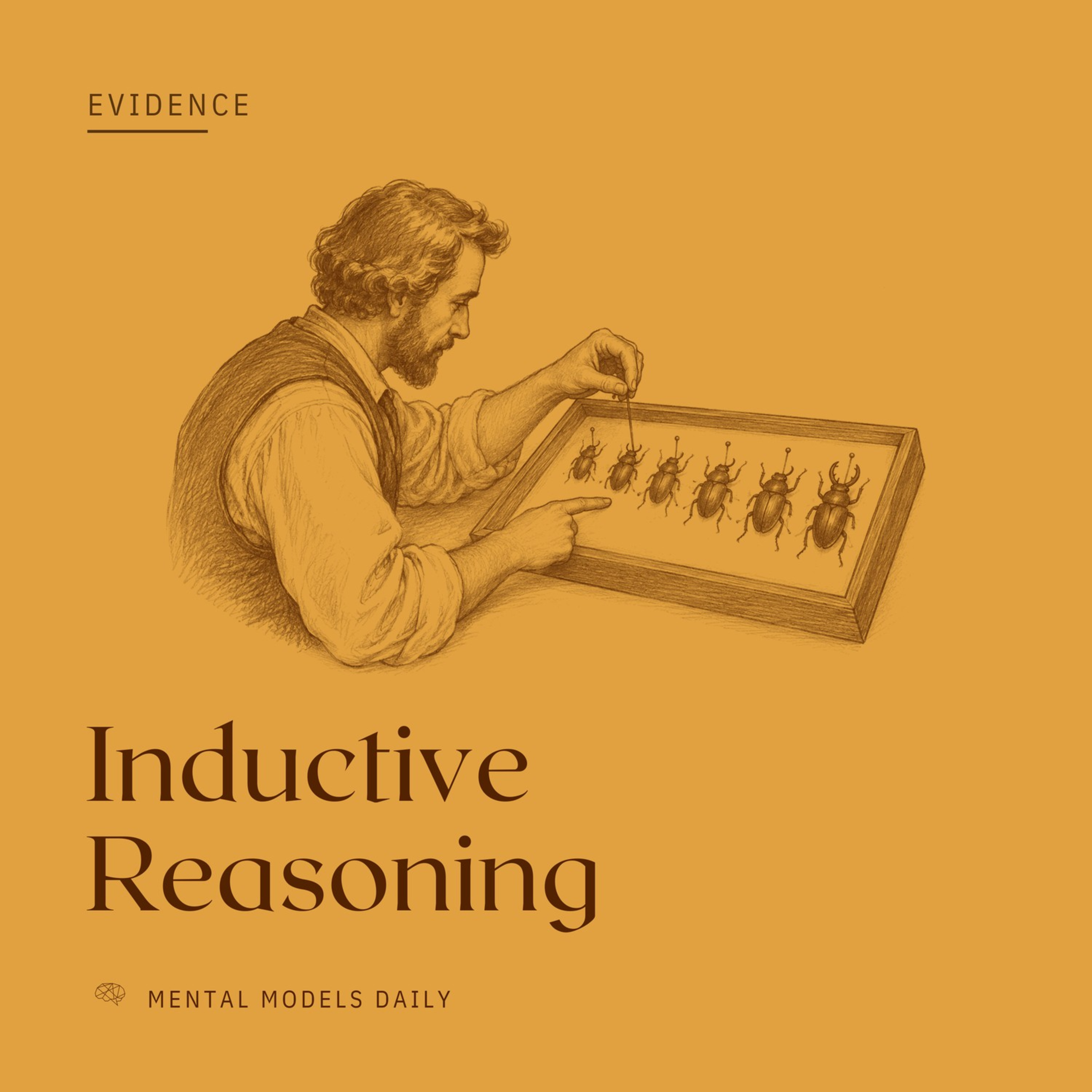 Inductive Reasoning 07.05.2025 5mExperience suggests what will happen next, but it can never promise it.Inductive reasoning is how we learn from experience: we see a pattern repeat and expect it to continue. It is essential, but its conclusions are only probable. A long streak of past observations cannot promise the future.Use it wisely by asking how many cases you have, how varied they are, and what could break the pattern. Hold beliefs with confidence that matches your evidence, and keep a cushion for the day the trend reverses.Read more about Inductive Reasoning: https://mentalmodelsdaily.com/models/inductive-reasoning/Mor...
-
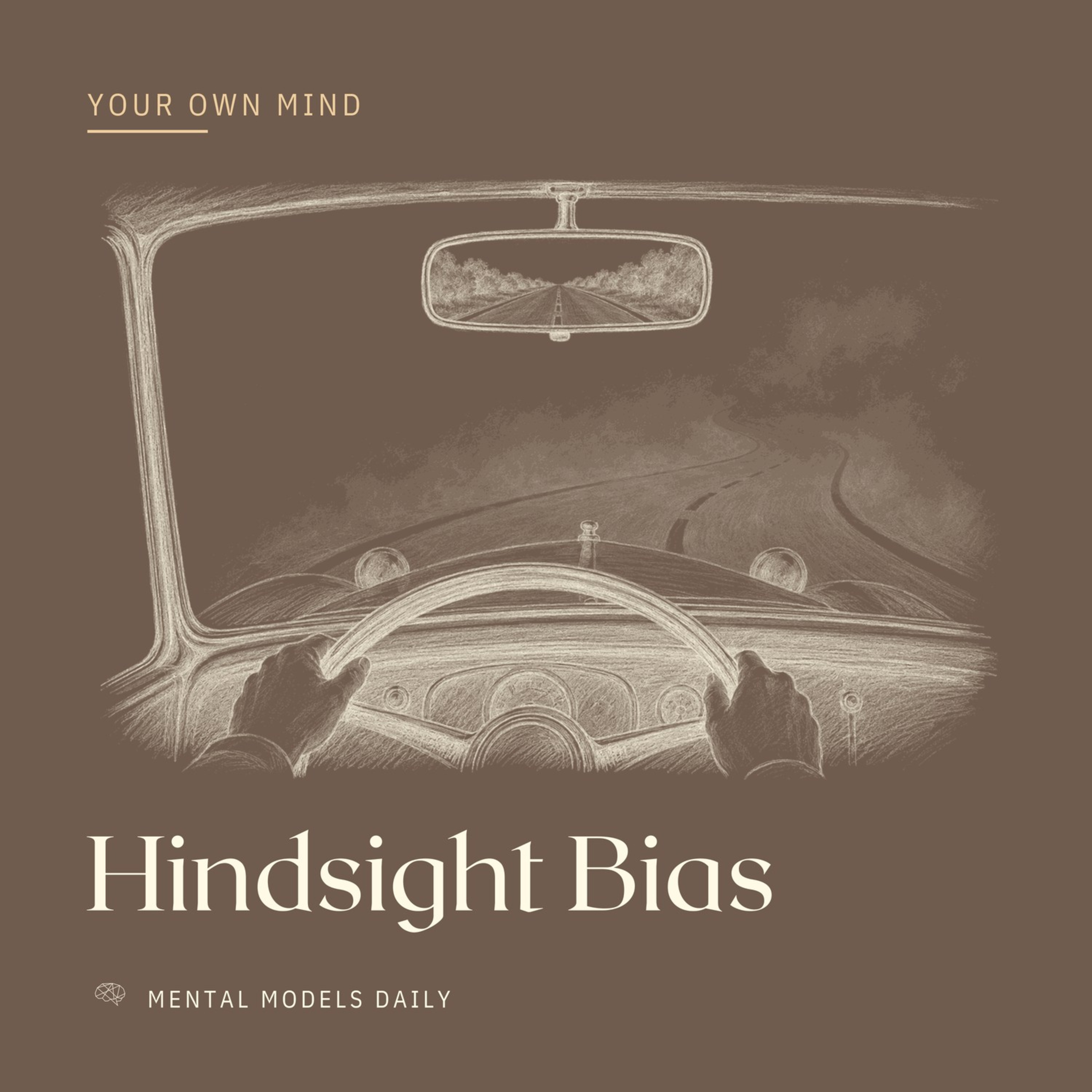 Hindsight Bias 06.05.2025 5mOnce we know how things turned out, the outcome seems to have been obvious all along.Hindsight bias is the 'I knew it all along' effect. Once we learn an outcome, our memory quietly rewrites what we expected, making surprises look obvious and making us overconfident about predicting the future.To counter it, write down your predictions and reasons before results arrive, then compare. When judging past decisions, yours or anyone else's, ask what could reasonably have been known at the time, not what is known now.Read more about Hindsight Bias: https://mentalmodelsdaily.com/models/hindsight-bias...
-
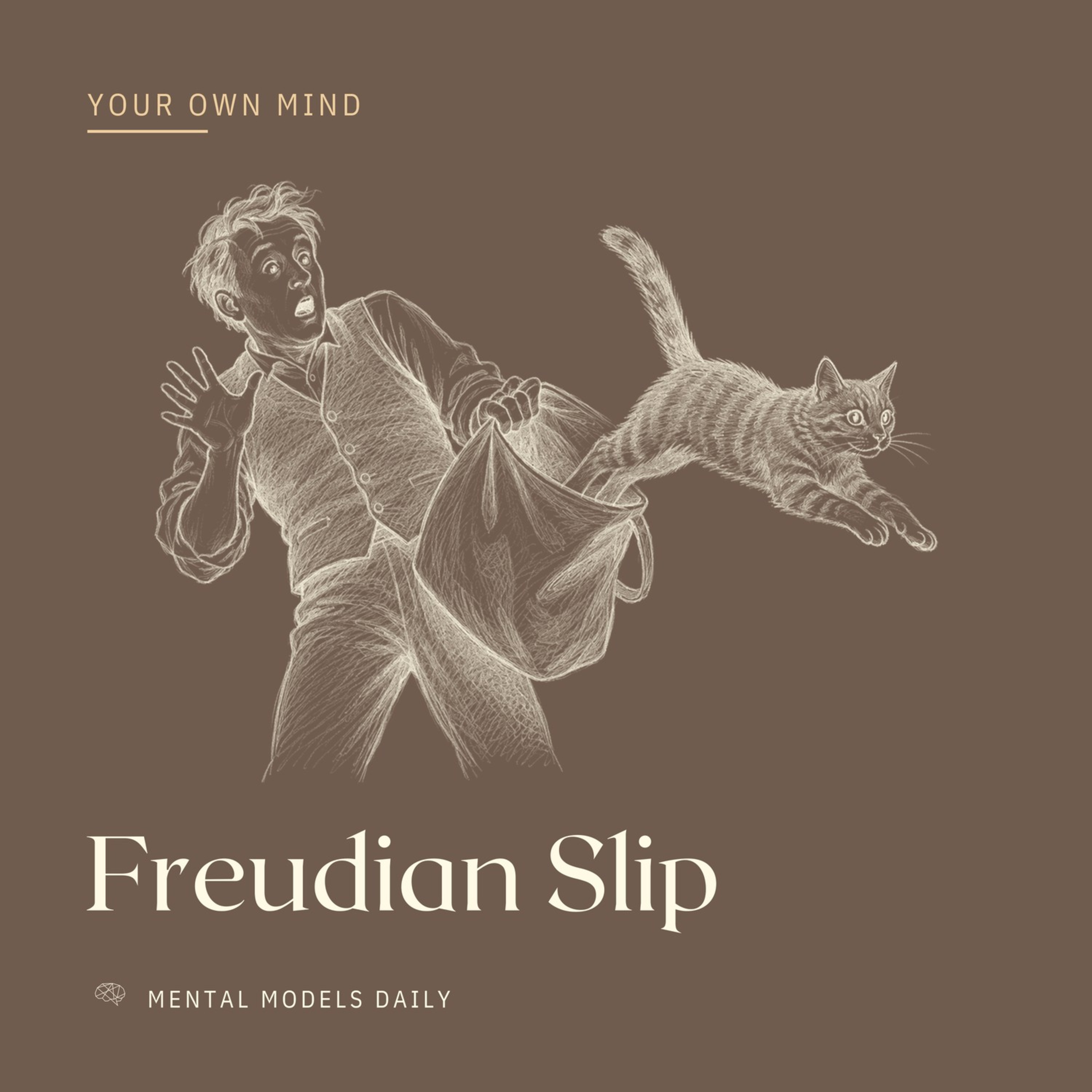 Freudian Slip 05.05.2025 5mA slip of the tongue can sometimes reveal what we really think.A Freudian Slip is a stumble in speech that may expose what we really think. Freud's classic case was a parliament president who opened a session by declaring it closed, and Gerald Ratner's joke mocking his own jewellery cost his company dearly.Use it with care: notice repeated slips and patterns rather than single mistakes, watch what your jokes reveal in public, and treat your own slips as prompts for honest self-reflection, not proof.Read more about Freudian Slip: https://mentalmodelsdaily.com/models/freudian-slip/More models fo...
-
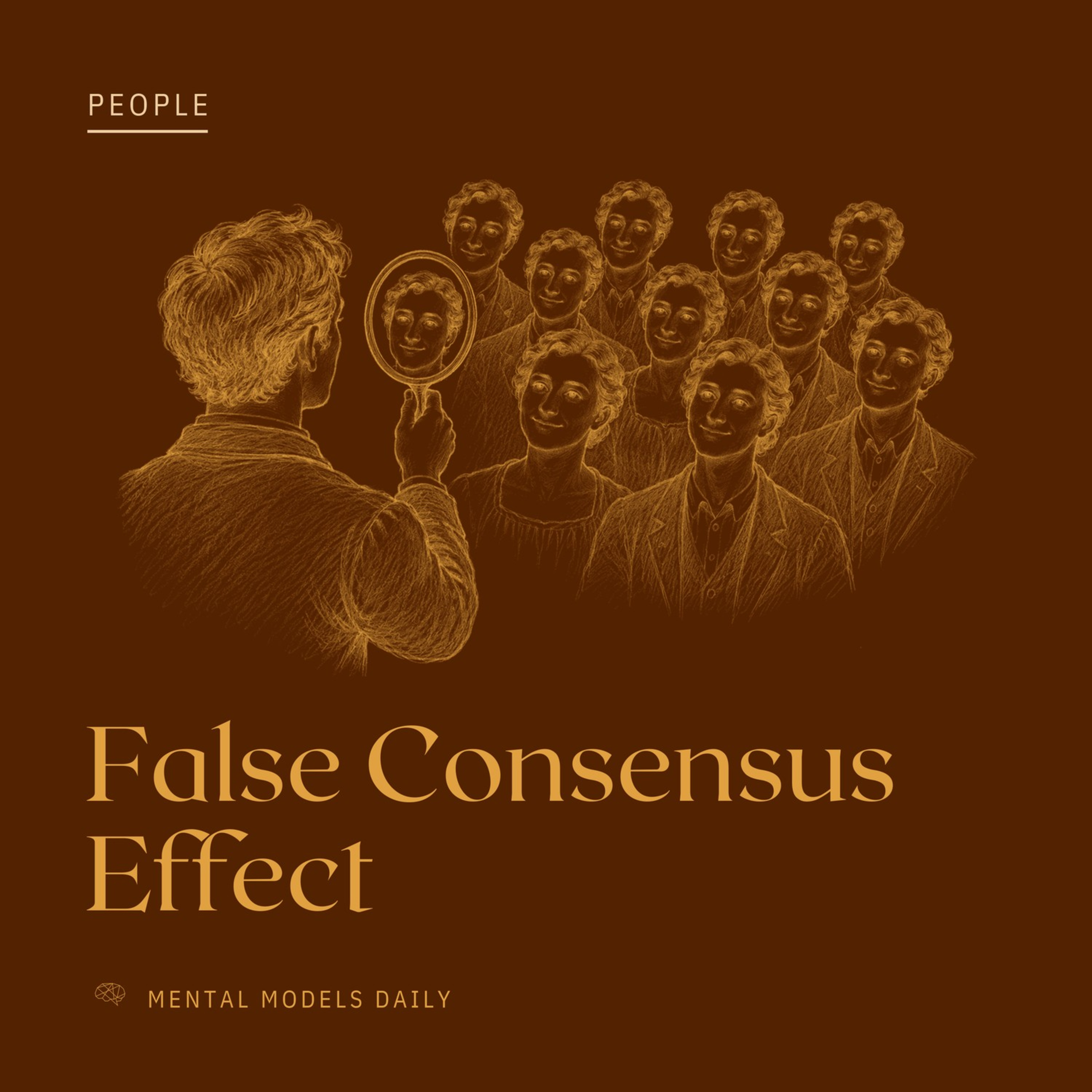 False Consensus Effect 04.05.2025 6mWe think far more people share our views and choices than really do.The false consensus effect is our tendency to assume others share our opinions, preferences, and choices more than they do. In a classic 1977 Stanford study, students who agreed or refused to wear a sign around campus both overestimated how many peers would choose as they did.Before assuming others agree, ask how someone with different experiences might see it. Widen your information sources and social circles so your sense of normal stays calibrated. When a decision depends on what others want, ask open questions or gather re...
-
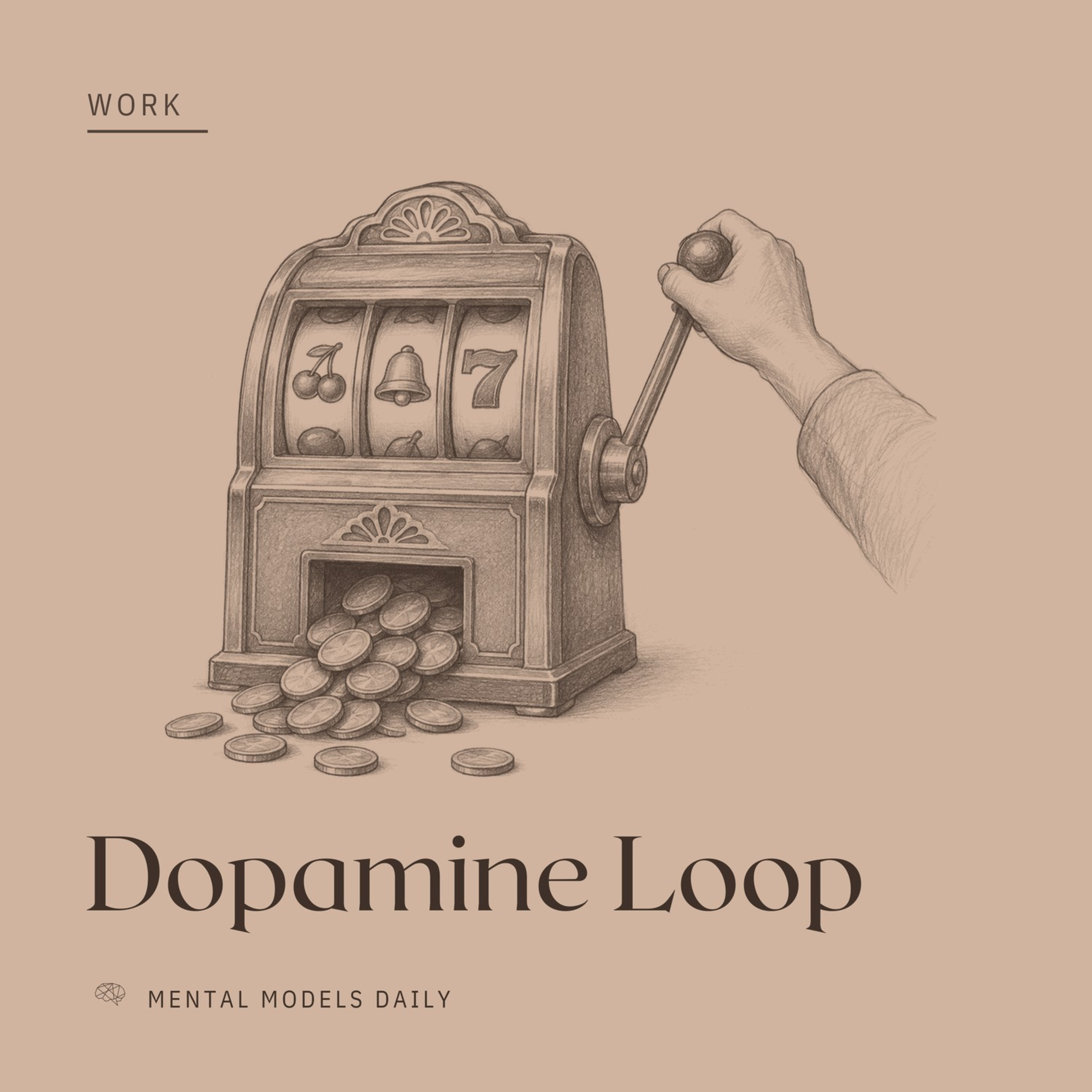 Dopamine Loop 03.05.2025 6mThe brain learns most from surprise rewards, and chases the cues that predict them.The dopamine loop is the brain's reward-learning system. Dopamine responds most strongly to unexpected rewards and to cues that predict them, as Wolfram Schultz's research showed, which is why it drives motivation and habit formation. Many apps and games are designed around these loops to keep us coming back.Use the loop for good habits: make progress visible, break goals into small wins, and pair delayed-reward activities with something enjoyable now. Interrupt unhealthy loops by turning off notifications, sett...
-
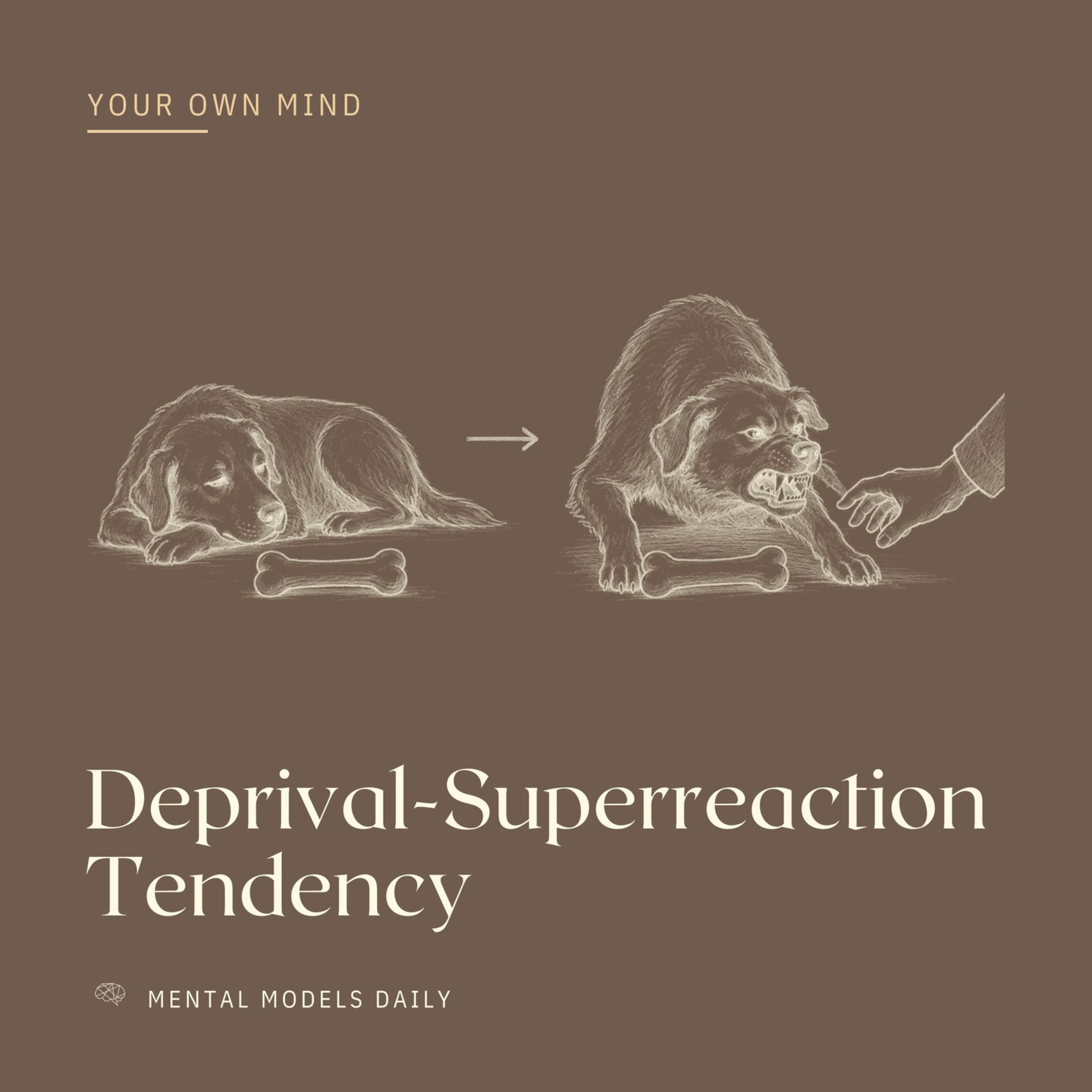 Deprival/Superreaction Tendency 02.05.2025 5mLosing something we have, or almost have, provokes a reaction far bigger than gaining it would.The Deprival/Superreaction Tendency is our habit of reacting with outsized intensity when something we have, or almost have, is threatened. The pain of a loss often far outweighs the pleasure of an equal gain, which is why taxes, licence changes and lost perks can spark fierce backlash.To use it, give yourself a cooling-off period before reacting to financial losses. When taking something away from others, explain, give notice and phase it out. In relationships, name the feeling of loss before you sp...
-
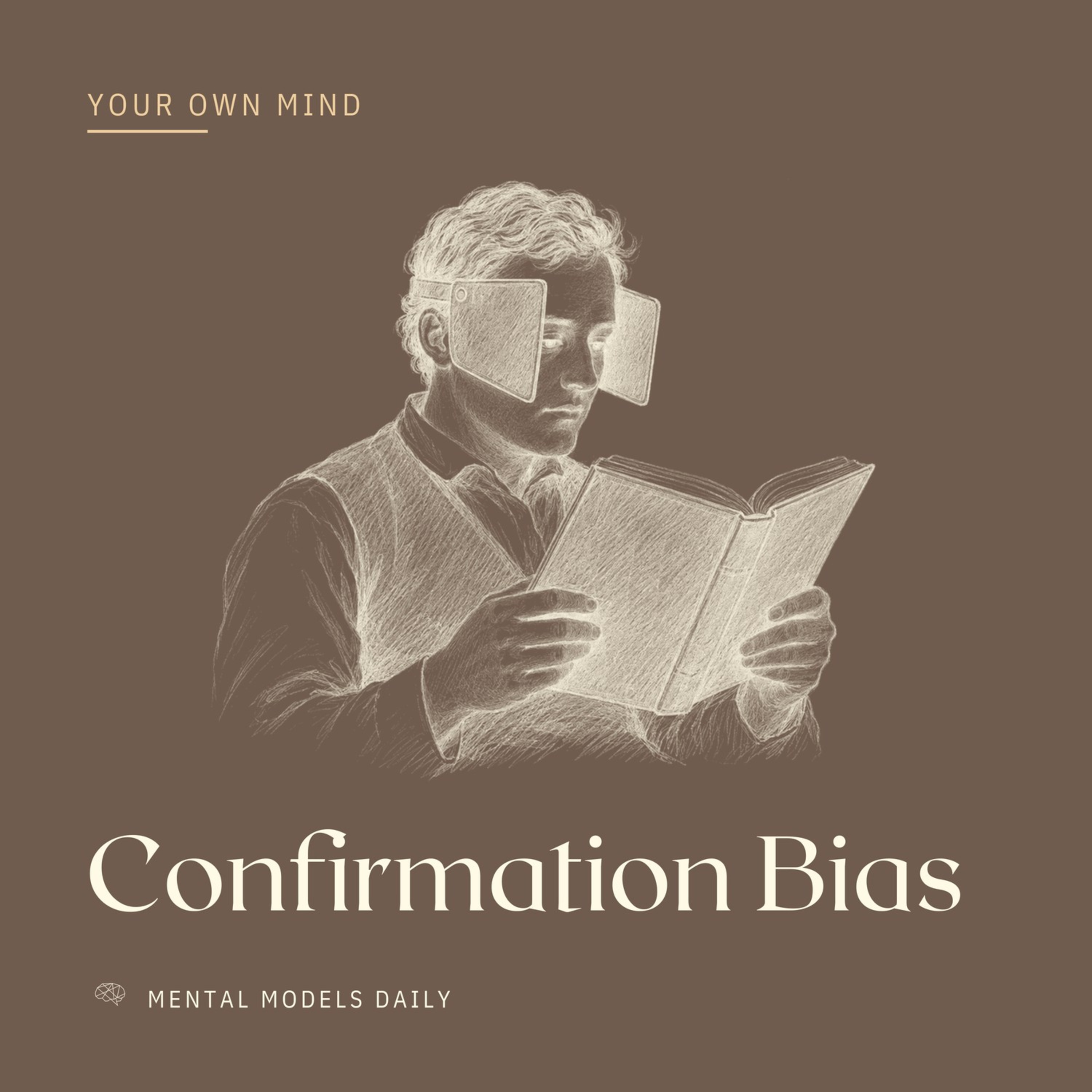 Confirmation Bias 01.05.2025 5mWe look for, notice and remember the evidence that agrees with what we already believe.Confirmation bias is our tendency to seek, interpret, and recall information that supports what we already believe, while discounting what challenges it. Because it works mostly below awareness, it can distort judgments everywhere from science to hiring to everyday arguments.Deliberately look for credible sources that disagree with you, and treat constant agreement as a warning sign. Run a pre-mortem before big decisions by imagining you were wrong and asking why. Seek out people who think differently and ge...
-
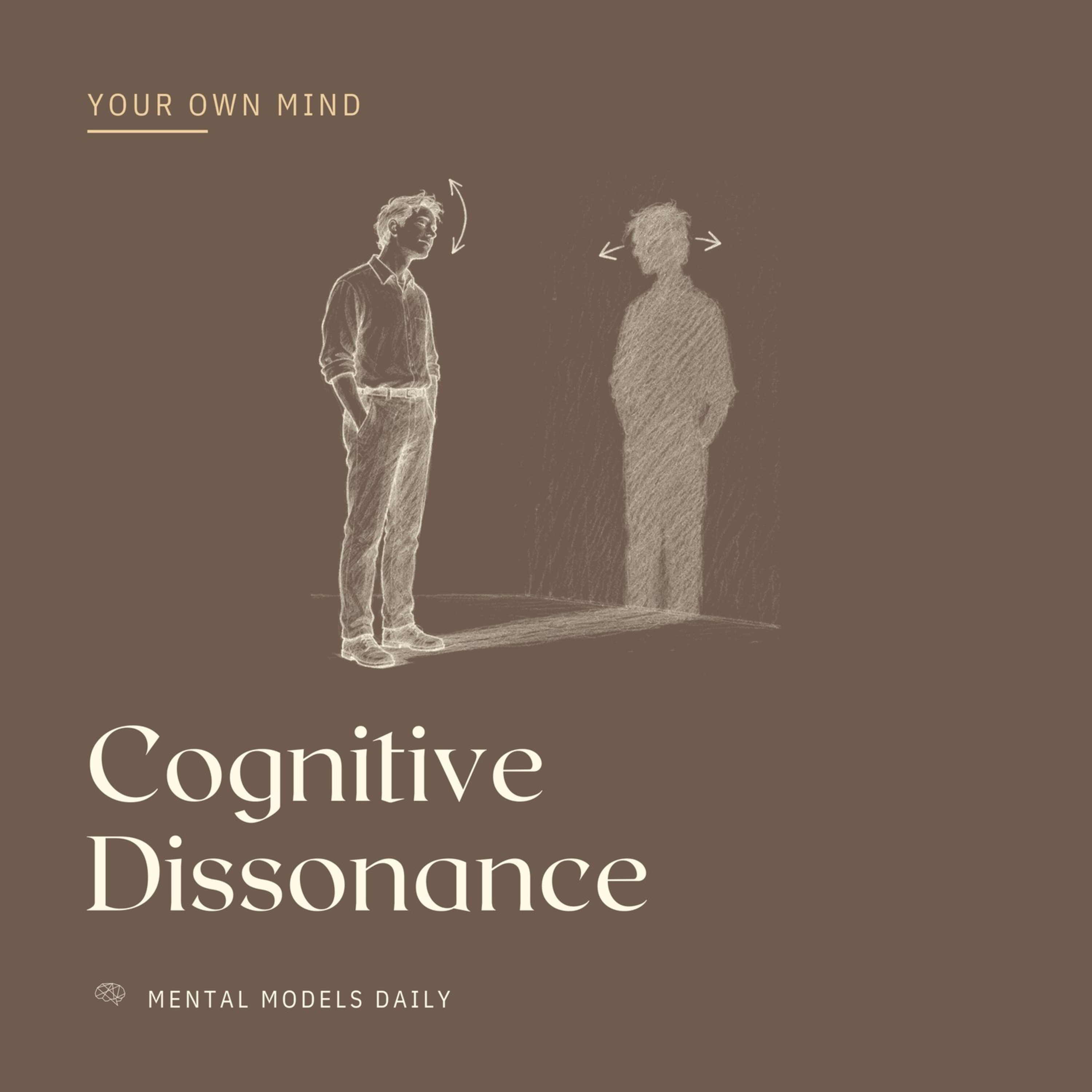 Cognitive Dissonance 30.04.2025 5mWhen our actions and beliefs clash, we often change the story rather than the behaviour.Cognitive Dissonance is the discomfort we feel when our beliefs conflict, or when our actions clash with our values. To ease it, we often change the story instead of the behavior, explaining away evidence or doubling down, as a doomsday group reportedly did when its prophecy failed.To use it, notice when you're defending a choice rather than evaluating it. After big purchases, ask if you'd buy again. At work, set success criteria in advance so facts, not pride, decide. And turn the gap between values and ac...
-
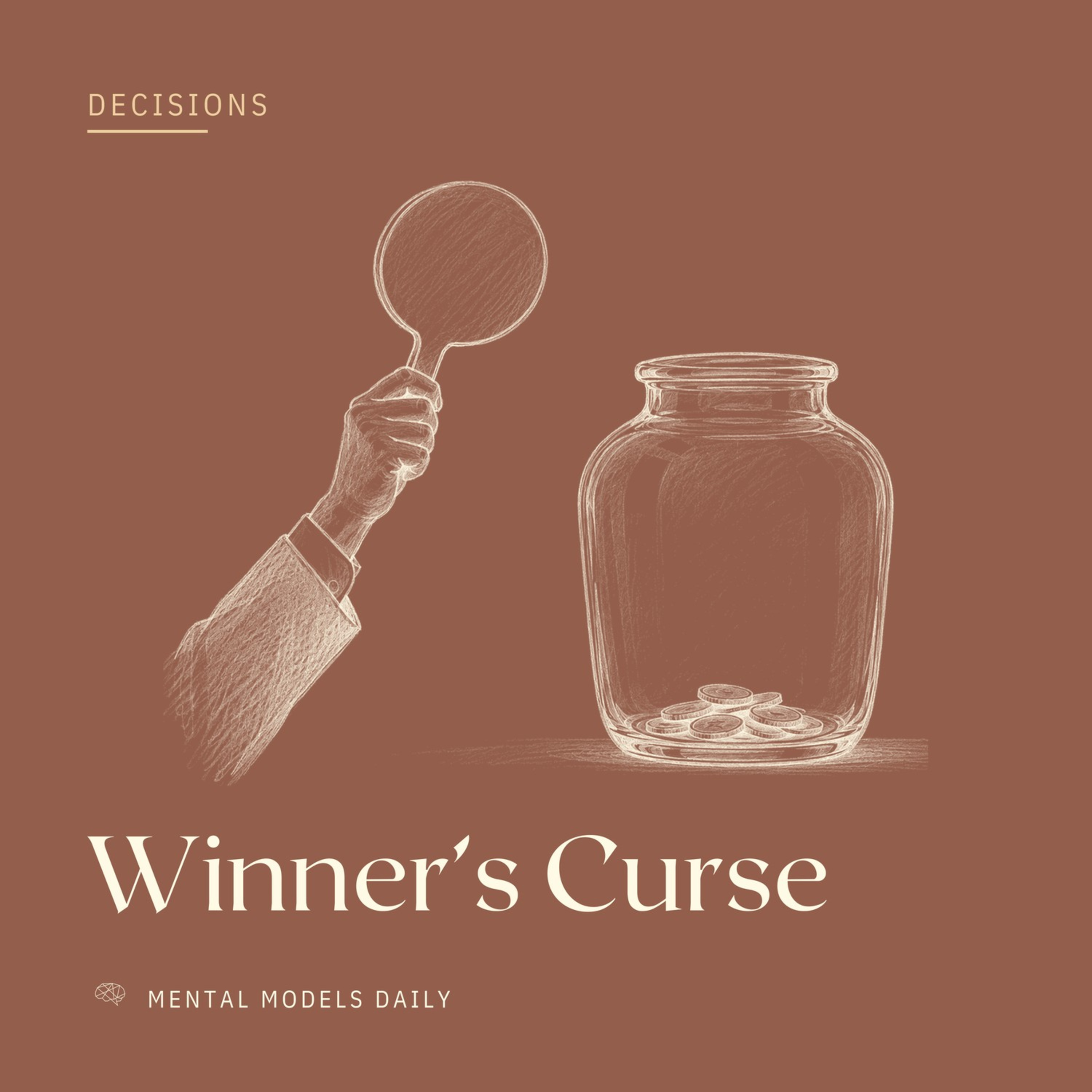 Winner's Curse 29.04.2025 5mIn a contest over an uncertain prize, the winner is often whoever overestimated it most.The Winner's Curse happens when many bidders estimate an uncertain value. Their guesses scatter around the truth, and the highest guess wins, so the winner is often the person who overestimated the most.Before any bidding war, whether for a house, a candidate or a company, set your walk-away price while you're calm. If you win easily or by a mile, ask what you might have missed, and be willing to let someone else overpay.Read more about Winner’s Curse: https://mentalmodelsdaily.com/models/winner-s-curse/Mor...
-
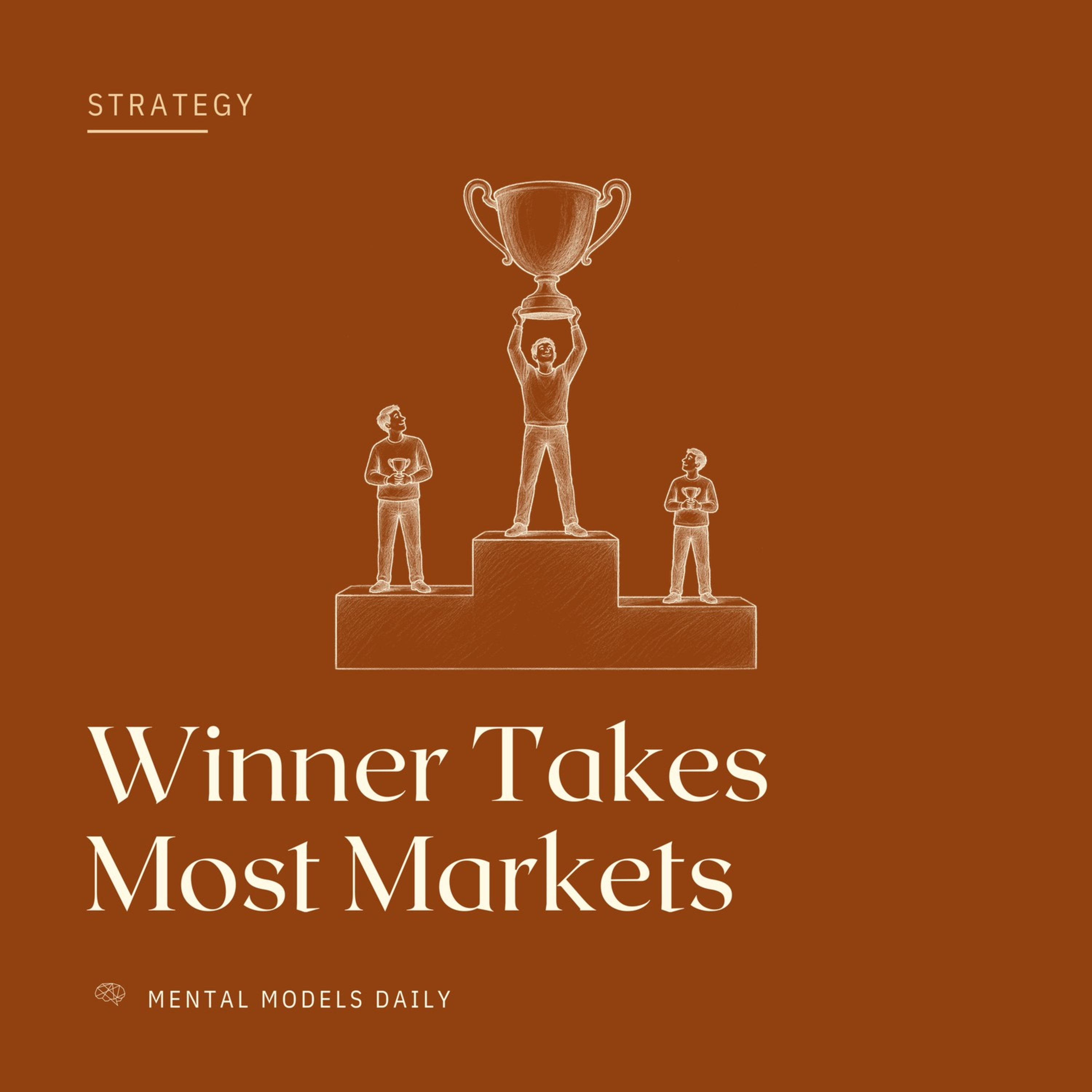 Winner Takes Most Markets 28.04.2025 6mWhen being biggest makes you more attractive, a small early lead can become lasting dominance.Winner Takes Most Markets form when the biggest option becomes more attractive simply because it is the biggest, thanks to network effects, shared standards or scale. One leader captures most of the customers and profit, and rivals share what is left.Use it to see when early momentum matters most. Aim to be the obvious choice in a specific niche, pick platforms likely to last, and question whether a giant's lead is truly permanent.Read more about Winner Takes Most Markets: https://mentalmodelsdaily.co...
-
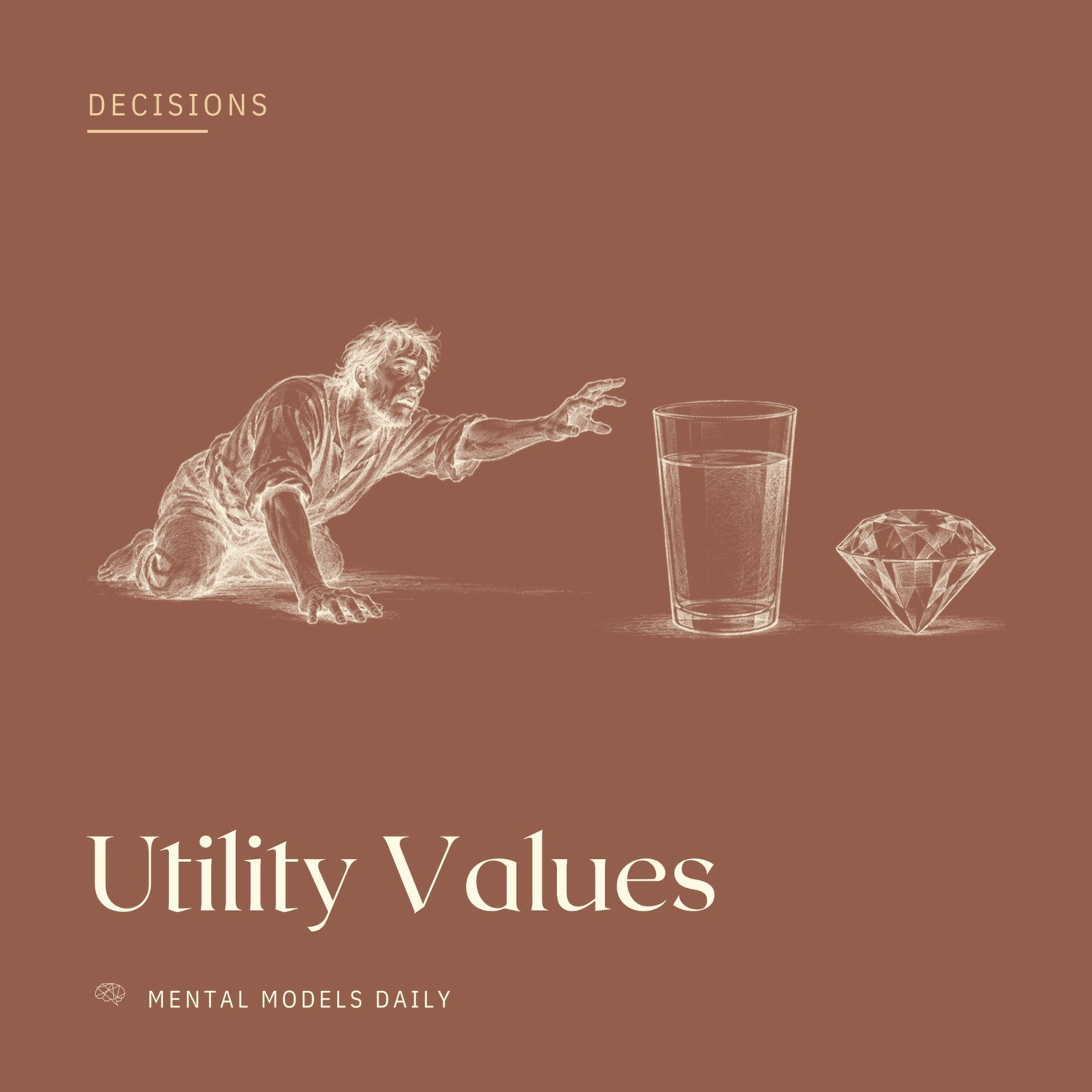 Utility Values 30.03.2025 6mValue lives in the person, not the object, so the same thing is worth different amounts to different people.Utility value is the personal satisfaction or benefit someone gets from something, which is why two people can value the same item very differently. Tulip bulbs once meant status to some and mere flowers to others, and Dyson buyers pay a premium for design and story as well as suction.Before buying, ask how much genuine benefit something will bring you, not what others think or what it costs. Remember your values will change over time. In negotiations and gift-giving, find out what the o...
-
 Tyranny of Small Decisions 29.03.2025 6mMany small, sensible choices can add up to a result nobody wanted.The Tyranny of Small Decisions describes how individually reasonable choices, made one at a time, can combine into a result that few people would ever vote for, from eroded farmland to empty high streets.To guard against it, judge repeated choices as policies rather than one-offs, look at the yearly total of small habits and commitments, and spend some of your money and time on the things you want to survive.Read more about Tyranny of Small Decisions: https://mentalmodelsdaily.com/models/tyranny-of-small-decisions/More models fo...
-
 Tragedy of the Commons 28.03.2025 6mA resource everyone can use and no one looks after tends to be used up.The tragedy of the commons, popularized by Garrett Hardin in 1968, describes how individuals with open access to a shared resource can overuse it until it collapses, even when each choice seems rational. The North Atlantic cod fishery collapsed in 1992 after decades of overfishing, and shared attention at work can be drained by constant notifications.Identify the commons around you, from shared spaces to team attention. Align incentives with care through clear rules, rotations, and recognition for those who maintain shared...
-
 Trademarks 27.03.2025 6mA distinctive sign becomes a promise that customers learn to trust at a glance.Trademarks are names, logos, and designs that identify who stands behind a product. Beyond legal protection, they are mental shortcuts that signal consistent quality, lowering the effort needed to choose. Coca-Cola's contour bottle became so recognizable that it was registered as a trademark in its own right.Use trademark thinking to judge products: established brands have a reputation to protect, while lookalike names and inconsistent branding can be warning signs. In your own work, develop consistent, distinctive...
-
 Tipping Point 26.03.2025 6mPressure builds quietly for a long time, then change arrives all at once.A Tipping Point is the moment when an idea, product or behavior stops growing gradually and starts spreading fast, often under its own momentum. Before it, effort seems wasted. After it, change can feel unstoppable.Use it to stay patient through slow beginnings in your career, savings and habits, and to look for the small push, or the first few allies, that could tip things your way. Just remember tipping points are easier to see in hindsight.Read more about Tipping Point: https://mentalmodelsdaily.com/models/tipping-poin...
Similar podcasts


Popular in
The podcast also appears in the podcast charts of these countries.


