
Embracing Digital Transformation
Dr. Darren Pulsipher
0
Dr. Darren Pulsipher, Chief Enterprise Architect for Public Sector, author and professor, investigates effective change leveraging people, process, and technology. The podcast explores which digital trends are fleeting and which will form the foundations of lasting change, with in-depth discussion and expert interviews. It covers topics such as transforming public sector work in an era of rapid disruption, building innovative IT organizations with the right processes, and sifting through confusing messages to find true drivers of value for IT organizations.
Episodes
-
 Why Quantum-Resilient Security Starts with Better Entropy 18.11.2026 33mThis episode reframes cybersecurity around foundational trust. Andy Laurence makes the case that AI accelerates attack capability, quantum computing threatens conventional cryptographic assumptions, and enterprises can no longer depend on obscurity or static defenses. The practical response is not only adopting post-quantum algorithms, but also improving the source of entropy and anchoring identity in hardware. For executives, the lesson is simple: security architecture must become more agile, more verifiable, and less dependent on assumptions that may not survive the next generation of comput...
-
Designing for Movement Across the Space-to-Terrestrial Continuum 18.11.2026 9mThis episode explores how resilient space architecture governs the movement, synchronization, degradation, reconfiguration, and recovery of applications, AI models, and data across heterogeneous space-to-Earth environments. Using the example of a lunar rover operating with intermittent Earth connectivity, the episode reveals how mission policy, telemetry, and node capability combine to drive placement decisions that preserve mission intent. It covers federated control, designed degraded modes, secure and accountable workload movement, prioritized synchronization, and how architecture enables c...
-
How Semiconductor Innovation Keeps Moore’s Law Alive 16.11.2026 42mThis episode argues that chips are not a background utility; they are a central constraint and enabler in modern digital strategy. Rakesh Kumar explains how the industry has kept scaling through packaging, layering, specialization, and new compute models, while also facing real limits in power, cost, and manufacturing economics.
-
How to Build a Resilient Team Without Toxic Positivity 12.11.2026 36mRussell Harvey makes a clear case that resilience is not about telling people to toughen up or stay positive. It is about helping individuals and teams move forward with learning after pressure, loss, or disruption. For executives, the real issue is not whether people can endure change, but whether the organization creates the conditions for people to adapt, perform, and keep moving. That means removing blockers, role-modeling healthy leadership, and replacing toxic positivity with grounded optimism. The conversation is especially relevant for leaders navigating constant change, because it ref...
-
Why Space Computing Must Be a Continuum 11.11.2026 10mDr. Darren explores the concept of a space computing continuum, emphasizing dynamic placement of applications, AI models, and data across orbital and terrestrial environments to optimize mission value. The episode discusses how mission capability depends on distributing work across orbit, ground, edge, and cloud systems, adapting to changes in power, connectivity, and trust. It highlights the importance of governance, telemetry, and policy to ensure placement decisions are explicit, explainable, and testable, using examples like disaster response and space domain awareness to showcase the reus...
-
How to Build an Innovation Marketplace 09.11.2026 35mThis episode reframes innovation as an operating system problem. Terry Young argues that organizations already produce plenty of ideas, prototypes, and research, but too many of them stall because the surrounding structures reward comfort, speed, and incrementalism. He proposes possibility sciences as a discipline for redesigning innovation itself: connecting ideas horizontally, preserving provenance, enabling reuse, and building pathways from invention to impact. For executive leaders, the message is direct: if your organization cannot move ideas across silos and into new contexts, AI will on...
-
How to Build an Organizational Digital Twin 08.11.2026 36mThis episode makes a strong case that digital transformation needs a better operating model, not just better tooling. Michael Schank explains why enterprises should model the organization itself: its structure, processes, controls, roles, and performance signals. That perspective matters because the biggest transformation risks often come from hidden work, inconsistent language, and incomplete knowledge. The practical takeaway is clear: start with a measurable business outcome, build the semantic layer around it, and keep the model alive as the business changes.
-
 How to Find Invisible Labor Before You Automate 03.11.2026 34mMargot Lawless argues that invisible labor is one of the most overlooked sources of organizational friction. It includes the coordination, follow-up, rework, and tribal knowledge that keep a business functioning but rarely appear in formal plans or headcount assumptions. For executives, the issue is not just employee burnout; it is growth capacity. When hidden work accumulates, leaders feel it as slower scaling, overloaded managers, and high performers leaving. The larger lesson is that AI will not fix a system leaders do not understand. If organizations automate only the visible tasks, they r...
-
Hollywood’s AI Inflection Point 30.10.2026 35mThis conversation is less about whether AI can make video and more about what happens when creative production becomes widely accessible. Helix Wolfson argues that the film industry is already changing because of streaming, COVID, and shifting audience behavior, while AI is accelerating the next phase by lowering the barrier to entry. The executive lesson is simple: the winners will not be the people with the most tools, but the people who know how to direct them. That has implications for media, brand content, training, and any organization that produces visual storytelling at scale.
-
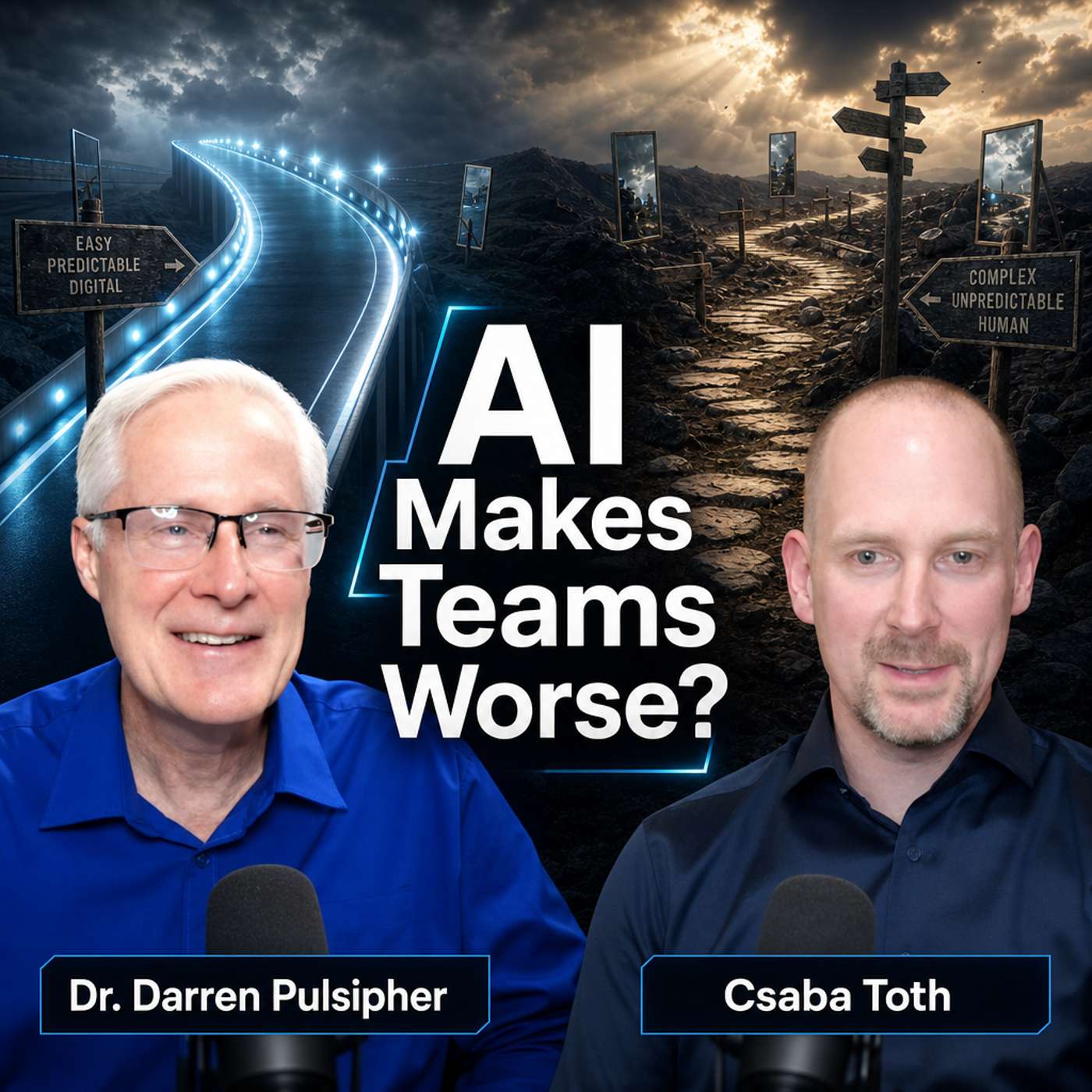 Why AI Makes Team Conflict Harder, Not Easier 26.10.2026 38mModern teams fail less because of missing talent than because of invisible differences, ego, and the tendency to choose comfort over clarity.
-
 Is AI helping your Vote? An unbiased approach. 22.10.2026 36mEvan Meyer explains how voters can use AI, values, and cross-checking to cut through political noise and make more informed ballot decisions.
-
 How to Control AI With Data-First Governance 18.10.2026 37mTim Freestone explains why AI is exposing weak data security, why broad AI adoption is the wrong metric, and how leaders should use controlled, data-first governance.
-
How to Build AI Workflows Without Burning Out Your Team 15.10.2026 34mGeorgina Woodley and Dr. Darren Pulsipher explore why AI can raise stress, rework, and cognitive load unless leaders design for human capacity.
-
 #392 How Regulated Industries Can Adopt AI Without Losing Control 07.10.2026 34mCheck out my new book AI Augmented Teams on Amazon or on my website paidar.ai/books.Regulated industries are under pressure to adopt AI without compromising security, compliance, or critical thinking. In this episode, Aaron Bach and Dr. Darren Pulsipher discuss why blanket AI bans fail, how shadow AI increases organizational risk, and what leaders can do to adopt AI responsibly. The conversation explores AI sovereignty, multi-model strategies, sensitive-data redaction, observability, human validation, and practical ways regulated organizations can move faster without losing control. The centra...
-
 #391 How Regulated Industries Can Adopt AI Without Losing Control 05.10.2026 45mCheck out my new book AI Augmented Teams on Amazon or on my website paidar.ai/books.Regulated industries are under pressure to adopt AI without compromising security, compliance, or critical thinking. In this episode, Aaron Bach and Dr. Darren Pulsipher discuss why blanket AI bans fail, how shadow AI increases organizational risk, and what leaders can do to adopt AI responsibly. The conversation explores AI sovereignty, multi-model strategies, sensitive-data redaction, observability, human validation, and practical ways regulated organizations can move faster without losing control. The centra...
-
 #390 AI Search Is Rewriting SEO: What Leaders Need to Know 01.10.2026 35mCheck out my new book AI Augmented Teams on Amazon or on my website paidar.ai/books.AI search is rewriting SEO—and business leaders need a new playbook. Host Dr. Darren welcomes SEO strategist Leopold von Lee to unpack how AI search, Google Business Profile, media coverage, and social proof now shape visibility. They explore why authority is no longer just about backlinks, and what leaders must do to get found in an AI-driven search world. ## Key Takeaways - SEO is shifting from a page-level tactic to an ecosystem strategy shaped by authority, consistency, and trust. - AI search tools compare...
-
 #389 AI Search Still Runs on SEO Authority 29.09.2026 34mCheck out my new book AI Augmented Teams on Amazon or on my website paidar.ai/books.AI search is rewriting the rules of digital visibility, trust, and persuasion. Host Darren Pulsifer sits down with SEO and AI expert Kevin C. Roy to unpack how search, content credibility, and local ranking are changing in the age of AI. They explore practical ways businesses can build authority, improve AI SEO, and stay visible in an increasingly automated information landscape. ## Key Takeaways - AI search still relies heavily on credibility, relevance, and authority signals — not just keywords. - Strong SEO...
-
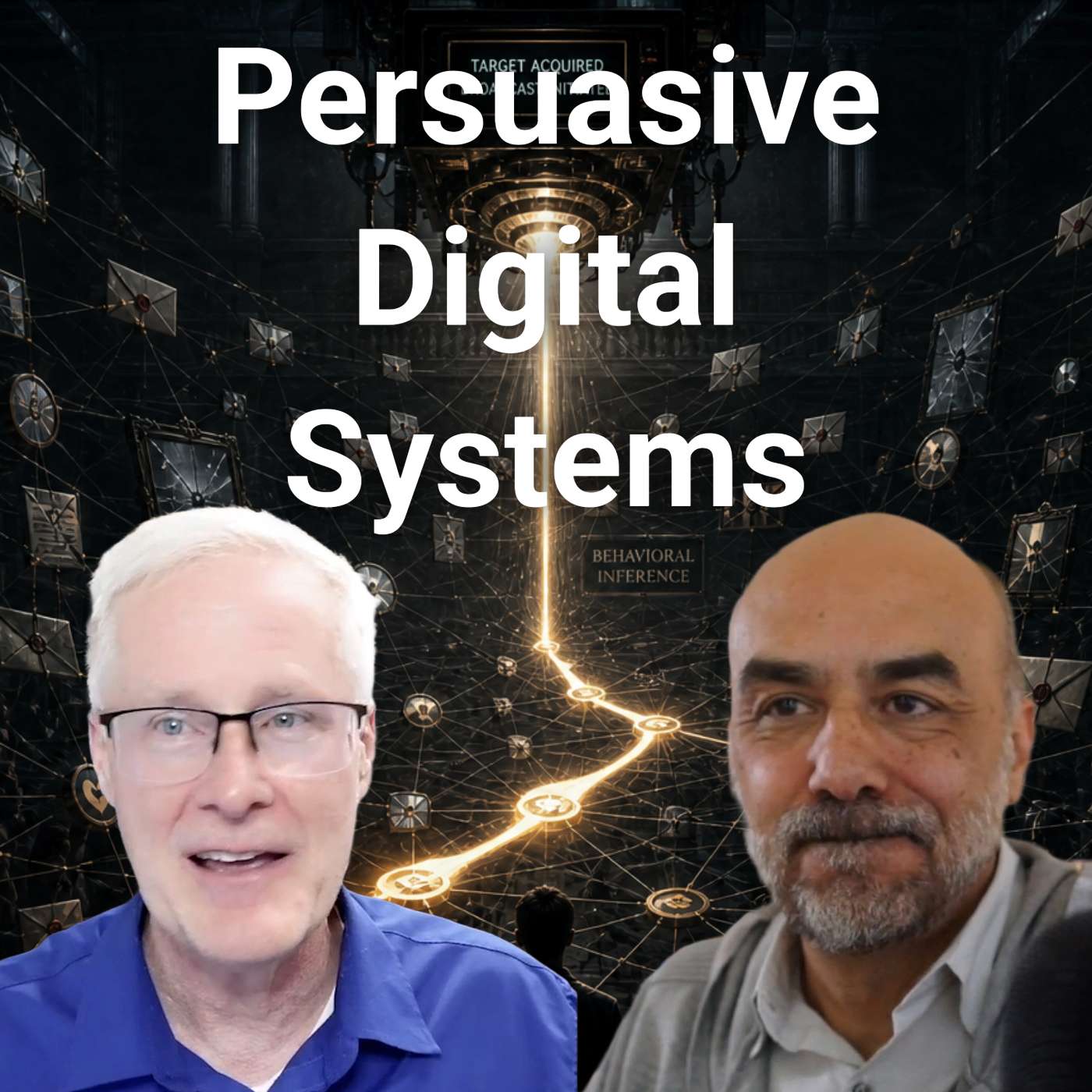 #388 AI Literacy and the Hidden Power of Digital Persuasion 23.09.2026 39mCheck out my new book AI Augmented Teams on Amazon or on my website paidar.ai/books.AI is reshaping not just what we see, but how we think, trust, and decide. Host Dr. Darren sits down with Diego Bonilla, CSU professor and AI literacy expert, to unpack digital persuasion, privacy, critical thinking, and how AI can move from personalized influence toward collective intelligence. ## Key Takeaways - **AI literacy is now leadership literacy.** Understanding how AI shapes attention, persuasion, and decision-making is essential for technologists and business leaders. - **Critical thinking applies ac...
-
 #387 Why Technical Leaders Need Storytelling Before Slides 21.09.2026 32mCheck out my new book AI Augmented Teams on Amazon or on my website paidar.ai/books.Clarity wins in the age of AI. Host Dr. Darren sits down with Nir Zavaro to unpack how leaders, engineers, and founders can turn complex ideas into clear, memorable stories—without hiding behind slides. From AI-assisted drafting to presentation structure and emotional storytelling, this conversation is a practical guide to better **business communication**, **public speaking**, and **storytelling for leaders**. ## Key Takeaways - **Slides should support the message, not carry it.** If the deck is doing all the...
-
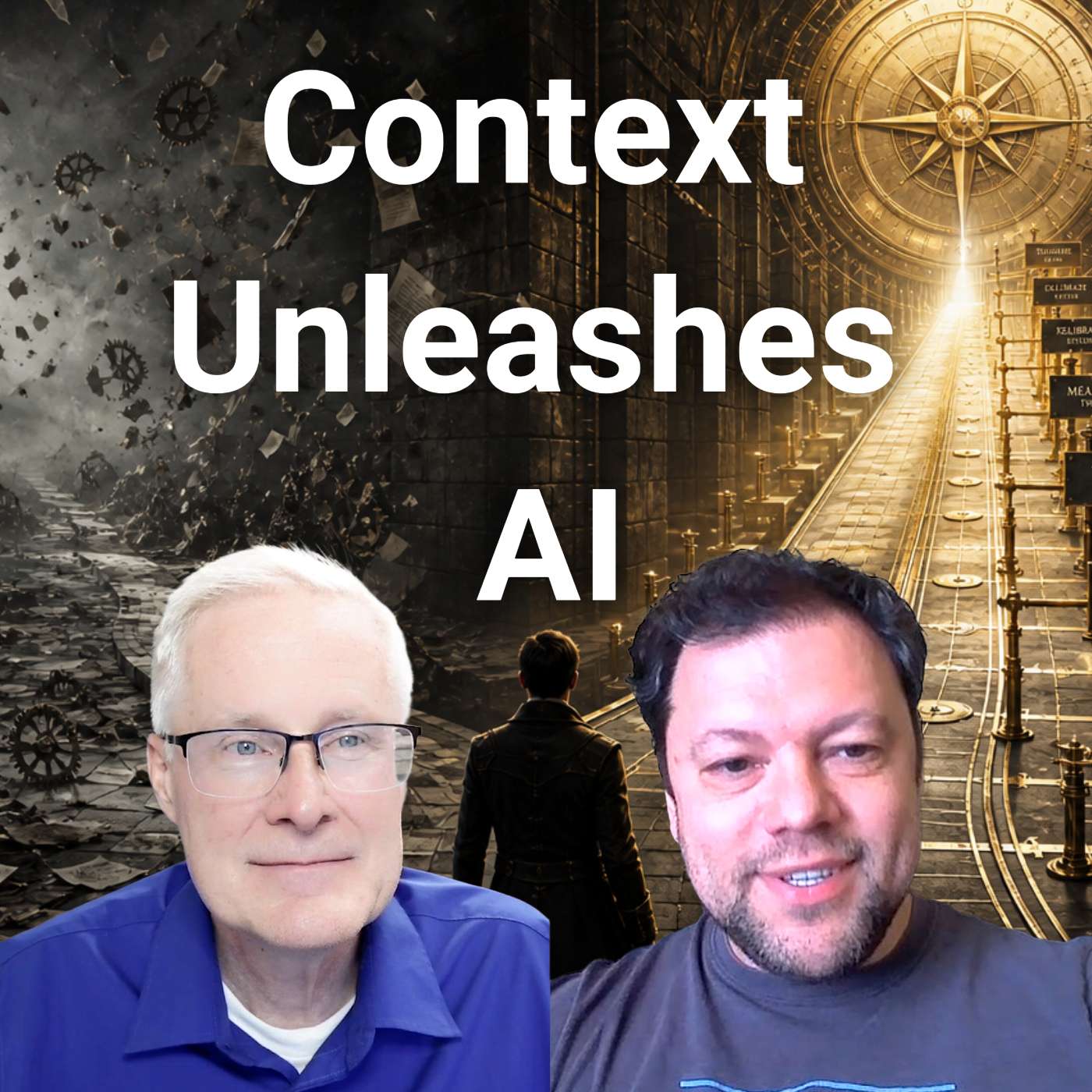 #386 AI Transformation Fails Without Context: What Enterprise Leaders Need to Know 16.09.2026 42mCheck out my new book AI Augmented Teams on Amazon or on my website paidar.ai/books.AI transformation fails when teams skip the most important ingredient: context. Host Dr. Darren welcomes Artem Koren, Chief Product Technology Officer at Sembly AI, to unpack why enterprise AI success depends on clear intent, quality standards, and better requirements—not just buying a platform. They explore digital transformation, AI workflow redesign, and how to make AI actually useful in the real world. ## Key Takeaways - **AI is changing transformation from automation to reimagining work.** Many workflows a...
Similar podcasts


Popular in
The podcast also appears in the podcast charts of these countries.
