
Herbert Smith Freehills Kramer Podcasts
Herbert Smith Freehills Kramer Podcasts
0
A podcast series from the global law firm Herbert Smith Freehills Kramer, offering thought leadership on a wide range of legal topics and industry sectors. Through expert discussions, the episodes explore current legal issues and developments affecting businesses worldwide. The firm's lawyers share their insights and analysis, providing listeners with a deeper understanding of complex legal matters. It serves as a professional resource for clients and anyone interested in the legal landscape.
Episodes
-
 Inside Employment, IR and Safety (Australia): AI Wearables 10.11.2026 24mAI-powered wearables are moving rapidly from consumer novelty to workplace reality, bringing new opportunities alongside significant legal and governance challenges. In this episode, Anna Creegan and Olga Klimczak explore how smart glasses and other AI wearables are being used at work, the emerging risks around privacy, surveillance, confidential information and workplace safety, and the practical steps employers can take now to put appropriate guardrails in place.
-
 Employment Espresso pods: The Employment Rights Act 2025: the 2026 reforms are now in force 09.11.2026 10mThe Employment Rights Act 2025: the 2026 reforms are now in force. Has your business completed its preparations – and are you ready for what comes next? With the final tranche of this year’s Employment Rights Act 2025 reforms having taken effect on 30 October, now is a good time to check that your business has made the necessary changes to policies, processes and training, while preparing for the significant reforms coming in early 2027. In the final episode of our 2026 Employment Espresso podcast mini-series on the 2025 Act, Jenny Andrews, Siân McKinley and Anna Henderson take stock of key changes already in force, highlight outstanding action points and explain the latest changes to the implementation timetable. The episode covers: • Your 2026 checklist: from sick pay, family leave and holiday records to preparing for union access requests and strengthening harassment prevention, including in relation to third parties. • What has moved, and what has not: the duty to inform workers of their right to join a union is now expected on 1 January 2027, while the fire and rehire restrictions have moved to March 2027. The unfair dismissal reforms remain scheduled for 1 January 2027, with important year-end implications for employers considering dismissals. • The rest of 2027: the newly announced timetable for further reforms, including equality action plans, bereavement leave, collective redundancy consultation changes, NDA restrictions, strengthened flexible working rights and enhanced dismissal protections for those taking family leave. We will explore these changes and how to prepare for them in next year’s podcasts.
-
 Squatters on site? Practical insights from the enforcement front line 09.11.2026 26mIn this episode, Graeme Robertson and Michaela Abbs of Herbert Smith Freehills Kramer are joined by Jon Tatam and Mick Haddon of South East Enforcement to discuss the practical realities of dealing with trespass and unlawful occupation. Moving beyond the legal framework for possession claims, they explore the reported rise in squatting and trespass incidents, the routes available to recover possession, working effectively with the police, what happens on the day of an eviction, and the steps developers and landowners can take to secure sites before and after possession is obtained. A practical discussion offering real-world insights for developers, property owners and real estate professionals.
-
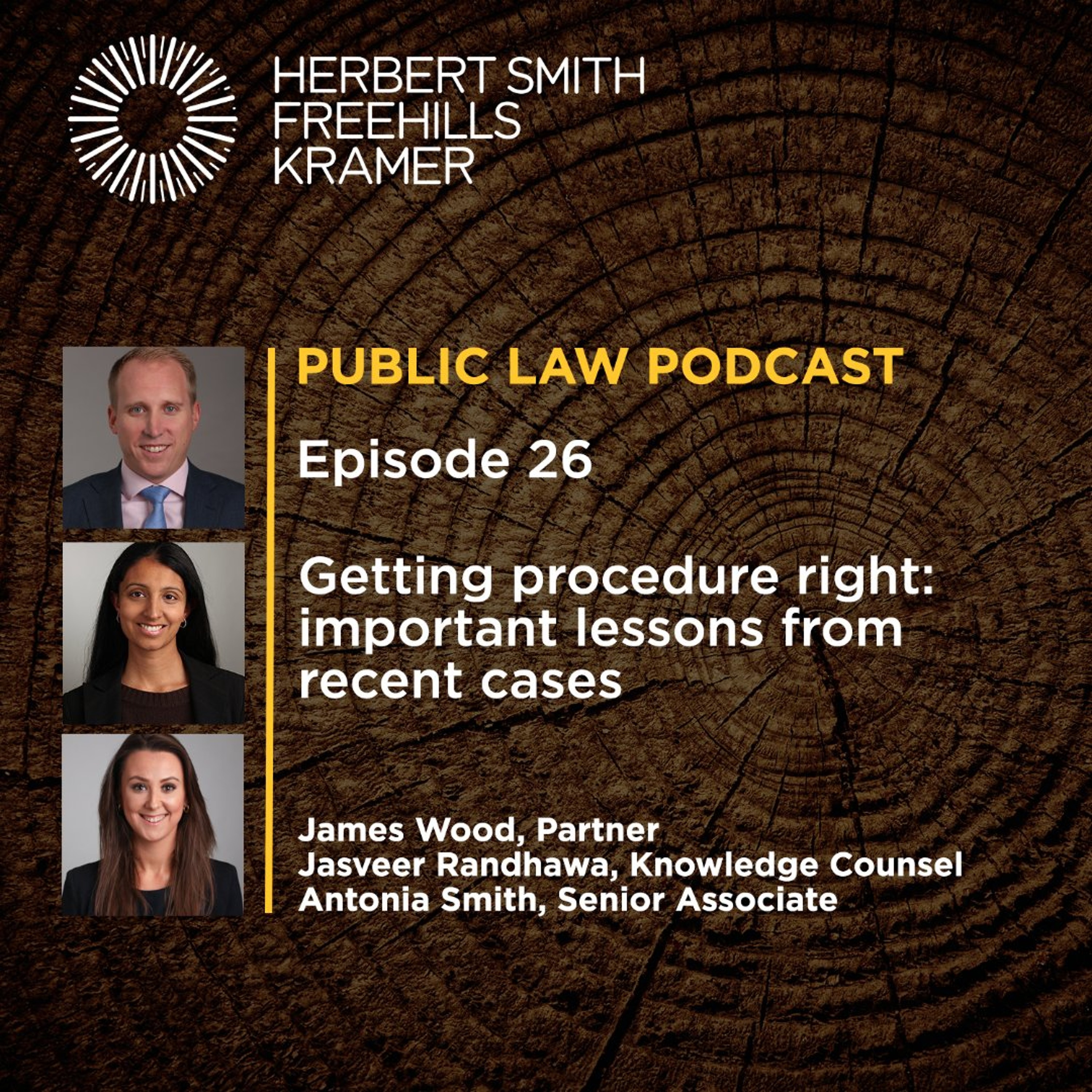 Public Law Podcast EP26: Getting procedure right: important lessons from recent cases 05.11.2026 14mIn this edition of the public law podcast series, HSF Kramer Partner James Wood is joined by Knowledge Counsel Jasveer Randhawa and Senior Associate Antonia Smith. Together, they discuss the importance of getting procedure right, drawing on recent decisions. Their discussion covers compliance with court deadlines, applications for extensions of time and the duty of candour, highlighting practical lessons for both claimants and defendants. They also explore recent subsidy control cases, including the risks of bringing a challenge too early or too late, how to identify a final decision that can be challenged, and the respective roles of decision-makers and the courts/CAT under the subsidy control regime. Speakers: James Wood (Partner), Jasveer Randhawa (Knowledge Counsel) and Antonia Smith (Senior Associate).
-
 Insuring AI - EP2: Data Centres 05.11.2026 22mIn this episode, we discuss data centres: the tangible infrastructures that are supporting the AI revolution. We explore the complex risks surrounding these projects (from construction to operation), how insurance might assist in mitigating some of the risks and some key coverage considerations. This episode is hosted by Antonia Pegden, Partner in our Insurance & Professional Risks team in London, who is joined by Greig Anderson, Partner in the same team in London and Travis Gooding, Senior Associate from our Sydney office. For more insights on Data Centres, please visit the hub on our website: https://www.hsfkramer.com/insights/key-topics/data-centres#insights
-
 The Construction Law Shortcast: EP2 Delay, Float and Extensions of Time 04.11.2026 6mDelay claims are among the most common and most contested in construction disputes, yet the underlying concepts are frequently misunderstood or misapplied. In Episode 2, Xavier Milne and Noe Minamikata simplify the meaning of delay in a construction context, "float", as well as extensions of time, and the importance of procedural compliance when making claims. Essential listening for employers and contractors alike.
-
 Judgment Calls: True Stories from Trusts & Estates: EP1: The Man Pursued by Ghosts 04.11.2026 14mWhat happens when a man troubled by extraordinary delusions makes a will, and his estate ultimately finds its way to someone he apparently never intended to benefit? In this storytelling episode from our Private Wealth and Trusts team, we recount the landmark case of Banks v Goodfellow, which established the legal test for testamentary capacity. We explore the unusual circumstances surrounding John Banks and the unexpected chain of events that brought the dispute before the courts. The case established legal principles which remain significant today – over 150 years later. This podcast can be listened to on SoundCloud, Apple and Spotify. Don’t forget to subscribe to the channel to receive updates on future episodes. Contributors: Mark Adair, Chloe Taylor
-
 Deal Talk EP11: Demystifying the US flip for Australian startups (Part 2) 03.11.2026 23mIn this episode, HSF Kramer partners Claire Thompson and Toby Eggleston discuss the key tax considerations Australian startups need to work through to ensure a successful US flip. Flipping an Australian startup to the US constitutes a tax event, and with many startups dealing with a complex capital structure - from employee option holders to SAFEs and a number of investors - early engagement with Australian and US tax advisers is critical. The episode delves into what the ATO will want to know about a flip and how this may affect its timing, how to manage various shareholders, and the other tax-related issues founders and GCs need to have on their radar early on.
-
 Cross Examining Cyber EP29: Cross Examining Andrew Penn and Vikram Sharma 02.11.2026 52mIn this episode, we cross-examine Andy Penn and Vikram Sharma, two leading voices at the intersection of cybersecurity and emerging technologies. You will know Andy well, the former CEO of Telstra, a current non-executive director at Coles, and chairman at Sharon AI. Andy has played a significant role in shaping Australia's approach to cybersecurity, including chairing the Expert Advisory Board for Australia's 2020 and 2023 National Cybersecurity Strategies. Vikram is the founder of Quintessence Labs, Australia's first quantum company, which emerged from cutting-edge research at the ANU and applies quantum tech to real-world cybersecurity challenges. Vikram also won the 2025 Prime Minister's Prize for Innovation in Australia, one of Australia's highest honours for scientific achievement. In this conversation, Andy and Vikram share their perspectives on the opportunities and risks presented by quantum, why organisations need to start preparing for its impact today, and they draw upon their extensive experience across business, government and tech. This episode provides a fascinating perspective on the opportunities and risks presented by Quantum, the growing convergence between Quantum, AI and cybersecurity, and why boards and business leaders should be thinking about Quantum resilience today. Thanks again for listening. This is Cross-Examining Andy Penn and Vikram Sharma. Here we go.
-
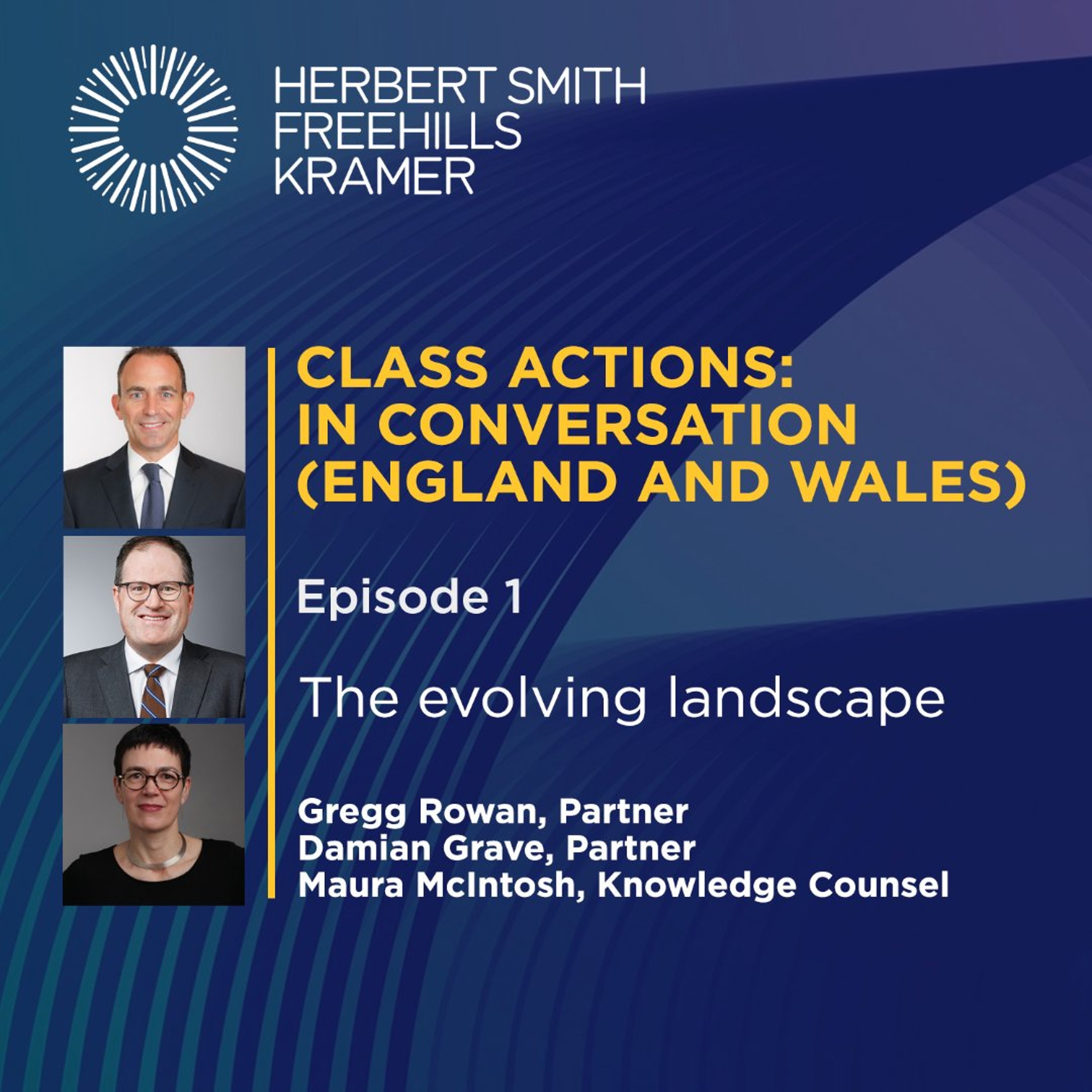 Class actions: In conversation (England and Wales) – EP1 The evolving landscape 29.10.2026 14mThis is the first in a series of podcasts we will be releasing to mark the launch of the third edition of Class Actions in England and Wales https://www.hsfkramer.com/notes/litigation/2026-09/new-third-edition-of-our-leading-textbook-class-actions-in-england-and-wales, published by Sweet & Maxwell. In this episode we take stock on how class actions are brought in this jurisdiction, look at the position regarding funding, and discuss the global context for class actions. This episode is hosted by Maura McIntosh, a knowledge counsel in our commercial litigation team in London, who is joined by Gregg Rowan, a London disputes partner, and Damian Grave, a disputes partner based in Melbourne. The three of them are the general editors of the book. Episode transcript available here: https://marketing.hsfkramer.com/20/36058/landing-pages/class-actions-ep1-transcript.pdf
-
Deal Talk EP10: Demystifying the US flip for Australian startups (Part 1) 27.10.2026 28mIn this episode, HSF Kramer partners and co-heads of venture and growth capital, Australia, Elizabeth Henderson and Claire Thompson discuss the ins and outs of a US flip. There’s a lot of talk in Australia about US flips at the moment. Some founders are being told it's essential. Others are wondering if it's worth the cost, complexity and disruption. The reality is that there isn't a one-size-fits-all answer. A US flip is generally manageable with proper planning, but early engagement with Australian and US legal and tax advisers is essential. The episode unpacks what a US flip involves, how to time the process, and the practical considerations startup founders and GCs need to have on their radar early on.
-
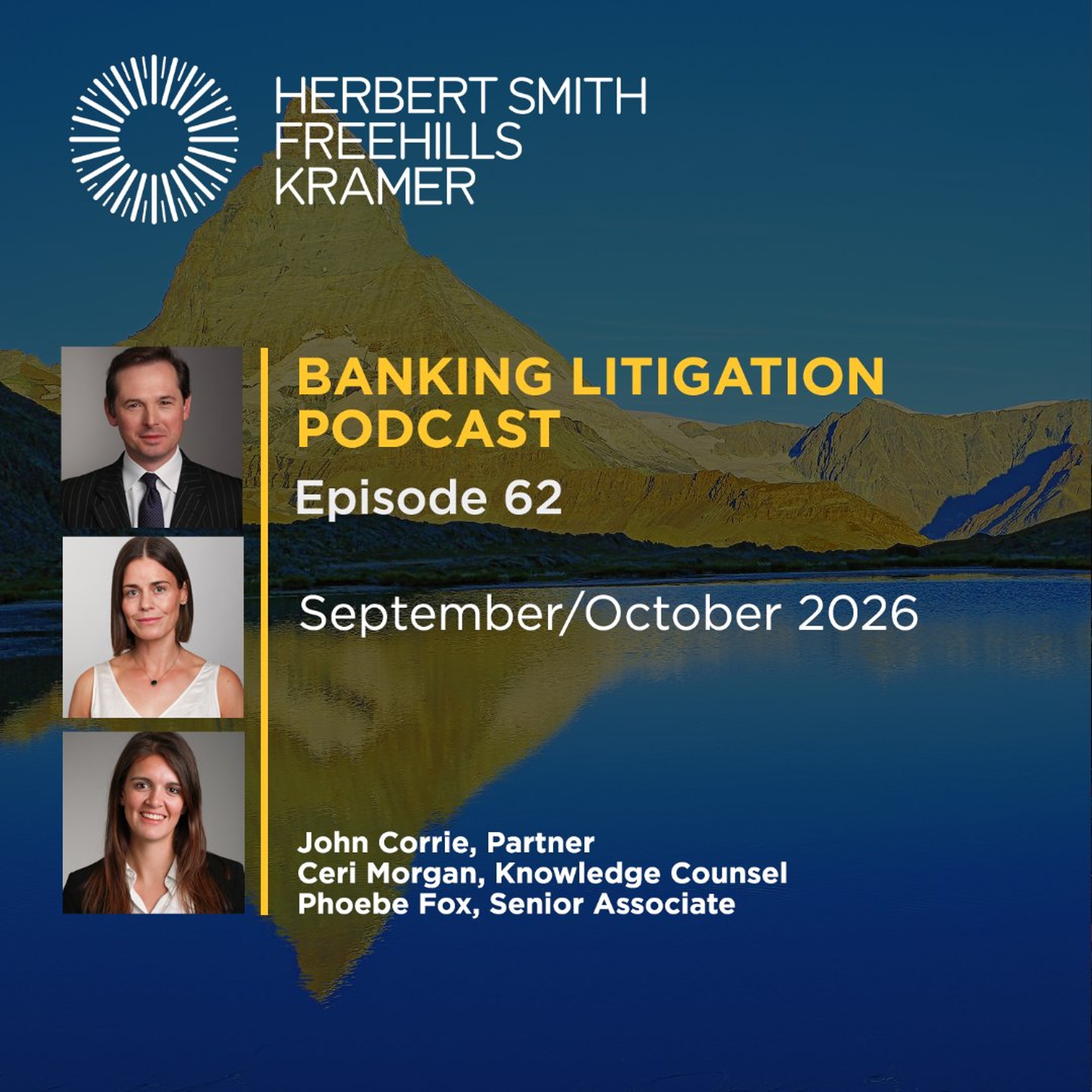 Banking Litigation Podcast EP62: Monthly Update – September/October 2026 26.10.2026 25mIn this edition of our banking litigation podcast, we consider some recent cases that will be most relevant to in-house lawyers at banks and financial institutions. This episode is hosted by John Corrie, a partner in our banking litigation team, who is joined by Ceri Morgan and special guest Phoebe Fox. Speakers: John Corrie (Partner), Ceri Morgan (Knowledge Counsel), Phoebe Fox (Senior Associate). This podcast can be listened to on SoundCloud, Apple and Spotify and don’t forget to subscribe to the channel to receive updates on future episodes. You can find out more about the cases covered in this podcast on our blog at the following links: County Court holds no statutory limitation period applies to unfair relationship claims under s.140A CCA https://www.hsfkramer.com/notes/bankinglitigation/2026-09/county-court-holds-no-statutory-limitation-period-applies-to-unfair-relationship-claims-under-s-40a-cca Supreme Court holds that no statutory limitation period applies to unfair prejudice petitions https://www.hsfkramer.com/notes/litigation/2026-03/supreme-court-holds-that-no-statutory-limitation-period-applies-to-unfair-prejudice-petitions High Court grants anti-suit injunction to prevent foreign proceedings from undermining letter of credit payment obligations https://www.hsfkramer.com/notes/bankinglitigation/2026-09/high-court-grants-anti-suit-injunction-to-prevent-foreign-proceedings-from-undermining-letter-of-credit-payment-obligations High Court grants case management stay in liability management exercise dispute pending New York litigation https://www.hsfkramer.com/notes/bankinglitigation/2026-09/high-court-grants-case-management-stay-in-liability-management-exercise-dispute-pending-new-york-litigation Carter Ruck v SRA: High Court decision means SRA cannot compel production of privileged documents https://www.hsfkramer.com/notes/litigation/2026-09/carter-ruck-v-sra-high-court-decision-means-sra-cannot-compel-production-of-privileged-documents Lawyer struck off in first disciplinary case on AI misuse https://www.hsfkramer.com/notes/litigation/2026-09/lawyer-struck-off-in-first-disciplinary-case-on-ai-misuse English Sanctions Litigation and Russian Enforcement Battles https://www.hsfkramer.com/notes/bankinglitigation/2026-09/english-sanctions-litigation-and-russian-enforcement-battles Biannual Banking Litigation Update (Autumn 2026) https://www.hsfkramer.com/notes/bankinglitigation/2026-10/biannual-banking-litigation-update-autumn-2026 New third edition of our leading textbook Class Actions in England and Wales published https://www.hsfkramer.com/notes/bankinglitigation/2026-09/new-third-edition-of-our-leading-textbook-class-actions-in-england-and-wales
-
 Legal Tech Deciphered: Trust, Truth and Hallucinations: Beyond Messaging Apps 22.10.2026 19mIn this episode, we take the conversation a step further, moving from the challenges of mobile and messaging-app data to the fast-emerging frontier of social media evidence. Roisin McCrory, Meghan Ryan, David Shepherd and Uchi Jayawardhena explore how posts, private messages, ephemeral content and platform-specific multimedia are increasingly finding their way into litigation and investigations. As organisations and their employees communicate across an ever-growing mix of platforms, the speakers examine why collecting, preserving and authenticating social media data is significantly more complex than traditional forms of digital evidence. They discuss the practical challenges created by evolving platforms, restricted access pathways and constantly changing content formats, and what these developments mean for legal teams and investigators. Through emerging trends and real-world examples, the episode highlights a simple but critical reality: AI cannot analyse what you cannot reliably collect. The discussion offers insights into why social media is becoming one of the next major challenges in digital evidence and how organisations can prepare for what lies ahead.
-
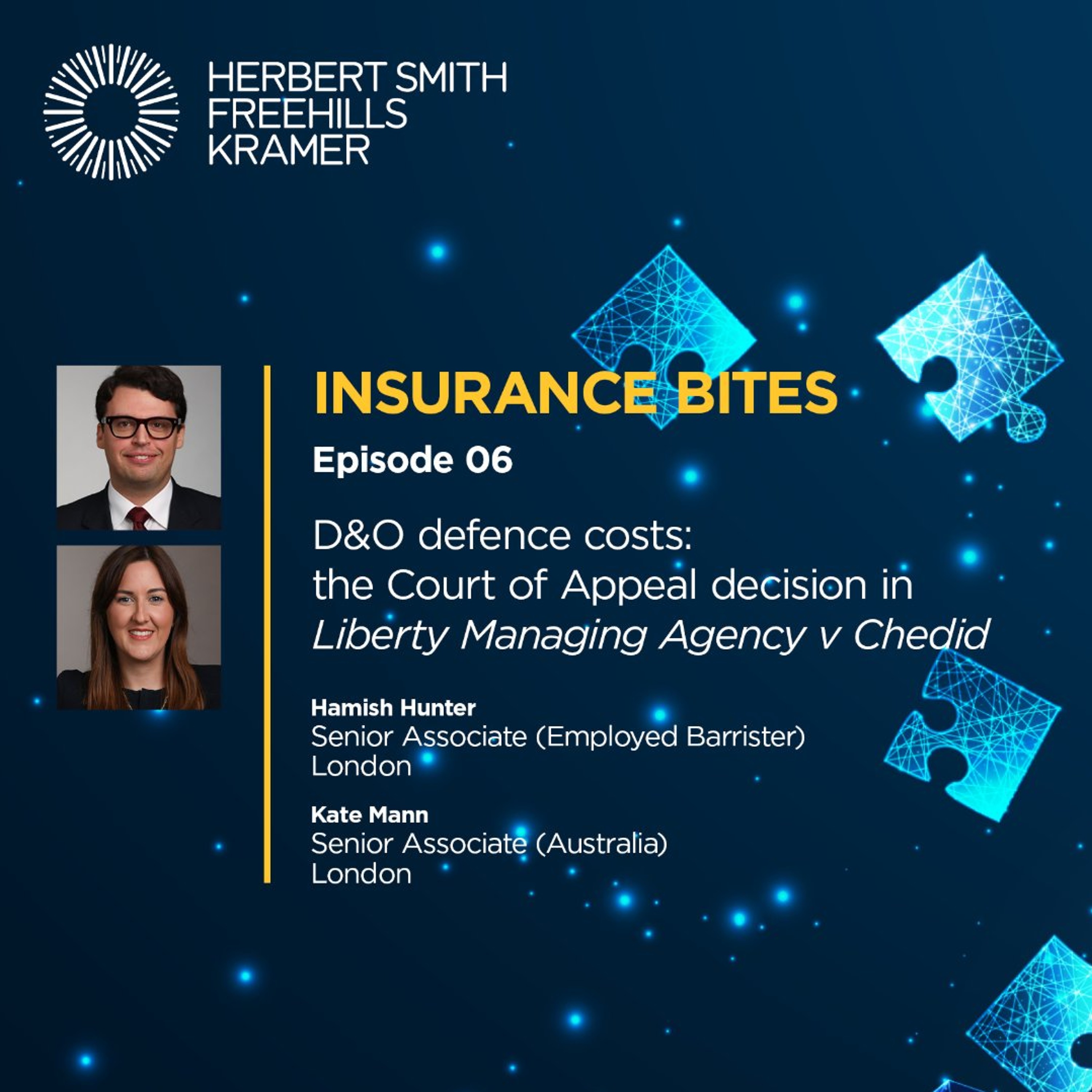 Insurance Bites EP6: D&O defence costs: the Court of Appeal decision in Liberty Managing Agency v Chedid 22.10.2026 7mIn this episode of Insurance Bites, Hamish Hunter and Kate Mann, Senior Associates in the Insurance & Professional Risks team, report on the appeal in Liberty Managing Agency Limited v Chedid which considered whether allegations of fraud against directors or officers permit a D&O insurer to withdraw cover, or whether the insurer must wait for independent determination. This is a critical question for an insured policyholder as it may determine whether they have the resources to mount a proper defence to the allegations. Our article on the first instance decision can be seen here on our Insurance Notes blog: https://www.hsfkramer.com/notes/insurance/2026-posts/established-not-alleged-commercial-court-confirms-d-o-policyholders-right-to-defence-costs
-
 The Construction Law Shortcast: EP1 The prevention principle and time at large 22.10.2026 6mWhat happens when an employer's own conduct prevents the contractor from meeting the contractual completion date? And what are the consequences when a contract has no effective mechanism to deal with acts of prevention? In the first episode of the Construction Law Shortcast, Xavier Milne and Noe Minamikata tackle two foundational principles of English construction law that anyone involved in construction projects needs to understand: the prevention principle and time at large. These concepts have significant practical implications for the completion date, liquidated damages regime, and other contractual relief potentially available to the parties. A concise breakdown of two principles that neither employers nor contractors should overlook.
-
 Inside Arbitration Issue 22: Building the Bench - A conversation with Lise Bosman 21.10.2026 33mAFSA’s appointment of Professor Lise Bosman as the inaugural president of its International Court was a clear statement of intent. Her career has moved between practice, academia and arbitral institutions: from apartheid-era campus politics at the University of Cape Town, the Iran–US Claims Tribunal in The Hague, practising commercial arbitration at Freshfields, leadership of the International Council for Commercial Arbitration (ICCA) and two decades teaching arbitration law at the University of Cape Town (UCT). She also serves as senior counsel to the Permanent Court of Arbitration. When she sat down with Jonathan Ripley-Evans, partner in the Johannesburg office at HSF Kramer, the conversation ranged across the current state of South African arbitration, how the AFSA International Court works, and how younger practitioners can build credible careers in the field. Speakers: Lise Bosman (President, AFSA International Court) and Jonathan Ripley Evans (Partner, Herbert Smith Freehills Kramer)
-
 On Just Terms S2 E13: Across the Tasman: New Zealand's class actions landscape with Bell Gully 15.10.2026 38mIn this episode, partners Jason Betts and Aoife Xuereb speak with Sophie East and Jesse Wilson, partners at Bell Gully, about the evolving class actions landscape in New Zealand and how it compares with developments across the Tasman. They explore the foundations of New Zealand's representative proceedings regime, the significance of the Supreme Court's landmark decision in Ross v Southern Response, and the increasingly important role of litigation funders. The conversation also examines the claims driving activity in the market, the growing influence of Australian class action trends on claim theories and parallel proceedings, and what may lie ahead for the New Zealand class actions landscape.
-
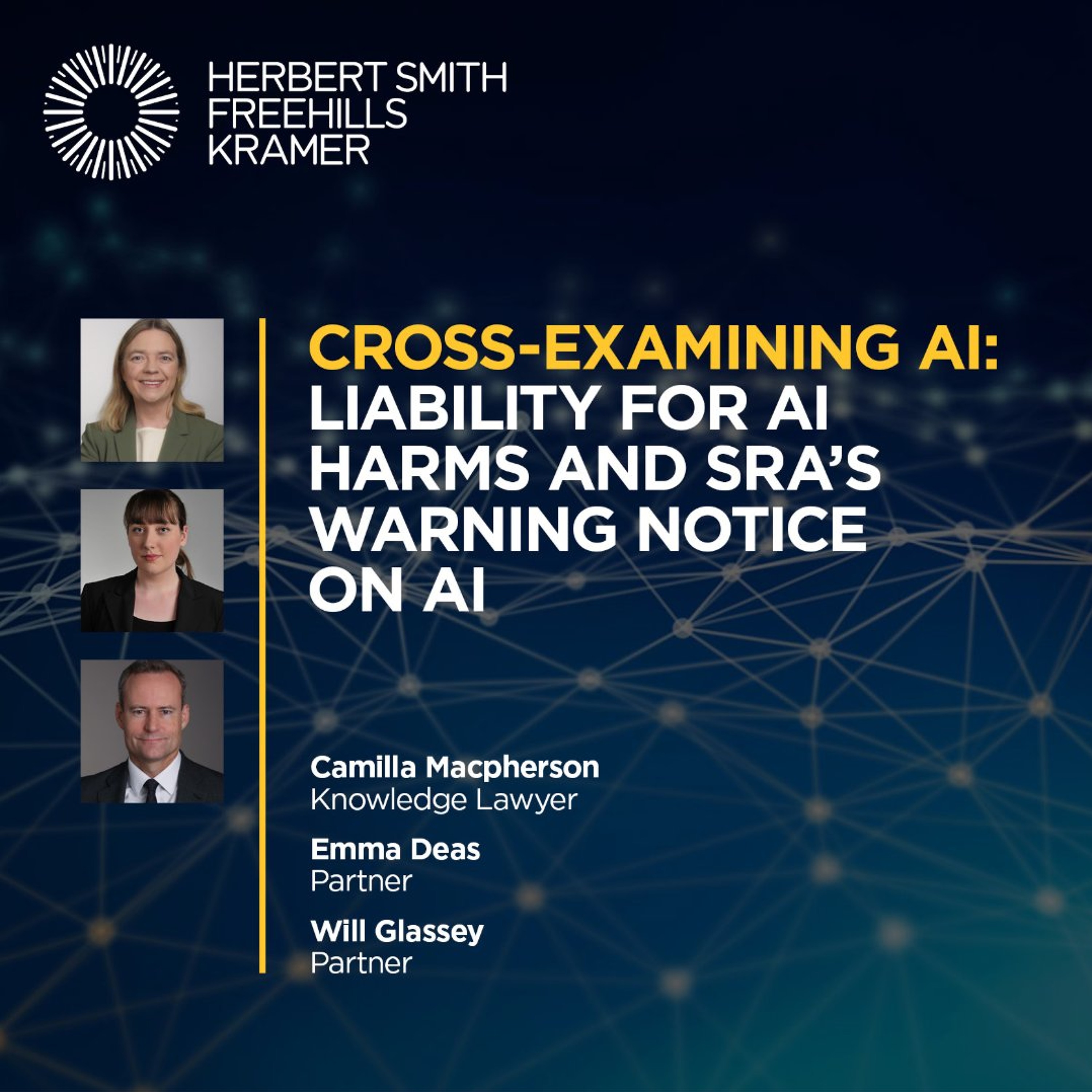 Cross-examining AI: Liability for AI harms and SRA’s warning notice on AI 14.10.2026 17mThis is the fourth episode of "Cross-examining AI", HSF Kramer's podcast series on disputes and AI where we unpack the key developments that are shaping litigation. In this episode we look at the UKJT’s statement on liability for AI harms, the SRA’s recent warning notice on AI and the first case from the Solicitors Disciplinary Tribunal where a lawyer has been struck off for misuse of AI. This episode is hosted by Camilla Macpherson, a knowledge lawyer in our disputes team, who is joined by Emma Deas, a partner in our banking litigation team and Will Glassey, a partner in our disputes practice with a focus on professional negligence and professional disciplinary claims. Below you can find links to our blog posts on the developments and cases covered in this podcast. • UK Jurisdiction Taskforce publishes final legal statement on liability for AI harms https://www.hsfkramer.com/notes/litigation/2026-07/uk-jurisdiction-taskforce-publishes-final-legal-statement-on-liability-for-ai-harms • Solicitors Regulation Authority issues a Warning Notice on the misuse of AI https://www.hsfkramer.com/notes/insurance/2026-posts/solicitors-regulation-authority-issues-a-warning-notice-on-the-misuse-of-ai • Lawyer struck off in first disciplinary case on AI misuse https://www.hsfkramer.com/notes/insurance/2026-posts/lawyer-struck-off-in-first-disciplinary-case-on-ai-misuse
-
Cross Examining Cyber EP28: Cross Examining Charles Carmakal 13.10.2026 40mWelcome to Cross Examining Cyber, a podcast brought to you by Herbert Smith Freehills Kramer. In this series, we speak with leading cyber practitioners, business leaders and policymakers about the issues shaping today's cyber landscape, from emerging threats and regulatory developments to governance, resilience, and security strategy. In this episode, we cross-examine Charles Carmakal, Chief Technology Officer of Google Cloud Mandiant Consulting and one of the world's most respected cyber security and threat intelligence experts. Over the course of his career, Charles has been at the forefront of investigating some of the most significant cyber incidents and nation-state campaigns impacting governments and organisations around the globe. His insights are widely sought after by boards, executives and security leaders navigating an increasingly volatile threat environment. In this conversation, Charles shares his views on the growing intersection between geopolitics and cyber risk, and how global instability is reshaping the threat landscape for organisations of every size. Drawing on his extensive incident response and threat intelligence experience, he discusses the motivations and tactics of today's threat actors, the challenges of operating in an era of heightened geopolitical tension, and the practical steps organisations can take to improve their resilience. Charles also reflects on the reality that many successful cyber intrusions still begin with surprisingly simple techniques. From social engineering to physical security failures such as tailgating, he explains why organisations must remain focused on cyber fundamentals even as the threat landscape becomes more sophisticated and complex. This episode provides a fascinating perspective from one of the industry's leading voices on the threats shaping the future of cyber security and what leaders should be thinking about today to prepare for tomorrow. Thanks again for listening. This is Cross Examining Charles Carmakal. Here we go...
-
 Legal Tech Deciphered Trust, Truth and Hallucinations: When Clients Communicate Everywhere, How Do You Collect Anything 06.10.2026 17mIn this episode we explore a challenge that receives far less attention than AI: how organisations identify and collect data in an increasingly fragmented communications landscape. From disappearing messages and encrypted devices to AI-generated transcripts and summaries, our speakers, Stephanie Barrett, David Beck, and Danbee Kim explore what happens when the volume of data, communication channels and information sources expand faster than an organisations' ability to keep track of them. The episode highlights a simple but important message: before organisations can unlock value from AI, they must first understand where their data lives, how to collect it, and whether it is fit for analysis. Good governance, clear policies, and a robust collection strategy remain the foundation of any successful data and AI programme.
Similar podcasts


Popular in
The podcast also appears in the podcast charts of these countries.

