
Asia Centric by Bloomberg Intelligence
Bloomberg
0
Some of the world's largest and fastest-growing markets, economies and companies are in Asia. Every Thursday, John Lee from Bloomberg Intelligence speaks with experts and newsmakers about the big ideas and trends moving money across the region.
Episodes
-
 Why Chinese Consumers Are Shunning New Smartphones 11.11.2026 19mChinese consumers are deferring smartphone upgrades into 2027 and beyond, casting a shadow over the world's largest mobile market. Despite industry hopes, on-device artificial intelligence and new form factors such as foldables are failing to excite buyers. Instead, rising memory prices are prompting users to hold onto their devices longer. Apple and Huawei stand out as the major brands growing in China, while Android competitors like Oppo and Vivo suffer volume declines. Steven Tseng, senior technology analyst at Bloomberg Intelligence, and Vlad Savov, tech editor for Bloomberg News, join host John Lee on the Asia Centric podcast. They explore the findings of our China smartphone survey and discuss what this means for the smartphone supply chain.See omnystudio.com/listener for privacy information.
-
 Partners Capital on Picking Top Fund Managers 04.11.2026 24mAsset allocation has become much tougher as the unwinding of the AI trade and rising interest rates ripple through equities and fixed income, breaking down traditional market correlations. With bonds struggling to fulfill their historical role as a portfolio safety net, investors are looking beyond conventional strategies to find true diversification. Adam Watson, Head of Asia Pacific at Partners Capital, and Dominik Burckgard, Head of Hong Kong, join host John Lee on the Asia Centric podcast. Representing an outsourced CIO firm with more than $85 billion in assets under management, they unpack their rigorous process for selecting top-tier fund managers. The pair also discuss the role Asia plays in portfolios and the opportunities presented by smaller, specialized managers.See omnystudio.com/listener for privacy information.
-
 BHP CFO on Copper, AI and Mining's New Era 28.10.2026 30mThe mining industry is undergoing a structural transformation. Copper has overtaken iron ore as the world's most sought-after commodity, driven by electrification, the energy transition and AI data center demand. Meanwhile, traditional commodity markets are facing a shifting landscape as China's steel consumption pivots away from a slumping property market toward advanced manufacturing. Vandita Pant, Chief Financial Officer of BHP, joins John Lee and Bloomberg Intelligence senior analyst Alon Olsha on the Asia Centric podcast. Pant unpacks the compelling economics of organic growth versus M&A and the structural bull case for India's massive infrastructure runway. She also discusses her career journey from banking to becoming the CFO of the world's largest mining company.See omnystudio.com/listener for privacy information.
-
 Morgan Stanley on Beijing's 'Made by China' Shift 21.10.2026 18mChina's share of global exports continues to rise despite US import restrictions. Rather than pulling back, the country is evolving from a "Made in China" to a "Made by China" model, supplying critical capital goods and high-value components to emerging markets such as Vietnam, Mexico and India. And after dominating the electric vehicle supply chain, China is now aggressively targeting humanoids and robotics as its next frontier. Chetan Ahya, Chief Asia Economist at Morgan Stanley, joins host John Lee on the Asia Centric podcast to break down the five distinct factors driving this industrial strategy. He also discusses how policymakers have been effective in anticipating global demand trends, but also the investor risks tied to manufacturing overcapacity.See omnystudio.com/listener for privacy information.
-
 The Contrarian Edge in Pan-Asian Equities 14.10.2026 23mIn a region where hot themes such as the AI trade dominate the headlines and investors rapidly rotate through markets, playing the contrarian can offer a distinct edge. Steering clear of the hype is uncovering unique opportunities – from South Korean preferred stocks to high-yielding defensive companies in Hong Kong and beaten-down Indonesian equities – according to Daniel Rupp, CIO and founder of Parkway Capital. Rupp joins John Lee on the Asia Centric podcast to unpack his value-oriented, fundamental approach to pan-Asian equities. He also shares his experience of leaving a multibillion-dollar firm to build a long-only fund from scratch.See omnystudio.com/listener for privacy information.
-
 Inside Quantedge's 49% Surge and 20-Year Run 07.10.2026 19mSurviving the cutthroat world of hedge funds is notoriously difficult, with firms facing an average lifespan of just five years. Yet Singapore-based systematic quantitative fund Quantedge has defied those odds, recently celebrating its 20th anniversary and growing its assets under management from less than $3 million to $7.6 billion. Boasting an annualized return of 20.8% over two decades and a massive 49% gain year to date, the firm stands apart from multi-manager "pod shops" that prioritize stable, low-volatility returns. Suhaimi Zainul-Abidin, CEO of Quantedge, joins John Lee on the Asia Centric podcast to demystify the "black box" of quantitative investing. He discusses the advantages of running a major hedge fund out of Singapore versus New York or London, and what it really takes for job applicants to stand out at the firm.See omnystudio.com/listener for privacy information.
-
 Goldman Pushes Back on ‘Short-AI’ India Narrative 30.09.2026 15mWhile global equities have surged on the AI boom, India's stock markets have languished. With concerns that the nation's large IT services sector is vulnerable to automation and job losses, critics have increasingly labeled India an "anti-AI" or "short-AI" trade. Santanu Sengupta, chief India economist at Goldman Sachs, joins John Lee on the Asia Centric podcast to challenge this bearish narrative. He explains why robust hiring at smaller tech firms and global capability centers is offsetting traditional software job losses. Sengupta also breaks down the drivers behind India's resilient economic growth despite higher energy prices and explains why the central bank may soon pivot to a hawkish tightening stance.See omnystudio.com/listener for privacy information.
-
 Private Wealth Boom Defies China's Capital Curbs 23.09.2026 14mAsia's private wealth industry continues to flourish. A Bloomberg Intelligence survey of 100 senior private bankers reveals widespread optimism for double-digit net new money growth, supported by mainland investors seeking diversification and emerging wealth from Southeast Asia and the Middle East. This comes despite new regulatory headwinds from Beijing, including tighter capital outflows and taxes on offshore trusts and insurance policies, which most surveyed expected will have only a mild impact on flows.Sharnie Wong, senior analyst covering Asia-Pacific diversified financials, and Sarah Jane Mahmud, senior analyst covering Southeast Asian and Indian banks at Bloomberg Intelligence, joins John Lee on the Asia Centric podcast.See omnystudio.com/listener for privacy information.
-
 Why Investors Are Mispricing China in a G2 World 16.09.2026 33mThe global economy is structurally shifting from G7 dominance toward a G2 dynamic led by the US and China, yet international investors continue to shun Chinese risk assets. Even as China dominates global manufacturing output and expands its trade surplus toward $1.2 trillion, global capital remains heavily allocated toward developed markets. Are markets mispricing China's role in this new order? Bin Gao, CEO and co-CIO of Kaifeng Investment Management Hong Kong, joins John Lee on the Asia Centric podcast to unpack the G2 shift. Gao draws parallels to Japan's 1970s export boom, presenting a contrarian case for yuan appreciation while warning of an overvalued bubble in Japanese consumer stocks.See omnystudio.com/listener for privacy information.
-
 Japan's Activism Boom Shifts to Small Caps 09.09.2026 29mShareholder activism is surging in Japan, with 120 campaigns launched in the first half of the year, making the country the second most active market globally after the US. With a record number of companies going private and M&A takeover battles on the rise, activist investors are increasingly becoming kingmakers in securing maximum value for minority shareholders. Jamie Halse, chief investment officer at Senjin Capital, joins Bloomberg Intelligence's John Lee on the Asia Centric podcast. He explains that while much of the headlines have focused on Japan's corporate giants like Toyota and Sony, the most compelling value lies in the under-researched small- and mid-cap space. Halse unpacks why smaller firms are only in the early innings of governance reform, how unwinding cross-shareholdings is stripping away corporate protection, and the cultural nuances of working with Japanese management teams on capital allocation and shareholder value.See omnystudio.com/listener for privacy information.
-
 Cheap North Asian Currencies Reach Turning Point 02.09.2026 21mNorth Asian currencies – including the Japanese yen, South Korean won, Taiwan dollar and Chinese yuan – are trading at some of their deepest discounts on record, dropping up to 56% below purchasing power parity. These depressed valuations persist despite strong macro fundamentals, backed by massive foreign exchange reserves and their status as top global creditors. However, this valuation gap is beginning to snap back as booming domestic economies, rising retail sales, and increasing inflation prompt central banks in the region to hike interest rates. What will this shifting macroeconomic environment mean for regional FX and equities? Sean Darby, equity strategist at Mizuho Securities, joins host John Lee on the Asia Centric podcast. Darby unpacks his "Burger Heaven" thesis on undervalued currencies and explains why steepening yield curves are setting up long-ignored bank stocks to outperform.See omnystudio.com/listener for privacy information.
-
 Europe Needs €14 Trillion to Catch US, China 26.08.2026 20mAfter decades of lagging behind the US and China in economic growth and innovation, Europe faces a stark reality: the era of cheap Russian energy, low-cost Chinese goods and US-backed security is over. Achieving strategic self-sufficiency will cost an estimated €14 trillion through 2035, according to Bloomberg Intelligence, requiring massive capital deployment across defense, energy, technology and agriculture. Traditional industrial mainstays are also under threat, with Chinese EV makers rapidly capturing market share and endangering an auto sector that employs nearly 14 million people. Rod Turnbull, EMEA research content manager at Bloomberg Intelligence, joins John Lee on the Asia Centric podcast. Turnbull breaks down how Europe can fund this €1.5 trillion annual effort — from unlocking €11 trillion in consumer bank deposits to EU budget shifts. He also highlights key investment opportunities across defense and tech, while weighing whether political friction and national self-interest could derail execution.See omnystudio.com/listener for privacy information.
-
 China's AI Firms Locked in Race to the Bottom 19.08.2026 26mWhile US tech giants such as Anthropic and OpenAI are monetizing at an unprecedented scale, Chinese developers are struggling to turn their technical progress into revenue growth. Despite narrowing the performance gap with US frontier models to just 5%, they face a domestic market flooded with nearly 1,000 competing large language models. This massive oversupply has triggered a brutal price war, with API tokens trading at roughly an 80% discount compared with US rates. Can Chinese AI companies ever generate significant returns for investors, and what are the implications for US frontier models? Robert Lea, senior analyst covering China AI at Bloomberg Intelligence, joins John Lee on the Asia Centric podcast. They outline why China's ecosystem prioritizes "progress, not profit," explore stark economic parallels with the heavily subsidized solar and EV sectors, and discuss whether this cutthroat competition will derail the industry's long-term ambitions.See omnystudio.com/listener for privacy information.
-
 Navigating US Treasury Selloff and Yen Intervention 12.08.2026 26mGlobal fixed income markets are facing fresh turbulence as 30-year US Treasury yields spike to 5.2% – their highest level since before the global financial crisis – amid policy uncertainty under Fed Chairman Kevin Warsh. At the same time, FX markets are on high alert following coordinated intervention by US and Japanese authorities to support the yen after it breached 162. With rate volatility climbing while corporate fundamentals remain largely intact, how can credit investors find value amid tight spreads and negative net debt issuance across Asia? Monica Hsiao, founder and chief investment officer of Triada Capital, joins John Lee on the Asia Centric podcast. She looks at how Fed communication is driving up risk premiums, the mechanics behind US-Japan FX coordination, and why carry remains the primary strategy in global credit markets.See omnystudio.com/listener for privacy information.
-
 Can CXMT and Kimi K3 Break the Memory Supercycle? 05.08.2026 30mMemory chips have been the standout trade of the AI boom, but July brought a sharp reality check. Global semiconductor stocks whipsawed as investors began questioning the return on hundreds of billions in data-center spending. Market jitters deepened after Chinese startup Moonshot released its open-source Kimi K3 model at a fraction of the cost of US frontier AI architectures. Compounding these concerns is the rise of CXMT, China’s leading DRAM supplier, whose stock surged fivefold following a blockbuster IPO – raising fears of aggressive capacity expansion that could disrupt incumbents such as Samsung, SK Hynix and Micron. Jake Silverman, semiconductor analyst at Bloomberg Intelligence, joins John Lee on the Asia Centric podcast. He unpacks why fundamental support for the memory sector remains solid, how high-bandwidth memory (HBM) creates a structural cap on standard DRAM supply, and why multi-year strategic supply contracts and extended fab construction lead times insulate incumbents from an immediate market collapse.See omnystudio.com/listener for privacy information.
-
 Rise of the $300 Billion Prediction Market 29.07.2026 21mPrediction markets are rapidly emerging as one of the fastest-growing asset classes in global finance. Driven by market leaders such as Kalshi and Polymarket, annual trading volume on real-world outcomes — from political elections to major sporting events — is projected to surge to $300 billion this year, with the potential to reach $1 trillion by 2030. But a high-stakes regulatory battle is looming: state gambling regulators argue these sports-heavy contracts constitute illegal gambling, while operators insist they are federally regulated derivatives under the purview of the Commodity Futures Trading Commission. Brian Egger, senior gaming and lodging analyst at Bloomberg Intelligence, joins John Lee on the Asia Centric podcast. They discuss the regulatory showdown, the impact on traditional sportsbooks such as DraftKings and FanDuel, and how financial markets utilize prediction market odds as real-time sentiment indicators.See omnystudio.com/listener for privacy information.
-
 Peak Hormuz and the New Oil Order 22.07.2026 17mThe disruption in the Strait of Hormuz upended global energy markets, but the feared catastrophic oil shock never materialized. Prior to the Middle East conflict, about 20 million barrels of oil and products flowed through the maritime chokepoint every day. Due to regional bypass pipelines, strategic reserve releases and voluntary demand reductions from China, the global system absorbed the impact. Now, major producers and exposed Asian consumers are doubling down on long-term diversification to secure their supply chains. Salih Yilmaz, senior equity research analyst covering energy, oil and gas at Bloomberg Intelligence, joins John Lee on the Asia Centric podcast. He outlines his "Peak Hormuz" thesis, detailing how global energy flows are rapidly realigning, the structural shift toward energy resilience, and what this means for near-term oil prices.See omnystudio.com/listener for privacy information.
-
 China's Shoppers Still Buy Luxury, But Selectively 15.07.2026 16mChinese consumer sentiment isn't collapsing across the board, but retail sales growth is projected to hit a four-year low. While big-ticket categories like home appliances and autos crumble under subsidy fatigue, highly resilient segments are holding ground, particularly cosmetics, luxury, and premium sportswear. In e-commerce, Alibaba and rival giants are locked in a margin-crushing battle over agentic AI to capture shrinking wallets. Catherine Lim, APAC head of Bloomberg Intelligence and senior consumer and technology analyst, joins John Lee to unpack her latest retail survey. Catherine reveals exactly where the wealthy plan to spend next -- which players, like Laopu Gold, are winning over shoppers, and how AI agents are reshaping the digital marketplace.See omnystudio.com/listener for privacy information.
-
 How AI and Energy Security Fuel a New Supercycle 08.07.2026 16mA massive convergence of artificial intelligence, energy and security is sparking what is likely to be the largest and longest energy investment cycle in history, according to Morgan Stanley. Driven by the demands of AI data centers and a strategic shift from "just-in-time" cost efficiency to "just-in-case" resilience, more than $5 trillion in new-energy investments is projected for Asia over the next five years. Mayank Maheshwari, equity analyst at Morgan Stanley, joins John Lee on the Asia Centric podcast to break down this monumental shift. They discuss the rewiring of regional supply chains, how these investments will be financed, and the far-reaching implications across every asset class, sector and geography.See omnystudio.com/listener for privacy information.
-
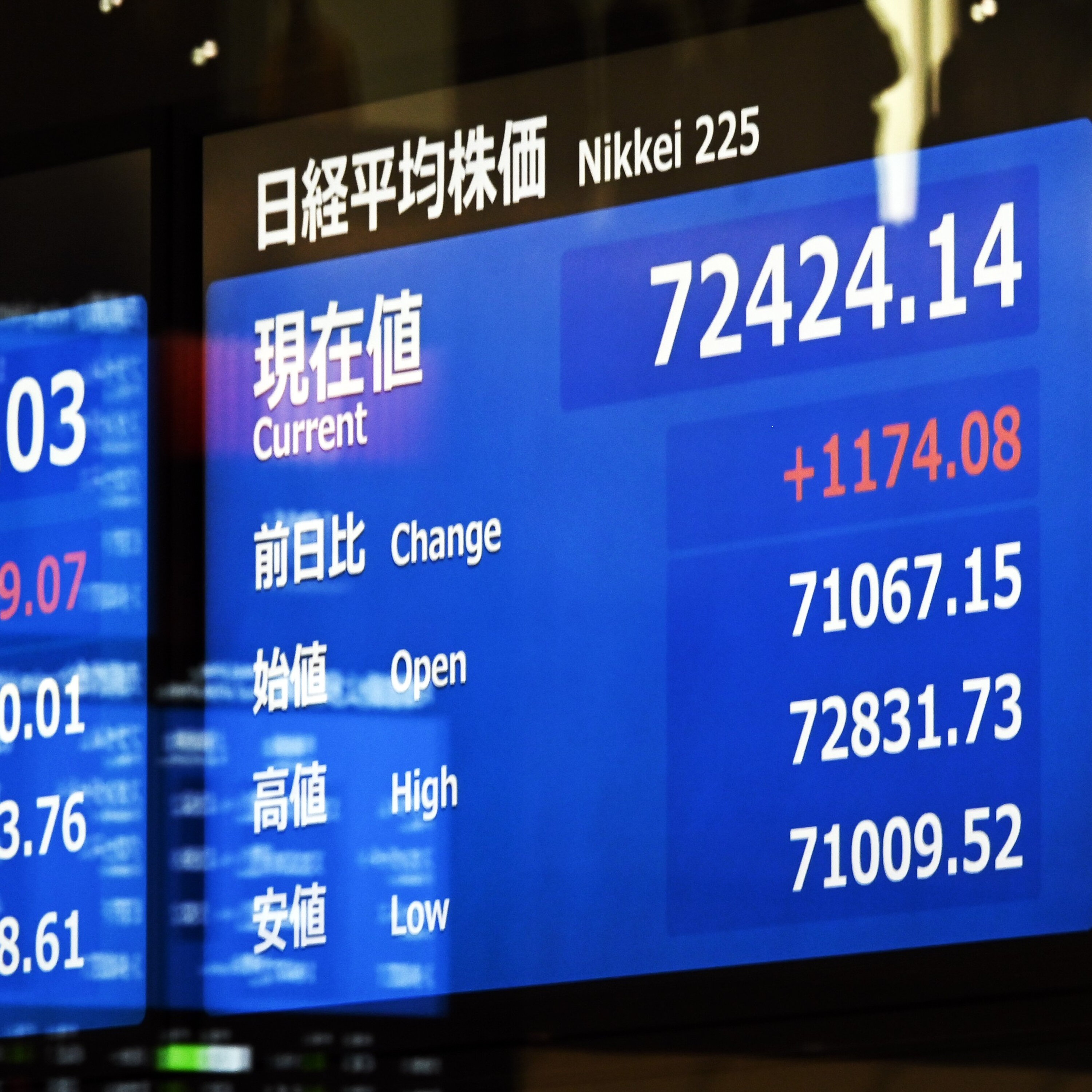 Why Global Capital Is Pouring Into Japan Stocks 01.07.2026 20mWhat's driving Japan's historic bull market? And why are global investors finally returning to Tokyo after years on the sidelines? According to Goldman Sachs, it’s a rare convergence of factors including the global AI trade, inflation, corporate governance reform and an evolving macroeconomic landscape. The firm also believes a regime shift is underway in the market, moving focus away from the high-growth, asset-light sectors such as software that dominated the past decade. Instead, they highlight a transition into "HALO" stocks: heavy assets, low obsolescence. These capital-intensive sectors, such as utilities and telecommunications, offer defensive barriers that can protect against AI disruption and geopolitical friction. Bruce Kirk, chief Japan equity strategist at Goldman Sachs, joins John Lee on the Asia Centric podcast to unpack these trends and discuss the implications of Japan's changing market dynamics.See omnystudio.com/listener for privacy information.
Radio station

Similar podcasts


Popular in
The podcast also appears in the podcast charts of these countries.

