
The Minimum Commitment: Film Theory in Small Doses
Donn Lawler Podcasts
0
Hosted by Donn Lawler, this podcast explores film theory by focusing on one movie per episode. Each installment offers sharp analysis in under 10 minutes, avoiding jargon and lectures. Episodes cover genres such as noir, sci-fi, horror, and dystopias, showing how every story says more than it first appears. New episodes are released weekly.
Episodes
-
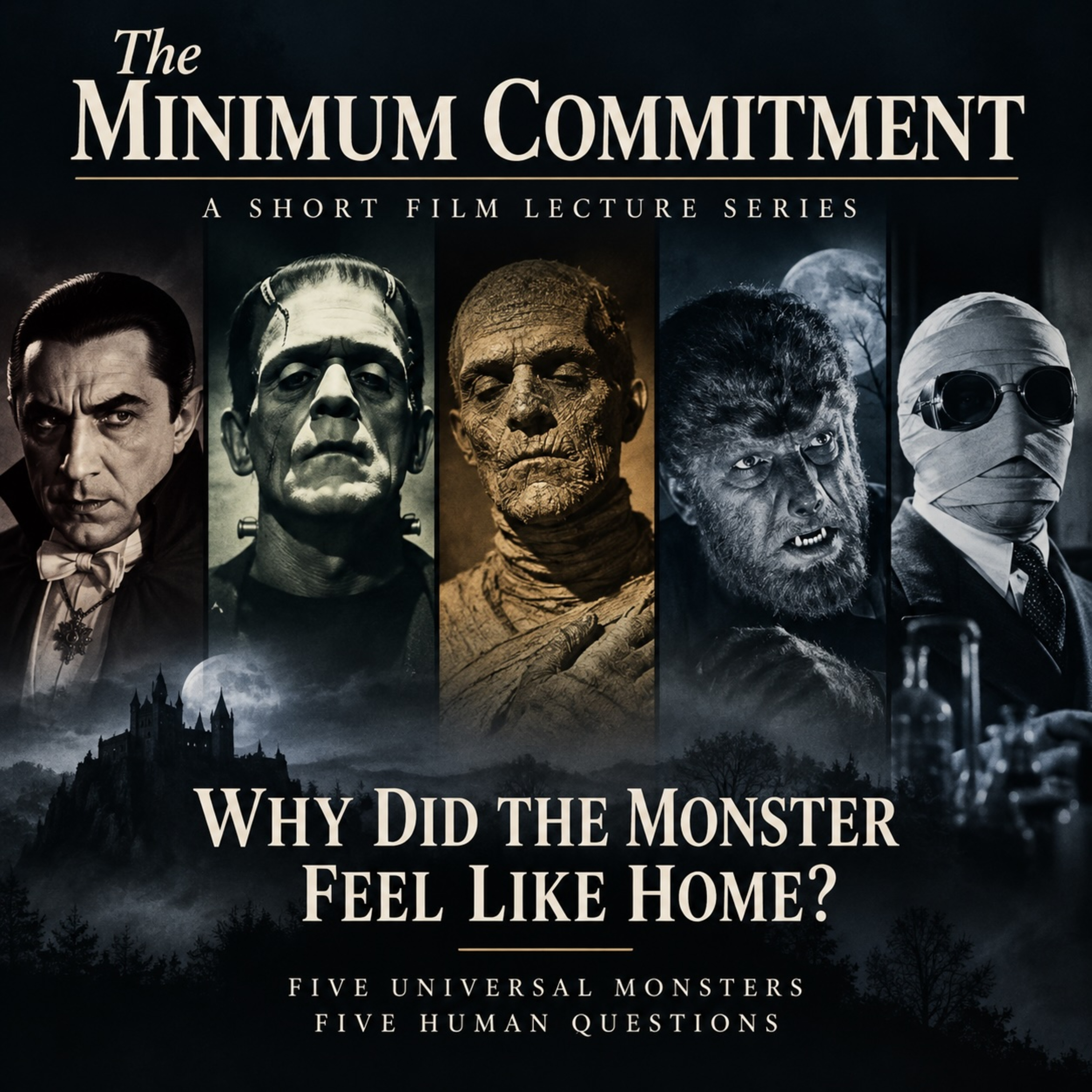 The Mummy - The Weight of Wanting 16.10.2026 18mNOTE: This episode contains MAJOR spoilers. If you haven’t seen the film yet, you might want to hit pause and come back when you’re ready.What happens when the past refuses to stay buried?In this episode of The Minimum Commitment, I explore Karl Freund’s The Mummy (1932), starring Boris Karloff, and the extraordinary lengths one man will go to reclaim what he has lost.Against the backdrop of the archaeological discoveries that captivated the world in the 1920s, we examine how the film transforms ancient history into a story of memory, devotion, and obsession.As Imhotep searches for the woman he loved thousands of years earlier, his determination raises a troubling question: when does holding on to the past begin to threaten the lives of those living in the present?Recommended Reading1. “The Mummy’s Curse: The True History of a Dark Fantasy” (2012) — Roger LuckhurstLuckhurst examines the cultural fascination with Egyptian curses, archaeology, and the supernatural. It provides historical context for the anxieties and fantasies surrounding The Mummy.2. “Screening the Past: Film and the Representation of History” (1995) — Robert A. Rosenstone (editor)An academic collection examining how cinema reconstructs and interprets history. It offers a broader theoretical perspective on how historical evidence shapes cinematic storytelling.3. “The Myth of Sisyphus” (1942) — Albert CamusCamus examines the human search for meaning through the Greek myth of Sisyphus. Although his philosophical argument differs from our interpretation of Imhotep, the text provides an interesting companion to the lecture’s final consideration of purpose, persistence, and failure.
-
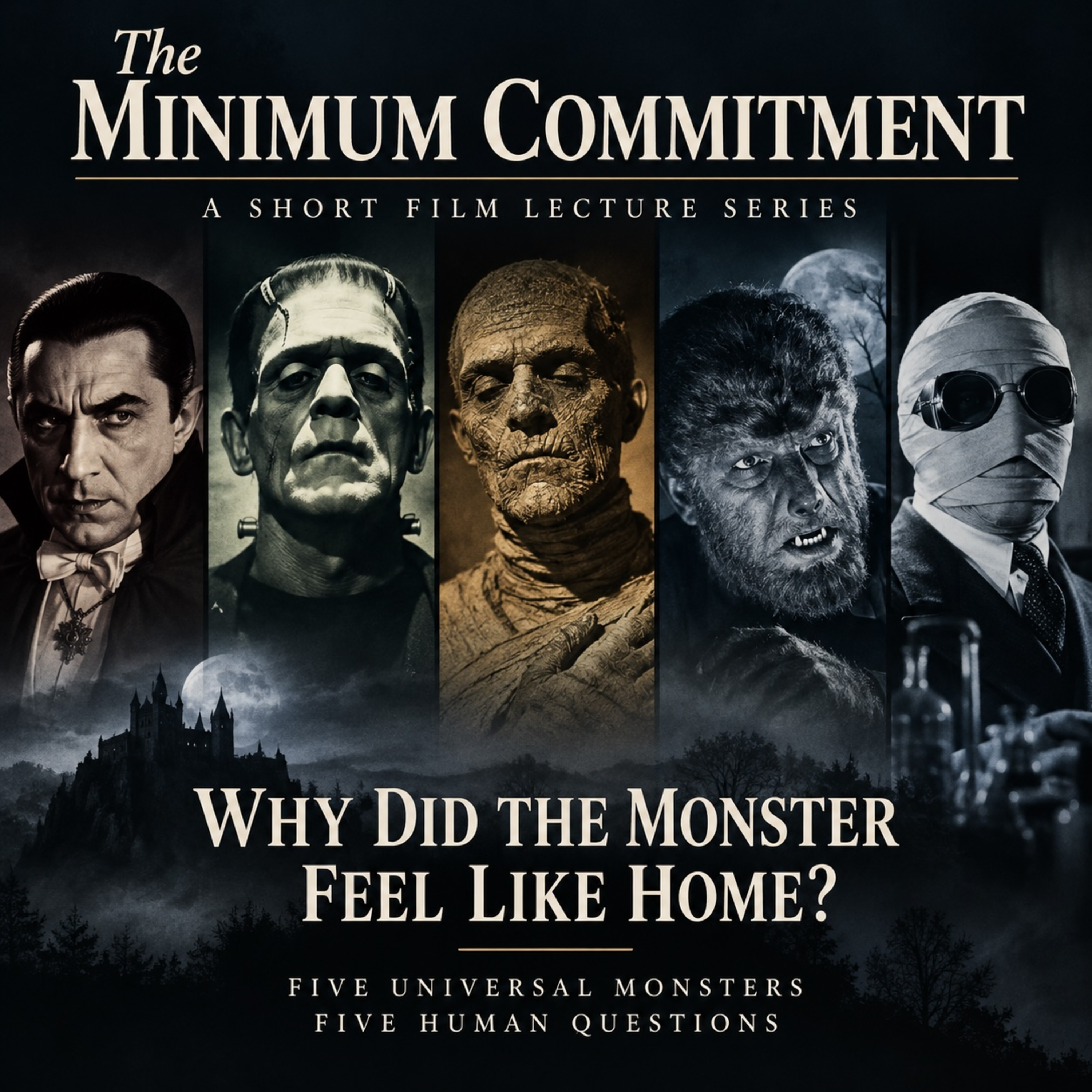 Frankenstein - What Do We Owe the Life We Create? 09.10.2026 19mNOTE: This episode contains MAJOR spoilers. If you haven’t seen the film yet, you might want to hit pause and come back when you’re ready.James Whale’s Frankenstein begins with one of humanity’s oldest questions: what happens after death? Henry Frankenstein finds an answer. But bringing the dead back to life creates another question entirely. Through Boris Karloff’s Creature, the cruelty he encounters, his brief friendship with Maria, and the consequences that spread beyond the laboratory, Frankenstein turns creation into a question of responsibility.What do we owe someone who has to live with the consequences of our choices?Recommended ReadingMary Shelley, “Frankenstein; or, The Modern Prometheus” (1818)Shelley’s novel provides the essential foundation for understanding Frankenstein as a story about creation, responsibility, abandonment, and the relationship between creator and creation. The novel gives the Creature a voice and an interior life largely absent from the 1931 film, expanding many of the questions the film leaves unresolved.Rick Worland, “The Horror Film: An Introduction” (2007)Worland places Frankenstein within the broader history and development of horror cinema, providing useful context for Universal’s cycle of classic monsters and the cultural traditions that shaped them. Read alongside Shelley’s novel, it helps bridge the original literary creation and the cinematic monster that would become one of horror’s defining images.
-
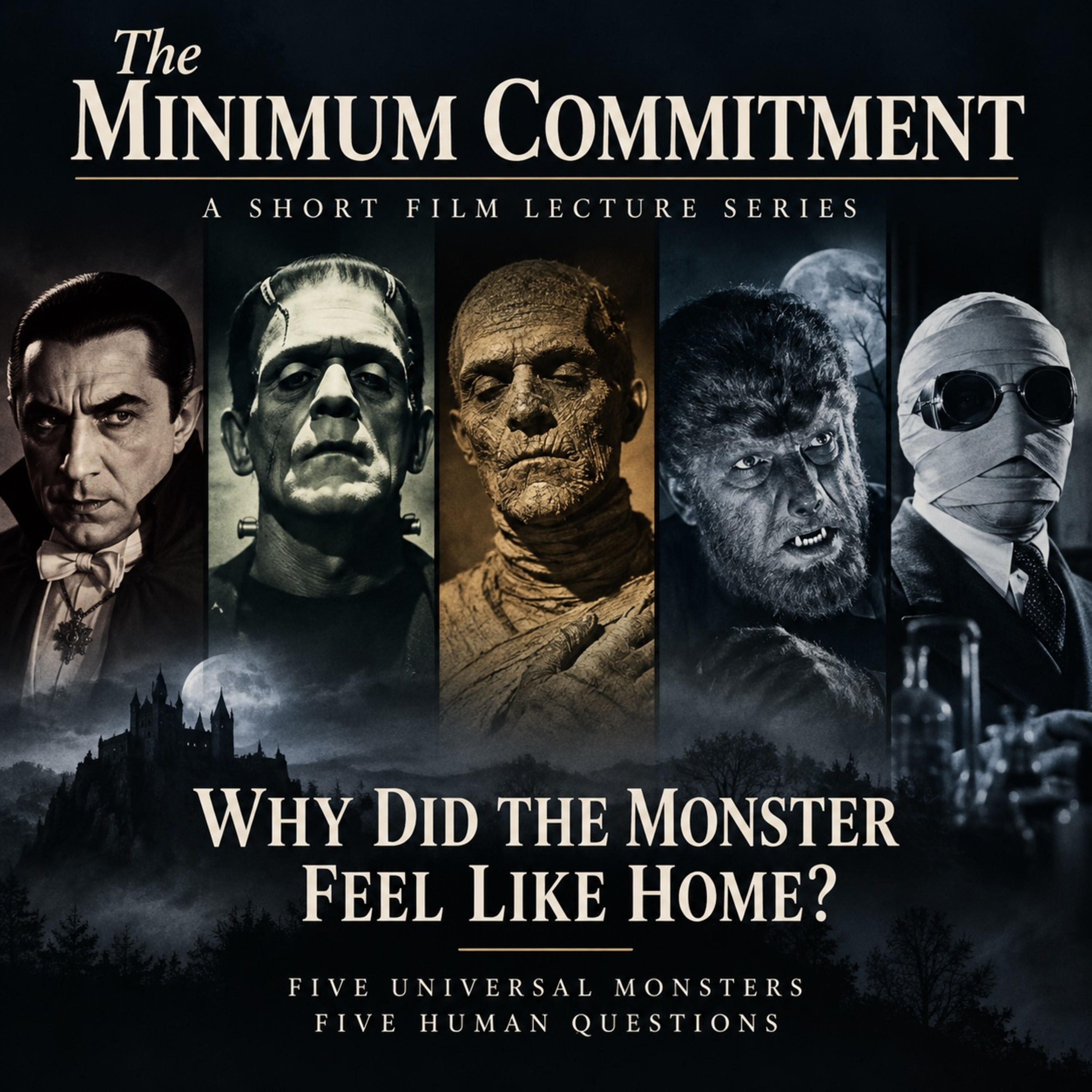 Dracula - What We Inherit 02.10.2026 18mNOTE: This episode contains MAJOR spoilers. If you haven’t seen the film yet, you might want to hit pause and come back when you’re ready.Tod Browning’s Dracula introduces a monster defined as much by elegance and attraction as by fear. Through Bela Lugosi’s performance, the Gothic spaces surrounding him, and the damage left behind in characters like Renfield, the film offers a way to think about vampirism as both consumption and inheritance.What happens when the damage we inherit begins taking something from us?Recommended ReadingBram Stoker, “Dracula” (1897)Bram Stoker’s “Dracula” expands the world behind Browning’s film and gives the vampire’s curse more room to spread across characters, places, and generations. Read beside the 1931 film, the novel offers another way to consider Dracula as both a consuming presence and something that can be transmitted, carried, and passed forward.
-
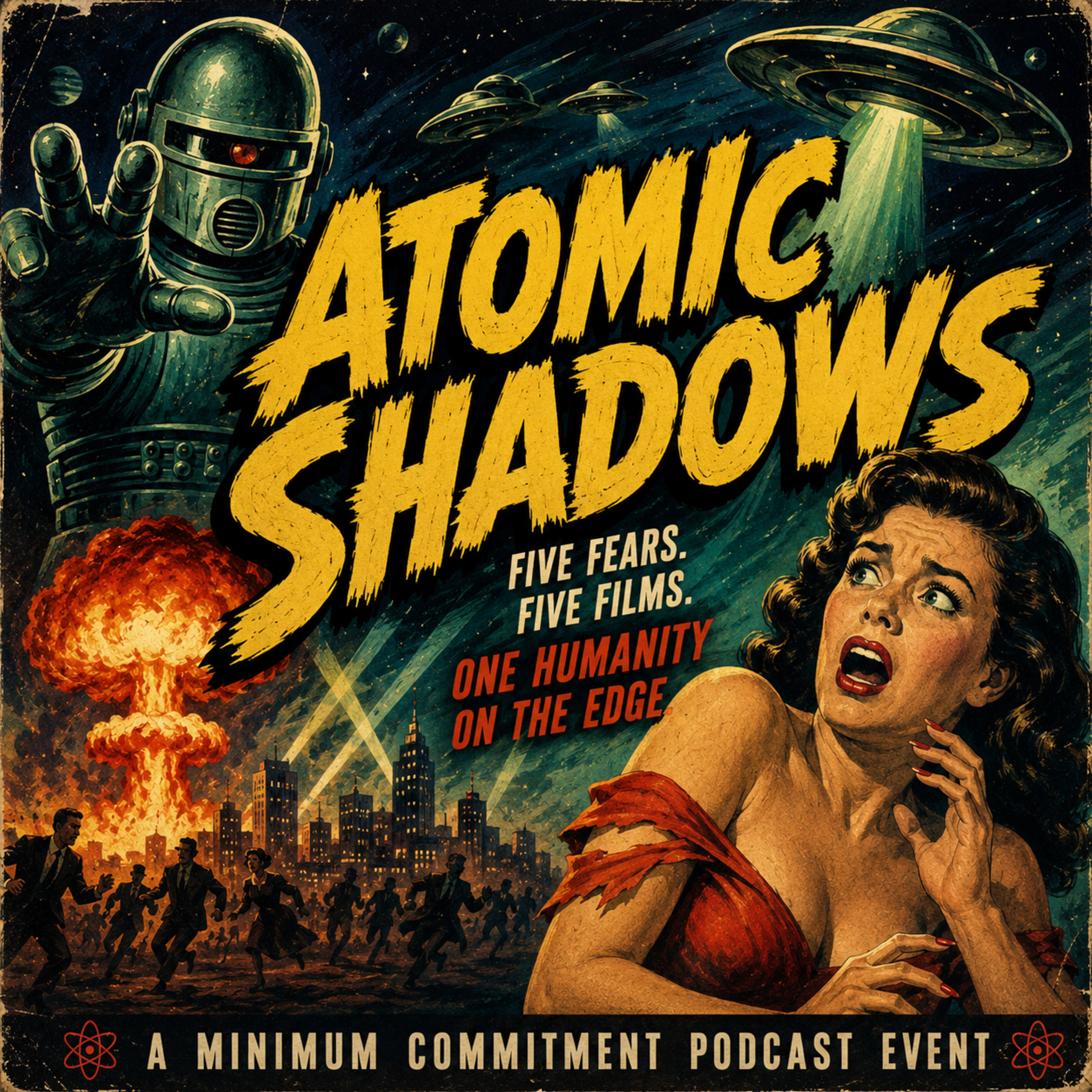 Invasion of the Body Snatchers - The Last Human Difference 25.09.2026 18mNOTE: This episode contains MAJOR spoilers. If you haven’t seen the film yet, you might want to hit pause and come back when you’re ready.What happens when the enemy no longer looks different from us?In the final lecture of Atomic Shadows, Invasion of the Body Snatchers turns the fear of the Other inward. As the people of Santa Mira are quietly replaced by duplicates, the film asks increasingly difficult questions about identity, evidence, conformity, and what allows us to recognize another person as uniquely human.The pods promise a world without fear, heartbreak, grief, or conflict. But that promise carries a cost. If suffering disappears because our capacity for love, attachment, and individuality disappears with it, what exactly has been saved?Across five films, Atomic Shadows has traced the fears of the Atomic Age from the enemy outside to the possibility that the final threat may be the disappearance of human difference itself.Recommended ReadingAldous Huxley, “Brave New World” (1932)Huxley’s dystopian novel imagines a society built around stability, conformity, and the removal of many forms of human suffering. Its citizens are conditioned away from deep attachments, disruptive emotions, and individual dissatisfaction. Paired with Invasion of the Body Snatchers, the novel raises a similar question: if we could eliminate much of what makes human life painful, what parts of our humanity would have to disappear with it?
-
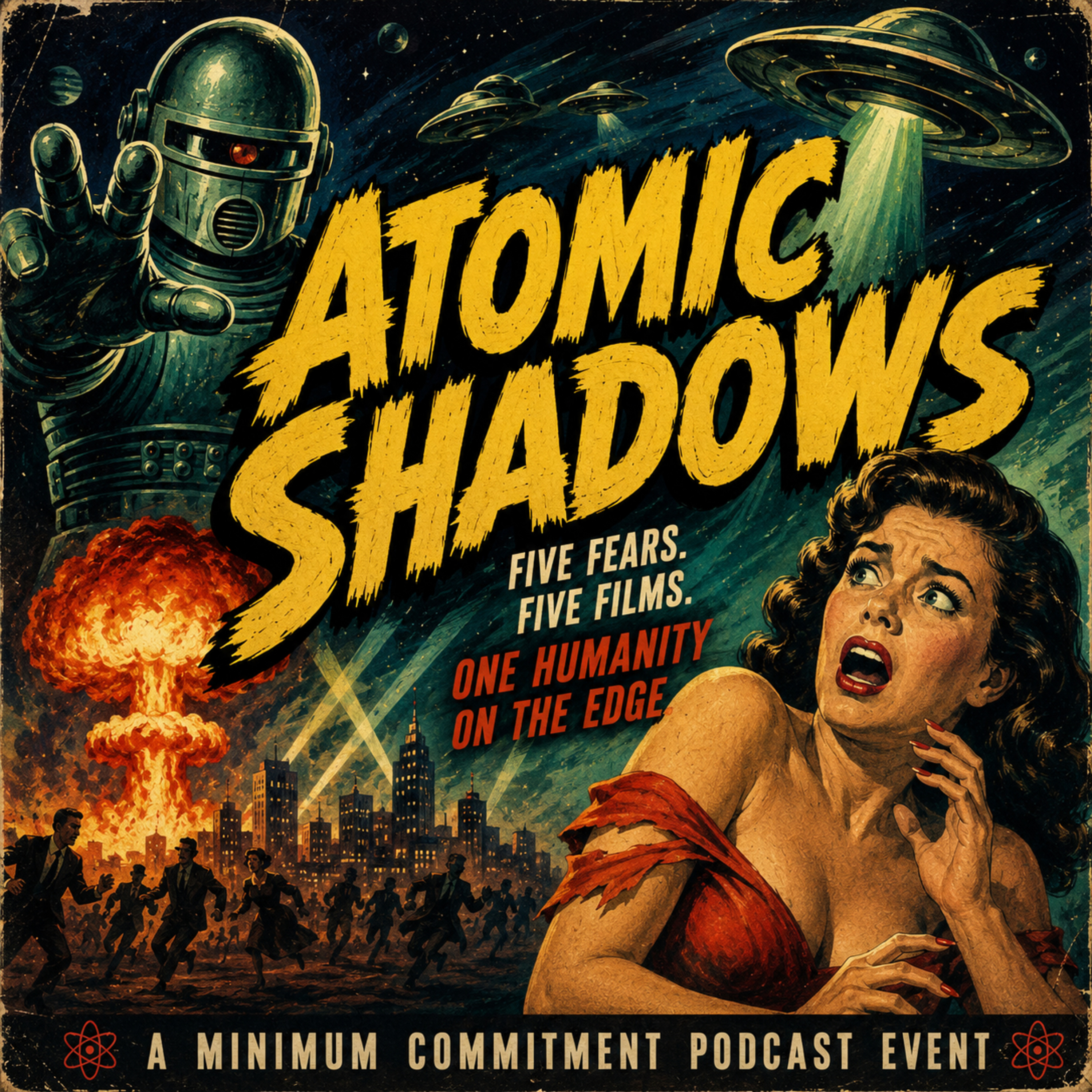 The Day The Earth Stood Still - Substituting Fear for Reason 18.09.2026 17mNOTE: This episode contains MAJOR spoilers. If you haven’t seen the film yet, you might want to hit pause and come back when you’re ready.When Klaatu arrives in Washington, humanity encounters something unprecedented: proof that we are no longer alone. But before anyone understands why he has come, fear begins determining what his presence means.In this lecture, we examine The Day the Earth Stood Still as a Cold War argument about fear, reason, and humanity’s growing responsibility for the power it creates. From Bobby’s curiosity to the terrifying authority represented by Gort, the film asks whether technological progress can carry humanity into a larger universe before our political and psychological divisions follow us there.Klaatu does not come to save humanity. He comes to warn us that our behavior may eventually become someone else’s problem.The decision rests with us.Recommended ReadingRay Bradbury, “Fahrenheit 451” (1953)Bradbury’s novel shares the film’s broader Atomic Age concern with a society whose technological development has outpaced its willingness to question the systems, assumptions, and behaviors shaping human life. Beyond its familiar association with censorship and book burning, “Fahrenheit 451” presents a civilization moving toward its own destruction while becoming increasingly disconnected from reflection, curiosity, and meaningful human engagement.Read alongside The Day the Earth Stood Still, the novel raises a similar question: what happens when humanity becomes extraordinarily capable of changing the world without becoming equally capable of understanding the consequences?
-
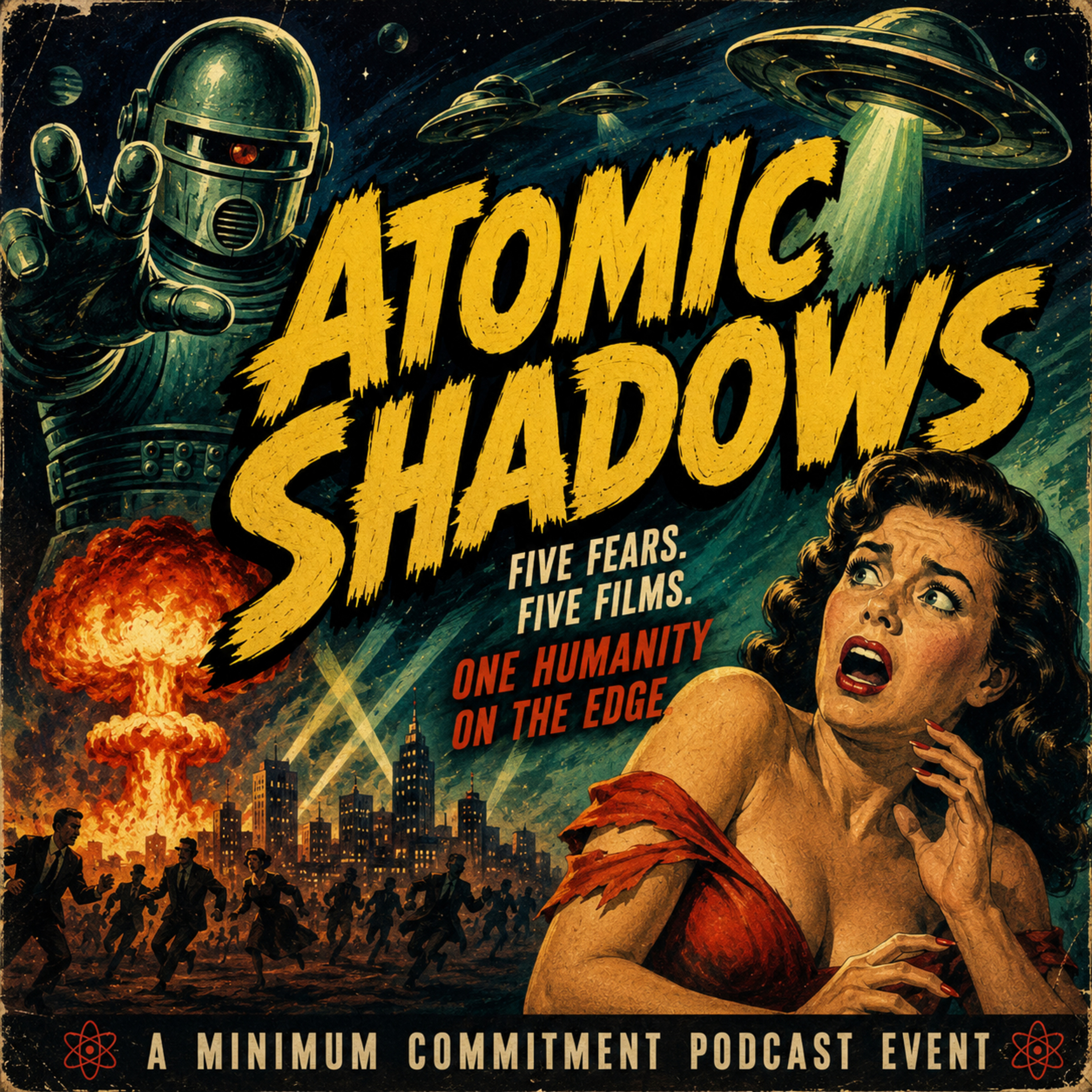 Forbidden Planet - The Enemy Within 11.09.2026 18mNOTE: This episode contains MAJOR spoilers. If you haven’t seen the film yet, you might want to hit pause and come back when you’re ready.The Krell built a civilization of almost unimaginable technological power. Their machines could harness extraordinary amounts of energy, transform thought into action, and continue operating long after their creators disappeared.But their greatest achievement exposed something they had failed to understand: themselves.In Forbidden Planet (1956), the fears of Atomic Shadows turn inward. Through Dr. Morbius, the lost civilization of the Krell, and the mysterious force haunting Altair IV, the film asks whether technological progress can ever guarantee psychological maturity.Drawing upon Sigmund Freud’s ideas about civilization, restraint, and the unconscious, this lecture considers a distinctly Atomic Age anxiety: what happens when our ability to create becomes more powerful than our ability to control the impulses behind it?Because some dangers cannot be kept outside.Sometimes the enemy is already within.RECOMMENDED READINGSigmund Freud, “Civilization and Its Discontents” (1930)This is the natural companion to the episode. Freud examines the tension between individual instinct and the restraints civilization needs to function. It gives listeners a theoretical framework for understanding the Krell’s fatal mistake: extraordinary intellectual development does not necessarily eliminate aggression, desire, or destructive impulses. Civilization may regulate those forces without ever removing them.Sigmund Freud, “The Ego and the Id” (1923)For listeners who want to go directly to the psychological vocabulary behind the film, this is the more focused companion. Freud develops his model of the id, ego, and superego, providing useful context for the film’s famous idea of the “monster from the id.” The film simplifies Freud considerably, of course, but the original text makes the metaphor much richer.Paul Boyer, “By the Bomb’s Early Light: American Thought and Culture at the Dawn of the Atomic Age” (1985)This one expands the lecture beyond Freud and places Forbidden Planet inside the cultural world that produced it. Boyer examines how atomic weapons transformed American thought and culture after Hiroshima and Nagasaki. It provides an excellent historical foundation for understanding why a 1956 science-fiction film about an extinct civilization unable to control its own technological power would have carried implications far beyond Altair IV.
-
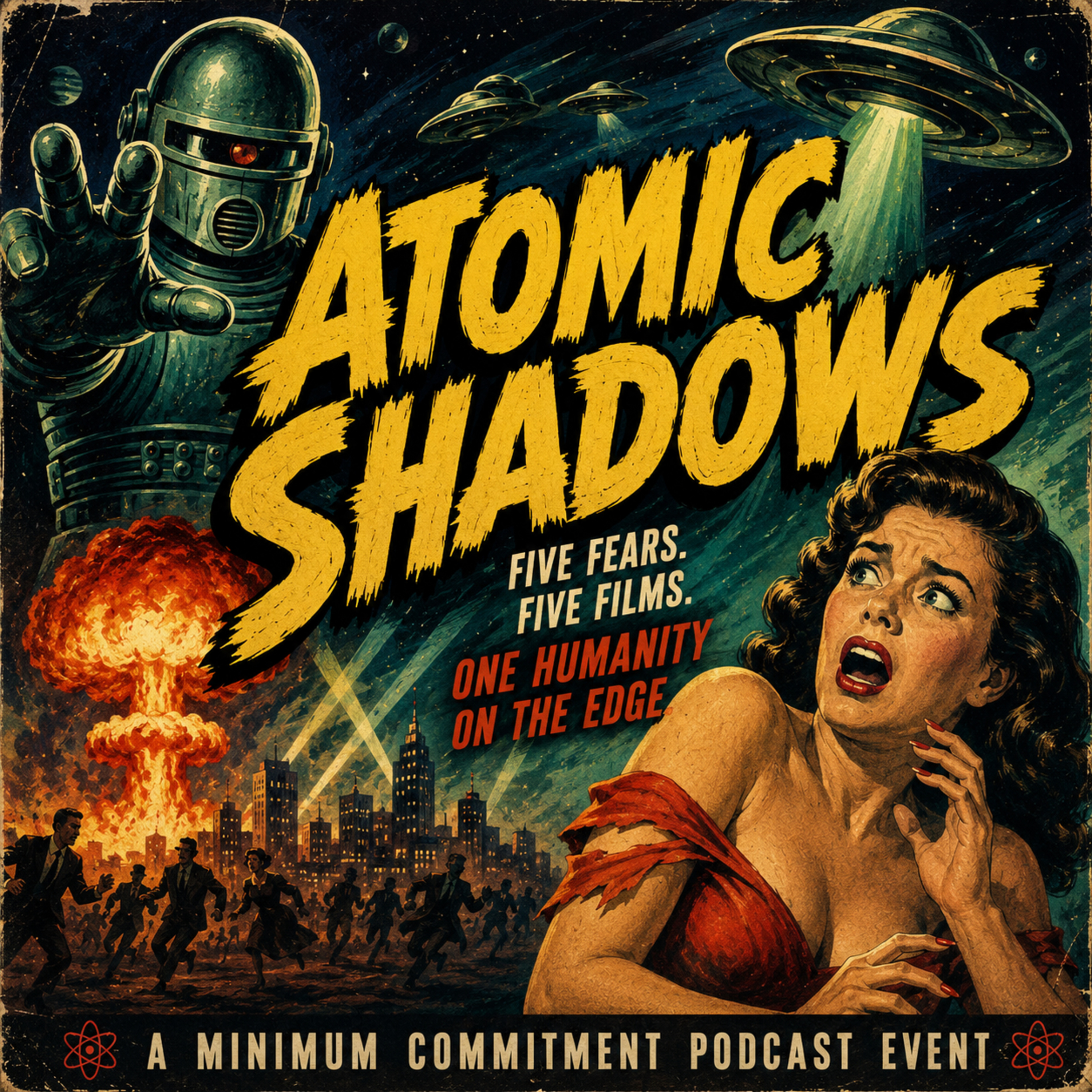 It Came From Outer Space - The Enemy We Imagined 04.09.2026 17mNOTE: This episode contains MAJOR spoilers. If you haven’t seen the film yet, you might want to hit pause and come back when you’re ready.It Came from Outer Space begins with a familiar 1950s science-fiction image: something falls from the sky, and an American community prepares for a possible invasion.But what if there is no invasion?In Lecture Two of Atomic Shadows, The Minimum Commitment continues its discussion of Cold War fear by examining how suspicion shapes our understanding of the unknown. When amateur astronomer John Putnam (Richard Carlson) discovers that a supposed meteor is actually a crashed spacecraft, his greatest challenge becomes convincing others that what he witnessed was real and determining what its occupants actually want.Through the Arizona desert, telephone lines, human duplicates, and a community increasingly convinced that an enemy has arrived, the film turns first contact into a crisis of interpretation.The visitors may be dangerous, but danger does not necessarily mean conquest.The Thing from Another World asked us to remain vigilant.It Came from Outer Space asks whether we can remain capable of doubt.RECOMMENDED READING“Stranger in a Strange Land” by Robert A. HeinleinA science-fiction novel about a human raised on Mars who returns to Earth and encounters a society whose customs, beliefs, and institutions are foreign to him. As It Came from Outer Space, Heinlein uses contact with an outsider to question the assumptions people make about those who experience the world differently, and how misunderstanding can reveal as much about the observer as the person being observed.“The Martian Chronicles” by Ray BradburyA collection of interconnected stories about humanity’s encounters with Mars and its inhabitants. Bradbury repeatedly turns the idea of alien contact back toward humanity, using fear, colonization, prejudice, nostalgia, and cultural misunderstanding to question who actually becomes the alien when two worlds meet.“The Imagination of Disaster” by Susan SontagAn essay examining how science-fiction cinema gives visual form to collective anxieties about catastrophe, technology, and destruction. Returning to Sontag after The Thing from Another World lets her argument develop alongside Atomic Shadows, especially as It Came from Outer Space begins to question whether the anticipated disaster exists outside humanity or is partly created through how people interpret the unknown.
-
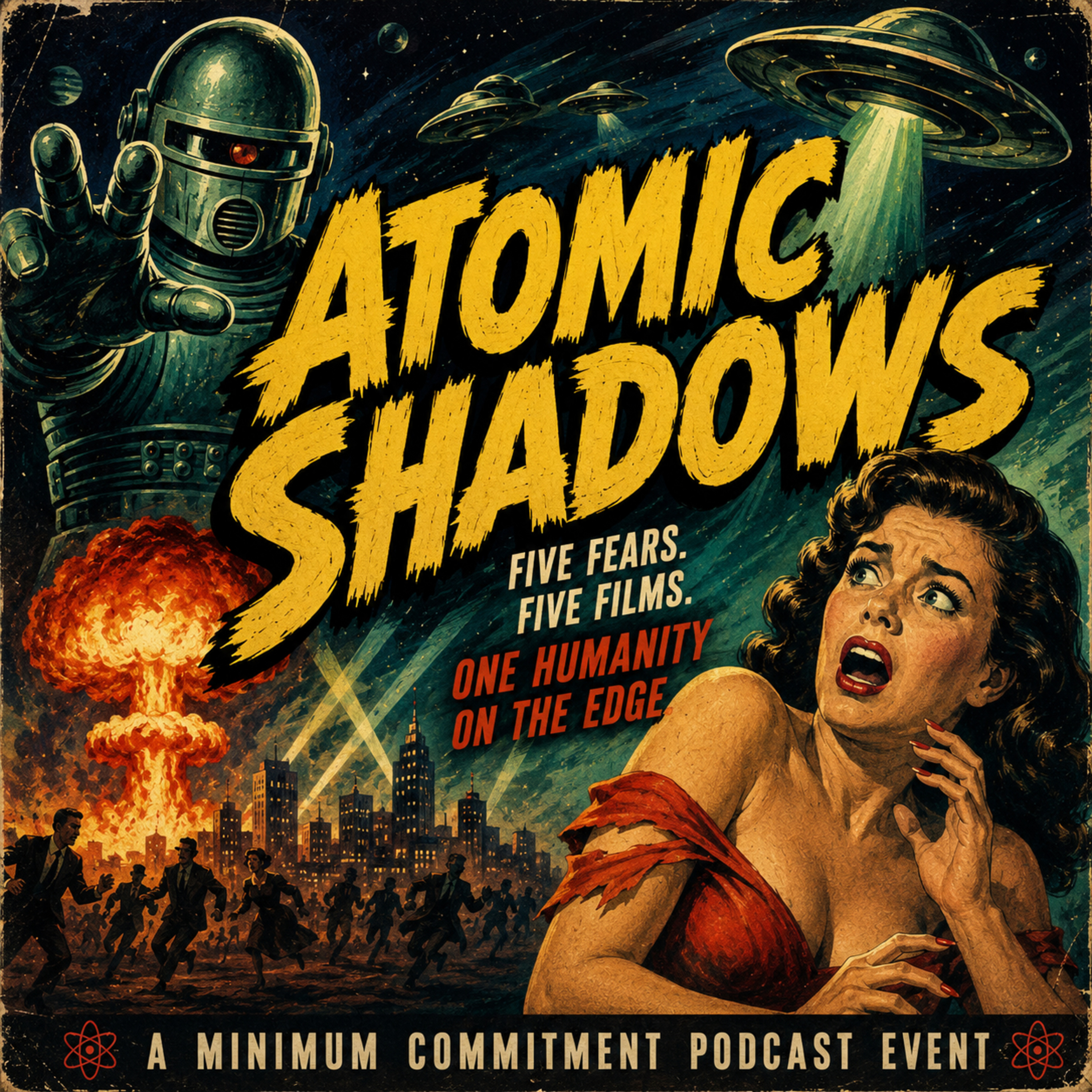 The Thing from Another World - The Enemy in the Ice 28.08.2026 16mNOTE: This episode contains MAJOR spoilers. If you haven’t seen the film yet, you might want to hit pause and come back when you’re ready.The Cold War had barely begun, but American science fiction was already giving its anxieties a body.In the first lecture of Atomic Shadows, The Minimum Commitment examines The Thing from Another World as a reflection of early Cold War uncertainty, where military readiness, scientific ambition, atomic power, and fear of the unknown collide at an isolated Arctic outpost.Long before the creature emerges from the ice, the film presents a culture already prepared to be suspicious. An unidentified object becomes a possible Soviet aircraft. A scientific discovery becomes a security threat. And something found outside the American world is brought inside, where curiosity and fear compete over what should happen next.The question begins with something unknown falling from the sky.It ends somewhere more complicated:How do we decide who the enemy is before we understand what we’re looking at?RECOMMENDED READING“The Imagination of Disaster” by Susan SontagAn essay examining how science fiction cinema turns collective fears into spectacles of invasion, destruction, and catastrophe. Sontag provides a useful framework for reading The Thing from Another World as more than an alien encounter, revealing how the film gives physical form to the nuclear anxiety, technological uncertainty, and political suspicion of the early Cold War.“Supernatural Horror in Literature” by H.P. LovecraftAn examination of supernatural fiction built around humanity’s enduring fear of forces beyond its understanding. Lovecraft’s discussion of fear of the unknown provides a useful lens for The Thing from Another World, where uncertainty precedes the creature itself and the characters must decide how to respond to something they cannot yet explain.“Who Goes There?” by John W. Campbell Jr.The 1938 novella that provided the source material for The Thing from Another World and later John Carpenter’s The Thing. Campbell’s story emphasizes paranoia, imitation, and the inability to distinguish human from alien, making it a fascinating comparison for how the same premise can reflect different cultural fears across eras.
-
 NOCTURNAL ANIMALS – 19 Years of Distance 21.08.2026 12mNOTE: This episode contains MAJOR spoilers. If you haven’t seen the film yet, you might want to hit pause and come back when you’re ready.Nineteen years separate Susan Morrow from the man she once loved. Then a manuscript arrives.Tom Ford’s Nocturnal Animals uses fiction, memory, color, composition, and absence to explore the distance between the lives we choose and the lives we leave behind. Through Formalism, this episode examines how Susan’s immaculate world begins to fracture as Edward’s novel reaches across nearly two decades. His fiction transforms loss, helplessness, and anger into something Susan cannot simply observe. She has to experience it.Nocturnal Animals isn’t a puzzle asking us to determine which fictional character represents whom. It’s a film about what art can carry across distance when ordinary language no longer can.And sometimes nineteen years of distance can be measured in the space between two chairs.RECOMMENDED READINGViktor Shklovsky, “Art as Technique” (1917)Shklovsky’s foundational Formalist essay explores how art can make familiar experiences feel unfamiliar again, forcing us to perceive rather than simply recognize them. That idea offers an interesting way into Edward’s manuscript. He doesn’t explain his pain to Susan. He transforms it through fiction, allowing her to encounter something she may have stopped seeing years ago.Susan Sontag, “Against Interpretation and Other Essays” (1966)Sontag challenges the impulse to reduce works of art to hidden messages waiting to be decoded. That makes her especially useful for Nocturnal Animals. Rather than forcing Tony, Laura, Ray, Susan, and Edward into a rigid symbolic equation, we can focus on what Ford’s images, performances, colors, sounds, and juxtapositions make us experience.Roland Barthes, “Camera Lucida” (1980)Barthes explores photography, memory, absence, and the strange ability of an image to make something lost feel present. Though he focuses on photography rather than cinema, his ideas complement a film haunted by the persistence of the past. Edward remains physically distant, yet art repeatedly makes him present in Susan’s life.
-
 NIGHTCRAWLER – The Business of the Abyss 14.08.2026 16mNOTE: This episode contains MAJOR spoilers. If you haven’t seen the film yet, you might want to hit pause and come back when you’re ready.Los Angeles sleeps, but Lou Bloom is looking for opportunity.Dan Gilroy’s Nightcrawler follows a man who discovers that violence, tragedy, and human suffering have market value, provided someone is there to capture the right image.Through Guy Debord’s concept of the spectacle, this episode explores how Nightcrawler turns crime into content, witnesses into consumers, and the camera into something more complicated than an observer. From Lou’s carefully constructed performance of professionalism to Nina Romina’s ratings-driven newsroom, the film reveals an economy where attention determines value and ethical boundaries become negotiable.The most disturbing thing about Lou Bloom may not be what he is willing to do.It may be how quickly the world learns to reward him.RECOMMENDED READING“Regarding the Pain of Others” (2003) by Susan SontagSontag explores how our engagement with images of war, violence, suffering, and death affects us, questioning the impact of frequent exposure. This ties into a key theme of the episode: while a camera can record suffering, it also has the power to distance us from it.“Amusing Ourselves to Death” (1985) by Neil PostmanPostman examines what happens when public information must compete within an entertainment-driven media culture. For Nightcrawler, that gives us Nina’s newsroom. The question isn’t simply whether an event is newsworthy. The event must hold attention. And attention has economic value.
-
 SE7EN – Life in the Abyss 07.08.2026 16mA city without a name. A killer with a purpose. Two detectives confronting a world that no longer seems capable of healing.In this episode of The Minimum Commitment, we examine David Fincher’s SE7EN (1995) through the lens of Formalism, exploring how image, color, sound, performance, and atmosphere construct one of cinema’s most haunting visions of moral exhaustion. Rather than asking who committed the crimes, SE7EN invites us to consider the world that made them conceivable.From the relentless rain to the unforgettable performances of Morgan Freeman, Brad Pitt, Kevin Spacey, and Leland Orser, every formal choice contributes to a city where darkness has become ordinary.Some films show us evil. SE7EN shows us what happens when it becomes part of the landscape.RECOMMENDED READING“Inferno” by Dante AlighieriA foundational work for understanding journeys through moral landscapes, judgment, and the consequences of human choices. While SE7EN is not a direct adaptation of Inferno, its descent through the Seven Deadly Sins echoes Dante’s vision of a world ordered by moral consequence.“Hieronymus Bosch: The Complete Works” by Stefan Fischer (Taschen)Bosch’s paintings present worlds where corruption has become ordinary, and every corner of the frame contributes to a larger moral vision. Viewing Bosch alongside SE7EN reveals striking similarities in how both artists construct environments in which human behavior, symbolism, and atmosphere coalesce into a single unsettling worldview.
-
 Fargo – The Price of Enough 31.07.2026 15mNOTE: This episode contains MAJOR spoilers. If you haven’t seen the film yet, you might want to hit pause and come back when you’re ready.Jerry Lundegaard thinks one more deal will fix everything. Instead, each compromise broadens the impact of consequences. In this episode of The Minimum Commitment, we examine the Coen brothers’ Fargo (1996) through Marxist criticism and formalist analysis, focusing on how money subtly alters relationships, ambition, and moral balance. From snowy landscapes to small talks about a three-cent stamp, Fargo shows that neo-noir isn’t always in shadows. Sometimes it’s in plain sight. The real question isn’t how evil appears. It’s when “more” silently displaces “enough.”Recommended Reading“Nicomachean Ethics” by AristotleAristotle’s reflections on virtue, moderation, and living a well-ordered life provide a compelling companion to Fargo. Marge Gunderson embodies many of the qualities Aristotle associates with practical wisdom: balance, restraint, and the ability to keep life’s priorities in proportion.
-
 Angel Heart – The First Step Down 24.07.2026 14mNOTE: This episode contains MAJOR spoilers. If you haven’t seen the film yet, you might want to hit pause and come back when you’re ready.At first glance, Angel Heart appears to be a typical detective story involving a missing person, a mysterious client, and clues leading deeper into the unknown. However, beneath this surface lies something much older. This episode examines how director Alan Parker employs cinematic language to turn the investigation into a journey of recognition. Through visual motifs, sound design, movement, and atmosphere, Angel Heart connects to Greek tragedy and showcases the power of formalist filmmaking. More than just a neo-noir, it serves as a reflection on memory, consequences, and the truths that stubbornly refuse to be buried.Recommended Reading“Inferno” by Dante AlighieriDante’s descent through the circles of Hell remains one of literature’s great explorations of moral consequence and self-discovery. While Angel Heart tells a very different story, both works use the imagery of descent to reveal truths that cannot be discovered any other way.“Falling Angel” by William HjortsbergThe novel that inspired Angel Heart. Hjortsberg’s book expands the mystery and atmosphere that Alan Parker brought to the screen while offering an opportunity to compare how literature and cinema tell the same story through different artistic languages.
-
 Monolith - The Stories We Choose to Believe 17.07.2026 13mNOTE: This episode contains MAJOR spoilers. If you haven’t seen the film yet, you might want to hit pause and come back when you’re ready.Human beings have always gathered to tell stories. Around campfires, in books, through radio broadcasts, on television, and now through podcasts, we search for voices that help us make sense of a confusing world. This week on The Minimum Commitment, we explore Monolith (2022) through the lens of truth. What begins as a journalist’s investigation into mysterious black bricks slowly transforms into something far more unsettling: an examination of trust, belief, and the stories we tell ourselves to make the unknown feel understandable. As information multiplies and certainty begins to collapse, Monolith asks a question that feels increasingly urgent: How do we distinguish between a story that comforts us and a story that is true? Rather than offering easy answers, the film invites us to consider how fear shapes belief, how narratives spread, and how the pursuit of truth can transform the person searching for it.Recommended Reading“The Demon-Haunted World” by Carl SaganCarl Sagan’s classic exploration of science, skepticism, and critical thinking is an ideal companion to Monolith. Rather than dismissing belief, Sagan examines why human beings are drawn to extraordinary claims and argues that genuine curiosity must be balanced with intellectual discipline. Like Monolith, the book is less interested in proving a single truth than in asking a more enduring question: How do we evaluate the stories we are told, especially when they speak to our deepest fears and hopes?
-
 Moon - Who Gets to Decide? 10.07.2026 12mNOTE: This episode contains MAJOR spoilers. If you haven’t seen the film yet, you might want to hit pause and come back when you’re ready. A man nearing the end of a three-year contract. A lunar mining station. A routine that has become invisible through repetition. At first glance, Moon appears to be a science-fiction mystery. Yet beneath its quiet surface lies a profound exploration of identity, memory, and the forces that shape our understanding of ourselves. This week on The Minimum Commitment, we examine Duncan Jones’ modern classic through the lens of identity. As Sam Bell begins to question the reality around him, the film challenges assumptions about memory, individuality, and the relationship between humanity and corporate power. Through Sam Rockwell’s remarkable performance, Moon asks one of the oldest philosophical questions imaginable:Who gets to decide who I am?Recommended Reading“Do Androids Dream of Electric Sheep?” By Philip K. DickPhilip K. Dick’s landmark novel explores many of the same questions that drive Moon. Through artificial humans, implanted memories, and uncertain identities, Dick asks what separates authentic humanity from manufactured existence. Like Sam Bell, the characters in Dick’s novel struggle to understand who they are in a world where memory, identity, and truth can be manipulated by powerful institutions.
-
 All Is Lost - What Remains 03.07.2026 11mNOTE: This episode contains MAJOR spoilers. If you haven’t seen the film yet, you might want to hit pause and come back when you’re ready.A man alone on the ocean. A damaged boat. A storm on the horizon.On the surface, All Is Lost appears to be a simple survival story. Yet beneath its quiet exterior lies a meditation on mortality, loss, and the things we cling to when certainty begins to disappear.This week on The Minimum Commitment, we examine J.C. Chandor’s minimalist masterpiece through the lens of existentialism. As Robert Redford’s unnamed sailor struggles against an indifferent ocean, the film slowly strips away every source of comfort, security, and control, forcing both the character and the audience to confront a difficult question:What remains when everything we depend upon is taken away?Through visual storytelling, remarkable restraint, and one of Redford’s finest performances, All Is Lost transforms a survival film into a reflection on what it means to face impermanence with dignity.Recommended Reading“Following the Equator” by Mark TwainPublished in 1897, “Following the Equator” chronicles Mark Twain’s journey around the world while reflecting on human nature, aging, regret, resilience, and the passage of time.Like the sailor in All Is Lost, Twain often writes from the perspective of a man looking backward while continuing to move forward. The book’s observations are frequently humorous, sometimes melancholy, and deeply aware of life’s impermanence.Both works ask readers to consider what remains after expectations, plans, and certainty begin to fall away.Alternate Reading“The Myth of Sisyphus” by Albert CamusFor listeners interested in the existential themes discussed in the episode, Camus’ famous essay explores how meaning can be created in a universe that offers no guarantees and no explanations.Like Redford’s sailor, Camus’ Sisyphus persists despite overwhelming odds. The value is not found in victory, but in the decision to continue.
-
 Locke - The Road Chosen 26.06.2026 11mNOTE: This episode contains MAJOR spoilers. If you haven’t seen the film yet, you might want to hit pause and come back when you’re ready.What do we inherit from the people who shaped us?This week on The Minimum Commitment, we examine Steven Knight’s Locke through the lens of Shakespearean tragedy. Set almost entirely inside a moving vehicle, the film follows Ivan Locke, played by Tom Hardy, as a single decision forces him to confront responsibility, integrity, and the legacy of a father who was never there.As phone calls unravel his marriage, threaten his career, and challenge his sense of self, Locke transforms into more than just a story about a man driving to London. It becomes a reflection on the decisions that shape who we are and who we strive not to become.Through performance, sound design, and minimalist storytelling, we’ll explore how one of cinema’s smallest stages creates one of its most compelling modern tragedies.Recommended Reading“Hamlet” by William ShakespeareNo single work illuminates Locke better than “Hamlet”. While the plots differ dramatically, both stories are haunted by absent fathers, shaped by questions of obligation, and concerned with what it means to act according to one’s conscience. Ivan Locke’s conversations with his deceased father echo Shakespeare’s use of the ghost as a manifestation of unfinished business and inherited responsibility.Pay particular attention to the tension between personal conviction and consequence. Both Hamlet and Ivan Locke are men attempting to determine what kind of person they will become.Alternate Reading“Meditations” by Marcus AureliusFor listeners interested in the philosophical dimension of the film, “Meditations” offers a compelling companion piece. Marcus Aurelius repeatedly returns to questions of duty, self-discipline, integrity, and acting in accordance with one’s principles despite external circumstances.Whether Locke’s actions are admirable or self-destructive remains open to debate, but his commitment to acting in accordance with his values places him firmly within a Stoic tradition.
-
 No One Will Save You - The Weight of Guilt 19.06.2026 11mNOTE: This episode contains MAJOR spoilers. If you haven’t seen the film yet, you might want to hit pause and come back when you’re ready.What happens when guilt becomes a place you live?This week on The Minimum Commitment, we explore Brian Duffield’s No One Will Save You through the lens of Trauma Theory and guilt. While the film presents itself as an alien invasion thriller, a deeper reading reveals something far more personal. Brynn, played by Kaitlyn Dever in a remarkable near-silent performance, is not simply fighting extraterrestrials. She is confronting a wound she has spent years avoiding.Through meticulously layered sound design, heightened formalist storytelling, and striking visual symbolism, the film transforms guilt into an almost living, invasive force that seeps into every corner of the frame and refuses to remain buried. In this episode, we’ll examine how fragmented memory, suffocating isolation, and a self-imposed emotional and physical exile shape every aspect of Brynn’s world, and why the film’s most terrifying presence may not be the otherworldly creatures descending from the sky, but the haunting inner torment that shadows her every step.Recommended Reading“The Interpretation of Dreams” by Sigmund FreudFor listeners interested in a more theoretical approach, Freud’s classic text offers insight into repression, memory, and the return of buried emotions. While No One Will Save You is not a psychoanalytic film in a strict sense, the way Brynn’s past repeatedly intrudes upon the present aligns closely with many of Freud’s ideas regarding suppressed experiences and their persistence in the unconscious.
-
 You Were Never Really Here - Fragments of Violence 12.06.2026 11mNOTE: This episode contains MAJOR spoilers. If you haven’t seen the film yet, you might want to hit pause and come back when you’re ready.You Were Never Really Here transforms the crime thriller into a fragmented study of trauma, memory, and psychological survival. Through the shattered perspective of Joe (Joaquin Phoenix), Lynne Ramsay explores how violence reshapes identity long after the physical act itself has ended. This episode examines trauma theory, fractured sound design, intimate cinematography, and the film’s suffocating atmosphere of emotional exhaustion, while exploring how Ramsay dismantles the mythology of cinematic violence and replaces it with its lingering psychological aftermath.Recommended Reading“The Body Keeps the Score” by Bessel van der KolkVan der Kolk’s exploration of trauma, memory fragmentation, dissociation, and the physical effects of psychological damage pairs remarkably well with You Were Never Really Here. The book examines how traumatic experiences become embedded inside the body and nervous system, helping illuminate Joe’s fragmented memories, physical exhaustion, emotional dissociation, and the film’s recurring imagery of suffocation, drowning, and bodily distress.
-
 Collateral - Cities Without Connection 04.06.2026 13mNOTE: This episode contains MAJOR spoilers. If you haven’t seen the film yet, you might want to hit pause and come back when you’re ready.Collateral transforms the crime thriller into a cold study of urban alienation, emotional fragmentation, and postmodern disconnection. Through the intersecting lives of Vincent and Max, the film explores what happens when modern city life becomes so vast and impersonal that people begin to experience one another as temporary transactions rather than human beings. This episode examines Michael Mann’s groundbreaking digital cinematography, the emotional architecture of Los Angeles at night, formalist framing choices, and how Collateral presents movement, technology, and isolation as defining features of contemporary life.Recommended Reading “Simulacra and Simulation” by Jean BaudrillardBaudrillard’s exploration of hyperreality, simulation, emotional detachment, and modern systems provides a fascinating companion to Collateral. The film’s fragmented Los Angeles, temporary human interactions, and Vincent’s emotionally statistical worldview all reflect postmodern anxieties about isolation, disconnection, and the collapse of authentic human experience within modern urban life.
Similar podcasts


Popular in
The podcast also appears in the podcast charts of these countries.
