
The Giving Done Right Podcast with Phil Buchanan
The Center for Effective Philanthropy
0
Giving Done Right is a podcast from the Center for Effective Philanthropy that explores how donors and grantmakers can make a meaningful impact with their charitable giving. Host Phil Buchanan talks with nonprofit leaders, effective donors, and experts about where to give, how to identify and support effective nonprofits, and how to increase the odds of making a difference. The show addresses common questions and myths about philanthropy and focuses on practical guidance for giving well, especially when nonprofits and communities face great challenges.
Episodes
-
 Is Philanthropy Fueling Polarization? With Daniel Stid 22.10.2026 50mDaniel Stid, senior fellow at the American Enterprise Institute and author of the newsletter The Art of Association and host of a podcast by the same name, shares his provocative argument that large-scale philanthropic investment in national policy advocacy has, over time, deepened American polarization rather than healed it. Stid, who spent nearly a decade leading the Hewlett Foundation's U.S. Democracy Program, explains why he believes funders on the left and right have increasingly bankrolled advocates clustered at ideological poles, making it harder for either political party to build governing majorities near the center where most Americans actually sit. Phil pushes back, prompting a nuanced discussion of where philanthropy's influence on democracy is concentrated versus diffuse. The two also debate whether philanthropically funded efforts to directly oppose the current administration are effective or counterproductive, with Stid arguing for what he calls "responsible pluralism": funding advocacy aimed at building durable majorities through Congress, rather than unilateral executive action, regardless of which party wields that power. Phil challenges the underlying premise, arguing the current threat to democratic norms and civil society is categorically different from past administrations' overreach. The conversation closes on the nonprofit sector's dependence on federal funding, a relationship Stid traces back to the Great Society era, and what he sees as an unavoidable reckoning now that the decades-long bipartisan consensus supporting that funding relationship has broken down. Both agree that philanthropy cannot fill the resulting gap alone, but see real opportunity for donors to give more, given how flat charitable giving has remained relative to the wealth concentrated among the richest Americans. Resources: The Art of Association American Enterprise Institute Hewlett Foundation, U.S. Democracy Program Slow Philanthropy: Why giving by the ultra-wealthy often lags behind their ambitions—and what could help move money faster by Jeff Bradach CEP's State of Nonprofits report
-
 Bryan Stevenson on Narrative, Courage, and Meeting This Moment 15.10.2026 1hPhil sits down with Bryan Stevenson, founder and executive director of the Equal Justice Initiative, for a wide-ranging conversation on what this moment of backlash demands of individual and institutional donors. Stevenson places the current retreat from racial equity commitments within a much longer arc: the recurring pattern stretching from Reconstruction through Jim Crow to today, in which periods of racial justice progress in America are met by a deliberate counter-narrative, and progress stalls until a new narrative takes hold. Drawing on his own personal history, Stevenson makes the case that philanthropy's work on racial equity has too often been reactive rather than grounded in real historical learning, and argues that donors who invest in understanding this history will be far better positioned to fund effective, defensible strategies, from addressing the legacy of Black displacement during the Great Migration to reframing what accountability should have looked like after the Voting Rights Act passed. He also responds directly to donors who worry that a racial equity focus alienates potential allies, distinguishing the problems of poverty from the problems of racial bias while insisting the two shouldn't be conflated. Stevenson reflects on his years serving on the board of the Ford Foundation, and what he learned about the gap between funders and grantees, and why he believes that foundation boards need more representation from people with direct nonprofit experience. Resources: Equal Justice Initiative The Legacy Sites (Legacy Museum, National Memorial for Peace and Justice, Freedom Monument Sculpture Park, Montgomery Square) Just Mercy by Bryan Stevenson The Sum of Us: What Racism Costs Everyone and How We Can Prosper Together by Heather McGhee
-
 Protecting Democracy with Maya Wiley 08.10.2026 44mWith the midterm elections just weeks away, Phil talks with Maya Wiley, president and CEO of The Leadership Conference on Civil and Human Rights and its Education Fund, about what donors and foundations concerned about the state of American democracy can do right now, and why the philanthropic response has so far fallen short. Maya shares findings from the Leadership Conference's landscape mapping of its coalition, which found that nearly half of the organizations surveyed are doing voter protection and engagement work on a quarter or less of the budget they say they need. Maya describes what voter engagement work actually looks like on the ground, from year-round canvassing and voter education to faith leaders trained to deescalate tensions at polling places. She also outlines how the current administration has used the power of government to intimidate and defund organizations doing lawful work. She and Phil dig into the decision by major donor-advised fund sponsors to block gifts to the Southern Poverty Law Center following its indictment, and discuss why institutional capitulation, whether by law firms, corporations, financial institutions, or foundations, has proven to be as damaging as the threats themselves. The conversation closes on a personal note, as Maya reflects on growing up as the daughter of civil rights organizer George Wiley, and on what she draws from the generations who came before her when the fight feels hardest. Resources: The Leadership Conference on Civil and Human Rights Fifth Annual Civil Rights Monitor Poll Southern Poverty Law Center Ohio Organizing Collaborative Louisiana v. Callais (Voting Rights Act) Shifting Out of Neutral Evolving Foundation Responses to a Sector in Crisis
-
 Who Should Control The Money? With Glen Galaich and Jamie Allison 01.10.2026 50mPhil Buchanan is joined by Elisha Smith Arrillaga, CEP's Vice President of Research, as co-host for a conversation focused on some of philanthropy's oldest tensions: who should decide how charitable dollars get spent and how to balance short-term needs with the long view? Their guests, Glen Galaich, CEO of the Stupski Foundation, and Jamie Allison, Executive Director of the Walter & Elise Haas Fund, are usually the ones asking the questions, as frequent co-hosts on Glen’s podcast, Break Fake Rules. Glen makes the case from his new book, CONTROL: Why Big Giving Falls Short, that too much charitable wealth sits parked in private equity and hedge fund accounts rather than moving out to the communities that need it, and that donors should treat public stewardship, not private control, as their guiding value. Jamie pushes back on the idea that this is a binary choice between spending down and staying perpetual, describing how the Walter & Elise Haas Fund has worked to increase payout and shift toward larger, unrestricted grants without abandoning a long time horizon. Together, they debate what foundations with large endowments owe to this moment of crisis for nonprofits, why "responsiveness" matters more than any single spending formula, and what foundations might learn from everyday donors. Disclosure Note: The Stupski Foundation is a CEP podcast sponsor and the Walter & Elise Haas Fund provides grant support to CEP. Resources: CONTROL: Why Big Giving Falls Short Break Fake Rules Giving Done Right book Center for Effective Philanthropy State of Nonprofits 2026: What Donors Need to Know Ruby’s Pantry closes The Democracy We Are Making: Philanthropy and America’s Next 250 Years A Sector in Crisis: How U.S. Nonprofits and Foundations Are Responding to Threats Rethinking Payout: The Hidden Costs of Undervaluing Social Return A Call for Higher Payout from a Believer in Perpetual Foundations The Debate That Belongs in Every Foundation Boardroom Right Now US Firms That Kept DEI Policies Thrived
-
 Lysa Ratliff Wants You to Trust Her 24.09.2026 49mAs nonprofits face sharply increased demand, deep federal funding cuts, and a fundraising climate unlike anything in recent memory, Lysa Ratliff, CEO of KABOOM!, joins Phil Buchanan for an unusually candid conversation about what it takes to lead right now, and why she refuses to soften the truth to make anyone comfortable. Ratliff discusses KABOOM!'s new report, State of Our Kids, which finds that 28 million children in the U.S. don't have access to a quality park within a 10-minute walk from their home. She explains why play is the foundation of childhood development, and walks through the report's unflinching look at the mental health crisis facing young people, including the adultification of Black children and the impact of a rise in ICE arrests on Latino families. She also talks candidly about the promise and limits of a landmark, unrestricted MacKenzie Scott gift, why so few other funders have followed that lead, and why she believes donors need to stop nitpicking nonprofits' budgets and start trusting their expertise to solve solvable problems. In a time defined by uncertainty, Ratliff makes the case for honesty over comfort: "It's not someone's right and someone's wrong. It's how do we, as adults, have really honest conversations that allow us to see very clearly what's going on around us and what we need to do to solve those challenges." Resources: KABOOM! State of Our Kids Report The 25 in 5 Initiative to End Playspace Inequity Center for Effective Philanthropy State of Nonprofits 2026: What Donors Need to Know Youth Truth
-
 Jeff Atwood and Dr. Betsy Burton Are Giving Big and Fast 17.09.2026 43mPhil Buchanan sits down with spouses Jeff Atwood, co-founder of Stack Overflow and Discourse, and Dr. Betsy Burton, a scientist who has helped develop cancer therapies, to talk about their commitment to give away $50 million, half their family's wealth, over five years, with the bulk of it going toward guaranteed income programs in rural America. Jeff and Betsy describe a two-part strategy that began with $1 million, no-strings-attached gifts to eight organizations they trusted to excel with the money, before turning to what they call "fire abatement": tackling the systemic conditions that create so much need in the first place. That work led them to guaranteed income pilots in West Virginia, North Carolina, and Mississippi, run in partnership with GiveDirectly and built on research from Open Research's landmark basic income study. They share what that data actually shows about how people spend unconditional cash — including a drop in substance use and unexpectedly high rates of people sharing their payments with neighbors in need — and push back hard on the assumptions that so often shape how donors think about giving directly to people. The conversation also gets personal, as Jeff reflects on his father's own path out of generational poverty in West Virginia, and the two discuss raising philanthropically minded kids, their admiration for MacKenzie Scott's trust-based approach, and their frustration with slow-moving giving pledges that lack a real timeline for getting money out the door. Resources: Stay Gold, America "We Have Everything We Need": Jeff Atwood and Betsy Burton's Bold Mission to Guarantee Minimum Income in Rural America - Denver Frederick Giving Cash to Those in Need with Paul Niehaus of GiveDirectly Fighting Poverty with Direct Cash Transfers, Featuring Jesús Gerena UBI Data SEED Project Breaking the Mold: The Transformative Effects of MacKenzie Scott’s Big Gifts
-
 Introducing: Season 6 of Giving Done Right 10.09.2026 1mFederal policy shifts continue to upend the landscape for domestic nonprofits, civil society, and international aid alike, leaving donors facing urgent questions about where and how to give. This season on the Giving Done Right podcast, host Phil Buchanan sits down with philanthropic and nonprofit leaders to explore what effective giving looks like in a moment of real strain and real opportunity. Together, these conversations dig into the questions donors are asking today: how to give when trust and partnership matter more than ever, the tension between short-term needs and a long-term view, and what good stewardship really demands of those with the resources to act. Follow along with season six of Giving Done Right for candid, urgent, and ultimately hopeful conversations about how to make your charitable giving as effective, and as meaningful, as it can be.
-
 A Special Goodbye from Grace 27.08.2026 33mAfter 15 years at CEP and more than 50 episodes co-hosting Giving Done Right, Grace Nicolette is stepping away. In this special episode, Phil Buchanan turns the microphone to her. Together they look back on how philanthropy has shifted over the past decade and a half, from the rise of multi-year general operating support to the risks of inaction in a moment of crisis? Grace shares the guests and stories that have stayed with her, including April Tam Smith, Jeremy Lin, and a give and take with GiveDirectly's Paul Niehaus over effective altruism. She also opens up about the personal threads running through her career: her faith, her parents' own story of generosity, and the family reasons drawing her toward her next chapter. Through it all, one idea keeps surfacing for Grace: in philanthropy, relationships matter most. Resources: A Fond Farewell to a Catalyst of CEP’s Growth and Evolution Relationships Matter: Program Officers, Grantees, and the Keys to Success
-
 We Need Your Help 10.02.2026We want to hear from you about how the conversations on this podcast are making a difference in your approach to philanthropy. If our show has helped you, we want to hear about it! Can you take a few moments to send us a voice memo to [email protected]? Please include your name, institutional affiliation if you have one, role, and the answer to these questions: What specific ways has Giving Done Right influenced your giving and the way you think about philanthropy? And if it hasn't, what topics would you like to hear that would help? Share your voice memo with us at [email protected]. We can’t wait to hear from you! Thanks for listening!
-
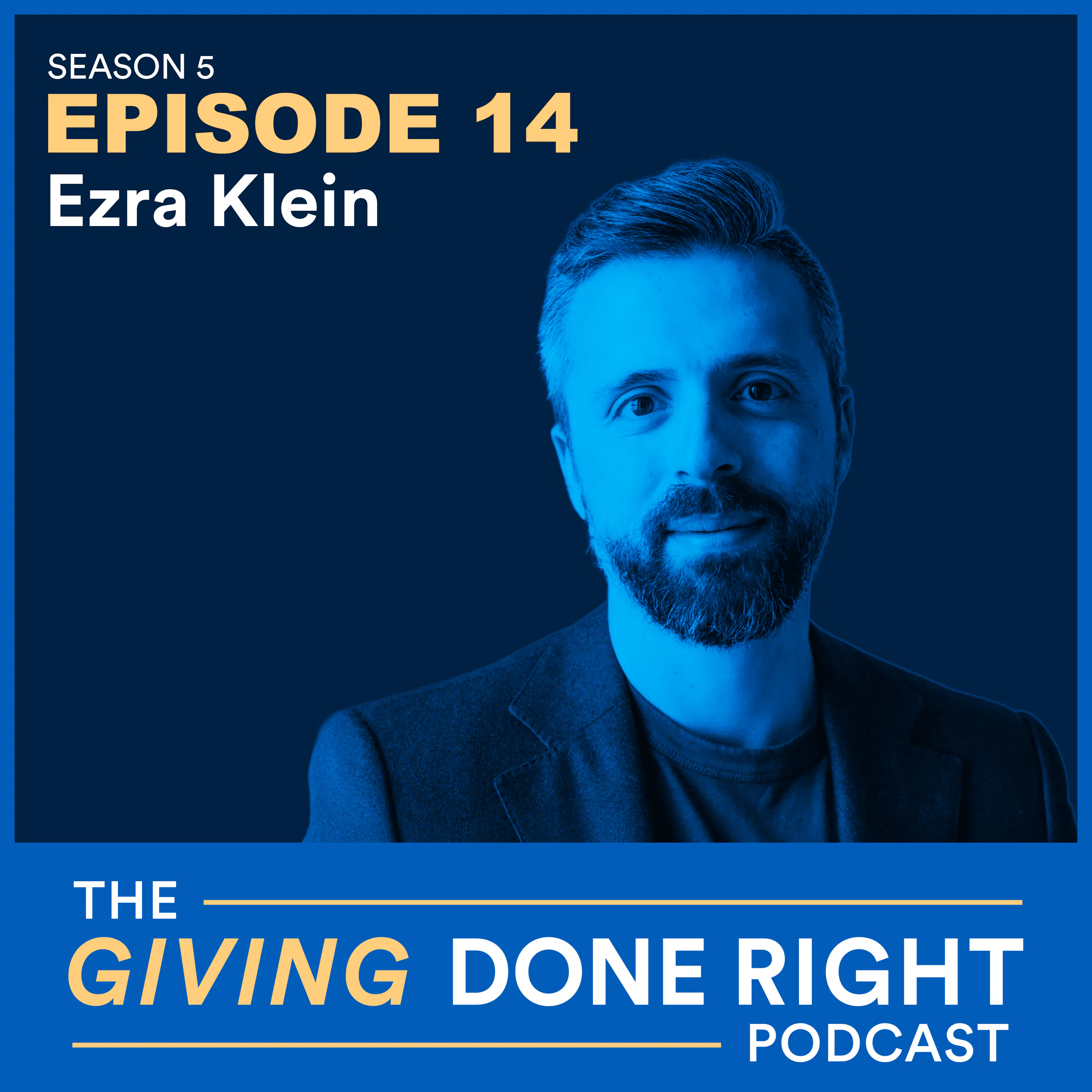 Ezra Klein on Philanthropy’s Role at a Precarious Time 02.12.2025 1h 12mAs the current federal administration makes sweeping cuts to social safety net programs, political divisions deepen, and the guardrails of American democracy are tested, what is philanthropy’s role in this precarious time? In the final episode of this season, Phil Buchanan and Grace Nicolette interview New York Times columnist and podcast host Ezra Klein live at CEP’s 2025 conference. Klein contends that America needs to renew a politics of plenty, face up to the failures of liberal governance, and abandon what he calls the chosen scarcities that have deformed American life. But what does this analysis mean for philanthropy, particularly at a moment of so many competing and urgent crises? Additional Resources: “Mounting Pressure: U.S. Foundations and Nonprofits on the 2025 Political Climate” Elisha Smith Arrillaga, Ph.D. on the Giving Done Right podcast “Abundance,” by Ezra Klein and Derek Thompson
-
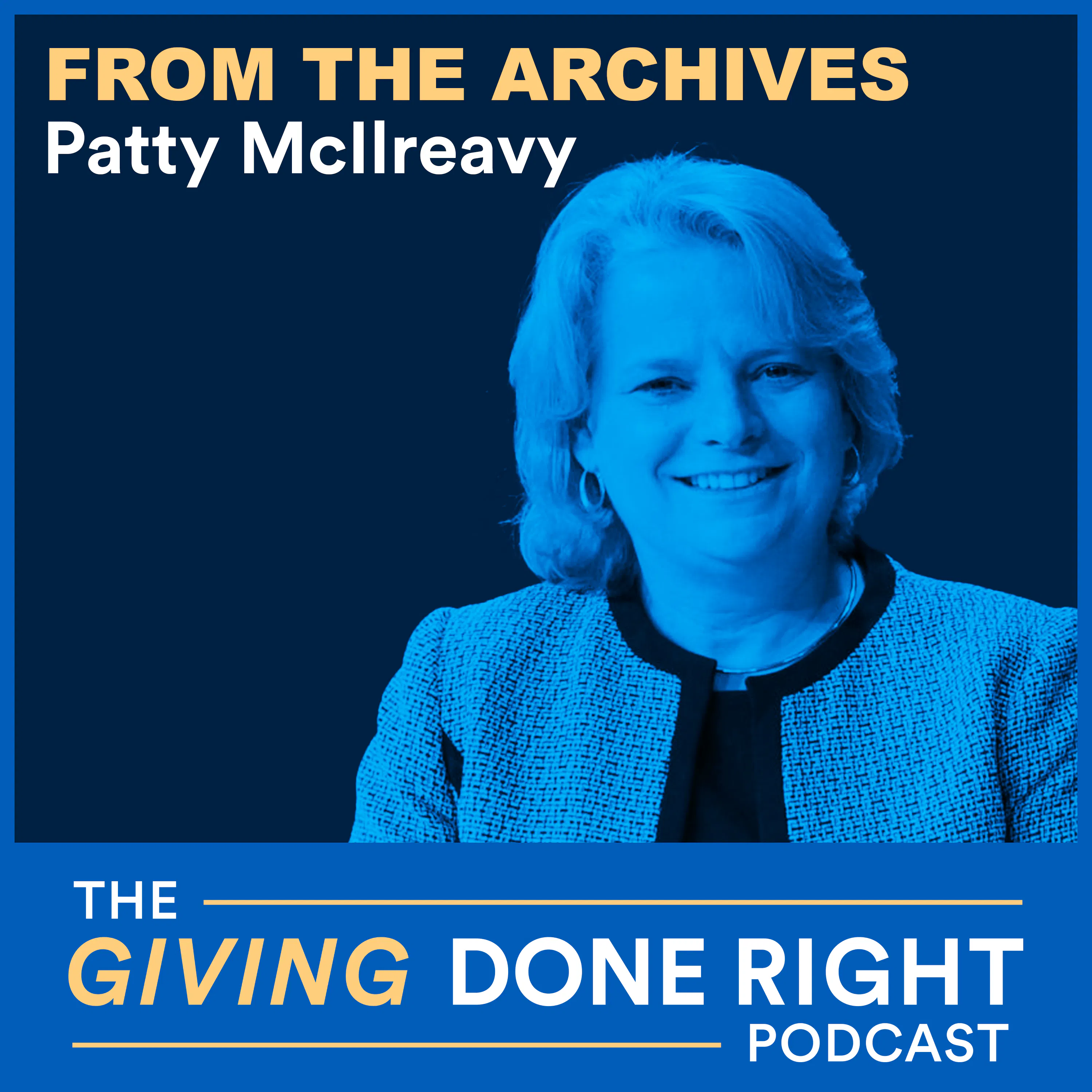 Lessons on Disaster Giving With Patty McIlreavy 20.11.2025 41mEffective disaster giving often begins before a disaster even occurs. So says Patty McIlreavy, president and CEO of the Center for Disaster Philanthropy, in this popular episode from the Giving Done Right archives. In conversation with hosts Phil Buchanan and Grace Nicolette, Patty offers insight into how donors can support disaster prevention by focusing on reducing vulnerabilities as well as support recovery efforts, and the most common pitfalls for donors to consider when responding to disasters. Patty shares her deep expertise on what can make disaster giving successful (or unsuccessful) and the three discuss examples that still hold lessons for donors looking to mitigate disasters — or prevent them — today. Additional Resources: Center for Disaster Philanthropy From Rapid Response to Sustainable Solutions: Disaster Response and Recovery in Post-Earthquake Haiti – Harvard Humanitarian Initiative Report “Complex Humanitarian Emergencies: Where Crisis, Conflict, Climate, and COVID Meet” – Center for Disaster Philanthropy Disasters, Dollars And Decisions: Lessons For Nonprofits To Prioritize Where And How To Help – Forbes Unprecedented Times Call For Unprecedented Actions – Forbes Asset-Based Framing: Trabian Shorters
-
 Mounting Pressure on Nonprofits: What Donors Need to Know with Elisha Smith Arrillaga 13.11.2025 39mFederal funding cuts and increased demand for their services have left nonprofits across the country and issue areas reeling, with many questioning whether they will survive. The consequences are stark, given the vital work nonprofits do in communities across the country. In this episode, CEP Vice President of Research Elisha Smith Arrillaga, Ph.D. shares just-collected data on what nonprofits are experiencing, exploring questions like which nonprofits have been hardest hit and what steps organizations are taking to respond. She also talks with Phil Buchanan about data on the foundation response to the situation, exploring lessons for individual and institutional donors alike. Smith Arrillaga argues that the existential challenges nonprofits are facing require bold, values-driven responses from donors. Additional Resources: New CEP Research: “Mounting Pressure: U.S. Foundations and Nonprofits on the 2025 Political Climate” CEP’s annual “State of Nonprofits” report for 2025, published May 2025 March 2025 CEP Research snapshot: “Challenging Times” A compilation of additional resources for funders on responding to the current context on the CEP blog
-
How to Get Boards to Help With Fundraising, From The Chronicle of Philanthropy 06.11.2025 35mThis week on Giving Done Right, we’re introducing you to another podcast we love: Nonprofits Now: Leading Today, from The Chronicle of Philanthropy. In this episode, two leaders, Kathleen St. Louis Caliento and Nick Grono, join Chronicle CEO Stacy Palmer to explain how they have engaged their board in financial efforts. As nonprofits face economic headwinds — including losses in federal funding, rising costs, and the possibility of a global recession — nonprofit boards play an increasingly essential role. Trustees help with strategy and can also be powerful donors and fundraisers. Yet fewer than a quarter of respondents to a Chronicle survey described their board members as enthusiastic fundraisers. Grono and St. Louis Caliento share their advice on how to inspire boards to champion your mission and share insights from their shared experience of working with trustees to manage unrestricted, multimillion-dollar grants from MacKenzie Scott. St. Louis Caliento runs Cara Collective, a Chicago nonprofit that helps low-income people find jobs. Grono heads the Freedom Fund, an organization that pools funds from donors who want to fight modern-day slavery. He’s the author of “How to Lead Nonprofits: Turning Purpose into Impact to Change the World,” published in 2024.
-
 Building Better Schools: David McKinney on Why Student Voice Matters 30.10.2025 52mWhat happens when education reform takes place without the input or engagement of the young people who will experience its effects? Conversely, what happens when youth voices lead the way to change? Phil Buchanan and Grace Nicolette sit down with their CEP colleague David McKinney, vice president of YouthTruth — a CEP initiative — to discuss how systematically listening to young people at scale can transform education, both at the school and system level. David shares not only his own formative experiences facing exclusion as a young person, but draws on data collected from more than 3 million student surveys YouthTruth has administered to offer powerful examples of how schools have used student voice to close achievement gaps, address bullying, improve belonging, and build stronger communities. He also challenges common assumptions that have undergirded education reforms for decades, including top-down approaches and using common metrics of success, like test scores, in isolation. Additional Resources: YouthTruth Aspen Institute TNTP Public Allies YouthTruth’s “Youth Civic Empowerment” Report “The Anti-Bullying Report” from YouthTruth Questions about YouthTruth’s work? Reach out to David at [email protected]
-
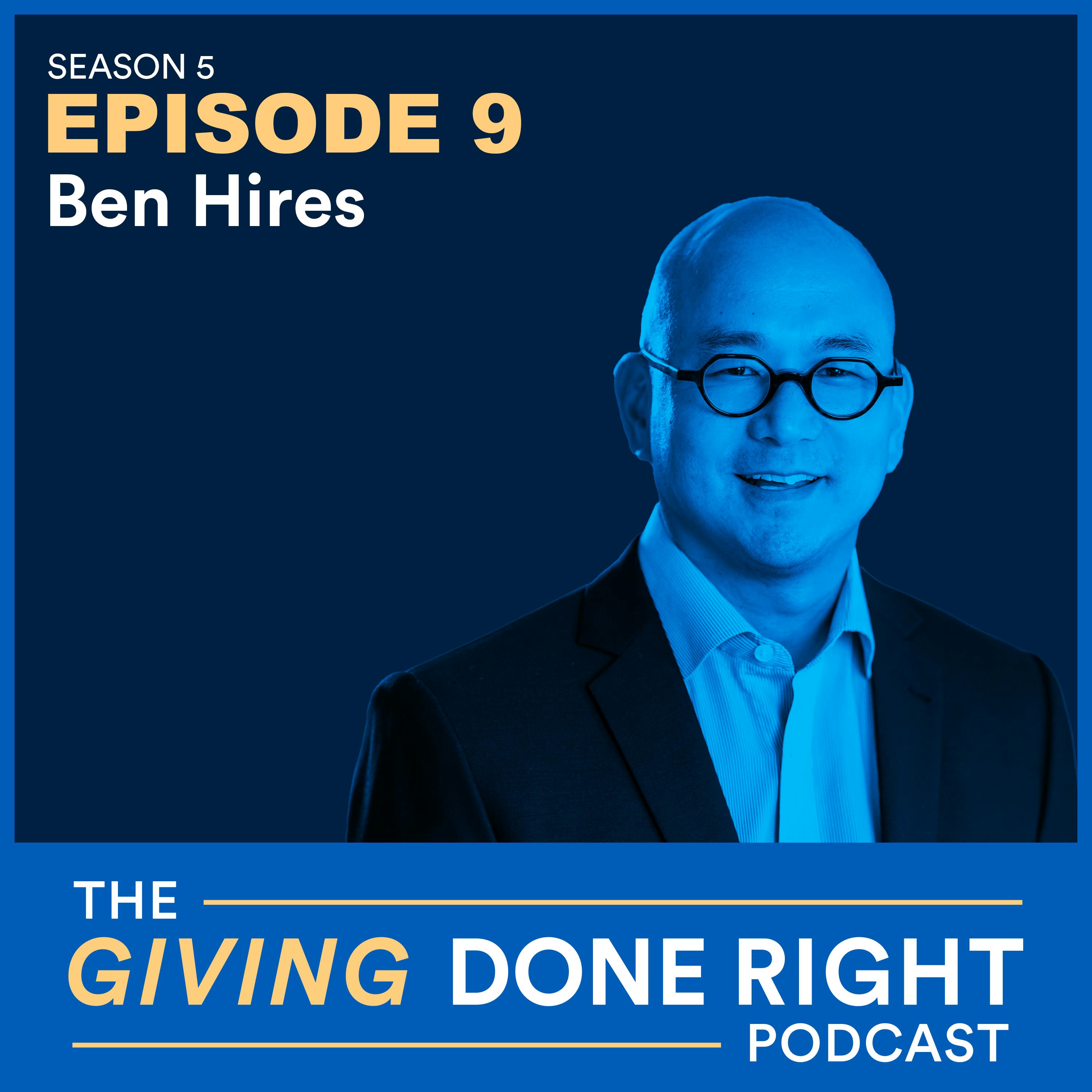 Beyond the Model Minority Myth: Ben Hires on Supporting AAPI Communities 23.10.2025 42mHow does the "model minority myth" impact how funders view and support Asian immigrant communities? What role do disaggregated data play in ensuring their thriving? In a conversation with Ben Hires, CEO of the Boston Chinatown Neighborhood Center (BCNC), hosts Phil Buchanan and Grace Nicolette dig into the vast array of services that BCNC — and nonprofits like it — provide and the crucial role they play in mitigating the challenging realities facing Asian immigrants today, from ICE enforcement creating a climate of fear to long-standing funding gaps that leave essential services underfunded. Ben explains why translation services as well as robust and disaggregated datasets are foundational to ensuring immigrant communities are well served, and why supporting both direct services and systemic change isn't an either-or proposition, but “a both-and.” Despite mounting challenges, Ben's message is unshakably optimistic: "The immigrant community, in particular, we know is resilient and strong and is not going away." Additional Resources Boston Chinatown Neighborhood Center (BCNC) Pao Arts Center Overlooked, Part One: Foundation Support for Asian American and Pacific Islander Leaders and Communities The Asian American Foundation (TAAF) STAATUS Index by TAAF The Asian Community Fund at the Boston Foundation Asian Pacific Islander Civic Action Network in Massachusetts
-
 Defending the Freedom to Give with Tonya Allen and John Palfrey 16.10.2025 43mIs the fundamental right to give according to one’s values under attack in America? Phil Buchanan and Grace Nicolette talk with two influential foundation leaders who are sounding the alarm and fighting back. Tonya Allen, president of the McKnight Foundation, and John Palfrey, president of the John D. and Catherine T. MacArthur Foundation, discuss the Unite in Advance initiative — a coalition defending philanthropic rights — and the broader issue of giving as a crucial first amendment right. The conversation explores why these leaders believe we're at a critical moment for U.S. civil society, how funders can increase their giving while continuing work on big goals like racial equity and halting climate change, and what individual donors can do to protect the American tradition of charitable giving. Unite in Advance McKnight Foundation John D. and Catherine T. MacArthur Foundation CEP Blog: “A Wave Forming? Funders Taking Action in Response to a Challenging Context” Council on Foundations Independent Sector National Council of Nonprofits GroundBreak Coalition More Perfect Press Forward Giving Done Right episode featuring Julie Butner
-
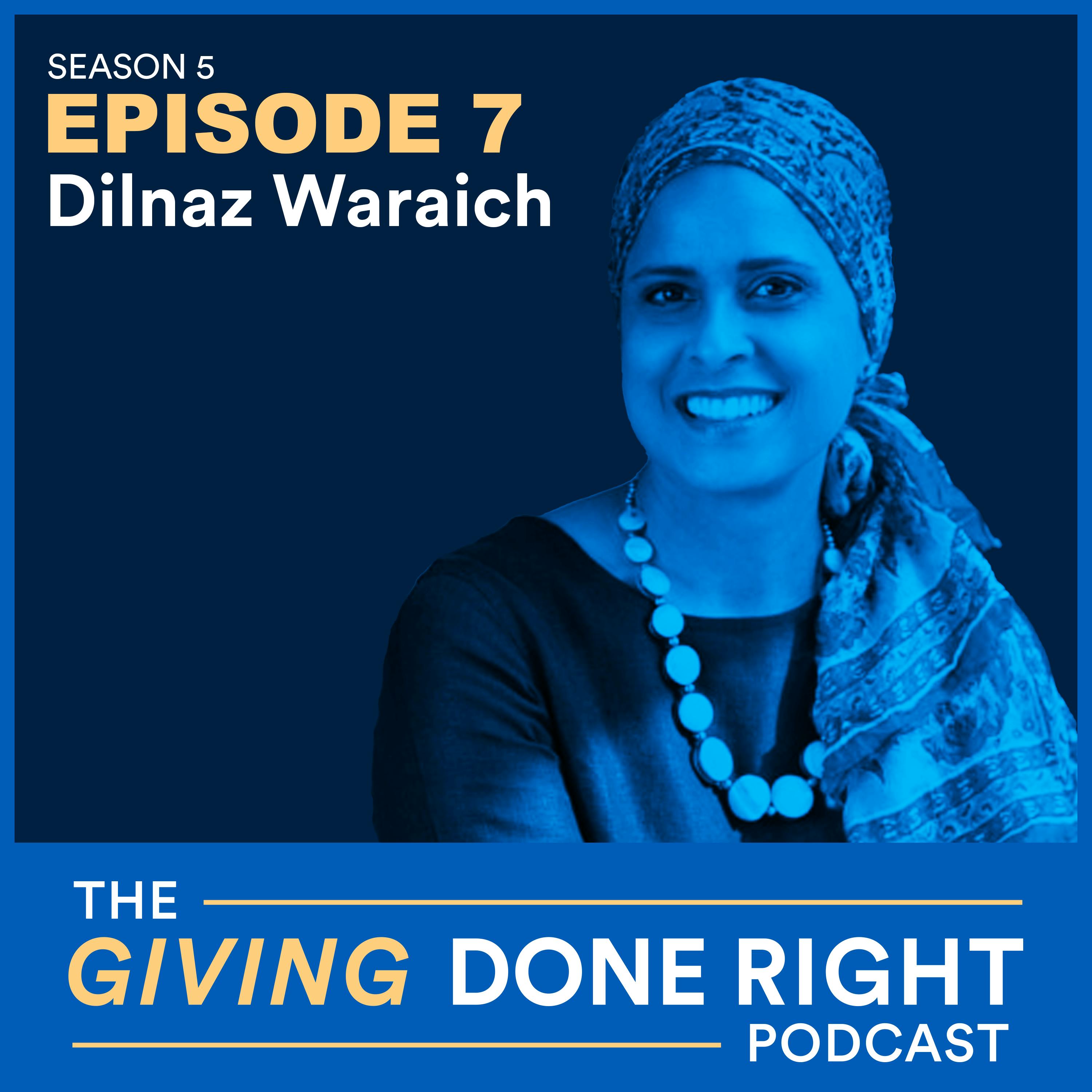 Faith, Generosity, and Justice: Dilnaz Waraich on Muslim American Giving 09.10.2025 40mWhat does it mean to tell the Muslim American story of generosity? Why is it important to talk about "religious justice" in philanthropy alongside other forms of justice? These are questions that President of the WF Fund and philanthropic advocate Dilnaz Waraich explores with hosts Phil Buchanan and Grace Nicolette as she shares her journey from kitchen table conversations about giving back to leading narrative change work that highlights Muslim American generosity. In this episode, Dilnaz discusses Islamic principles behind charitable giving, why trust-based philanthropy requires humility, and how interfaith bridge-building strengthens communities. She also offers candid insights about her mistakes as a donor, the power of storytelling in philanthropy, and why "you're just enough" might be the encouragement hesitant donors need to hear right now. Additional Resources WF Fund Inspired Generosity: stories of Muslim American generosity National Center for Family Philanthropy Indiana University Lilly School of Philanthropy “The Next Day” by Melinda French Gates Connections for the Homeless Equal Justice Initiative PBS documentary series: “American Muslims: A History Revealed”
-
 An Anti-Authoritarian Playbook for Donors With Joe Goldman 02.10.2025 55mPresident of the Democracy Fund Joe Goldman offers both urgency and clarity for donors concerned about the U.S.’ democratic backslide into authoritarianism in this conversation. As the second Trump administration consolidates power, he offers a practical three-part framework for strategic, democracy-focused giving: strengthening guardrails, powering breakthrough strategies, and working toward reconstruction. In a conversation that grapples with difficult questions about donor fear and the paralyzing sense of overwhelm that many feel when considering the breadth of threats to democracy right now, Goldman shares specific examples of organizations doing critical work, and an array of ways that donors can get involved. His message is clear: "Courage breeds more courage. Solidarity breeds more solidarity." Additional Resources Democracy Fund Democracy Fund Voice Free DC Press Forward More Equitable Democracy Protect Democracy Democracy Forward Institute for Constitutional Advocacy and Protection at Georgetown Law Government Accountability Project GovAct States United Community Change New America Demos Unite in Advance “Hope in the Dark” by Rebecca Solnit “Eichmann in Jerusalem: A Report on the Banality of Evil” by Hannah Arendt
-
 A Defining Moment for Democracy: Angelica Salas on the Immigration Crisis 25.09.2025 56mAs ICE raids and warrantless arrests by masked federal agents take place around the U.S., Angelica Salas, executive director of CHIRLA (Coalition for Humane Immigrant Rights), joins hosts Phil Buchanan and Grace Nicolette to discuss the unprecedented scale of current immigration enforcement and its implications for everyone. Angelica sheds light on what is happening on the streets and in processing and detention centers, including how individuals are being "disappeared,” due process is being denied, and the infrastructure supporting immigrant integration is being systematically dismantled. She also shares how CHIRLA and other immigrant rights organizations are fighting back through rapid response, documentation, advocacy, and in the courts. She offers hope through the remarkable story of how CHIRLA’s community stepped up to support them and the gathering tide of courage shown by advocates, activists, donors, and others. In what she calls "a defining moment for our country" with implications well beyond immigration, she urges donors to support the ecosystem of immigrant rights, and shares her optimism that the U.S. can continue to be a country “built out of the many.” Additional Resources: CHIRLA - The Coalition for Humane Immigrant Rights Raids Rapid Response Network (California) Center for Migration Studies National Day Labor Organizing Network “Trump is Building His Own Paramilitary Force,” The Ezra Klein Show - The New York Times Opinion (podcast mentioned by Grace) International Institute of Los Angeles
-
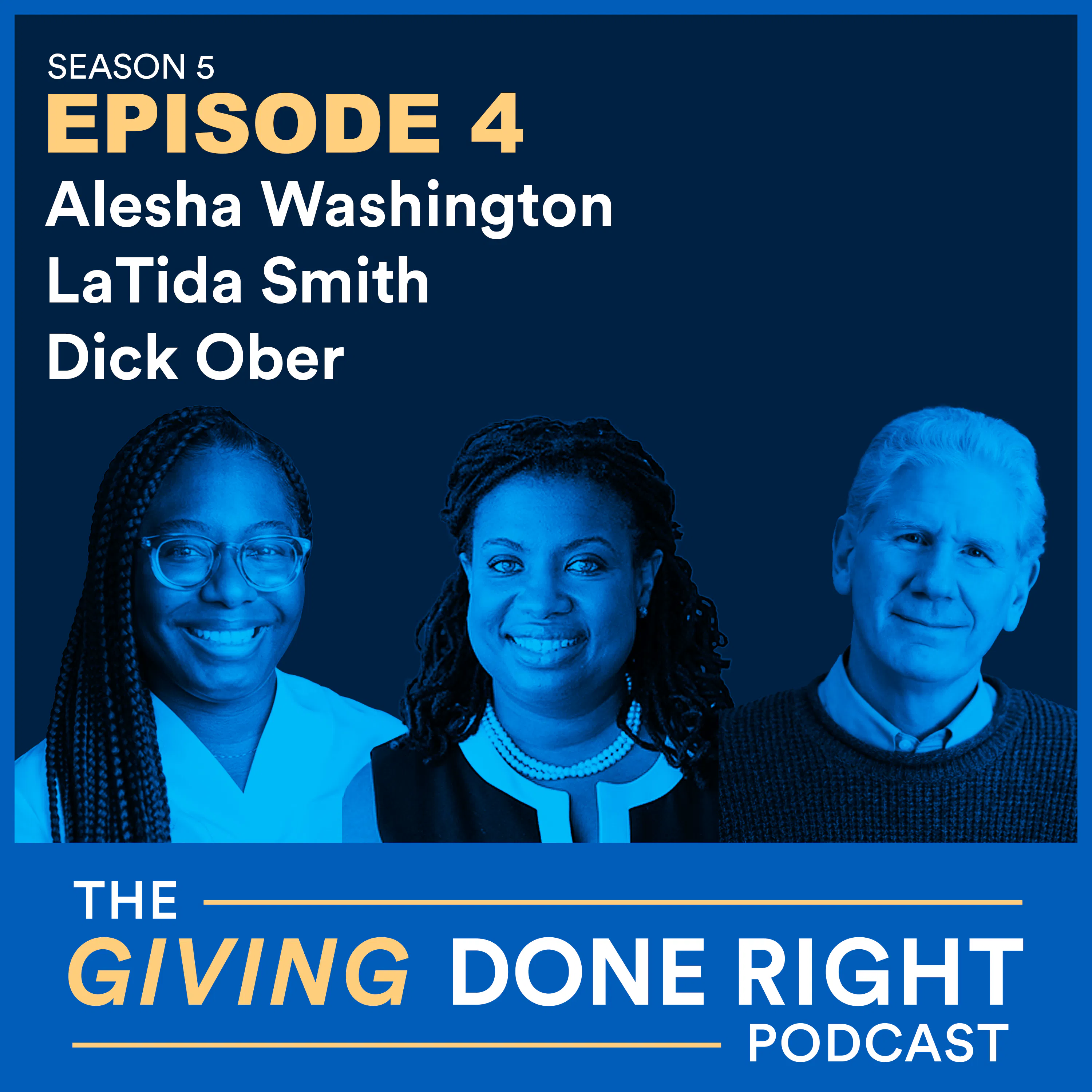 Effecting Change at the Local Level: Wisdom from Community Foundation CEOs 18.09.2025 1h 8mDonors looking to make a difference in their local communities can turn to community foundations — local philanthropic institutions driven by giving “of, by, and for the people” and rooted in the goal of creating thriving communities. In this episode, Phil and Grace are joined in conversation by three community foundation leaders: Dick Ober, president and CEO of the New Hampshire Charitable Foundation, LaTida Smith, president of the Winston-Salem Foundation, and Alesha Washington, president and CEO of the Seattle Foundation. In sharing their experiences and approaches, these CEOs encourage donors to embrace their power to engage and effect change in their own community. They reflect on thorny issues including working across ideological lines, supporting often under-appreciated nonprofits and their staff, and the proliferation of giving options for donors. They also explore how to ensure money doesn't sit in institutions, but gets out the door to organizations working in communities. Additional Resources: CEP Report: What Donors Value: How Community Foundations Can Increase Donor Satisfaction, Referrals, and Future Giving Community Foundation Locator, by Council on Foundations Winston-Salem Foundation Seattle Foundation New Hampshire Charitable Foundation Data on Declining U.S. Donor Participation, from the Lily Family School of Philanthropy at Indiana University CEP Reports: State of Nonprofits 2025, 2024, and 2023
Similar podcasts


Popular in
The podcast also appears in the podcast charts of these countries.
