
Gov Tech Today
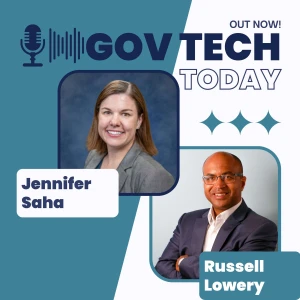
Russell Lowery, Jennifer Saha
0
Gov Tech Today explores how technology is changing government and public services. It focuses on the intersection between the private sector and government, often framed as bridging the gap between .com and .gov. The show likely covers digital transformation, procurement, innovation, and the people working to modernize public institutions.
Episodes
-
 E81: Code for America’s Amanda Renteria on Modernizing Benefits—and Using AI Without Harming People 22.09.2026 31mOn Gov Tech Today, host Jennifer Saha talks with Amanda Renteria, CEO of Code for America, about bridging technology and government to help residents access safety-net benefits like food assistance, school lunch programs, healthcare, SNAP, and Medicaid. Renteria argues modernization should start with real user experience—watching people apply at kitchen tables—and emphasizes “no wrong door” access across phone, in-person, and mobile, plus culturally competent language and iterative design tailored to each state. They discuss why the “apply once” vision is constrained by shifting policies such as new renewal and work requirements, and how better data sharing and common definitions across agencies are still lacking. Renteria outlines Code for America’s values-first approach to AI, warning it requires infrastructure and should be tested carefully with humans in the loop, while highlighting promising uses like document verification and caseworker support.
-
E80: Services Down, Goods Up, and What It Signals Next 25.08.2026 20mOn this episode of Gov Tech Today, hosts Russell Lowery and Jennifer Saha step back from day-to-day procurement details to examine what California’s public data reveals about technology spending trends. Jen shares analysis comparing FY 2024–25 to 2025–26 across major contract vehicles, finding a sharp decline in IT services: about $3.8B down to $2.59B, nearly a 30% drop, with notable decreases in interagency agreements (down roughly 50%), formal competitive bids, and non-competitive bids. At the same time, IT goods spending is steadier and slightly up—from about $2.3B to $2.7B—suggesting continued purchases of software, hardware, and cloud while agencies reduce reliance on long-term vendor-managed services. They discuss policy changes enabling implementation services through the Software Licensing Program and consider political pressures, budget constraints, and potential pent-up demand ahead of the next administration.
-
E79: California’s New State CIO on SITES, AI Guardrails, and the Future of CDT 11.08.2026 36mOn Gov Tech Today, host Jennifer Saha speaks with Chris Given, California’s new state CIO and director of the California Department of Technology, about his first 10 weeks in the role and priorities for the state’s tech organization. Given shares his background across 10 federal agencies via the U.S. Digital Service and work with several states, then discusses how CDT must adapt as departments modernize away from legacy data center services, reshaping CDT’s budget and service model. He outlines CDT’s push to act as a broker of services through SITES (Statewide IT Shared Services), aiming to consolidate common software purchases, reduce duplicative negotiations, and expand beyond initial AI contracts such as Anthropic’s Claude. They also cover Poppy as a safe AI experimentation tool, updates to California’s AI risk assessment process (5305F) with tiered review, leadership transitions including state CISO Vitaly Panich, and CalSecure 2.0 and CalNet’s expanded managed security offerings.
-
E77: Rebuilding Trust in Government Identity and Fraud Controls 16.07.2026 30mIn this episode, Jennifer Saha interviews Jordan Burris, who leads Socure’s public sector business using AI to verify identity and predict fraud risk, drawing on his prior work in digital trust and as chief of staff to the U.S. CIO. Burris argues fraudsters—helped by digitized services and modern AI tools—are outpacing government, making old identity-proofing standards and “bouncer-at-the-club” checks insufficient at scale. They discuss how pandemic-era “pay and chase” benefit delivery created losses that are often unrecoverable once funds move overseas, and why agencies must shift to layered, preventative controls that reduce friction for legitimate users. Burris cites efforts in California (EDD, CalHEERS/ACA enrollment, DMV) and other states, and emphasizes sharing risk signals across agencies and with transparent vendor partners without broad PII transfer. He predicts success will mean manageable fraud rates and better citizen experience, with accountability led by senior agency leadership and organization-wide vigilance similar to cybersecurity.
-
E76: Why Government IT Procurement Costs More—and How to Fix It 30.06.2026 29mOn this episode of Gov Tech Today, host Jennifer Seha talks with longtime public-sector consultants Heide Cassidy and Eugene Martinez about why government IT procurement—especially in California—so often feels slow, expensive, and overly burdensome. They argue that the system is built for checks and balances, but growing complexity, centralized control, and shifting definitions of “success” drive up vendor risk and cost. The guests point to Washington State reforms as promising models, including master contracts with prequalified vendors, greater use of national cooperative agreements, and more consistent pre-procurement dialogue with industry. They also critique California’s heavy reliance on resumes and references, suggest weighting interviews more, and propose asking vendors to disclose project failures and lessons learned. The conversation closes with the launch of their new AI-native, women-owned public-sector firm, Lynxar.
-
E75: Appointments, State IT Leadership, and the Risks of Being ‘At the Pleasure’ 16.06.2026 19mOn this episode of Gov Tech Today, hosts Russell Lowery and Jennifer Saha discuss how California government transitions affect thousands of gubernatorial appointees and the broader technology landscape, especially with an uncertain governor’s race and early “lame duck” dynamics. They use the departure of longtime state technology leader Liana Bailey Crimmins and the arrival of a new state CIO as a case study in how leadership changes ripple through procurement, priorities, staff retention, and vendor relationships, while core operations continue. The conversation explains the difference between political appointees and Career Executive Assignments (CEAs), including at-will risk, return rights, and why CEAs are sometimes called “career-ending assignments.” They argue that “personnel is policy,” urging listeners to prepare accomplishments, elevate strong public servants, and build relationships with the managers who will remain through future administrations.
-
E74: Sales Mistakes That Undermine Government Trust 02.06.2026 24mOn this episode of Gov Tech Today, hosts Russell Lowery and Jennifer Saha discuss common private-sector sales behaviors that can offend or erode credibility with government clients. They argue titles matter (e.g., “Vice President of Capture” feels cringey), caution against pushing “land and expand” too early, and warn that ghosting after a contract—often driven by commission and renewal structures—damages long-term relationships unless there’s a strong handoff to implementation and support. They explain why end-of-quarter discounts and quota-driven deadlines irritate agencies that expect best pricing upfront, and why posting lavish “President’s Club” or QBR trips can look like spending public dollars. They also critique generic “discovery” and meet-and-greet meetings as outdated when public plans and budgets are online, and urge respect for workload seasons like budget cycles, new roles, or audits.
-
E73: What State Employees Want From Gov Tech 28.04.2026 21mOn this episode of Gov Tech Today, hosts Russell Lowery and Jennifer Saha discuss Engage California, a virtual suggestion box run by California’s Office of Data and Innovation and previously outlined by Director Jeffrey Marino. Drawing on more than 1,400 employee comments, they highlight top themes: digitizing paper-heavy workflows (including replacing PDFs and wet signatures), automating repetitive tasks so staff can focus on higher-value work, and modernizing outdated legacy systems that drive delays, errors, and duplicate data entry. They also cover calls to better use existing tools the state already pays for (including Microsoft products), create more shared enterprise solutions across departments, improve data integration and trust through cleaner data and better dashboards, expand AI and advanced analytics for low-hanging processes, and increase digital access to public services. The hosts conclude that the success of the effort depends on leaders actually implementing the recommendations.
-
E72: RSA Conference Takeaways – Governing AI Agents and Securing Public Infrastructure 14.04.2026 18mGov Tech Today hosts Russell Lowery and Jennifer Saha recap this year’s RSA cybersecurity conference in San Francisco, noting the event’s commercial scale and a smaller, dedicated public-sector track. Key takeaways include how “agentic AI” is moving from buzzword to reality, with public agencies urged to treat AI agents like users—requiring identity and access controls, least-privilege permissions, logging, and auditing—within existing governance frameworks such as FedRAMP, StateRAMP, and NIST. They discuss governance as a primary security control, growing attention to critical infrastructure and physical access as cybersecurity issues, and the challenge of tiny local utilities lacking staff and budgets, suggesting collaboration and shared services. The conversation also flags procurement and tool sprawl concerns, and explores what outcome-based security might mean for measuring automation, effectiveness, and ROI in government contracts.
-
E71: Supply Shocks, Fixed Contracts, and the AI Regulation Patchwork 31.03.2026 15mOn this episode of Govtech Today, hosts Russell Lowery and Jennifer Saha examine how global disruption and an AI-driven hardware boom are colliding with government procurement realities. They discuss how rapid supplier price spikes and delivery uncertainty strain California’s fixed price schedules—often locked for six months—creating delayed quotes, uncompetitive bids, and the risk that vendors stop bidding rather than sell at a loss, leading to project delays and a focus on mission-critical needs. The conversation then shifts to federal AI regulation: a new plan and executive-order direction may set guardrails while still leaving states to manage AI procurement rules, potentially forcing early-moving states like California, Colorado, and New York to roll back some efforts later. They close on how legislation lags fast-moving AI, and how adoption varies widely across agencies and cities.
-
E70: AI Tops NASCIO’s 2026 State CIO Priorities — Ending Cybersecurity’s 12-Year Reign 24.02.2026 18mWhat happens when cybersecurity is no longer the No. 1 priority for state CIOs? On this episode of Gov Tech Today, hosts Russell Lowery and Jennifer Saha break down the National Association of State CIOs (NASCIO) annual Top 10 list for 2026—and the major shakeup that put AI, including generative and agentic AI and machine learning, at the top for the first time in more than a decade.
-
E69: Transforming Maintenance and Operations — From Maintenance to Modernization 10.02.2026 15mIn this episode of Gov Tech Today, hosts Russell Lowery and Jennifer Saha dive into a new trend in government contracting: transforming maintenance and operations (M&O) into modernization opportunities. They examine how traditional M&O contracts are increasingly including system improvement requirements, effectively shifting from simple maintenance to significant technological upgrades. This approach allows government agencies to modernize within existing budgets, avoiding the complexities and scrutiny of new IT projects. The discussion also explores the balance between maintaining existing systems and leveraging M&O contracts for continuous modernization.
-
E68: Navigating the Governor's Budget and Technology Initiatives 27.01.2026 20mIn this episode of Gov Tech Today, Russell Lowery and Jennifer Saha delve into the recently released governor's budget, focusing on its implications for technology initiatives. They discuss the significant role of AI, legacy system updates, and the governor's approach to AI regulation. The duo also explores state procurement changes, including the growing use of RFI2 and the introduction of climate-aligned contracts. With insights on the Middle Mile Broadband initiative and the complexity of state budgets, this episode provides a comprehensive overview of California's tech and budget landscape.
-
E67: Navigating Government Transitions and AI Regulations in California 13.01.2026 20mIn this episode of Gov Tech Today, hosts Russell Lowery and Jennifer Saha dive into the complexities of government transitions, focusing on Governor Newsom's last year in office and the implications for gubernatorial appointees and vendors. The conversation explores the nuances between career civil servants and those appointed from private sectors. They also discuss the ongoing AI regulation at the federal level and how California is positioning itself amidst federal executive orders. The episode wraps up with insights on managing new tech initiatives during budget deficits, emphasizing strategic positioning for tech vendors in lean times.
-
E66: New Terms and Conditions for IT Contracts — A Simplified Approach 16.12.2025 16mIn this episode of Gov Tech Today, hosts Russell Lowery and Jennifer Saha discuss the recent updates to terms and conditions for IT contracts released by the California Department of Technology (CDT) and the Department of General Services (DGS). The new regulations aim to simplify the contracting process by consolidating three sets of cloud provisions into one and introducing a cap on vendor liability for cybersecurity breaches. The episode delves into the significance of these changes for both vendors and state agencies, highlighting the collaborative efforts between CDT and DGS to address long-standing concerns from the vendor community.
-
E65: Bridging the Procurement Gap — How New Regulations Empower Small Businesses 02.12.2025 15mIn this episode of Gov Tech Today, hosts Russell Lowery and Jennifer Saha discuss a significant rulemaking process initiated by the Department of General Services (DGS) to change small business and Disabled Veteran Business Enterprise (DVBE) procurement processes. They examine the new statutory mandate requiring 25% of state spending to go to small businesses and 3% to DVBEs. Jennifer highlights the impact on technology procurements and the potential for leveling the playing field for small businesses. The conversation also delves into the increased contract limit from $250,000 to $3.5 million for small business procurements and the need for education and awareness within both government and vendor communities. The episode closes with a look at the opportunities and challenges this new regulation presents.
-
E64: Innovating Government Services with Data and Technology 18.11.2025 31mIn this episode of Gov Tech Today, host engages with Jeffrey Marino, Director of the California Office of Data and Innovation (ODI), to discuss his journey from data journalism to government service. They delve into government use of data during the COVID-19 crisis, the challenges of data analytics in state systems, and the mission of ODI to enhance service delivery through technology and human-centered design. They also explore the Engaged California program and Innovation Fellows initiative aimed at gathering state employee feedback and fostering transformational change from within.
-
E63: Bridging the Tech and Legislative Gap — A Dive into AI Regulation 04.11.2025 17mOn this episode of Gov Tech Today, hosts Russell Lowery and Jennifer Saha delve into the evolving landscape of AI regulation. Analyzing California's legislative actions, they discuss major bills such as SB 53 (Wiener) and AB 316 (Krell) that impact AI transparency and liability. They provide insights into the federal and state regulatory approaches and predict future legislative trends, offering a nuanced perspective on the balance between innovation and regulation.
-
E62: A Deep Dive into California's Innovative Strategies with Amy Tong 22.10.2025 31mOn this episode of Gov Tech Today, host Jennifer Saha sits down with Amy Tong, Senior Counselor to the Governor of California, to discuss groundbreaking efforts in government efficiency and transformation. Tong shares insights about her role and the state's 'E3' initiative, which stands for Efficient, Effective, and Engaged government. With a focus on challenges ranging from budget constraints to the integration of cutting-edge technology, this conversation unveils how California aims to create a lasting legacy of innovation and efficiency in public service. Key themes include the role of middle management in driving change, the necessity of grounding technological solutions in everyday operational needs, and the importance of industry partnerships.
-
E61: Navigating the Shift from Public to Private Sector in GovTech 07.10.2025 32mOn this episode of Gov Tech Today, host Jennifer Saha welcomes Mike Hussey, former state CIO of Utah, who shares his transition from 30 years in state government to a pivotal role in the private sector with Oracle. Mike discusses the intricacies of balancing public service exigencies with private sector dynamism, especially in the context of emerging AI technologies. Listen in as they delve into the unique challenges of AI regulation, the evolving roles of state CIOs, and the cooperative competition among states aiming for technological advancements. Key timestamps include insights into the working dynamics in government (10:12), the transformative impact of AI (25:30), and the nuanced differences in state vs. federal AI regulations (40:47).
Similar podcasts


Popular in
The podcast also appears in the podcast charts of these countries.
