
Pediatric Urology Academy
Amin Afrasiabi, MD, Pediatric Urologist
0
Pediatric Urology Academy is an evidence-based educational podcast hosted by pediatric urologist Amin Afrasiabi, MD. It uses clinical cases, landmark studies, and practical decision-making to explore pediatric urology topics such as posterior urethral valves, vesicoureteral reflux, hydronephrosis, UPJO, megaureter, neurogenic bladder, hypospadias, and pediatric stone disease. Episodes also cover surgical principles, reconstructive surgery, disorders of sexual development, and emerging research. The show is intended for pediatric urologists, general urologists, residents, fellows, and other healthcare professionals worldwide.
Episodes
-
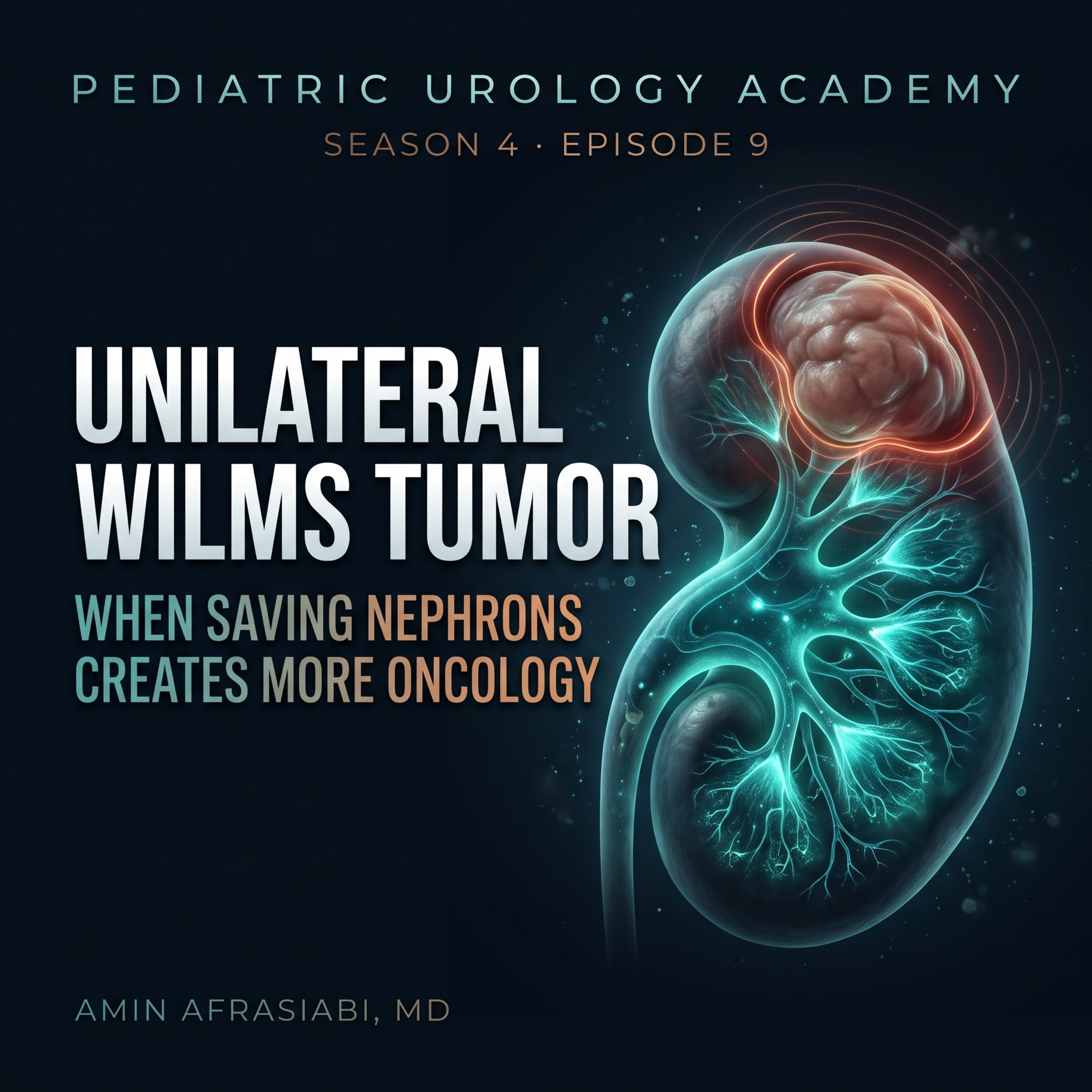 Partial Nephrectomy for Unilateral Wilms Tumor: What Is a Nephron Worth? 09.11.2026 11mPartial nephrectomy for unilateral Wilms tumor is one of the most debated operations in pediatric surgical oncology — and one of the rarest. When the opposite kidney is normal, what does preserving a remnant actually buy, and what might it cost?This episode treats unilateral nephron-sparing surgery as an exchange: renal tissue gained against added complexity in tumor clearance, staging, and reconstruction. Three questions set the value of that exchange:• How much functioning kidney will actually remain?• Can the tumor be removed without compromising oncologic safety?• How much is the preserved kidney worth to this particular child?In this episode:• Why the operation is uncommon in both Children's Oncology Group and SIOP practice• What the SIOP 2001 experience and systematic reviews can — and cannot — tell us, and why selection bias limits claims of equivalence• Treatment conversion: how an involved margin or tumor spill can change postoperative therapy• Why the operation and the treatment protocol are one combined decision• How a solitary kidney or bilateral predisposition changes the calculation• How to frame informed consent around two realistic futuresFor pediatric urologists, pediatric surgeons, pediatric oncologists, nephrologists, fellows, and residents.Season 4, Episode 9 — Wilms Tumor SeriesEducational content for healthcare professionals. Not medical advice for individual patients.
-
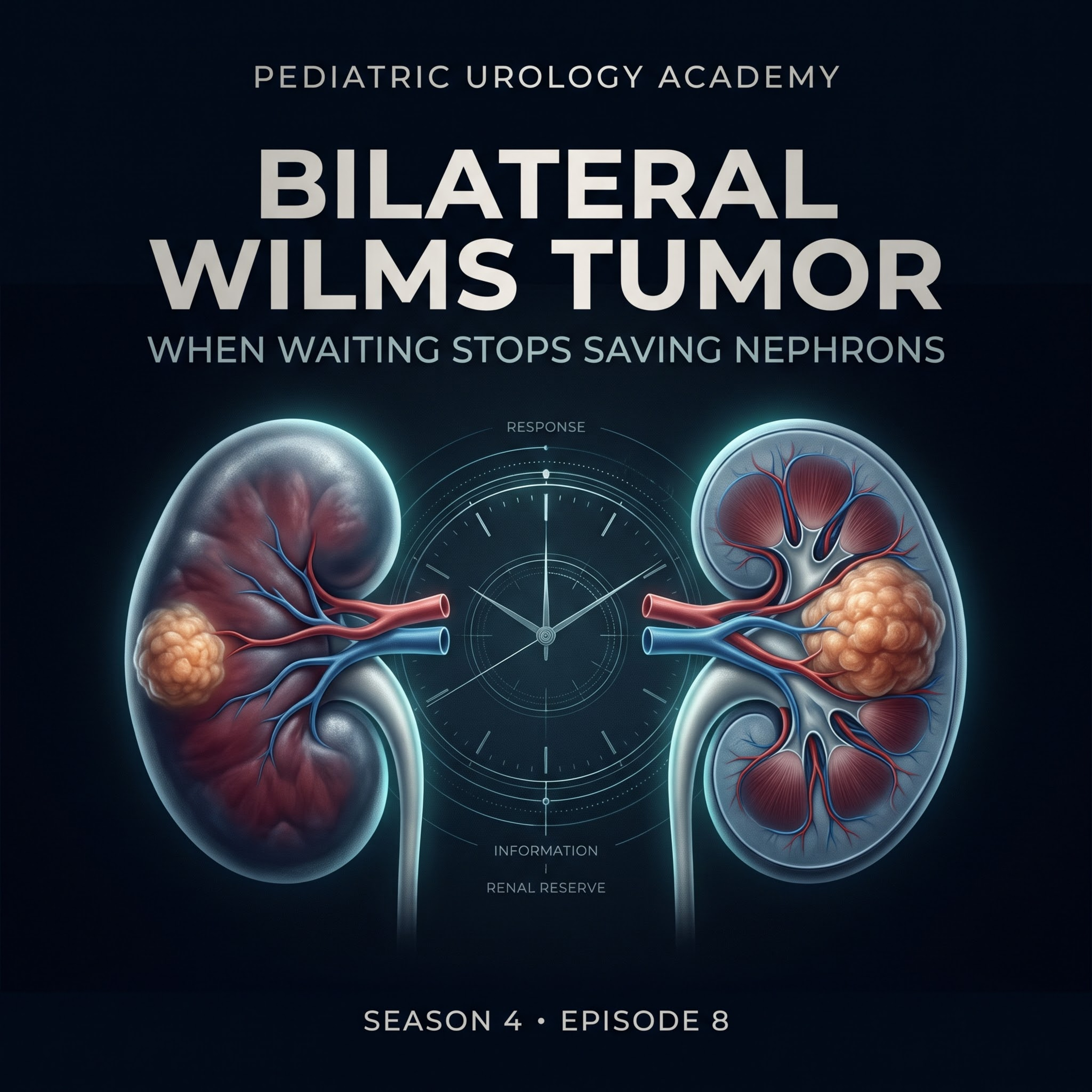 Bilateral Wilms Tumor: When Waiting Stops Saving Nephrons 08.11.2026 10mIn bilateral Wilms tumor, chemotherapy can make nephron-sparing surgery possible. But when does continued treatment stop improving surgical options and start delaying definitive care?This episode of Pediatric Urology Academy examines the twelve-week surgical decision through three competing clocks: tumor response, histological information, and long-term renal reserve.Using evidence from the Children's Oncology Group AREN0534 study, SIOP-2001, and contemporary expert-center experience, we explore why radiographic shrinkage does not necessarily translate into easier surgery, why poorly responding lesions require biological reassessment, and why preserving renal tissue is not always equivalent to preserving renal function.The discussion addresses the timing of definitive surgery, bilateral partial nephrectomy, pathological heterogeneity, the limitations of cross-protocol comparisons, and the role of specialized surgical expertise.Central question: When does waiting for a better operation become a risk to the child's oncologic and renal future?Pediatric Urology Academy | Season 4, Episode 8Hosted by Amin Afrasiabi, MD
-
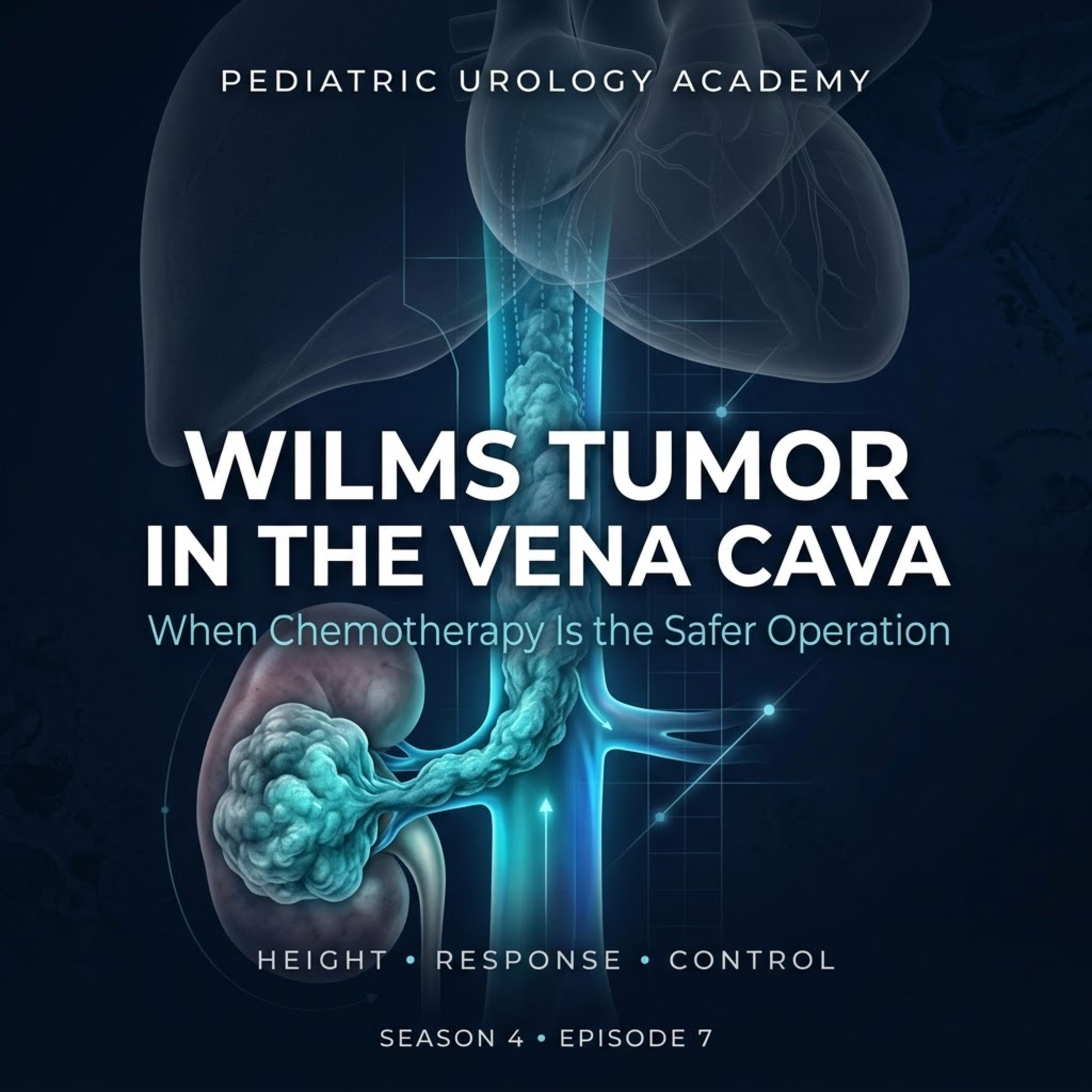 Wilms Tumor in the Vena Cava: When Chemotherapy Is the Safer Operation 27.10.2026 10mA Wilms tumor extending into the inferior vena cava can look like a surgical emergency.Sometimes the safer oncologic decision is to wait.This episode examines venous tumor thrombus in Wilms tumor and asks when preoperative chemotherapy should be viewed not only as cancer treatment, but as surgical risk reduction.We explore renal-vein, infrahepatic, retrohepatic, suprahepatic, and atrial extension; the hepatic veins as a critical operative landmark; thrombus regression after chemotherapy; cardiopulmonary bypass; vascular control; pulmonary embolic risk; anticoagulation; and the staging consequences of thrombectomy.The central framework is:Height.Response.Control.How high does the thrombus extend?Does chemotherapy move it down the surgical complexity ladder?And what vascular strategy is required for safe removal?The key lesson is that technical resectability and oncologic wisdom are not the same thing.Sometimes the safest Wilms operation is the one chemotherapy allows you not to perform.
-
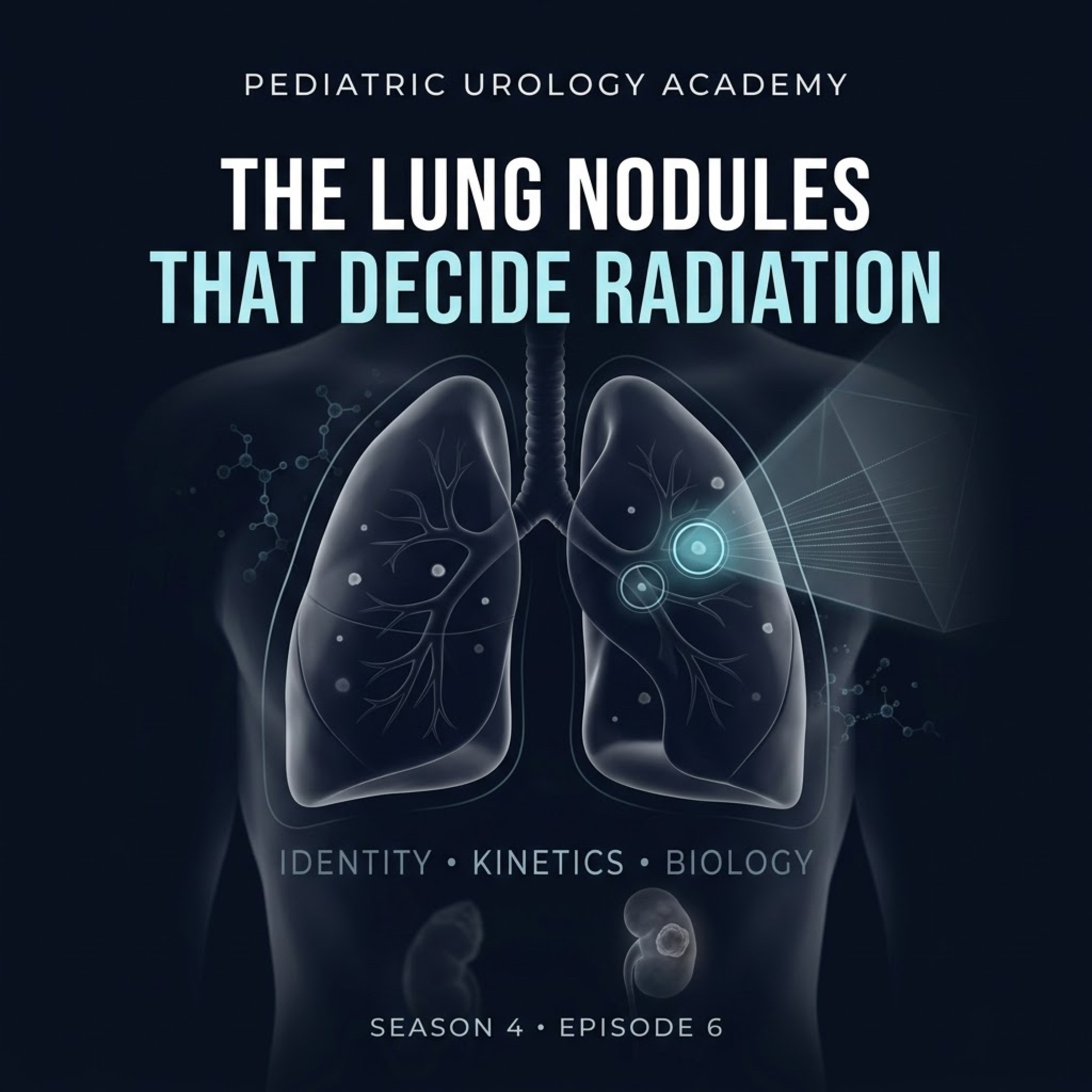 The Lung Nodules That Decide Radiation 26.10.2026 10mA few millimeters on chest CT can change the entire treatment pathway for a child with Wilms tumor.This episode examines the uncertainty behind pulmonary nodules: which lesions are truly metastatic, what chemotherapy response actually tells us, when persistent nodules still contain viable tumor, and when biopsy or metastasectomy can meaningfully change management.We explore the response-adapted logic of AREN0533, the limits of CT-only diagnosis, the role of 1p/16q loss and 1q gain, the evidence behind whole-lung irradiation, and why excellent overall survival can still conceal a high treatment burden.The central framework is:Identity.Kinetics.Biology.What is the nodule?How does it behave under treatment?And what does the tumor biology say about residual risk?In Wilms tumor, the most consequential lung nodule may be the one we classify incorrectly.
-
 AREN2231: When Tumor Biology Starts Writing the Postoperative Prescription 25.10.2026 8mWilms tumor treatment was once organized primarily around stage.AREN2231 is testing a more complex model.This episode examines how the Children’s Oncology Group is integrating anatomic stage with molecular biology and treatment response to determine who may need less therapy, who may need different therapy, and who may require intensification.We explore 1q gain, combined loss of heterozygosity at 1p and 16q, the specific role of 11p15, post-chemotherapy blastemal predominance, and the major de-escalation and escalation questions being tested in AREN2231.The episode also explains why prognostic biomarkers are not automatically predictive biomarkers, why trial questions should not be mistaken for established standards, and why precision Wilms therapy begins in the operating room with accurate staging, lymph-node sampling, and adequate tissue for central pathology and molecular testing.The central framework is simple:Anatomy tells us where the tumor is.Biology estimates its intrinsic risk.Response tells us what survived treatment.
-
 One Tear Can Rewrite the Protocol 24.10.2026 10mA Wilms tumor can be completely removed and still become a stage III problem.This episode examines the events that can change local staging despite apparently successful surgery: tumor spill, preoperative rupture, biopsy, and positive margins.We explore why these events are not biologically equivalent, how COG and SIOP may interpret them differently, why imaging alone can misclassify rupture, and why an unnecessary biopsy can alter the entire treatment pathway.The deeper issue is not simply contamination. It is loss of certainty about local control.The episode also examines a critical methodological problem: a surgical event may not worsen overall survival if modern therapy compensates for it, yet it can still increase radiation exposure, chemotherapy intensity, and long-term treatment burden.In Wilms tumor, operative technique does more than remove the tumor. It helps determine the stage, the treatment, and the consequences the child carries afterward.
-
 The Normal-Looking Node That Changes Treatment 23.10.2026 6mIn Wilms tumor surgery, lymph-node sampling is not a technical afterthought. It is part of the staging operation.This episode examines why normal-looking nodes can still contain tumor, why suspicious nodes can be reactive, and why the purpose of sampling is not therapeutic lymphadenectomy but reduction of staging uncertainty.We also examine the evidence behind node counts, why detection studies should not be confused with survival studies, how confounding can make node yield look more powerful than it is, and why COG and SIOP nodal data cannot be transferred uncritically across different treatment sequences.The central lesson is simple: in Wilms tumor, a very small specimen can carry a very large treatment consequence.
-
 COG vs SIOP: Why Two Successful Wilms Strategies Start in Opposite Directions 22.10.2026 11mWhy does one major Wilms tumor system begin with nephrectomy while another begins with chemotherapy?This episode examines the deeper logic behind the COG and SIOP approaches. The real difference is not simply surgery first versus chemotherapy first. It is about which information each system chooses to preserve, and which uncertainty it accepts.We explore untreated staging, response biology, stage migration, biopsy, lymph-node sampling, venous thrombus, and why a technically successful nephrectomy may still be an oncologically poor operation.The central question is not which system is better.It is: what information do you need before treatment changes the tumor?
-
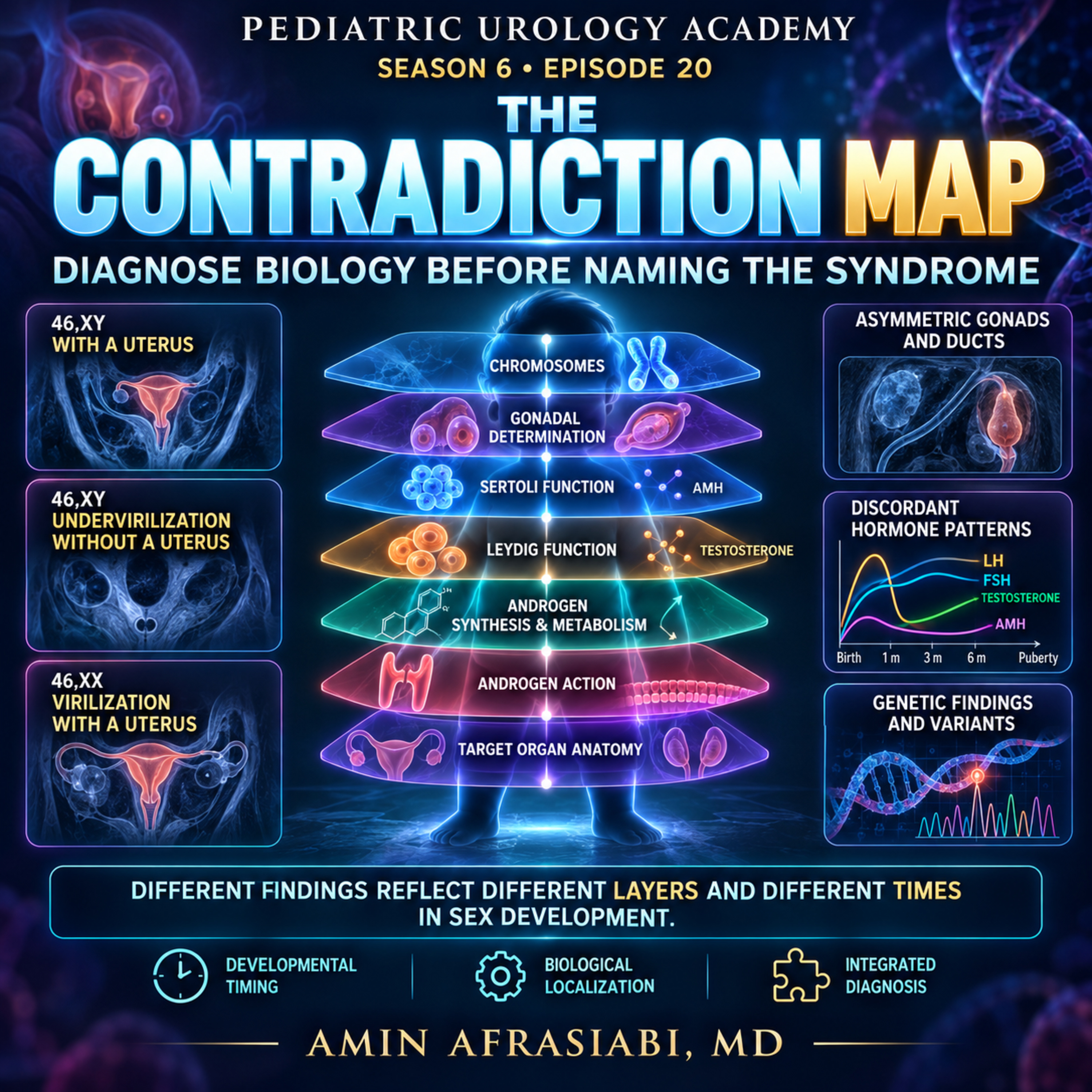 Season 6, Episode 20 — The Contradiction Map: Diagnose Biology Before Naming the Syndrome 20.10.2026 10mA 46,XY child can have a uterus.A 46,XX child can have virilized external genitalia.One patient can have two gonads that followed completely different developmental paths.These findings seem contradictory only if we expect every layer of sex development to agree.In this season finale of Pediatric Urology Academy, we build a reusable diagnostic framework for DSD: the Contradiction Map.Instead of starting with a syndrome name, we ask which developmental layer failed, when it failed, and which functions remain intact.We explore:• why karyotype, gonadal anatomy, Müllerian structures, external phenotype, mini-puberty, and puberty measure different biological events• how a uterus in a 46,XY child localizes the problem toward gonadal development or AMH signaling• why absent Müllerian structures with undervirilization shifts attention toward androgen production, metabolism, or action• how 46,XX virilization with a uterus points toward prenatal androgen exposure• why asymmetric gonads and ducts suggest spatial biology, mosaicism, or mixed differentiation• how mini-puberty and puberty add a time dimension to DSD diagnosis• why hormone ratios are clues rather than absolute diagnoses• how negative sequencing can still coexist with a clear biological diagnosis• why variants of uncertain significance should not override physiology• how to avoid appearance-first and gene-first diagnostic anchoring• how to integrate anatomy, endocrinology, developmental timing, and genomics into one mechanistic modelThe central framework:When two findings disagree, do not force them into a syndrome.Localize the biological failure between them.The contradiction is not the obstacle.The contradiction is the clue.Season 6 — Differences of Sex Development: Reconstruct the BiologyHosted by Amin Afrasiabi, MDPediatric Urology Academy
-
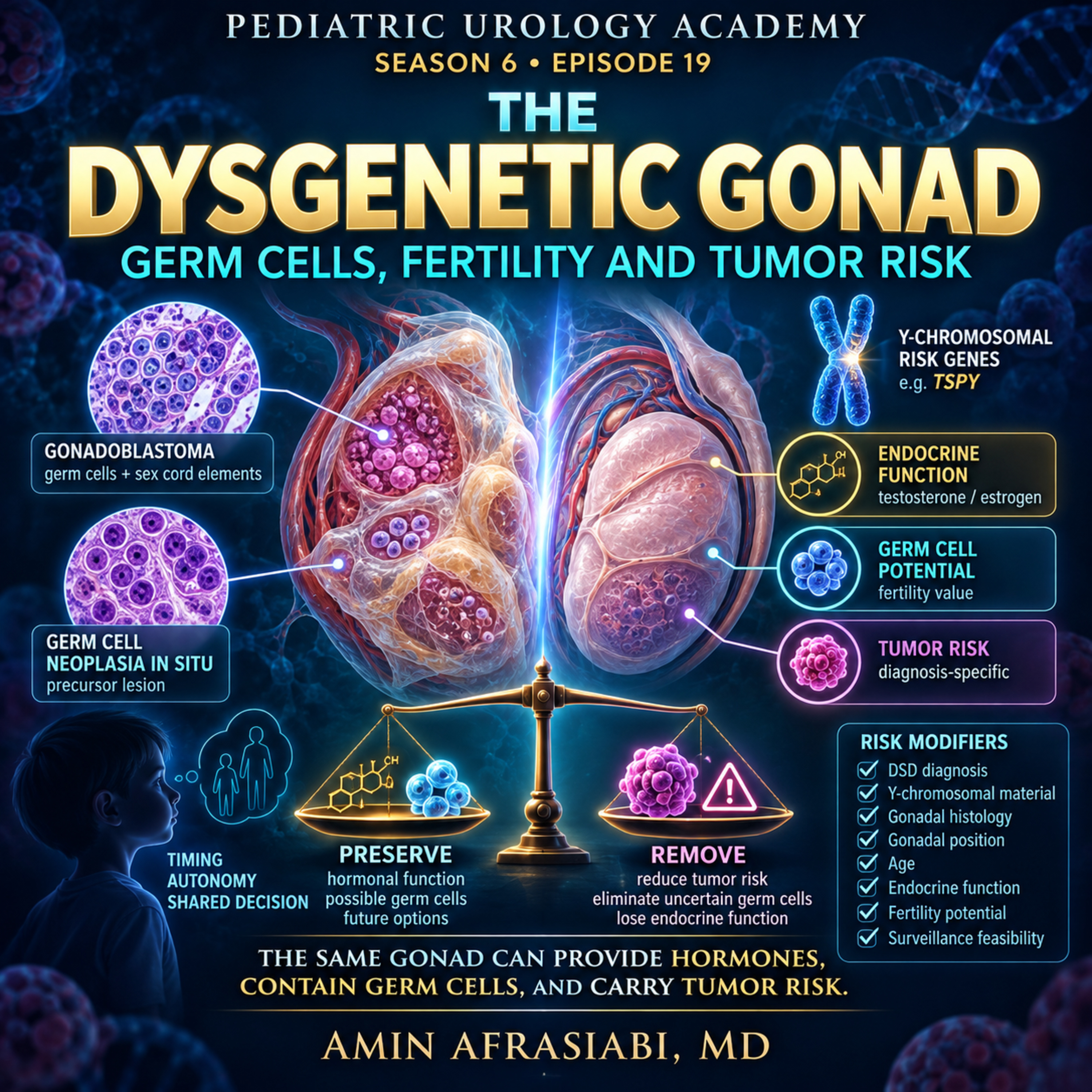 Season 6, Episode 19 — The Dysgenetic Gonad: Germ Cells, Fertility and Tumor Risk 19.10.2026 10mA dysgenetic gonad can contain hormonal function, potentially valuable germ cells, and oncologic risk at the same time.That is why the real question is not simply whether the gonad should stay or go.It is what biological value remains inside it—and what risk comes with preserving it.In this episode of Pediatric Urology Academy, we examine the dysgenetic gonad as three separate biological problems: endocrine function, germ-cell potential, and tumor risk.We explore:• why Y-chromosomal material alone does not determine malignancy risk• how abnormal germ cells, the dysgenetic gonadal environment, and genes such as TSPY interact• why tumor risk differs across complete gonadal dysgenesis, partial gonadal dysgenesis, mixed gonadal dysgenesis, androgen insensitivity, and other DSDs• how gonadal position, age, histology, and molecular diagnosis modify risk• the distinction between gonadoblastoma and germ-cell neoplasia in situ• why expert pathology is essential when evaluating dysgenetic gonads• why the presence of germ cells does not prove future fertility• how fertility preservation in prepubertal dysgenetic gonads remains investigational• why endocrine value must be considered before gonadectomy• the limitations of ultrasound, MRI, tumor markers, and biopsy for surveillance• why each gonad should sometimes be assessed independently• how delaying irreversible surgery can preserve autonomy when oncologic risk permitsThe central framework:Do not ask only whether a dysgenetic gonad is dangerous.Ask what function it still provides, what fertility potential it may contain, and what risk is created by leaving it in place.Season 6 — Differences of Sex Development: Reconstruct the BiologyHosted by Amin Afrasiabi, MDPediatric Urology Academy
-
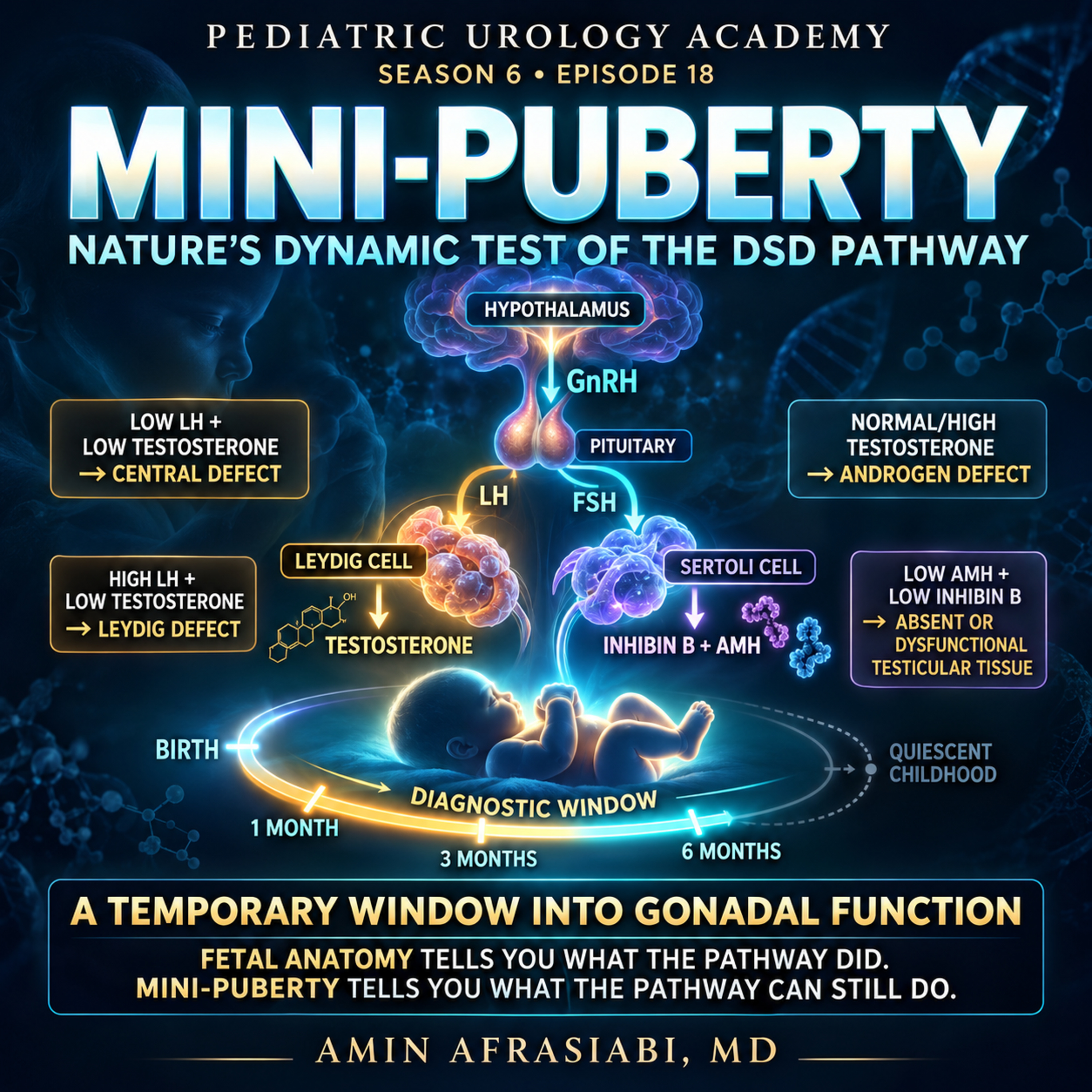 Season 6, Episode 18 — Mini-Puberty: Nature’s Dynamic Test of the DSD Pathway 18.10.2026 10mA newborn with a difference of sex development gives us anatomy.For a few months after birth, the endocrine system gives us something more valuable:function.Mini-puberty is a brief reactivation of the hypothalamic-pituitary-gonadal axis. During this window, LH and FSH rise, Leydig cells produce testosterone, Sertoli cells produce inhibin B and AMH, and the entire DSD pathway can be tested in real time.In this episode of Pediatric Urology Academy, we examine mini-puberty as a natural dynamic test rather than a passive developmental phase.We explore:• why anatomy records fetal development while mini-puberty reveals current gonadal function• how LH and testosterone together localize upstream versus Leydig-cell dysfunction• how normal or high testosterone with undervirilization shifts attention toward DHT metabolism or androgen action• how SRD5A2 deficiency, HSD17B3 deficiency, Leydig-cell hypoplasia, and androgen insensitivity may separate during this window• why AMH and inhibin B interrogate Sertoli-cell biology rather than androgen production• how mini-puberty can help distinguish functioning testicular tissue from anorchia• why congenital hypogonadotropic hypogonadism may be identifiable years before puberty• why age-specific reference ranges and assay quality are critical• why mini-puberty should not be treated as a perfectly standardized challenge test• how early gonadotropin therapy is being explored in selected infants with hypogonadotropic hypogonadism• why missing this window can mean losing years of diagnostic informationThe central framework:Fetal anatomy tells you what the pathway did.Mini-puberty tells you what the pathway can still do.Season 6 — Differences of Sex Development: Reconstruct the BiologyHosted by Amin Afrasiabi, MDPediatric Urology Academy
-
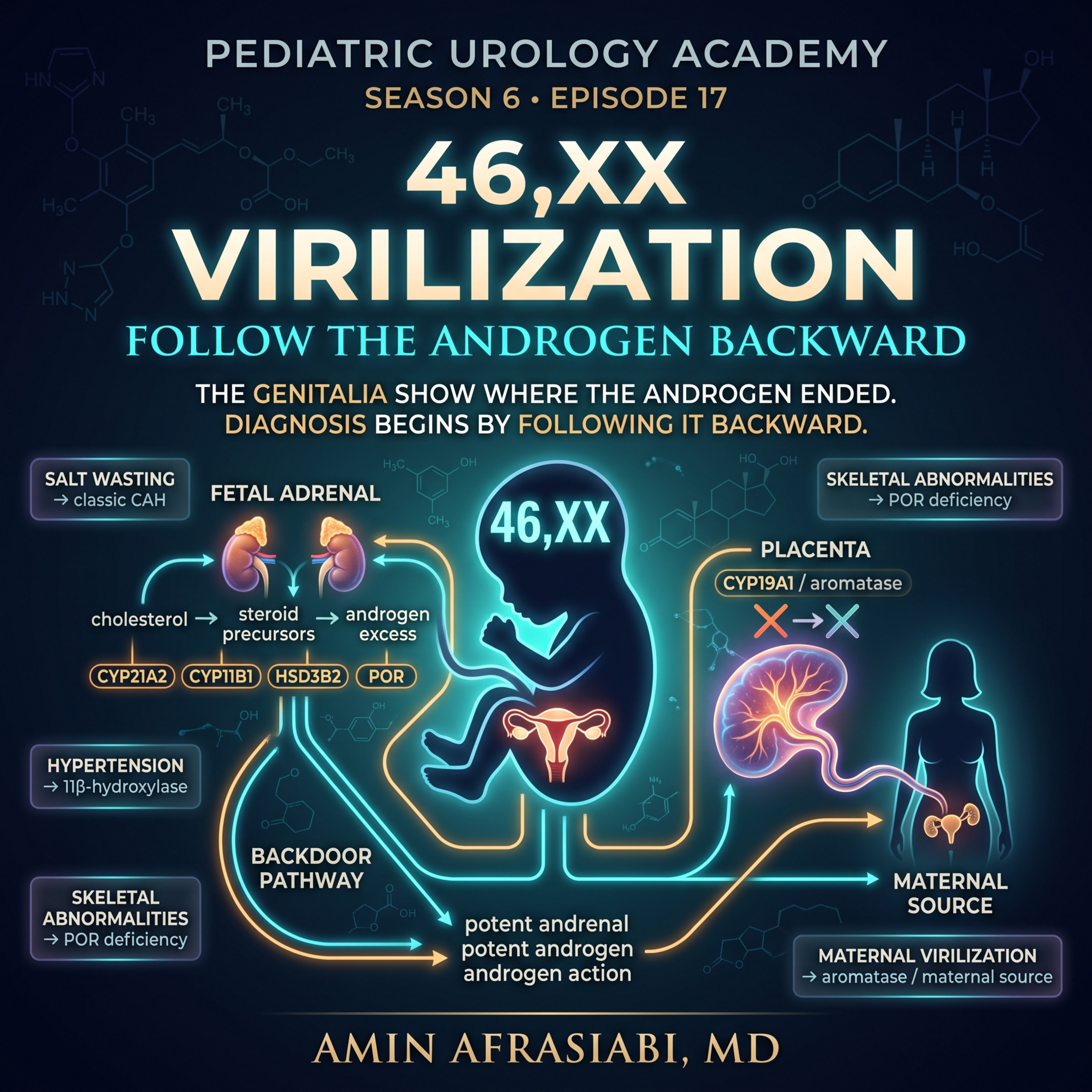 Season 6, Episode 17 — 46,XX Virilization: Follow the Androgen Backward 17.10.2026 10mA virilized 46,XX newborn with a uterus is not primarily a problem of testicular differentiation.It is a problem of prenatal androgen exposure.In this episode of Pediatric Urology Academy, we work backward from the phenotype to reconstruct where the androgen came from, when exposure occurred, and which steroidogenic pathway produced it.We explore:• why a uterus strongly shifts the diagnosis toward androgen exposure rather than fetal testicular development• why 21-hydroxylase deficiency remains the most important adrenal cause• how salt wasting can turn a genital finding into an endocrine emergency• why 11β-hydroxylase deficiency produces a different physiology, often with hypertension and hypokalemia• how HSD3B2 deficiency and POR deficiency alter steroid traffic• how backdoor androgen pathways contribute to 46,XX virilization• why maternal virilization during pregnancy can point toward aromatase deficiency or a maternal androgen source• why a normal postnatal androgen level does not exclude major prenatal androgen exposure• how internal Müllerian anatomy and external virilization record different developmental signals• how blood pressure, electrolytes, steroid precursors, maternal history, and skeletal findings can localize the source• why mass-spectrometry steroid profiling can be more informative than isolated hormone measurements• why endocrine stabilization comes before reconstructive decision-makingThe central framework:The genitalia show where the androgen ended.Expert diagnosis begins by following it backward.Season 6 — Differences of Sex Development: Reconstruct the BiologyHosted by Amin Afrasiabi, MDPediatric Urology Academy
-
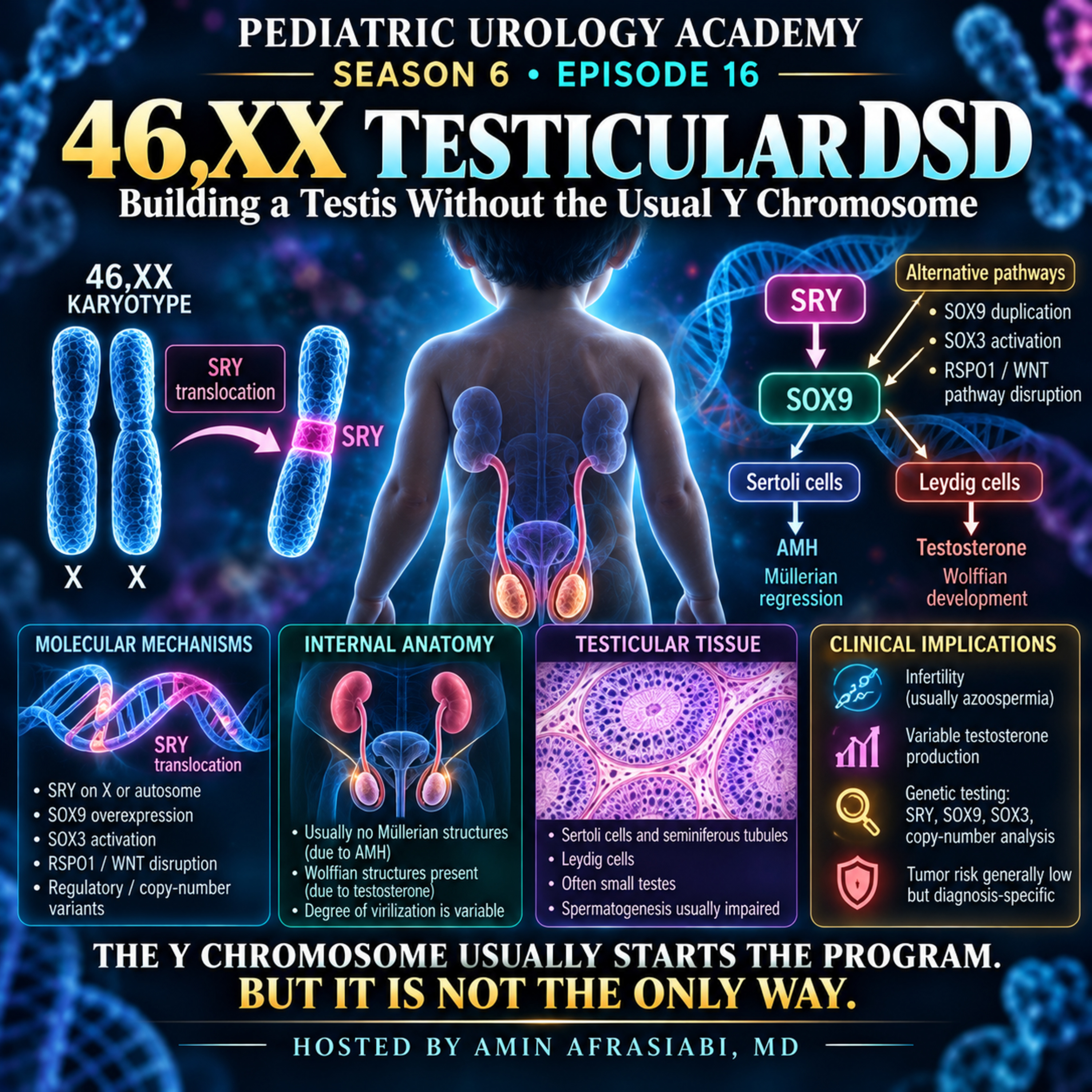 Season 6, Episode 16 — 46,XX Testicular DSD: Building a Testis Without the Usual Y Chromosome 16.10.2026 11mA child can have a 46,XX karyotype and still develop testes.That is only paradoxical if we assume the Y chromosome itself builds the testis.It does not.The Y chromosome usually provides the trigger. The testis is built by the downstream gonadal-determination network.In this episode of Pediatric Urology Academy, we examine 46,XX testicular DSD as a disorder of gonadal determination rather than androgen excess.We explore:• why SRY usually initiates testicular differentiation but is not the entire testicular program• how SRY translocation onto the X chromosome or an autosome can produce testes in a 46,XX individual• why SRY-negative 46,XX testicular DSD is biologically even more informative• how SOX9 overexpression can activate testicular differentiation without the usual Y chromosome• the role of SOX3 and other alternative routes into the testicular pathway• how weakening RSPO1/WNT ovarian signaling can shift the developmental balance toward testis formation• why regulatory and copy-number variants can be missed by conventional exon sequencing• why chromosomal microarray and broader genomic analysis may be necessary• how 46,XX testicular DSD differs from ovotesticular DSD• why testes can form while spermatogenesis still fails• why SRY-positive patients usually lack the larger Y-chromosomal regions required for normal sperm production• why endocrine function and fertility must be considered as separate biological outcomesThe central framework:SRY is usually the starter.SOX9 and the downstream network build the testis.The Y chromosome is the common route into that network, but it is not the only route.Season 6 — Differences of Sex Development: Reconstruct the BiologyHosted by Amin Afrasiabi, MDPediatric Urology Academy
-
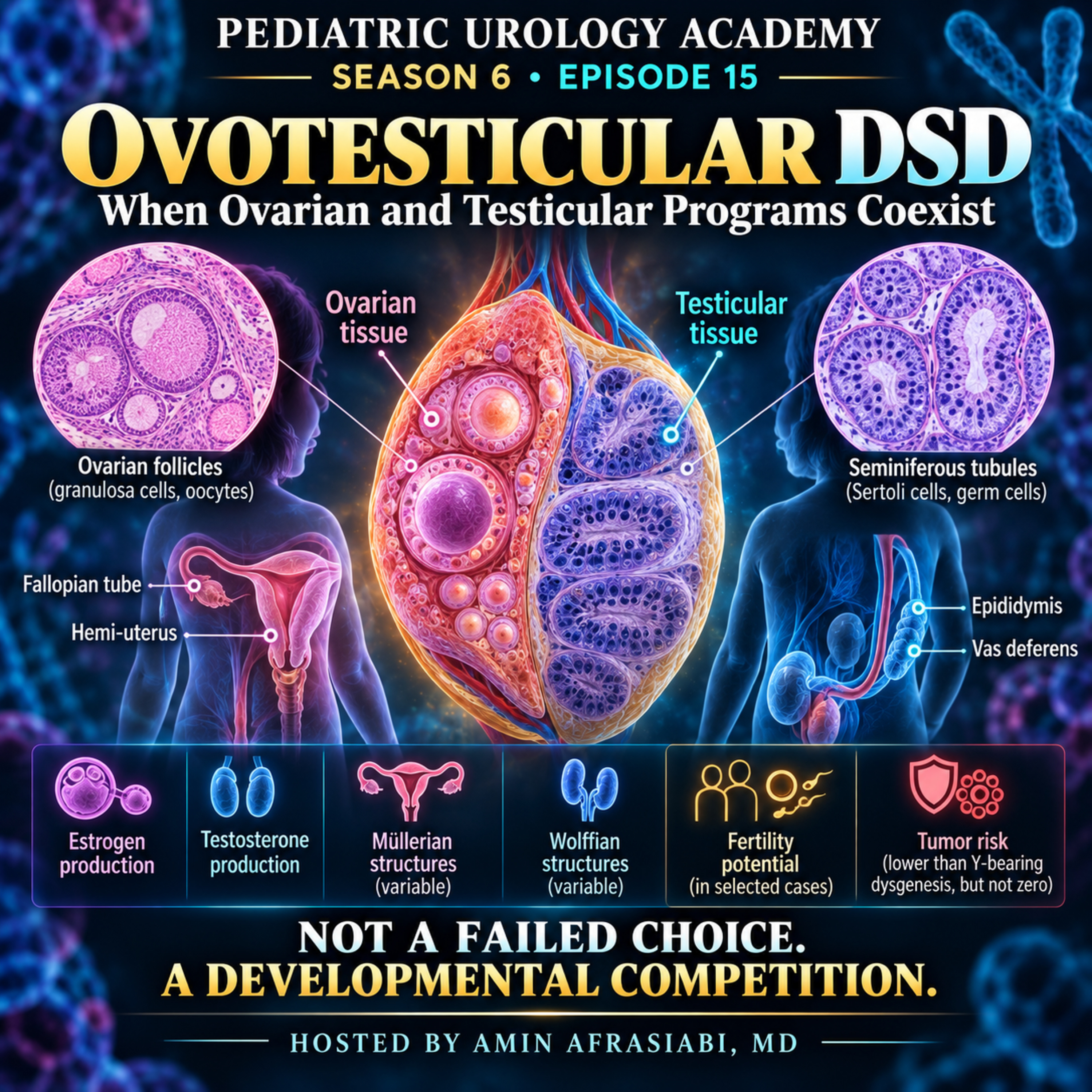 Season 6, Episode 15 — Ovotesticular DSD: When Ovarian and Testicular Programs Coexist 15.10.2026 10mA child can have ovarian follicles in one part of a gonad and seminiferous tubules in another.That is not developmental confusion.It is evidence that ovarian and testicular programs can coexist within the same individual—and sometimes within the same gonad.In this episode of Pediatric Urology Academy, we examine ovotesticular DSD as a problem of competing developmental networks rather than incomplete differentiation.We explore:• what truly defines ovotesticular DSD• why an ovotestis must contain genuine ovarian and testicular tissue• why follicles and seminiferous structures matter more than gross appearance• how 46,XX ovotesticular DSD can occur with or without SRY• the roles of SOX9, RSPO1, WNT signaling, and other regulators of gonadal fate• why internal Müllerian and Wolffian anatomy may be asymmetric• how ovarian and testicular tissue can remain endocrinologically active at puberty• why fertility potential should not automatically be dismissed• how tumor risk differs from Y-containing gonadal dysgenesis• why surveillance remains imperfect even when risk is relatively low• when selective gonadal preservation may be preferable to routine removal• why surgery should protect future endocrine, reproductive, and autonomous decision-makingThe central framework:The bipotential gonad is not controlled by one binary switch.It is governed by competing developmental programs.Ovotesticular DSD shows what happens when both programs remain biologically active.Season 6 — Differences of Sex Development: Reconstruct the BiologyHosted by Amin Afrasiabi, MDPediatric Urology Academy
-
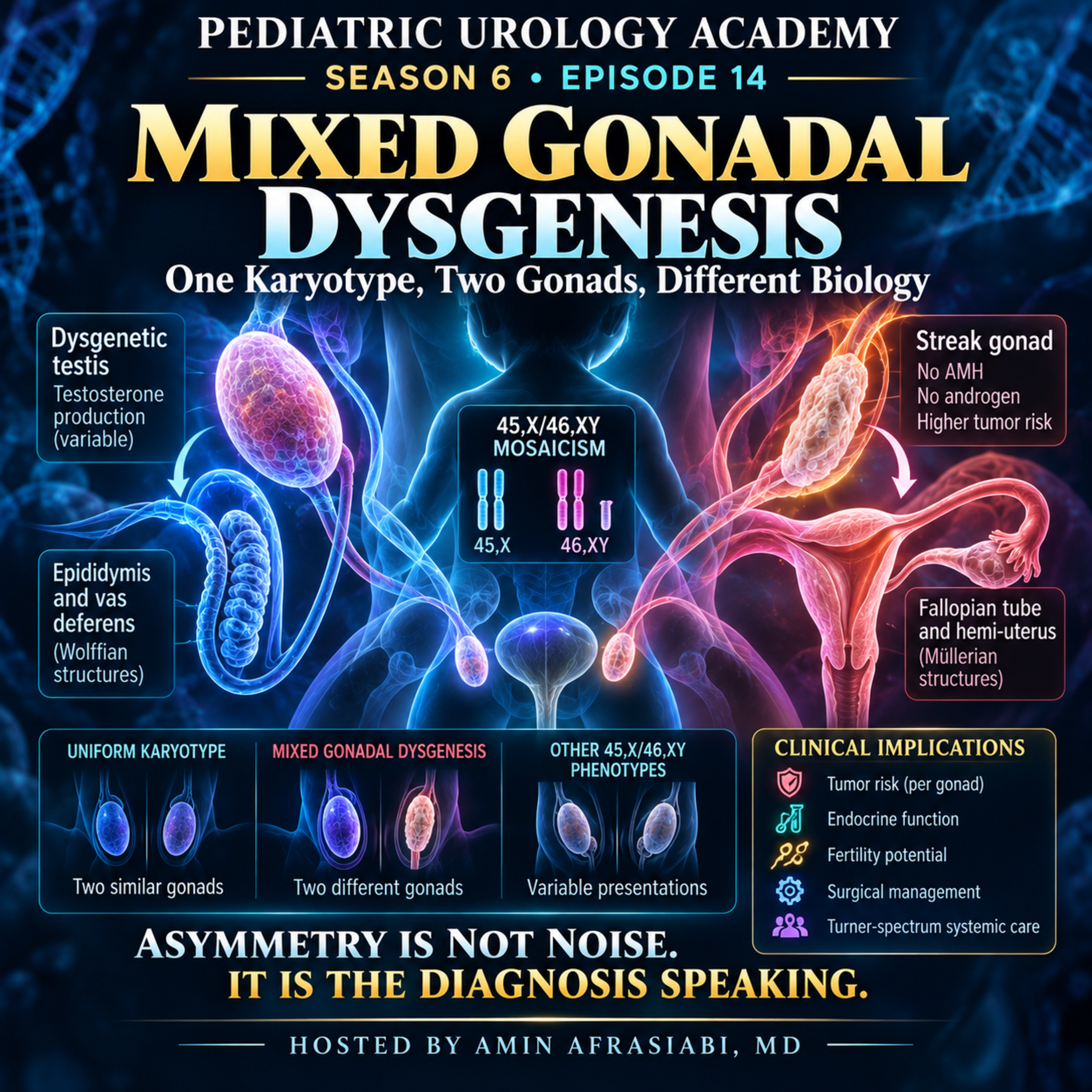 Season 6, Episode 14 — Mixed Gonadal Dysgenesis: One Karyotype, Two Gonads, Different Biology 14.10.2026 10mOne child can have a dysgenetic testis on one side and a streak gonad on the other.A hemi-uterus may persist beside one gonad while Wolffian structures develop beside the other.That asymmetry is not anatomical noise.It is developmental evidence.In this episode of Pediatric Urology Academy, we examine mixed gonadal dysgenesis as a disorder of spatially uneven gonadal development, most commonly within the broader spectrum of 45,X/46,XY mosaicism.We explore:• why 45,X/46,XY mosaicism is not synonymous with mixed gonadal dysgenesis• why blood mosaic percentage does not reliably predict genital phenotype• how the two gonads can follow completely different developmental trajectories• what a hemi-uterus reveals about local Sertoli-cell function• how Wolffian structures record side-specific fetal androgen exposure• why one functioning gonad can mask severe contralateral dysgenesis on serum testing• how to think about tumor risk separately for each gonad• why gonadal position, differentiation, histology, function, and surveillance feasibility all matter• how fertility and spontaneous puberty may depend mainly on the better-developed gonad• why Turner-spectrum cardiovascular, renal, growth, endocrine, and hearing issues must not be overlooked• how the operating room can be used to map the patient’s developmental history side by sideThe central framework:Do not think of mosaicism as a percentage.Think of it as a map.Season 6 — Differences of Sex Development: Reconstruct the BiologyHosted by Amin Afrasiabi, MDPediatric Urology Academy
-
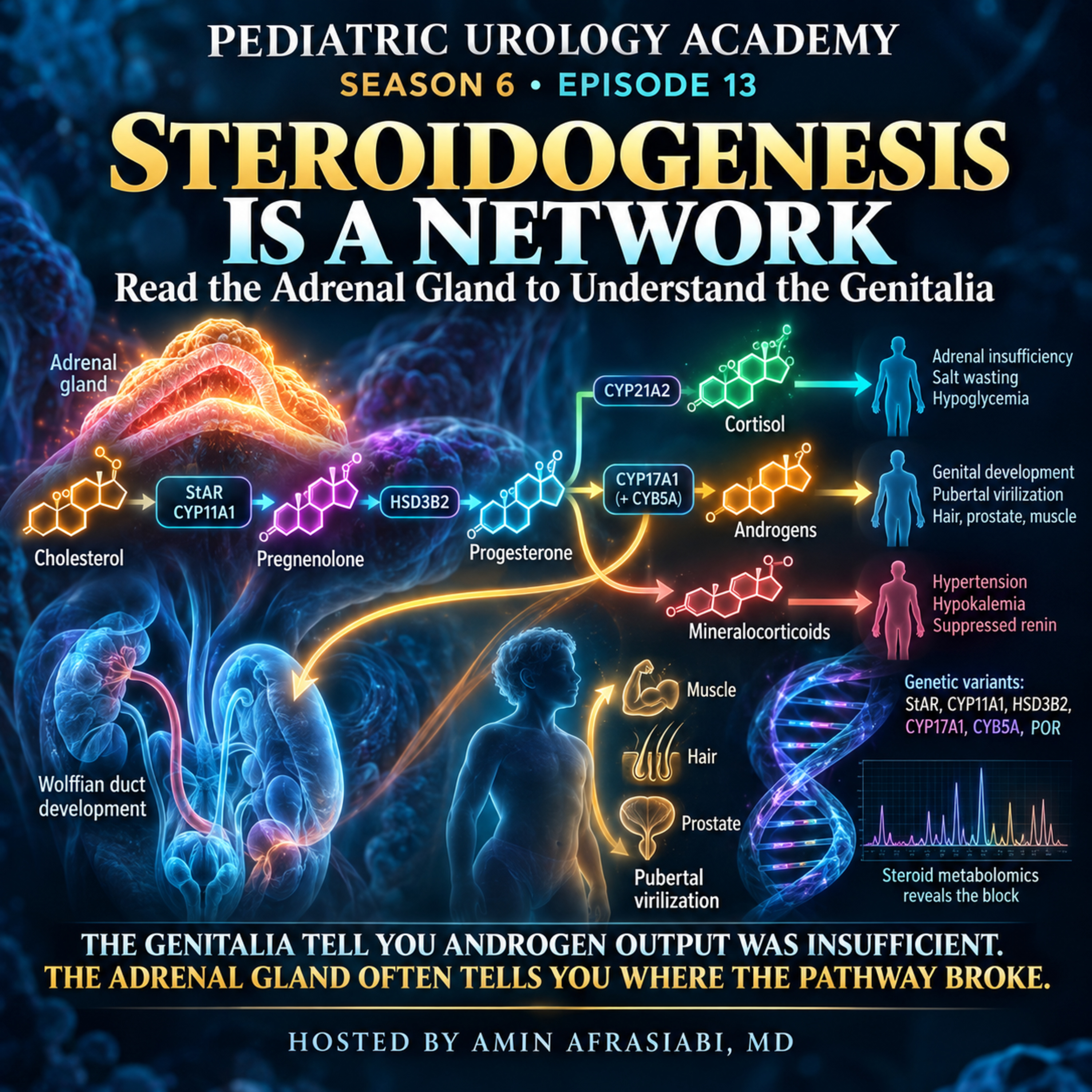 Season 6, Episode 13 — Steroidogenesis Is a Network: Read the Adrenal Gland to Understand the Genitalia 13.10.2026 9mA 46,XY child can be undervirilized because the testis cannot make enough androgen.But the same biochemical defect may also cause salt wasting, hypertension, hypokalemia, adrenal insufficiency, or skeletal abnormalities.Those extra findings are not side notes.They help localize where steroidogenesis failed.In this episode of Pediatric Urology Academy, we move beyond memorizing enzyme deficiencies and instead read steroidogenesis as a metabolic network.We explore:• why StAR and CYP11A1 defects can combine severe undervirilization with adrenal insufficiency• how HSD3B2 deficiency redistributes steroid traffic toward delta-5 precursors• why CYP17A1 deficiency can produce undervirilization with hypertension and hypokalemia• how isolated 17,20-lyase failure differs from combined CYP17A1 dysfunction• why CYB5A can selectively impair androgen synthesis while preserving other adrenal pathways• how POR deficiency disrupts multiple steroidogenic enzymes at once• why blood pressure, electrolytes, cortisol, and mineralocorticoid physiology are part of DSD localization• how urinary steroid metabolomics can reveal pathway-level bottlenecks• why genetics and biochemistry should be interpreted together rather than in isolationThe central framework:The genitalia tell you androgen output was insufficient.The adrenal gland often tells you where the pathway broke.Season 6 — Differences of Sex Development: Reconstruct the BiologyHosted by Amin Afrasiabi, MDPediatric Urology Academy
-
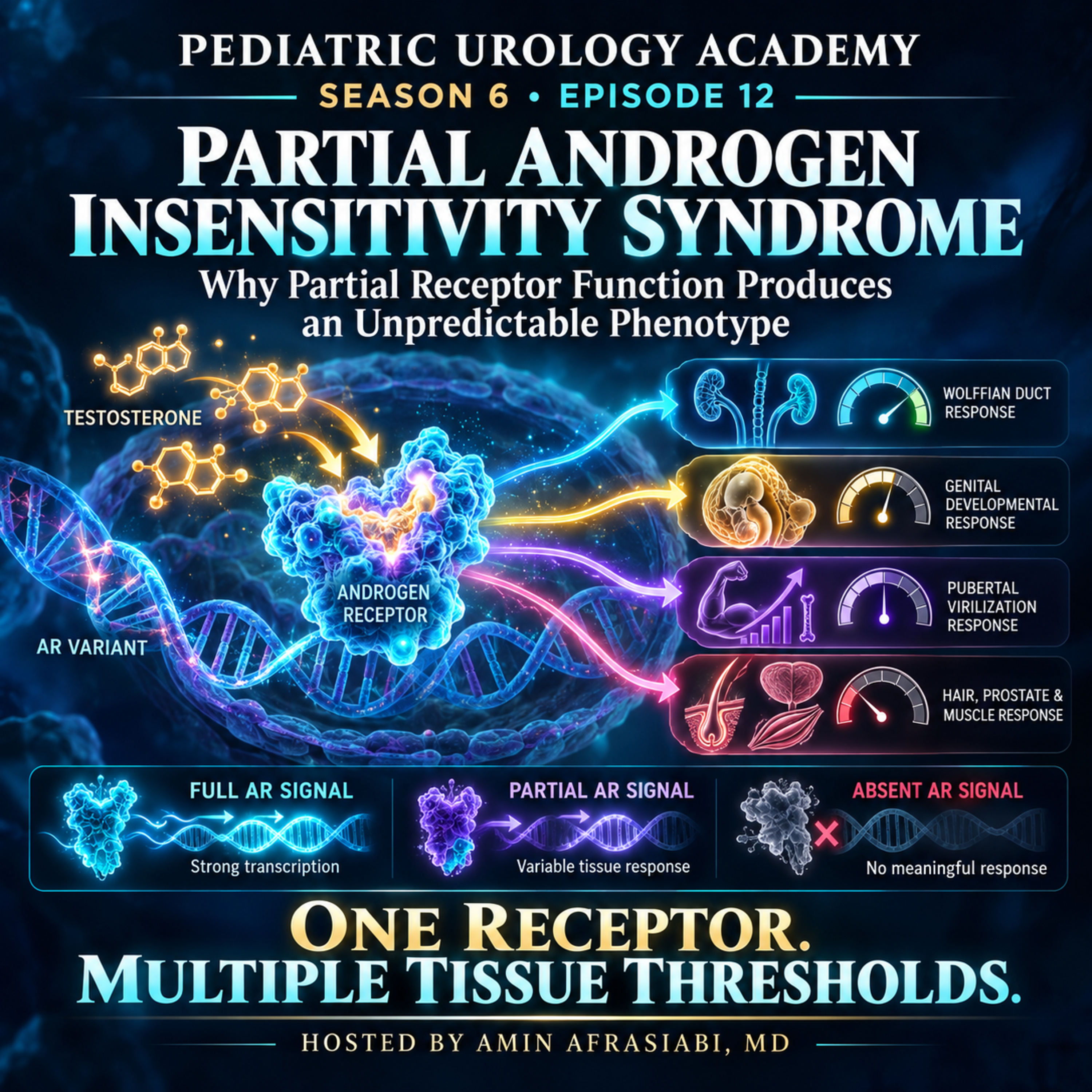 Season 6, Episode 12 — Partial Androgen Insensitivity Syndrome: Why Partial Receptor Function Produces an Unpredictable Phenotype 12.10.2026 10mTwo children can carry the same androgen receptor variant and still develop very different genital phenotypes.That is the central problem in partial androgen insensitivity syndrome.In this episode of Pediatric Urology Academy, we examine PAIS as a threshold disorder of androgen signaling rather than simply a milder form of complete androgen insensitivity.We explore:• why partial receptor function does not produce a uniform “partial” phenotype• how different tissues require different levels of androgen receptor activity• why testosterone may be normal or elevated despite inadequate virilization• how PAIS overlaps with gonadal dysgenesis, SRD5A2 deficiency, HSD17B3 deficiency, and other 46,XY DSDs• why even identical AR variants can produce markedly different phenotypes• how receptor expression, splicing, regulatory DNA, co-regulators, and other genes may modify androgen response• why a PAIS-like phenotype without a coding AR variant should not automatically be labeled PAIS• what androgen treatment can—and cannot—tell us about residual receptor function• why puberty acts as another physiological stress test• how gonadal management, tumor risk, fertility, reconstruction, and autonomy must be individualizedThe central framework:One receptor.Multiple tissue thresholds.Partial receptor function does not produce one predictable phenotype.Season 6 — Differences of Sex Development: Reconstruct the BiologyHosted by Amin Afrasiabi, MDPediatric Urology Academy
-
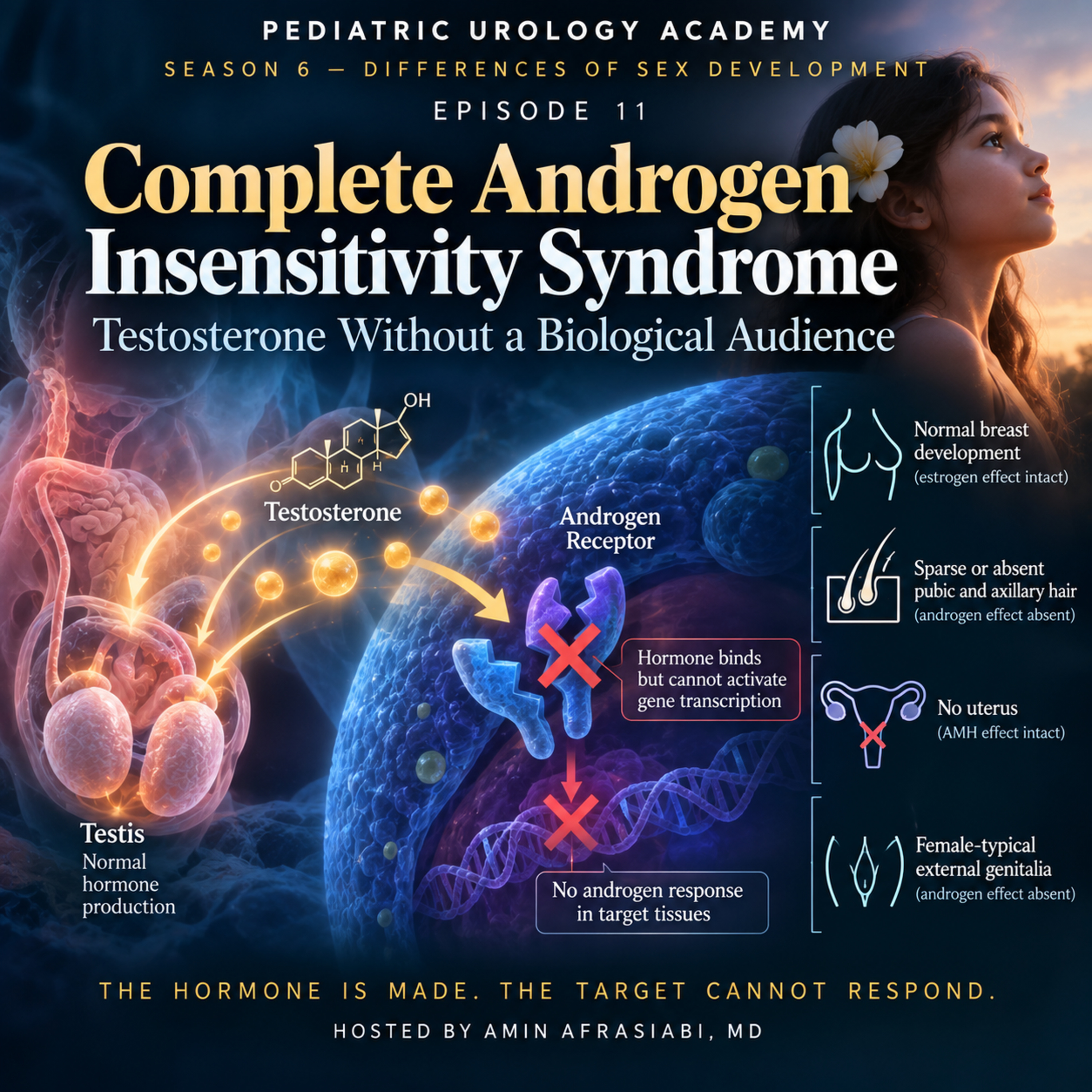 Season 6, Episode 11 — Complete Androgen Insensitivity Syndrome: Testosterone Without a Biological Audience 11.10.2026 11mA 46,XY child can have testes, no uterus, female-typical external genitalia, and normal or even high testosterone.The androgen is present.The target cannot respond.In this episode of Pediatric Urology Academy, we examine complete androgen insensitivity syndrome as a disorder of androgen action rather than androgen production.We explore:• why normal testosterone does not guarantee normal androgen effect• how preserved AMH explains Müllerian regression despite female-typical external genitalia• why Wolffian structures are often absent or poorly developed• how the androgen receptor converts hormone binding into gene transcription• why normal breast development can coexist with sparse pubic and axillary hair• how CAIS differs from Leydig cell hypoplasia, HSD17B3 deficiency, and SRD5A2 deficiency• why an inguinal testis in a phenotypic girl should trigger diagnostic reconsideration• how current evidence has changed the timing of gonadectomy• why prepubertal tumor risk appears low, but surveillance cannot eliminate uncertainty• how retained gonads, spontaneous puberty, hormone replacement, autonomy, and fertility preservation shape shared decision-makingThe central framework:The hormone is made.The target receives it.But the receptor cannot convert the signal into biological action.Season 6 — Differences of Sex Development: Reconstruct the BiologyHosted by Amin Afrasiabi, MDPediatric Urology Academy
-
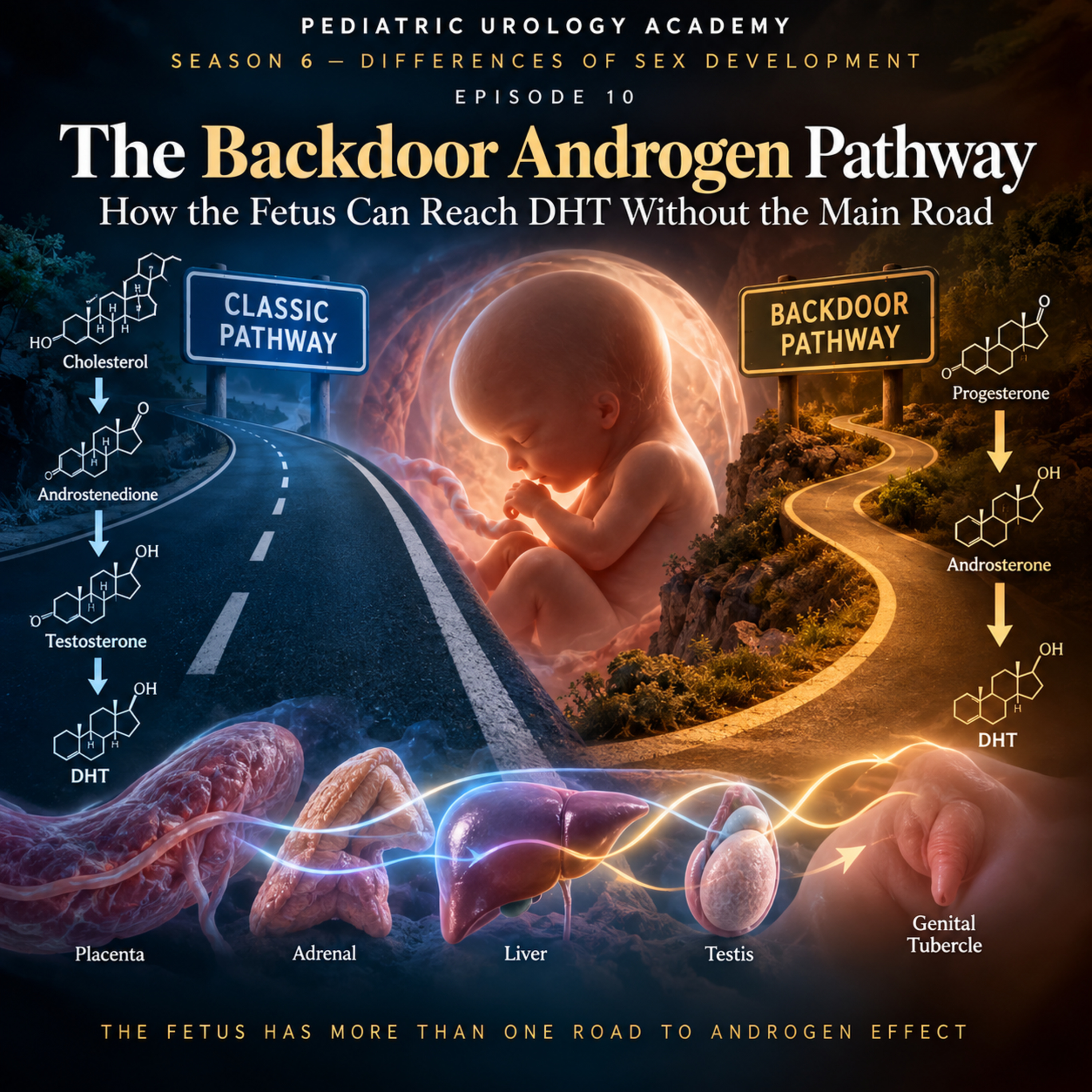 Season 6, Episode 10 — The Backdoor Androgen Pathway: How the Fetus Can Reach DHT Without the Main Road 10.10.2026 10mThe classic androgen pathway is not the whole story.A fetus can generate androgen effect through an alternative biochemical route that bypasses testosterone as the obligatory intermediate.In this episode of Pediatric Urology Academy, we examine the human backdoor androgen pathway and why it matters when genotype, serum hormones, and genital phenotype do not seem to fit neatly together.We explore:• how fetal tissues can reach DHT through more than one biochemical route• why serum testosterone does not fully represent androgen exposure at the target tissue• the role of androsterone in human fetal backdoor androgen biology• how AKR1C2 and AKR1C4 defects can produce 46,XY undervirilization• why POR deficiency can produce both 46,XY undervirilization and 46,XX virilization• how excess steroid precursors can be redirected through alternative androgen pathways• why placenta, adrenal, liver, testis, and peripheral tissues should be viewed as a distributed fetal steroidogenic system• when urinary steroid profiling and molecular testing become particularly useful• why the backdoor pathway should be used to localize biology, not as a catch-all diagnosisThe central framework:The classic pathway is the main road.The backdoor pathway is the side road.External genital development reflects the total androgen signal that reached the target during the critical developmental window.Season 6 — Differences of Sex Development: Reconstruct the BiologyHosted by Amin Afrasiabi, MDPediatric Urology Academy
-
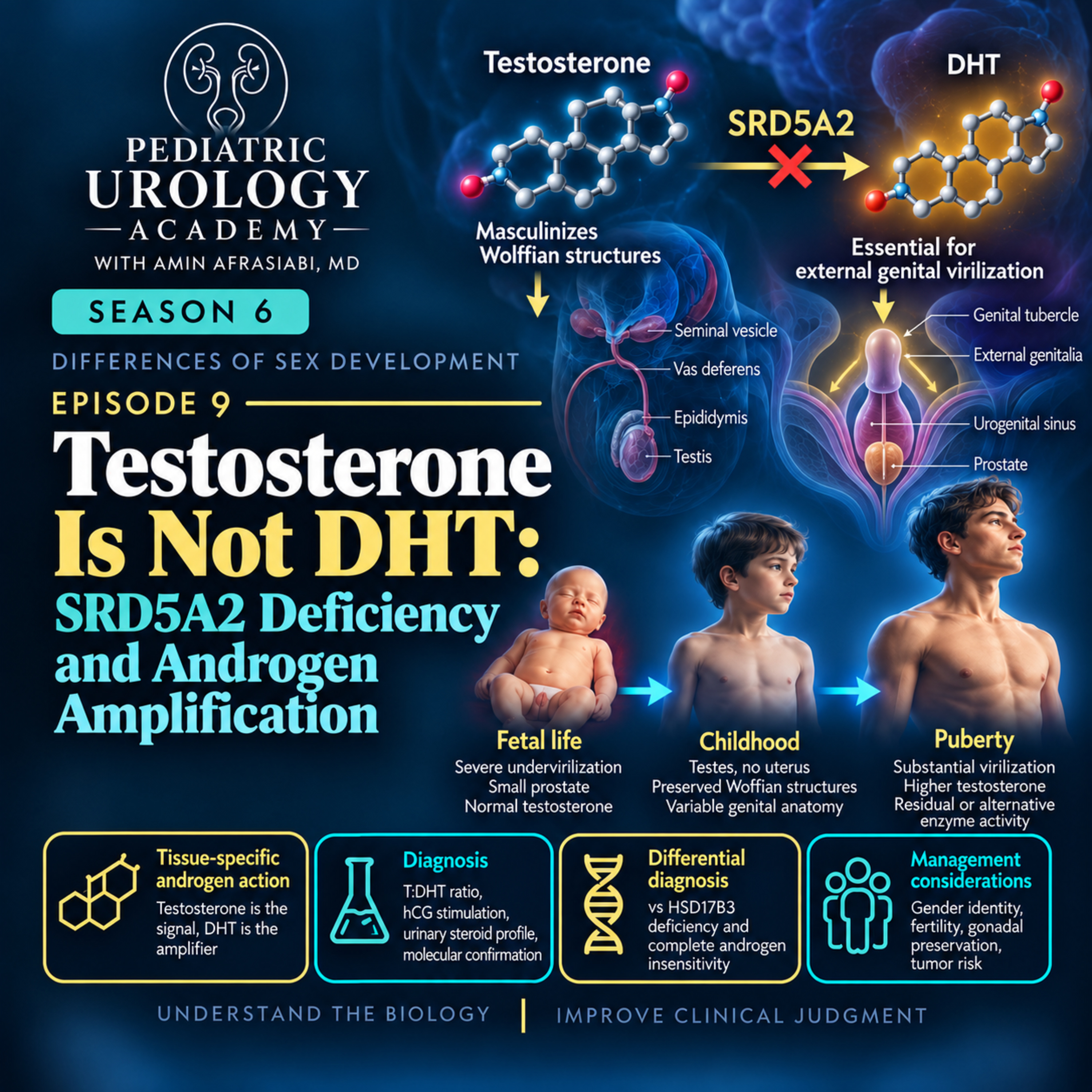 Season 6, Episode 9 — Testosterone Is Not DHT: SRD5A2 Deficiency and Androgen Amplification 09.10.2026 10mA 46,XY child can have testes, no uterus, preserved Wolffian structures—and markedly undervirilized external genitalia.The testosterone may even be normal.The missing signal is DHT.In this episode of Pediatric Urology Academy, we examine SRD5A2 deficiency as a disorder of tissue-specific androgen amplification rather than simply “low androgen.”We explore:• why testosterone and DHT are not biologically interchangeable• how Wolffian structures can masculinize while external genital virilization remains incomplete• why SRD5A2 acts as a local androgen amplifier during fetal development• how the testosterone-to-DHT ratio helps localize the defect, but cannot reliably confirm or exclude it• why hCG stimulation and urinary steroid profiling can add diagnostic information• how SRD5A2 deficiency differs from HSD17B3 deficiency and complete androgen insensitivity• why substantial virilization may occur at puberty despite severe fetal undervirilization• why puberty cannot recreate developmental windows that were missed in fetal life• what current evidence suggests about fertility, gonadal preservation, and tumor riskThe central framework:Testosterone delivers the androgen signal.DHT amplifies it in selected tissues.Season 6 — Differences of Sex Development: Reconstruct the BiologyHosted by Amin Afrasiabi, MDPediatric Urology Academy
Similar podcasts


Popular in
The podcast also appears in the podcast charts of these countries.
