
Sticky Notes: The Classical Music Podcast
Joshua Weilerstein
0
Sticky Notes is a classical music podcast that aims to make classical music accessible to everyone, from newcomers to lifelong enthusiasts. Hosted by Joshua Weilerstein, the show features interviews with great artists and in-depth explorations of pieces from the repertoire. It covers all eras of music with both basic and deep dives, emphasizing that classical music is for everyone. Seasons 1-5 are being re-recorded for improved sound quality and will be re-released.
Episodes
-
 Rachmaninoff Symphony No. 2 (Live with the Aalborg Symphony) 27.10.2026 1h 5mRachmaninoff's relationship with the symphony as a genre was famously complicated. The catastrophic premiere of his First Symphony is legendary: a badly prepared orchestra, a possibly drunk conductor, and critics who were ready to plunge a knife into the young composer's self-confidence and self-worth. The performance and the reviews that followed practically destroyed him, and it took three years before he began to compose again. His comeback piece was, amazingly, the Second Piano Concerto, which catapulted him to instant celebrity. Mobbed wherever he went, he desperately wanted peace and qui...
-
 Chopin Piano Sonata No. 2 (The One With the Funeral March) 15.10.2026 53mWhen the great pianist and composer Frederic Chopin decided to write a piano sonata in 1837, fashions had turned against the genre itself. Perhaps it was a feeling that Beethoven had essentially "finished" the genre, or perhaps it was a sense that a non-Germanic composer couldn't possibly master a form such as the Sonata, but Chopin's forays into the realm of the Piano Sonata were not generally appreciated. Robert Schumann famously said this about the Sonata: "The idea of calling it a sonata is a caprice, if not a jest, for he has simply bound together four of his most maddest children, thus u...
-
 Gerald Finzi: Dies Natalis 01.10.2026 51mAs I've often said, I love doing Patreon-sponsored episodes in part because they allow me to discover music I might never have encountered otherwise. Today's episode is one of those, because the truth is that before I made it, I had heard of Finzi, but that was about it. I knew nothing about the circumstances of his life or his music, and while I knew this was a hole in my musical knowledge, I hadn't had time to fill it. Well, thanks to Jillian, I got the time to explore this wonderful 20th-century composer's works, and now I'm ready to tell you about him, since I imagine his is an unfamiliar...
-
 Shostakovich Symphony No. 6 17.09.2026 1h 2mDmitri Shostakovich: "I have set myself a task fraught with tremendous responsibility, to express in sound the immortal image of Lenin as a great son of the Russian people and as a leader of the masses. I have received numerous letters from all over the Soviet Union with regard to my future symphony. The most important advice contained therein was to make considerable use of musical folklore." In the massively consequential year of 1939, Shostakovich used these words to launch his Sixth Symphony. The piece was meant to have soloists and a chorus alongside the orchestra — perhaps a nod to his S...
-
 Grieg: Peer Gynt 03.09.2026 1h 7mGrieg's Peer Gynt suites are among the best-known and best-loved works of classical music in the world. They are practically embedded into popular culture, being used in a dizzying number of cartoons, advertisements, and films. In the classical music world, as with Beethoven's 5th symphony, they have almost become a cliché, and they are often performed on so-called Pops concerts. The two big hits from Peer Gynt, Morning Mood and In the Hall of the Mountain King, are instantly recognizable to the general public, even if they don't know who wrote the music or where it comes from. And where all t...
-
 Mozart Clarinet Concerto 20.08.2026 51mWhen it comes to a piece like the Mozart Clarinet Concerto, a few words or phrases regularly come up: the concerto is described as "mellow" or Mozart's "swan song," but most often it is described as "perfect." Such a perfect piece as Mozart's Clarinet Concerto must have been hugely popular during Mozart's lifetime, right? It must have been played all over, by all the virtuoso clarinetists of the day. Well, that is not even close to the case. At the age of 35, Mozart was kind of old news in the economically depressed, repressed, and censored city of Vienna in 1790. There were very few concerts...
-
 Bohuslav Martinu Symphony No. 1 06.08.2026 1h 1mIt took a lot to make the composer and critic Virgil Thomson happy. He was famous for savaging new works he didn't like, and the truth is, he didn't like very many new works at all. One exception was Bohuslav Martinů's very first symphony, written in 1942. Thomson said this: "The Martinů Symphony is a beaut. It is wholly lovely and doesn't sound like anything else." The story of how this symphony came to be is as fascinating as the music itself, and it's perfectly in keeping with the relentless curiosity of Martinů as a composer. Martinů, a prolific composer who wrote nearly 400 works, had jus...
-
 Scriabin Poem of Ecstasy 23.07.2026 51mThence the universe resounds With a joyful cry I AM. These are the final lines of Alexander Scriabin's epic Poem of Ecstasy, a 300-line poem that takes nearly 10 minutes to read aloud and is one of the most surreal texts in the world. Scriabin wrote a Poem of Ecstasy in text and a Poem of Ecstasy in music simultaneously. Both are absolutely wild, with the musical Poem of Ecstasy being a 20-minute thrill ride that alternates between languid, sinewy, seductive music and some of the loudest, most over-the-top, and dramatic music that could possibly exist. I've always been fascinated by Scriabin,...
-
 Sibelius Tapiola 10.07.2026 47mAncient, mysterious, brooding savage dreams; Within them dwells the Forest's mighty God, And wood-sprites in the gloom weave magic secrets. These lines are affixed to the first page of Sibelius' tone poem Tapiola, a piece that is mysterious in many ways and stands as Sibelius' last completed major work. You might be expecting me to say that Sibelius died soon after its composition, but this is not the case. Sibelius wrote Tapiola in 1926, but did not pass away until 1957. Over the course of Sibelius' final 30 years, he wrote almost no music, a creative silence that has never been properly expl...
-
 Arthur Honneger, Symphony No. 3, "Liturgique" 25.06.2026 53mIn the aftermath of World War II, the Swiss composer Arthur Honegger, who had been living in occupied Paris throughout the war, wrote a new symphony entitled "Liturgical." He wrote an extended commentary on the piece, which included these lines: "My intention in this work was to symbolize the reaction of modern man against the morass of barbarism, stupidity, suffering, machine-mindedness, and bureaucracy that has been besieging us for some years now. I have reproduced in musical terms the combat that is joined in man's heart between yielding to the blind forces that encircle him and his instin...
-
 Dvorak Piano Quintet, Op. 81 11.06.2026 49mIn 1872, at the age of 31, Dvořák wrote a Piano Quintet designated as Opus 5. Dvořák was not a prodigy like some other famous composers; instead, his development as a composer was slow and steady. Later in his life, he would look back at some of these early pieces with a mix of nostalgia and embarrassment, burning some and revising others. In the case of the Op. 5 Piano Quintet, Dvořák decided to revise the piece in 1887, some 15 years after its original composition, at a point when he was approaching the peak of his creative powers. Soon, however, he cast aside the older quintet and decided t...
-
 Mozart String Quartet, K. 465, "Dissonance" 28.05.2026 49mYou might be wondering: why on earth would I choose a piece that is literally called "Dissonance" when I was looking for something a bit simpler or cleaner to talk about on the show today? Actually, Mozart's Dissonance quartet, probably his most famous and beloved quartet, was not called "Dissonance" by Mozart, and the rest of the piece is thought of as one of Mozart's most outgoing and cheerful works, though I think there's a bit more to it than that. This quartet was part of a set of quartets dedicated to his friend and mentor Joseph Haydn, the father of the String Quartet. Upon their public...
-
 Bonus Episode: Beethoven 5 en français! 15.05.2026 42mBienvenue dans cette édition spéciale du podcast Sticky Notes en français ! Aujourd'hui, nous parlons de la symphonie la plus célèbre du monde, et de la symphonie que nous allons interpréter à Lille les 21, 22 et 23 mai, la 5e symphonie de Beethoven. Et veuillez me pardonner pour toutes les erreurs de prononciation dans ma deuxième langue ! Bonne écoute ! »
-
 Liszt Faust Symphony 14.05.2026 1h 3mThank you to Jerry for sponsoring today's episode on Patreon! Goethe's Faust is considered to be the greatest work of German literature. This sprawling, 2-part play occupied Goethe's life for nearly 60 years, from its original version, begun in 1772, all the way to Goethe's final revisions before his death. It inspired just about every Romantic era composer who came after it, including Beethoven, Schubert, Schumann, Brahms, Berlioz, Gounod, Mahler, and our subject for the show today, Franz Liszt. Liszt, who was in many ways the world's first pop star, was initially skeptical of Faust, saying t...
-
 Schubert: Die Schöne Mullerin Mini-Episode No. 1 (Free Preview) 08.05.2026 6mThis is a free preview of my new series of mini-episodes over on Patreon all about Schubert's Die Schöne Mullerin, one of the great masterpieces of the 19th century. Each week we'll explore one song from the cycle, in a series of 21 episodes! Come join us over on Patreon.com/stickynotespodcast and thanks for listening!
-
 Wagner: Prelude and Liebestod from Tristan and Isolde w/Case Scaglione 01.05.2026 50mThis is a continuation of my new series where I learn about a new piece from a great friend/musician. This week I'm thrilled to welcome Case Scaglione, the Music Director of the Orchestre National D'Ile de France, for a discussion of the Prelude and Liebestod from Wagner's Tristan and Isolde. This is one of the most beloved pieces in the entire repertoire, and my longtime skepticism of Wagner has always kept me away. But Case has such a beautiful way of talking about Wagner that I might very well be convinced to give it another shot! This is a really fun and also philosophical episode - I hope...
-
 Lili Boulanger: Psalm 130 16.04.2026 46mThe story of Lili Boulanger's life is one of the most fascinating and tragic in all of musical history. A remarkably precocious talent, Boulanger learned to read sheet music before the alphabet, played the violin, piano, cello, and harp, and composed regularly from a young age. Despite her talent and commitment, Boulanger suffered from chronic illness her entire life, which severely dampened her budding career and prevented her from reaching her potential. She died at the age of just 24, likely from Crohn's disease, and left behind several spectacular pieces that unfortunately were soon relati...
-
 Tchaikovsky Symphony No. 6 (Part 2) 02.04.2026 48mIn a letter to Tchaikovsky's nephew Vladimir Davydov, Tchaikovsky wrote: "I'm very pleased with its content, but dissatisfied, or rather not completely satisfied, with the instrumentation. For some reason it's not coming out as I intended. It would be typical and unsurprising if this symphony were torn to pieces or little appreciated, as that wouldn't be the first time such a thing had happened. But I absolutely consider it to be the best, and in particular the most sincere, of all my creations. I love it as I have never loved any of my other musical offspring." I'm returning to that word sinc...
-
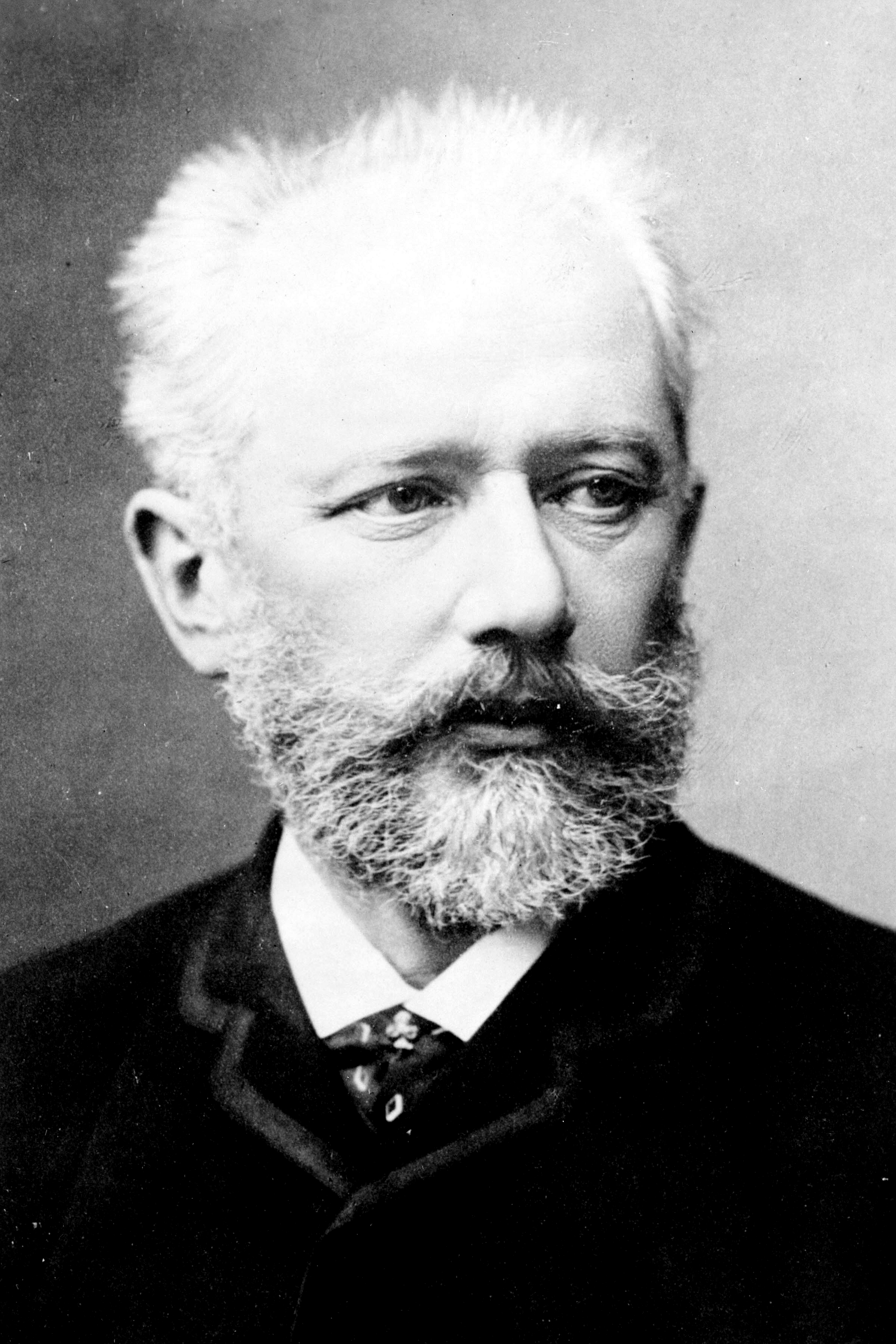 Tchaikovsky Symphony No. 6 (Part 1) 21.03.2026 50mThe great and somewhat controversial conductor Leopold Stokowski said this about Tchaikovsky: "His musical utterance comes directly from the heart and is a spontaneous expression of his innermost feeling. It is as sincere as if it were written with his blood." I couldn't agree more with Stokowski, because I think he hits on a word that has made Tchaikovsky's music so powerful to almost every audience that encounters it: sincere. Tchaikovsky's music is so profoundly moving because you feel as if there is no gap between the music and Tchaikovsky's emotions. It's as if he is earnestly speaking to...
-
 Beethoven String Quartet, Op. 59, No.2 05.03.2026 56mI'm always tickled by composer trivia questions, like which standard canon works begin in a major key and end in a minor key? I'll give you one, but please comment others below: Mendelssohn's 4th Symphony. Well, how about this one: how many of Beethoven's 16 string quartets end in a minor key? The answer? Just one, Op. 59, No. 2, the subject of today's show. And that minor key is hugely important to this darkest of the three Op. 59 quartets, three towering achievements that changed the string quartet repertoire for good. Beethoven, as I've said many times on the show, was a revolutionary withi...
Similar podcasts


Popular in
The podcast also appears in the podcast charts of these countries.


