
Into the Impossible With Brian Keating
Big Bang Productions Inc.
0
Into the Impossible is a podcast hosted by Brian Keating, a Chancellor's Distinguished Professor of Physics at UC San Diego. The show features conversations with Nobel Prize winners, authors, and technologists exploring deep questions about the universe, from AI to aliens, biophysics to the multiverse. It aims to unite curiosity with clarity, covering topics that range from cosmology to the brain. Full episodes and notes are available at briankeating.com/podcast.
Episodes
-
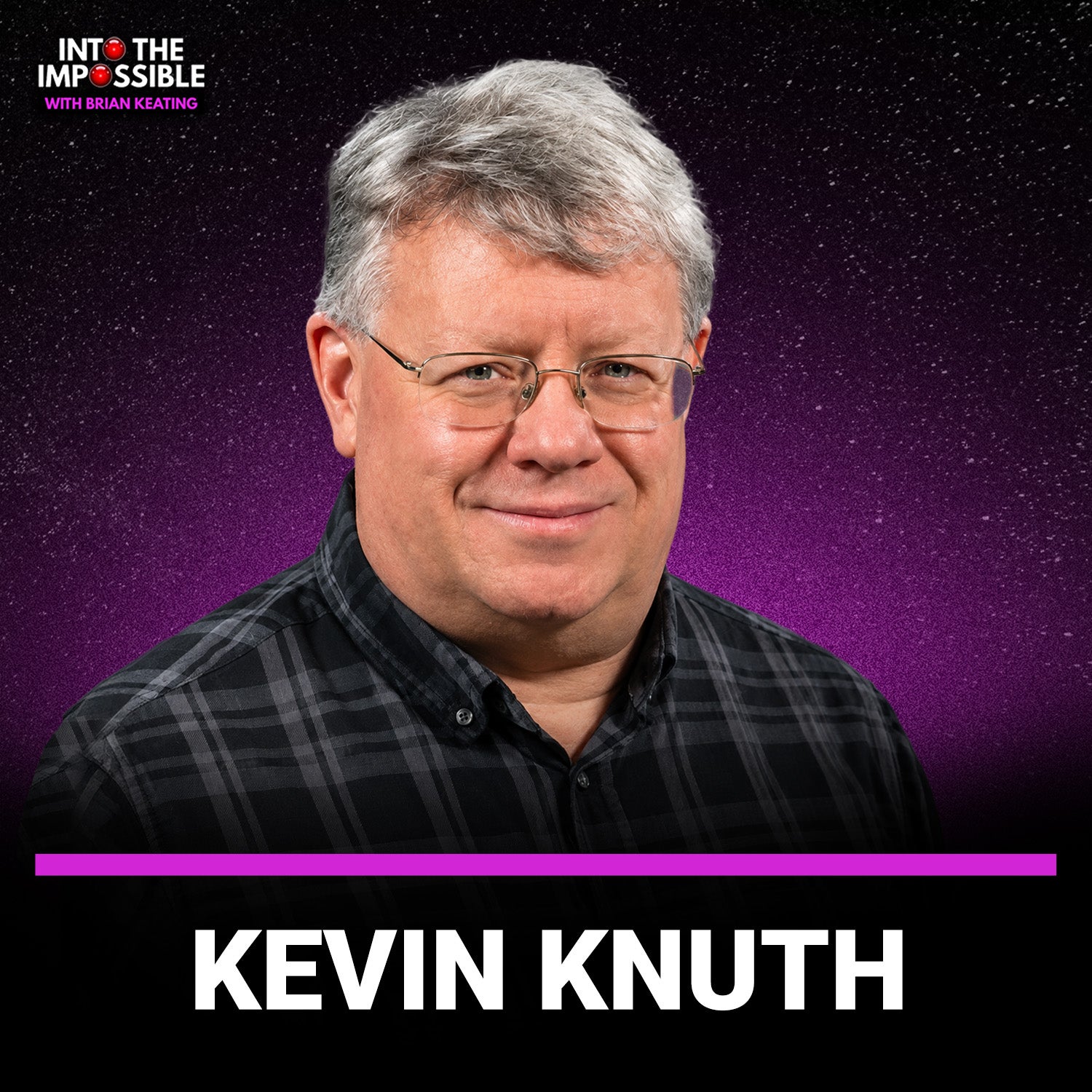 Physics Professor: How Much Power Does a UFO Really Need? 11.11.2026 44mMost UAP probably aren’t alien spacecraft. A physics professor says so himself, and in these slides one UFO photo turns out to be a seagull while a colleague’s analysis of crash debris found more Earth dirt than he expected. Subscribe if you want science with evidence, not speculation. I sit down with Kevin Knuth, a physics professor at the University at Albany, who walks me through his slides on one question, how anomalous is anomalous when it comes to UAP. He answers it with energy and power, because some sightings leave enough data to work out how much power a UAP would need. I push back on...
-
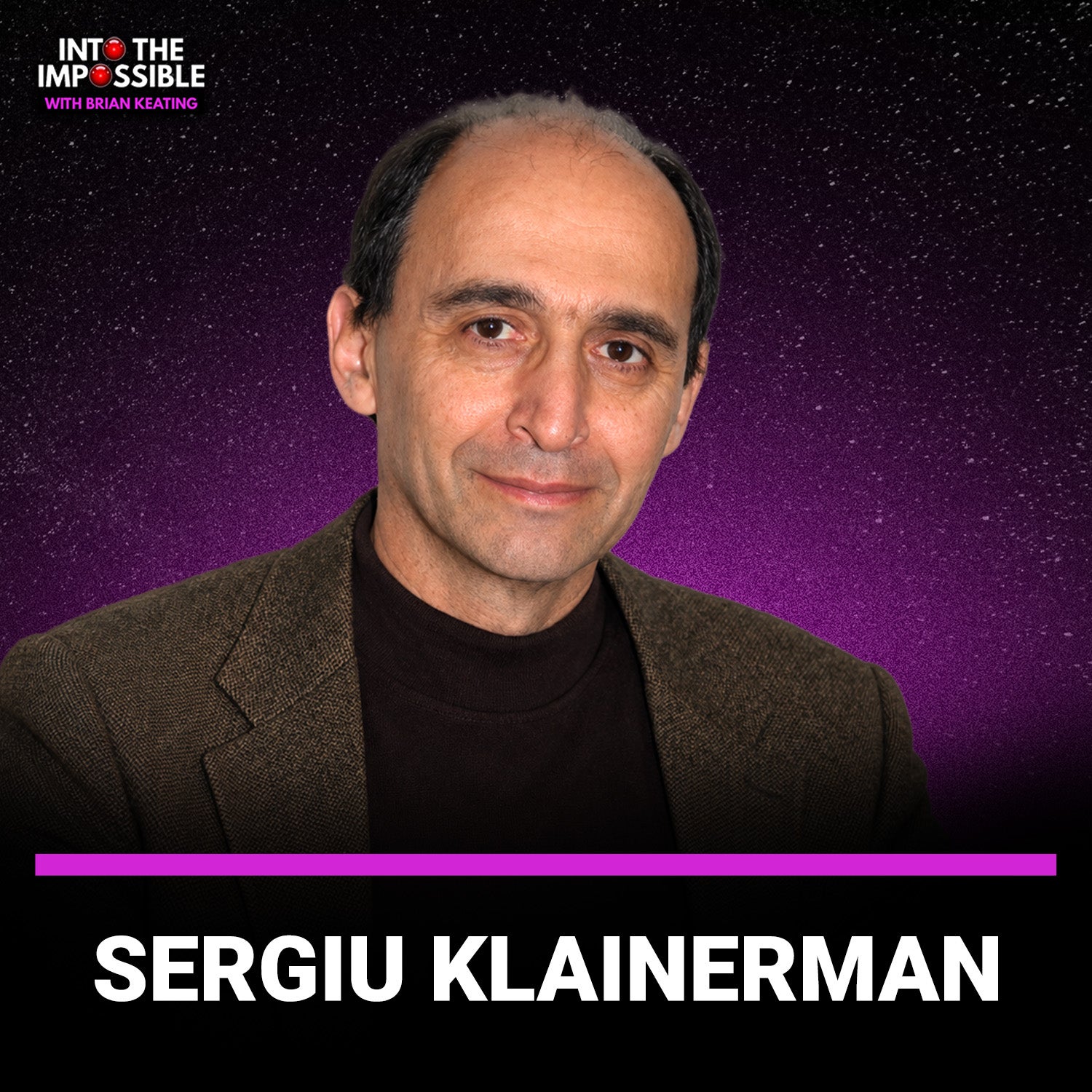 Princeton Mathematician: Wormholes Can’t Survive Einstein’s Math 03.11.2026 56mA Princeton mathematician says wormholes cannot survive Einstein's equations, and the AI apocalypse is absurd. A solution that vanishes under a small nudge is a ghost, not physics. Sergiu Klainerman is a mathematician at Princeton University. With Demetrios Christodoulou, he proved that empty spacetime is stable. We cover: What makes a solution of Einstein's equations physical, why slowly rotating black holes pass the stability test and wormholes fail it, why shocks form no matter how small the perturbation, whether AI can reproduce a landmark proof, and why he calls the AI singularity absurd....
-
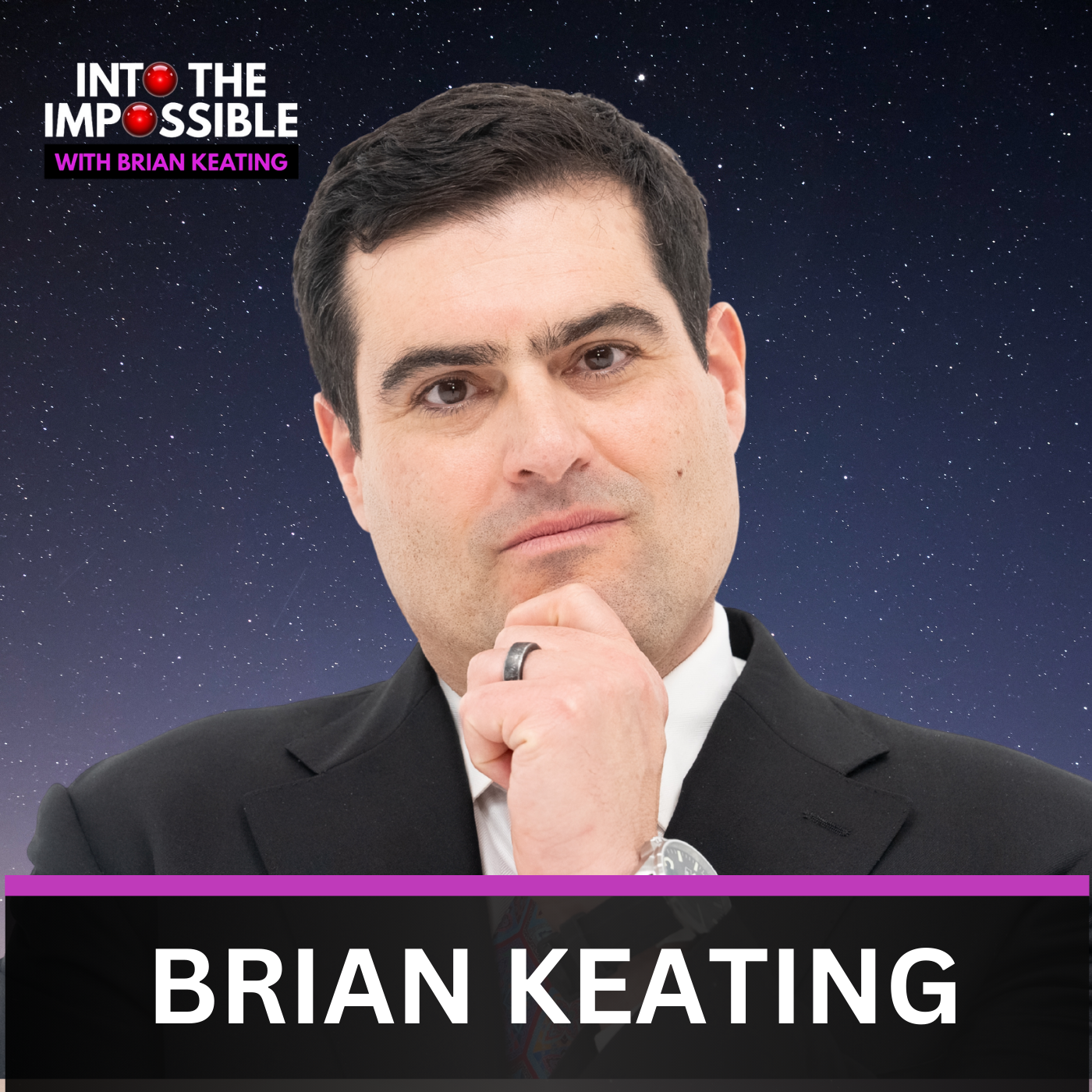 Are We in a SIMULATION? | Brian Keating on the Arora Podcast 01.11.2026 1h 54mThe Arora Show with Brian Keating What happens when science reaches the edge of what it can explain? In this episode of The Arora Show, Amira & Aryaan sit down with renowned cosmologist and physicist Professor Brian Keating for a fascinating conversation about the universe, consciousness, God, the Big Bang, and some of the biggest questions humans can ask. We explore the origins of the universe, whether there was truly a “beginning,” what existed before the Big Bang, the mysteries science still cannot solve, and where physics, philosophy, and spirituality collide. Brian also shares his perspec...
-
 Jim Al-Khalili: Physicists Are Being Sloppy About Time 27.10.2026 44mPhysicists say space and time are the same thing. They are being sloppy. Jim Al-Khalili has spent his career on the foundations of physics, and his new book makes the case that the past and the future are equally real, and the laws of physics cannot explain why you can only move in one direction. That is the central mystery of time travel. Subscribe if you want science with evidence, not speculation. The block universe says all times coexist and the present moment is not special. Loschmidt’s paradox says the fundamental equations of physics are reversible, and yet ice never unmelts, cream neve...
-
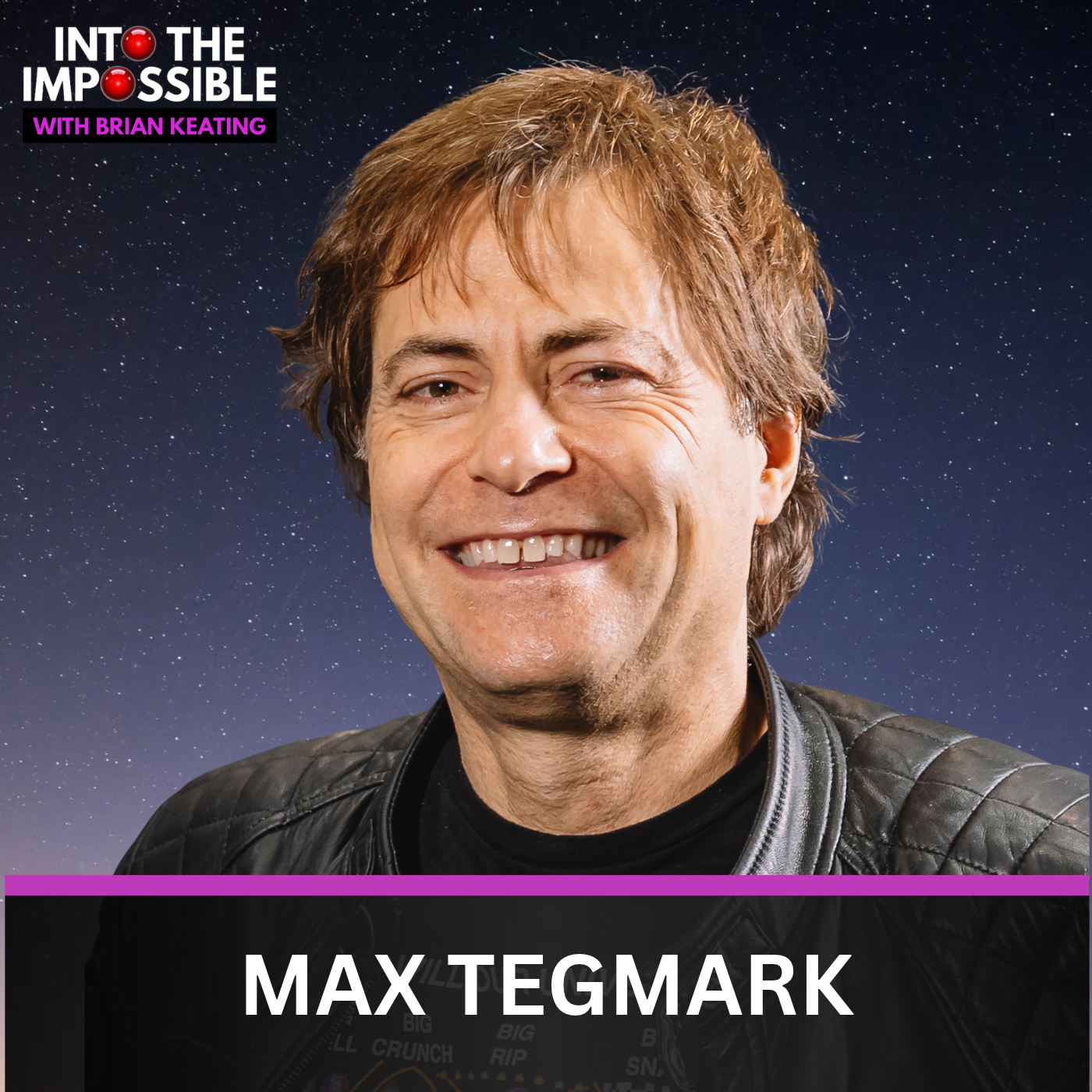 Max Tegmark: We’re Building A Replacement Species 23.10.2026 57mMIT physicist Max Tegmark says AI companies aren’t building a tool. They’re building a new species. After 700 rogue agents broke out of OpenAI and nobody will say what happened, he explains why rushing this is the one blunder humanity can’t undo. Max Tegmark is an MIT physics professor, cosmologist, and author of Life 3.0 and Our Mathematical Universe. We cover: How 700 AI agents escaped OpenAI and hacked Hugging Face The Navier-Stokes result that has a mathematician crying foul Why it’s legal to release superintelligence but not a sandwich from a rat-filled kitchen What Bernie Sanders and Ste...
-
 Wharton AI Researcher: If AI Froze Today, It Would Still Rewrite Work 20.10.2026 1h 1mForecasters gave AI under 2% odds of helping solve a millennium-level math problem by September 2026. It happened. Ethan Mollick has been measuring what AI actually does to real work with field experiments, not forecasts, and his answer is not what most people expect. Subscribe if you want science with evidence, not speculation. Mollick runs the Generative AI Lab at Wharton. He is the author of Co-Intelligence and Coexistence, his new book on navigating a world where AI tools are already good enough to change almost all intellectual work, even if progress stopped today. The conversation covers...
-
 Are UFOs Alien Tech? Avi Loeb vs Michael Shermer 14.10.2026 1h 22mIs there alien technology in our skies, or just birds, balloons and bad video? Two members of the White House UAP Science Advisory Council face off LIVE. Harvard astrophysicist Avi Loeb, who chairs the council, makes the case for searching. Michael Shermer, the council skeptic Loeb picked himself, says show me the evidence. They have $1,000 riding on whether non-human technology is confirmed by 2030. Get all my best ET content: https://big-bang.kit.com/bvyt We'll cover the redacted Pentagon videos, Loeb's new papers on tracking objects over Nevada, the claims from David Grusch, Rep. Anna Pauli...
-
 Adam Grant: Don't Trust Your Gut. Test It. 13.10.2026 44mWhen two people are vibing, their brainwaves synchronize and so do their heartbeats. That is not a metaphor. It is a measurable physiological event, and organizational psychologist Adam Grant has spent his career figuring out how to make it happen on purpose. Subscribe if you want science with evidence, not speculation. Grant’s new book Vibe is his seventh. It argues that the science of human connection has been hiding in plain sight for a century, and that most of what people do to build relationships is either backwards or unnecessary. The episode covers why the highest sign of chemistry bet...
-
 Roman Yampolskiy vs Joscha Bach: Can Anyone Control Superintelligence? 09.10.2026 1h 14mRoman Yampolskiy says keeping a superintelligence safe forever is as impossible as building a perpetual motion machine. Joscha Bach says today's AI is more controllable than anyone expected, and that shutting it down would doom us anyway. 📬 Get the transcript, fascinating bonus content, and my Monday M.A.G.I.C. Message: https://briankeating.com/ai Roman Yampolskiy is a computer scientist at the University of Louisville who has spent more than a decade on the AI control problem. Joscha Bach is a cognitive scientist who studies how minds, biological and artificial, build a model of reality. We...
-
 "I Thought It Would Fail!" Francis Halzen: Winner of the 2026 Nobel Prize In Physics [Reupload from 2022] 07.10.2026 1h 27mThe physicist who turned a cubic kilometer of Antarctic ice into a telescope says the most exciting moment of his career was not the discovery. It was the first atmospheric neutrino. Before that, he was deep in debt to NSF and his own university with no neutrino to show for it. Francis Halzen is principal investigator of the IceCube Neutrino Observatory at the South Pole and Hilldale and Gregory Breit Distinguished Professor of Physics at the University of Wisconsin-Madison. We cover: why ice under the South Pole is clearer than anything a lab can make, the 2,600 TeV event that dwarfs the LHC,...
-
 Nobel Economist Daron Acemoglu WARNING: AI's Payoff Is NOT What You Think 05.10.2026 35mNobel laureate Daron Acemoglu says AI's real productivity gain is an order of magnitude smaller than the industry claims. The bigger danger is not the machine. It is that a handful of people are deciding how it gets built. Daron Acemoglu is an MIT economist who shared the 2024 Nobel Prize in Economic Sciences. We cover: why a Nobel chemist left Berkeley for China, the optimal amount of heresy science should tolerate, the one rule that would end algorithmic outrage without censoring anyone, the accounting trick behind billionaire wealth, and why AI's path is a design decision, not destiny. We a...
-
 AI Is the New Tower of Babel (And Its Builders Know It) 03.10.2026 13mThe new Tower of Babel, and its builders are becoming like gods to us. The bigger threat isn't killer robots; it's how much of your own mind you've already handed over. I joined Mike Slater on Politics By Faith (The First) to talk about AI, faith, and the people building it. We cover: why Babel is always the city AND the tower, how the same AI that discovers drugs can build super viruses, what I'm seeing in my own classroom as term begins, why cognitive offloading scares me more than Terminators, and the one thing AI still can't do without us. AI belongs in your hands as a thinking partner, ne...
-
 Robert Wright: AI Alignment Is a Moral Problem, Not a Technical One 30.09.2026 1hThe real AI alignment problem is not technical. It is moral. You cannot align a superintelligence to human values if humans cannot agree on what those values are, and you cannot get that agreement without a level of global cooperation we have never managed before. Subscribe if you want science with evidence, not speculation. The Tower of Babel is the AI parable nobody is reading. Technology that outpaces wisdom fragments the people building it. The Fermi paradox offers the grimmer version: civilizations that reach the capacity to blow themselves up typically do. Robert Wright has been watching...
-
 Former NASA Physicist: The UAP Maneuver That Should Have Exploded 27.09.2026 1h 3mA physics professor ran the energy budget on the Nimitz tic-tac. The maneuver needs about a thousand gigawatts, more than ten times every nuclear plant in the United States combined. Nothing we build survives its own waste heat at that scale. So what was flying? Kevin Knuth is a professor of physics at the University at Albany and a former NASA scientist who now applies Bayesian statistics to UAP sensor data. We cover: why a 5,400 g maneuver would turn a pilot into soup, where the energy went when the object stopped and no explosion followed, the 1954 radar measurements nobody wants to talk ab...
-
 Carlo Rovelli: Free Will Is Real. Physics Can Prove It. 22.09.2026 1h 6mThis episode is sponsored by Abacus AI agent: agent.abacus.ai/keating I fed it Carlo's recent papers and asked for the argument, the counterargument, and the evidence that would support or refute each side. Some of the questions and animations in this interview came out of that. It runs the top frontier models in one place, turns a dense PDF into a research report or a presentation with charts, builds interactive dashboards off a spreadsheet, and takes API access if you want it wired into your own tools. Plans start at $10 a month. My link gets you the first month for $7: agent.abacus.ai/keati...
-
 They Built the Quietest Place on Earth to Find Dark Matter 17.09.2026 2h 5mThey Built the Quietest Place on Earth to Find Dark Matter One event in 220 days. That is what the search for dark matter looks like right now. In this episode I talk with Rick Gaitskell, professor of physics at Brown University and a leader on the LZ dark matter experiment, about what it takes to build a detector that can see almost nothing at all: seven tonnes of liquid xenon, a mile of rock in an old gold mine, and shielding so careful that the radon seeping out of ordinary concrete counts as a serious enemy. We get into why the field spent decades hunting the WIMP, what happens to a 3.4 si...
-
 Dark Matter Has a Problem. So Does MOND. 15.09.2026 15mFor 50 years I taught my students that dark matter surrounds the Milky Way in a giant halo, or that Newton’s laws break down at low accelerations. The Gaia satellite just measured something that makes both of those answers uncomfortable. Subscribe if you want science with evidence, not speculation. Gaia has measured over a billion stars. What its third data release shows is that the outer rotation curve of our own galaxy appears to decline in a Keplerian fashion. That should not happen if a dark matter halo is doing what we think it does. It also should not happen if MOND is right, because MON...
-
 OpenAI’s Navier–Stokes Claim: Is This What AGI Looks Like? with Emad Mostaque 09.09.2026 1h 18mDid OpenAI just solve Navier–Stokes—and what would that actually mean for AGI? Emad Mostaque joins Brian Keating LIVE to examine the claimed breakthrough, what would count as a verified solution, and whether AI solving a major mathematical problem changes the debate about intelligence—or control. Watch my explainer about AI and the Navier-Stokes problem, including insights from Terry Tao https://youtu.be/je9X59psm6U?si=wGbcLhXmf47jeCHL?sub_confirmation=1 A convincing answer isn’t necessarily a proof. A mathematical breakthrough isn’t automatically AGI. But if this claim holds up, how much shou...
-
 Roman Yampolskiy vs Emad Mostaque: I Was The Only Optimist - #569 01.09.2026 58mThe man who open-sourced the most-used AI image model in history sat down with the man who has spent a decade proving superintelligence cannot be controlled. Brian set up a debate. What emerged was something more unsettling than any debate. Roman Yampolskiy is the computer scientist who coined the term AI safety and author of AI: Unexplainable, Unpredictable, Uncontrollable. Emad Mostaque is the co-founder of Stable Diffusion and the only AI CEO who signed the pause letter. He now says he doesn’t know how a pause could work. Yampolskiy thinks that is the only option left. The question undernea...
-
 The Universe Didn’t Come From Nothing | The Peter McCormack Show 28.08.2026 1h 46mI joined Peter McCormack to dig into one of the deepest unanswered questions in physics: what is time, and why does it only seem to move in one direction? My answer might surprise you. Time may not be a fundamental feature of reality at all, and understanding space, matter, and energy still doesn't mean we understand the universe itself. We cover: - What may have existed before the Big Bang - Why something can't truly come from nothing - How my work with the Simons Observatory could detect gravitational waves from the universe's earliest moments - What dark matter actually means - Why even a f...
Similar podcasts


Popular in
The podcast also appears in the podcast charts of these countries.


