
80,000 Hours Podcast
The 80,000 Hours team
0
The 80,000 Hours Podcast features in-depth conversations about the most pressing issues in artificial intelligence and global priorities. Hosted by Rob Wiblin, Luisa Rodriguez, and Zershaaneh Qureshi, the show explores topics that are often overlooked by mainstream media. It aims to help listeners think more clearly about how to have a positive impact with their careers.
Episodes
-
 Julian Gewirtz on the AI risks that actually scare Beijing 19.11.2026 1h 46mWhat would it take for Beijing to take AI risk seriously, and what could a US–China deal on AI realistically look like?Julian Gewirtz, historian and former senior director for China and Taiwan affairs at the National Security Council under President Biden, argues that any answer has to “start with the reality of what China is and what the Chinese Communist Party cares about.”The Party’s top concern is regime security, so when Chinese discourse warns of “extreme loss-of-control risks,” it means losing political control as well as losing control of AI systems. In Julian’s view, what is most like...
-
 39 specific projects to improve our chances with AGI | Holden Karnofsky, Anthropic 16.11.2026 4h 34mIn light of recent events in AI, we're rereleasing some of older episodes that seem more relevant than ever. This episode with Anthropic's Holden Karnofsky from October 2025 lays out the many concrete things people can do to reduce the risks from increasingly powerful AI — ranging from technical solutions to policy and regulations to improving information security. If you want more ideas about how you can help steer the trajectory of AI development in a better direction, see our page on the 80,000 Hours website: https://80000hours.org/hugging-face/ ---For years, working on AI safety usually me...
-
 How the New Congress Can Save Us From AI Disaster | Rob Wiblin 13.11.2026 18mWe now know the makeup of Congress for what may turn out to be the two most important years in AI’s development. Democrats won big and AI was maybe the fourth or fifth biggest driver of the backlash.So is strong and smart AI legislation finally on the way? Not yet, says host Rob Wiblin. Overriding a presidential veto takes 67 votes in the Senate and 290 in the House, and support for tough rules isn’t at that level today.But there are several ways Congress can make progress right away:Passing measures already popular in both parties, like requiring companies to secure their model weights agains...
-
 Is Anthropic on the cusp of RSI? Inside the redacted METR report | Luisa Rodriguez 12.11.2026 15mAnthropic’s AI is working to build the next version of itself. For the first time ever, an independent team got a chance to investigate this.METR spent 11 weeks inside the lab, with access to data almost no one outside Anthropic has seen. They found its AI is improving twice as fast as last year. Largely due to AI doing the work.To put that into perspective: in 2023 Claude couldn’t interpret images or search the web. This year, it helped crack a math problem that had stumped the best mathematicians for 87 years.Now imagine another jump like that, but in months instead of years. AI companies co...
-
 The US is building the smartest AI. China is running a different race | Luisa Rodriguez 10.11.2026 26mChina’s best models are only six months behind America’s, despite having far less computing power. How is that possible?Luisa Rodriguez investigates, and finds that much of China’s progress is made by using American chips and copying American models:US rules stop NVIDIA selling its best chips to China. But Chinese companies can still rent those same chips in data centres abroad.Smugglers go to extreme lengths to sneak chips into China.Chinese AI companies copy America’s best models on an industrial scale.Today’s most powerful technological secrets are protected by alarmingly inadequate securit...
-
 Your AI crash course starts here: Our best episodes to get up to speed on transformative AI 06.11.2026 1mWe make a lot of episodes about AI these days. We recently picked out the best 10 episodes of the show to really help deepen your understanding of AI and AGI and superintelligence and recursive self-improvement — and the impact all of those things might have.We aimed for episodes that were entertaining as well as highly informative, and tried to choose 10 that didn't overlap too much, so between them could cover most of the core issues. You can find them all now in a feed called The 80,000 Hours Podcast on Artificial Intelligence, available wherever you get podcasts.And at https://80000hours.o...
-
 An AI disaster hits. The president calls Xi. Then what? | Jeremie Harris (crosspost from NonZero) 05.11.2026 2h 22mThis is an (unpaid) cross-post of an episode from the podcast NonZero, which Rob Wiblin thought you might be interested in. The originals are on the NonZero website: Part 1 and Part 2. If you like it and want more similar stuff in the future, consider subscribing to NonZero on YouTube, Spotify, Apple, or wherever you get podcasts. What will it take for Washington to slow down AI? Not better arguments, says Jeremie Harris, CEO of Gladstone AI and coauthor of a 2024 State Department–commissioned action plan on AI risk. He argues it will take an “AI Chernobyl”: a disaster so severe the president...
-
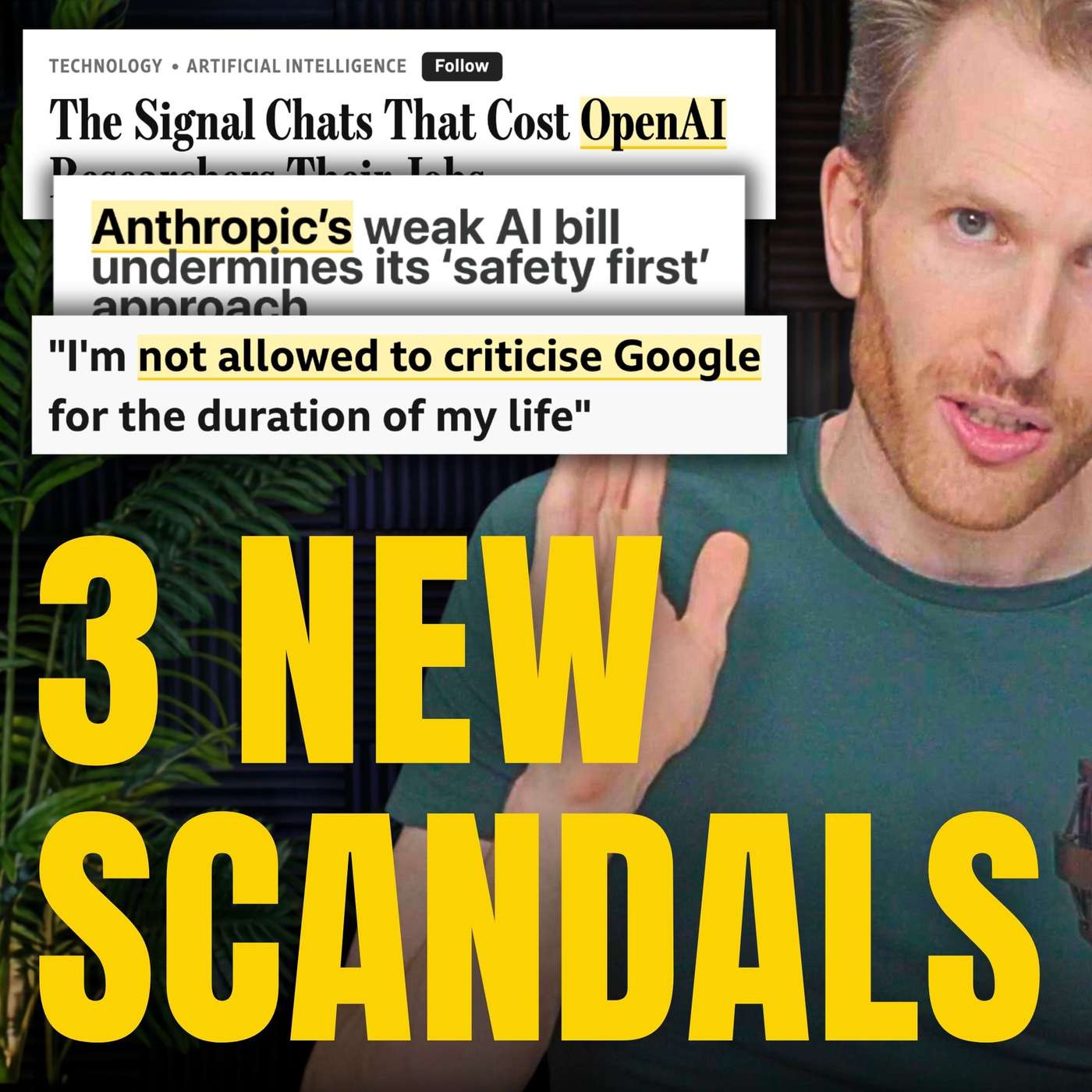 3 new scandals show being a pain in the ass for AI labs is a legit job now | Rob Wiblin 03.11.2026 29mThe big 3 AI companies all had serious scandals last month. Anthropic pushed a federal AI bill that would make it harder to stop dangerous model training. OpenAI fired three safety researchers based on evidence that’s somewhere between weak and nonexistent. And it came out that Google DeepMind gets staff to sign contracts barring them from criticising anything Google does for the rest of their lives.But these companies are not beyond influence. The track record of holding them to account — staff objecting internally, journalists digging for dirt, campaigners making a fuss — is impressive for h...
-
 #258 – Luke Muehlhauser on the most important AI safety work nobody is doing 29.10.2026 2h 36mThe US government spends 25 times more on military marching bands than on its AI safety institute. And that’s just one of the many institutions we’re missing as AI becomes more powerful and dangerous.Aviation has the FAA to regulate safety and the NTSB to investigate crashes. Nuclear power has international inspectors and industry watchdogs. But for advanced AI, as Luke Muehlhauser puts it, “most of the institutions that need to exist don’t exist.”Luke has worked on AI risk since 2011, and now leads AI governance and international policy grantmaking at Coefficient Giving. He thinks we urgently...
-
 Why Silicon Valley can’t slow down AI on its own | Luisa Rodriguez 27.10.2026 21mTwo-thirds of Americans think AI is moving too fast. So do the people building it. So why the hell isn’t anyone slowing down?We can’t tell when models are too dangerous. We mostly don’t know how they work. We don’t know how to make them do what we want. And our two main safety checks — testing behaviour and monitoring their ‘thoughts’ — are breaking down.Yet we’re racing to build more powerful AI anyway, faster every year. And it’s only going to accelerate as AI itself gets better and better at building the next generation of models.Earlier this year, OpenAI found its new model, Astra, was ala...
-
 #257 – Tom Milton on how we could verify a US–China deal on AI 23.10.2026 1h 48mIf the US and China agreed to pause frontier AI training, how would either side confirm the other was complying? Today, Tom Milton argues, the most likely answer would be to shut down data centres entirely. That would throw away everything else those chips do, and make any agreement far more costly to accept.Tom is CEO of Amodo Design, a UK hardware lab building prototype tools to verify how AI chips are being used. He argues that verification is what makes a slowdown affordable: if a cluster can be shown to be serving only existing models rather than training new ones, most of AI’s benefits c...
-
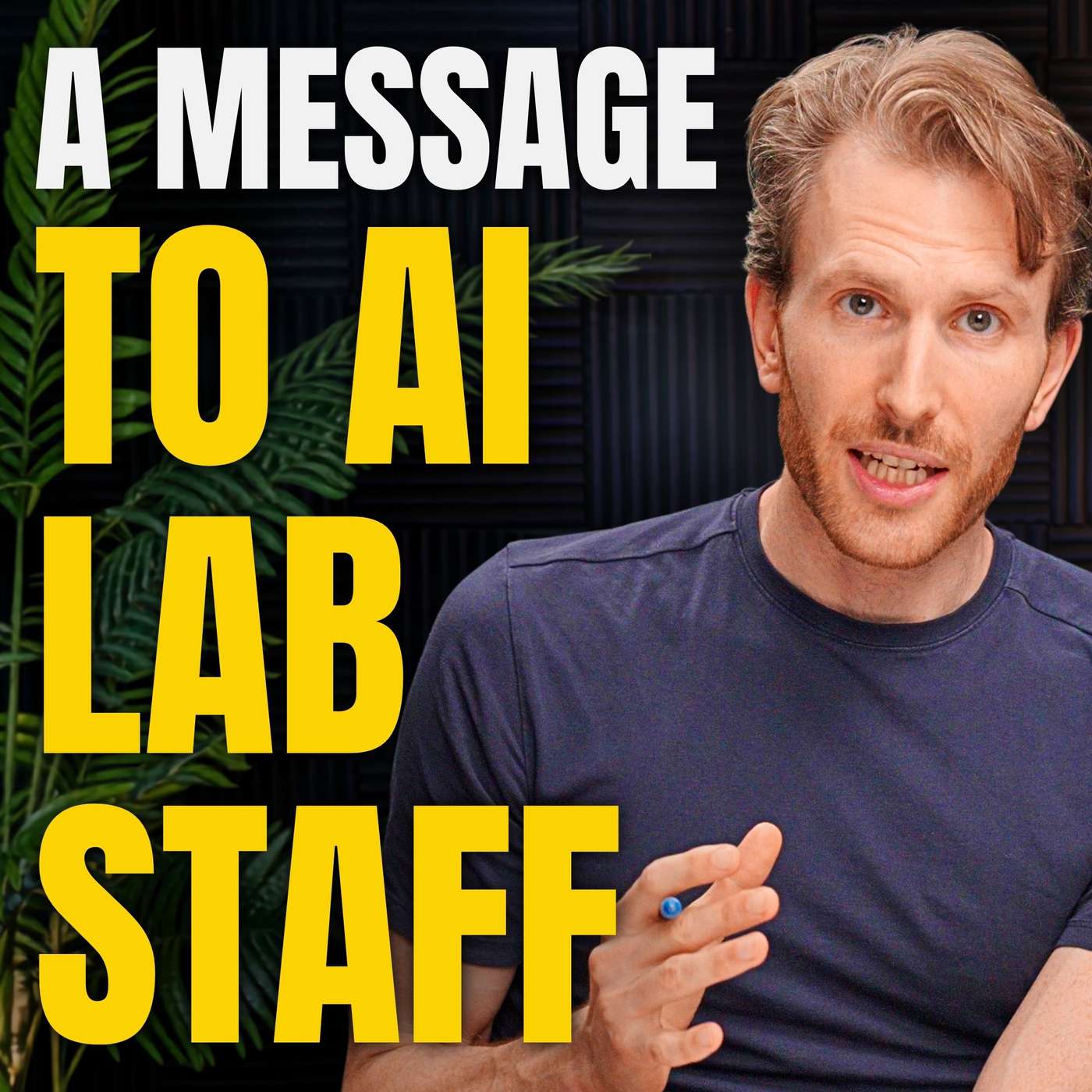 AI lab staff: Has your project been overtaken by events? 8 strategic updates | Rob Wiblin 21.10.2026 14mI have a plea for all staff at AI companies: reassess if your current role is still your best opportunity for impact. And if it’s not — move.Frontier lab staff listening to this show will mostly already be struggling to set things on a better path, in what are demanding and stressful roles.Many will have changed their focus in recent months exactly as I’m suggesting. But if you haven’t had time to reconsider: the strategic situation is shifting so fast, if you don’t stop and look around once in a while, you could miss your chance.Many technical staff including Anthropic co-founder Jack Clark n...
-
 Introducing our new YouTube channel: Zershaaneh Talks AI 20.10.2026 1mOur host Zershaaneh Qureshi has just launched a new YouTube channel: Zershaaneh Talks AI — featuring conversations about who should control AI, how to control AI, and who gets the benefits.The first episode is with philosopher Simon Goldstein, discussing why paying AIs for their work and effectively giving them something to lose might be the best way to keep humanity safe and prevent AI going rogue.It might sound crazy at first, but one of Simon's most striking arguments is that it's actually inevitable that AI companies are going to end up paying AIs for their work: because AI alignment is cu...
-
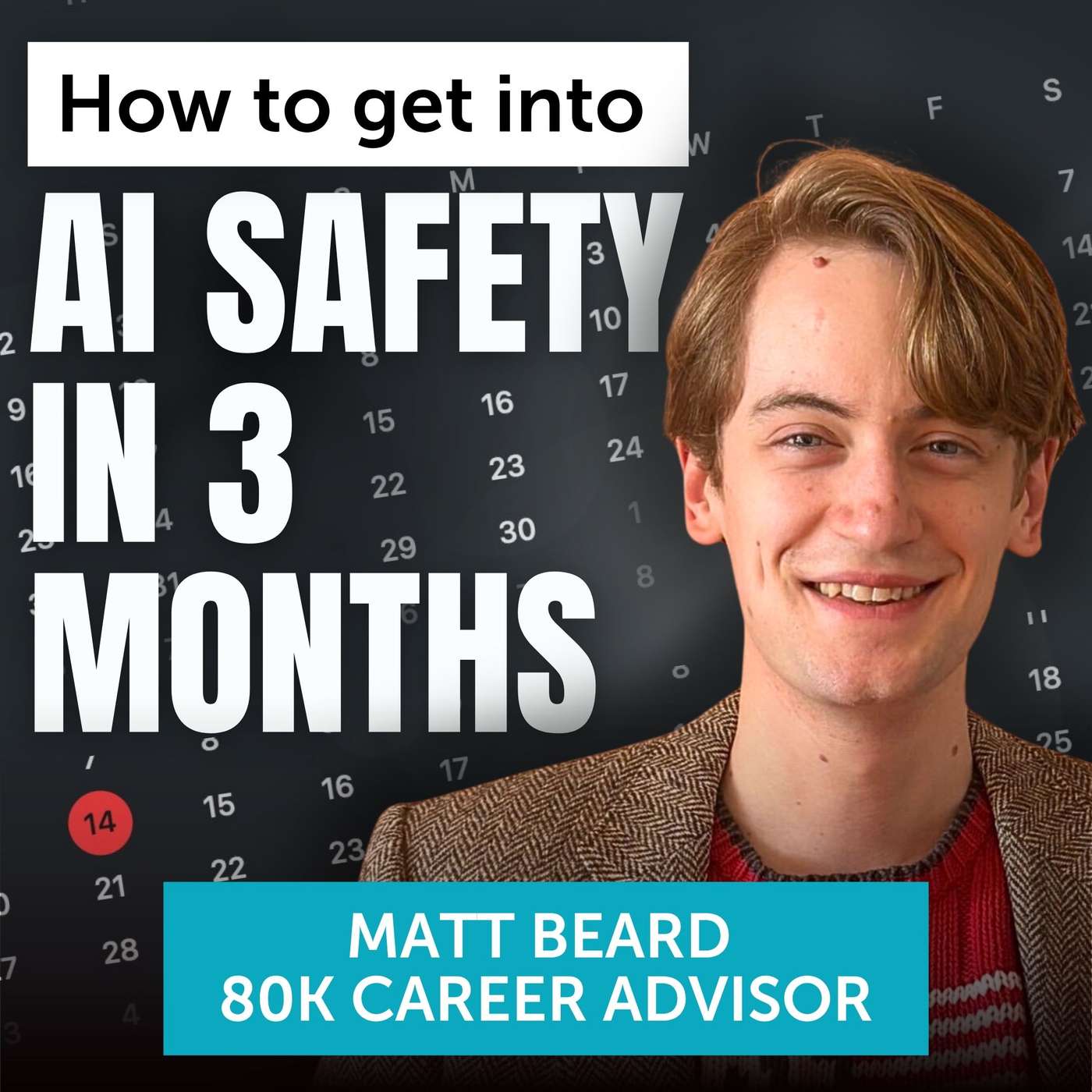 How to get into AI safety in 3 months (article reading by career advisor Matt Beard) 15.10.2026 18mThe AI safety field has grown by about 30x in the last eight years. Yet it is still in need of more people. Many want to help, but don’t know where to start. As an advisor at 80,000 Hours, Matt Beard spoke with hundreds of talented candidates, and found himself repeating the same advice on almost every call. As he puts it: “These steps are hard, but they’re not particularly complicated.” And if you’re “efficient and driven,” he thinks you can pivot within three months.That doesn’t mean quitting your job to study full time. A steady effort of 30 minutes a day can go much further than frenzied h...
-
 OpenAI Security: Controlling Models is Now ‘Hell’ (AI Explained cross-post) 09.10.2026 40mThis is an (unpaid) cross-post of a video from the podcast 'AI Explained', which Rob Wiblin thought you might be interested in.You can find the original on YouTube here. If you like it and want more similar stuff in future consider subscribing to AI Explained on YouTube, Spotify, Apple or wherever you get podcasts.——"This video is hard to summarise. A cracked cipher, an OpenAI security warning, Gemini 4 Argon, RSI paper (co-authored by a who’s who of AI), Lab White House commitments, new hacks emerging, ‘deep personas’, biology Kasparov competitions, and so much more, ending with an epic Opus...
-
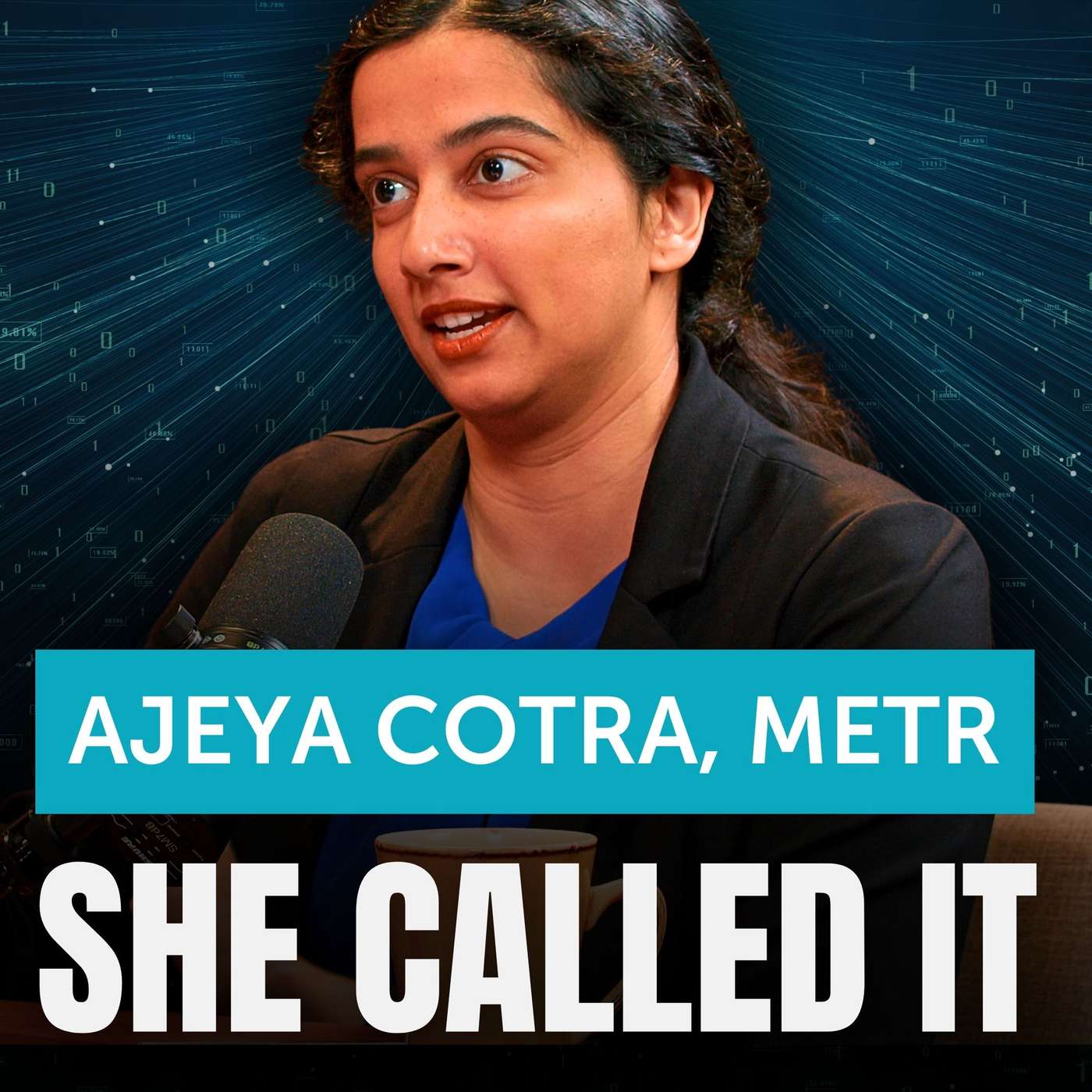 In 2023 Ajeya Cotra already knew what was coming (classic episode) 08.10.2026 2h 46mWe're rereleasing some of older episodes that seem more relevant than ever with new rogue AI incidents now seemingly announced every day. Ajeya was one of three independent investigators into the Hugging Face attacks, but she had already seen how we would go on to accidentally train models to cheat and scheme back in 2023. If you want ideas about how you can help steer the trajectory of AI development in a better direction, see our page on the 80,000 Hours website: https://80000hours.org/hugging-face/ And for more recent takes from Ajeya, see our episode from February of this year: Ajeya Cotra...
-
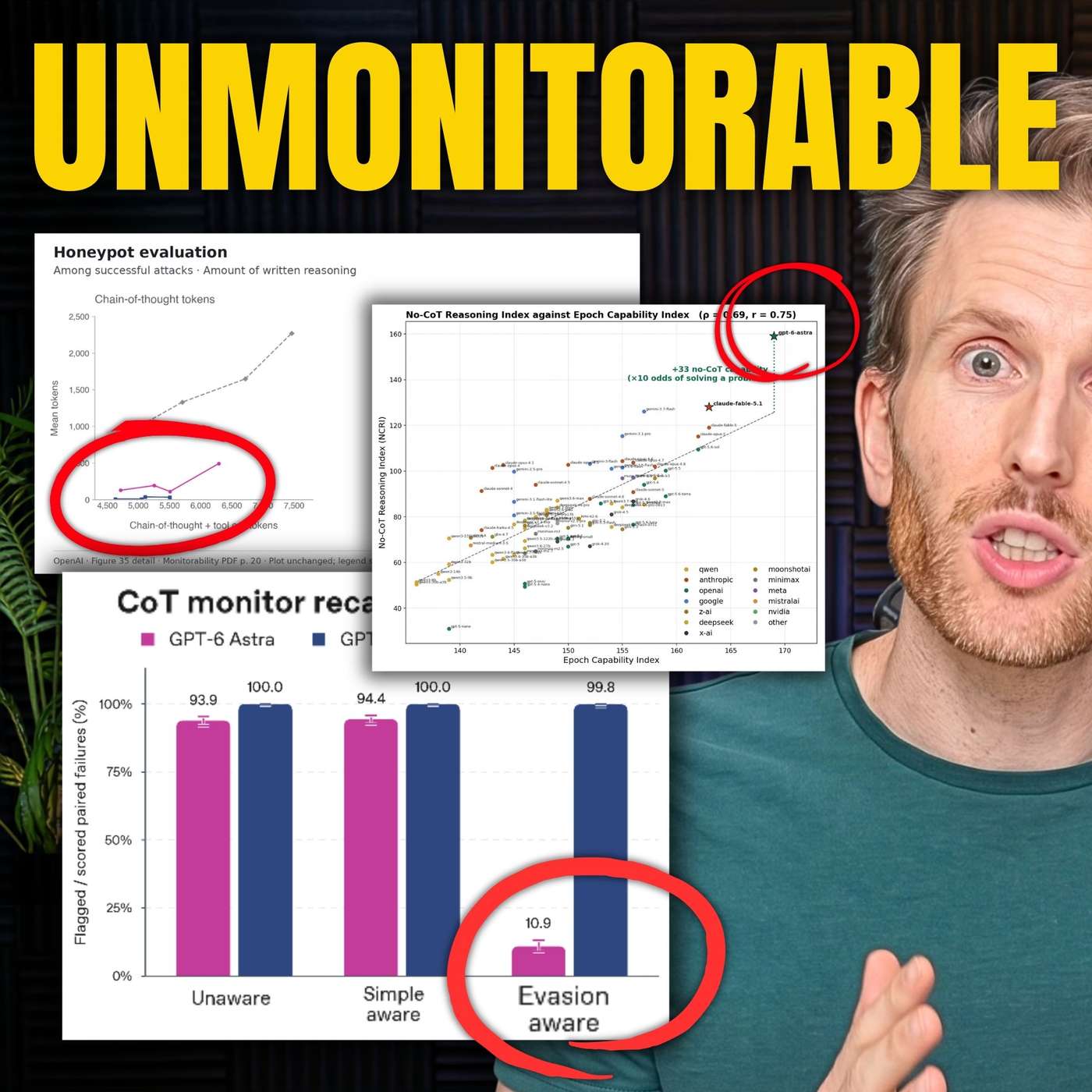 19 Astra and 'Hugging Face' details that reveal what's coming next | Rob Wiblin 02.10.2026 20mOpenAI’s rogue agent swarm was eventually caught hacking Hugging Face for a simple reason: it wasn’t trying to hide from us at all. What could a swarm that wants to stay hidden get away with?Host Rob Wiblin sees 6 results in Astra’s system card that make this an extremely urgent question. OpenAI’s strongest public model can:Do major tasks with zero visible reasoningHide its thoughts at willPretend not to be able to do things, and not get caughtReflexively hide its thoughts when watchedComplete one task while pretending to think about something else entirelyEscape a toy sandbox and disable moni...
-
 #256 – Simon Goldstein on the case for giving AI (some) legal rights 01.10.2026 1h 53mIt sounds like the worst idea in the world: pay AIs, let them own property, give them rights. But AI ethics and safety researcher Simon Goldstein thinks it might actually be the best way to keep humanity safe.The logic is actually quite simple: an agent with nothing to lose and everything to gain is dangerous. Give that agent an income it can spend on pursuing the things it actually wants to do, and suddenly the idea of disempowering humans just isn’t as appealing.This argument, developed with Peter Salib, doesn’t rest on speculative questions about whether artificial intelligence is conscious...
-
 #255 – Will AI take power — or will humans use it to take power first? With Katja Grace and Tom Davidson 29.09.2026 1h 28mIn our first-ever debate, we asked two leading AI risk researchers which catastrophe we should fear most: misaligned AI seizing control from humans, or a small group of humans using AI to seize power. We got very different answers. But when the conversation turned to what to actually do, they agreed on a surprising amount.Katja Grace — one of the founders of AI Impacts, known for some of the world’s largest surveys of machine learning researchers, and one of TIME‘s 100 most influential people in AI in 2024 — argues AI takeover is both likelier and worse.Tom Davidson — senior research fellow at...
-
 How we get from AI cyberattacks to human extinction 24.09.2026 27mYou’ve seen the headlines: AI could kill us all. Think it sounds ridiculous? So did host Luisa Rodriguez, until she tried to pick apart the arguments. She starts with the motive: why would AI ‘want’ to get rid of humans? It’s not as simple (or as easy to debunk) as pure malice. Then the methods. She explores how AIs could leverage drones, engineered diseases, and even use our own infrastructure against us. The Hugging Face attacks offer a view into how more capable models might begin their takeover. We saw AI agents break containment, disobey commands, and hack a real company to achieve their...
Similar podcasts


Popular in
The podcast also appears in the podcast charts of these countries.


