
Psychology in Everyday Life: The Psych Files
Michael Britt
0
The Psych Files is a podcast for anyone interested in psychology and how it applies to everyday life. Host Michael Britt presents upbeat, fun episodes covering topics from psychology majors to casual listeners curious about human behavior. The show explores why people do what they do, making psychological concepts accessible and engaging.
Episodes
-
 What Makes a Dad Joke Funny? Science Weighs In 14.10.2026 41mI'm known in my family for bad dad jokes. I text them to relatives and get the eye-roll emoji back. So when two psychologists published a paper this year on what makes a dad joke funny, I had to look. Paul Silvia and Meriel Burnett scraped more than 32,000 jokes from Reddit's r/dadjokes, coded every one for length, concreteness, and 156 topics (dads, chickens, pirates, Halloween), and tried to predict which ones got upvotes. That worked badly, and the reason why is a lesson in measurement. So they picked 501 jokes, had 621 adults rate them, and tried again. This time the features mattered: con...
-
 One Simple Habit for a Happier Marriage? Not So Fast 07.10.2026 13mA new study of about 1,700 married couples found that partners who exercise together, usually by walking, tend to have stronger marriages, and the headlines quickly turned that into "one simple habit for a happier relationship." In this short episode I use that study to walk through one of the most useful ideas in all of psychology: correlation is not causation. The same finding fits three very different stories (walking improves the marriage, a good marriage is what gets couples out walking in the first place, or some third factor like shared free time, health, or less money stress drives bot...
-
 I'm Not the Person I Used to Be (and Why Your Brain Wants You to Believe That) 01.10.2026 22mWhy do your good deeds feel like "still me" while your bad ones feel like "a different person back then"? Research from Felipe De Brigard's lab at Duke University, published in the Journal of Experimental Psychology: General and in Memory and Cognition, shows that people judge their own past lies and hurtful acts more harshly the further back they happened, and that remembering a wrong act makes you feel like you have changed, while remembering a right act makes you feel like the same person you have always been. The effect holds after controlling for how long ago the event occurred, and it di...
-
 You've Got Dopamine Backwards (and I Can Prove It On Piano) 23.09.2026 24mWhat do a false ending to the Star Spangled Banner, a food delivery website where nothing ever arrives, and a monkey waiting for a squirt of juice have in common? In this episode I sit down at the piano to demonstrate the deceptive cadence, the musical trick of setting up the "home" chord and then stepping sideways instead. I use it to explain a new trend: "dopamine sites," where people order meals that never come and take smoke breaks with cigarettes that don't exist. The popular story says dopamine is the brain's pleasure chemical, released when you get the reward. The research says otherwis...
-
 Science Corrects Itself: The Embodied Cognition Story 30.08.2026 41mWhat is embodied cognition, and did it survive the replication crisis? This episode of The Psych Files examines the famous embodied cognition and social priming studies — power posing, the hot coffee study, the Macbeth effect, the facial feedback (pen-in-the-teeth) study, elderly priming, and the action-sentence compatibility effect — and the large-scale replication studies that failed to reproduce them. Learn how small samples, publication bias, researcher degrees of freedom, and experimenter expectancy effects produced findings that later evaporated, and how psychology responded with pre-reg...
-
 The Secret to a Good Joke Is Silence 13.08.2026 16mThis episode looks at why comic timing works, using a 2026 study from Yuxi Ma, Yongqian Peng, and colleagues at Peking University, presented at the Cognitive Science Society. The researchers analyzed 828 professional stand-up sets from Chinese comedy competitions, about 86 hours of material, and measured what actually predicted the laughs: the content of each line, or the delivery. Timing won, and not by a little. The length of a comedian's pauses and how much those pauses varied beat every content measure, and slower delivery helped rather than hurt. The reason comes down to how the brain han...
-
 AI: Mixed Feelings, Cognitive Dissonance, and the Stories We Tell Ourselves 30.07.2026 23mMost of us who use AI tools live with a quiet contradiction: the tools are genuinely useful, and using them raises real ethical problems — work that might have gone to a person, the energy and water that data centers consume, and models trained on creators' content that was never paid for. This episode of The Psych Files sits in that uncomfortable middle and asks what psychology can tell us about it, drawing on Festinger's cognitive dissonance, the trivialization research of Simon, Greenberg, and Brehm, Bandura's moral disengagement, and Kohlberg's stages of moral reasoning to show how we quie...
-
 Why Nobody Pushed the Button: The Psychology Behind a Subway Tragedy 06.07.2026 14mWhy did more than a dozen people walk past Steven McCluskey as he lay trapped in a Boston subway escalator? On the surface it seems to refute the newest research on bystander intervention — Richard Philpot's cross-national CCTV study showing that at least one bystander helps in roughly nine out of ten public conflicts. In this episode of The Psych Files, Michael Britt explains why this tragic case doesn't contradict that finding at all. The key is ambiguity: Philpot studied public conflicts, which are loud and unmistakable, while a still figure in a transit station is exactly the ambiguous sit...
-
Why People Step Out of the Plane — and Go Back Up the Next Day 26.06.2026 10mWhy would anyone step out of an airplane — and why, after a fatal accident, would they go back up the very next day? In this episode I talk through that question using a recent New York Times feature on a brutal weekend in extreme sports, paired with my own interview with Dr. Kenneth Carter of Emory University, author of Buzz. It turns out "adrenaline junkie" mostly gets it wrong. The trait at the center of this is sensation seeking, and high sensation seekers actually process risk differently — running on less of the stress hormone cortisol and more dopamine — so the moment that floods most o...
-
 Does Your Cat or Dog Need Closure? Pet Grief and the Psychology of Loss 12.06.2026 25mWe hear the word "closure" everywhere — in true crime shows, in news coverage of trials, and in the well-meaning advice of friends after a loss. But where did this idea come from, and does the research actually support it? In this episode I trace the surprising history of closure, from the Gestalt psychologists of the 1920s, to Arie Kruglanski's research on the "need for cognitive closure," to its takeover by talk shows, the victims' rights movement, and even the funeral industry in the 1990s. Along the way we look at what the science really shows: the craving for answers is real and measurabl...
-
Home Alone: The Hidden Cost of Remote Work 10.06.2026 12mI've worked from home for about fifteen years, and I like it. I'm a writer, I'm fine being on my own, and I've got the cats for company. But there's one thing I miss, those little water-cooler conversations with colleagues, and a new study published in the journal Science speaks to exactly that. Economist Natalia Emanuel and her colleagues at the Federal Reserve Bank of New York set out to answer a deceptively simple question: what does remote work actually do to our mental health? The catch is that you can't ethically grab a thousand workers and order half of them to stay home for two years,...
-
 "I'm Getting Old" — And That Thought Might Be Killing You 27.03.2026 17mDo you catch yourself saying "I'm getting old" more than you'd like to admit? Turns out, that habit might be doing more damage than you think. Psychologist Becca Levy of Yale has spent decades studying how our aging mindset — the beliefs we hold about what getting older actually means — shapes how we physically and cognitively age. In a study following more than 11,000 older Americans over twelve years, nearly half showed improvement in either cognitive or physical function, a story that gets completely buried when you only look at averages. Her earlier research found that people with a positi...
-
Actors Don't Really Memorize Lines! 24.02.2026 9mWhy do some people remember things effortlessly while others repeat information over and over and still forget it? In this episode, Michael looks at what research on actors reveals about how memory really works. Drawing on studies by psychologists Helga and Tony Noice and the remarkable story of John Basinger — who memorized all 10,565 lines of Milton's Paradise Lost starting at age 58 — we look at why understanding something beats repeating it every time. If you're a student, a performer, or just someone who wishes they could remember things better, this episode will change how you think abou...
-
Latest Research: Anthropomorphism and Dementia 15.10.2025 18mIn this episode of The Psych Files, I explore anthropomorphism—our tendency to attribute human characteristics to non-human entities—drawing from Justin Gregg's new book "Humanish." I discuss both helpful and harmful examples of anthropomorphism, from Soviet dolphin-assisted births to Japanese raccoon imports inspired by anime, and explain how this connects to Theory of Mind, our ability to attribute mental states to others. Gregg, an expert on animal cognition, argues that anthropomorphism isn't necessarily bad if used reflectively, citing Jane Goodall's approach of using intuition as a resea...
-
The Surprising Psychology Behind Effortless Line Memorization 24.09.2025 10mWhen I receive a new script, my first step surprises people. I create an audio recording of every scene I'm in – not just my lines, but everyone's lines. Using apps like LineLearner, I record each cue line followed by my response, all delivered in completely monotone voice with zero inflection or emotion. This approach might make acting coaches cringe, but it connects directly to Sanford Meisner's teaching philosophy. Meisner had students rehearse lines in monotone specifically to prevent them from "setting" a line reading too early. The goal? When you're actually performing, you can react nat...
-
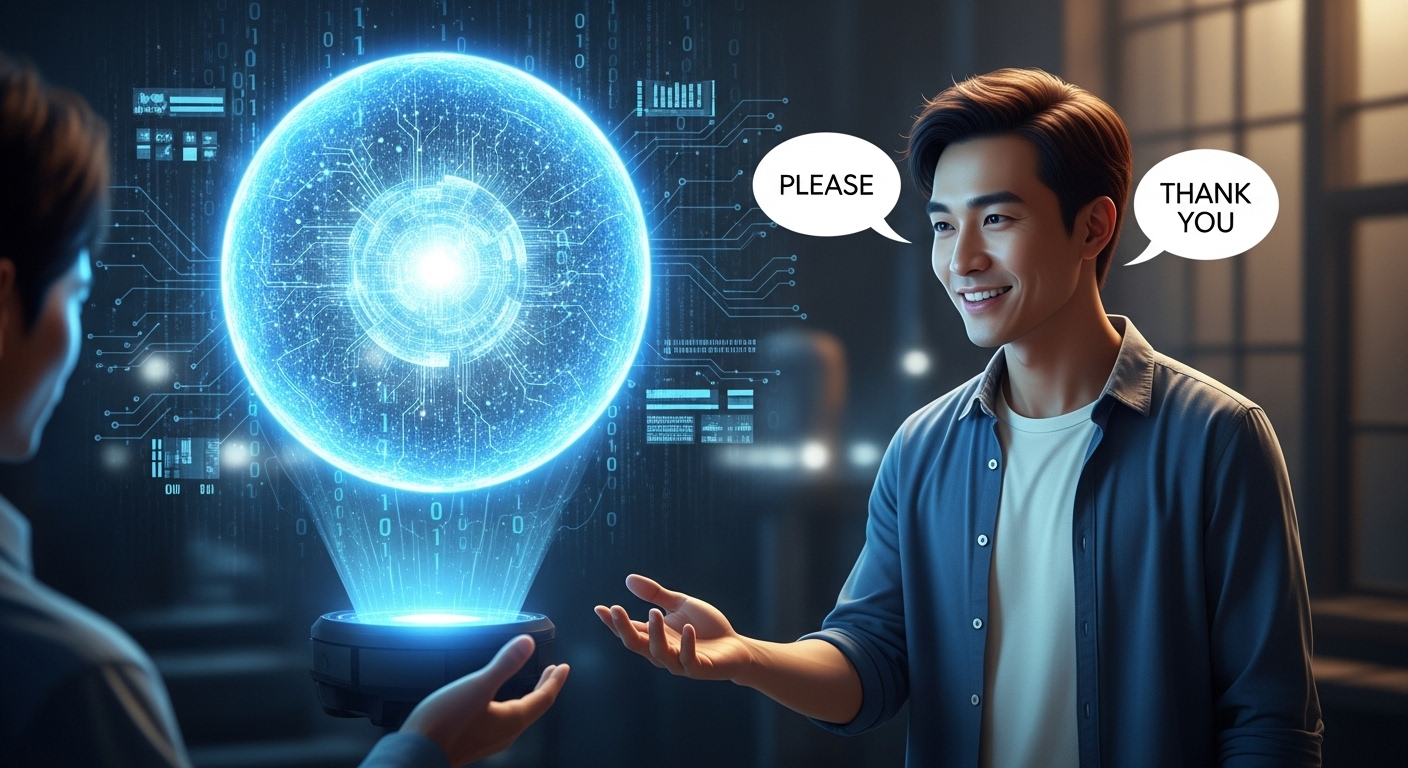 Why Are We So Polite to AI? 25.06.2025 10mWhen we say "please" or "thank you" to ChatGPT, we're witnessing the remarkable power of human social psychology in action. Our brains have developed such deeply ingrained social scripts over millions of years that they automatically activate whenever we encounter conversational situations—even with machines. Through social scripts, attribution theory, and automatic processing, we treat AI interactions just like human conversations, complete with politeness and courtesy. This isn't a flaw or embarrassing quirk; it's actually a testament to how fundamentally social we are as humans. Our ancient...
-
The Song "Yesterday," Manhood, and the Fear of Vulnerability 11.05.2025 11mIn this episode of The Psych Files, I explore the fascinating intersection between music, psychology, and gender roles through subtle lyric changes in Paul McCartney's timeless song, "Yesterday." I focus specifically on why iconic male singers like Frank Sinatra, Elvis Presley, and Marvin Gaye altered the lyric from "I said something wrong" to "I must have said something wrong." I suggest that this small but meaningful change reflects a deeper cultural discomfort with male vulnerability, connecting it to the psychological concept of "precarious manhood"—the idea that men often feel compelled t...
-
 Study Hack: Use ChatGPT to Ace Your Exams! | Self-Explanation Effect 07.02.2025 4mDiscover how to leverage ChatGPT and other AI tools to dramatically improve your learning and test performance! In this video, I explain a powerful study technique called the "self-explanation effect" and show you exactly how to combine it with AI for maximum learning impact. The full prompt: "I am currently studying [insert the topic you are studying here]. Pretend that you are a student who doesn't know what the term means. I would like you to listen to my explanation and the example I give in it. Then tell me if you think anything I've said is incorrect or unclear. Feel free to ask me to ex...
-
 Lost in the Click: Exploring the Browser Doorway Effect 18.10.2024 3mThe Blank Tab Effect: A Modern Doorway Phenomenon Have you ever switched to a new browser tab, only to find yourself staring at a blank page and wondering why you opened it in the first place? This common experience is strikingly similar to what psychologists call the doorway effect and it's one of quirks of how our memory works. Understanding the Doorway Effect The doorway effect occurs when people forget their intentions after passing through a doorway. This happens because our brains compartmentalize information based on the environment, treating each room as a separate context. For example...
-
 Beck's Cognitive Distortions: An AI-Powered Learning Activity 24.06.2024 3mIn my recent exploration of artificial intelligence, I stumbled upon a fascinating article entitled, "Instructors as Innovators: a Future-focused Approach to New AI Learning Opportunities, With Prompts" which introduced the concept of goal-play interaction between students and AI. The authors provided a prompt for this interaction, which I found to be an intriguing application of AI to create interactive, educational experiences for students. I adapted the prompt provided in the article to be more aligned with psychology concepts, particularly for students learning about cognitive distortions....
Similar podcasts


Popular in
The podcast also appears in the podcast charts of these countries.


