
Psychofarm Podcast
Psychiatry, Skepticism, and Integration.
0
PsychoFarm Podcast is a deep dive into the intersection of psychiatry, psychopharmacology, and the evolving understanding of mental health. Hosted by 2 psychiatrists, the podcast explores complex topics such as diagnosing mood and personality disorders, the role of medications in treatment, and the challenges of psychiatric training. Each episode breaks down the clinical insights and philosophical debates surrounding mental health care, providing both practitioners and curious listeners with thoughtful analysis, expert opinions, and practical advice.
Episodes
-
 Is Autism Overdiagnosed? How Psychiatrists Assess Adults 18.11.2026 59mIs autism overdiagnosed? In Part 2 of our autism series, two adult psychiatrists ask why U.S. autism prevalence went from about 1 in 150 to about 1 in 31, what should count as a mental disorder, and how to evaluate an adult who arrives asking whether they have autism.What we cover* Why autism diagnoses have climbed, from about 1 in 150 children around 2000 to about 1 in 31 in 2022, and whether better recognition or a shift toward naming ordinary traits as disorders explains most of the rise.* What DSM-5 changed: Asperger's syndrome and childhood disintegrative disorder folded into autism spect...
-
 How to Stabilize Mood without Medications: Social Rhythm Therapy Anyone Can Use with Dr. Jim Phelps 10.11.2026 1h 21mHow to stabilize mood may have a lot to do with the rhythms that organize everyday life. Dr. Jim Phelps explains social rhythm therapy as a practical framework anyone can learn from, especially people with mood disorders: regular sleep and wake times, morning light, evening darkness, predictable routines, and gradual changes that actually fit real life. We discuss circadian rhythm, blue light, dawn simulators, amber glasses, weekends, night shifts, exercise, and the social rhythm metric. Although these ideas are especially important in bipolar disorder, the broader lesson is universal: the bra...
-
 Diagnostic Hierarchy Explained: Why Patients Get 5 Diagnoses 03.11.2026 1h 5mWhy do so many patients arrive with four, five or six psychiatric diagnoses? Mark Ruffalo, a psychoanalytically trained clinical social worker who teaches psychiatry residents, joins Dr. Malzberg and Dr. Fu to discuss his new paper with psychiatrist Ronald Pies in Psychiatric Services, “The Need for a Validity-Based Diagnostic Hierarchy in DSM-6.” We trace how DSM-III chose reliability over validity, why the Washington University group of Robins and Guze pushed back, and how losing the diagnostic hierarchy opened the door to false comorbidity, polypharmacy and symptom-by-symptom treatment. Mar...
-
 The Psychology of Elizabeth Holmes in You Can See Everything: Narcissism, Autism, or Manipulation? 28.10.2026 1h 6mYou Can See Everything psychological analysis returns in Part 2 as two psychiatrists revisit Elizabeth Holmes, Billy Evans, and Nathan Fielder’s documentary. We examine the scenes that divided viewers, from the Abbott and Costello joke and Holmes’s statements about Theranos to Billy’s egg-mixing, social media posts, and comments about revenge. Along the way, we discuss narcissism, psychopathy, autistic traits, and the difference between personality traits and psychiatric disorders. We also explore why people repeat familiar relationship dynamics and how a film can become a mirror for the audie...
-
 You Can See Everything Psychological Analysis by Clinical & Forensic Psychiatrists 20.10.2026 56mYou Can See Everything is one of the strangest films about Elizabeth Holmes yet, and in this episode two psychiatrists try to make sense of it. We explore what Nathan Fielder’s interviews bring out in Holmes and Billy Evans, from unusual facial expressions and her distinctive voice to the couple’s intense descriptions of love. Using psychoanalytic concepts such as narcissism, splitting, borderline personality organization, identity diffusion, and the “as-if personality,” we examine how people construct a sense of self and why someone might defend a version of reality that others find impossibl...
-
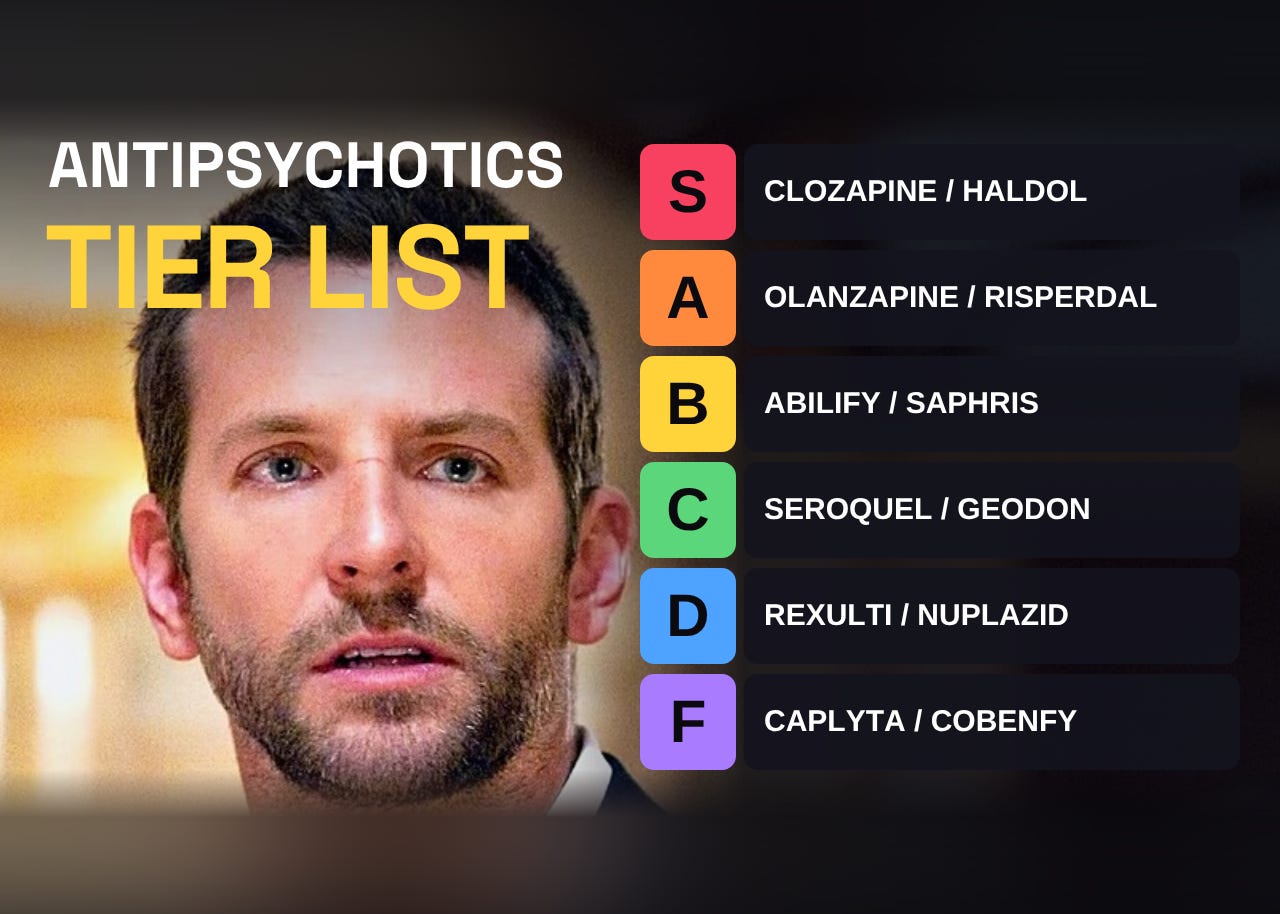 Antipsychotic Tier List: Ranking the Best and Worst Anti-psychotics 13.10.2026 1h 15mAntipsychotic medications are not interchangeable, and the tradeoffs between efficacy, metabolic burden, movement side effects, sedation, and adherence can be huge. In this episode, we build an antipsychotic tier list and rank medications including clozapine, olanzapine, haloperidol, risperidone, lurasidone, quetiapine, aripiprazole, and more. Along the way, we connect receptor pharmacology to practical clinical pearls, including food requirements, smoking effects, prolactin, akathisia, EPS, weight gain, long-acting injectables, and clozapine monitoring. We also discuss how medication choice s...
-
 Trauma and PTSD: How the DSM Criteria Actually Help Us Understand What’s Going On 06.10.2026 1h 1mPTSD diagnosis is more complicated than identifying a trauma history. In this episode, we break down what qualifies as Criterion A trauma, the major PTSD symptom clusters, and how intrusion, avoidance, negative beliefs, hyperarousal, and dissociation can show up in practice. We also discuss acute stress disorder, fragmented traumatic memory, and why PTSD can be mistaken for depression, anxiety, mania, concentration problems, or psychosis. Along the way, we focus on careful trauma assessment: establishing a timeline, considering alternative diagnoses, monitoring the patient’s level of distress,...
-
 What Patients Should Know When Diagnosed With Depression 29.09.2026 1h 2mWhat should patients know when they are diagnosed with depression? In this episode, psychiatrists Dr. Malzberg and Dr. Fu cover what they wish every patient knew from the start. They explain why a depression diagnosis is a useful shorthand rather than a fixed identity, how biological, psychological, and social factors feed into each other, and how medication, therapy, and lifestyle changes work together. You will hear practical first steps like behavioral activation, a steady wake time, morning sunlight, and cutting back on alcohol and cannabis, plus what to do if treatment stalls and how to d...
-
 Autism Diagnosis Explained: DSM-5 Criteria, Autistic Traits & the Difficult Differential 22.09.2026 54mAutism diagnosis is more complicated than recognizing a handful of autistic traits. In this episode, Dr. Fu and Dr. Malzberg unpack the DSM-5-TR criteria for autism spectrum disorder, including social communication differences, restricted and repetitive behaviors, developmental onset, impairment, and Levels 1–3. They then tackle one of the hardest parts of adult autism assessment: differential diagnosis, including overlap with ADHD, schizophrenia, and personality disorders. The conversation also explores theory of mind, masking, the double empathy problem, weak central coherence, and the empat...
-
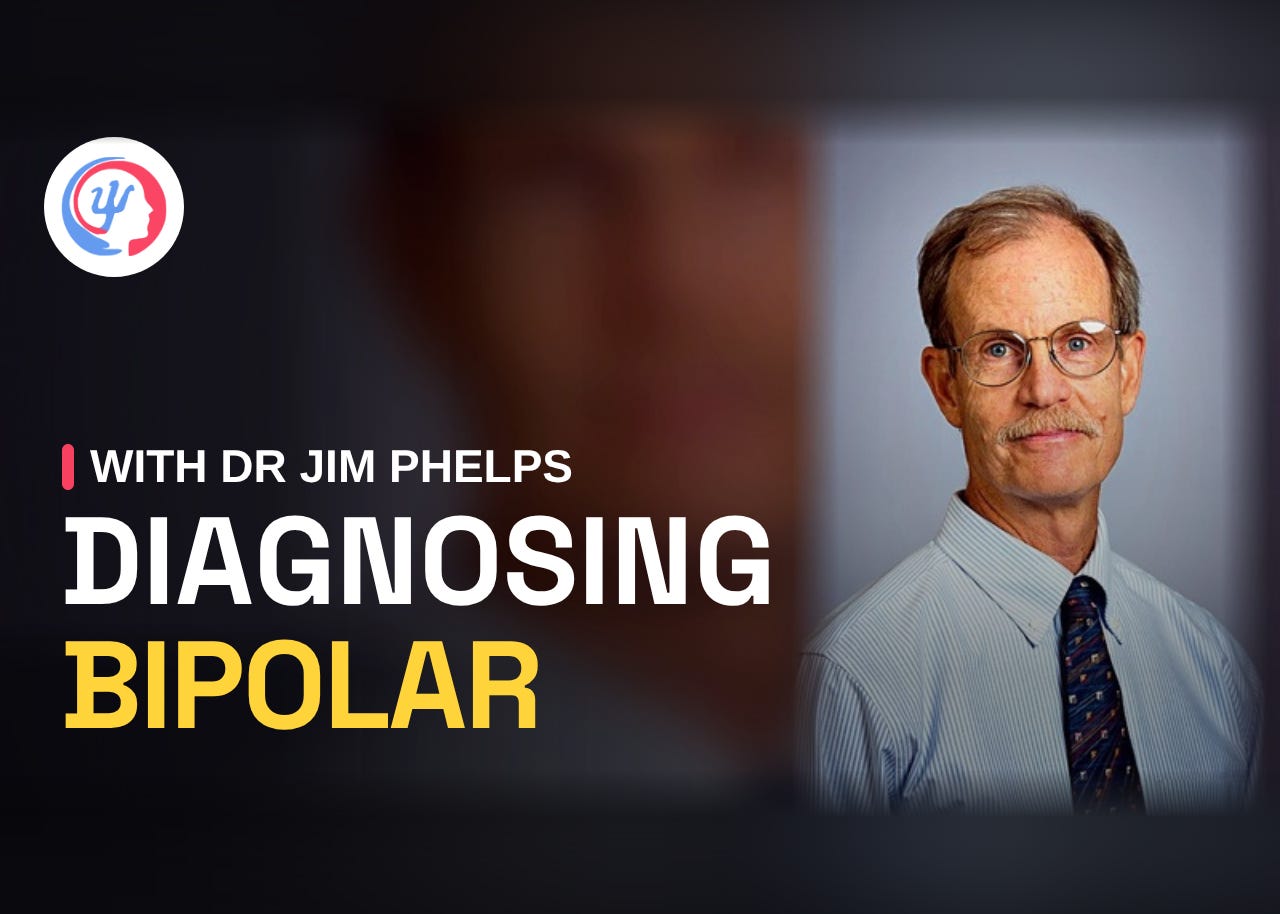 How to Diagnose Bipolar Disorder with Dr. Phelps: Hypomania, Mixed States & the Clues DSM Misses 15.09.2026 1h 5mDiagnosing bipolar disorder is rarely as simple as finding a clear episode of hypomania. Dr. Phelps explains why bipolarity is better understood across a mood spectrum and walks through the clues that can help distinguish bipolar depression from unipolar depression: age of onset, family history, course of illness, treatment response, cyclicity, and collateral history. We also dig into mixed states, the “four A’s” of anxiety, anger, agitation, and attention problems, antidepressant activation, the HCL-32, and the Bipolarity Index. The larger theme is diagnostic humility: uncertainty is often ap...
-
 Lindsay Clancy Case: Biggest Misconceptions After the Mistrial Explained by a Forensic Psychiatrist 09.09.2026 1h 7mLindsay Clancy’s insanity defense is the focus of this forensic psychiatry follow-up after the mistrial. We revisit the case through the lens of legal insanity, postpartum psychosis, malingering, criminal responsibility, and the difference between a legal conclusion and a moral judgment. We also discuss why psychosis cannot be reduced to a single reported voice, how forensic psychiatrists think about exaggeration versus malingering, questions around expert testimony and diagnosis, and the relationship between psychosis and violence. Finally, we look at medication nonadherence, culpability, how...
-
 Lindsay Clancy Trial: A Forensic Psychiatrist Explains Psychosis, Malingering, & the Insanity Defense 01.09.2026 58mLindsay Clancy postpartum psychosis and the insanity defense are examined through a forensic psychiatry lens in this episode. We discuss how psychiatrists distinguish psychosis from malingering, whether someone can be psychotic while still appearing organized, command hallucinations, delusions, altruistic filicide, and what criminal responsibility actually asks. We also look at Dr. Philip Resnick’s testimony, Clancy’s psychiatric treatment, fragmented care, collateral information, and the limits of ruling out bipolar disorder after a brief evaluation. Finally, we explore why the case has produ...
-
 Affective Neuroscience: Understanding Patients Beyond DSM Diagnoses 25.08.2026 59mAffective neuroscience in psychiatry may offer a better way to understand patients who do not fit neatly into DSM categories. Dr. White joins us to explain Jaak Panksepp’s seven primary emotional systems, the difference between affect and emotion, and how subcortical emotional arousal interacts with cortical regulation. We discuss anger, borderline personality disorder, cognitive decline, mindfulness, ACT, emotional blunting with SSRIs, and why some cases labeled treatment-resistant depression may need a better formulation rather than another medication. We also get into the neuroscience behin...
-
 The Psychology of Seinfeld: What’s Really Wrong With George, Kramer, Jerry & Elaine? 19.08.2026 57mWe put the Seinfeld cast on the proverbial couch, not to slap diagnoses on fictional characters, but to show why personality formulation can tell us far more than a psychiatric label.Is George a vulnerable narcissist, borderline, or something more complicated? Does Jerry’s obsession with cleanliness and order actually resemble OCD or an obsessive-compulsive personality style? Could Kramer meet criteria for antisocial personality disorder despite being charming, affectionate, and largely nonviolent? And is Elaine secretly the healthiest person in the group?Along the way, we explore flanderizati...
-
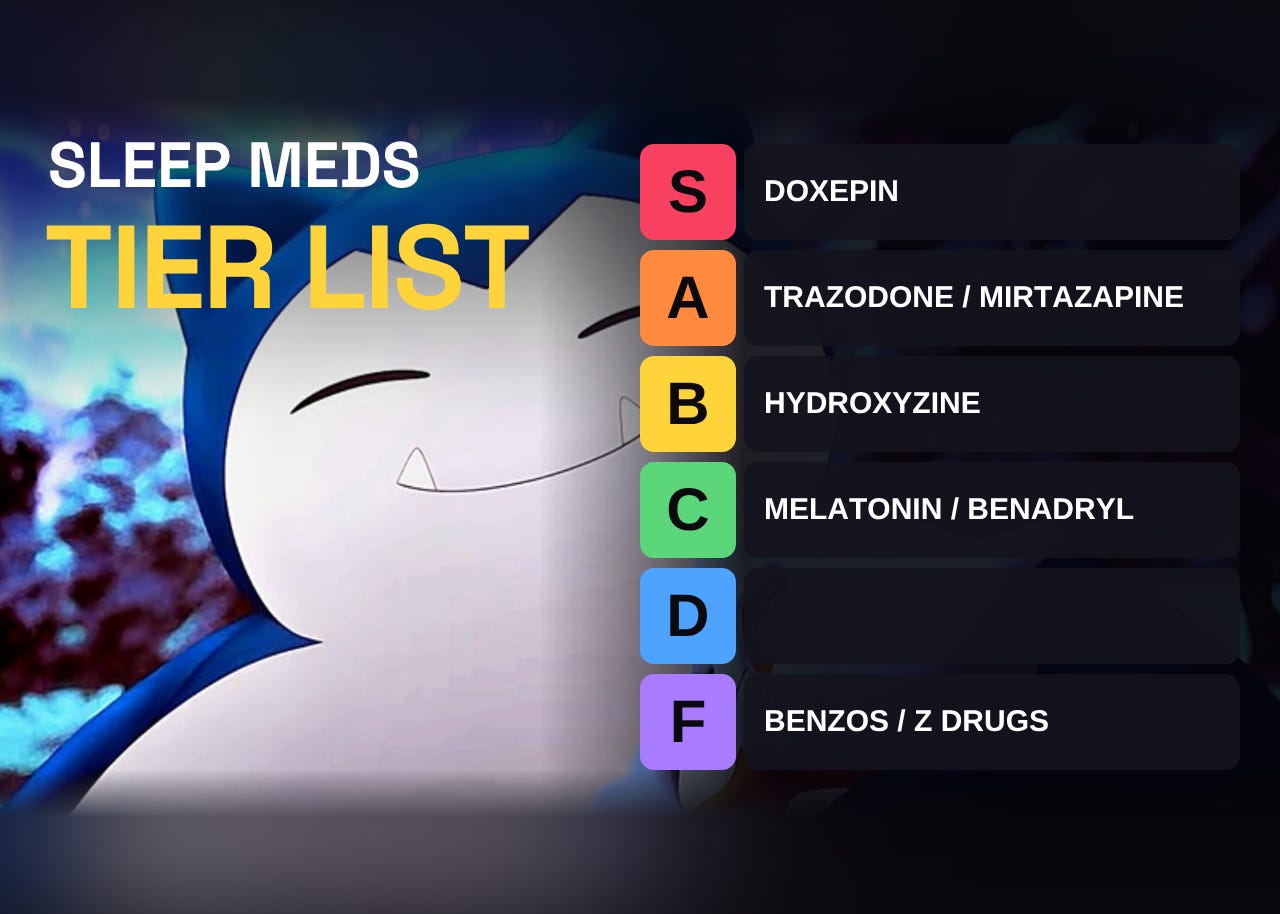 Sleep Medications Treatment Tier List: Best Insomnia Medications Ranked 11.08.2026 1h 9mIn this episode, the hosts rank the behavioral and medication strategies they use for sleep problems in psychiatric practice, starting with strict wake times, CBT-I, sleep hygiene, exercise, and treating the underlying disorder. They compare doxepin, trazodone, mirtazapine, hydroxyzine, melatonin, gabapentin, benzodiazepines, Z-drugs, antipsychotics, and other options, with attention to sleep onset, sleep maintenance, side effects, dependence, sleep architecture, and comorbid conditions. The conversation also covers caffeine and stimulant timing, alcohol and cannabis, primary sleep disorders,...
-
 Mood Stabilizers for Bipolar Disorder: Lithium, Lamotrigine, Depakote & More 28.07.2026 1h 1mMood stabilizers for bipolar disorder can be confusing because lithium, lamotrigine, Depakote, carbamazepine, and oxcarbazepine have very different strengths, risks, and clinical roles. In this episode, two psychiatrists break down how they think about maintenance treatment, lithium dosing and monitoring, common side effects, lab levels, toxicity counseling, and medication interactions. They also compare Depakote for mania, lamotrigine for bipolar depression, carbamazepine’s interaction burden, and the potential role of oxcarbazepine. Along the way, they discuss combination treatment, diagnost...
-
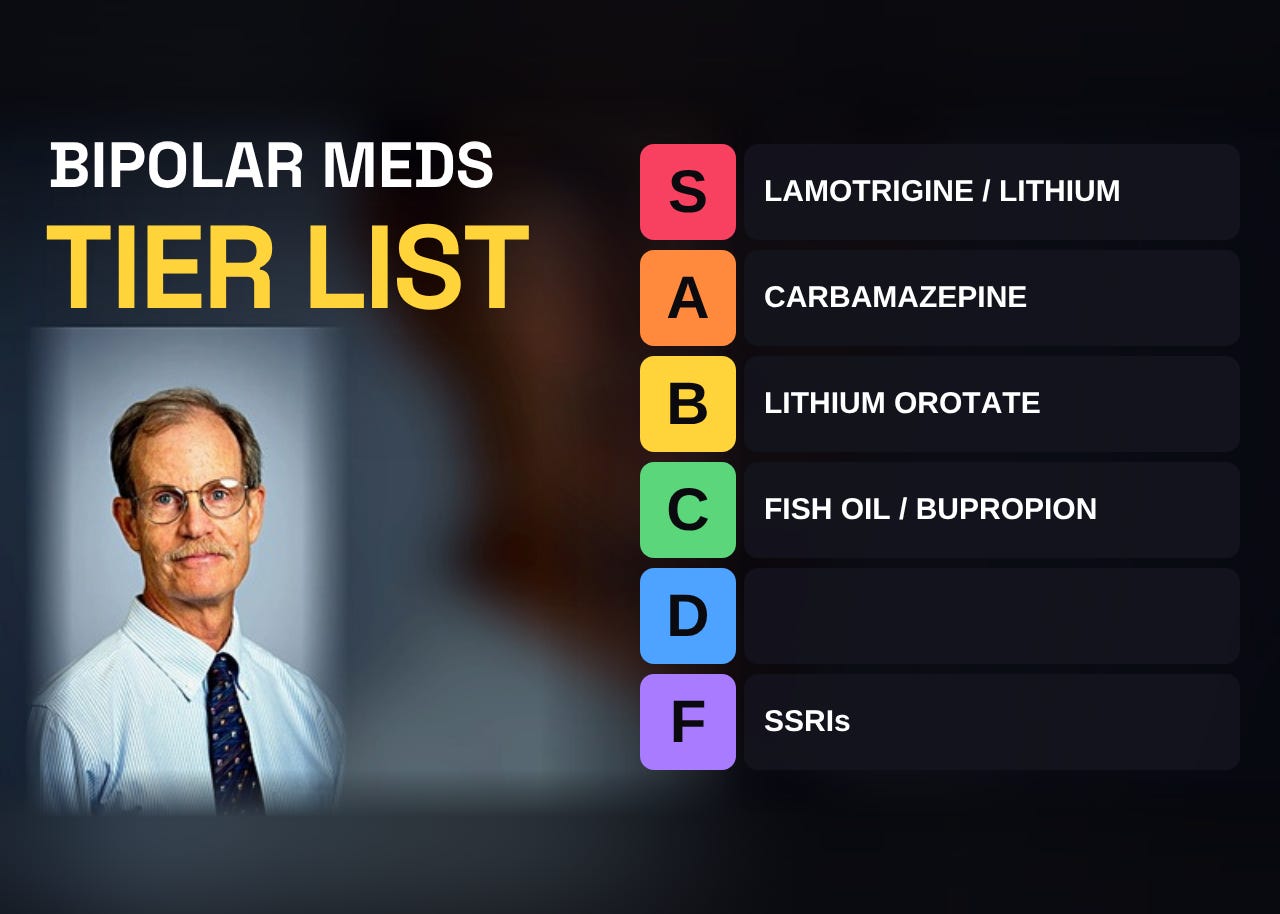 Dr. Jim Phelps’ Bipolar Treatment Tier List: Lessons from 30+ Years in Psychiatry 23.07.2026 1h 12mBipolar disorder treatment is put to the test in this clinically grounded tier list with psychiatrist Jim Phelps. He and Dr. Malzberg rank low-dose lithium, lamotrigine, social rhythm therapy, dark therapy, dawn simulators, antidepressants, carbamazepine, supplements, ketogenic diet, mood tracking, and group psychoeducation. Along the way, they discuss why sleep and circadian rhythm belong in the mood stabilizer conversation, how antidepressants may worsen cycling or mixed states, and why the long-term goal is not simply treating the mood of the day. The episode also explores practical adheren...
-
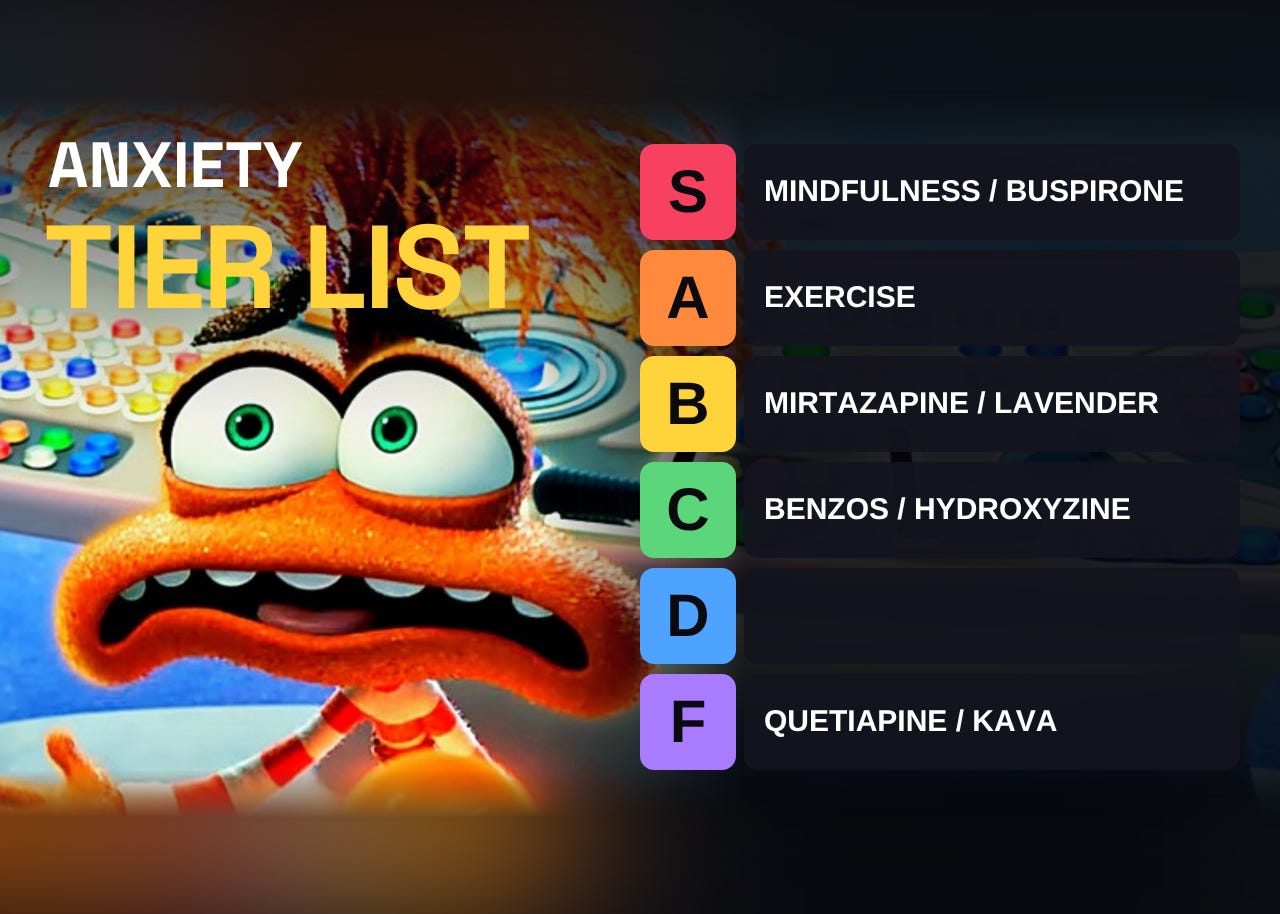 Anxiety Medications Tier List: The Best and Worst Treatments for GAD 14.07.2026 1h 3mAnxiety medications tier list: two psychiatrists rank the treatments they actually use for generalized anxiety disorder… and the ones they avoid. The discussion covers first-line SSRIs, why buspirone may be underrated, when benzodiazepines can help or harm, and how to think about mirtazapine, hydroxyzine, propranolol, gabapentin, pregabalin, quetiapine, and bupropion. Just as important, the episode argues that “anxiety” is not a diagnosis: re-diagnosis, mindfulness, CBT and ACT principles, exercise, reducing caffeine or stimulants, and understanding avoidance may matter more than adding anothe...
-
 Psychodynamic Technique and Therapeutic Intervention: Mirroring, Clarification, Confrontation, Interpretation 30.06.2026 40mPsychodynamic therapy interventions are the focus of this episode, organized through a practical levels framework for clinicians. Dr. Fu and Dr. Greg break down empathic mirroring as a way to keep the patient’s narrative moving, clarification as a tool for deepening detail, confrontation as a gentle way to point out patterns or discrepancies, and interpretation as the rare intervention that should come only after enough groundwork. Along the way, they connect these skills to diagnostic interviewing, medication management, forensic psychiatry, therapeutic alliance, and the difference between he...
-
 ECT Treatment: When to Refer, Who It Helps, and What Actually Happens with Dr. MaryEllen Eller 17.06.2026 54mUnfortunately no Dr. Fu today, but Dr. Malzberg speaks with the wonderful psychiatrist Dr. Mary Ellen Eller, who walks through what modern electroconvulsive therapy actually looks like and when clinicians should consider it. The episode covers ECT history, stigma, seizure monitoring, memory concerns, side effects, and the real-world logistics patients face during a treatment course. It also explores where ECT fits in the algorithm for severe depression, depression with psychosis, catatonia, bipolar mania. The result is a grounded, clinician-friendly guide to a misunderstood treatment. This is...
Similar podcasts


Popular in
The podcast also appears in the podcast charts of these countries.


