
The Science of Happiness
PRX and Greater Good Science Center
0
This podcast explores research-backed strategies for cultivating happiness, compassion, gratitude, mindfulness, and awe. Hosted by psychologist Dacher Keltner, it features insights from scientific studies and practical exercises. Co-produced by PRX and UC Berkeley's Greater Good Science Center.
Episodes
-
 36 Questions to Spark Intimacy 19.11.2026 18mWhat if you could fall in love, or forge deep connections, in just 45 minutes? Our guests, Kristen Meinzer and Jolenta Greenberg of By The Book podcast, try out 36 questions with their partners to see if they can strengthen their connection. Summary: In this episode of The Science of Happiness we explore the science behind the famous 36 questions designed to spark romance and deepen connections between people. Guests Kristen Meinzer and Jolenta Greenberg share what happened when they tried the questions with their husbands, revealing how the practice helped them rediscover intimacy, learn new...
-
 The Science of Kindness and Connection 13.11.2026 26mPsychologist and meditation teacher Tara Brach explores how practicing kindness and compassion can strengthen our relationships, ease loneliness, and help us feel more connected to others. Summary: Kindness can do more than brighten someone's day; it can help us feel happier, less lonely, and more connected to the people around us. On this episode of The Science of Happiness, psychologist and meditation teacher Tara Brach explores the science of kindness, self-compassion, and how we can keep our hearts open during difficult times. She also shares her RAIN practice, a four-step approach to meet...
-
 Happiness Break: A Practice in Saying Yes 12.11.2026 8mDiscover how practicing acceptance can help you let go of fear, open your heart, and meet life's challenges with greater love and compassion. How To Do This Practice: Begin With Acceptance: Take a moment to acknowledge whatever is happening in your life right now, without trying to change, resist, or judge it. Repeat the Affirmation: Slowly read or repeat these words, allowing yourself to take in their meaning: I am thankful for the enduring capacity to love that has come to me from the sacred heart of the universe. May everything that happens to me today open my heart more and more. Reconnect...
-
 The Hidden Power of Knowing Where You Come From 05.11.2026 18mDiscover how writing about our ancestors can strengthen our sense of identity, deepen gratitude, and help us find meaning in our own lives. Summary: What happens when we take time to imagine the lives of the people who came before us? We hear from artist Mi’Jan Celie Tho-Biaz about a writing practice that helped her feel closer to her ancestors and discover new perspectives on her own life, dreams, and independence. Then, psychologist Susan Moore shares the research on how exploring our family history can deepen self-understanding, strengthen our sense of connection, and give us a greater sens...
-
 Happiness Break: A Meditation to Help You Sit with Grief 29.10.2026 6mThis guided meditation with end-of-life doula Andrea Sexton-Dumas offers a gentle way to make space for grief by imagining sharing your heartache with a plant, releasing it into the soil, and nurturing the earth that holds it. How To Do This Practice: Take a few deep breaths: Find a comfortable position, gently lower your gaze or close your eyes, and breathe slowly as you settle into the present moment. Imagine a plant friend: Picture a plant in your mind, noticing its leaves, flowers, scent, and texture. Ask whether it is willing to share in your heartache today. Connect with the earth: Imagi...
-
 What If Thinking About Death Could Make Us Feel More Alive? 22.10.2026 25mExplore how thinking about death can teach us to live more fully, find meaning, and appreciate the people we love. Summary: We often avoid thinking about death, but research suggests that facing our mortality can help us live more fully and focus on what matters most. On this episode of The Science of Happiness, death doula Andrea Sexton-Dumas shares how her experiences with loss have shaped her understanding of grief, connection, and finding hope in unexpected places. Then, psychologist Philip Cozzolino explains how reflecting on our limited time can help us live more authentically, strengthe...
-
 Happiness Break: A Breathing Technique to Help You Relax 15.10.2026 8mDr. David Spiegel leads us in a practice of cyclic sighing, a simple breathing technique that uses slow, extended exhales to calm your nervous system, ease stress and anxiety, and help you feel more relaxed. How To Do This Practice: Prepare: Find a comfortable seated or standing position in a quiet environment. Relax your shoulders and jaw. First Inhale: Inhale slowly and deeply through your nose. Start with your abdomen, allowing it to expand (diaphragmatic breathing) as you fill your lungs about halfway. Hold this breath briefly. Second Inhale: Continue inhaling through your nose, now expand...
-
 How to Breathe Away Anxiety 08.10.2026 24mExplore how cyclic sighing, a simple controlled breathing technique, can help reduce anxiety, promote relaxation, and bring greater calm to everyday stressful moments. Summary: In this episode of The Science of Happiness, professional surfer and chemistry professor Sarah Gerhardt shares how she uses cyclic sighing to manage anxiety and stress in everyday situations. Then Stanford psychologist David Spiegel explains the science behind the technique and how five minutes of daily practice can improve mood and lower respiratory rate. Together, they explore how controlled breathing can help us shif...
-
 Happiness Break: A Practice In Appreciating Your Friends 01.10.2026 9mTake a moment to appreciate the friends who know you, support you, and make your life richer with their presence, with author Alex Elle. How To Do This Practice: Take a few deep breaths: Inhale through your nose and exhale slowly, relaxing your shoulders and jaw. Bring a friend to mind: Think of someone who has become an important part of your life. Remember how they’ve known you: Reflect on the stories, experiences, and versions of yourself that this person has witnessed. Notice the ordinary moments: Bring to mind a laugh, conversation, meal, road trip, or small gesture that captures your fri...
-
 How Smell Shapes Memory 24.09.2026 25mDiscover how our sense of smell can transport us back to meaningful memories, shape our emotions, and influence the brain systems involved in memory and mood. Summary: Smell is one of our most powerful and underappreciated senses, with a unique ability to evoke memories and emotions. On this episode of The Science of Happiness, we look at the science behind smell’s close relationship with memory, emotion, and our environment and we explore how paying attention to the scents around us can bring us back into our bodies and help us feel more connected to the present moment. How To Do This Practic...
-
 Happiness Break: A Meditation on the Uniqueness of Your Voice 17.09.2026 8mIn celebration of Latinx Heritage Month, embrace the beauty of your accent in this self-compassion meditation. Mindfulness and meditation teacher Criss Cuervo invites you to reflect on your history, heritage, and connection to your ancestors. How To Do This Practice: Find a Comfortable Position: Sit in a relaxed yet alert posture, either on a cushion or chair. Gently lower your gaze or close your eyes if that feels comfortable. Focus on Your Breath: Take a deep breath in and slowly exhale. Allow yourself to transition from your daily activities into this moment of reflection. Acknowledge Your...
-
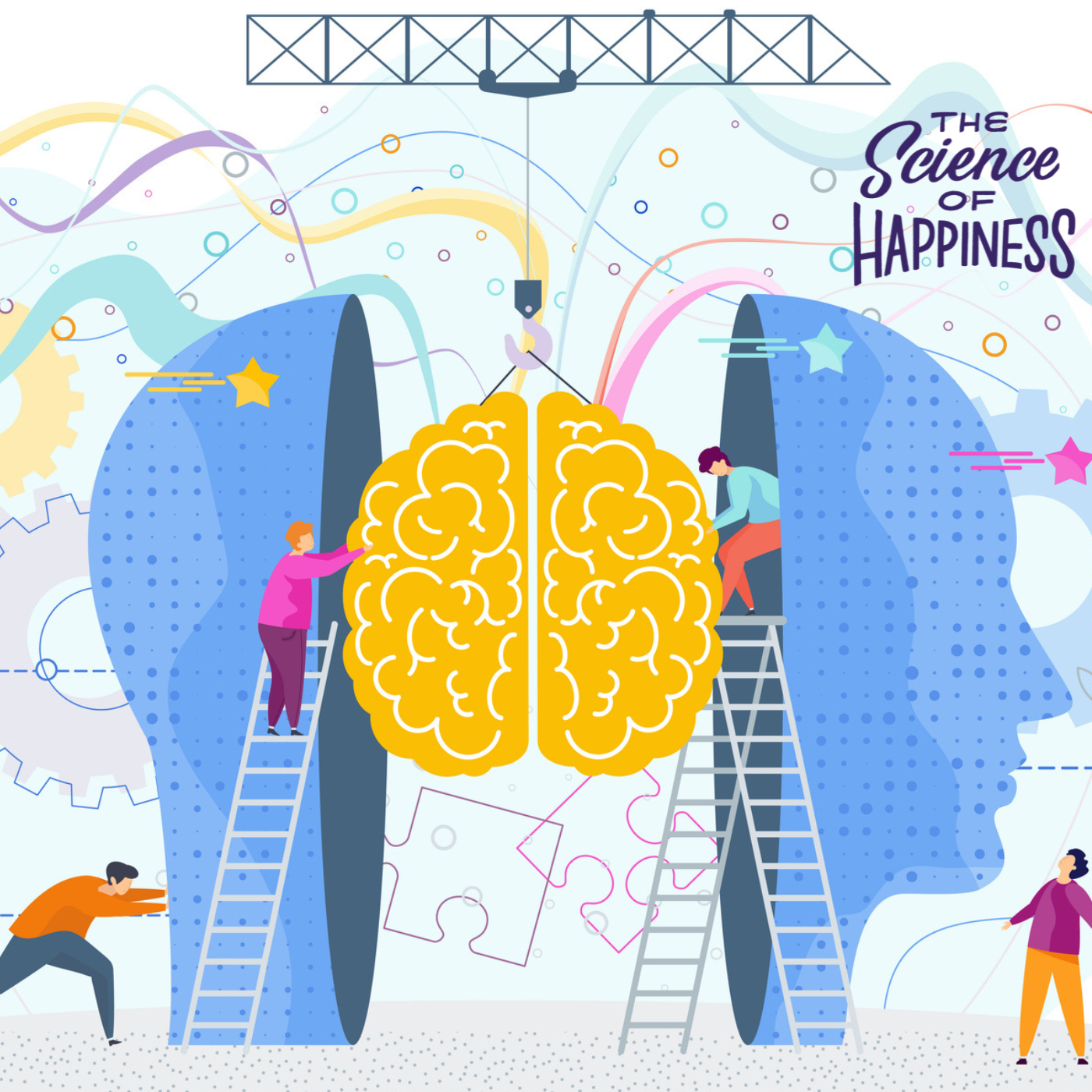 How to Protect Your Brain as You Age 10.09.2026 25mWhat if getting older doesn’t have to mean losing your memory? Learn how neuroplasticity, healthy habits, and simple memory exercises can help keep your brain strong at any age. Summary: We often assume that getting older means our memory and brain function will inevitably decline—but emerging science tells a more hopeful story. On this episode of The Science of Happiness, we’ll explore how neuroplasticity, along with practices like memory exercises, stress reduction, sleep, exercise, and finding a sense of purpose, can support brain health as we age. How to Remember Where You Parked: Pause be...
-
 Happiness Break: Tap into the Joy That Surrounds You 03.09.2026 4mBuddhist meditation teacher, Anushka Fernandopulle, guides us through a practice of Mudita, or appreciative joy, to help us share in the happiness of others. How To Do This Practice: Get comfortable and ground yourself: Sit comfortably, close your eyes if you’d like, and take a few deep breaths. Relax your body: As you exhale, release tension in your face, jaw, shoulders, and anywhere else you feel it. Think of someone whose happiness is easy to celebrate: Bring to mind a friend, child, pet, or anyone who is experiencing joy. Connect with their happiness: Imagine their joy and allow yourself t...
-
 Talk To A Stranger—It’s Good For You 27.08.2026 24mWe often underestimate how much small talk can impact our wellbeing. Research shows that even brief conversations with strangers can boost our happiness and sense of connection, but fear and anxiety often keep us from reaching out. Summary: We often avoid talking to strangers because we assume they’d rather be left alone, or worry the interaction will be awkward. But research shows that our expectations about these interactions are often wrong. Even brief conversations can make us happier and more connected. On this episode of The Science of Happiness, learn how small choices like saying hello...
-
 Happiness Break: A Practice In Moving Through Stress 20.08.2026 8mJoin yoga and meditation teacher Jonathan Relucio for a trauma-informed practice combining mindful movement and breathing to reduce tension and build resilience to stress. How To Do This Practice: Get comfortable: Sit or lie down and notice the support beneath your body, keeping your eyes open or closed—whichever feels comfortable. Connect with your body: Bring your attention inward and notice how your body, mind, and heart feel in the present moment. Release tension: Inhale as you gently shrug your shoulders toward your ears, then exhale as you relax and release them. Move with your breath: I...
-
 Where To Look For Joy 13.08.2026 15mHow can we feel more moments of joy? Explore how joy is rooted in connection, gratitude, and paying attention to the people and moments that bring meaning to our lives. Summary: Did you know that joy isn’t just something we feel, but something we practice? On this episode of The Science of Happiness, poet Ross Gay shares how connection and attention can help us cultivate more joy, while psychologist Philip Watkins explains how gratitude can amplify that feeling. Learn how hanging out, noticing moments of connection, and reflecting on joyful experiences can help bring more joy into your life. H...
-
 Happiness Break: A Body Scan for Calm and Ease 06.08.2026 10mMeditation teacher Spring Washam guides us in a practice of embodied awareness, helping us use the body as an anchor during stressful or overwhelming moments. How To Do This Practice: Find a comfortable position: Sit upright in a relaxed position where you can comfortably notice the flow of your breath. Begin at the top of your body: Close your eyes and bring your attention to your head, neck, face, and jaw. Notice any tightness and allow those areas to soften. Move your awareness downward: Slowly scan through your shoulders, arms, hands, chest, and belly, noticing any sensations, emotions, or...
-
 Why You Can’t Do It Alone 30.07.2026 20mCan anyone truly succeed alone? We explore how role models, mentors, and strong social support make upward mobility far more possible than grit alone. Summary: What role do the people around us play in shaping our success? Brothers Danny and Gilbert Murillo share how education, mentorship, and their evolving relationship helped them overcome incarceration and systemic barriers to build lives of purpose. Then, Social Mobility Lab founder Bob McKinnon explains why success is never a solo journey and how recognizing our own "dream team" can expand what's possible for ourselves and others. How To...
-
 Happiness Break: Holding Truth With Compassion 23.07.2026 10mTake a moment to connect with your body and make space for difficult emotions with compassion and care. This embodiment practice is guided by Lyla June Johnston, a Diné musician, scholar of Indigenous land management, and community organizer. How To Do This Practice: Ground yourself in the present: Find a comfortable seated position and take four slow, deep breaths. Notice the feeling of your body supported by the chair or the floor, bringing your attention fully into the present moment. Reflect on a difficult truth: Gently bring to mind a challenging truth—such as the lasting impacts of colon...
-
 Why Revenge Feels So Good—and Why It Hurts Us 16.07.2026 23mNeuroscience reveals revenge can become a powerful habit—and that forgiveness may be one of the most effective ways to break the cycle. Summary: After years of bullying led him to almost committing an act of violence, James Kimmel Jr., an assistant clinical professor at the Yale School of Medicine, set out to understand why revenge can be so compelling—and how forgiveness can interrupt that cycle, easing emotional pain and strengthening self-control. On this episode of The Science of Happiness, we explore what science can teach us about healing ourselves and creating a less violent world. How...
Radio station

Similar podcasts


Popular in
The podcast also appears in the podcast charts of these countries.
-
 Namibia
-
 Cyprus
-
 Malta
-
 Argentina
-
 Uruguay
-
 Serbia
-
 Myanmar
-
 Qatar
-
 Sri Lanka
-
 Slovenia
-
 Cayman Islands
-
 Mongolia
-
 Mauritius
-
 Oman
-
 Jamaica
-
 Dominican Republic
-
 Bahamas
-
 Sierra Leone
-
 Trinidad and Tobago
-
 Cambodia
-
 Jordan
-
 Nepal
-
 Guyana
-
 Luxembourg
-
 Uzbekistan
-
 Iceland
-
 Indonesia
-
 Kenya
-
 Brunei
-
 Philippines
-
 Montenegro
-
 Grenada
-
 Ecuador
-
 Costa Rica
-
 Greece
-
 Maldives
-
 Bahrain
-
 Peru
-
 Romania