
The Joy of Why
Steven Strogatz, Janna Levin and Quanta Magazine
0
The Joy of Why is a Quanta Magazine podcast that explores curiosity and the pursuit of knowledge. Hosts Steven Strogatz and Janna Levin interview leading researchers about major scientific and mathematical questions. New episodes are released every other Wednesday. Quanta Magazine is an editorially independent publication supported by the Simons Foundation.
Episodes
-
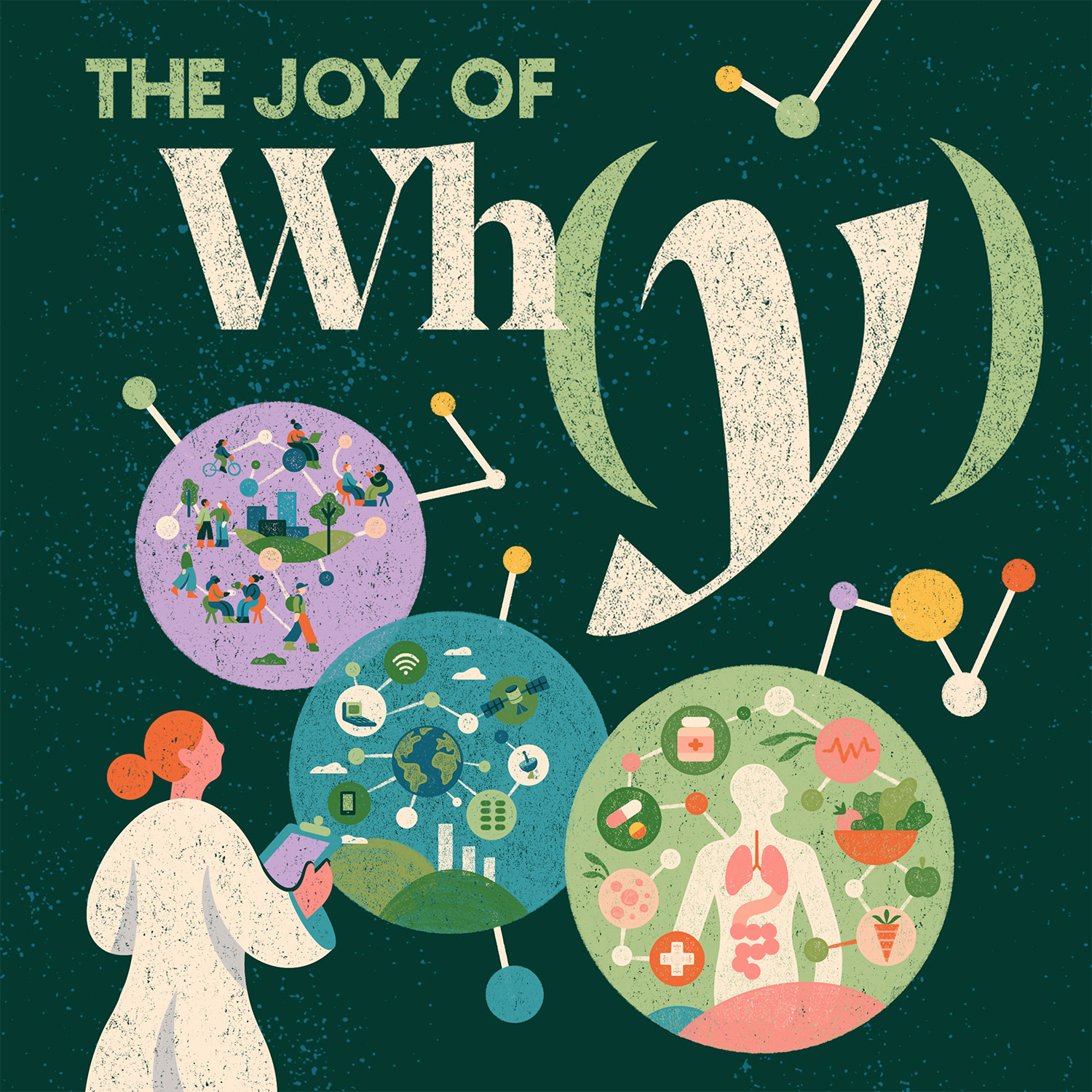 Can Network Science Transform Health and Nutrition? 12.11.2026 51mNothing really exists in isolation. Almost every part of our lives exists in a network. Consciousness arises from what neurons do together, life from what genes and proteins do together, society from what we do together. When researchers began mapping real-world networks in the 1990s – from the World Wide Web to Hollywood actors linked by films – they found that wildly different systems shared architectural features that their components alone could not explain. This suggested common organizing principles for how networks form and develop. In this episode, two of the pioneers of network scienc...
-
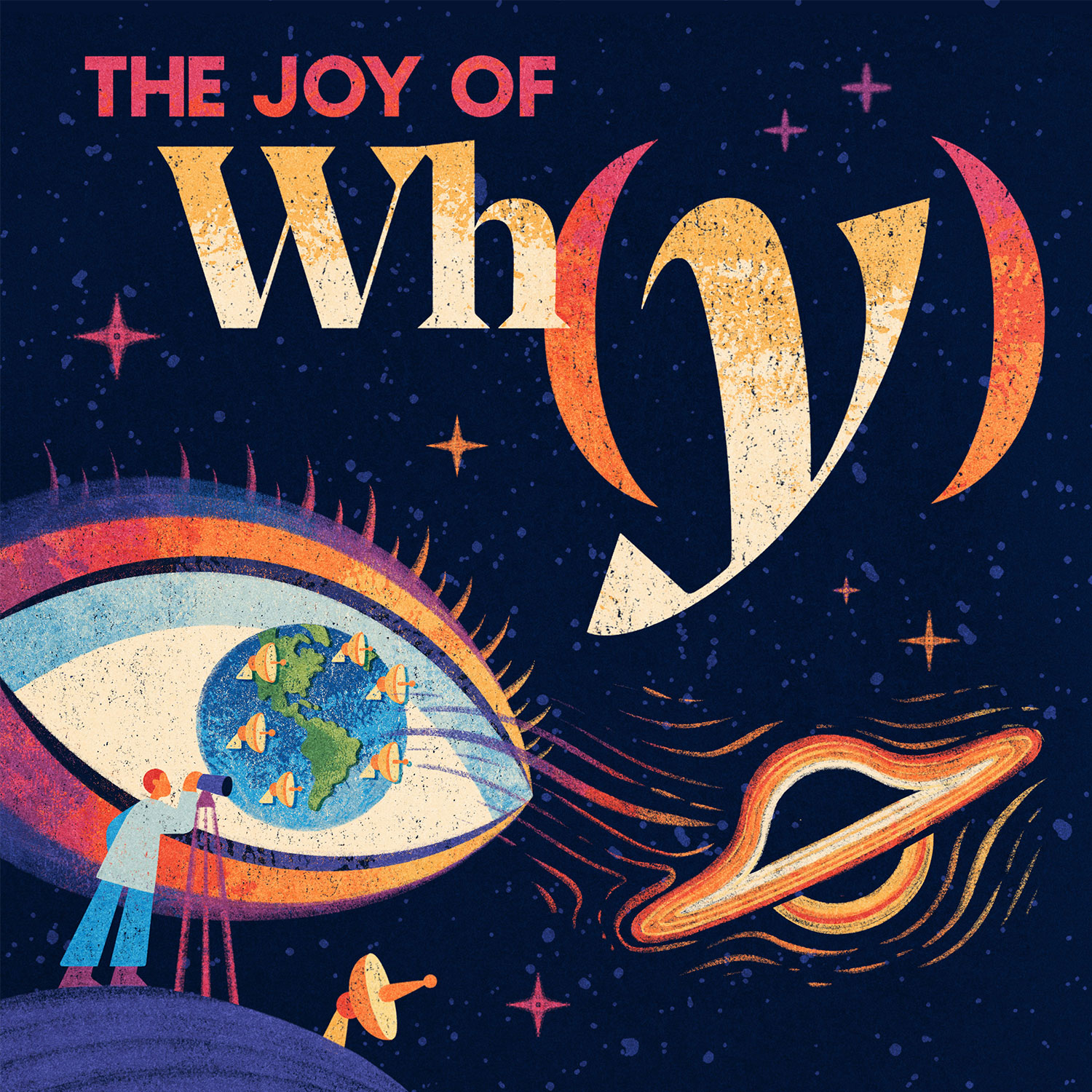 How Do You Take a Picture of a Black Hole? 29.10.2026 59mBlack holes are one of the universe’s most exotic and elusive objects. When nothing, not even light, can escape their powerful gravitational grasp, taking a picture of one seems unimaginable. But an image of a black hole, or more accurately its shadow, could offer insights that theory alone may not provide when testing predictions. So how can it be done? Harvard astrophysicist Shep Doeleman and a team of 250 researchers achieved this extraordinary feat by linking a group of radio telescopes around the world. This network, called the Event Horizon Telescope, produced the first image of a superm...
-
 How Do Fungi Keep the Planet Healthy? 15.10.2026 56mPeople may think of soil as just dirt, but it is anything but inert. Beneath your feet, a vast network of mycorrhizal fungi is hard at work, trading minerals with plant roots. This trading system helps enrich the soil, and it sequesters 13 billion tons of atmospheric carbon dioxide each year — roughly equivalent to one-third of the world’s fossil-fuel emissions. Scientists know that these fungi form partnerships with 80% of all plant species on Earth, a relationship that evolved some 450 million years ago. What they have not understood is how organisms with no brain or central nervous system c...
-
 What Does the Fourth Dimension Actually Look Like? 01.10.2026 53mWe know all about how things exist in the three dimensions of length, width, and height. Physicists often talk about time as a fourth dimension, but what if there were a fourth spatial dimension — another direction entirely? How on earth would we picture that? Mathematicians use topology to visualize abstract spaces in higher dimensions. Maggie Miller at the University of Texas at Austin explores what happens when knots encounter an extra dimension. Familiar tangled loops behave in unexpectedly complex and counterintuitive ways in 4D: Knots can always come undone, while ordinary surfaces like...
-
 Where Does the Quantum World End and Ours Begin? 17.09.2026 47mQuantum mechanics may be one of the most precisely tested paradigms in science, but there’s still no universally accepted interpretation of what it tells us about reality. How do we get from the wave-like behavior of quantum systems to the solid, macroscopic world of objects and the universe at large? Jonathan Halliwell, a professor of theoretical physics at Imperial College London, has spent his career probing the foundations of quantum theory. In this episode, he tells Steven Strogatz why decoherence — the process by which fragile quantum behavior becomes dispersed through interactions with...
-
 Live from ICM 2026: What Is Math For in the Age of AI? 03.09.2026 53mMathematicians are witnessing a profound shift in their field. AI systems are now producing proofs, spotting connections between distant fields, and, in a few cases, solving problems that had stumped mathematicians for decades. The pace of progress over the past several months has raised challenging questions: What can AI systems actually do? And what happens to the more human, creative aspects of the field once machines can match – or exceed – people at problem-solving? In this special live episode of The Joy of Why, recorded at the International Congress of Mathematicians in Philadelphia on...
-
 Are We Thinking Correctly about AI Intelligence? 20.08.2026 52mWhen an LLM answers a question, is it reasoning like humans, or just producing text that looks like reasoning? The distinction isn’t just philosophical, this determines what we can trust AI to do, how closely we need to supervise it, and ultimately what its real-world impact will turn out to be. Melanie Mitchell at the Santa Fe Institute argues that we lack adequate methods for measuring machine cognition, and that AI is a form of “alien intelligence” that operates through non-human cognitive mechanisms. In this episode of The Joy of Why, Mitchell tells Steven Strogatz how methods that psychol...
-
 How Does Touch Lead To Pain Or Pleasure? 06.08.2026 55mPain and pleasure seem like simple facts of life, but they are far from it. Neuroscientists still cannot say why physical pain differs from psychological pain, for instance, nor why a loved one’s touch soothes while a stranger’s touch repels. To explore the science behind these sensations, Janna Levin talked to Ishmail Abdus-Saboor, a neuroscientist at Columbia University’s Zuckerman Institute. Their conversation covers how pain serves an evolutionary purpose, how researchers measure pain and pleasure in the lab despite the absence of any objective biomarker, and how touch functions as a socia...
-
 How Fast Is the Universe Really Expanding? 23.07.2026 1h 4mOne of the biggest mysteries in cosmology seems to keep getting bigger. Astronomers have known since the 1930s that the universe is expanding, but in the 1990s, the discovery that this expansion is accelerating rather than slowing down came as a huge shock to the field. Something had to be driving that acceleration, and dark energy was proposed as the cause. What began as a seismic shock in cosmology eventually led to a Nobel prize. But this story has a sequel, and it comes with another major plot twist. The two main methods for estimating the universe's present-day expansion rate are producin...
-
 Will We Ever Find Alien Civilizations? 09.07.2026 53mDoes intelligent life exist elsewhere in the universe? The question has captivated us for centuries, but despite decades of searching it remains frustratingly unanswered. Every so often a curious signal appears — fossilized structures in a meteorite, say, or an unusual gas in an exoplanet’s atmosphere — and for a moment it seems possible that we are not alone before the excitement gives way to a more mundane explanation. So what would it actually take to find life in the cosmos — and how would we know when we saw it? David Kipping, an astronomer at Columbia University, has spent his career fin...
-
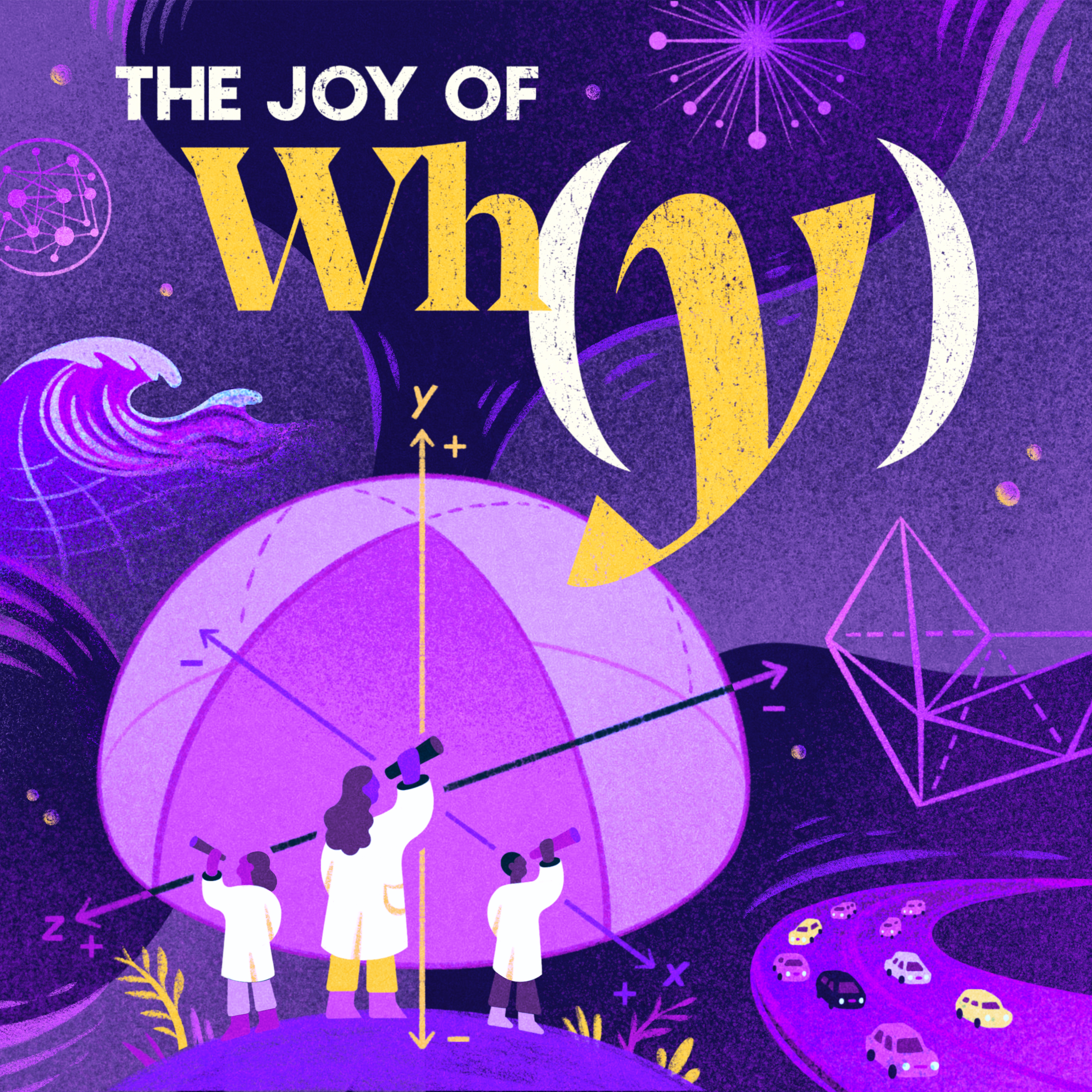 What Is the Positive Grassmannian and Why Does It Show Up Everywhere? 25.06.2026 51mWhat links certain mathematical models of traffic flow, shallow-water waves, and quantum particle scattering? The surprising answer lies in a corner of the algebraic combinatorics world that goes by the name of positive Grassmannian. In simple terms, the positive Grassmannian is a shape that classifies other shapes. Remarkably, pieces of the positive Grassmannian can be reassembled in forms that reveal shared structures in these and many other seemingly unrelated mathematical systems. That we know the positive Grassmannian crops up in many real-world settings is largely down to the theoretical...
-
 What’s the Future of Gene Editing? 11.06.2026 51mOne of the most surprising and remarkable discoveries in recent scientific history has been CRISPR. Short for Clustered Regularly Interspaced Short Palindromic Repeats, CRISPR is a form of immune system that evolved in bacteria more than a billion years ago to defend against persistent viral threats. Under attack, bacteria can snip a small fragment of a virus’s DNA, store it in the CRISPR region of their genome, and then use it to recognize and destroy the same virus if it returns. The CRISPR-Cas9 system, to give it its longer name, consists of a short strand of guide RNA that identifies where...
-
 More Conversations, Complex Questions, and Bold Ideas in Season Five of ‘The Joy of Why’ 04.06.2026 1mWhat is the future of gene editing with CRISPR? Has AI changed mathematics forever? Will we find other civilizations in the universe? What if we’ve been wrong about dark energy all along? These are just a few of the big, bold questions we’ll be exploring in the new season of The Joy of Why. Mathematician Steven Strogatz and physicist Janna Levin are back as your hosts for these and other conversations that explore the frontiers of basic science and mathematics. Each episode features an in-depth conversation in which Steven or Janna sits down with a leading scientist or mathematician to unpack...
-
 Do Beautiful Birds Have an Evolutionary Advantage? 21.08.2025 46mBirds are not merely descendants of dinosaurs — they are dinosaurs. For Yale evolutionary biologist and ornithologist Richard Prum, birds have been a lifelong passion and a window into some of evolution’s most intriguing mysteries. In a wide-ranging conversation with co-host Janna Levin, Prum traces the deep evolutionary origins of feathers, which he argues first emerged not for flight but for insulation, camouflage and display. Their colors — often invisible to the human eye — come into sharp focus under birds’ ultraviolet vision, suggesting a sensory world far richer than our own. Prum also...
-
 How Can Math Protect Our Data? 07.08.2025 39mEvery time data travels — from smartphones to the cloud, or across the vacuum of space — it relies on a silent but vigilant guardian in the form of error-correcting codes. These codes, baked into nearly every digital system, are designed to detect and repair any errors that noise, interference or cosmic rays might inflict. In this episode of The Joy of Why, Stanford computer scientist Mary Wootters joins co-host Steven Strogatz to explain how these codes work, and why they matter more than ever. Wootters discusses the evolving list of codes that keep modern communication resilient, and the fro...
-
 Why Did The Universe Begin? 24.07.2025 52mMost cosmologists agree that our universe had a beginning. But the finer details about the Big Bang remain a mystery. A history of everything would explain all, or so theoretical physicists hoped. In his final years, Stephen Hawking working with Thomas Hertog proposed a striking idea: The laws of physics were not precisely determined before the Big Bang; they evolved as the universe evolved. In this episode of The Joy of Why, Hertog speaks with co-host Janna Levin about his work and partnership with Hawking. Hertog, now at KU Leuven in Belgium, explains why they rejected the popular multiverse...
-
 How Can Regional Models Advance Climate Science? 10.07.2025 45mClimate models have changed the way we view the world. While effective, these models are imperfect, and scientists are constantly looking at ways to improve their accuracy and predictability. MIT professor Elfatih Eltahir has spent decades developing complex models to understand how climate change affects vulnerable regions like the Nile Basin and Singapore. In this episode of The Joy of Why, Eltahir tells co-host Steven Strogatz how growing up near the Nile in Sudan helped him realize that climate change doesn’t occur in isolation. To better understand climate-related impacts and to create mo...
-
 How Does Graph Theory Shape Our World? 26.06.2025 34mBorn in the 18th century when Leonhard Euler solved the puzzle of the seven bridges of Königsberg, graph theory has become a foundational tool in mathematics. It studies relationships through nodes (vertices) and the links (edges) that connect them, transforming the complexity of systems — from friendship networks to airline routes — into elegant abstractions that reveal underlying structure and interaction. Maria Chudnovsky from Princeton University is a leading mathematician in the field. In this episode of The Joy of Why, Chudnovsky talks with co-host Janna Levin about how she got into grap...
-
 Does Form Really Shape Function? 12.06.2025 47mWhat links a Möbius strip, brain folds and termite mounds? The answer is Harvard University’s L. Mahadevan, whose career has been devoted to using mathematics and physics to explore the form and function of common phenomena. Mahadevan, or Maha to his friends and colleagues, has long been fascinated by questions one wouldn’t normally ask — from the equilibrium shape of inert objects like a Möbius strip, to the complex factors that drive biological systems like morphogenesis or social insect colonies. In this episode of The Joy of Why, Mahadevan tells co-host Steven Strogatz what inspires him to...
-
 Will We Ever Prove String Theory? 29.05.2025 48mFor decades, string theory has been hailed as the leading candidate for the theory of everything in our universe. Yet despite its mathematical elegance, the theory still lacks empirical evidence. One of its most intriguing, yet vexing, implications is that if all matter and forces are composed of vibrations of tiny strands of energy, then this allows for a vast landscape of possible universes with different physical properties, varieties of particles and complex spacetimes. How, then, can we possibly pinpoint our own universe within a field of almost infinite possibilities? Since 2005, Cumrun...
Similar podcasts


Popular in
The podcast also appears in the podcast charts of these countries.
-
 Azerbaijan
-
 Finland
-
 Sri Lanka
-
 Armenia
-
 Ecuador
-
 Slovenia
-
 Indonesia
-
 Luxembourg
-
 Lebanon
-
 Philippines
-
 Bahrain
-
 Tunisia
-
 Cyprus
-
 Kyrgyzstan
-
 United Arab Emirates
-
 Pakistan
-
 Oman
-
 Ukraine
-
 Greece
-
 Honduras
-
 Thailand
-
 Malta
-
 Moldova
-
 Guatemala
-
 Cambodia
-
 Uzbekistan
-
 Uruguay
-
 Estonia
-
 Romania
-
 Bulgaria
-
 Myanmar
-
 Costa Rica
-
 Latvia
-
 Laos
-
 Paraguay
-
 Zimbabwe
-
 Dominican Republic
-
 Panama
-
 Iceland
-
 India
-
 Bolivia
-
 Chile
-
 Slovakia
-
 North Macedonia
-
 Croatia
-
 Colombia
-
 Lithuania
-
 Peru
-
 Argentina
-
 Kenya
-
 Sierra Leone
-
 Hungary
-
 Serbia